2.5 C
New York
Home Blog Page 1170

SEACOR Marine Enters Agreement To Acquire Three Additional Platform Supply Vessels

0

SEACOR Marine Holdings Inc. announced it has entered into definitive agreements to acquire three platform supply vessels (“PSVs”) from COSCO Shipping Heavy Industry (Zhoushan) Co., Ltd. (“COSCO Zhoushan”), an affiliate of COSCO Shipping Group, the world’s largest ship owner.

Aggregate consideration for the vessels will be approximately $46.0 million, of which 30% will be paid in cash and 70% will be paid under a four-year deferred payment agreement between SEACOR Marine and COSCO Zhoushan. Half of the cash payment will be funded in the first quarter of 2019 with the balance per vessel to be paid upon physical delivery of each vessel. The parties currently expect the vessels to be delivered on September 30, 2019, January 30, 2020, and April 30, 2020.

John Gellert, SEACOR Marine’s Chief Executive Officer, commented: “We are honored to build upon our relationship with the COSCO Shipping Group, which began last year with our SEACOSCO joint venture. That initiative’s first two vessels are already operational in the North Sea and in Saudi Arabia. Those vessels have performed well since delivery in early 2018, and we look forward to welcoming these newly acquired vessels into our fleet over the next year."

This is truly an exciting time for SEACOR Marine and its stakeholders as we continue to modernize our fleet through prudently structured transactions. In our core areas of U.S.-flag lift boats, aluminum hull fast support vessels, and now, foreign-flag, mid-size deepwater platform supply vessels, we will have one of the most modern and commercially viable fleets in the industry for many years to come.

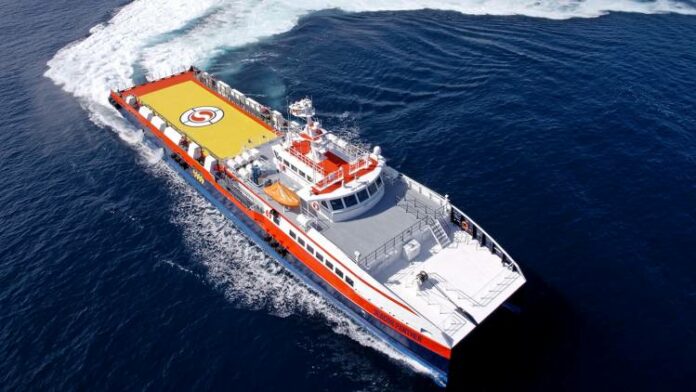
The PSVs acquired are Rolls Royce UT771CDL design of 3,800 tons deadweight capacity with dynamic position class 2 and firefighting class 1 notations. They can accommodate a subsequent upgrade to a battery hybrid power solution. They will be registered in the Marshall Islands and be named the M/V SEACOR Alps, SEACOR Andes, and SEACOR Atlas, respectively.
Orsted, Tepco forge alliance for Japan offshore push

0

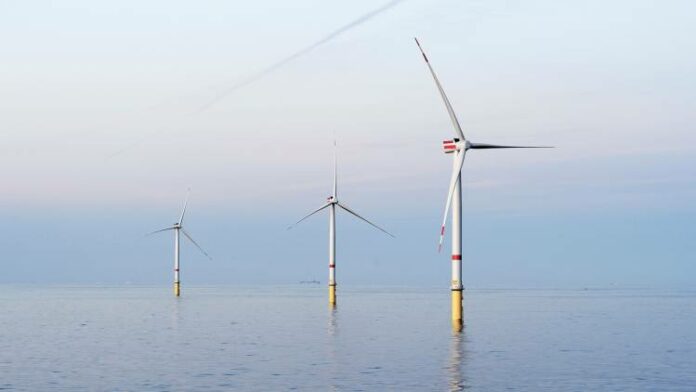
Danish developer Orsted and Japanese utility Tepco have formed a partnership to pursue offshore wind projects in the latter’s home market.

The two companies have signed a memorandum of understanding, which will start with work on the Choshi project near Tokyo.

Tepco, which commissioned a single turbine at the site recently, has been exploring a larger wind farm at the site in recent months, it is understood.

The partnership comes after the government in Japan committed to passing laws to support large-scale offshore wind development areas.

Tokyo has a 10GW wind target, including onshore, for 2030.

Tepco president Tomoaki Kobayakawa said the utility is “confident” of using its “extensive expertise” locally with Orsted’s “unparalleled track record in the offshore wind business” to deliver the Choshi project.

“We hope that this first step paves the way for expansion beyond the coastlines of Japan for the development, construction, operation and ownership of offshore wind projects,” he said.

Tepco is aiming to make renewable energy a core generating source by developing 6 to 7GW of renewable energy projects in Japan and overseas.

Ørsted chief executive Henrik Poulsen said: "As the largest player in the Japanese electricity industry, Tepco has deep insights into the local power market and the regulatory requirements."

This MoU is the first step in Orsted and Tepco’s aspirations to deliver on Japan's ambitions for domestic renewable power generation at a large scale and contribute to making Japan a leading offshore wind market in the Asia-Pacific.

He added: We welcome this first opportunity to work with TEPCO and look forward to strengthening our relationship further.

Source:renews

Maersk boosts supply chain efficiency through container triangulation in US

0

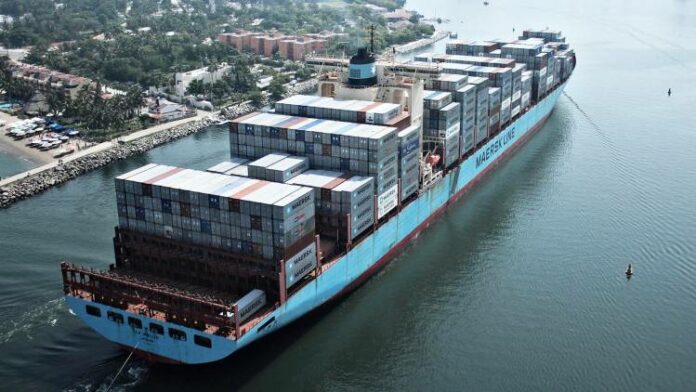
Maersk is the first carrier to offer container triangulation services in the US and Canada.

It is using Antwerp-headquartered Avantida's online platform for empty triangulation services – and the move represents Avantida’s first steps in the US and Canadian markets.

Avantida said in a statement “Empty container triangulation, or the interchange of an intermodal container outside of a marine terminal or yard (street turns), is a well-known activity in the US. By offering this on Avantida’s online platform, transporter and logistics companies are freed from the administrative hassle of having to request and process street turns manually.”

Through the automated request process offered by Maersk, dispatchers and planners requesting street turns will get a response in minutes. They will be able to take advantage of time and cost savings, benefit from a fully digital process and reduce CO2 emissions as these efficiencies help cut unnecessary truck miles.

“Both shipping lines and transporters continue to look for agile, cost-saving tools that can optimise their planning, and our platform has a proven track record of improving efficiency,” said Avantida chief executive Luc De Clerck. “The platform has changed the way shipping lines in Europe are doing business, and after our launch in Mexico, it was a natural next step to introduce Avantida to the United States and Canada.”

In September 2018 CMA CGM and Hapag-Lloyd announced they are introducing container management services via Avantida in Mexico – the first time this service has been offered in the country.

Avantida is owned by cloud-based provider of networked supply chain solutions E2open, which acquired INTTRA at the end of 2018.

Source:containerst

Fleet Management to roll-out cyber security on more than 200 vessels

0

Third-party ship management specialists Fleet Management Ltd have inked a contract with class society ABS to implement cyber security across a fleet of liquid cargo carriers.

US-based ABS announced the agreement, which will see 220 of Fleet Management’s tankers undergo ABS’ cyber risk assessment and increased security measures.

ABS Advanced Solutions vice president Russell Medeiros said “Working together, we will provide a comprehensive cyber security solution to assist in ensuring compliance with the International Maritime Organization (IMO), as well as additional cyber-security related guidelines and requirements – creating a safer fleet.”

IMO requires cyber security to be addressed in ship Safety Management Systems by January 2021; TMSA3, SIRE, BIMCO, IACS and Rightship have all specified additional industry guidelines and commercial requirements. ABS said its model supports compliance with all of these requirements.

ABS developed its FCI cyber risk model during a two-year research contract with the Maritime Security Center – part of the US Department of Homeland Security. Launched in June 2018, the ABS FCI cyber risk approach quantifies cyber security risk and gives owners and operators a practical, actionable strategy to reduce cyber risk onboard a vessel. ABS also offers services in support of its assessment.

“The ABS FCI cyber risk model calculates a cyber risk score and demonstrates how specific FCI (functions, connections and identities) alterations reduce the level of risk,” Mr Medeiros said.

Using its model, ABS calculates a cyber risk index for a client’s individual assets or entire fleets. From the risk index, an actionable report details precisely how to reduce cyber risk, which allows clients to target cyber security investments across their assets.

The quantifiable and calculable method evaluates not only the operational systems and connections of a vessel, but also the human and machine identities, clearly enumerating the level of cyber risk exposure.

Source:marinemec

Container shipping enhances IT and communications with VSAT

0

A Norwegian container ship owner is investing in VSAT and IT management to improve communications and cyber security while reducing the complexity of its operations.

Klaveness Ship Management has selected Marlink to provide its Sealink VSAT service and Palantir’s KeepUp@Sea platform for ships it operates for Torvald Klaveness.

This will involve Sealink VSAT and L-band backup hardware and connectivity being deployed across a fleet of 23 combination carriers and container ships. Marlink will also deploy its XChange centralised communications management devices and Palantir KeepUp@Sea remote IT service on these ships.

These deployments will support Torvald Klaveness’ plans to optimise its business operations through sophisticated IT and connectivity solutions. Sealink VSAT uses Ku-band coverage for data and voice communications. This falls back to L-band if ships are outside the Ku-band coverage. This is managed by XChange modules.

Torvald Klaveness will use KeepUp@Sea for monitoring, managing and controlling onboard servers and computers. It provides a complete overview of the health status for critical components on board, including verifying backup is performed and antivirus protection is up to date.

KeepUp@Sea also enables shore staff to maintain a transparent overview of the operational status of a fleet, while enabling on board staff with limited IT competence to deal with errors.

Torvald Klaveness head of IT and development Lars Erik Luthman said standardising IT management is a key pillar of the ship operator’s digital strategy.

“With Marlink’s VSAT connectivity as a backbone, the scalable KeepUp@Sea solution will allow us to consolidate our IT operations on a single platform, reducing complexity, simplifying troubleshooting and ensuring that our software, licences and antivirus are always up to date,” he said.

“Through this we are looking to optimise IT management on board and ashore, improve stability and availability across our fleet of 23 owned and managed ships, and ultimately reduce overall operational expenditure.”

Torvald Klaveness owns eight container ships, including six of 2,500 TEU capacity built 2013-2014, plus 2004-built Barry with 3,091 TEU and 2004-built Baro with 1,700 TEU. It also operates 10 combination carriers, including 83,563-dwt Baru, delivered in 2018, and five more 83,563-dwt combination carriers on order at Jiangsu New Yangzi Shipbuilding Co, China.

Its combination carriers can switch between dry and wet cargo shipments with minimum ballast between the laden voyages. These are capable of transporting caustic soda solution, floating fertilizer, molasses and all forms of dry bulk commodities.

This is the second VSAT contract Marlink has announced this month as tanker operator Transpetrol renewed its contract for VSAT communications for its existing fleet with Marlink.

Source:marinemec

Aker BP to drill 15 exploration wells in 2019.

0

Norwegian oil company Aker BP is raising its growth ambitions on the back of what it says is a strong performance in 2018.

Aker BP on Friday said it plans to organically triple its production by 2025, to cut production costs from USD 12 to USD 7 per barrel by 2023, and to significantly increase the dividend payments to shareholders.

“The future of the E&P industry belongs to the most competitive and efficient oil companies,” says Karl Johnny Hersvik, Chief Executive Officer of Aker BP.

Aker BP’s production in 2018 was 155.7 mboepd. The guidance for 2019 has been set at 155-160 mboepd.

The company is planning what it describes as a high-potential 2019 exploration program with 15 prospects to be drilled, targeting net unrisked prospective resources of 500 million barrels of oil equivalents (“mmboe”)

It is looking to spend around $500 million on exploratory works this year.

“This is a very exciting exploration program. We are investing to find profitable barrels around our hubs, test new plays and to generate new potential stand-alone development opportunities for Aker BP,”says Hersvik.

Capital spending in 2018 amounted to USD 1.2 billion, USD 100 million below plan, and all current field developments remain on track, the company said.

“We have delivered on the goals we set for 2018. Aker BP is well positioned to deliver on our high ambitions for the coming years,” says Hersvik.

Aker BP increased its reserves to 917 mmboe in 2018, driven by conversion of resources to reserves, especially in the Valhall area. Through license acquisitions and discoveries, the company’s contingent resources increased to 946 mmboe.

5 energy trends that will run the world in 2019

0

As the global community becomes more interested in- and aware of- the devastating impacts of climate change, more and more industries have shown a shift towards environmentally-friendly solutions. Meanwhile, smart technology seems to emerge in every aspect of business operations. While the world’s need for energy seems to be insatiable, the sources of it are going through a drastic change.

In this regard, Finnish technology group Wartsila presented some of the trends awaited in 2019 and significantly impacting the energy transition:

1. Renewable is business as usual

The cost of renewable energy is falling fast enough to be consistently cheaper than the use of fossil fuels within a few years, according to International Renewable Energy Agency. For example, the cost of solar photovoltaic electricity has reduced by 73% since 2010. The changes in energy policy are expected to continue and with higher speed.

2. In tech we trust

Blockchain and Big Data are already being used everywhere and will be involved from energy production to energy management. The renewable energy industry is constantly updating its manufacturing and working models to make use of innovation in other industries to reduce costs.

For instance, in July 2018, the world’s largest offshore wind farm used automated drones to cut inspection time from two hours to 20 minutes. At the same time, two US national laboratories collaborated to manufacture a 3D-printed wind-blade mould, reducing prototyping costs and time from over a year to three months.

3. Financing a green transition

All innovation and technological advancement towards a sustainable society will fall flat if we do not have the money to push these changes. As financial institutions cannot afford to be outside of the transition path to low-carbon economies, they seem to drain more funds into green projects than ever before.

This year's United Nations Climate Change Conference (COP24) held in Poland dedicated a number of side events that talked about how to accelerate the innovation towards sustainability and green technological advancements.

4. Our waste, our fuel

Both organic waste and plastic can be turned into fuel, which is constantly discussed in view of an increase in demand for new carbon-neutral fuels, which not only includes waste-based fuels, but all kinds of synthetic fuels as well.

At the latest GREEN4SEA Conference in 2018, Aleksey Nikulin, Chief Technology Officer, Humble Energy Ltd, talked about Solid Recovered Fuel (SRF) Energy Pellets, a fuel which comes in several forms and is produced from domestic waste and producible commercial waste.

5. What a wonderful ‘green’ world

In line with the greater awareness on climate change, governments globally have shown a shift to sustainability and stood up to show that we can still fight it with the right policies.

"From Curitiba, Brazil, that recycles 70% of its waste, to Reykjavik, Iceland, which uses its natural geothermal energy to lower dependency on fossil fuels, there is a global move to make cities more sustainable. San Francisco banned all plastic bottles and pioneered water conservation. Singapore has now had a decade of mandated ‘green buildings’. Cape Town, South Africa, is among the top five cities in the world to have addressed climate change through their Carbon Disclosure Project."

Source:safety4sea

Saipem awarded $1.3bn worth of offshore contracts by Saudi Armanco

0

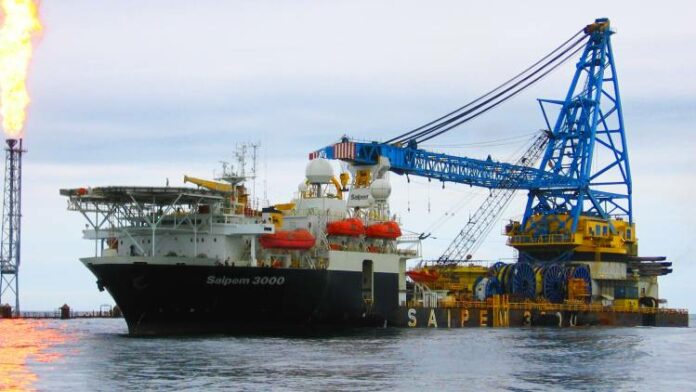
Italy’s Saipem has been awarded two engineering, procurement, installation and construction contracts by Saudi Aramco, worth around $1,3bn, and part of a long-term agreement for offshore activities in Saudi Arabia, renewed in 2015 and in force until 2021.

A statement from the Italian contractor reports that these contracts are part of the development of offshore fields in Berri and Marjan, located in the Arabian Gulf, which are among the most important offshore fields in the region.

Saipem’s work scope includes the design, engineering, procurement, construction, installation and implementation of subsea systems in addition to the laying of pipelines, subsea cables and umbilicals, platform decks and jackets.

Source:splash247

Shell to Pick Either Onesubsea or TFMC for Ormen Lange Phase 3

0

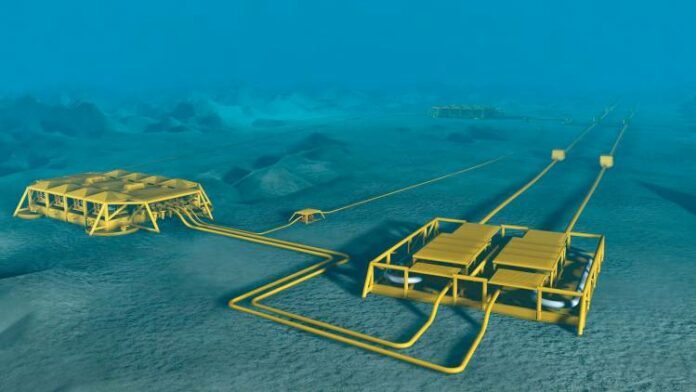
Shell said it has decided to go with subsea compression as a concept for the Ormen Lange Phase 3 to increase the recovery rate from the reservoir.

Shell will develop the third phase of its giant Norwegian gas field Ormen Lange with a subsea compression system, the oil major said in a statement on Friday.

The company will either choose Schlumberger's Onesubsea or TechnipFMC to do the work, it said, adding that it would take a decision later in 2019. 

This is an important choice, where we have evaluated a number of alternative concepts. Subsea compression will result in a significant increase in what is possible to produce from Norway’s second largest gas field, by reducing the pressure near the wellheads. We have managed to reduce costs by more than 50 per cent compared to the first time we considered offshore compression for Ormen Lange. This demonstrates that it was a right decision to stop the project in 2014 and look at all opportunities again,” says Rich Denny, CEO of A / S Norske Shell.

We have worked closely with suppliers and partners with a focus on optimizing work volume, costs, safety, environment, and using learning from similar projects. This has resulted in a number of competitive alternatives, such as unmanned platform solutions and several subsea concepts,” says Arne Dahle, project manager at Shell.

Despite Breakdowns and Missed Pay, Polar Star Reaches Antarctica

0

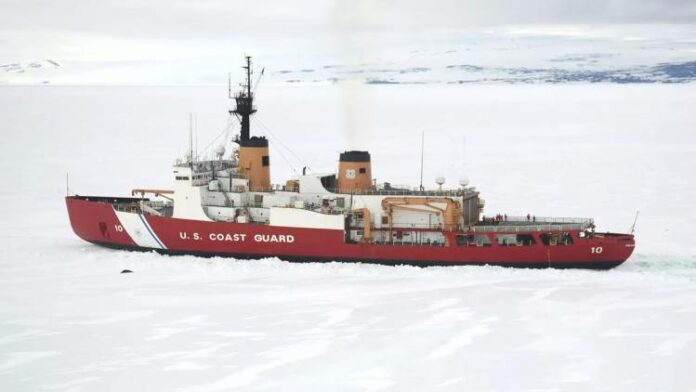
The 150 crewmembers of the U.S. Coast Guard Cutter Polar Star arrived Thursday in Antarctica, fulfilling their yearly mission to to resupply America's main outpost on the continent. 

The 42-year-old ship is the United States’ only operational heavy icebreaker, and the crew – which has not been paid since December – is making their sixth deployment in as many years to support the resupply of McMurdo Station. 

Each year, the Polar Star creates a navigable path through seasonal and multi-year ice, sometimes as much as 21 feet thick, to allow a resupply vessel to reach McMurdo Station. The supply delivery allows multiple Antarctic stations to stay operational year-round, including during the dark and tumultuous Antarctic winter. 

The Polar Star arrived after completing an 18-mile trip through the ice to McMurdo Sound, where 400 containers will be offloaded from the supply ship Ocean Giant.

The U.S. Coast Guard maintains two icebreakers – the Coast Guard Cutter Healy, which is a medium icebreaker, and the Polar Star. Protecting America's interests in the polar regions is part of the Coast Guard's national defense mission, along with providing search and rescue capabilities. In order to keep carrying out this mission, the agency says that its icebreaker fleet desperately needs modernization.

The Polar Star is showing her four decades of age, and she is now only capable of one mission per year. She spends the northern hemisphere's winter breaking ice near Antarctica, and when the mission is complete, she returns to drydock on the U.S. West Coast. With a six-month-long drydock period scheduled after every six months, she may well be a contender for the title of the most maintenance-intensive vessel in operation today – especially considering her frequent need for damage control under way.

During this year’s deployment, one of the ship’s electrical systems began to smoke, causing damage to wiring in an electrical switchboard, and one of the ship’s two evaporators used to make drinkable water failed. Like last year, she also experienced a leak from a shaft seal, which halted icebreaking operations until scuba divers could make repairs. 

The Polar Star also experienced ship-wide power outages while breaking ice. Crewmembers spent nine hours shutting down the ship’s power plant and rebooting the electrical system in order to remedy the outages.

If a catastrophic event were to happen to the Healy in the Arctic or to the Polar Star near Antarctica, the U.S. Coast Guard is left without a self-rescue capability. By contrast, Russia currently operates more than 40 icebreakers – several of which are nuclear powered.

The Coast Guard has been the sole provider of the nation’s polar icebreaking capability since 1965, and is seeking to increase its icebreaking fleet with six new Polar Security Cutters in order to ensure continued national presence and access to the Polar Regions.

“While we focus our efforts on creating a peaceful and collaborative environment in the Arctic, we’re also responding to the impacts of increased competition in this strategically important region,” said Adm. Karl Schultz, commandant of the U.S. Coast Guard. “Our continued presence will enable us to reinforce positive opportunities and mitigate negative consequences today and tomorrow.”

Source:maritime-executive