2.5 C
New York
Home Blog Page 1169

MOL, Asahi Tanker launch new product tanker pool

0

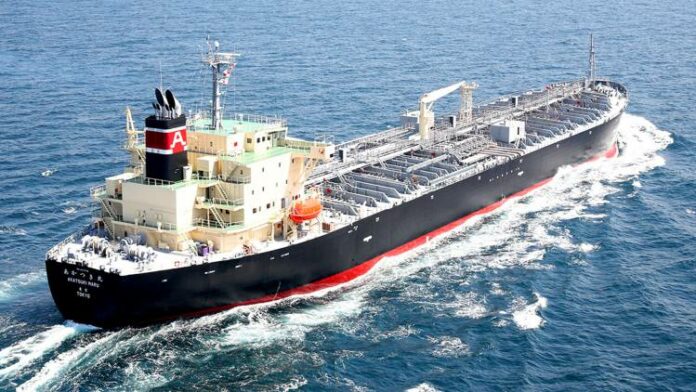
Mitsui OSK Lines (MOL) and Asahi Tanker Co have launched a new MR product tankers pool with a fleet of about 25 ships.

The new pool, named Asahi MOL Tankers and headquartered in Republic of the Marshall Islands, will also launch MR product tankers that will be assigned to the pool.

Asahi MOL Tankers pool, effectively operational on Monday, will mainly allocate its 25 ships to Asia and Oceania from the three centers of Tokyo, Singapore and London.

The joint statement from the Japanese owners said: “The pool operation allows Asahi MOL Tankers to offer efficient, reliable, high quality ocean transport services with the flexibility to meet diverse customer needs.”

Source:seatrade-maritime

OCIMF: How to ensure a safe deck onboard offshore vessels

0

The last twenty years many dangerous events took place, showcasing the risk that offshore deck cargo operations present. To deal with this issue, OCIMF released a new information paper, Deck Cargo Management Onboard Offshore Vessels.

The paper includes risk-based guidance as well as best practices on how to manage deck cargo in the offshore marine industry. It aims to help vessel Masters, offshore industry personnel and vessel crews adopt safe working practices for deck cargo handling between shore base operations, offshore facilities and vessels.

Specifically, Masters must follow some best practices to ensure a safe deck, by completing a specific checklist. This includes:

1. A completed risk assessment

The vessel's crew must in the task-based risk assessment, as well as mitigations and controls. In addition, participation in the Matrix of Permitted Operations (MOPO) should be part of the risk assessment.

2. Safe vessel motion

When dynamic environmental conditions occur, a safe deck provides a stable platform for the crew. In order to achieve a safe vessel motion, the following must be taken into consideration:

  • Quantify roll, pitch and heave;
  • Instrumentation;
  • Effect on vessel freeboard;
  • The vessel's efficiency in clearing the deck of sea water via deck freeing ports;
  • Base friction: steel versus wooden or plastic deck coverings;
  • Type and code of CoG of deck cargo or equipment carried;
  • Stability management;
  • Manoeuvring/positioning in the seaway.

3. Presence of a buddy system

A buddy system consists of at least two experienced crewmembers, to ensure each other's safety. A ship's crew must collaborate in order to know each other's activities and prevent exposure to dangers.

4. Adequate communications

Bridge crew can provide additional supervision to the buddy system. If they notice a potential danger before the deck crew, they should be able to communicate with them immediately and effectively.

5. Sufficient lighting

The deck must have sufficient lights in order to be fully visible by all persons that take part in an operation.

6. Deck cargo securing/escape routes awareness

Deck cargo and equipment must be secured to ensure a safe deck. Only the block of cargo or equipment being loaded on offloaded should be unsecured. This will limit the number of items that can shift because of seawater of vessel movement.

7. No green water on deck

Green water is a solid wave of water breaking over the deck. The impact of green water can threaten the safety of the deck, damaging structures, moving deck cargo or even personnel. In order to prevent that, OCIMF suggests to:

  • Avoid any water that could cause deck cargo to move;
  • Free ports to allow drainage of water;
  • Optimise vessel movement to ensure a safe deck;
  • Manoeuvre the ship in such a way to limit green water on deck.

8. Awareness of lines under tension

Wires, ropes, chains, or stored energy sources under tension pose a safety danger. In this case, personnel should remain clear of the deck.

9. Safe atmosphere

An atmosphere without toxic fumes or dust should be maintained for all crew.

10. Permissions granted for operation

The final step to ensure that the deck in safe, is to agree that all criteria have been met and verify that deck can be approached for the operation.

Source:safety4sea

WEC Lines fined for illegal scrapping

0

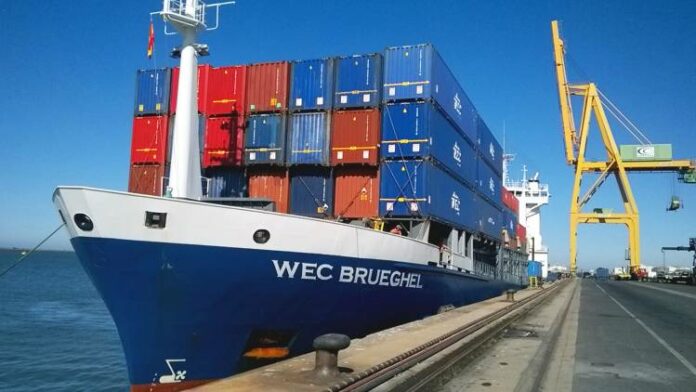
Dutch boxship operator WEC Lines has been fined by the Dutch prosecutor for selling an old containership fo scrapping on the beaches of India.

According to a file by Netherlands Public Prosecution Service, the company sold 1985-built 646 teu containership HMS Laurence to a cash buyer and the vessel ended up being scrapped on tidal mudflats in Alang, India, against EU regulations.

WEC Lines has paid a fine of EUR780,000 and a settlement of EUR2.2m to the prosecutor and promised it would take measures to avoid beach scrapping in the future.

“It is very encouraging to see that ship owners are being held accountable for the trafficking of toxic ships – it is also encouraging to see that WEC Lines BV is now committed to the safe and clean recycling of its fleet off the beach. With that they join other responsible ship owners, such as Dutch Boskalis, German Hapag Lloyd, and Scandinavian companies Wallenius-Wilhelmsen and Grieg, that already have sustainable recycling policies in place that clearly rule out beaching,” commented Ingvild Jenssen, executive director and founder of NGO Shipbreaking Platform.

In March last year another Dutch shipping company, Seatrade, was convicted for having intended to scrap four vessels in India. Five subsidiaries of the company received fines, and two of the company’s CEOs were sentenced to professional bans.

Source:splash247

14 vessels escorted by icebreakers in eastern part of Gulf of Finland during 24 hours on January 20-21

0

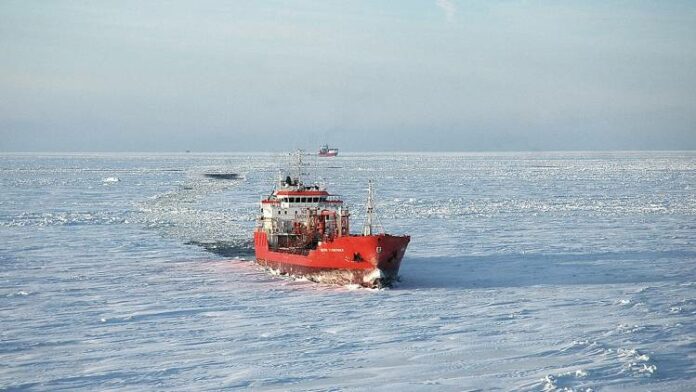
14 vessels were escorted by icebreakers in the eastern part of the Gulf of Finland during 24 hours on January 20-21, says Ice Operations Headquarters of the Baltic Sea Ports Administration.

From the beginning of winter navigation season, icebreakers escorted 282 vessels including 210 vessels in Big Port St. Petersburg and 72 vessels in Vyborg and Vysotsk.

According to Ice Operations Headquarters, 4 icebreakers are in operation with six more ships in reserve. Technical availability of 4 icebreakers is being recovered. 

20-30 cm thick fast ice is observed in the Neva Bay along the northern and southern coasts. 15-25 cm thick ice with high concentration is observed along the Seaway Canal of Saint-Petersburg. 15-20 cm thick brash ice is observed on the canal. 15 cm thick brash ice is observed at Big Kronshtadt Anchorage. 10-15 cm thick floating ice is observed between the Dock-Gate Building and buoys No 11 with new ice observed from the entrance buoy. Floating ice floes with thickness of 10-25 are observed between the entrance buoy and buoy No 14. In the port waters – floating brash ice with concentration of 9-10/10th and thickness of up to 10-20 cm.

Between the port of Vyborg and the turning buoy of Vysotsk port: fast ice of 20-35 cm thick. The canal is free with 10-25 cm thick brash ice. Between the turning buoy of Vysotsk port and Vysotsk Gate (including water area of Vysotsk port) – solid ice with thickness of up to 20 cm. From the entrance buoy to the Hally island – new ice.

Source:portnews

China Approves Twenty-Four Offshore Wind Projects

0

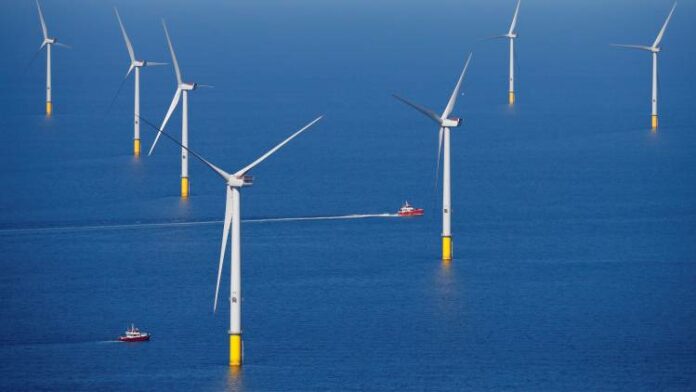
The Chinese government has approved 24 offshore wind projects off the Jiangsu Province.

Local media reports that the projects will have a total capacity of 6.7GW and will involve an investment of around $18 billion. The wind farms are expected to be operational by the end of 2020. They will be developed by a number of utilities including China Energy Group, China General Nuclear Power Corp., China Huaneng Group and State Power Investment Corp.

The province already has 56 wind farms in operation with a total capacity of 8.6GW.

China was responsible for almost half of the world's $25 billion investment in offshore wind last year, according to Bloomberg, spending $11.4 billion on 13 new offshore wind farms.

China is also boosting its pumped storage power plant capacity to facilitate the integration of renewable energy into its electricity grid. The State Grid Corp. of China, which runs the majority of the nation's electricity distribution networks, is building five new plants which are expected to be operational by 2026, reports China Daily. The plants, costing approximately $5.6 billion, will have a total capacity of 6GW.

They are designed to transfer water from a reservoir at a lower elevation to a higher reservoir during the night when demand is low, using off-peak power production from sources such as wind power. The water is then released from the higher reservoir to generate enough power to meet demand at peak hours.

The boost to renewable energy in China is part of government moves to reduce reliance on coal power, to combat air pollution.

Source:maritime-executive

Regionalism Plagues Sustainable Naval Shipbuilding Plans

0

A new policy paper examining the naval shipbuilding industry in Canada and Australia cites the problems of “regionalism” the nations face in developing a successful strategy.

Overcoming ‘Boom and Bust’? Analyzing National Shipbuilding Plans in Canada and Australia by Jeffrey F. Collins, a Fellow of the Canadian Global Affairs Institute, analyzes the largest and most expensive procurement projects undertaken by the nations: Canada’s $73 billion National Shipbuilding Strategy launched in 2010 and Australia’s A$90 billion Naval Shipbuilding Plan launched in 2017.

The projects aim to create a sustainable naval shipbuilding sector, but, says Collins, old problems persist. “Determining which province or state will be home to billions in contracts over many years remains a zero-sum game no matter how arms-length the process of yard selection.”

Building domestically can carry a 30 percent to 40 percent premium, and delays can make such projects even more costly. For example, Canada's initial cost estimates for the National Shipbuilding Strategy were $37.7 billion, but they have now increased to $73 billion. 

“In this context, schedule is king and avoiding cost increases requires keeping to planned shipbuilding schedules,” says Collins. “Failure to do so opens production gaps and necessitates going with alternative options including building overseas (Australia) or converting commercial vessels for naval and coast guard use (Canada).”

Collins also notes that Australia will face an increasing number of relatively cheap anti-ship missiles in the IndoPacific region. “In this context, money spent on surface combatants may be perhaps better spent on other capabilities.”

Document here

Source:maritime-executive

Huntington Ingalls Industries to acquire Fulcrum IT Services

0

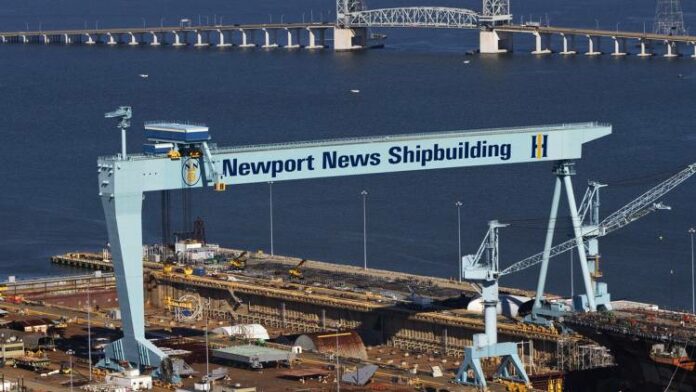
Huntington Ingalls Industries has entered into an agreement to acquire Fulcrum IT Services, LLC, an information technology and government consulting company headquartered in Centreville, Va. The planned acquisition is expected to close in February, the shipbuilder said in a press release.

Financial terms of the transaction were not disclosed.

Fulcrum expands HII’s capabilities in enhanced situational awareness and predictive threat analytics through Fulcrum’s advanced engineering, cyber security, software development, big data engineering, and intelligence and special operations experience. Fulcrum will join HII’s Technical Solutions division.

“Fulcrum’s capabilities in software development, data analytics, cyber security and advanced engineering are strongly aligned with national security priorities and complement our priority practice areas,” said Andy Green, executive vice president of HII and president of Technical Solutions. “The company’s unique experience and capabilities across the C5ISR domain grow our reach and support in the intelligence and special operations communities.”


Hellas and Piraeus Still at the Heart of DNV GL’s Operations

0

On Friday the 11th of January 2019, the annual DNV GL’s Press Conference took place in the company’s offices in Piraeus, with a few distinguished journalists and media people of the maritime sector attending. George Teriakidis, Regional Business Development Manager, along with Jason Stefanatos, Senior Research Engineer, displayed the main presentation.

The classification society within the year of 2018 attempted a number of initiative efforts and ideas in order to keep customers satisfied, while amplifying its support to the local market. Marketing & business development segment was furthermore reinforced, by optimizing regulatory procedures, promoting the advisory services, strengthening customers’ service support and marketing team. DATE (Direct Access to Technical Experts) was upgraded, providing customers with solutions and continuous support, with a 97% response in due time, and an urgent cases handling within 3.3. hours on average. As far as the Greek owned new buildings are concerned, 37% of the mGRT, and 38% in terms of the number of vessels, was classed by DNV GL, along with an addition of 28 vessels in service (1.3 mGRT) coming from other classes. Personal touch and direct communication with the clients consisted a matter of great importance, leading to a positive feedback from customers and the market in general.

Maritime Forecast to 2050, DNV GL’s newest research, was briefly presented. Following the previous successful releases, this innovative study promotes insights for environmental and climate regulations, driving technologies that include alternative fuels, and regulatory developments. Looking ahead, the classification society’s experts foresee, that by 2050 there will be a 37% growth in seaborne transport demand, meaning that arguably, a necessity for a bigger number of ships will be emerged. Propulsion technologies, alternative fuels, reducing the Greenhouse gas emissions, and compliance with all IMO regulations will be in the spotlight for the next upcoming years. Moreover, digitalization is expected to be the key enabler for the improvement of the world fleet effectiveness, by coordinating ships and ports with the use of AIS data, contributing in the emission reduce. It appears that all alternative fuel paths confront challenges and barriers, but safety and environmental aspects consist the overriding concern.

Alternative Fuel Insight Platform, a novel DNV GL online application, was also presented. This sophisticated tool promotes an overview of alternative fuel projects, technologies, scrubbers, bunkering infrastructure and suppliers. Information is free to access, rendering the platform a prominent and up to date search resource for the ones interested.

Following the presentation, the representatives were happy to answer all questions raised by the guests, while having constructive discussions.
 

China’s CNOOC To Double Domestic Proven Reserves, Exploration Work By 2025

0

China National Offshore Oil Co., or CNOOC, said on Jan. 18 it aims to double its exploration activities and proven oil and gas reserves in China over the next seven years, a target that will see the state oil firm expedite capital spending.

This comes after President Xi Jinping’s call last August to improve national security by boosting domestic production and reserves, CNOOC said in a report published on its official social media account.

CNOOC, parent of CNOOC Ltd., did not give details about where it would explore or breakdowns of reserve targets on crude oil and natural gas.

CNOOC will be able to double its natural gas reserves over the period as its current reserve base is small, but it will be a challenge to deliver on oil due to lack of sizeable discoveries in the pipeline and relatively higher reserve base on oil, analysts at consultancy Wood Mackenzie said.

“Doubling both oil and gas proven reserves will be harder and would require several large oil discoveries, the size of Lingshui, to achieve and higher investment commitments,” said Angus Rodger, Woodmac’s research director for Asia-Pacific upstream business.

He was referring to CNOOC’s deepwater gas discovery Lingshui 17—2, 150 kms off China’s southernmost province of Hainan, that has proven geological reserve of over 100 billion cubic meters.

As its shallow-water basins mature, CNOOC will increasingly shift focus to deepwater exploration.

Source:epmag

Ultra-deepwater Ghana well proves positive for Aker Energy

0

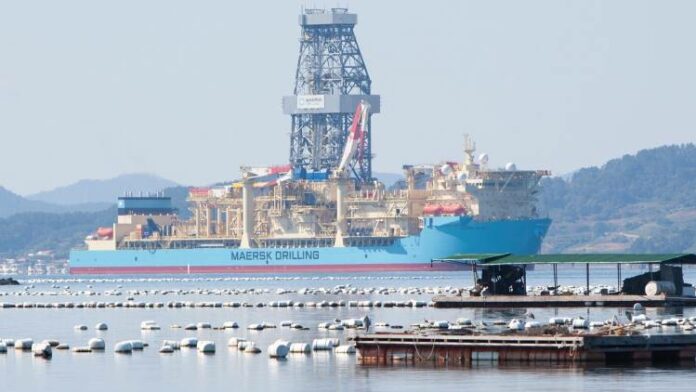
 Aker Energy has completed drilling of the Pecan-4A appraisal well in the Deepwater Tano Cape Three Points (DWT/CTP) block offshore Ghana.

The well was drilled on the Pecan field to a vertical depth of 4,870 m (15,977 ft), in 2,667 m (8,750 ft) of water. It is one of seven discoveries made to date on the block.

Aker Energy’s aims, both accomplished, were to confirm its understanding of the local geology in the area and to identify a deep oil/water contact in the Pecan reservoir.

The well also delivered a clearer indication of the resource base and upside potential in the block. Based on the results, the company will optimize the Pecan field development plan.

However, CEO Jan Arve Haugen added, “there is still a lot of work to be done, including to conclude the phasing of the development, the size of first phase and detailing of the concept."

“Our most important priority going forward is to deliver a robust field development plan to the Ghanaian authorities.”

Analysis of subsurface data from seismic and all wells drilled to date suggests contingent discovered resources in the 450-550 MMboe range.

Aker Energy estimates that following completion of the next two appraisal wells, total volumes to be included in the development could increase the resource range to 600-1,000 MMboe.

There are also further targets that could be drilled as part of a greater area development after submission of the development plan.

Aker Energy’s partners in the DWT/CTP block are Lukoil, the Ghana National Petroleum Corp., and Fueltrade (2%).

Source:offshore-mag