3.8 C
New York
Home Blog Page 1162

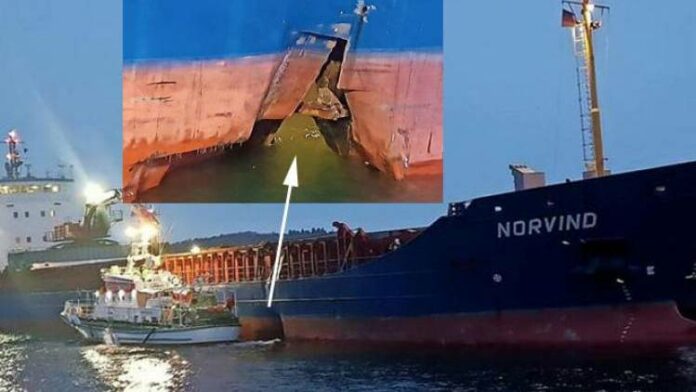
Norwegian cargo ship and German container ship collied, Baltic sea

0

Container ship BEATE collided with general caro ship NORVIND at around 0300 UTC Jan 25 in Baltic sea off Rugen, Germany, some 8 nm east of Sassnitz. NORVIND left Sassnitz, BEATE was passing by, en route from Swinoujscie Poland to Bremerhaven.

BEATE struck NORVIND stbd fore in holds area, inflicting a sizeable hole above and below waterline (1.5×2 meters above waterline), with following water ingress, taken under control by ship’s pumps. NORVIND and BEATE reached Sassnitz and were docked, BEATE reportedly, sustained comparatively slight bow damages. NORVIND salvage was still on as of 1000 UTC, local fire engines assisting with pumping out water

Container ship BEATE, IMO 9333345, dwt 11269, capacity 868 TEU, built 2005, flag Germany, manager RAMBOW REEDEREI.
General cargo ship NORVIND, IMO 9247118, dwt 5916, built 2002, flag Norway, manager KARMOY SKIPSCONSULT MANAGEMENT AS.

Source:maritimebulletin

NYK Takes Delivery of New Coal Carrier

0

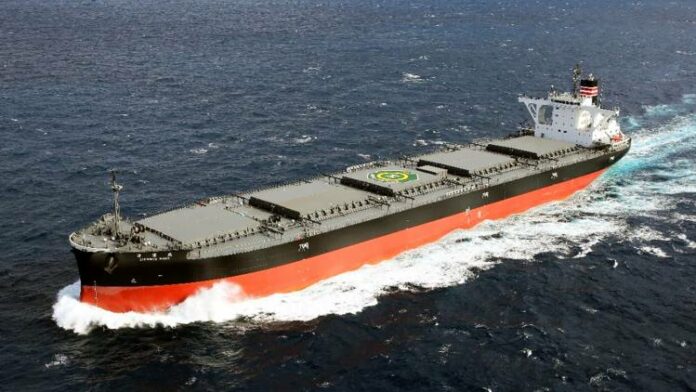
Japanese shipping company Nippon Yusen Kabushiki Kaisha (NYK) has taken delivery of a coal carrier equipped with a binary cycle power-generation system that utilizes engine exhaust heat.

The new coal carrier Pirika Mosiri Maru that NYK will own and operate to transport coal for Hokkaido Electric Power (HEPCO), was delivered yesterday (January 23) at Oshima Shipbuilding Co. Ltd. in Saikai city, Nagasaki prefecture, and a delivery ceremony was held on the same day.

The event was attended by Akihiko Mayumi, president and director of HEPCO and NYK president Tadaaki Naito, among others.

Pirika Mosiri Maru, as the third generation ship, will take on the mission that has been handed down from the first-generation vessel named Sapporo Maru which was delivered in 1984 as HEPCO’s first coal ship, and the second ship named Shin Sapporo Maru which was delivered in 2002 and played an important role by transporting coal for the company until recently.

 The new ship, named after Japan’s indigenous Ainu language, is registered in Tomakomai port of Hokkaido and will be assigned to transport coal from Australia and Indonesia to the Tomato-Atsuma Coal Power Station of HEPCO 's thermal power plant.

"Pirika Mosiri Maru is equipped with the binary cycle power generation system unit produced for ships, an innovative system that utilizes exhaust heat from engine exhaust gas," said a press release from the company. Binary cycle power generation system for ship is jointly developed by Kobe Steel, Ltd., Miura Co. Ltd., and Asahi Shipping Co. Ltd. and has received approval as “environmental equipment” from Japan’s ship classification society Nippon Kaiji Kyokai (ClassNK).

The generated electric power will serve as auxiliary power and will reduce CO2 emissions by up to about 2 percent by decreasing fuel consumption.

In accordance with its new medium-term management plan “Staying Ahead 2022 with Digitalization and Green,” the NYK Group aims to create sustainable value for the company and society, and continue its efforts to contribute to stable and economical transport of energy resources.

Source:marinelink

Yantian Express to sail to the Port of Freeport, Bahamas

0

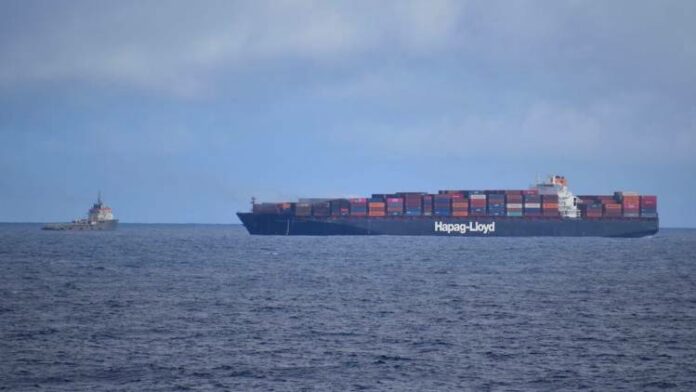
Hapag-Lloyd informed that after the fire onboard the container ship 'Yantian Express' was brought under control, the responsible salvage master from the company Smit decided to sail the vessel to the Port of Freeport, in Bahamas.

Upon arrival, the recovery and assessment efforts of the cargo can continue in a safer environment. Currently, the container ship is about 1250 nautical miles from the Bahamas and is expected to arrive in Freeport by next week. The 'Yantian Express' currently sails with its own machine and in tug escort.

However, Hapag-Lloyd said that it is still not possible to precisely estimate any damage to the ship or its cargo.

The fire broke out on 3 January in one of the containers onboard the 7,510 TEU container ship 'Yantian Express' approximately 1,015 miles northeast of Bermuda and spread to additional containers. The ship was en route from Colombo to Halifax via the Suez Canal, at the time of the incident.

On the aftermath, 11 non-essential crew members were evacuated to the tugboat Smit Nicobar and Sunday morning all remaining crew were evacuated to the Smit Nicobar, because the fire was not successfully contained. All of the crewmen are safe.

Immediate efforts were launched to put out the fire, but they had to be stopped because of a deterioration of weather conditions.

Source:safety4sea


EIA expects continued growth in use of renewable resources

0

The US Energy Information Administration (EIA) released its Annual Energy Outlook 2019 (AEO2019), including a Reference case and six side cases, examining the robustness of key assumptions. The AEO2019 Reference case expects significant continued development of US shale and tight oil and natural gas resources, along with continued growth in use of renewable resources.

The AEO2019 Reference case projects that in 2020, the US will export more energy than it imports, and will be a key net energy exporter through 2050. This energy export growth will be driven mainly by petroleum exports including crude oil and products, and by more LNG exports.

EIA also highlights the impact of sustained low natural gas prices and reducing costs of renewables on the electricity generation fuel mix. Natural gas will still be having the leading share of electricity generation and will continue to grow, increasing from 34% in 2018 to 39% in 2050. In addition, the renewables share, including hydro, also increases from 18% in 2018 to 31% in 2050, driven by in wind and solar generation.

The report concluded to other significant findings as well, which are the following:

  • The US will continue to see record high levels of oil and natural gas production. According to the report, US crude oil production will continue to be achieving annual records through the mid-2020s and remain greater than 14.0 million barrels per day (b/d) through 2040. Continuing development of tight oil and shale gas resources will support growth in natural gas and natural gas plant liquid (NGPL) production, which will reach 6.0 million b/d by 2030, as well as the growth in dry natural gas production. As for dry natural gas production, it will reach 43 trillion cubic feet by 2050. NGPLs grow faster than other fossil fuels, and account for about one-third of the total US liquids production during the projection to 2050.
  • US net exports of natural gas will grow, as LNG becomes an increasingly significant export. In the Reference case, US LNG exports and pipeline exports to Canada and Mexico increase until 2030 and then remain constant through 2050, due to relatively low, stable natural gas prices, which make US natural gas competitive in North American and global markets.
  • Increasing energy efficiency across end-use sectors will keep U.S. energy consumption relatively stable, even as the US economy continues to expand. US energy consumption grows across all major end-use sectors in the Reference case, with electricity and natural gas consumption growing the fastest. EIA’s AEO2019 also features a Reference case that includes the impacts of current laws and regulations on the US energy industry. Thus, it can be used as a baseline to estimate the impact of potential policy changes in the future.

Source:safety4sea

Funds found for Vineyard Wind meetings

0

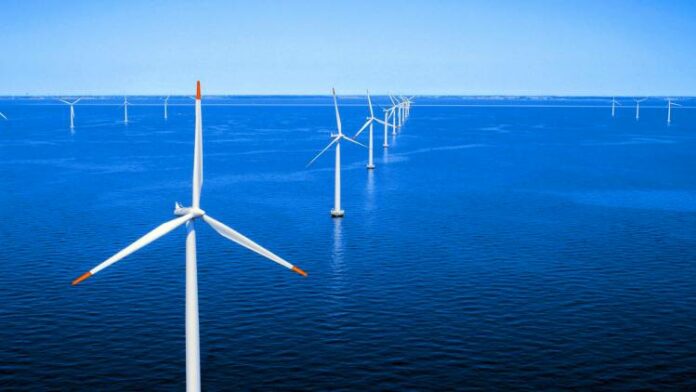
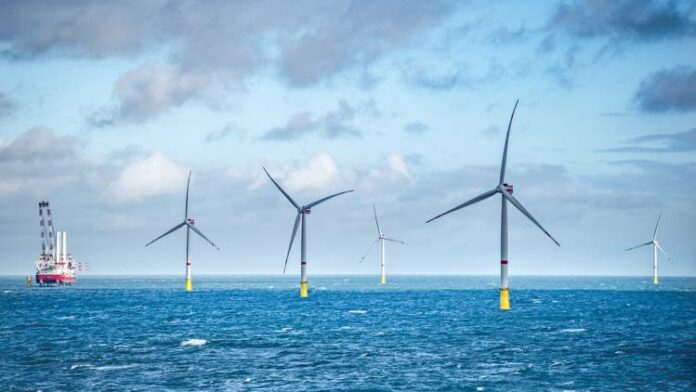
The US Bureau of Ocean Energy Management plans to reschedule several postponed public meetings “very soon” covering the development of the 800MW Vineyard Wind offshore project off the coast of Massachusetts.

Acting Department of the Interior Secretary David Bernhardt said BOEM will use “carryover funds, previously appropriated by Congress” to run the events.

Five meetings on 8, 9, 15, 16 and 17 January had been postponed because of the ongoing US government shutdown.

They concern the project's draft environmental impact statement.

Vineyard Wind is a 50:50 joint venture between Copenhagen Infrastructure Partners and Avangrid Renewables.

Source;renews

Port of Oakland’s TraPac concludes upgrade, doubling its size

0

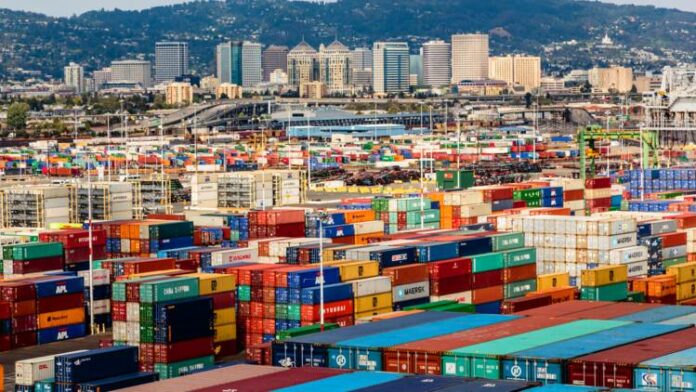
A $67 million waterfront expansion concluded at the Port of Oakland during January. Specifically, the TraPac marine terminal opened its newest vessel berth to arriving container ships. The milestone signals the completion of a 2-year project at Oakland’s second-largest terminal.

Commenting on the project, the Port of Oakland informed that it has:

  • Nearly doubled TraPac’s footprint from 66 to 123 acres;
  • Boosted its fleet of ship-to-shore cranes from four to seven;
  • Added a third 1,400-foot-long dock for berthing mega container ships.

TraPac started its new era in Oakland in January when the container vessel Bay Bridge tied up at Berth 25. The ship moored in Oakland’s Outer Harbor near the San Francisco Oakland Bay Bridge.

TraPac’s expansion is the latest in a series of investments at the Port of Oakland. Last November, Lineage Logistics and Dreisbach Enterprises opened Cool Port Oakland, a $90 million refrigerated distribution center. Last June, Oakland International Container Terminal completed a $14 million project to heighten four cranes, with TraPac saying that it will raise two cranes, as well.

Currently, TraPac handles about 15% of the containerized cargo moving through Oakland. A large portion of it is refrigerated cargo destined for Japan, a major Oakland trading partner. TraPac also noted that during expansion, it increased plug-in spaces for storing refrigerated containers from 388 to 860.

As part of its buildout, TraPac opened a new gate complex last year for harbor truck drivers. It also bought nine new pieces of cargo-handling equipment to lift containers.

Finally, TraPac has signed a 14-year-lease with the Port in 2016 as a precursor to its expansion.

Source:safety4sea

Oil Majors Huddle in DAVOS to Mull Future

0

When the global oil industry held its biggest annual gathering this week in the Swiss town of Davos, it invited banking bosses and fund managers to discuss two key topics – climate change and pressure from investors.

The conclusion of the discussions was worrying for those present – pressure is rising and the industry is losing a battle not to be seen as one of the world's biggest evils.

The answer? Lure investors with higher returns and raise the PR game.

"There is no doubt – and there is a consensus coming here in various meetings in Davos – that our industry is literally under siege and the future of oil is at stake," said Mohammed Barkindo, secretary-general of oil producer group OPEC.

"The industry needs to come together and respond positively with facts and figures. We are not shying away from the fact that we have not been able to communicate well," Barkindo said.

The industry gathered on the sidelines of the World Economic Forum, holding a series of closed-door meetings.

The chief of oil giant Chevron, Michael Wirth, had discussions with bosses from BP, Royal Dutch/Shell, Total and Aramco for the first time as U.S. companies joined European and Middle Eastern peers in debating climate change. Darren Woods, head of the biggest U.S. oil firm, Exxon Mobil, participated in the meeting via telephone.

The meetings were also attended by John Flint, chief of HSBC, Ron Mock, president of Ontario Teachers’ Pension Plan, and executives from investment firms Canyon Partners and ValueAct, two sources present at the discussions said.

The climate change debate has split the oil industry over the past decade.

While U.S. majors took an initially soft approach towards global warming, Shell had urged that the industry be held responsible not only for its own emissions, but also for those of consumers.

Linked to that debate was pressure from investors urging the oil industry to help tackle climate change, with some pension funds including that of Norway saying they would stop investing in the stocks of oil companies.

WINNING HEARTS AND MINDS
The oil industry has repeatedly tried to explain that if it stops investing in new projects, the world will face an energy shortage and price spikes because renewables and nuclear energy cannot meet rising energy demand as the global population grows.

"How do you get the hearts and minds of investors back? That is a real challenge for our industry," said John Hess, the founder of independent U.S. producer Hess Corp.

He said investor frustration with the oil industry was manifested by the fact that the share of energy companies in the S&P index had shrunk to 5.5 percent, from 16 percent 10 years ago.

"We will have to compete against other industries in the S&P to create the value proposition that makes us more attractive. A new paradigm is coming up which is to generate free cash and share some of this cash with investors," he said.

The U.S. oil industry has been booming in recent years but investors have been frustrated by heavy debts and a lack of free cash flow and dividends.

However, even European oil majors such as Shell and BP, which pay billions of dollars in dividends, have struggled to remain popular with investors.

"We need to engage with policymakers and the public to understand the huge task we have ahead," Hess said.

TAX ON WHOLE VALUE CHAIN
BP chief Bob Dudley said the industry needed to explain the challenge of producing and making energy affordable for an increasing global population, which will see energy use rising 30 percent by 2040.

"You cannot just tax energy-intensive industries and not the users of energy and think you're going to solve the problem. People need to use less energy. Philosophically, trying to look at emissions across the entire value chain is critical," Dudley told Reuters.

The head of state-run Saudi oil giant Aramco, Amin Nasser, said investors would ultimately differentiate between cleaner and more polluting companies.

Aramco wants to list its stock sometime after 2021 in what could become the world's largest initial public offering. Nasser said the latest research by Stanford University found Aramco was the cleanest major oil company in the world thanks to zero gas flaring and modern field technology.

He said oil companies could help cut emissions by end users but should not ultimately be responsible for them.

"We have to look at what we control. I have control of what I send to the grid in Saudi Arabia. But we do not have control over factories in Europe," Nasser said.

"However, it doesn’t mean we don’t care about end users. As a company we are looking at what we can do to increase the efficiency of end users," he said.

Aramco invests in research to make cars more efficient, increase mileage per gallon and the use of hydrogen in cars. It recently acquired high-end rubber producer Arlanxeo to help reduce tyre friction.

"We need to boost efficiency or get rid of CO2 by technology," Nasser said. 

Source:marinelink

BP Invests In Chinese Electric Vehicle Charging Platform

0

BP said on Jan. 24 it had invested in Chinese start-up PowerShare, which links electric vehicle drivers to charging points and helps power suppliers balance distribution.

The PowerShare application, which is used in cities such as Shanghai, will help manage growing pressure on power grids as electric vehicles (EVs) usage surges in the coming decades.

With China targeting sales of more than 7 million EVs by 2025, the need to manage demand and distribution of power on the grid, particularly at times of peak demand, will be crucial.

BP's investment is the latest in a string by the London-based oil and gas major and several of its rivals, including Royal Dutch Shell and Total, in EV charging as they target future low-carbon economies.

Car producers, utility firms and energy companies have doubled down efforts in recent years to find ways to manage the expected surge in power demand.

PowerShare helps drivers locate charging points and pay for the supply, while allowing suppliers to optimize to balance demand on the grid, depending on the time of day, for example between city centers and residential areas.

"As more and more EVs come on, grid operators are concerned about mobile demand. PowerShare can monitor where vehicles are and where demand is in the system," Graham Howes, managing director of BP Ventures in Asia, told Reuters.

Source:epmag

Fujairah Bans Open-Loop Scrubbers

0

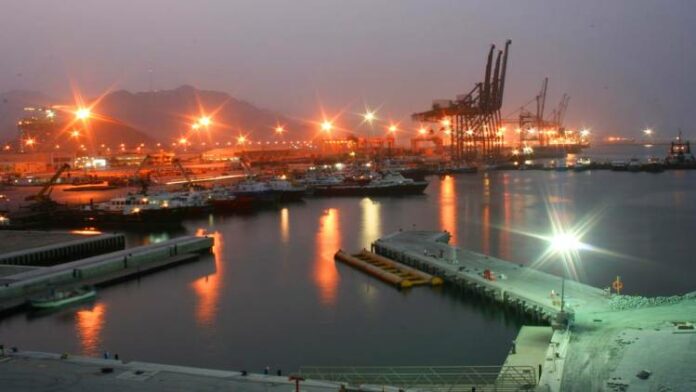
The port of Fujairah is following California, Massachusetts, Belgium, Singapore and China in banning open-loop scrubbers within its jurisdiction. 

In a brief notice to mariners, harbormaster Capt. Tamer Masoud said that "the Port of Fujairah has decided to ban the use of open-loop scrubbers in its waters." Ships will have to use compliant fuel at Fujairah after the IMO's 0.5 percent sulfur content cap takes effect in January 2020, he said. 

Capt. Masoud did not specify whether the ban extends to closed-loop scrubbers, which retain residues from exhaust cleaning on board. Singapore, which also bans open-loop scrubbers, has decided to allow scrubbers in closed-loop operating mode, and to provide reception facilities for scrubber wastes. 

Fujairah is a key bunkering hub, and its private terminals will continue to sell both IMO-compliant LSFO and non-compliant HFO, which can be used legally in almost all localities and in international waters in conjunction with an open-loop scrubber. As local or regional bans on scrubbers can only extend to the edge of the governing jurisdiction, ships with this equipment may still switch to high sulfur fuel once they reach the open ocean – where the great majority of their voyage and fuel expenditure occurs.  

The Clean Shipping Alliance, a recently-formed consortium of shipowners who have adopted scrubbers, has expressed concern that "arbitrary" local scrubber restrictions could impact the business of hundreds of shipping companies and thousands of vessels. The CSA estimates that about 150 companies have invested in scrubbers, including industry leaders like Maersk Lines, Carnival, Frontline, DHT, Navig8 and Oldendorff.

Source:maritime-executive

Minesto’s main owners exercise all of their subscription warrants

0

Minesto's largest shareholders BGA Invest and Midroc New Technology has underlined their long-term commitment in Minesto by exercising all of their warrants held in Minesto AB. The subscription period for Minesto's TO 2 warrants runs until 8thof February 2019.

Minesto's two main owners BGA Invest and Midroc New Technology have made further investments in Minesto by having exercised all of their “MINEST TO 2” warrants held in Minesto AB.

“As long-term and active owners in Minesto, BGA Invest and Midroc New Technology have been crucial to take the company to where we are today. The fact that they have invested further in Minesto is pleasing and emphasises both their commitment to and their faith in the company”, said Minesto's CEO Dr s Martin Edlund.

The subscription period for the warrants of series TO 2 in Minesto AB runs until the 8thof February 2019. In total, Minesto can potentially add approximately SEK 45 million in proceeds before issue costs, should all warrants be exercised, which will be used for the continued development and market establishment of the company's unique marine energy technology.

“Midroc New Technology invests in companies that strive to build a better world through innovative and commercially viable technology. We have been active in Minesto for 10 years and our belief in the company's product and its importance to the global energy system has never been greater. We look forward to the company's continued journey towards commercialisation,” said Göran Linder, CEO of Midroc New Technology.