3.8 C
New York
Home Blog Page 1161

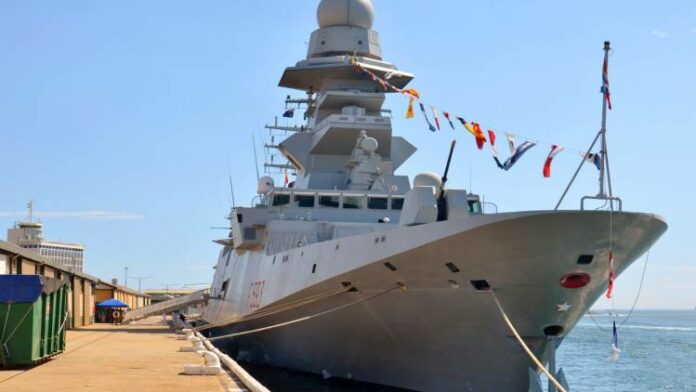
Fincantieri launches the ninth multipurpose frigate “Spartaco Schergat”

0

The launching ceremony of the “Spartaco Schergat” frigate, the ninth of a series of 10 FREMM vessels – Multi Mission European Frigates, took place at the integrated shipyard of Riva Trigoso (Genoa). The 10 FREMM vessels have been commissioned to Fincantieri by the Italian Navy within the framework of an Italo-French cooperation program under the coordination of OCCAR (Organisation Conjointe de Cooperation sur l’Armement, the international organization for cooperation on arms).

After the launching, fitting activities will continue in the Integrated naval shipyard of Muggiano (La Spezia), with delivery scheduled in 2020. The “Spartaco Schergat” vessel, like the other units, will feature a high degree of flexibility, capable of operating in all tactical situations. 144 metres long with a beam of 19.7 metres, the ship will have a displacement at full load of approximately 6,700 tonnes. The vessel will have a maximum speed of over 27 knots and will provide accommodation for a 200-person crew.
 
The FREMM program, representing the European and Italian defence state of the art, stems from the renewal need of the Italian Navy line “Lupo” (already removed) and “Maestrale” (some of them already decommissioned, the remaining close to the attainment of operational limit) class frigates, both built by Fincantieri in the 1970s.

The vessels “Carlo Bergamini” and “Virginio Fasan” have been delivered in 2013, the “Carlo Margottini” in 2014, the “Carabiniere” in 2015, the “Alpino” in 2016, the “Luigi Rizzo” in 2017, and the “Federico Martinengo” in 2018. The Italian program has been fully implemented with the option exercised in April 2015, regarding the construction of the ninth and tenth vessel, whose delivery is scheduled after 2020. Orizzonte Sistemi Navali (51% Fincantieri, 49% Leonardo) acts as prime contractor for Italy in the initiative, while Armaris (Naval Group + Thales) is prime contractor for France.
 
This cooperation has applied the positive experience gained in the previous Italo-French program “Orizzonte” that has led to the construction for the Italian Navy of the two frigates ”Andrea Doria” and “Caio Duilio”.

Source:portnews

MSC secures US$439 million financing to install scrubbers

0

Geneva-based shipping giant Mediterranean Shipping Company SA (MSC) has secured financing of US$439 million to equip its fleet with 86 exhaust gas cleaning systems (scrubbers) in view of IMO's 2020 sulphur cap.

In particular, the loan will be used to finance the manufacturing and installation of the scrubbers onboard 86 container ships owned by the MSC group in light of the implementation of the IMO's low sulphur cap regulations in 2020.

IMO's sulphur cap, to take effect from 1 January 2020, mandates that ships must run on fuel containing no more than 0.5% m/m of sulphur, unless having scrubbers installed.

Law firm Watson Farley & Williams (WFW) advised French BNP Paribas (BNPP) as coordinating bank and agent, together with a syndicate of four other banks as lenders, in connection with the SINOSURE-backed financing for the MSC.

"We are very pleased to have advised BNPP and the other lenders on this milestone deal, which marks the first scrubber financing between the parties highlighting MSC’s environmental commitment and its firm support by the lenders in light of the new IMO-2020 sulphur cap,"...Finance Partner Alexia Russell commented.

From 1 January 2019, the shipping company has introduced a new Global Fuel Surcharge to help customers plan for the impact of the post-2020 fuel regime, as announced in September.

BNP Paribas has been intensively engaged in green finance over the last years. In late 2017, the European Investment Bank and BNP Baribas agreed to finance EUR150 million worth of vessel modernization to help companies to green their fleets.

Source:safety4sea

MOL-operated Car Carrier Grand Orion Makes 1st Call at Port of Sihanoukville, Cambodia

0

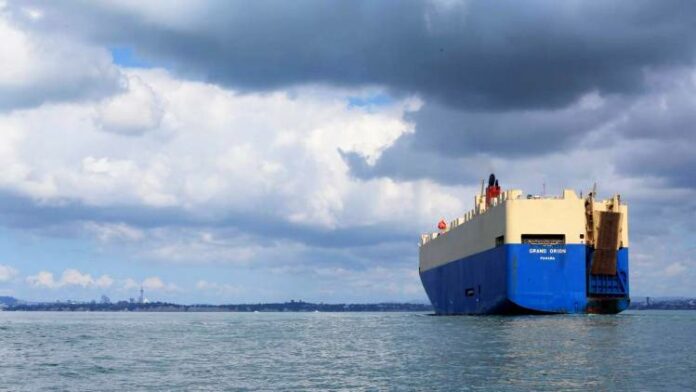
Mitsui O.S.K. Lines, Ltd. yesterday announced that on January 23, the MOL-operated car carrier Grand Orion (capacity: 6,400 standard passenger cars) called at the Port of Sihanoukville, Cambodia, and discharged about 12,000 tons of construction machinery. It was the first call at a Cambodian port by an MOL-operated car carrier.

In commemoration of the first call, Grand Orion Capt. Denis C. De la Peña received a memento from Sihanoukville Autonomous Port while the ship was in port.

Most of the cars imported to Cambodia, both brand-new and second-hand, are currently carried in ocean containers or by car trailers. With motorization rapidly spreading throughout the country, it is expected that automobile imports will increase and create demand for regular ocean transportation service by car carriers.

Sihanoukville is Cambodia’s only deep-water port and its facilities have been developed with the support of the Japanese government. In May 2018, a newly built multipurpose terminal that accommodate large-size cargo ships started operation in the port and enabled large car carriers such as the Grand Orion to call at the port. MOL considers the call an important first step to prepare for possible future demand.

MOL continues to take a proactive stance in effectively meeting the demand for vehicle transport not only in Cambodia, but also throughout SE Asia, providing safe, efficient, and reliable services that span the globe.


Kongsberg unveils advanced FF simulator improving maritime safety training

0

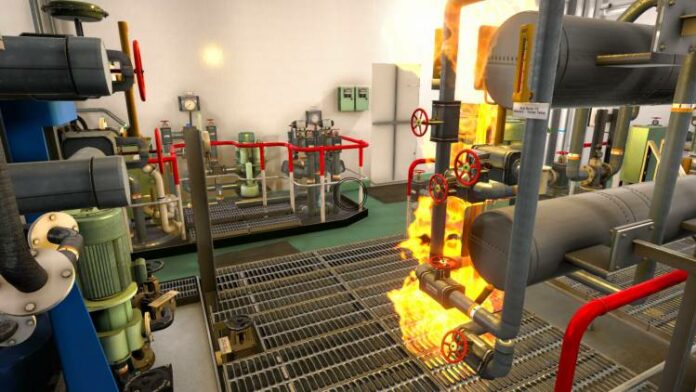
Kongsberg Digital has unveiled an innovative new simulator solution for training officers and crew in advanced firefighting. Providing vital education for preparedness in accordance with the STCW Code requirements, K-Sim Safety offers high fidelity simulation covering all aspects of fire safety. K-Sim Safety contributes to reducing the impact of fire on board as well as planning strategies and tactics to control fire in various parts of the ship, enabling a safer and more effective response to incidents when they occur, the Company said in a press release. 

K-Sim Safety delivers practical exercises simulated in a realistic environment and meets the STCW regulation VI/3, section A-VI/3 table A-VI/3-1, where methods for demonstrating competence in firefighting, and search and rescue on board are described as: Control firefighting operation on board ships; Organize and train fire teams; and inspect and service fire detection and extinguishing systems and equipment.

K-Sim Safety is based on a detailed 3D representation of a 152,000 dwt double hull Suez Max crude oil carrier with 7 decks, which allows trainees to assess situations and determine the best response strategy, implement it and then observe the consequences of their decisions during a debriefing. Integration with K-Sim Engine and K-Sim Cargo simulators, as well as K-Sim Navigation also offers the possibility for crew resource training where actions on one simulator will directly affect others. This approach engenders more focus on clear communication between different roles on board.


Destroyer Honors Navy SEAL Who Threw Himself on Grenade

0

The U.S. Navy’s second Zumwalt-class destroyer, USS Michael Monsoor (DDG 1001), was commissioned on January 26 at Naval Air Station North Island, California.

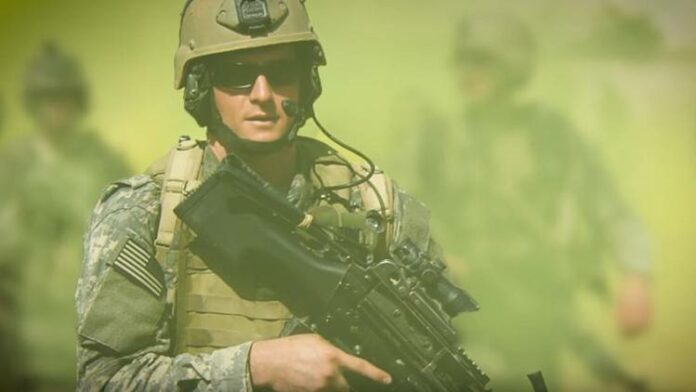
The ship honors Petty Officer 2nd Class Michael Monsoor, a Navy SEAL who was posthumously awarded the Medal of Honor for his heroic actions in Ramadi, Iraq, September 29, 2006. 

Monsoor was part of a sniper overwatch security position with two other SEALs and several Iraqi Army soldiers when an insurgent closed in and threw a fragmentation grenade into the position. The grenade hit Monsoor in the chest before falling to the ground. Positioned next to the single exit, Monsoor was the only one who could have escaped harm. Instead he dropped onto the grenade, smothering it to protect his teammates. 

The grenade detonated as he came down on top of it, inflicting a mortal wound. Monsoor’s actions saved the lives of his two teammates and the accompanying Iraqi soldiers. His Medal of Honor citation reads, “by his undaunted courage, fighting spirit and unwavering devotion to duty in the face of certain death, Petty Officer Monsoor gallantly gave his life for his country, thereby reflecting great credit upon himself and upholding the highest traditions of the United States Naval Service.”

California Congressman Scott Peters delivered the commissioning ceremony's principal address for the ship named for the southern California native. "'You never quit.' Those are the words Michael Monsoor wrote with permanent marker inside the camouflage hat he wore throughout his [Basic Undersea Demolition School] training at the Naval Special Warfare Training Center here at Coronado," said Peters. 

"If you visit the quarterdeck of the magnificent new ship we commission this morning, you will see his hat there with those words inscribed within it. It is encased in glass where and it will remain on display permanently for the life of the ship. The letters are faded from time and wear but their significance and how Michael applied them to his life are as vivid and meaningful today as they were that day when he wrote them many years ago as his reminder to persevere. The words 'you never quit' are also brandished prominently throughout the ship as if Michael himself is offering encouragement to every man and woman who sets sail upon her."

Sally Monsoor, Michael Monsoor’s mother, served as the ship’s sponsor and delivered the time-honored first order to "man our ship and bring her to life!" The crew of 148 officers and enlisted personnel were joined by service members who served with Monsoor in Ramadi as they raced aboard to man the rails and watch stations.

"Monsoor is an incredible honor that the Navy has bestowed upon him and his family," said Chief Warrant Officer Benjamin Oleson, one of Monsoor’s teammates in Ramadi. "I went out to the christening event, and I was completely blown away [by] the sheer size of what this ship represents. I think if Mikey saw the ship, he'd be like, 'That's too much. That's not for me. I'm just laid back.' But I think it's truly an honor that the Navy did this, especially the type of destroyer that it is. … [with] its cutting-edge, advanced technology. I think, with Mikey in the platoon, always at the front, leading the way, the way the ship is designed, it's going to be leading the way in the future."

The nearly 16,000-ton USS Michael Monsoor was built by General Dynamics Bath Iron Works in Bath, Maine. The ship is 610 feet in length, has a beam of 87 feet and a navigational draft of 27 feet. The ship is powered by two Rolls-Royce main turbine generators, two Rolls-Royce auxiliary turbine generators, two 34.6 MW advanced induction motors to speeds up to 30-plus knots.

Source:maritime-executive

Denmark issues cyber threat assessment for maritime sector

0

As part of the launch of a cyber security strategy for shipping sector earlier this month, the Danish Ministry of Industry, Business and Financial Affairs published a threat assessment, providing an overview of the general cyber threat against the Danish maritime sector and informing the industry of threats in order to facilitate mitigation. This threat assessment could, for example, be included in the maritime sector’s work related to the Danish cyber and information security strategy.

As the maritime sector is a part of the critical infrastructure in Denmark, it is essential that public and private shipping companies are resilient against cyber attacks. The maritime sector consists of several components of varying complexity and with different characteristics and vulnerabilities.

The assessment focuses on the end goal of different cyber attacks, such as:

  • Cyber espionage: Cyber espionage against the maritime sector may be motivated by financial interests. or security-related interests, for instance, foreign states may have a special interest in the opening of new shipping routes as well as shipping in disputed territorial waters.
  • Cyber crime: In this assessment, cyber crime covers the uses cyber attacks in relation to financially motivated criminal activities.
  • Cyber activism: Cyber activism is typically motivated by ideological or political beliefs, and cyber activists often target individuals or organizations they perceive as opponents to their cause
  • Cyber terrorism: Even though militant extremists in a few instances have expressed an interest in launching cyber terrorism, the report assesses that they currently lack the capabilities to do so.

In line with the Danish Centre for Cyber Security’s (CFCS) Threat Assessment of January 2019, the strategy considers:

  • the threat from cyber espionage to be very high. Foreign states can have both financial as well as political interests in conducting cyber espionage against private companies and public authorities;
  • the threat from cyber criminals to be very high. Cyber criminals direct many different types of cyber attacks at private companies and public authorities in the maritime sector. In addition to the economic ramifications, cyber crime may, at worst, disrupt operations in the maritime sector;
  • the threat of cyber activism to be low. Cyber activists are typically motivated by ideological or political beliefs and target individuals or organizations they perceive as opponents to their cause. The threat may suddenly increase as hackers can mobilize quickly in the wake of political events and incidents involving the maritime sector, such as transport of controversial goods or oil spills from ships; and
  • the threat of cyber terrorism to be low. Even though militant extremists in a few instances have expressed an interest in conducting cyber terrorism, they currently lack the capabilities to do so.

Source:safety4sea

Rotterdam Looks for Green Fuel Projects

0

The Port of Rotterdam Authority has made five million euros (nearly $5.7 million) available for funding via its Incentive Scheme Climate-Friendly Shipping. 

Funding is available for shippers, shipping companies, fuel manufacturers and suppliers, engine manufacturers and service providers to promote projects that make use of low-carbon or zero-carbon fuels delivered in Rotterdam’s port area.

The scheme is intended for fuel projects that reduce CO2 emissions by over 50 percent. In cases where the proposed project involves biofuels, they need to be of an advanced nature and be produced from residual or waste flows. 

The incentive scheme aligns with the goals set out in the World Ports Climate Action Program, which was launched in September 2018. In this partnership – a Rotterdam initiative – the port authorities of Hamburg, Barcelona, Antwerp, Los Angeles, Long Beach, Vancouver and Rotterdam are working together on projects intended to reduce the shipping sector’s contribution to global warming.

CEO of the Port of Rotterdam, Allard Castelein, said at the time: “The Paris Agreement has set a clear target: we need to limit global warming to well below 2°C. It is vital in this context to reduce the emissions generated by maritime transport. As critical hubs in the global maritime transport network, I am convinced that ports can make a significant contribution.”

The World Ports Climate Action Program focuses on the following specific actions:

• Increase efficiency of supply chains using digital tools;
• Advance common and ambitious (public) policy approaches aimed at reducing emissions within larger geographic areas;
• Accelerate development of in-port renewable power-to-ship solutions and other zero emission solutions;
• Accelerate the development of commercially viable sustainable low-carbon fuels for maritime transport and infrastructure for electrification of ship propulsion systems.
• Accelerate efforts to fully decarbonize cargo-handling facilities in our ports.

The new funding scheme scheme runs until the end of 2022.

The port of Rotterdam is Europe’s largest bunkering port, as well as one of the top three bunkering ports worldwide. Every year, some 11 million cubic meters of bunker fuel, including LNG, is supplied to vessels in Rotterdam.  

Source:maritime-executive

Austal Confirms Investigation into its Market Announcements

0

Australian ferry and defense shipbuilder Austal is cooperating with an Australian probe into market disclosures it made in 2015 regarding cost overruns on LCS-6, the Littoral Combat Ship USS Jackson.Austal builds one of the U.S. Navy's two LCS variants, the aluminum-hulled Independence-class ships.

In a filing released through the Australian Stock Exchange on Thursday, Austal confirmed that it is "assisting an investigation by ASIC (the Australian Securities and Investments Commission) into market announcements . . . with respect to earnings from its Littoral Combat Ship program." Its American division, Austal USA, confirmed Friday that it is also cooperating with the U.S. Navy in an unspecified investigation. Local media reported that officials from the Department of Defense, the NCIS and the Defense Criminal Investigative Service were spotted at the Austal USA yard in Mobile, Alabama. 

Austal became the prime contractor for the Independence-class LCS variant for the third hull in the series, the USS Jackson. The company experienced margin and schedule pressures during her construction, but in mid-2015 it indicated that it was using lessons-learned from its first vessel to improve margins on follow-on ships. Jackson was commissioned on December 5, 2015; five days later, Austal warned investors that its ability to increase productivity on the follow-on vessels was not as high as expected, and that its U.S. shipyard's earnings in FY2016 would likely be lower than the previous year. By December 14, the firm's stock price had fallen by a third. 

After commissioning, USS Jackson began U.S. Navy shock trials as the representative vessel for her class. On June 30, 2016, after the preliminary trials, Austal entered into a trading halt and issued an earnings announcement. The firm cautioned that it would have to increase its cost estimate for follow-on hulls due to "design changes required to achieve shock certification and U.S. Naval Vessel Rules." 

10 contracted ships were already in various phases of construction at the time of the announcement, and Austal anticipated "significant modifications to vessels already nearing completion" in an "extensive rework program." LCS 6, 8, 10 and 12 would all require at least 4,000 specific modifications each. The expense amounted to a $115 million writeoff and a full-year loss groupwide for FY2016. 

After USS Jackson completed her third and last shock trial in July 2016, Austal announced that the testing program had been a success, and it reported that the U.S. Navy was satisfied with the results. However, in competing testimony later that year, the Department of Defense's director of operational testing reported that shock trials for both LCS classes had been conducted at "reduced severity" due to concerns about the possibility of damage to components. The Navy is now seeking to phase the two LCS classes out of production in favor of a more conservative frigate design. 

Source:maritime-executive

Improving Safety Standards for Workboat Launch and Recovery

0

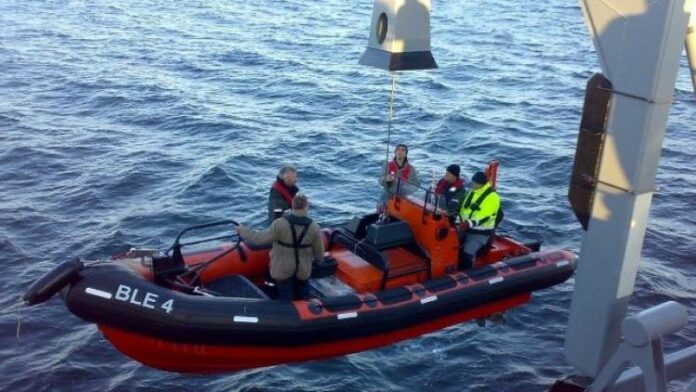
DNV GL is reviewing a new voluntary certification standard covering the davits used to launch and recover workboats and tenders, and it aligns closely with some of the design features that supplier Vestdavit has long advocated for safer and more efficient boat handling.

According to Vestdavit, the need for these standards has been brought into focus by the development of smarter, more complex davit designs, where lack of clarity on documentation can lead to incorrect use, and potentially to accidents.

DNV's proposed standard observes that existing certification approaches for non-lifesaving launching appliances are “ad-hoc based on the [lifesaving appliance] standard”. This is an approach that does not believe meets market or customer requirements, according to the class society. 

IMO acted on a known lifesaving appliance (LSA) hazard in 2011, tightening rules on failures in on-load release hooks, with all existing ships to comply by July 1, 2019. However, a review by the European Maritime Safety Agency (EMSA) covering the period 2011-2014 reconfirms accepted industry wisdom by tracing 67 percent of marine casualties or incidents to human error.

To address this problem, the new standard for non-LSA davits emphasizes solutions that are more forgiving of system and human failures. The standard calls for more redundancy in critical components, control and monitoring systems, painter arrangements, launching cradles and radio remote control systems. It also includes criteria on where to position the davit on a mothership, and for winches themselves (single or dual) and release mechanisms. In addition, the standards move with the times by opening the way for fiber rope use in the davit fall operation, instead of insisting on wire ropes.

The new standards also recommend inclusion of an efficient shock absorber to dampen forces on boat launch and recovery, to limit the dynamic effect caused by the interaction with the waves.

The standards also accept the direct connection between equipment performance and different sea states; today, IMO SOLAS requirements offer only minimum handling speeds for davit lifting and lowering operations – regardless of conditions. In higher sea states, boats need to be hoisted clear of the water quickly enough to avoid being lifted by a following wave. When that wave subsides, the rope is slack, and the boat and its occupants drop dangerously. We have consistently argued that basing operations on the sea state in which the vessel is operating is not only favourable, but essential for safe boat handling.

Source:maritime-executive

Port of Charleston Considers Container-on-Barge Service

0

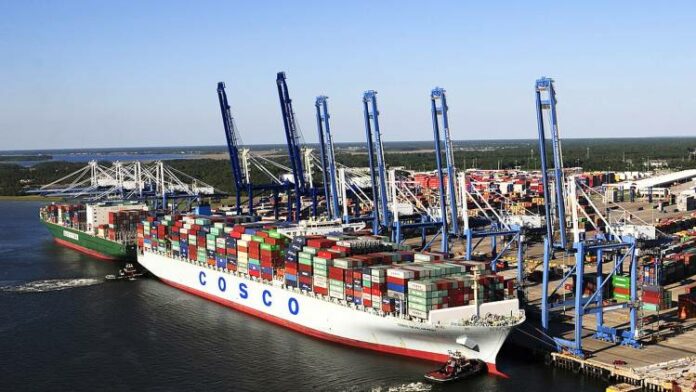
The Port of Charleston, South Carolina is turning to a long-discussed strategy to move containers off its wharves: the marine highway. 

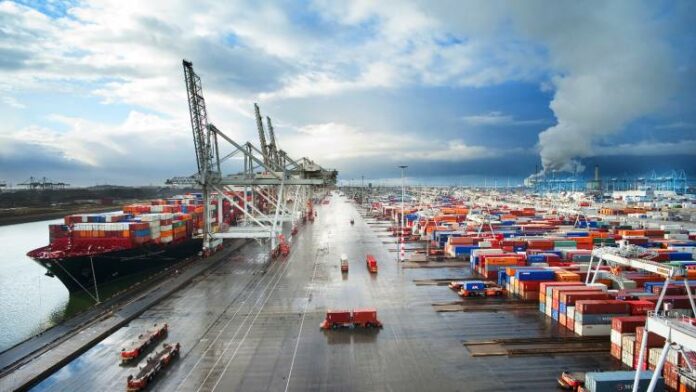
In order to reduce congestion on nearby roadways, the port wants to load containers onto barges at its Wando Welch Terminal and tow them four miles to its future Leatherman Terminal, a ULCV-capable container facility that is currently under construction in North Charleston. 

The Leatherman Terminal is located about one mile from a new intermodal rail yard under development by state-owned Palmetto Railways. The boxes would be lifted off the barge, transferred from the terminal to the rail yard, and loaded onto rail cars for transport inland. 

An intermodal barge-to-rail system would involve several additional box moves compared with an over-the-road delivery, and would not be as swift; however, it would reduce the traffic and pollution of over-the-road trucking. For long-distance inland deliveries – where intermodal rail has the competitive advantage – it could be an attractive solution. 

“We can certainly have less emissions putting 200 boxes on a barge versus 200 trucks,” said port COO Barbara Melvin, speaking to South Carolina Radio Network. “And, just from a quality of life perspective, trying to relieve some of the congestion that exists today.”

The port authority has applied for a permit from the Corps of Engineers to build out its wharf at the Wando Welch terminal, which would facilitate barge shipments. If approved, the project would see the construction of an additional 700 feet of berthing at the site. Operation of the barge service would begin in 2022, after work is completed on the Leatherman Terminal and the rail yard. 

Source:maritime-executive