5.2 C
New York
Home Blog Page 1163

Blockchain evolution must focus on problem solving

0

Andrew Fenner, CEO of Swiss-based BitNautic, argues the blockchain revolution could be as important as the containerisation of global trade itself.

Having been involved in the industry for over 18 years I have seen first-hand the problems that owners, operators and charterers face. Being involved in a software company I can also see that there are valid solutions available to us now in order to solve some of these problems.

Shipping and logistics is an industry that is traditional in its ways and built on personal relationships and human interaction. People in the industry are naturally sceptical of new technologies especially if they are being advertised from industry outsiders. We have seen many times over the years products and services brought to shipping that claim to solve issues and problems that quite frankly do not exist.

Technology uptake in shipping has generally been slow mainly because it’s a people business and contacts are the most valuable commodity. Talking to people is a vital part of the industry and not something that will change anytime soon given the nuances of ship borne transport. So far no amount of computing or algorithms can replace that.

If we can get past the concept that not all companies in this space are swindling we do have a very realistic chance of improving many negative situations that arise on a daily basis.

It is important that we are able to demonstrate the real world advantages of the blockchain and how it can be applied to significant shipping problems. Blockchain has some very important applications and can improve many situations were paper based systems are inferior.

The blockchain in a few words is a network where all participants share a common ledger. In this ledger we can store basically any type of data in a transparent way: transactions, text, pictures anything you can normally store in a computer. Since this ledger is shared by all participants, it is impossible to forge or tamper with the data that it contains, making it safer and more secure than any other alternative.

One of the most interesting uses of blockchain is the ‘smart contract’ aspect of the technology. Smart contracts are contracts that are automatically adjusted and moved on through the blockchain when a specific instruction or task has been completed. This could be a payment or an electronic signature (the digital equivalent of a stamp) or an agreed description of goods based on a cargo manifest.

This type of scenario is perfectly suited to a bill of lading (B/L) and smart contracts in general lend themselves well to the current paper processes we see in the shipping industry as a whole. If we can replace paper where it is logical and useful to do so we automatically save ourselves both time and money.

With an electronic smart contract on the blockchain we can perform many tasks electronically safer and more securely than an original. In a scenario where a vessel is delayed waiting for an original B/L in port – with a smart contact this would not happen, the B/L would be instantly available and only in the hands of the person on the block chain and therefore the correct holder of the B/L. This means no wrongful delivery, no LOIs (letters of indemnity – which remain a pain point for the insurance industry) and above all else it means no ship idle time or costs associated with that.

Where blockchain technology can be applied in order to create an advantage for all the stakeholders then we really have the opportunity to drive progress and move the shipping and logistics industry on to the next level. This is a groundbreaking technology with numerous applications all of which can create efficiency.

The message that software companies in the shipping space need to deliver is that there is technology out there available to dramatically improve the way the shipping industry works.

The blockchain revolution could be as an important event as the containerisation of global trade itself, we just have to keep the focus on problem solving.

Source:splash247
Watch: Two ferries collide at Olbia, Italy

0

This video depicts a collision between the ferry Cruise Olbia, with the ferry Athara at Olbia port, Sardinia, Italy, on January 24. The collision was minor, but it caused damage to both ships. The collision took place probably due to rough weather.

The ferry Cruise Olbia collided with the portside bridge wing of ferry Athara at Olbia port, Sardinia, Italy, while it was moving from pier, on January 24.

The accident took place because of rough weather, as the ferry went out of control, while tugs were not able to help.

Athara's bridge wing was damaged and remained at port, while Cruise Olbia continued her voyage after leaving Olbia harbor.

Source:safety4sea

Western Bulk suffers $10m Chilean hit

0

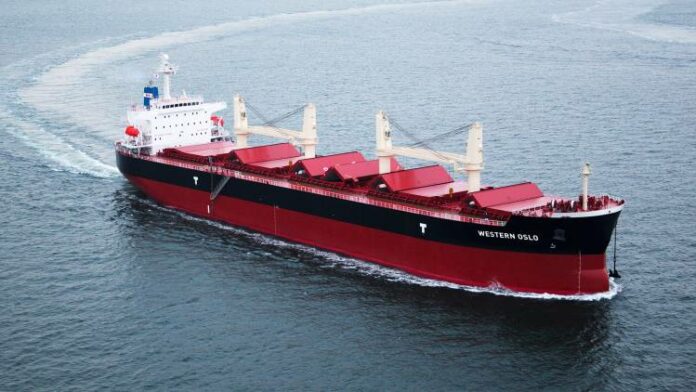
Oslo-based Western Bulk Chartering saw its full-year profits take a sizeable hit from some poor decisions taken by an employee in South America.

Western Bulk said that its Chile business unit experienced a net time charter loss of $10m in the last six months of the year, thanks in large part to contracts that were approved based on what the company said in a release were “unrealistic assumptions” presented by a trusted employee. The Chile business unit has been restructured and the employee removed from his position, and internal control routines have been reviewed and enhanced. A zero net time charter result is expected from Chile this year.

The company still managed to record a full-year profit after tax of $4.2m.

“After ending both 2017 and the first half of 2018 with increase in profitability, the last six months of 2018 was disappointing due to losses in Chile. At the same time, with the Chile business unit restructured and a good fourth quarter I am convinced that we will be able to better reflect the strong performance in the remaining business units on group level in 2019,” said Jens Ismar, the CEO of Western Bulk.

Source:splash247

Equatorial Guinea takes back gas-prone deepwater block

0

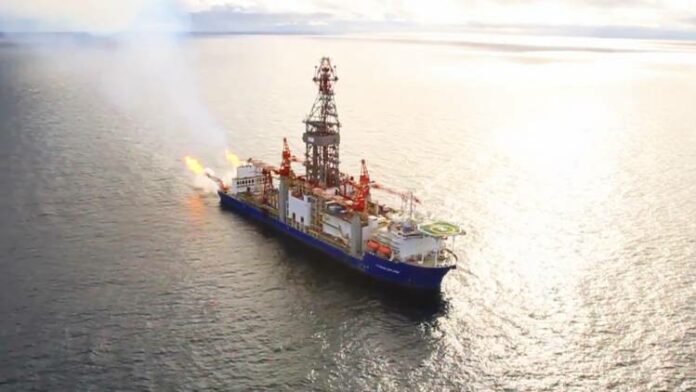
 Ophir Energy has relinquished block R offshore Equatorial Guinea after the government declined to extend the production-sharing contract.

H.E Gabriel Mbaga Obiang Lima, Minister of Mines and Hydrocarbons, said: “The Ministry recognizes and strongly appreciates the commitment of Ophir in its exploration activities in Equatorial Guinea and welcomes further investment in appropriate opportunities in the hydrocarbon sector.”

Ophir discovered six commercial fields across the license. After initiating its work program in 2008, three exploration wells led to the Fortuna and Lykos gas discoveries.

The company planned a deepwater development via the Fortuna FLNG vessel, but failed to secure financial backing for the investment.

Block R covers 2,450 sq km (946 sq mi) in the Distal Niger Delta, 140 km (87 mi) offshore Bioko Island, in water depths ranging from 600-1,950 m (1,968-6,397 ft).

Estimated recoverable resources are 3.4 tcf, of which the Fortuna field accounts for around 1.3 tcf, followed by the Silenus Complex (1.2 tcf), the Tonal discovery (500 bcf), and other smaller finds that collectively contain 400 bcf.

Source:offshore-mag

McDermott to deliver Cassia C platform offshore Trinidad

0

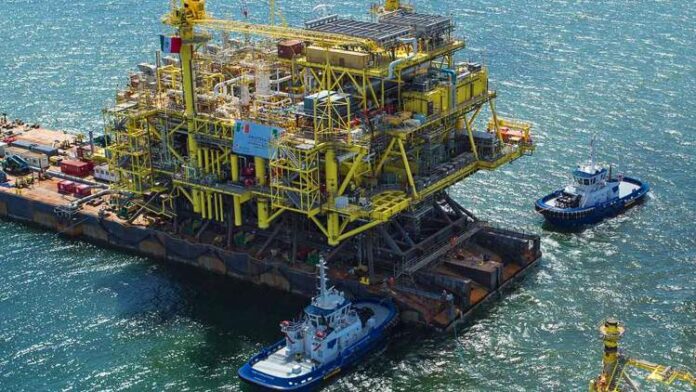
BP Trinidad & Tobago LLC (bpTT) has awarded McDermott International Inc. an engineering, procurement, and construction (EPC) contract for the Cassia Compression platform.

McDermott will provide engineering, procurement, construction, hook-up, and commissioning of the 8,928-ton (8,100-metric ton) Cassia C topsides, a 3,747-ton (3,400-metric ton) jacket, and a 793-ton (720-metric ton) bridge to link Cassia C with the existing Cassia B platform that currently sits in 223 ft (68 m) of water. The scope also includes brownfield modifications at Cassia B.

The compression platform will be fabricated and constructed at the company’s fabrication facility in Altamira, Mexico. Trinidad Offshore Fabrication Co. will fabricate the jacket and the bridge landing frame. 

Engineering services will be provided by McDermott’s offices in Houston, Chennai and Dubai, with the project management team and procurement being performed from its office in Houston.

The Cassia Compression platform will be installed 35 mi (57 km) offshore southeast Trinidad.

This EPC contract follows the completion of a detailed engineering and long lead procurement services contract McDermott completed for Cassia C earlier this year.

Cassia C is bpTT’s third Cassia platform, handling gas coming from its operations in the Columbus basin. Cassia C will receive 1.2 bscf/d of hydrocarbon gas through new piping from Cassia B across the bridge. The gas will be compressed in three gas turbine driven compressors and returned to Cassia B for export. Liquids from Cassia C and Cassia B will be combined and boosted for export.

North Sea Ivar Aasen platform controlled from Trondheim

0

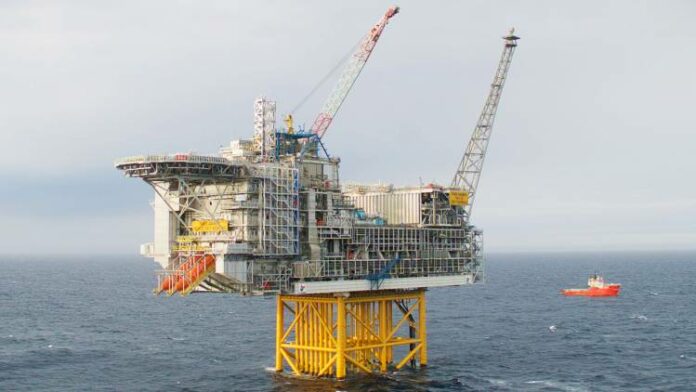
 Aker BP claims to have become the first company on the Norwegian continental shelf to operate a manned platform from an onshore control room.

The Ivar Aasen platform in the North Sea is now run from the company’s offices in Trondheim.

Aker BP constructed two identical control rooms for the Ivar Aasen field development – one on the platform and one in Trondheim, but always planned to migrate management of the platform eventually to land.

However, other offshore staff will remain at the field complex.

The control room includes monitoring facilities, production, equipment, and supports activation of work permits and the arrival of vessels and helicopters within the 500-m (1,640-ft) zone surrounding the field center.

Aker BP believes this approach should lead to increased revenues as subsurface specialists onshore can be closer to the control room. And there is potential for cost reductions, the company added, through implementation of new digital solutions that change established working methods.

Source:offshore-mag

Seaspan Shipyards Awards JSS Contract to INDAL Technologies

0

Canadian shipbuilder Seaspan Shipyards has awarded Ontario-based INDAL Technologies Inc. a contract valued at almost $20M for work on Canada’s new Joint Support Ships (JSS).

INDAL represents one of more than 60 Ontario suppliers to date that Seaspan is working with to meet its commitments under the National Shipbuilding Strategy (NSS), said a press release.

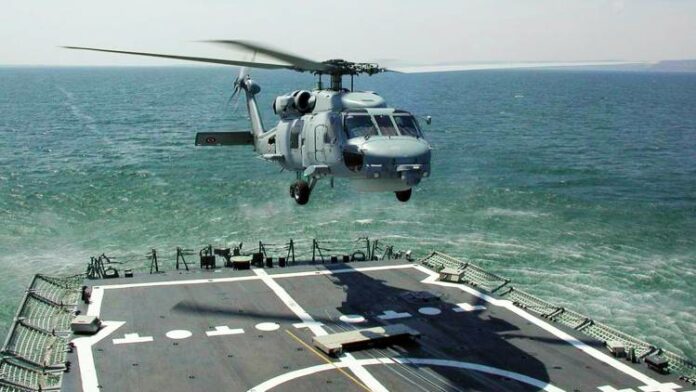
INDAL is providing its Aircraft Ship Integrated Securing & Traversing (ASIST) System for JSS. The ASIST System is a state-of-the-art integrated helicopter handling system for surface combatants.

The System provides the functionality necessary to support helicopter handling, including deck securing on touchdown, on-deck manoeuvring and traversing to/from the hangar space, and helicopter launch. INDAL will also be supplying all the installation support and training, as well as the required maintenance and logistics documentation.

A distinct capability of this System is its ability to straighten and align the helicopter remotely from the ASIST Control Console using combined operations of the on-deck Rapid Securing Device (RSD) and Traverse Winch sub-system. Straightening and alignment is achieved with no requirement for external cables attached to the helicopter.

Various configurations of INDAL’s ASIST systems are operating successfully with navies from around the world including Chile, Turkey and Singapore. ASIST has also been selected by the U.S. Navy as an integral capability within its DDG-1000 “Zumwalt” destroyer program and by the Royal Australian Navy for its Air Warfare Destroyer and SEA 5000 Programs.

“This contract is a prime example of how the National Shipbuilding Strategy is helping drive technological innovation in Canada, while also building a strong, sustainable marine sector. INDAL Technologies Inc.’s homegrown, state-of-the-art technology will help equip our Royal Canadian Navy’s future supply ships with the tools needed so that our women and men in uniform can carry out their important work,” said Carla Qualtrough, Minister of Public Services and Procurement and Accessibility.

"Thanks to its work under the NSS, Seaspan has issued over $690M in committed contracts with approximately 540 Canadian companies. By building ships for the Canadian Coast Guard (CCG) and Royal Canadian Navy (RCN) in Canada, Seaspan is helping to re-establish a Canadian marine industry," the release said.

As the company continues to make progress on its NSS commitments, this supply chain is expected to grow as more Canadian companies realize new opportunities with a revitalized shipbuilding industry. It is through its work on the NSS that Seaspan is directly and indirectly helping to employ thousands of Canadians from coast to coast to coast.

Source:marinelink

COSCO SHIPPING Ports takes 60% stake in Chancay Terminal, Peru

0

COSCO SHIPPING Ports Limited , a leading ports operator in the world  will establish its first greenfield subsidiary in South America by acquiring 60% stake in Terminales Portuarios Chancay S.A. (Chancay Terminal) from Volcan Compañía Minera S.A.A., (“Volcan”) for a total consideration of US$225million, with an  initial payment of US$56million.

COSCO SHIPPPING Ports will partner with Volcan to build Chancay Terminal into an important  gateway port in  Peru.  Chancay Terminal owns the land of the Terminal and doesn’t need to pay for  any  concession rights, financial resources  thus  can be placed mainly on the development s of the  terminal.  Economic growth of Peru has continued in recent years; container throughout of Peru in 2017 has  increased to 2.5 million TEU from 1.5 million TEU in 2010.

Located 58 km in the north of the  Peruvian capital of Lima, Port of Chancay enjoys favorable location where it has easy access to the  economic centre of Peru.  About 60% of Peru's economic activities are concentrated in Lima and its 2 surrounding areas, and thus, the favourable geographic location of Lima is of strategic importance.  Port of Chancay is a natural deep – water harbour with a maximum of 16 meters water – depth and is capable of satisfying the needs of mega vessels. The construction of Chancay Terminal includes  multi – purpose terminals, container terminals and related infrastructure facilities.  Phase one of the  terminal will have  four berths, of which two are multi – purpose berths,  and two are container  berths  with a total annual designed capacity of one million TEU. 


EU raises cyber-security awareness in transportation

0

The European Union Agency for Network and Information Security (ENISA) organised the first Conference on Transport Cyber-security, in Lisbon, on January 23. A hundred seventy public and private partners from Europe, representing all transport modes took part in the event and discussed the EU legal framework for cyber-security, its relevance for the transport sector, and explored options for more cooperation.

The conference gave participants the opportunity to analyze cyber-security from a multifaceted and multimodal perspective. They discussed the current legal framework for cyber-security at EU level and its relevance for the transport sector, as well as the need for cooperation in the future.

Maja Markovčić Kostelac, EMSA’s Executive Director, stated:"In this increasingly digital age, we face borderless cyber-security risks and we must take a borderless response to our cooperation across all transport modes."

During the discussions, the following points were raised:

  • Cyber-attacks targeting transport could lead to serious consequences, result in the loss of lives, and damage the economy. Namely, the transport system should be able to deter attacks and show resilience if they take place. Cyber-security must also ensure safety;
  • It is important to look at cyber-security in a holistic manner by addressing not only internet-connected systems, but also the 'human element'. Cooperation is needed between the technical and operational levels;
  • The Directive on Security of Network and Information Systems (NIS Directive) lays a foundation to improve cyber-security and resilience in the transport sector. Where appropriate, specific rules may be needed in certain transport modes;
  • Non-regulatory actions should be pursued to deal with cyber threats: information exchange, capabilities building, awareness raising and development of cyber skills. The transport sector should cooperate to set out foundations for a 'cyber-security culture';
  • As transport is global and interconnected, a close cooperation with international partners and relevant international organisations should continue and be encouraged.

What is more, the discussions show the importance to promote the cooperation between DG MOVE, DG CONNECT, ENISA, EASA, EMSA and ERA to raise the bar for cyber-security in transport. The following actions will be considered:

  • Closely follow the NIS Directive implementation giving due consideration to the needs and specificities of each transport mode;
  • Encourage the exchange of information and best practices, by including cyber-security as a regular agenda item for discussion in the meetings of the Aviation Security (AVSEC) and Maritime Security (MARSEC) Committees, Stakeholder Advisory Groups on Maritime Security (SAGMAS) and Aviation Security (SAGAS) as well as Land Transport Security Expert Group (LANDSEC).
  • Sectorial initiatives will also be encouraged as identified in the recently approved Cyber-security Act;
  • Adopt the cross-fertilisation of ideas and experiences among the transport modes by organising meetings or workshops dedicated to cyber-security, and gathering experts from different modes;
  • Develop cyber-skills in the transport sector. DG MOVE will support the development of a cyber-security 'toolkit' providing appropriate knowledge of good cyber-security practices for transport staff;
  • Continue cyber dialogues with third countries and collaborate with international organisations, such as the International Civil Aviation Organization and the International Maritime Organization.

Source:safety4se

Stages of common cyber attacks

0

UK National Cyber Security Centre (NCSC) has issued a paper and an infographic summarizing the key stages of common cyber attacks, in a bid to help individuals and companies to better defend amid the rising cyber threat. The attacker is effectively probing defences for weaknesses that, if exploitable, will take them closer to their ultimate goal.

In a simplified approach, NCSC gathered the four main stages present in most cyber attacks:

  • Survey – investigating and analysing available information about the target in order to identify potential vulnerabilities
  • Delivery – getting to the point in a system where a vulnerability can be exploited
  • Breach – exploiting the vulnerability/vulnerabilities to gain some form of unauthorised access
  • Affect – carrying out activities within a system that achieve the attacker’s goal

Survey

Attackers will use any means available to find technical, procedural or physical vulnerabilities which they can attempt to exploit. User error can also reveal information that can be used in attacks. Common errors include:

  • releasing information about the organisation’s network on a technical support forum
  • neglecting to remove hidden properties from documents such as author, software version and file save locations

Delivery

During the delivery stage, the attacker will look to get into a position where they can exploit a vulnerability that they have identified, or they think could potentially exist. Examples include:

  • attempting to access an organisation’s online services
  • sending an email containing a link to a malicious website or an attachment which contains malicious code
  • giving an infected USB stick away at a trade fair
  • creating a false website in the hope that a user will visit

Breach

The harm to business will depend on the nature of the vulnerability and the exploitation method. It may allow them to:

  • make changes that affect the system’s operation
  • gain access to online accounts
  • achieve full control of a user’s computer, tablet or smartphone

Affect

Depending on their objectives, the activities they aim to carry out on your systems will differ, but they can include:

  • retrieving information they would otherwise not be able to access, such as intellectual property or commercially sensitive information
  • making changes for their own benefit, such as creating payments into a bank account they control
  • disrupting normal business operation, such as overloading the organisation’s internet connection so they cannot communicate externally, or deleting the whole operating system from users’ computers.

Source:safety4sea