-0.6 C
New York
Home Blog Page 1133

C/S Aurora Steel Cut

0

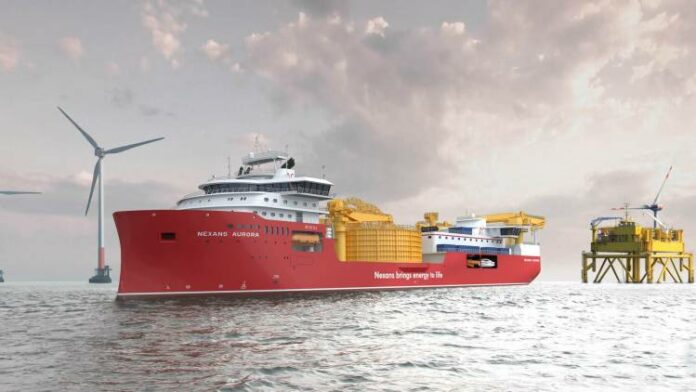
The first major milestone in the construction of Nexans’ new DP3 cable laying vessel, the C/S Aurora, was passed Monday, February 18, 2019, with the cutting of the first steel.

With this modernization we will further strengthen our ability to deliver green power for the future”, said Vincent Dessale, Senior Executive VP Subsea and Land Systems Business Group at Nexans.  “Aurora will play a key role in the installation of our cutting-edge submarine cables to help bring more energy to the world, connect offshore wind farms to the grid, support electrification of offshore petroleum installations and create interconnectors between countries”, said Vincent Dessale.

The hull is being built at Crist, Poland, while the engineering, outfitting and system integration, equipment preparations, testing, sea trials and finalising will be carried out at Ulstein Verft, Norway. The ST-297 CLV is designed by Skipsteknisk.

The shipbuilding contract of Nexans next flag ship was announced in July, 2018.

The vessel will be outfitted for power cable laying, including bundle laying, cable jointing, repair, cable system protection and trenching. She will be delivered in 2021.

Source:marinelink

Keppel delivers jackup rig to Grupo R on sale and leaseback deal

0

First rig equipped with Keppel’s proprietary RigCare digital solutions that will significantly transform the efficiency, safety and operability of the rig.

Keppel FELS, a wholly-owned subsidiary of Keppel Offshore & Marine Ltd (Keppel O&M) has delivered the jackup rig, Cantarell IV, to Grupo R with a perfect safety record. As part of the deal, Grupo R has entered into a sale and leaseback agreement with FELS Asset Co Pte. Ltd. (FELS Asset), a wholly-owned subsidiary of Keppel O&M.

FELS Asset will purchase the rig from Grupo R for US$179m which is equivalent to the balance contract value of the rig. Cantarell IV will be leased back to Grupo R on a bareboat charter at competitive day rates over five years. IPC, the parent company of Grupo R, will provide a Parent Company Guarantee on Grupo R's charter payment obligations.

Under the bareboat charter, Grupo R has the right to purchase the rig at pre-agreed prices during the term of the bareboat charter. After the fifth year, FELS Asset may, at its discretion, put the rig to Grupo R at a pre-agreed price.

Cantarell IV will be deployed directly to work in offshore Mexico, under an integrated drilling contract for offshore wells secured by IPC with Pemex, which will commence in early May 2019.

Mr Chris Ong, CEO of Keppel O&M said, "This transaction demonstrates how we are able to leverage the strengths of Keppel O&M to achieve win-win solutions for all stakeholders. Keppel FELS will be able to deliver the rig at full value; Grupo R will be able to lease the rig to begin operations in Mexico; and Keppel O&M will benefit from acquiring a quality rig at attractive commercial terms while generating regular and predictable cash flows from the charter at a good rate of return."

As Mexico develops its oil and gas reserves, more high specification rigs such as the KFELS B Class rigs will be needed. We have previously delivered 10 such rigs to Mexico which have delivered robust, efficient and economical performances.

Grupo R is well-established as a driller in Mexico, with excellent uptimes and a strong track record of success with difficult wells. The two jackup rigs Keppel FELS delivered to Grupo R in 2016, Cantarell I and Cantarell II, have been drilling for Pemex in Mexico since August 2016 under a seven year charter.

Mr Jose Ramiro Garza, CEO of Grupo R added, "We are pleased to be able to partner Keppel to bring this rig to work for Pemex in Mexico. The fields where the rig will operate is expected to produce up to 210,000 bpd of crude and 350 million mmcfd of natural gas by 2020, resulting in more opportunities for the rig to be deployed in future. As a leading rig operator in Mexico, we are well positioned to meet the country's drilling demands."

Our two jackups from Keppel FELS, Cantarell I and II have been achieving exceptional performances ever since they started working for Pemex in Mexico. In the last two years, they recorded uptimes of 99% and have clocked the best drilling times for both a JSO well and Cenozoic well. This is a result of having the right rig design, the choice yard to deliver a quality rig and our unmatched operating expertise. I am confident Cantarell IV will break new records in Mexico as well.

Mexico's current oil production is depleting faster than it is being replenished, and the country is looking to increase its E&P activities. It has stated its intention to boost crude output to reach 2.4 million b/d of oil production by 2024, from 1.8 million b/d today by focusing on upstream investment on shallow water and onshore conventional fields.

The Cantarell IV is a KFELS B Class jackup designed to operate in water depths of up to 400 feet and drill to depths of 30,000 feet. It is equipped with an advanced and fully-automated high capacity rack, pinion jacking system, Self-Positioning Fixation System, and also has accommodation with full amenities for 150 persons.

Two dead after tanker hit by fire at Bangladesh shipbreaking yard

0

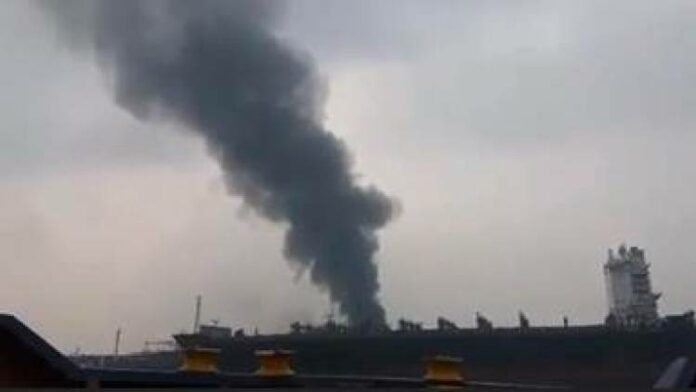
A fire broke out onboard an oil tanker beached at the Shagorika Ship Breaking Yard in Bangladesh, resulting in the death of two workers.

The fire started from the engine room of the 2000-built VLCC Greek Warrior. One worker was severely injured and died after being sent to hospital, and another worker’s body was found onboard the vessel later.

According to NGO Shipbreaking Platform, the vessel was sold to the shipbreaking yard by Greek company Polembros Shipping in 2018 and changed its name to S Warrior and flag from Panama to Palau before its final voyage. The cash buyer involved in the sale was India’s Prayati Shipping.

NGO Shipbreaking Platform says the owner has sent at least 24 old ships to South Asian beaches and half of them reached the shores of Bangladesh in the last ten years.

“With more than 900 vessels beached since 2009, Greek owners top the list of global dumpers by far,” NGO Shipbreaking Platform said in a release.

“It is about time that the Greek government puts an end to the appalling shipbreaking practices of its shipping industry and holds it liable for the irreparable damages caused by beaching. The EU has set a standard that should be followed by Greek ship owners, even when not sailing their vessels under an EU flag,” said Ingvild Jenssen, executive director of NGO Shipbreaking Platform.
 

Gas4Sea partners and Equinor signed an LNG bunkering agreement

0

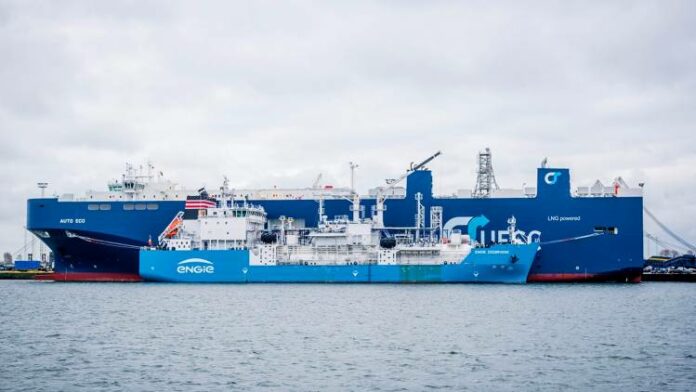
Marine LNG Zeebrugge, a joint venture of the Gas4Sea partners – ENGIE, Mitsubishi Corporation and NYK – has signed an agreement with the Norwegian multinational energy group Equinor for supplying their four crude shuttle tankers with LNG as marine fuel in particular in the port of Rotterdam, the company said in its release.

The four planned dual fuel vessels are to come into service in early 2020; they will be operated by Equinor in Northern European seas.

Marine LNG Zeebrugge will supply LNG using the LNG bunkering vessel ENGIE Zeebrugge which started operations in 2017. She is currently performing ship-to-ship LNG bunkering services in the port of Zeebrugge, in Belgium.

ENGIE Zeebrugge holds an LNG capacity of 5,000 m3 and is designed to serve a full range of shipping customers.

Gas4Sea is a commercial brand jointly launched by ENGIE, Mitsubishi Corporation and NYK in 2016 to develop the use of LNG as a sustainable, reliable, safe and cost-effective alternative to conventional oil-based marine fuels. Its purpose and ambition is to accompany the shipping sector in the upcoming transition towards a greener maritime environment, in Europe and worldwide.

Singapore’s Submarine Baptized in Kiel

0

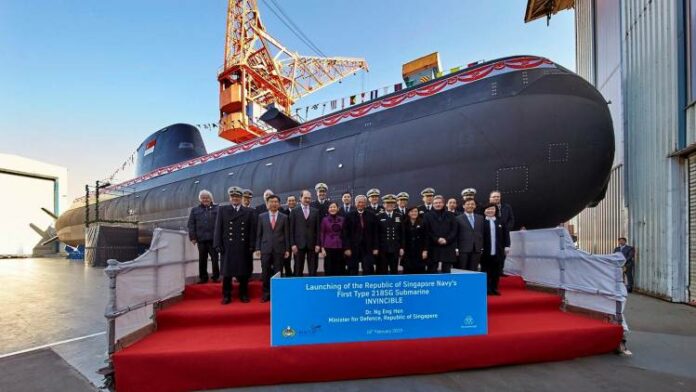
ThyssenKrupp Marine Systems (TKMS) has launched at the Kiel shipyard the the largest ever built in Germany submarine. Named Invincible, the submarine will be part of the ongoing submarine program in the Republic of Singapore.

Prof. Ivy Ng, wife of Dr. Ng Eng Hen, Minister for Defense of the Republic of Singapore, named the boat in the presence of high-level representatives from the Singapore government and Navy, as well as high-ranking German officials.

In addition to representatives from Thyssenkrupp, there were also representatives from suppliers in attendance for the ceremony. After construction and outfitting is completed, Invincible will undergo intensive testing before being handed over in 2021.

Dr. Ng Eng Hen, Minister of Defense for the Republic of Singapore: "These new submarines are the products of years of experience and deep expertise from both Germany and Singapore. They are a testament to our warm and growing defense ties with Germany. Closely collaborating with our Defence Science and Technology Agency (DSTA), the RSN oversaw the design of the submarines, before jointly developing them with Thyssenkrupp Marine Systems. I am heartened by the cooperation and efforts of the Singaporean and German industries."

Dr. Rolf Wirtz, CEO of Thyssenkrupp Marine Systems: "We are proud to be able to take this important step in the life of a boat together with our Singaporean partners. This first boat of the Type 218SG will mark a next generation of submarines. They will possess an extensive range of vital capabilities and therewith become a highly capable strategic asset for Singapore and its Navy."

Invincible is the first in a series of four boats of the Type 218SG. The contract for the first two submarines was signed in 2013 and the contract for the second batch in 2017. After handing over the Invincible in 2021, the second submarine is scheduled to be delivered in 2022. The third and fourth submarines are scheduled to follow from 2024 onward.

The boats have the design of a low-signature submarine with air independent propulsion – enabling them to stay submerged for a longer period – and numerous tailor-made solutions and new technologies.

DSTA and Thyssenkrupp Marine Systems dive into additive manufacturing for submarines Prior to the launch of the Republic of Singapore Navy's first Invincible-class submarine, Singapore's Defense Science and Technology Agency (DSTA) and Thyssenkrupp Marine Systems signed a Memorandum of Understanding (MOU) in Kiel to collaborate on new technologies such as additive manufacturing and data analytics for naval applications.

Under the agreement, DSTA and Thyssenkrupp Marine Systems will explore the use of additive manufacturing as an innovative, cost-effective method for producing submarine spare parts. Both parties will work together on the design, engineering, and qualification of additive manufactured components, which could be tested and trialed on Singapore submarines.

Tan Peng Yam, Chief Executive of DSTA: "In this age of rapid change, collaboration is key to exploit novel technologies. We are excited to combine our expertise with Thyssenkrupp Marine Systems in additive manufacturing."

Dr Rolf Wirtz, CEO of Thyssenkrupp Marine Systems: "This initiative is a prime example of our understanding of innovation: We are engineering. tomorrow. together. The MOU allows us to test parts manufactured in Kiel with additive manufacturing under real conditions. This is a great asset for us."

Source:marinelink

Lukoil Marine Lubricants inks three-year deal with Oman Shipping Co

0

Lukoil Marine Lubricants Middle East has inked a three-year contract with Oman Shipping Company (OSC).

Under the agreement Lukoil will supply lubricants covering OSC’s fleet of 39 vessels consisting of very large crude carriers (VLCC), product tankers, chemical tankers, LPG Carriers, very large ore carriers (VLOCs) and bulk carriers.

The agreement comes with an option for a further two years. The two companies have worked together since 2014.

“Our business relationship first began five years ago and since then it has blossomed through trust and respect into a solid partnership which has proved to be beneficial for both companies,” commented David Stockley, coo of OSC.

As we move forward, we are eager to develop our relationship even further in the next five years.

June Manoharan, director of Lukoil Marine Lubricants said: “Although we specialize in the production and marketing of marine lubricants, we also pride ourselves in serving our clients to the utmost standard and in this case, we are excited to see that our efforts have been appreciated. Oman Shipping Company has shown great trust in allowing us to continue supplying their vessels.”

Source:seatrade-maritime

Crew injured in Wikinger CTV collision

0

All fifteen people aboard the crew transfer vessel World Bora have been injured after it collided with a freighter while traveling towards Iberdrola's 350MW Wikinger wind farm in the German Baltic Sea.

Six of the 15 people have sustained heavy injuries.

"None of the injuries appear to be life-threatening," the spokesman said.

We at Iberdrola are following their conditions closely.

The World Bora collided with the freighter Raba at about 7.40am local time about 2.5 nautical miles off the coast of Rugen, but did not sink and was able to return to the port of Sassnitz nearby. Nobody aboard the Raba was injured.

Lifeboat crew from the German Maritime Search and Rescue Service performed medical treatment on the injured people until doctors arrived.

The injured were transported to hospital via either ambulance or helicopter.

Of the 15 people on board, nine were employees of Siemens Gamesa, two were employees of Iberdrola and the remaining four were crew.

"Iberdrola wishes to thank the rescue services for their diligence and professionalism," the company said.

Officials in Mecklenburg-Western Pomerania have started the investigation into the cause of the accident.

Source:renews

Trio establishes Japan’s first offshore wind energy fund

0

Sumitomo Corporation, Sumitomo Mitsui Banking Corporation (SMBC) and Development Bank of Japan Inc., (DBJ), have established their first fund through Spring Infrastructure Capital Co., Ltd., a fund management company jointly established by the three companies. The Fund raises money from Japanese investors and finances and invests in offshore wind power projects overseas.

The Fund will acquire UK assets held by Sumitomo Corporation as seed assets, and this will be the first fund in Japan designed to invest in offshore wind power projects overseas. The Fund will seek to raise up to 30 billion yen.

The company was founded in July 2018 to provide institutional investors with opportunities to invest in renewable energy assets both inside and outside Japan.

The aim is to meet investors’ expectations by dispatching members experienced and knowledgeable in investment/financing in the renewable energy sector to the Company, where they will participate in running the infrastructure projects in which the Fund invests and thereby provides value to local communities.

The Company will also help meet investment needs from domestic investors and contribute to building infrastructure worldwide by developing mechanisms to funnel funds back into infrastructure projects, especially renewable energy projects.

Sumitomo Corporation is actively engaged in developing and running renewable energy projects worldwide, and it now possesses 1.4GW in generation capacity. The company will complete construction of these projects and then will sell to the Fund some of the assets that have begun stable operation, to achieve strategic asset replacement.

Additionally, SMBC has financed power plants with a total capacity of more than 10GW. In this particular project, the SMBC Group will be providing the knowledge and know-how it has cultivated heretofore to facilitate smooth operation of the Fund.

DBJ will be leveraging its investment experience in UK offshore wind power projects as it participates in managing the company. Because the Fund will be working to provide Japanese institutional investors with opportunities to invest in offshore wind power projects and other renewable energy projects and because the Fund will be helping Sumitomo Corporation accelerate activities in renewable energy projects inside and outside Japan, DBJ has decided to supply funding through the use of “Special Investment Operations”.

Source:safety4sea

Magallanes install atir tidal turbine at EMEC

0

The European Marine Energy Centre (EMEC) is delighted to welcome Spanish tidal energy developer Magallanes Renovables to their tidal test site at the Fall of Warness in Orkney, Scotland.

The successful installation of their second generation (2G) 2MW tidal platform ‘ATIR’ took place on 16th February and marks a major milestone in the Ocean_2G project, which aims to test, validate and pre-certify Magallanes’ device.

The ATIR was built and launched in Vigo, Spain in 2017, where it underwent a structured test programme to optimise the system, ensuring the device performs at its best.

After this successful period of testing, the ATIR was towed from Spain to Orkney in September 2018.

After months of careful planning and close working between the project partners, Orkney based marine service provider Leask Marine was able to successfully execute the operation at the weekend.

The ATIR will now undergo commissioning on site prior to being connected to the national grid.

Alejandro Marques de Magallanes, CEO, Magallanes Renovables, explained:

The journey to Orkney was no mean feat, but the team managed to skilfully navigate their way in harsh weather conditions, through some of Europe’s most challenging seas.

We are very pleased to have the ATIR installed at EMEC. This marks a major milestone for the project and is a great achievement for our dedicated team after years of building up to this point.

The next step in the project will be to start the testing programme at the Fall of Warness. We look forward to demonstrating the outputs of this pioneering prototype and generating electricity into the national grid in the near future.

EMEC’s Managing Director, Neil Kermode, adds:

We are thrilled to welcome Magallanes back to Orkney following their 1:10 scale tests at EMEC in 2014. By deploying the ATIR here, Magallanes have joined the family of technologies benefiting from the UK’s centre of excellence for marine renewable innovation.

Having companies like Magallanes invest here and choose to demonstrate technologies in the UK, has led to the development of the world’s most experienced and innovative supply chain for marine energy. With Leask Marine installing the ATIR, Bryan J Rendall Electrical providing the electrical connection and RM Computing delivering IT support and communication, the value of this is clear to see: local jobs are being supported by the Ocean_2G project and EMEC’s infrastructure continues to create income for local companies.

Douglas Leask, Managing Director of Leask Marine, oversaw the operations:

“The successful installation of the ATIR at the Fall of Warness was due to careful planning and an effective working relationship between Leask Marine, Magallanes Renovables and EMEC,” he said.

Marine operations at this time of year can be challenging, however by utilising the weather windows and skills of the team, it allowed this successful operation to take place. This also proves that marine operations don’t have to be restricted to summer months.

Orkney is seen as a peripheral area by some, but we see it as the centre of this innovative and world leading sector. Leask Marine’s diversification into renewables has been key to the delivery of this type of operation. We are delighted to have been part of progress thus far and look forward to being part of more operations here in the future.

Transocean to install Automated Drilling Control on five rigs

0

Offshore drilling company Transocean announced that it has entered into an agreement with its Norwegian oil and gas company Equinor, to license and install Automated Drilling Control (ADC) systems on five of its rigs.

The agreement foresees installation on four high-specification, harsh environment rigs which are currently on contract in Norway, and a fifth semisubmersible that is expected to commence operations in the Norwegian sea this summer.

The decision comes as the 'Transocean Enabler' was previously equipped with the ADC system in 2017 and has delivered tangible improvements in overall drilling efficiency that have led to more cost-effective wells for Equinor. Further, the system has demonstrated improvements in well integrity, while enhancing safety and operations assurance.

In addition to the Transocean Enabler, the upgraded floaters in Transocean’s fleet will include Transocean Spitsbergen, Transocean Norge, Transocean Encourage, Transocean Equinox, and Transocean Endurance.

The ADC systems are developed through the combination of various technologies from MHWirth, NOV and Sekal AS, which enable, among other things, higher rates of penetration while drilling, highly stable bottom hole pressures avoiding swab/surge effects and early detection of kick/loss events.

"The ADC upgrades advance our automation efforts and further enhance our industry leading fleet of high-specification, harsh environment semisubmersibles,".…said Jeremy Thigpen, President and CEO.