-0.6 C
New York
Home Blog Page 1134

Ørsted, Total and Elicio join forces to bid for offshore wind farm by Dunkirk, France

0

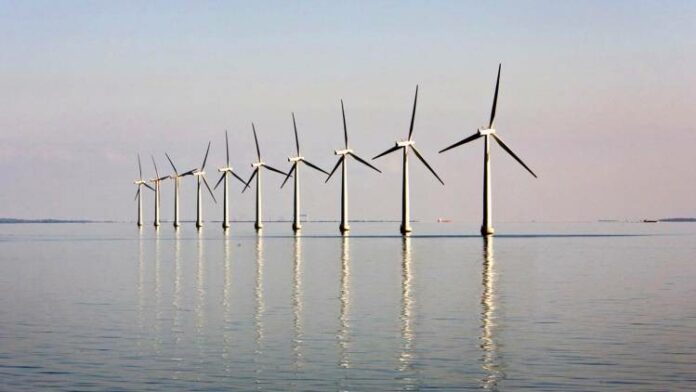
Total, a major energy player, Ørsted, renewable major, and Elicio, a renewable energy producer preselected by the French Energy Regulatory Commission, announce the creation of an industrial consortium to submit a joint bid for the Dunkirk offshore wind farm project for a power capacity of up to 600 MW.

"Total's participation in this offshore wind bid is in line with our strategy to develop low-carbon electricity business in Europe. Our recognized offshore oil and gas know-how combined with Ørsted market-leading expertise across the offshore wind energy value chain, as well as that of Elicio, an experienced developer qualified from the beginning of the bid, provide a solid foundation for success of a safe and competitive project,“ commented Philippe Sauquet, President Gas, Renewables and Power at Total.

Martin Neubert, Chief Executive Officer of Ørsted Offshore, said: “Offshore wind can contribute significantly to France’s renewable energy targets. As the world-leading offshore wind developer, we bring an unparalleled track-record in developing, constructing and operating offshore wind farms to the consortium, and the combined competencies of Ørsted, Total and Elicio are ideal to help France unleash its significant potential for developing clean power from offshore wind.”

Emile Dumont, President of Elicio France, said: “Wind energy has significant growth potential in France and is at the heart of Elicio’s strategy to contribute towards a cleaner and cost-effective energy powered world. Further to Elicio’s successful preselection for the French round 3 competitive dialogue and by joining our unique expertise and experience, we are committed, with our partners Total and Ørsted, to making this tender a milestone in the French offshore wind sector. “
Polaris Bunkered in Finland

0

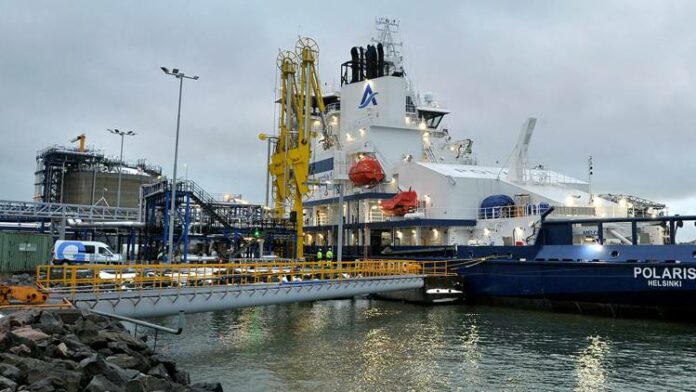
The world’s first LNG-fueled icebreaker, Polaris, received liquefied natural gas (LNG) fuel in January from the Pori LNG import terminal and in February from the Manga LNG terminal located in the Röyttä Harbor in Tornio, Finland. 

The commercial use of the Tornio import terminal begins this year, said a press release from Nordic gas company Gasum.

The gas and fuel market of Northern Finland will diversify as the commercial use of the Tornio import terminal begins this year. Access to LNG is an important competitiveness factor for current industrial operators in the area as well as for the Port of Tornio. The terminal is intended to meet industrial as well as land and maritime transport needs.

LNG is excellently suited for use as a marine fuel as it's a great alternative to oil, and being environmentally friendly is one of its strengths. We’ve already supplied LNG for northern ports such as Luleå, Sweden, and Kemi and Oulu, Finland. Polaris is the first vessel bunkered in Tornio. The start of the commercial use of the Tornio Manga LNG terminal strengthens Gasum’s LNG supply chain in Northern Finland and Sweden for industry and maritime transport,” says Tommy Mattila, Sales and Marketing Director, Natural Gas and LNG, Gasum.

Gasum, which is building a bridge towards a carbon-neutral society on land and at sea, said that LNG is the most environmentally friendly maritime fuel. LNG meets the requirements set by the Sulphur Directive regulating shipping emissions as well as the stricter emission limits to be applied in the future. It does not contain sulfur and its combustion generates 87% less nitrogen oxides.

In maritime transport, the in-use carbon dioxide emission reduction achieved is at least 9% compared with marine diesel. Its fine particulate emissions are also minute. LNG can also be used to replace the use of petroleum-based fuels in industry, energy production and heavy-duty road transport. The use of LNG also enables a switch to liquefied biogas (LBG) without any additional investments.

Gasum has an LNG production plant and terminal in Risavika, Norway, LNG terminals in Øra, Norway, Lysekil, Sweden and Pori, Finland. Gasum is a joint-venturer in the Tornio Manga LNG terminal with Outokumpu, SSAB Europe and EPV Energy.

Source:marinelink

McDermott Announces Contracts for Pan Malaysia Field Development

0

McDermott International, Inc.today announced two sizeable* contracts, one from Sarawak Shell Berhad (SSB) and one from Sapura Exploration and Production (SEP), to provide transportation and installation of offshore structures, pipelines and pre-commissioning work for the Pan Malaysia field development located off the shore of Sarawak, Malaysia.

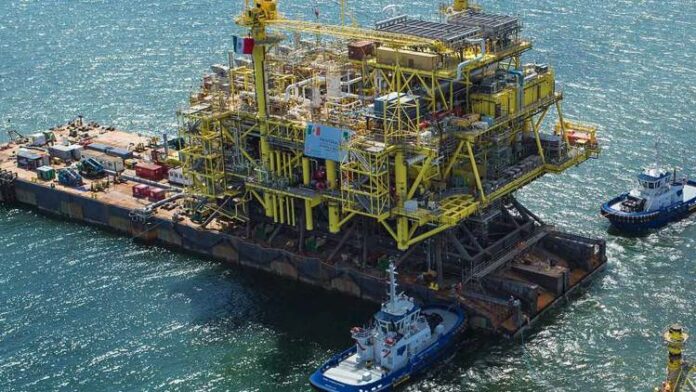
McDermott's scope of work for SSB includes the transportation and installation of jackets, topsides and pipelines for the Gorek gas field. The company's scope of work for SEP includes the transportation and installation of jackets, topsides and pipelines for the Larak and Bakong gas fields. McDermott will also fabricate risers and spools for SSB and SEP.

"These two contracts give McDermott the opportunity to strengthen our long-standing relationship with Sarawak Shell Berhad and develop a new relationship with Sapura Exploration and Production," said Ian Prescott, McDermott's Senior Vice President for Asia Pacific. "They also provide an excellent opportunity for McDermott to execute offshore projects in Malaysia using many of the company's assets, from our highly-skilled and talented workforce to our marine assets and our global fabrication expertise."

McDermott is scheduled to use its installation vessel, the Malaysian-registered Derrick Barge 30, for these jobs. The project management team will be based in Kuala Lumpur using the maximum Malaysian workforce to meet the local content requirement. Fabrication of the risers and spools is scheduled to be performed at McDermott's global execution center in Batam, Indonesia. The offshore campaign is expected to begin in Q2 2019.

The awards mark McDermott's first contracts in Malaysia since relocating the regional headquarters to Kuala Lumpur. McDermott has since increased its local workforce from 90 to nearly 700 employees. "We have grown significantly in a relatively short space of time. Our Kuala Lumpur office is one of the company's centers of excellence supporting our global projects. This gives our local employees excellent development and growth opportunities. We are extremely pleased to secure the Pan Malaysia field development work which enables us to support the growth of the Malaysian oil and gas sector and the country," said Prescott.

McDermott is continuing its hiring process in Malaysia to meet the growing business prospects in the region and its recent combination with CB&I that opens up onshore petrochemical business opportunities in addition to its offshore business portfolio.

The Pan Malaysia contracts will be reflected in McDermott's first quarter 2019 backlog.

* McDermott defines a sizable contract as between USD $1 million and USD $50 million.


Qatar confirms intention to order up to 60 LNG carriers

0

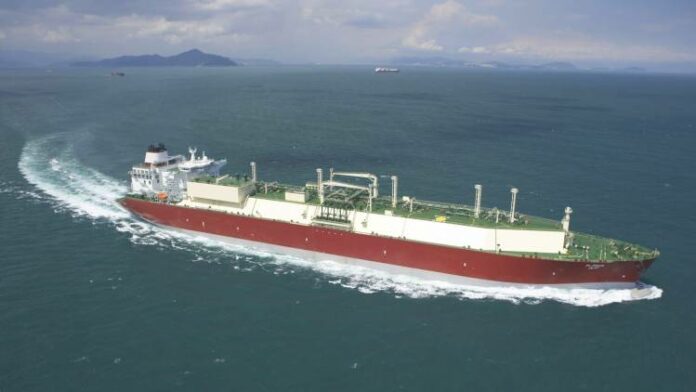
The head of Qatar Petroleum (QP) yesterday confirmed speculation that the Middle Eastern nation will push ahead with plans to order up to 60 LNG carriers. Saad bin Sherida Al Kaabi, who is also Qatar’s minister of state for energy affairs, said at a press conference that Qatar was in advanced negotiations to order between 50 and 60 gas carriers, a giant order similar in scale to the series of Q-Flexes and Q-Maxes the country ordered in South Korea in the previous decade via QP shipping subsidiary Nakilat.

“It should be between 50 and 60 vessels that we will require to transport the expanded output of LNG which will increase from 77m tonnes per day (mtpa) to 110 mtpa by 2024,” Al Kaabi said, adding that a team has been touring yards in Asia to ready the orders.

“We built all our ships in South Korea in the past, so we are looking at South Korean companies and others to bid and meet our shipbuilding requirements in the future,” Al Kaabi said.

Source:splash247

BIMCO demands 4th IMO GHG Study based on realistic economic growth

0

BIMCO says it has proposed that the Fourth International Maritime Organization (IMO) Greenhouse Gas Study does not include unrealistically high gross domestic product (GDP) growth projections to predict future transport demand – and thereby emissions – of the shipping industry. The proposal has been made to the expert workshop preparing for the study, which is meeting in London 12-14 March.

“It is imperative that the industry – and the world – base discussions and actions to reduce emissions from shipping on credible and realistic projections. If not, we risk making the wrong decisions and spending resources ineffectively,” says Lars Robert Pedersen, BIMCO Deputy Secretary General. 

BIMCO argues that the Fourth IMO GHG Study should avoid scenarios 1 and 5 of the International Panel on Climate Change (IPCC) Shared Socio-economic Pathways (SSP), as these scenarios project considerably higher and unrealistic short- to mid-term economic growth (as much as two percentage points higher) than current economic trends and OECD (Organisation for Economic Cooperation and Development) projections. It should be noted that only the lowest of the five SSPs (scenario 3) has compounded growth in line with current OECD projections. 

“The previous study’s most pessimistic projection of a 250% increase in CO2 emissions from shipping has since proven to be totally unrealistic, given the actual and projected economic development of the world. Unfortunately, the 250% projection has frequently been used as a stick against the shipping industry and to shape regional policy. BIMCO wants to avoid that happening again,” Pedersen says. 

BIMCO has collaborated with CE Delft, the consultancy that modeled and calculated the Third IMO GHG Study’s projections in 2014 for future GHG emissions from ships. The revised calculation includes the most recent OECD GDP projections.

The report highlights, that when using a more realistic GDP growth scenario, the shipping industry is projected to achieve an absolute reduction of 20% versus the target of an absolute emission reduction of 50% by 2050 compared to 2008. 

“We will need new solutions, in addition to traditional efficiency measures, to reach the 2050 target. But to pick the right solutions, we need realistic projections,” Pedersen says. 

Lower transport work projections have recently been supported by two other studies: “Energy Transition Outlook 2018: Maritime Forecast to 2050” by DNV-GL and “Transport 2040 – Automation, Technology and Employment – The Future of Work” by the World Maritime University. 

Both studies have decoupled the correlation between the growth in GDP and transport demand after 2030, and both studies arrive at projections well below the BIMCO/CE Delft recalculation of the Third GHG Study. BIMCO also suggests that the IMO expert workshop take the decoupling of GDP growth and transport work into consideration.

Source:portnews

Royal Caribbean Orders Sixth Oasis-Class Vessel

0

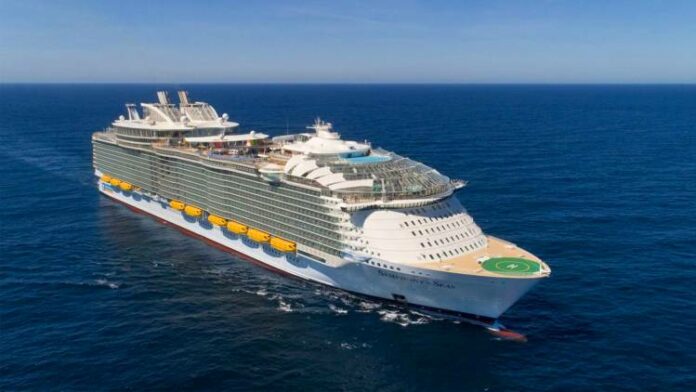
She is the 23rd cruise ship that RCL has ordered from the yard. Chantiers de l’Atlantique has already built Harmony of the Seas, delivered in May 2016, and Symphony of the Seas, delivered in March 2018, and will deliver the third vessel in spring 2021. The first two ships in the class, Oasis of the Seas and Allure of the Seas, were delivered in 2009 and 2010 by STX Europe Turku Shipyard, Finland.

The order is contingent upon financing, which is expected to be completed in the second or third quarter of this year. 

In November last year, Chantiers de l’Atlantique's pre-assembly area was expanded by 17,000sqm, a 30 percent increase. The rail of the 1,400-ton gantry crane which is used to assemble the hull of the large vessels was extended by 135 meters (443 feet). This €16 million ($18 million) investment allows the yard to move to a simultaneous construction capacity of 22 blocks, compared to 16 previously.

Main characteristics of the new vessel

Length overall: 362 meters (1,188 feet)
Breadth overall: 66 meters (217 feet) 
Gross tonnage: 231,000 GRT 
Passenger cabins: 2,857 / 6,700 passengers

Source:maritime-executive

World’s Biggest Offshore Wind Farm Generates First Power

0

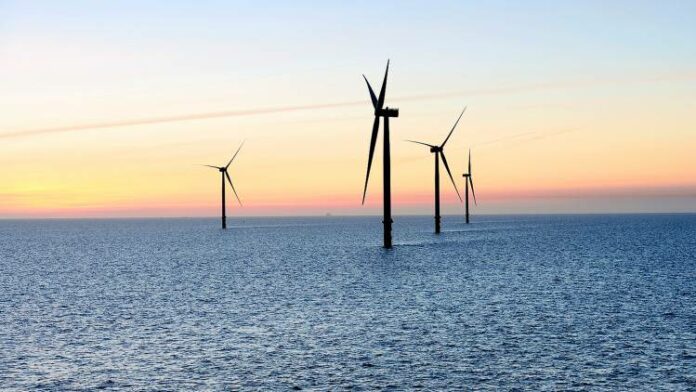
The first turbine at the world’s biggest offshore wind farm has been installed and is now producing electricity. When fully operational, Hornsea 1 offshore wind farm will be nearly double the size (1,218MW) of the current world’s largest offshore wind farm, Walney Extension, and capable of powering well over one million U.K. homes with renewable electricity, generated by wind. 

The project is located 120 kilometers off the Yorkshire Coast and will consist of 174 Siemens Gamesa 7MW turbines. 

The wind farm is a joint venture between Ørsted and Global Infrastructure Partners. Ørsted, recently voted as the world’s most sustainable energy company, began offshore construction just over a year ago, and expects the project to be completed by Q1 2020.

Matthew Wright, U.K. Managing Director at Ørsted, said: “Hornsea 1 is the first of a new generation of offshore power plants that now rival the capacity of traditional fossil fuel power stations. The ability to generate clean electricity offshore at this scale is a globally significant milestone, at a time when urgent action needs to be taken to tackle climate change.”

To date, 172 out of 174 monopile foundations have been installed at the site, and turbine installation is expected to continue until late summer 2019. The electricity generated by the turbines will pass via undersea cables through one of three massive offshore substations, and the world’s first offshore reactive compensation station, all fully installed, before reaching shore at Horseshoe Point, Lincolnshire. The electricity is then transported via underground cables to the onshore substation in North Killingholme, where it connects to the U.K. National Grid.

Ørsted will generate almost exclusively green energy by 2025 and bring clean energy to more than 50 million people by 2030. Ørsted operates more than 1,100 offshore wind turbines. The company has installed approximately 5.6GW offshore wind capacity and has a further 3.4GW under construction. In addition, Ørsted has secured the rights to build approximately 1GW offshore wind in the U.S. by 2023, approximately 1.1GW in Germany by 2025 and approximately 1.8GW in Taiwan. It is Ørsted’s ambition to have installed a total of 15GW offshore wind capacity worldwide by 2025.

Carnegie Files Albany Funding Plan

0

Carnegie said it has submitted the Albany wave energy project updated funding plan to the Department of Primary Industries and Regional Development (DPIRD) for consideration.

As reported earlier, the government of Western Australia requested that Carnegie delivers a funding plan for the wave project offshore Albany, after it agreed to pay the negotiated revised first milestone grant for the project of Au$2.6 million to the company.

Following that decision, Carnegie asked the DPIRD to consider extending the funding plan submission deadline (granted for February 2019) to allow time for the proposed changes to the Federal government’s research & development (R&D) tax incentive to be clarified.

Now that the plan has been delivered, the state government will assess whether the company has the financial capability, in an altered Federal R&D tax incentive environment, to complete the Albany Wave Energy Project.

The CETO power generating system to be constructed in the project will consist of a single submerged CETO 6 unit with offshore power generation, subsea cable to shore and an onshore substation.

Cpower wins Borssele 1&2 gig

0

Services provider CPower Energy has won a five-year contract to supply personnel for wind farms Orsted is developing off the Netherlands coast, starting with the 752MW Borssele 1&2.

CPower Energy has been chosen as one of only five firms to supply skilled personnel with professional wind qualifications to Orsted's Dutch projects.

The framework agreement will see the UK company provide a full range of personnel required to deliver Orsted’s programme, including project managers, high voltage engineers, client representatives, administrative staff, site technicians and general engineers.

CPower Energy has provided personnel and services for several large-scale wind farms, including Horns Rev 3 and Hohe See.

Company managing director Peter Jorgensen said: “The Dutch renewables market is booming, with Orsted one of the most prominent worldwide players."

The project will provide us with a fantastic opportunity to help create and shape some of the world’s leading renewables projects and allow us to cement our growing reputation as an extremely knowledgeable and easy-to-work-with service provider.

Source:renews

Spanish tidal floater shipshape off Orkney

0

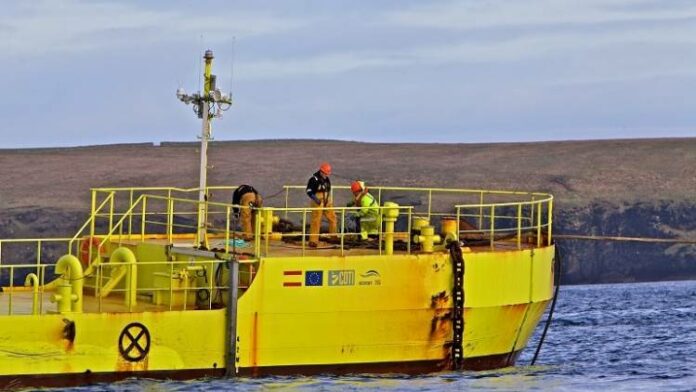
Spanish tidal developer Magallanes Renovables has installed its 2MW Atir floating device at the European Marine Energy Centre off Orkney in Scotland.

The deployment of the 45-metre Atir floater with twin 19m rotors, which arrived in Orkney from the Spanish port of Vigo last September, was overseen by local contractor Leask Marine.

The machine will undergo commissioning at EMEC’s Fall of Warness site prior to being connected to the grid.

“The next step in the project will be to start the testing programme at the Fall of Warness,” said Magallanes Renovables chief executive Alejandro Marques de Magallanes.

“We look forward to demonstrating the outputs of this pioneering prototype and generating electricity into the national grid in the near future.”

EMEC director Neil Kermode added: “Having companies like Magallanes invest here and choose to demonstrate technologies in the UK, has led to the development of the world’s most experienced and innovative supply chain for marine energy.”

The installation forms part of the EU-backed Ocean_2G project.

Bryan J Rendall Electrical supported the deployment by providing the electrical connection and RM Computing delivered IT support and communication services.

Source:renews