-0.1 C
New York
Home Blog Page 1132

DP World qcquires leading european transportation and logistics provider

0

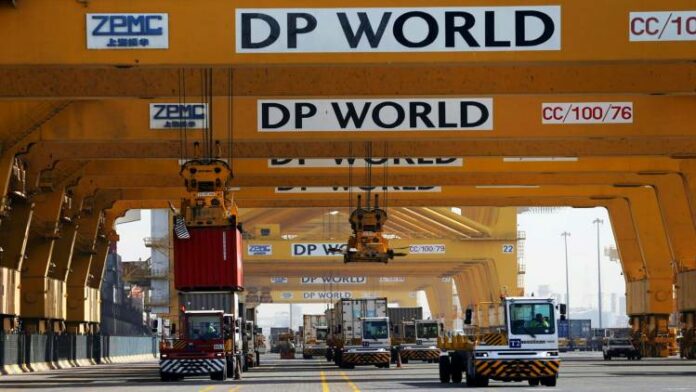
DP World PLC announces the acquisition of the holding company of P&O Ferries and P&O Ferrymasters (together P&O Ferries) for a purchase consideration of GBP322mn (USD421mn¹), implying a 2017 Enterprise Value/EBITDA valuation multiple of 6.1x. 

P&O Ferries is a pan-European integrated logistics business consisting of a market leading roll-on roll-off (Ro-Ro) ferries operation and a European transportation and logistics solutions provider, P&O Ferrymasters. P&O Ferries operates a fleet of 21 vessels on the Short Sea, North Sea and Irish Sea sectors across 11 ports whilst P&O Ferrymasters provides supply chain solutions in 19 European locations. P&O Ferries handles over 2.5mn freight units per year which accounts for approximately 75% of group revenues. P&O Ferries reported FY2017 revenues of GBP1.1bn (USD1.4bn) and EBITDA of GBP100mn (USD131mn). The acquisition is expected to be earnings accretive from the first full year of consolidation and is expected to meet DP World’s return targets. On a proforma basis, DP World’s net leverage as of 1H2018 would be 2.96x Net Debt to EBITDA with this acquisition compared to the reported 2.91x.

The transaction is subject to customary completion conditions and is expected to close in the first half of 2019. As the acquisition is considered a related party transaction under the DFSA Market Rules, DP World will comply with the relevant requirements of DFSA Market Rule 3.5.3.

Sultan Ahmed Bin Sulayem, Group Chairman and CEO, DP World, said: “We are pleased to announce the return of P&O Ferries back into the DP World family. P&O Ferries is a strong, recognisable brand and adds a best-in-class integrated logistics provider into our global portfolio. Importantly, P&O Ferries provides efficient European freight connectivity building on last year’s acquisition of Unifeeder. This transaction is in line with our strategy to grow in complementary sectors, strengthen our product offering and play a wider role in the global supply chain as a trade enabler."

P&O Ferries has delivered a robust performance in recent years and we aim to drive further value through increasing efficiencies and offering value-added solutions to our customers. Overall the transaction offers compelling value strategically and financially, and we look forward to P&O Ferries contributing to driving shareholder value in the coming years. 
Rotterdam Port Fund invests in remote inspection robotics company

0

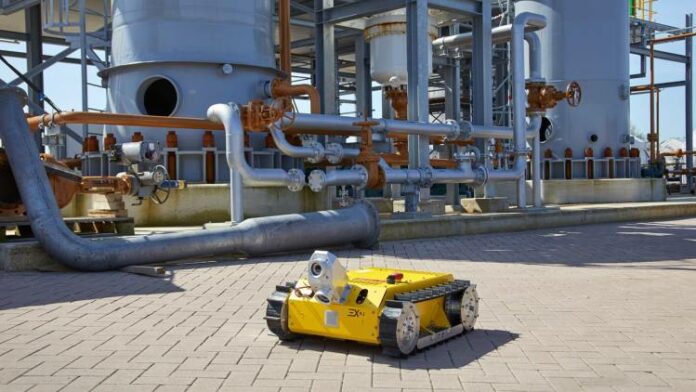
Rotterdam Port Fund has invested in a company specialising in robots to operate in high risk environments such as oil and gas facilities.

The fund has acquired a stake in Dutch company ExRobotics which manfacturers modular robots that can carry out remote inspections of oil and gas facilities more efficiently and with a lower safety risk than those carried out by humans.

“The robots’ potential applications in the oil and gas industry touch on themes that we consider particularly important, like safety, maintenance and digitalisation,” said Frans van der Harst of Rotterdam Port Fund. “We are delighted that we are able to support ExRobotics in their ambitions and to help put these robots on the market.”

The investment will give ExRobotics both funding and access to the Rotterdam Port Fund network.

“Rotterdam Port Fund’s participation will enable us to sell our robot all over the world,” said Iwan de Waard general manager of ExRobotics.

The independent investment fund is an initiative of the Port of Rotterdam Authority, NIBC Bank, InnovationQuarter, Royal Doeksen and the Rotterdam entrepreneurs Peter Goedvolk and Luc Braams.

Source:seatrade-maritime

Ports of Genoa enter IPCSA

0

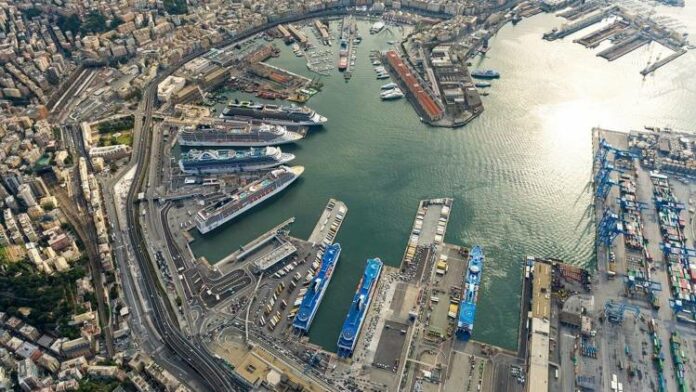
Ports of Genoa, one of Europe’s busiest trade hubs, has become the 40th member of the International Port Community Systems Association (IPCSA). The port authority has joined the organization to support its integration of ‘Port Community Systems’, as well as enhancing and developing new functions and modules.

Specifically, Genoa and Savona operate more than 15 million electronic import and export documents annually, while they also manage about 20.000 users, 1.500 companies and 6 container terminals.

Paolo Emilio Signorini, Ports of Genoa Chairman stated "The two Port Community Systems will merge, under the umbrella of the Italian Logistics Platform, which is an unusual feature compared with other countries."

He continued stating that the port entered IPCSA because they want to share experiences and learn from international and national contexts.

Mainly, Genoa was the first Italian port to be included into the Italian Logistics Platform, created by the government to connect ports with inland freight villages and promote the development of the entire national logistics system.

In the past ten years, cargo volumes at the port of Genoa have experienced an increase of 61%, prompting the authority to achieve a 47% decrease in import cycle times.

The port's chairman addressed that although the port's infrastructure and transport connections have been stable, the results came from the contribution of Information Technology and the development of E-port.

In our case, it is very clear that organisation and technology have been crucial in the development of our traffic in recent years.

Source:safety4sea

Watch: Tango FLNG arrives in Bahia Blanca, Argentina

0

Tango FLNG (floating LNG), previously known as the Caribbean FLNG, arrived in Argentina on early February.  The gas unit voyaged from China onboard a heavy lift vessel. The floating LNG unit will remain in Argentina and produce LNG for export for the Argentinian energy company YPF over a 10-year period.

The FLNG unit belongs to Nicolas Saverys-led shipowner Exmar, and its following accomplishment includes outfitting and commissioning the unit.

Also, the departure of the first conventional LNG vessel is planned in the Q2 in 2019, according to the company.

Tango FLNG is the first project that uses Exmar's FLNG technology.

The unit will be the first FLNG to produce LNG in the Americas. Therefore, Argentina will be for the first time a LNG exporter.

Finally, Tango FLNG is designed to operate with a liquefaction capacity of about 0.5 million tonnes of LNG, annually, and will serve YPF in exporting Vaca Muerta gas reserves to international markets.

Source:safety4se

General cargo vessel collides with offshore service vessel off Germany

0

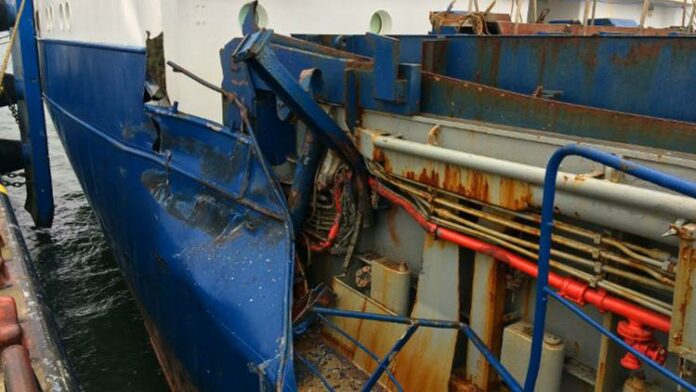
General cargo vessel Raba collided with crew transfer vessel World Bora in the Baltic Sea near Germany yesterday, resulting in injuries to the 15 people onboard the World Bora.

The collision happened while the offshore vessel was on its way to the Wikinger offshore windfarm. It was carrying 15 people in total, made up of four crew members and 11 technicians.

The cargo vessel, operated by Polish company Baltramp Shipping, was on its way from Copenhagen to Szczecin.

Ten of the fifteen injured were seriously injured, while the other five suffered minor injuries. There were no injuries reported on the Raba.

According to World Marine Offshore, the owner of World Bora, both of the two vessels were able to return to port under their own power with minor damage to the upper part of their hulls.

The German Society for Rescue of Shipwrecked responded to distress calls and escorted the World Bora to the port of Sassnitz where the rescue teams conducted examinations.

World Marine Offshore has also initiated a full and thorough investigation in co-operation with local and Danish authorities.

Source:splash247

Rockwell Automation, Schlumberger to form joint venture

0

Rockwell Automation and Schlumberger have entered into an agreement to create a joint venture named Sensia.

The transaction is expected to close in the summer of 2019, subject to regulatory approvals and other customary conditions.

The joint venture is said to be the first fully integrated provider of measurement solutions, domain expertise, and automation to the oil and gas industry. It will offer scalable, cloud and edge-enabled process automation, including information and process safety solutions. From intelligent systems to fully engineered life-cycle management automation solutions, the joint venture will help drive efficiency gains through measurement and data driven intelligent automation.

Under the terms of the agreement, Sensia will operate as an independent entity, with Rockwell Automation owning 53% and Schlumberger owning 47% of the joint venture. The company will have about 1,000 employees serving customers in more than 80 countries, with global headquarters in Houston. 

Allan Rentcome will serve as CEO. He is currently Director Global Technology – Systems and Solutions Business at Rockwell Automation.

Source:offshore-mag

AI and automation to boost seafarers’ job

0

Artificial intelligence and automation will improve the human's place in the near future. Mainly, Jeremy Bogaisky, Deputy Editor at Forbes, quotes that autonomous and remote-control shipping is sure to decrease cost of consumer goods and enhance safety for passenger ferries and cruise liners.

In 2017, Ugo Vollmer and Clement Renault were developing automated cars when they decided to switch to autonomous shipping as the next big thing of the future.

Both French engineers began focusing on robotisizing a small boat along with Antoine de Maleprade.

Three months after joining the incubator Y Combinator in January 2018, they collaborated with CMA CGM to install a system on cargo ships plying trans-Pacific routes that detects surrounding ships and obstacles.

Moreover, the first commercial vessels to be autonomously-operated will be tugboats and small ferries travelling to short distances.

Yet, although it is said that automation may reduce seafarers, oceangoing ships can have 20 or more crew members onboard, some of whom tend to a range of mechanical systems en route.

As Oskar Levander, head Roll-Royce’s autonomous systems efforts, commented "Diesel engines require replacement of filters in oil systems—the fuel system has a separator than can get clogged. There are a lot of these things the crew is doing all the time."

It is more likely that the helm will be controlled by autonomous systems or human-remote operations, whereas smaller crew will take care of the vessel.

For instance, Wartsila published on February, it's first ever dock-to-dock automation, presenting the benefits of the autonomous vessel.

Also, in December in Finland, Rolls-Royce presented the first public demonstration of an autonomous voyage by a passenger vessel, a state-run car ferry that avoided obstacles on a 1-mile route and docked automatically.

According to Forbes, the first commercial applications of autonomous systems are likely to be on small vessels in coastal waters in Scandinavia, where Finland and Norway have staked out testing areas.

In addition, Levander supports that autonomous ferries will be very useful to Scandinavia, as they could enable expansion of service on short routes into nighttime hours, and reduce staffing on less popular ones, with boats potentially piloted from onshore centers where one captain could supervise many.

He continued stating that many from the industry think that new-built electric vessels although will be ideal to robotize cargo shipping, electric propulsion systems will have fewer moving parts and require less maintenance.

However, it acquires decades for cargo fleets to turn over, as vessels typically stay in service for about 20 years and batteries don’t have enough energy density yet to power ships for cross-ocean voyages.

Nowadays, large vessels have marine-tested sensor systems, such as GPS, radar and a transponder-based automatic identification system. In addition, microphones are useful since they can acknowledge a vessel's horn and by algorithm the system can pinpoint its location.

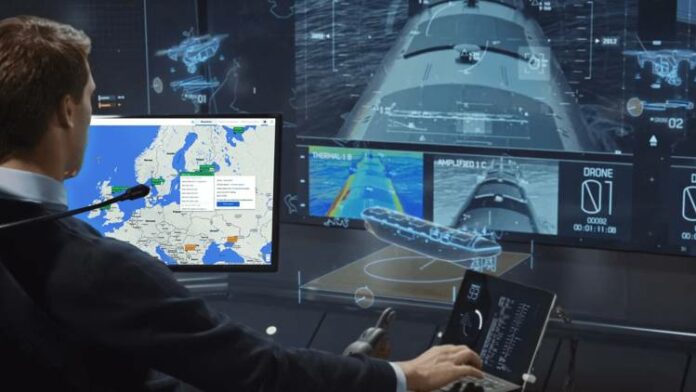
In the future, ships will be autonomously operated. For example, Levander addresses that going in and out of port the ship would be controlled remotely by a captain in a centre onshore, with video and other data streaming over land-based 4G and 5G networks.

When sailing on open water, the ship would switch to autonomous mode, which wouldn’t require as much data transmittal, with captains ashore standing by to take over as needed, aided by satellite communications.

Levander noted that with automation, there will be more jobs ashore, so the life of seafarers' will be safer.

The captain doesn’t have to be away for six months at a time and can have a family life. We can provide a better life for the seafarer.

Finally, automation will bring situational awareness systems, that are expected to decrease accidents; from 2011 through 2016, 75% of incidents at sea that resulted in liability insurance claims were due to human error.

Source:safety4sea

Pressure grows on Brussels to repeal liner block exemption regulation

0

A host of transport-related associations have joined forces to urge the European Commission to repeal the EU consortia block exemption regulation (BER), which is currently under review in Brussels.

Nine associations – comprising shippers, forwarders, ports, barge and tug operators – yesterday determined that the BER, which comes up for renewal shortly, is now obsolete.

In a release the associations described the BER as a “generous exemption from normal competition rules”.

“[M]arket developments which occurred over the last five years justify an in-depth review of the regulatory framework as this has not been done since 2009,” the associations stated, adding that the liner market concentration – either via mergers or new alliances – had created a negative environment for their businesses and their customers.

The grouping cited a recent report from the International Transport Forum (ITF) which concluded that “the impacts of alliances on the containerised transport system taken as a whole seem to be predominantly negative”.

The associations jointly concluded that the European Commission should repeal the BER unless a revised regulatory framework clarifying the current legislation is adopted.

The BER could be extended for a further five years beyond its current 2020 expiration date with Brussels currently seeking feedback from stakeholders on the issue, something that has generate a vast swathe of response from across the maritime landscape.

In December four trade associations representing the international liner shipping industry – the World Shipping Council (WSC), the European Community Shipowners’ Associations (ECSA), the International Chamber of Shipping (ICS), and the Asian Shipowners’ Association (ASA) – submitted their comments to the European Commission supporting an extension of the regulation.

The industry comments claim vessel sharing arrangements are a fundamental part of the structure of the global liner shipping transportation network and that the consortia BER has since 1995 provided transparent and practical legal guidance to vessel sharing arrangements for international liner shipping services operating from and to EU ports.

The submission from the liner-linked bodies went on to maintain that despite recent mergers in the liner industry, the industry remains unconcentrated and highly competitive, with freight rates at half of their levels 20 years ago.

In a 127-page report on container alliances issued in November, the International Transport Forum (ITF), administrated by the Organisation for Economic Co-operation and Development (OECD), called on the EU to not renew the BER.

“A repeal of block exemptions is unlikely to result in the termination of current and future alliances, as these could still be authorised under competition law on a case by case basis,” ITF explained, adding: “However, it would ensure greater scrutiny of individual alliances and thus more effectively deter any anticompetitive conduct in the sector.”

Among the many submissions made to Brussels on the matter, one from an anonymous European shipowners association stands out. The 18-page document, seen by Splash, argues that the BER will inevitably lead to European companies fading as tonnage providers.

“Consortia members appear to interpret the Consortia BER as allowing coordinated or joint purchases/charters from tonnage providers,” the submissions alleges, adding that the current regulation does not sufficiently clearly deal with this kind of coordination, thereby causing harmful effects to competition, quality and sustainability of European tonnage providers.

The BER provisions, the submission claims, have been used against tonnage providers.

“Liner companies engaging in consortia have extensively coordinated their chartering activities (even though never officially declared to outsiders) during the past decade without a single known case during which this practice was challenged by authorities,” the anonymously penned document states, adding: “The negotiation power of consortium members is significantly higher than that of independent liner companies, thereby keeping charter rates artificially low.” The authors observe how the correlation between the percentage of ships unemployed and the development of charter rates have significantly decreased over the last 10 years.

The submission concludes: “In the long run, if selling below cost, tonnage providers in the EU are going to be substituted by tonnage providers from outside the EU. This will lead to dependencies from non-EU countries and can significantly raise the costs of end customers and consumers.”

Source:splash247

U.S. Navy Destroyer Repeats Black Sea Patrol

0

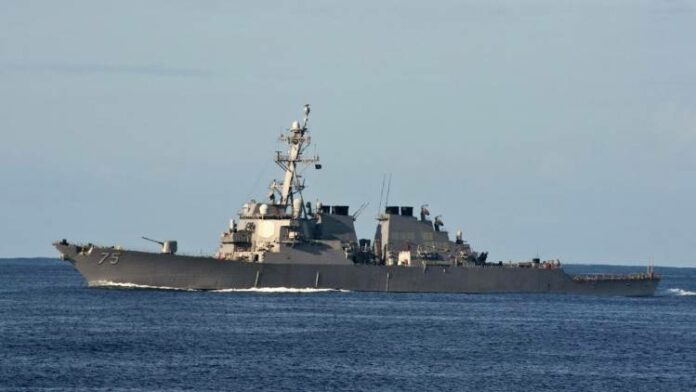
The U.S. Navy destroyer USS Donald Cook has transited the Bosporus and returned to the Black Sea, repeating a voyage that she made last month as tensions between Russia and Ukraine mount. 

The Montreux Convention, which gives Turkey governance over the Bosporus, lays restrictions on the presence of foreign warships in the Black Sea. These terms include a 21-day time limit for warships from non-Black Sea states, meaning that the Cook cannot stay within the Black Sea for more than three weeks at a time – but she can exit and return again.

The Cook's return comes at a time of heightened tensions between Russia and Ukraine over the governance of the Kerch Strait, the narrow waterway between the Black Sea and the Sea of Azov. Russian forces rammed, fired upon and detained three Ukrainian naval vessels on the Black Sea side of the strait in November, and Russian prosecutors have filed criminal charges against 24 Ukrainian sailors who were captured during the altercation. The United States and its allies in Europe have called on Russia to release the detainees. 

Adm. James Foggo, the commander of U.S. Naval Forces Europe-Africa, said last week that the sailors' detention "irritates me to no end.” At the Munich Security Conference last week, Foggo told reporters that the prisoners were not being treated in accordance with their rights as military servicemembers. “They are uniformed Ukrainian sailors and officers and chiefs. They’re not criminals, and they are being charged under a criminal code," he said. "That is just absolutely wrong, and it is not the kind of behavior that you would expect from a major power – which Russia wants to be.” 

For its part, Russia maintains that the incident occurred in Russian territorial waters, not in the international waters of the Black Sea, and insists that the Ukrainian crews were trespassing over its "maritime borders." 

Russian drills

According to the Ukrainian media outlets UNIAN and Ukrainian Military Portal, Russia is holding a live fire drill on the north side of the Kerch Strait from February 18-20, overlapping the time period of the USS Donald Cook's arrival in the Black Sea. The drill closure area is located in Temryuk Bay, an area of the Sea of Azov located to the northeast of the strait. 

In addition, the drills include an electronic-warfare exercise on the south side of the strait, in the same area as the encounter between Russian and Ukrainian forces last November. 

The drills are the latest in a series of Russian restrictions on shipping through the strait. In his comments last week, Foggo described these limits on merchant shipping as "economic strangulation" targeting the Ukrainian economy. 

Source:maritime-executive

South Pars 24A platform in place offshore Iran

0

The HL5000 barge has installed the second offshore platform at the South Pars phases 22-24 project in the Persian Gulf.

Pars Oil and Gas Co. told news service Shana that ‘push-pull’ technology was applied to place the 2,300-ton 24A satellite platform structure at its offshore location over a two-week period.

Once fully operational, the platform will deliver 14.2 MMcm/d of natural gas. The main Phase 22 platform came online in January.

Phases 22-24 will eventually produce 56 MMcm/d of sour gas, 50 MMcm/d of methane, 2,900 t/d of LPG, 2,750 t of ethane, 75,000 b/d of gas condensate, and 400 t/d of sulfur.   

A consortium of Petrosina Arya and Iran Marine Industrial Co. (SADRA) is responsible for construction of the facilities.

Source:offshore-mag