1.1 C
New York
Home Blog Page 1109

SEALNG Welcomes First North American Port Member

0

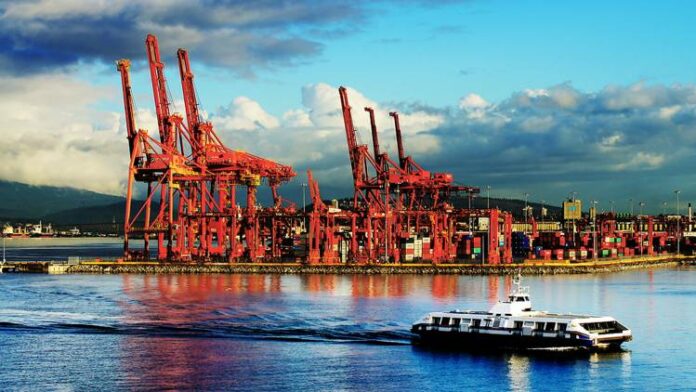
The Vancouver Fraser Port Authority has joined SEALNG, the multi-sector industry coalition aiming to accelerate the widespread adoption of liquefied natural gas (LNG) as a marine fuel. The Vancouver Fraser Port Authority is the federal agency of the Port of Vancouver, Canada’s largest port, and the fourth port member to join the coalition, alongside Port of Rotterdam, Yokohama-Kawasaki International Port Corporation (YKIP), and most recently the Maritime and Port Authority of Singapore (MPA). 

SEALNG’s vision of a competitive global LNG value chain for cleaner maritime shipping by 2020 has clear synergies with the Vancouver Fraser Port Authority and British Columbia’s efforts to drive further use of natural gas in the Canadian region. The Vancouver Fraser Port Authority is working closely with the regional gas supplier, Fortis BC, and with industry, academia and government to advance LNG bunkering in the Port of Vancouver.

SEALNG unites industry players from across the LNG marine value chain, from major LNG suppliers, shipping companies, infrastructure providers, downstream companies, and shipyards, to original equipment manufacturers, classification societies, port authorities, shipbrokers, and financial institutions, to address the commercial barriers to LNG, particularly in the deep-sea shipping segment.
 
Together, the coalition advocates for collaboration, demonstration, and communication on key areas such as regulation, emissions, infrastructure, and the economic case, to provide the confidence and demand required for an effective and efficient global LNG value chain by 2020 and beyond.
 
Through the use of best practices and appropriate technologies to minimize methane leakage, realistic reductions of GHG by 10-20 percent are achievable, with a potential for up to 25 percent or more as technology develops, compared with conventional oil-based fuels. LNG, in combination with efficiency measures being developed for new ships in response to the IMO’s Energy Efficiency Design Index (EEDI), will provide a way of meeting the IMO’s target of a 40 percent decrease in GHG by 2030 for international shipping. 

Source:maritime-executive
Guangdong invests in new port project at Bohe

0

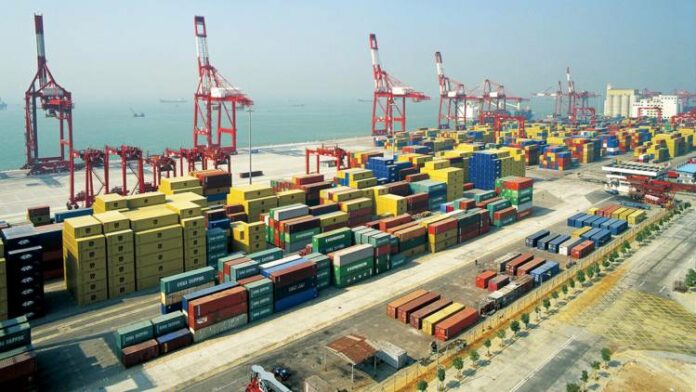
China’s southern Guangdong province plans to develop a new port area at Bohe, Maoming city to improve cargo handling capacity for the west area of Guangdong.

The Bohe new port area is jointly invested and will be constructed by Guangzhou Port Group and Maoming Port Group. The planned port area is 20 square kilometres.

The new port will be divided into east operation area and west operation area. The east part will feature large-sized deepwater berths, servicing coal, crude oil, ore and container cargo transportation. The west part will have general cargo berths servicing local manufacturing and harbor industries.

Bohe new port area will have 40 berths when the entire project is completed, including 32 berths above 10,000 dwt. The overall port handling capacity is estimated at 65m dwt by 2020 and 112m dwt by 2030.

Source:seatrade-maritime

Another world first for Wärtsilä will deliver impressive fuel and emissions savings

0

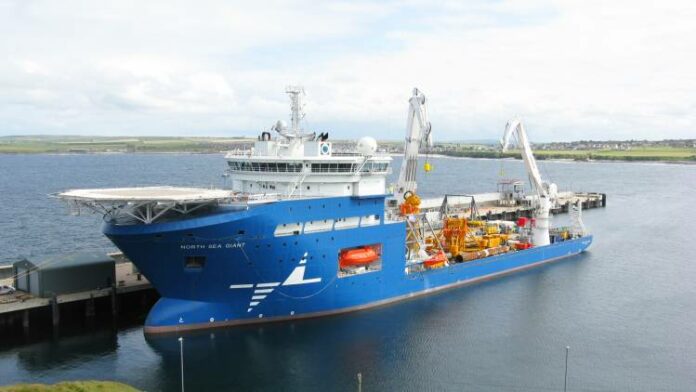
A benchmark installation of three energy storage systems by the technology group Wärtsilä onboard an offshore construction vessel features, for the first time ever, energy and load sharing capability. The system combines a diesel-electric configuration with batteries, and is designed to deliver impressive fuel savings for the ship of as much as 50 percent, given optimal operating conditions.

The installation was carried out in February 2018 onboard the North Sea Shipping AS owned ‘North Sea Giant’, one of the world’s largest and most advanced subsea construction vessels. In a second phase of the project, Wärtsilä commissioned an electronic bus link, a newly developed module that allows the ship to share load and energy optimally between the three Wärtsilä energy storage systems. This technology is expected to generate additional operating cost savings, and a total reduction in annual fuel consumption of two million litres. The estimated annual reduction in exhaust emissions is 5.5 million kg of CO2, 30 tons of nitrogen oxides (NOx), and 1200 kg of sulphur oxides (SOx).

“This is a forward looking solution that offers both cost and environmental benefits, including less maintenance, reduced fuel consumption, and fewer exhaust emissions. In addition, it promotes more efficient and safer operations for the ship. We are confident that the positive impact of this solution will eventually be felt throughout the industry,” says Sindre Utne, General Manager, Wärtsilä Project Centre, Norway.

“The project has been driven by our focus on reducing the environmental impact of offshore oil-related operations in the North Sea. The advanced Wärtsilä energy storage system is important, because of both the favourable fuel consumption as well as its sustainability. Seabed installations are increasingly moving further north into very sensitive environmental areas, which makes this system extremely relevant,” says Hallvard Klepsvik, CEO of North Sea Shipping AS.

The three Wärtsilä energy storage systems reduce load fluctuations on the ship’s diesel generators. Typically, vessels utilising dynamic positioning require two or more engines operating simultaneously at low load to secure back-up power. By using the Wärtsilä hybrid battery system to provide the needed reserve power, the operational engine can be run closer to its optimal load point.

Singapore port handles lesser containers in February

0

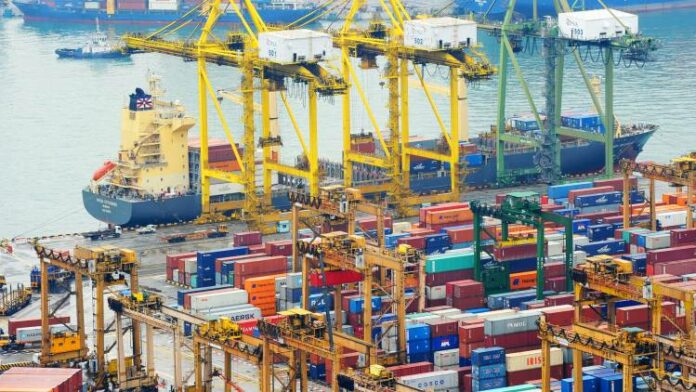
The port of Singapore has handled lower container volumes in February, according to preliminary estimates released by the Maritime and Port Authority of Singapore (MPA).

Last month, Singapore moved 2.74m teu of containers, a decrease of 2.8% compared to 2.82m teu handled in February 2018, MPA figures showed.

February throughput was also lower on a month-on-month comparison with January registering 3m teu.

In the first two months of this year, Singapore recorded a total throughput of 5.74m teu, inching down 1.4% compared to 5.82m teu posted in the previous corresponding period.

In 2018, Singapore moved a record high throughput of 36.6m teu, up from 33.67m teu seen in 2017.

Source:seatrade-maritime

Partners Group invests in Greenlink

0

Private markets investor Partners Group has provided equity financing for the 500-MW Greenlink interconnector,  the subsea connection between Wales and Ireland in exchange for a stake in the scheme.

To-date, Greenlink has been developed by Element Power, an independent renewable energy developer, which, together with funds managed by Hudson Sustainable Investments, is the other major shareholder in Greenlink.

Greenlink will use a subsea high-voltage direct current (HVDC) cable system to connect the power markets of Ireland and Great Britain, improving the security of electricity supply in both countries and reducing average electricity costs for consumers. It will stretch approximately 200km underground and under the sea between County Wexford in Ireland and Pembrokeshire in Wales.

The project is considered of critical importance in Europe and has been awarded "Project of Common Interest" status by the European Commission as well as granted funding from the EU's Innovation and Networks Executive Agency. Construction is scheduled to commence in 2020 and is expected to be completed by 2023.

Esther Peiner, Managing Director, Private Infrastructure Europe, Partners Group, stated: "Greenlink Interconnector is a key electricity infrastructure project for Ireland and Great Britain. With the build-out of renewable energy generation in both countries, particularly the growth of offshore wind, infrastructure like Greenlink is essential to facilitate the low carbon economy as it will allow surplus renewable power to be exported between the two countries."

Esther added: "Once completed, this interconnector will not only benefit consumers in Great Britain and Ireland, but will also enhance security of supply."

Source:marinelink

Orsted raises Hollandse Kust Zuid 3&4 stakes

0

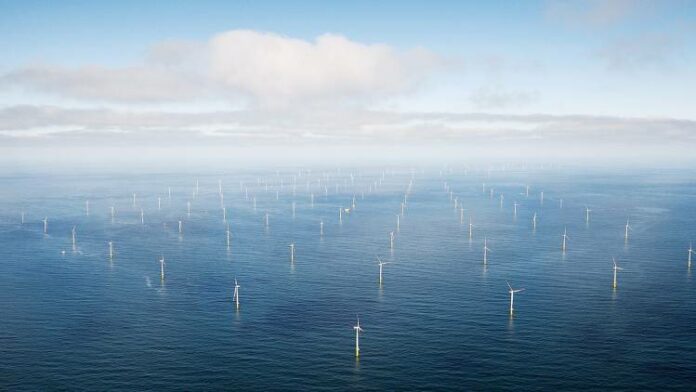
Orsted is the latest developer to submit a bid into the offshore wind tender for Hollandse Kust Zuid 3&4, having lined up financing for the project.

As part of its bid the company is also committed to establish green hydrogen projects that will take power generated from its Dutch offshore wind farms.

Company chief executive Henrik Poulsen said: "Production and sale of green hydrogen to large industrial customers can help stabilise revenues from offshore wind farms which rely on the market price of power.”

He said Orsted is ready to scale-up and bring down costs of green hydrogen like it has done with offshore wind.

As part of its proposal to the Dutch government, Orsted has already taken the final investment decision on Holland Kust Zuid, which could be up to 760MW in size.

Orsted Offshore chief executive Martin Neubert said: “The funding is secured and guaranteed on our balance sheet, so if the Dutch government selects Orsted, they can be certain that the wind farm will be built."

Orsted is already engaged in the Dutch offshore wind market having won the 752MW Borssele 1&2 project tender in 2016. It will be Holland’s largest offshore wind farm when completed in late 2020-2021.

Earlier this week a consortium of Shell, Van Oord and Eneco called Witwind joined the bidders for Hollandse Kust Zuid 3&4 and at the end of last month, Vattenfall said it was also bidding for Hollandse Kust Zuid 3&4.

Source:renews

Boskalis clinches contract to widen Australian shipping channel

0

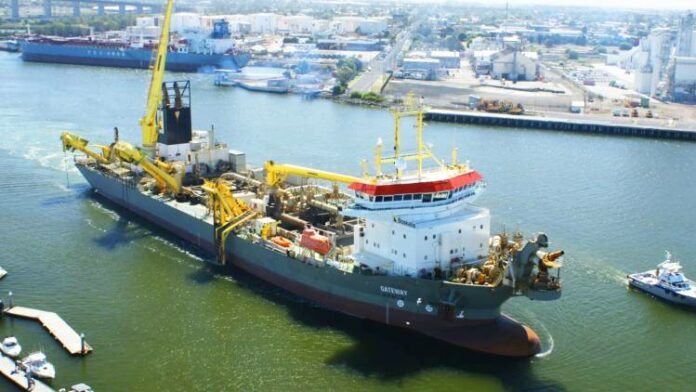
Royal Boskalis Westminster N.V. (Boskalis) has clinched a EUR40m ($45m) contract for the widening of Australia’s Port Adelaide Outer Harbor shipping channel.

Boskalis will widen the shipping channel to 170 metres from the current 130 metres, and extend the turning basin to accommodate the larger post-panamax containerships which are increasingly dominating global containerised cargo transport.

The expanded channel will also accommodate larger cruise ships to support the tourism industry.

The dredging project was awarded by port owner and operator Flinders Ports. Work is planned to start in the second half of 2019.

“Flinders Ports and Boskalis are committed to minimising the environmental impact of the channel widening program and maximising the ongoing health of the marine environment in line with the strict requirements of the Environment Protection Authority dredging license,” Boskalis stated.

Source:seatrade-maritime

Extending life of eight installations

0

Equinor has received the authorities’ approval for extending the life of eight installations on the Norwegian continental shelf (NCS) during the last three years.

Several of these installations were originally scheduled for shutdown already, or in only a few years. Instead, the extensions will give many more years of operation on the NCS.

“Field life extension is an excellent way of managing resources, as it creates high value from established fields, where we cooperate with our suppliers on safe operation and lower emissions every single day. It also creates more activity offshore, in line with our ambition of pursuing our profitable and sustainable development of the NCS,” says Arne Sigve Nylund, executive vice president for Development and Production Norway.

The eight life extensions involve Gullfaks A, B and C (2036), Oseberg East (2031), Snorre A and B (2040), Norne (2036) and Åsgard A (2030).

“It helps secure thousands of jobs offshore and onshore and considerable revenue to society, owners and suppliers. As an example, Gullfaks is currently creating more than 1500 jobs directly on three platforms, in addition to onshore jobs with Equinor and our suppliers and local spinoffs across the country,” says Nylund.

In 2018, Gullfaks produced oil and gas at a value of close to NOK 28 billion and investments of NOK 4.7 billion were made.

Equinor plans to extend the life of more than 20 NCS installations in total. The company is expected to apply for extending the life of all older and relevant installations by 2031.

Equinor has submitted applications for consent to the authorities for furtheroperation of Vigdis, Tordis and Veslefrikk. Applications for life extension of Troll B and Heidrun Subsea are scheduled to be submitted this year.

Safe and efficient operation of our fields also form the basis for innovation relating to carbon capture and storage, floating offshore wind farms and hydrogen,” says Nylund.

At this year’s capital markets update Equinor presented plans that will lead to record production from its operated NCS installations in 2025.

Continuous focus on extending the life of our fields is one of the reasons for the company’s record production.

Eni makes another large deepwater oil find off Angola

0

Eni has discovered another large oil field in block 15/06.

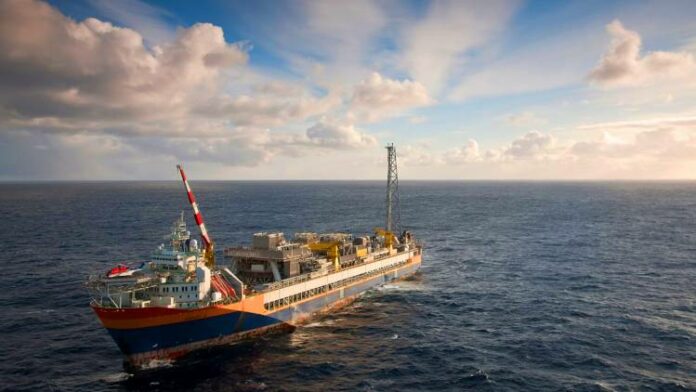
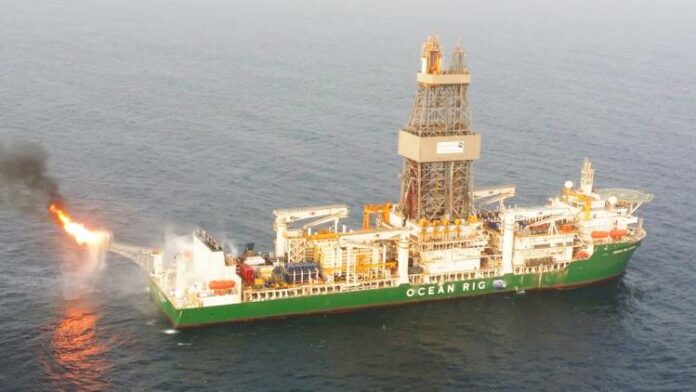
The drillship Poseidon drilled the Agogo-1 NFW well in 1,636 m (5,367 ft) water depth, 180 km (112 mi) offshore and around 20 km (12.4 mi) west of the FPSO N’Goma serving the block’s West Hub.

Eni estimates in-place light oil in the range of 450-650 MMbbl, with further upside.

The well encountered a single oil column of around 203 m (666 ft) with 120 m (394 ft) of net pay of good quality (31° API) oil in a subsalt diapirs setting in Lower Miocene sandstones with strong petrophysical properties.

Well results indicate a production capacity of more than 20,000 b/d.

This was the third new commercial find on the block since the partners resumed exploration drilling last year. The earlier discoveries were Kalimba and Afoxé.

Agogo also opens the potential for new opportunities for oil exploration below salt diapirs in the northwestern part of the block, Eni added. The company used its proprietary seismic imaging technologies for mapping and drilling of the prospect.

Other partners in the Block 15/06 Joint Venture are Sonangol P&P and SSI Fifteen.

The focus now will be on appraising the discovery and initiating studies for fast tracking development, Eni said.

Qatar Petroleum set to enter exploration offshore Morocco

0

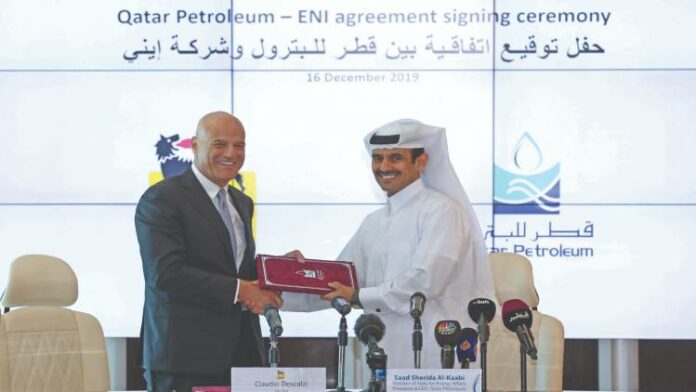
Eni has agreed to farm out a 30% interest in the Tarfaya Offshore Shallow Petroleum Agreement to Qatar Petroleum, subject to approval by the Moroccan authorities.

The 23,900-sq km (9,228-sq mi) Tarfaya Area, covering 12 exploration blocks, is in waters up to 1,000 m (3,281 ft) deep off the country’s southern coast.

Eni Maroc operates in partnership with state-owned Office National des Hydrocarbures et des Mines (ONHYM).

Currently the focus is on geological and geophysical studies to fulfil commitments for the first exploration period work program.

Assuming clearance for the transaction, Eni will have a 45% interest, Qatar Petroleum 30%, and ONHYM 25%.

Eni and Qatar Petroleum are also partners in exploration acreage offshore Mozambique, Oman, and Mexico.

Source:offshore-mag