-5.3 C
New York
Home Blog Page 1108

Dutch JV opens Vlissingen offshore hub

0

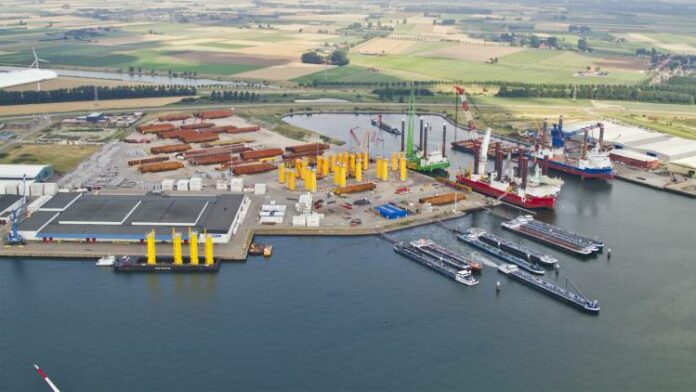
A joint venture of Sagro and Prior Group called Green Blue Offshore Terminal has opened a logistics hub at the port of Vlissingen in the Netherlands to offer services for the offshore wind industry.

Green Blue Offshore Terminal aims to provide assistance for construction, modification, repair and maintenance of projects, as well as storage facilities.

It offers 22,000 square metres of workspace and a 125-metre long manufacturing hall at Estlandweg in Vlissingen-Oost.

Prior Group's Bram van Stel and Sagro Group's Raoul de Jonge said: “Initiatives often die in silence because of insufficient regional capacity in the form of temporary workers or work space."

“This usually concerns: technical, co-supporting solutions related to technical demands. For this reason, a number of regionally operating companies are working together offering a solution as in a total package.”

Source:renews

Denmark aims to a future of smart shipping

0

Denmark aims to a smart and sustainable future with the launch of ShippingLab this March. The platform will be used for maritime research, development and innovation and consists of 30 partners. The project is scheduled to run for three years.

Specifically, the goal of this partnership is to develop Denmark’s first autonomous, environmentally friendly ship. The pathway to achieving that goal will also include workstreams on digital ship operation and decarbonization, according to J. Lauritzen, a shipping company amongst the rest of the partners.

Denmark aims on developing digital operations to find intelligent solutions, by adopting machine-learning data analytics for instance.

Moreover, the workstream on decarbonization will get an insight on areas such as the electrification of ship propulsion and the use of various power sources in a hybrid setup.

The goal is to introduce clean tech solutions with low or no carbon footprint.

Shipping companies J. Lauritzen, Maersk Tankers, DFDS, Torm and a range of other shipping firms, industrial maritime suppliers, research and technology institutions and universities have formed the partnership.

In addition, Danish Funds including the Danish Innovation Fund, the Danish Maritime Fund and Lauritzen Fonden are supporters of this innovation.

J. Lauritzen is involved in different subgroups of ShippingLab and Senior Vice President, Claus Winther Graugaard, Head of Fleet Management, is a member of the steering committee of the partnership.

In light of ShippingLab, the Senior Vice President commented

The ShippingLab innovation platform is a fantastic collaboration opportunity for J.Lauritzen and its industry peers to partner up with mutual interest and motivation to identify and apply new clever solutions and technology to a number of use cases.

He continued that the innovation is an attempt to combine players in the Blue Denmark with those participating in the ShippingLab and compete against the rest of the world.

The group that launched ShippingLab represents a selection of Blue Denmark, the country’s maritime cluster. Yet, Shipping Lab is not a closed initiative, so that additional organizations participate.

US Navy’s review concludes to a widespread Chinese hacking

0

According to a new internal review that was conducted by Navy secretary, Richard Spencer, the US Navy R&D ecosystem is 'under cyber siege' by hackers. The results of the review concluded that the Navy's digital secrets have been so thoroughly plundered by Chinese infiltrators that the service doesn't even know what or how much it has lost.

According to the review, the most representative example is the theft of confidential information from Navy contractors last year, which gave Chinese government hackers access to plans for the service's new hypersonic anti-ship missile.

In addition, Chinese state-backed hackers are the most crucial threat for the US Navy.

Independent researchers have identified the hacking group TEMP.Periscope, also known as Mudcarp, APT 40 and Leviathan, as a particularly active Chinese-affiliated cyber-espionage outfit, with a specific interest in maritime technology.

TEMP.Periscope has actively targeted American university researchers, contractors and other organizations involved in the development of marine systems: according to cybersecurity firm iDefense, the group targeted 27 universities with spearphishing attacks last year, including Woods Hole, MIT, the University of Washington, Penn State, Duke and others.

IT research firm Proofpoint identified the group's activities and its focus on American maritime R&D back in 2014, but further successful attacks continued for years.

The review made the service assess the situation and proceed to the relevant solutions.

With urgency the Department of the Navy Secretariat along with the Chief of Naval Operations and the Commandant of the Marine Corps, will coordinate with the Department of Defense and Congress for the resources required to compete and win in the cyber domain.

"Leadership has already initiated this process as part of a broader review of how best to organize the Department to address the overall challenges of information management; to include not only cybersecurity, but also data strategy and readiness, business system rationalization, and artificial intelligence."… Secretary Spencer said in a statement.

Source:safety4sea

Internet of Things leads component trade expansion

0

Demand for electronic components used in Internet-of-Things (IoT) devices has driven the value of trade in international imports of information and communications technology (ICT) goods in 2017 to reach $2.1 trillion, according to UNCTAD.

Specifically, it is the first time that ICT goods imports have rebounded since 2014, experiencing a 6% development.

Moreover, according to UNCTAD, trade in ICT products developed a bit faster in comparison to merchandise trade and represented 13.4% of the total in 2017,  down from the 16.1% high during the dot-com boom in 2000; Yet, the highest in two years.

In 2017 machinery and transport equipment accounted for 37% and food for eight% of merchandise imports.

Among ICT products, trade in electronic components continued increasing with an annual growth rate of 8%.

Although China remains the leader exporter of ICT goods, the Republic of Korea reached the highest development rate among the top exporters in 2017.

The share of intra-industry trade remains high in this sector, as big players such as Asia, North America and Europe are amongst the top exporters of ICT goods.

The US was the top importer, followed closely by China and Hong Kong. Mexico was the only economy among the top 10 where ICT goods imports did not grow in 2017.

ICT imports to developed economies showed 10% annual growth.

In 2017, Eastern Asia accentuated its role as the leading export hub, while Africa, Southern and Western Asia all experienced a decrease.

However, at 54% market share, developing economies import more than developed economies, because they have a more significant role in assembling ICT goods and so import significantly more electronic components.

Source:safety4sea

World’s first commercial drone deliveries to vessels at anchorage tested

0

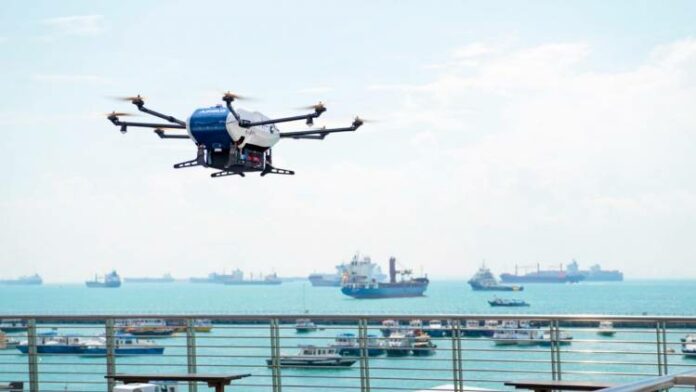
In cooperation with Airbus, Norwegian shipping company Wilhelmsen launched this week a shore-to-ship Singapore pilot project, marking the first deployment of drone technology in real-time port conditions, delivering a variety of items to working vessels at anchorage. Shore-to-ship delivery of this range and scope has never been explored, prior to this trial, Wilhelmsen said.

Lifting off from Marina South Pier in Singapore with 3D printed consumables from Wilhelmsen’s onshore 3D printing micro-factory, the Airbus Skyways drone navigated autonomously along pre-determined ‘aerial-corridors’ in its 1.5km flight to Eastern Working Anchorage.

The drone landed on the deck of the Swire Pacific Offshore (SPO)’s Anchor Handling Tug Supply (AHTS) vessel, M/V Pacific Centurion and deposited its 1.5kg cargo without a hitch before returning to its base. The entire delivery, from take-off towards the vessel, to landing back at base, took just ten minutes.

Operations began with a Toolbox Talk with the Wilhelmsen, Airbus and SPO crew to ensure that the risk assessment was understood by all parties. With final safety checks completed, Wilhelmsen’s Marina South Pier team loaded the drone.

Supported by spotters stationed on board the vessel deck to ensure the safety of the crew and vessel, the drone took off towards the vessel, landing on the dedicated area on the main deck where the parcel was retrieved by the officer on board.

Less labour dependent than delivery via launch, autonomous Unmanned Aerial Vehicles (UAVs) can potentially reduce delivery costs by up to 90% in some ports and have a smaller carbon footprint than launch boats. SPO has been an important partner during the detailed final preparation and operational testing of the drone, with the provision of its Anchor Handling Tug Supply.

"We’re confident that this pioneering move of Wilhelmsen will create new opportunities for future collaborations with SPO, improve work efficiency and drive cost savings for players in the offshore industry,"…says Duncan Telfer, Commercial Director, SPO.

Signing a unique MoU with aeronautics company Airbus in June 2018, Wilhelmsen was tasked with setting up the necessary maritime and port operations, gaining relevant approvals from port authorities, with Airbus the overall Skyways system architect and provider, contributing its expertise in aeronautical vertical lift solutions to develop the UAS for shore-to-ship deliveries.

The ongoing pilot trial will for now, focus on offshore supply vessels at anchorage 1.5km from the pier. For safety reasons, flights will be limited to this distance for the time being, before the flight range is gradually extended to as far as 3km from the shore.

MPA Singapore is facilitating the trial, which started in late November 2018, through the interim use of Marina South Pier as the launching and landing point for Airbus’ delivery drone. At the same time, MPA has designated anchorages for vessels to anchor off Marina South for the trial.

The Civil Aviation Authority of Singapore is also working with Wilhelmsen and Airbus to ensure safety of the trials.

Source:safety4sea

 

Eni makes gas discovery offshore Egypt

0

Eni has discovered gas in the Nour exploration prospect in Egypt’s Nour North Sinai Concession in the Eastern Mediterranean Sea.

Located about 50 km (31 mi) north of the Sinai peninsula, the semisubmersible Scarabeo 9 drilled the Nour-1 new field wildcat in a water depth of 295 m (968 ft) and reached a total depth of 5,914 m (19,403 ft).

The Nour-1 well found 33 m (108 ft) of gross sandstone pay with good petrophysical properties and an estimated gas column of 90 m (295 ft) in the Tineh formation of Oligocene age. The well has not been tested, but an intense and accurate data acquisition has been carried out, Eni said.

In the concession, which is in participation with Egyptian Natural Gas Holding Co., Eni is the operator with a 40% stake, BP holds a 25% stake, Mubadala Petroleum a 20% stake while Tharwa Petroleum Co. holds a 15% stake of the contractor’s share.

After finalizing the discovery evaluation, the joint venture will start the feasibility studies to accelerate the exploitation of these new resources leveraging the synergies with existing facilities and infrastructures.

Source:offshore-mag

Talos details Gulf of Mexico drilling campaigns

0

 Talos Energy Inc. has issued an update on its operations in the Gulf of Mexico.

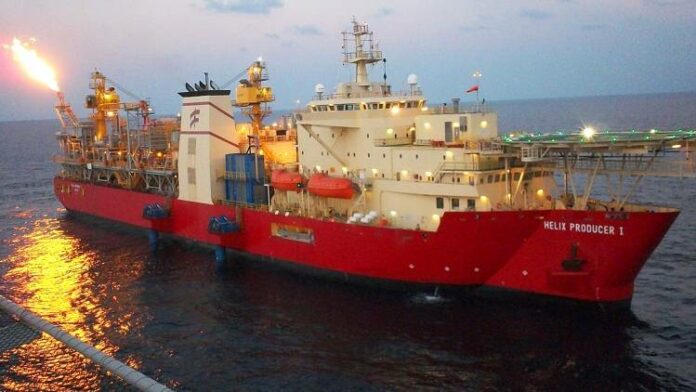
The Helix Producer 1 drydock project was completed in 1Q 2019. The HP-1 departed the shipyard on March 7, 2019. After a period of sea trials, Talos expects production from the Phoenix complex to re-start on or about March 20, 2019, resulting in a total shut-in period of 56 days.

The Tornado 3 well was drilled in December 2018 and is scheduled to begin completions operations in late March, with an expected duration of 21 days. The well is anticipated to start production by early 2Q 2019, with an expected gross production rate between 10,000-15,000 boe/d, or 5,000-7,500 boe/d net to Talos after royalties. Talos is the operator and owns a 65% working interest, with Kosmos Energy owning the remaining 35% working interest.

In January, the Boris 3 well was spudded and drilled to a TD of about 15,000 ft (4,572 m) and logged about 75 ft (23 m) gross and 56 ft (17 m) net of true vertical pay, 360 ft (110 m) updip of 27 MMboe of historical production in the B-4 Sand. Boris 3 is scheduled to begin completion operations in mid-April with an expected duration of 21 days and is expected to initiate production in 2Q 2019. Initial production is expected to be between 3,000-5,000 boe/d gross, or 2,800-4,600 boe/d net to the company after royalties. Talos is the operator and owns 100% working interest in all Boris wells.

The company has signed a participation agreement with a subsidiary of EnVen Corp. to drill the Bulleit prospect on Green Canyon block 21. Talos will be the operator and has an initial working interest of 66.7% in the lease. Bulleit is an amplitude-supported Pliocene prospect with similar seismic attributes to the analogous sand section in the company’s Green Canyon block 18 field, which has produced about 39 MMboe to date.

It expects to spud the well in 2Q 2019. If successful, the well would be completed and tied back to the Talos-owned and -operated facility on Green Canyon block 18 approximately 10 mi (16 km) away. Talos anticipates first production within 12-18 months from spud date and estimates that Bulleit has the potential to deliver initial production between 8,000-15,000 boe/d gross on an unrisked basis.

The company has signed a participation agreement to engage in the drilling of the Orlov prospect on Green Canyon block 200. Fieldwood Energy will be the operator and Talos has a working interest of 30% in the prospect. Orlov is an amplitude-supported Miocene prospect with similar geophysical and structural attributes to the Talos-operated Boris field, which has produced approximately 27 MMboe to date.

The well is expected to spud near the end of 1Q 2019. If successful, the well would be completed and tied-back to the Fieldwood-operated Bullwinkle fixed-leg production platform on Green Canyon block 158. First production is anticipated within 12-18 months from spud date and estimates that Orlov has the potential to deliver between 8,000-15,000 boe/d gross on an unrisked basis.

On Jan. 23, 2019, Talos acquired 100% interest in the Antrim discovery on Green Canyon block 364 from ExxonMobil. In November 2017, Exxon drilled an exploration well that encountered hydrocarbons in a subsalt Miocene reservoir. Talos plans to drill an additional well to further appraise the discovered resource. If the appraisal is successful, the company is currently considering a tieback to its GC 18 facility, which it acquired from Whistler in 2018.

Source:offshore-mag

Petronas relocates FLNG vessel offshore Sabah

0

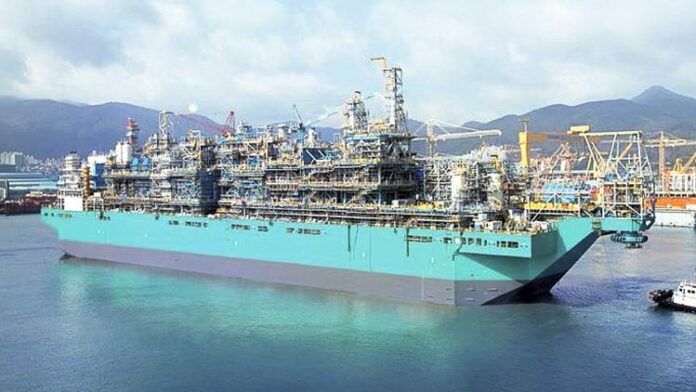
 Petronas has relocated the PFLNG Satu from the Kumang cluster field to the Kebabangan (KBB) cluster field offshore Sabah. 

The PFLNG Satu will be moored in a water depth of 120 m (394 ft) in the KBB cluster field, 90 km (56 mi) northwest of Kota Kinabalu, Sabah. 

Datuk Mohd Anuar Taib, executive vice president and CEO Upstream, said the PFLNG Satu’s technology, featuring the capability to move from one location to another will strengthen the reliability of the company’s LNG supply system to meet growing LNG demand. 

“Petronas has delivered 19 successful cargoes since the commissioning of PFLNG Satu and we are confident that this success continues in Sabah waters as well,” he added.

Designed to last up to 20 years without dry-docking, the 365-m (1,198-ft) long PFLNG Satu is expected to be able to produce 1.2 million metric tons of LNG per year.

Source:offshore-mag

Heads of CSSC and CSIC meet as merger speculation heats up

0

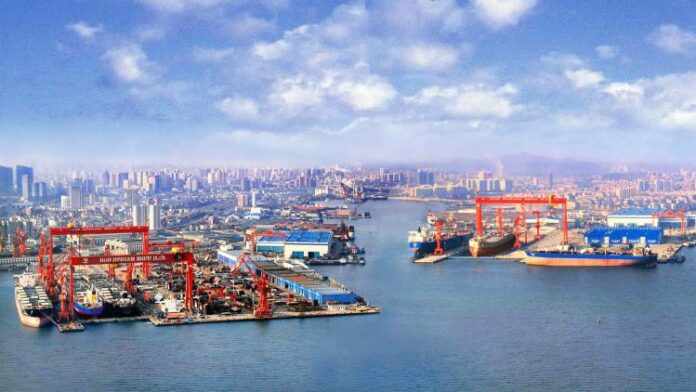
Merger speculation between China’s two top state-run shipbuilders, China State Shipbuilding Corporation (CSSC) and China Shipbuilding Industry Corporation (CSIC), is heating up further with leaders from both groups meeting yesterday at the headquarters of CSSC.

According to releases by both CSSC and CSIC, the top executives from the two shipbuilding conglomerates held a group discussion on strengthening collaborations in many areas including smart manufacturing, naval products, cruiseships, clean energy and internationalisation to jointly serve the central government’s development strategy.

Hu Wenming, chairman of CSIC, who is also the former chairman of CSSC, said in the meeting that he hoped the two groups will increase efforts in communications and jointly promote the development of China’s shipbuilding industry.

The meeting was right after the China’s National People’s Congress Conference during which the government reaffirmed its plan to push forward further consolidation in many sectors including shipbuilding.

If the merger materialised, the shipbuilding competition between China and South Korea could be further intensified. This month, South Korean shipbuilding major Hyundai Heavy Industries signed an official contract with Korea Development Bank for the takeover of Daewoo Shipbuilding & Marine Engineering, which would create one of the largest shipbuilders in the world.

CSIC and CSSC were one conglomerate until 1999 when they were spilt in two with the Yangtze river serving as a geographic marker with CSIC in charge of northern yards and CSSC taking yards south of the river.

Source:splash247

MSC and Fincantieri sign contracts for the construction of four luxury cruise ships

0

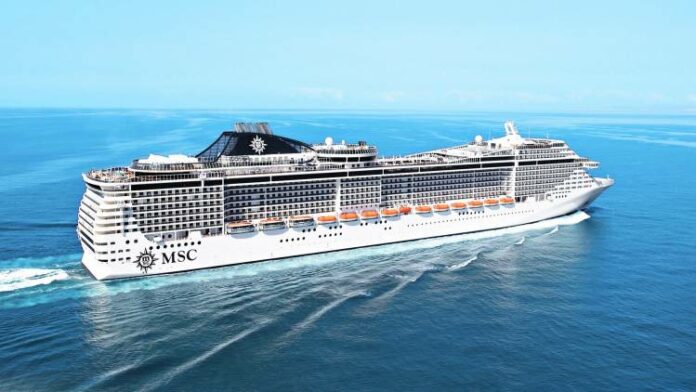
MSC and Fincantieri announced the signing of the final contracts for the construction of four luxury cruise ships, Fincantieri said in its release.
 
All four vessels will have gross tonnage of approximately 64,000 GT and will feature the latest maritime and environmental technologies available. Each equipped with 481 guest suites, they will also showcase a highly-innovative design and introduce ground-breaking options for guest comfort and relaxation.
 
This announcement follows the initial signing of a memorandum of agreement between the two parties in October 2018. The contracts, subject to shipowner financing, have a total value exceeding EUR 2 billion.
 
As per the terms of the agreement, the first of the four ships will be delivered by Spring 2023. The remaining three will come into service one per year over the following three years through 2026.
 
MSC is the cruises division of MSC Group, the world’s second largest transportation and logistics business. Under this umbrella will operate the new brand as well as MSC’s contemporary brand MSC Cruises, the leading cruise brand across Europe, South America, the Gulf as well as southern Africa. Fincantieri is the heir to the great tradition of Italian shipbuilding and one of the largest shipbuilding groups in the world.
 
Since starting to work with Fincantieri, in 2014, MSC has also ordered four ships for its contemporary MSC Cruises brand, for a value of EUR 3.2 billion. The first two of these vessels, MSC Seaside and MSC Seaview, are already in service. The next two vessels will be delivered in 2021 and 2023, with MSC Seashore already under construction at Fincantieri’s yard in Monfalcone.