-1.2 C
New York
Home Blog Page 1107

Three Russian Shipyards Sanctioned Over Kerch Strait Incident

0

Canada, the United States and the EU have imposed new sanctions on Russian entities in response to the Kerch Strait incident, including three shipyards. 

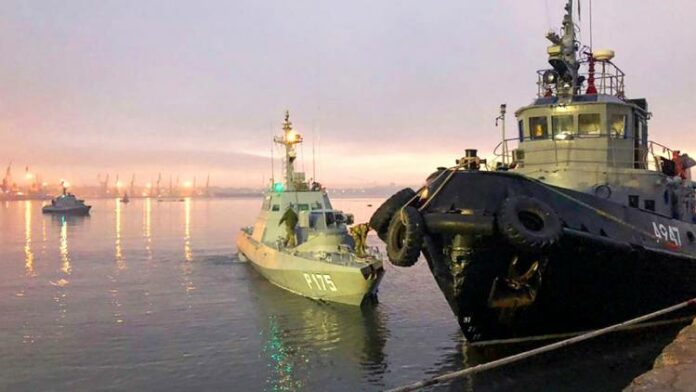
The sanctions are a response to the encounter between Russian border forces and three Ukrainian Navy vessels at Kerch Strait in November. When these vessels approached the Strait, Russian forces shot at, rammed and seized them, then took their crews into custody. Russian prosecutors have charged the ships' crewmembers with civilian criminal offenses, including "illegal border crossing," and they are being detained near Moscow. The international community does not recognize a Russian maritime "border" in or near Kerch Strait, and the U.S. and EU assert that these sailors are prisoners of war, not criminals. 

“Russia’s provocations in the Kerch Strait and its illegal invasion and ongoing occupation of Crimea will not go unchecked," said Canadian minister of foreign affairs Chrystia Freeland. "We call on Russia to immediately release the 24 detained Ukrainian servicemen and return the seized vessels. Russia must allow free and unhindered passage through the Kerch Strait and the Sea of Azov."

The Canadian, American and European lists differ, but the new measures cover more than 100 individuals and a dozen companies The American sanctions affect several shipbuilders and suppliers to the Russian Navy, including Yaroslavsky Shipbuilding Plant, Zelenodolsk Shipyard Plant, hydroacoustic system manufacturer AO Konstern Okeanpribor and diesel engine maker PAO Zvezda. Zelenodolsk Shipyard is building Russia's new Karakurt class corvettes, with engines from PAO Zvezda, and Yaroslavsky Shipbuilding has built vessels for Russia's Federal Security Service (FSB). 

The U.S. Treasury's sanctions list also covers LLC Novye Proekty, an offshore oil and gas firm which holds an (allegedly illegal) exploration license on Crimea's Black Sea continental shelf from Russian authorities. The Crimean shelf is believed to hold significant potential for new petroleum discoveries, and Novye Proekty's lease area holds estimated reserves of about eight million tons of crude oil and 1.4 billion cubic meters of natural gas. 

Canada's sanctions list also includes JSC Zaliv Shipyard, which was allegedly seized by Russia during the annexation of Crimea. Its former owners say that it is now under the control of Russian-aligned Crimean entities. "Currently, representatives of the legitimate government of [Zaliv Shipyard] are not allowed to perform their functions, completely blocked manufacturing, financial, economic activities of the Enterprise," the owners assert. 

Source:maritime-executive
Shearwater awarded survey contract in Turkey

0

Shearwater GeoServices has been awarded a seismic acquisition and depth processing contract by Türkiye Petrolleri Anonim Ortakligi (TPAO).

The survey contract covers an area of 2200 sq kms and includes fast track processing, followed by full time and depth processing. Work will commence in the second quarter and will be conducted by the survey vessel Polar Empress.

We are very pleased to see the Polar Empress contracted by TPAO for this 14-streamer survey, following on from efficient operations elsewhere completing ahead of schedule. Achieving operational efficiency within each project and maximizing utilisation over a program of projects is key to our results,” said Irene Waage Basili, the CEO of Shearwater GeoServices.

Shearwater GeoServices is a joint venture between GC Rieber and Rasmussengruppen.

BW Group Buys Epic Gas

0

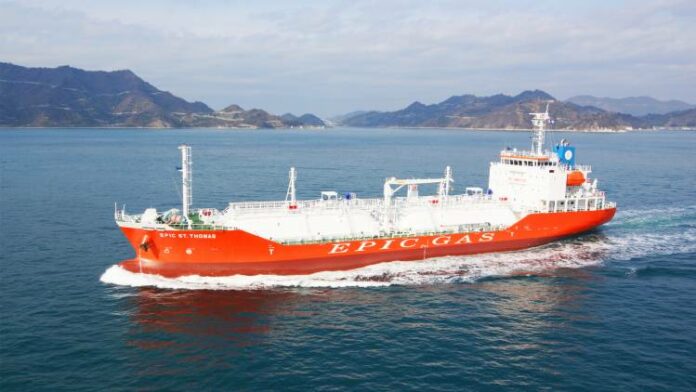
BW Group purchased over 38 million shares in Epic Gas from key shareholders on Tuesday. This represents 54.7 percent of the issued shares, and BW has now launch its unconditional tender offer to acquire the remaining shares.

Epic Gas is the largest commercial operator and second largest owner of small pressurized LPG carriers. It has a fleet of 39 vessels ranging from 3,500 to 11,000 cbm that typically serves the short-haul or regional LPG and chemicals trade.

Andreas Sohmen-Pao, Chairman of BW Group said: “The transaction represents an opportunity to acquire a well-managed company, led by Charles Maltby, and we look forward to working together to achieve successful growth in the service of our customers.”

Maltby, Chairman and Chief Executive Officer of Epic Gas, said: “BW Group’s experience and track record as an industry leader in maritime transportation of energy aligns with Epic Gas’ vision of being the leading provider of pressurized LPG shipping solutions, and we are confident that BW Group will work alongside shareholders electing to remain to support the future growth of the business.”

BW Group is a global maritime group involved in shipping, floating gas infrastructure and deepwater oil & gas production and has been delivering energy and other commodities for more than 80 years, with a controlled fleet of over 300 ships including affiliates and subsidiaries. The group was founded by YK Pao in Hong Kong in 1955 as World-Wide Shipping. 

In 2003, the group acquired Bergesen, Norway’s largest shipping company founded in 1935, and in 2005, the business was re-branded as BW. Today, BW Group operates the world’s largest gas shipping fleet (LNG and LPG combined), with a total of 70 large gas vessels, including three FSRUs. BW Offshore operates the world’s second largest FPSO fleet, with 15 units in the U.S., Brazil, Mexico, West Africa, North Sea and Australasia. BW’s fleet also includes crude oil supertankers, refined oil tankers, chemical tankers and dry bulk carriers.

Source:maritime-executive

Maersk and Panama Canal Authority Join Low Carbon Alliance

0

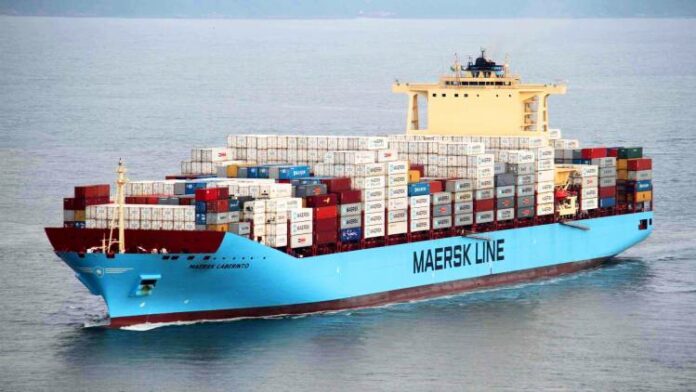
The Panama Canal Authority and A.P. Moller – Maersk A/S are the latest entities to join the IMO-supported Global Industry Alliance to Support Low Carbon Shipping (GIA).
 
Launched in June 2017, the GIA is a public-private partnership initiative of the IMO, under the framework of the GEF-UNDP-IMO Global Maritime Energy Efficiency Partnerships (GloMEEP) Project, that aims to bring together maritime industry leaders to support an energy efficient and low carbon maritime transport system. The GIA now has 18 members, including shipowners and operators, classification societies, engine and technology builders and suppliers, big data providers, oil companies and ports.

The new members signed up to the GIA during the fifth meeting of the GIA Taskforce at IMO Headquarters in London, United Kingdom on March 15.

The GIA Taskforce meeting has several on-going projects including the validation of performance of energy efficient technologies, the assessment of barriers to the uptake of just-in-time operation of ships and resulting emission saving opportunities as well as work on the current status and application of alternative fuels in the maritime sector and barriers to their uptake. 

During the meeting, the taskforce formalized the extension of the GIA until December 31, 2019 and agreed to develop a white paper outlining its vision and potential priority areas.

The GIA members include ABB Engineering (Shanghai); Bureau Veritas; DNV GL; Grimaldi Group; Lloyd’s Register EMEA; Maersk; MarineTraffic; MSC Mediterranean Shipping Company; Port of Rotterdam; Ricardo UK; Royal Caribbean Cruises; Shell International Trading and Shipping Company; Silverstream Technologies; Stena; Total Marine Fuels; Wärtsilä Corporation and Winterthur Gas & Diesel.


IMO’s Sub-Committee agrees on Polar life-saving appliances guidelines

0

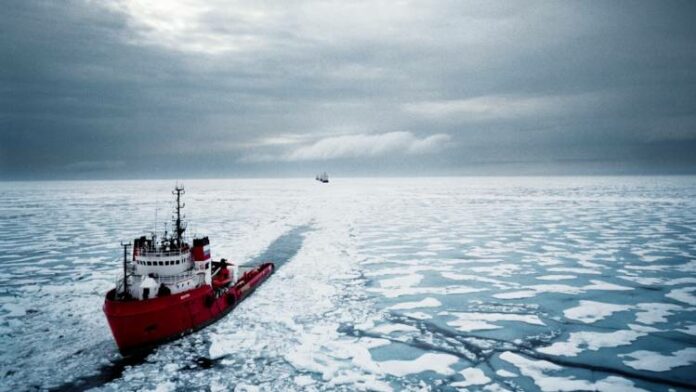
In light of the Ship Systems and Equipment (SSE 6) meeting conducted by IMO's Sub-Committee on 4-8 March 2019, the participants agreed to draft interim guidelines on life-saving appliances and arrangements for ships operating in polar waters, to ensure they meet the needs for survival in the harsh and specific conditions in Polar waters.

Mainly, the guidelines consist of specifications of the equipment needed and would require that lifeboats and rescue boats on ships proceeding to latitudes over 80°N should be fitted with a non-magnetic means for determining heading.

Subsequently, the Sub-Committee agreed to the draft interim guidelines on life-saving appliances for submission to MSC 101, invited proposals regarding options to develop guidelines on how to determine the 'maximum expected time of rescue' and agreed proposed terms of reference in re-establishing the correspondence group on life-saving appliances.

In the meantime, the guidelines are intended to support the implementation of the mandatory Polar Code.

IMO's Sub-Committee on Ship Design and Construction (SDC 6), which took place on 4-8 February 2019, discussed about draft recommendations for fishing vessels and yachts operating in Polar waters. Generally, the meeting focused on the increased traffic in the Polar waters and the safety of the environment, since the traffic results to the polar environment being sensitive, therefore polluted.

In light of operating in Polar waters, the STCW  has been amended with a new regulation V/4 , according to which, two main trainings are defined: the basic and the advance training, to ensure the crews' safety and knowledge when sailing in Polar waters.

Source:safety4sea

Fincantieri Starts Work on New Viking Ship

0

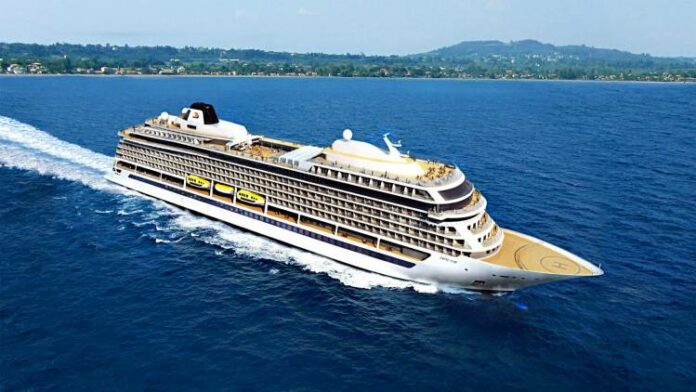
The steel cutting ceremony of the seventh ship which Fincantieri is building for Viking took place  at the shipyard in Ancona, Italy.

The new unit, whose delivery is scheduled in 2021, will be placed in the small cruise ship segment. As its sister ships, she will have a gross tonnage of about 47,800 tons, 465 cabins with accommodation for 930 passengers.

The first of the series, “Viking Star”, has been built at the shipyard in Marghera and delivered in 2015. The other units, “Viking Sea”, “Viking Sky”, “Viking Sun”, and “Viking Orion”, handed over in 2016, 2017 and 2018, were all built at the Ancona yard, as well as “Viking Jupiter”, which joined the shipowner’s fleet in February. Other 10 units, options included, for Viking Cruises will take to the sea from the Group’s Italian yards between 2021 and 2027.

Source:marinelink

Offshore wind to ‘dominate’ CfD3

0

Offshore wind is set to dominate the third Contract for Difference round in the UK, according to research by consultancy Cornwall Insight.

Qualification for CfD3 kicks off on 29 May with offshore wind alone able to meet the auction cap of 6GW, it said.

In capacity terms, offshore represents just over 7.8GW of the 10GW of potential projects that could enter the round, said Cornwall Insight head of training Ed Reed.

“The remaining technologies representing a small fraction of the pipeline, with remote island wind the next largest by overall project capacity,” he said.

Reed added that analysis suggests between 1.9GW and 3.2GW of offshore wind will be procured at the auction at the current administrative strike price (ASP) levels of £56 per megawatt-hour for 2023-24 and £53/MWh for 2024-25.

“Offshore wind has been able to benefit from great leaps in efficiencies with increased turbine size and larger individual projects all helping to boost outputs,” he said.

As a result, this dominance should be of little surprise particularly when this sector has come out on top in previous rounds.

Unfortunately, the scale of the offshore wind sector alongside its relatively low ASP in comparison to other technologies will see other sectors struggle to win a CfD.

Source:renews

Third oil slick discovered because of Grande America’s sinking

0

After the initial confirmation of oil spill coming from Grande America's sinking, French authorities have sighted another oil slick originating from the sunken RoRo in the Bay of Biscay.

The French Navy and Spain's maritime search and rescue agency revealed that there is a third oil spill in the area of the incident, covering an area of about 5 km2.

According to Premar Atlantique's statement, despite weather conditions still being very degraded in the area of ​​the sinking of the Grande America, the anti-pollution operations started on March 15. They are coordinated on the area of ​​operations by the director of Center of Expertise Practices of Antipollution Control (CEPPOL).

Moreover, in light of the harsh weather conditions, the authorities were unable to locate the earlier sighted oil slicks which measured 13 by 7 km and 9 by 7 km, local media reported, citing Stéphane Doll, director of Centre of Documentation, Research and Experimentation on Accidental Water Pollution (Cedre).

The oil spills were covering an area of about 20 km and authorities noted that they were moving at a speed of about 30 km per day and could reach the French coast by the middle of this week.

The owner of Grande America, Grimaldi, informed that the vessel had 2.210 vehicles and 365 containers onboard when the incident occurred. From these, 45 containers were with IMO-classified hazardous cargo, 34 of which were stowed on the weather deck and the rest inside the vessel. The ship also had 2,200 tons of fuel in its bunkers.

Grande America suffered a fire on March 10 when voyaging from Hamburg to Casablanca. The fire caused the vessel to sink on March 12, in the Bay of Biscay.

Source:safety4sea

DPW and Infor Partner for Global Supply Chain Platform

0

Infor, a specialist in cloud-based software, has announced that leading terminal operator DP World has selected its GT Nexus Commerce Network to power a “Global Supply Chain Platform Initiative”.

According to a statement, DP World has launched a series of projects to accelerate digital transformation and achieve strategic growth.

The DP World supply chain platform aims to bring together stakeholders from all links in the global supply chain on a single intelligent network, delivering enhanced end-to-end solutions and visibility for companies working in the logistics sector.

Infor’s GT Nexus Commerce Network, which provides global trade management services to over 65,000 businesses, was selected for its track record and the software company’s overall strategy to drive digitalization and innovation throughout the supply chain.

DP World’s own strategy aims make global trade smarter by establishing vital infrastructure, such as ports, logistics parks, and transport services, where it is most needed and leveraging digital technologies to make logistics processes more efficient.

In its role as a “global trade enabler”, DP World has also asserted the importance of its expansion into the logistics sector, another key part of the industry giant’s growth strategy.

Jonathan Wood, Infor General Manager for India, Middle East, and Africa (IMEA), said: “The global digital logistics market is expected to grow by almost 8 percent between now and 2023."

“As some of the busiest production centers in the world, the IMEA region is ideally placed to maximize this opportunity, and with its heritage in global trade and strategic investment, DP World will position the Infor GT Nexus Commerce Network to help achieve its objective of a leading position in worldwide supply chain service.”

Source:porttechnology

ExxonMobil’s 0.5% fuel will be on sale from Q3 this year

0

ExxonMobil has revealed its low sulphur bunker fuel will be available from the third quarter of this year, joining the likes of BP and Sinopec in making clear it will offer compliant fuel around the world ahead of next year’s sulphur cap.

Luca Volta, marine fuels venture manager at ExxonMobil, told Forbes in an interview: “We will be ready with the products and point of sales by the third quarter of 2019. That’s when we expect marine customers will start to bunker as the deadline of January 1, 2020 approaches.”

Volta said the compliant fuel would be offered in select locations to begin with, near key refineries, before being rolled out further.

“Logically we can deploy an effective supply chain where ports are in proximity of our manufacturing assets. This is where we are focusing our first wave of IMO 2020 compliant fuels,” Volta said.

Initially ExxonMobil has named the ports of Antwerp, Rotterdam, Genoa, Marseilles, Singapore, Laem Chabang and Hong Kong, where compliant fuels would be available, with locations in North America to follow. Once again, like BP, which unveiled its global sale locations for compliant fuel last week, Fujairah in the UAE is off the initial selection from ExxonMobil. Fujairah is the world’s second largest bunkering port after Singapore.

Volta also gave Forbes some ExxonMobil projections of shipping’s fuel mix going forward.

“Today bunker consumption is around 5m barrels per day (bpd) and we see that increasing to more than 8m bpd by 2040. Notionally, when we look at the fuel mix – 10% will be LNG, 20% will be distillate fuel oil, and the remainder will be residual in nature from high to low sulphur,” the ExxonMobil executive said.