5.9 C
New York
Home Blog Page 1097

CSSC initiates restructuring to pave way for CSIC merger

0

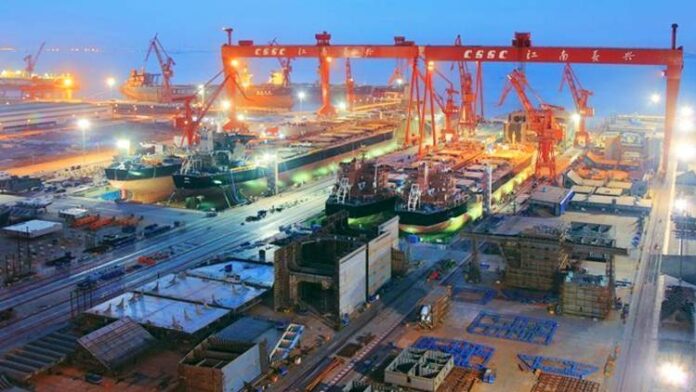
Chinese state-run shipbuilding conglomerate China State Shipbuilding Corporation (CSSC)’s listing platform, CSSC Holdings, has announced plans to initiate restructuring for three of its subsidiary yards and its marine propulsion business ahead of what looks increasingly like a mega merger with its northern neighbour, China Shipbuilding Industry Corporation (CSIC).

The shipbuilding group plans to start a debt-to-equity scheme for Jiangnan Shipbuilding, Huangpu Wenchong Shipbuilding and Guangzhou Shipyard International through issuing new shares to investors and fund raising.

CSSC Holdings said the plan is in line with the controlling group’s development strategy and it has suspended its stocking trading due to the potential restructuring deal.

Additionally, CSSC Offshore & Marine Engineering, the parent company of Huangpu Wenchong and Guangzhou Shipyard International (GSI), announced that the company will take over the marine propulsion asset from CSSC Group including full equity of Hudong Heavy Machinery and CSSC Marine Power, 51% equity of CSSC Propulsion Research Institute and 15% equity of CSSC-MES Diesel, and transfer its shareholdings in Huangpu Wenchong and GSI to its CSSC Group.

Following the transactions, CSSC Offshore & Marine Engineering will become the marine propulsion platform of CSSC.

The potential restructuring is believed to be paving the way for a long expected merger between two major Chinese shipbuilding groups CSSC and CSIC. The two shipbuilding groups are reportedly accelerating preparations for the merger and a detailed merger plan is expected to be finalised this year.

Last week, CSIC announced a plan to merge its two flagship yards Dalian Shipbuilding Industry and Bohai Shipbuilding Industry.

CSIC is also giving up on its non-profitable assets. Three loss making subsidiaries of DSIC including DSIC Offshore, Dalian Shipbuilding Industry Steel and Dalian Shipbuilding Industry Marine Services, are being liquidated by courts.

Source:splash247
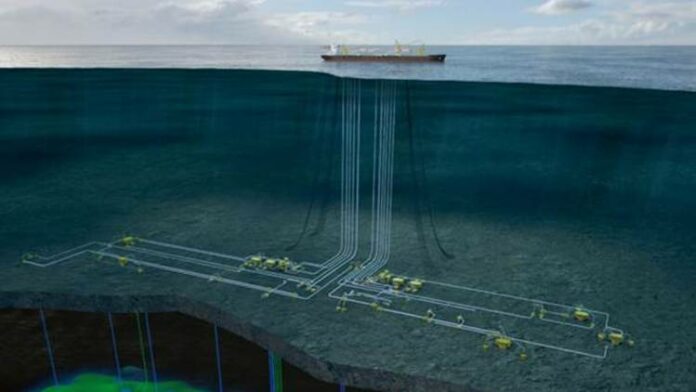
Aker Energy submits plan for DWT/CTP block offshore Ghana

0

Aker Energy Ghana Ltd. and its partners have submitted an integrated plan of development and operations (PDO) for the Deepwater Tano/Cape Three Points (DWT/CTP) block offshore Ghana to Ghanaian authorities.

The PDO was submitted and presented to the Minister of Energy, Hon. John Peter Amewu, at the Ministry of Energy in Accra, Ghana.

The integrated PDO presents an overall plan for a phased development and production of the resources in the DWT/CTP contract area. The phased development plan will start with the development of the Pecan field as a firm phase one, being the largest of several discoveries in the area.

Upon PDO approval from relevant Ghanaian authorities, the partners will initiate a process to make a final investment decision (FID). First oil from the Pecan field is estimated 35 months after FID.

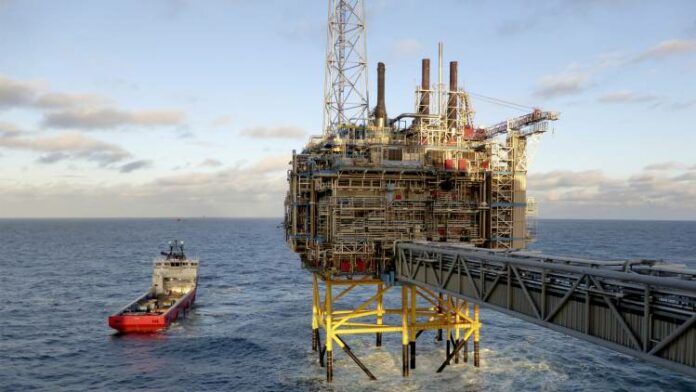
The main Pecan field, located in ultra-deepwaters ranging from 2,400 to 2,700 m (7,874 to 8,858 ft) about 115 km (71.5 mi) offshore Ghana, will be developed with an FPSO vessel and a subsea production system (SPS). The development will comprise of up to 26 subsea wells. It is planned for 14 horizontal oil producers and 12 injectors with alternating water and gas injection, and the use of multi-phase pumps as artificial lift, to maximize oil production.

Total reserves from the Pecan field development are estimated at 334 MMbbl of oil, and plateau production is estimated at 110,000 b/d. Production is expected to last for more than 25 years.

Capex is estimated at $4.4 billion, excluding the charter rate for a leased FPSO.

The Pecan field center will have the flexibility to tie-in subsequent development of resources, according to Aker Energy. In addition to the reserves to be developed in the first phase, the area holds discovered contingent resources (2C) of 110-210 MMboe, combined resulting in an estimated volume base of about 450-550 MMboe.

Total resources in the area have the potential to increase to between 600-1,000 MMboe, provided successful appraisal drilling activity. Data analysis and appraisal drilling are currently ongoing at Pecan South and Pecan South East.

CEO Jan Arve Haugan said: “In addition to the FPSO for the Pecan field development, Aker Energy has entered into an option agreement with Ocean Yield ASA for a second FPSO, Dhirubai-1. If the option is exercised, Dhirubai-1 could either be used to accelerate production or for other, potential developments dependent on volumes and geographical distribution of these.”

Aker Energy Ghana Ltd. is the operator under the DWT/CTP Petroleum Agreement with a 50% participating interest. Its partners are Lukoil Overseas Ghana Tano Ltd. (38%), the Ghana National Petroleum Corp. (10%), and Fueltrade Ltd. (2%).

The company said it and the partners have strong ambitions for developing a national oil and gas industry in Ghana.

“Aker Energy has a long-term ambition to go beyond regulatory requirements to develop the local oil and gas industry, through both investments and transfer of technology, know-how and skills,” Haugan said. “Therefore, our owner, Aker ASA, has recently initiated plans to establish a separate investment company, Aker Ghana Industrial Corp., to support the local industry.”

Source:offshore-mag

Equinor to drill frontier Barents Sea prospect

0

 Equinor has the go-ahead from the Norwegian Petroleum Safety Authority to proceed with two exploratory wells.

Seadrill’s semisubmersible West Hercules should start work on well 7335/3-1 in the southeast Barents Sea in early May.

The 55-day program will target the Korpfjell Deep prospect in production license 859, in the far northeast of this newly opened area, 420 km (261 mi) from the coast of Finnmark. Water depth is 239 m (784 ft).

In the North Sea, the semisub Transocean Spitsbergen should spud well 16/5-7 in mid-May on PL 502, northwest of the Utsira High region.

The location is southwest of Johan Sverdrup and northeast of Sleipner, in a water depth of around 105 m (344 ft).

Operations should last for 28 days.

Source:offshore-mag

AP Moller-Maersk takes Maersk Supply Service off the market

0

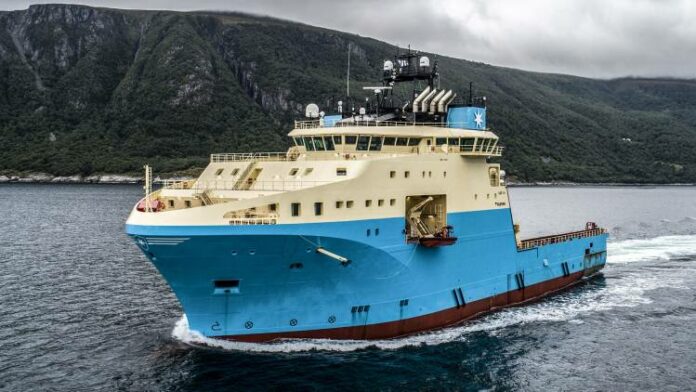
AP Moller-Maersk has decided to keep a hold of its offshore support vessel company Maersk Supply Service.

Maersk Supply Service was put up for sale by Maersk as part of a strategy to offload all of its oil and gas related assets and become a pure-play container specialist. Maersk Oil has already been sold to Total for $7.45bn, while Maersk Drilling has been demerged in preparation for an upcoming IPO.

Maersk said that three years of distress in the sector and lower asset values had a negative impact on its ability to find a buyer.

Claus Hemmingsen, Vice CEO of AP Moller-Maersk, commented: “We have over the past two years been investigating various structural solutions for Maersk Supply Service. However, having been unable to establish any solutions meeting our objective of creating shareholder value, we have decided to retain Maersk Supply Service."

“Maersk Supply Service launched a new strategic direction in the autumn of 2016 as a response to the downturn, which is positioning the company stronger and with a more robust and differentiated platform to compete from, when we eventually see a recovery within their core markets in the Oil & Gas space.”

A change in business plan for Maersk Supply Service has resulted in around 30% of its revenue in 2018 generated from new and diverse business including offshore wind, ocean cleaning and deep-sea mining.

“Our diversification initiatives are building presence in other markets and enable us to be less dependent on the traditional Oil & Gas market in the future. Our 44-vessel fleet has an average age of less than ten years and supports our integrated solutions offerings. With our modern fleet and skilled people, we are well positioned to take advantage of market opportunities in the future and differentiate us from our peers,” said Steen S. Karstensen, CEO of Maersk Supply Service.

Source:splash247

Australian offshore clears survey hurdle

0

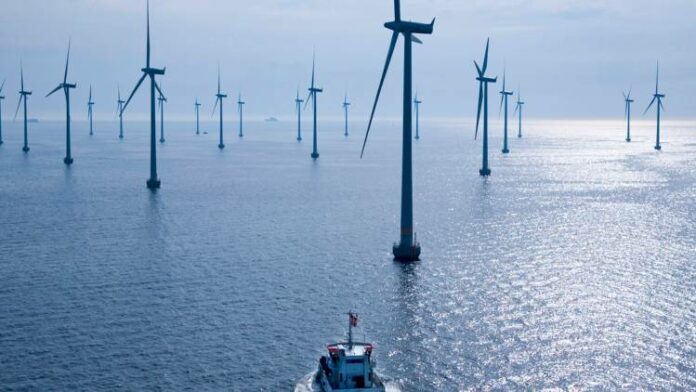
The government of Australia has approved a licence for technical and environmental studies for the up to 2GW Star of the South offshore wind farm off the coast of Victoria.

The developer – made up of Copenhagen Infrastructure Partners and local investors – said the licence “paves the way for a range of studies to take place, including wind monitoring and investigations into the seabed and the marine environment”.

It added that detailed community and stakeholder consultation will be undertaken before any studies start.

The project could feature up to 250 turbines located some 25km off the coast of Gippsland.

Star of the South chief executive Andy Evans said: “We’re excited to start the next phase of our work – we’ve done a lot of background studies and look forward to getting out there and further understanding the marine environment."

While it’s still early days for the project, these crucial investigations will help us move forward and understand how we might progress an offshore wind project in Australia.

“We look forward to working with government, stakeholders and local communities in Gippsland and the Latrobe Valley throughout our investigations.”

Source:renews

Port of Antwerp Starts Sustainable Methanol Project

0

The Port of Antwerp has initiated a project to produce sustainable methanol as part of its ambition to be a carbon-neutral port.

Methanol is used on a daily basis by the chemical industry players in the port, and the port of Antwerp uses around 300,000 tons of methanol annually for chemical processes and fuel production: everything from insulation panels to fuel additives.

However, methanol is currently obtained from fossil sources. "We will produce methanol from waste CO2 and sustainably generated hydrogen," says Didier Van Osselaer, project manager at Port of Antwerp. "The waste CO2 will be collected by a new process called Carbon Capture and Utilization (CCU) in which at least some of the CO2 emissions are recovered. This CO2 is then combined with hydrogen generated on a sustainable basis using green energy in a new electrolysis plant. These two processes – CCU and electrolysis – together form the perfect basis for producing sustainable methanol."

This will mean that the Port of Antwerp will avoid producing at least one ton of CO2 emissions per ton of methanol generated. 

Methanol can also be used in the future as a sustainable fuel to power vessels such as tug boats, and the port plans to introduce a methanol-powered tug in the near future.

ENGIE, Oiltanking, Indaver, Vlaamse Milieuholding (VMH) and Helm-Proman have declared their support for the project, along with several academic institutes. ENGIE will contribute its knowledge of the electricity market, Oiltanking will give advice on the logistical aspects of methanol production and storage and Indaver will offer expertise on collection of CO2. Helm-Proman is involved with a view to finding markets for the methanol that is produced, VMH will be responsible for at least part of the financing, while Port of Antwerp will act as a bridge between the public and private sectors.

Source:maritime-executive

MTL enters Brazil FPSO support venture

0

FPSO and marine integrity management specialist Marine Technical Limits (MTL) has formed a strategic alliance in Brazil with Rio de Janeiro-based AES Union.

This will lead to MTL providing integrity management and safe system of work equipment for confined space entry on Brazilian FPSOs, and on-station repairs.

Initially MTL’s teams will provide services, project management, and offshore project supervision, while AES Union supplies skilled trades personnel for inspections and repair projects; tools and equipment to support offshore projects; and Brazil-sourced materials, consumables and personnel logistics.

Via this arrangement, AES Union will deliver services for all FPSO tank-related activities, including initial cleaning through to class inspections, and concluding with any tank structural and coating repairs necessary before the tanks are returned to service.

Source:offshore-mag

Flexport debuts box sharing app

0

Flexport, the American digital freight forwarder, has sought to fix one of container shipping’s great inefficiencies. The company has launched OceanMatch, an ocean freight offering, which is essentially a box sharing app that matches unused space in a container with other Flexport cargo.

Full Container Load shipping (FCL) is a misleading term as Flexport data shows. The company analysed 2018 data for US box imports and found that on average, only 64.6% of FCL containers were fully utilised. Put another way, nearly half the container space of all FCL shipments last year destined to the US were unused, which Flexport said in a release creates “incredible inefficiency” in global supply chains.

OceanMatch is a cargo consolidation solution exclusively offered by Flexport, which  matches shipments’ specific weight and volume, lane, and cargo ready date using the company’s global network of structured supply chain data to consolidate cargo and fully utilise each container.

OceanMatch only takes an average of one or two days longer to destination than FCL, while traditional LCL takes up to a week more. OceanMatch shipments also save up to 35% on cost compared to FCL, Flexport claims.

Underutilizing containers means that there are more containers being moved over the ocean, rail, and road than necessary – significantly contributing to a spike in shipping costs, port congestion, truck and chassis shortages, and pollution,” Flexport stated in a release.

Commenting on the news, Andy Lane, director of Asia for SeaIntelligence Maritime Analysis, told Splash that genuinely full containers are unrealistic. US imports typically cube-out before they weigh-out. The internal capacity of a 40ft 9’6″ box is 76 cu m, but unless loading lots of very small packages, or goods are packaged specifically to fill a container perfectly, in reality utilisation in excess of 85 to 90% is impossible. However, even if there is an extra 15-20% unused capacity in each box, that is still significant, Lane said.

Lane warned that if cargo is mixed with other cargo which will not clear customs for days, that could create sudden supply chain disruption.

Nevertheless, crunching the numbers, if Flexport’s innovation were to take off, liners should be worried, Lane said.

“If the US in totality imports 21m teu per year, Flexport will reduce demand by 7.3m teu per year. How many more ships do we need?” Lane said.

Industry-First Airborne Noise Notation for Ships in Port Launched

0

Lloyd's Register has released the industry's first airborne noise emission notation (ABN) and ShipRight procedure.

The new notation defines a set of limit levels for airborne noise emission from ships. It is designed to assist port authorities in determining which and how many ships can access the most noise sensitive areas of the port, for example those locations close to residential areas.

Similarly, the new ABN notation is designed to enable shipowners to demonstrate that their vessels have controlled airborne noise emissions to gain access to noise sensitive areas and nature sanctuaries.

It is also designed to address airborne noise levels along inland waterways – currently maximum noise levels are specified in the E.U. by Directive (EU) 2016/1629.

Ports around the world have seen an increase in problems with excessive noise and complaints from neighbors, especially those located in residential areas. This has been highlighted as a problem by the Noise Exploration Program to Understand Noise Emitted by Seagoing Ships (NEPTUNES) project. Many of the biggest ports in the world are members including the Port of Amsterdam, the Port of Turku, the Port of Vancouver, the Port of Rotterdam, Hamburg Port Authority, Copenhagen Malmo Port, the Port of Gothenburg and the Port of Cork. 

A port is usually considered as an “industrial plant” by noise legislation, and ships in port are considered noise sources that are counted in the port’s overall noise emissions. There is currently no regulation of the airborne noise emission from individual ships when they are in port, but ports are held accountable for the level of noise emissions from the ships entering or using their facilities.

The new notation defines five limit levels for the airborne noise emission: Super Quiet, Quiet, Standard, Inland waterways and Commercial. 

The notation also describes how the compliance can be ensured at design stage by giving examples of how to calculate the expected noise levels. Several industry partners have helped with the development of the notation, including yard representatives and port operators.

Source:maritime-executive

Wello eyes €2m fundraising wave

0

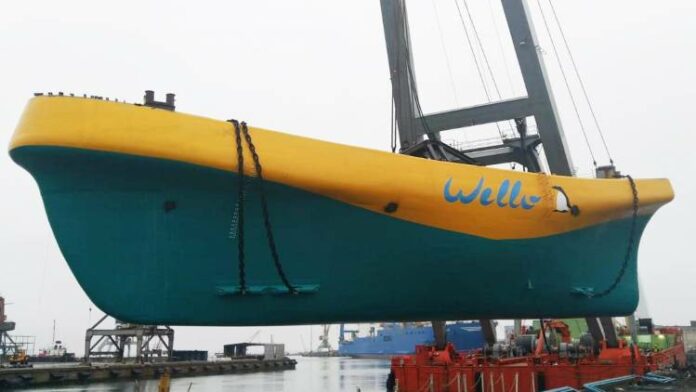
Finnish wave developer Wello is looking to raise at least €1m by next month to take forward projects around the world.

The company is offering its shares at a minimum investment of 140 shares at a price of €3.73 each.

Wello wants to raise €1m-€2.5m by 23 April in exchange for equity of between 4.34% and 10.18% through the new funding campaign on Invesdor.

Current projects include a three-unit array of 1MW Penguin machines at the European Marine Energy Centre off Orkney.

The first device sank last week but the second Penguin is due to sail from its Tallinn shipyward to Orkney soon, the company said.

Wello is currently negotiating with shipyards to make the third unit, it added.

Future projects include the 10MW Nusa Lembongan scheme in Indonesia, which is in the design phase.

After much research, prototyping, and field testing we can say that everything works perfectly, the technology and survivability of the devices are proven and the Penguin is ready for commercial use," said chief executive Heikki Paakkinen.

He added: "It's been calculated that by 2050 wave energy could fulfill one-tenth of the world’s clean energy needs."