1.9 C
New York
Home Blog Page 1098

Yantian Express fire damaged containers unloaded

0

Fire damaged containers from the Yantian Express have been unloaded, but it remains unclear where the remaining undamaged cargo will be unloaded.

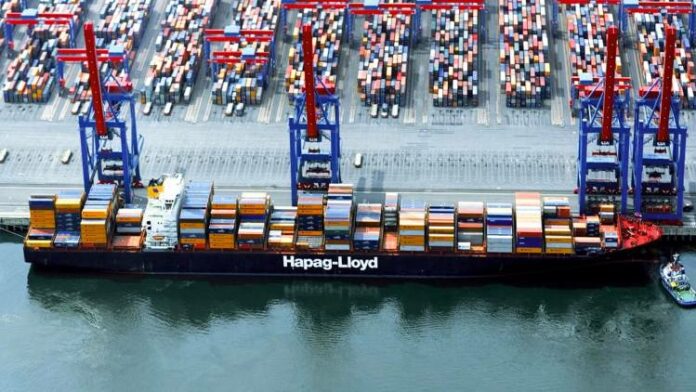
Nearly three months after a blaze erupted on the Hapag-Lloyd containership Yantian Express the damaged cargo containers from holds one and two, both above and below deck, have been unloaded in Freeport, the Bahamas, according to alliance partner Ocean Network Express (ONE).

“All customers whose containers have been discharged and are ready for on-carriage have already been informed, and we are currently working on a solution to transship those containers, which cannot be reloaded back on the vessel,” ONE said in a customer advisory.

Undamaged cargo remains on board the vessel, which is to undergo repairs, before sailing to an as yet unspecified port to unload the cargo.

“The final port of call for the vessel is still to be nominated and we will advise further on this aspect as soon as feasible,” ONE said.

The Yantian Express was hit by a fire starting in a single container, on 3 January in the Atlantic, the blaze spread to other boxes and the crew was forced to abandon the vessel with it taking a week to largely contain and bring the blaze under control.

Source:seatrade-maritime

IMO’s Legal Committee discusses fraudulent registration

0

In light of fraudulent registration incidents of ships and other shipping practices that have arose, IMO's Legal Committee plans to discuss a number of steps to be taken to prevent the corruption during its 106th session, on March 27-29.

Mainly, the discussions arose due to reports of fraudulent use of their flag by a number of IMO Member States.

Amongst others, the discussions will also focus on the growing number of cases of seafarer abandonment and the orchestrated action needed to address this issue.

The Committee will be informed on updates concerning latest cases and review those that have been successfully resolved, following intervention by the IMO Secretariat, the International Labour Organization (ILO), relevant flag States, port States, seafarers' States and other organizations.

In addition, the Committee will work on the regulatory scoping exercise of conventions emanating from the Legal Committee for the use of Maritime Autonomous Surface Ships (MASS).

A matter of importance is boosting ratification and implementation the 2010 HNS Convention, which covers liability and compensation in the event of an incident involving hazardous goods.

The number of ships carrying HNS cargoes is steadily increasing, with more than 200 million tonnes of chemicals traded per year.

The Legal committee was opened by IMO Secretary-General Kitack Lim and is being chaired by Mr. Volker Schöfish (Germany).

Source:safety4sea

L3 and Sonardyne Roll Out 6G-Enabled Autonomous Vessels

0

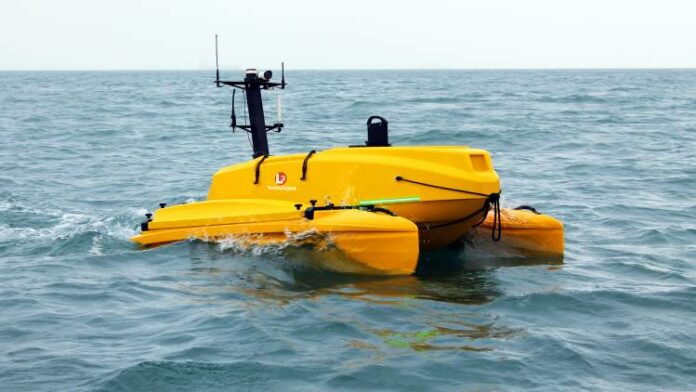
L3 Technologies together with Sonardyne will offer 6G-enabled capability across its commercial autonomous vessel product range.

L3’s C-Stat 2 and C-Cat 3 autonomous vessels will be offered factory-fitted with Sonardyne’s 6G range of Ranger 2 Ultra-Short BaseLine (USBL) tracking and communications systems.

The C-Stat 2, equipped with Sonardyne’s Ranger 2 Gyro USBL model, is designed for operators needing to position underwater assets. According to L3, the platform will enable a range of tasks, such as touchdown monitoring, seismic cable lay operations, Compatt 6 Long BaseLine (LBL) array box-in and remote LBL baseline calibration, vehicle tracking and subsea sensor data collecting.

The C-Cat 3, equipped with Mini-Ranger 2, will be able to operate as a gateway for autonomous underwater vehicle (AUV) operations, enabling tracking and communications with up to 10 AUVs at the same time.

L3 and Sonardyne have a long history of successfully working together to deliver on cutting-edge technical programmes. Now L3’s customers will be able to access Sonardyne’s versatile 6G acoustic positioning, communication and sensing technology on proven commercial autonomous vessel platforms,” said Ioseba Tena, global business manager – Marine Robotic Systems, Sonardyne. “Combining these capabilities means customers have access to vessels that can perform more remote and autonomous marine operations; including tracking multiple AUVs and real-time data harvesting in hard to access environments across defence, offshore and ocean science sectors.”


Princess Cruises Orders Two Ships from Fincantieri

0

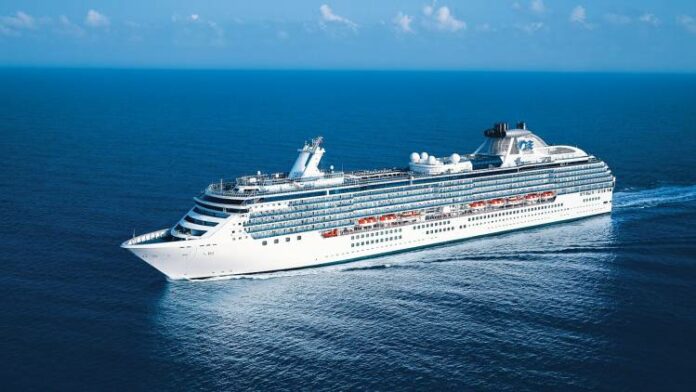
Princess Cruises has ordered two 175,000-ton cruise ships from Fincantieri. The ships will be the largest ships ever built in Italy, with deliveries scheduled in Monfalcone in late 2023 and in spring 2025. 

The vessels will each accommodate approximately 4,300 passengers and will be the line's first ships to have dual-fuel engines and be powered primarily by LNG.

The ships will be designed to include the line's MedallionClass platform, powered by their wearable device OceanMedallion, a technology that delivers personalized service and interactive entertainment. It is currently available on Caribbean Princess and Regal Princess. By the end of the year, it will be activated on three additional ships, Royal Princess, Crown Princess and Sky Princess.

Princess Cruises has five ships being built over the next six years.

The Cruise Lines International Association (CLIA) reported that growth in the number of people cruising between 2004 and 2014 outpaced land-based vacations by over 20 percent, and CLIA projects 30 million people will take an ocean cruise in 2019, an all-time record. 
 

McDermott cleared to start work on Saudi fabrication complex

0

McDermott International will construct a fabrication site at the King Salman International Complex for Maritime Industries in Ras Al-Khair, Saudi Arabia, after signing a land lease agreement with Saudi Aramco.

The new facility, which follows an earlier Memorandum of Understanding between the two companies, will produce offshore platforms and offshore/onshore modules.

In addition, McDermott plans to expand its in-country engineering and procurement offices and establish a new marine base in Saudi Arabia’s the Eastern Province to support installation of platforms, subsea pipelines and cables, skids, and associated structures and assemblies.

“This facility will serve as a major engineering, procurement, construction, and installation hub for not only the Kingdom, but for the GCC region,” said Ahmad Al Sa’adi, Aramco’s senior vice president of Technical Services.

“Having this facility with International Maritime Industries (IMI) in the King Salman International Complex for Maritime Industries offers an integrated portfolio of maritime products and services,” added Mohammad Al Assaf, vice president of New Business Development.

“The localization of these capabilities will contribute to diversifying the economy, create almost 7,000 jobs, and achieve a target of 60% Saudization by 2030.”

The new 1.15 MM-sq m fabrication complex in Ras Al Khair, due to be operational by 2022, will be close to the Jubail Industrial City on the Kingdom’s east coast.

Its throughput capacity will be more than 60,000 MM tons/yr.

Subsea lift system demonstrated to industry reps

0

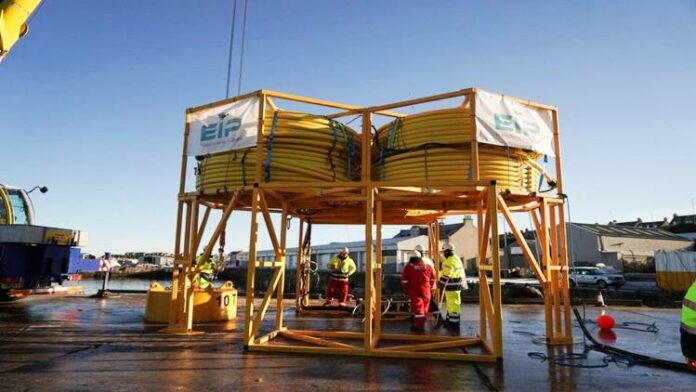
 Ecosse IP (EIP) staged a trial of its Ambient Lifter system for the offshore market at an event in northeast Scotland earlier this week.

Attendees included representatives from the Oil and Gas Technology Centre (OGTC) in Aberdeen, which is jointly funding the field trial to develop new solutions to cut the costs of subsea installation and decommissioning.

The field trial demonstrated Ambient Lifter’s buoyancy allied to ROVs, allowing the system to lift 200 times its current capability.

It could potentially replace the need for heavy-lift vessels, EIP claimed, and reduce offshore waiting times as the system is designed to operate in challenging sea conditions.

Mike Wilson of Ecosse IP said: “The 10-metric ton [11-ton] Ambient Lifter, using either an ROV or an AUV, will free swim with over 200 times the weight of a conventional ROV, which is limited to about 50 kg [110 lb]. "

The ability of lifting 10,000 kg [22,046 lb] opens up the scope of subsea construction, subsea salvage and applications that no one has even thought about yet…

“We’re grateful to our project partners, including Oceaneering and the OGTC, who have supported us in delivering this project so far, including our field trials this week.”

Susi Wiseman, OGTC’s project manager, claimed the development could cut subsea decommissioning costs by up to 40%.

The system is modular and both configurable and scalable to support a range of lifts from 10 metric tons to more than 24,000 metric tons (26,455 tons).

EIP is in talks with various operators on upcoming decommissioning and subsea projects.

Source:offshore-mag

Bourbon awarded integrated logistics contract by Shell

0

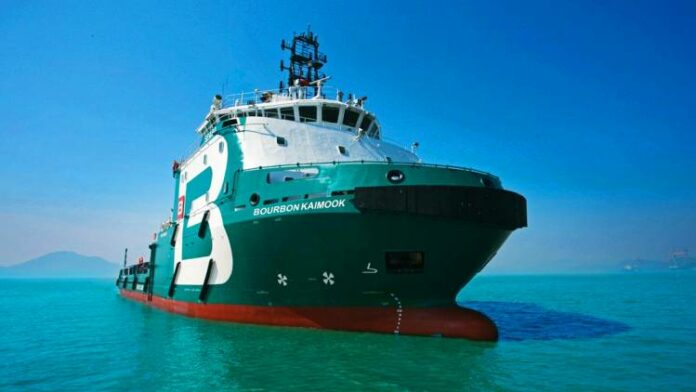
Bourbon Marine & Logistics has secured its an integrated logistics contract from Shell for the support of its exploration campaign in the Black Sea, Bulgaria.

The project scope covers the full logistics solution project management, offering both marine logistics together with shore logistics including marine services, logistics base, warehousing, port facilities, cargo carrying units, waste management, customs clearance.

Bourbon Marine & Logistics will jointly perform the services with its partner Bon Marine and will deploy two large supply vessels as well as the latest digital data management tools for the project.

The drilling operation of Shell’s exploration campaign is scheduled to start early April and will last about 3 to 4 months.

“Providing integrated logistics services for offshore operations, Bourbon will ensure, with its partner Bon Marine, that the entire logistics chain of Shell exploration campaign is successfully delivered on time, efficiently, while meeting the highest safety standards. We are proud to support Shell in this new exploration strategy. This contract illustrates the relevance of our Bourbon In Motion strategic plan, going a step forward in the creation of new services to accompany our clients’ evolving needs,” commented Victor Chevallier, CEO of Bourbon Marine & Logistics.

LNG Carrier and VLCC Collide at Fujairah Anchorage

0

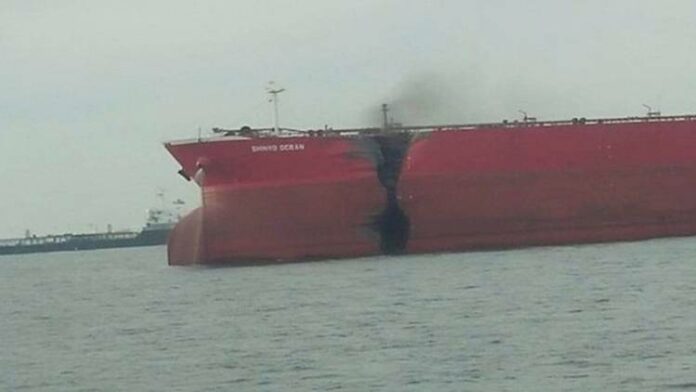
On the evening of March 24, the LNG carrier Aseem collided with the 280,000 dwt VLCC Shinyo Ocean at the Fujairah anchorage. 

At about 2000 hours on Sunday, the Aseem and Shinyo Ocean were both maneuvering at the edge of the busy anchorage. Aseem was inbound, but AIS data suggests that she executed a round turn to starboard several minutes before the casualty, turning through 270 degrees. At the same time, the approaching Shinyo Ocean executed a 90 degree turn to starboard, which put her in front of Aseem's new trajectory. Based on AIS data, it appears that the two vessels would not have interacted with each other if one or both had maintained their previous courses. 

The Aseem suffered severe damage to her bow, and the Shinyo Ocean was left with a gash on her port bow extending from the rail to below the waterline. The Ocean was in ballast at the time of the collision, and no pollution or injuries were reported. As of Wednesday, the Ocean was still anchored off Fujairah. An investigation into the cause of the casualty continues. 


Source:maritime-executive

Viking Sky: Hull Not Damaged, Cooling Water Inlets Not Clogged

0

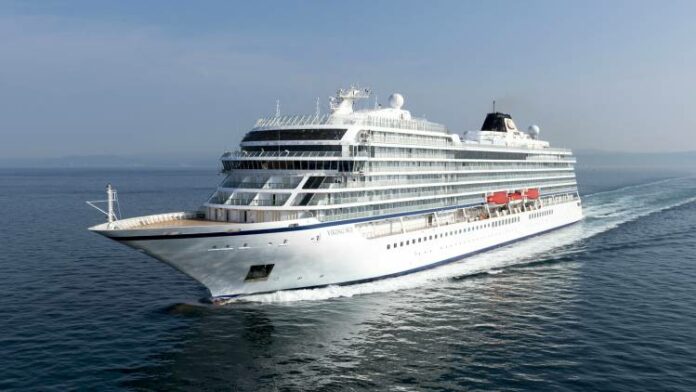
The Norwegian Maritime Authority has confirmed that the Viking Sky did not suffer any hull damage when she lost power on Saturday off the Norwegian coast. Divers have confirmed there is no damage below the waterline of the vessel and that the cooling water inlets were not clogged.

The Authority inspected the vessel on Monday but says it is not yet clear what caused the blackout that led to hundreds of passengers being airlifted from the vessel before she was towed to port at Molde.

It is too soon to draw any conclusions on what may have caused the ship to lose its engine output outside Hustadvika Saturday afternoon. Nevertheless, it is a fact that there has been a blackout, and we yet not been able to determine the cause of this blackout. So far however, it has been established that when the incident had occurred, the competency and efforts of the crew played an important role in the fortunate outcome,” said the Authority in a statement.

The incident is also being investigated by classification society Lloyd's Register, the Norwegian police and the Norwegian Accident Investigation Board. The U.S. and the United Kingdom consider they are substantially interested states and will participate in the investigation with their respective accident investigation branches.

The cargo vessel Hagland Captain went to the aid of Viking Sky but also lost propulsion and the crew were airlifted off. The vessel was towed to Averøy where it will be inspected by the classification society DNV GL. As far as the Norwegian Maritime Authority knows, the vessel has not touched ground, but this will be determined as part of the classification society’s follow up. The vessel is currently being unloaded.


PGNiG Upstream Norway and Aker BP sign contract for lease of semi-submersible drilling rig

0

PGNiG Upstream Norway and Aker BP have signed a contract for the lease of a semi-submersible drilling rig, PGNiG says in a press release. In autumn, the exploration well will start to be drilled on the Shrek prospectus within PL838 license. For the PGNiG Group, it will be the first drill well in the role of an operator on the Norwegian Continental Shelf.

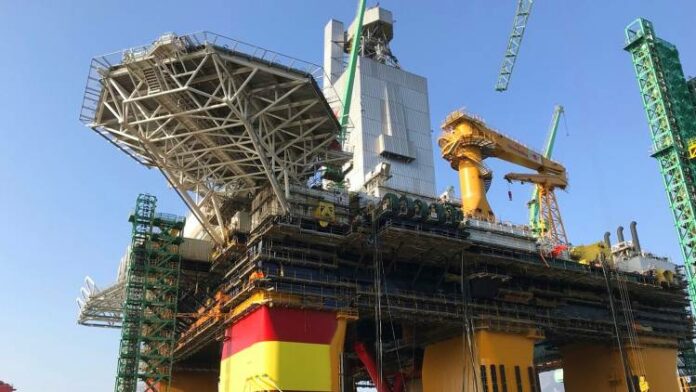
The platform named Odfjell Deepsea Nordkapp will be used for drilling off the production wells in the Skogul and Ærfugl fields, and then for drilling the exploration well 6506/5-9 on the PL838 license in the Norwegian Sea. The drilling rig is a completely new unit commissioned in January this year. Its latest VI generation allows for working in extreme marine environment. In April 2019, the rig will reach the Norwegian port of Bergen, where it will undergo the last tests before being allowed to work offshore.

“Our knowledge and previous experience have allowed us to prepare well for the first drilling as an operator on the Norwegian shelf. PGNiG's diversification strategy assumes a significant increase in its own gas production in this region,” said Piotr Woźniak, President of the Management Board of PGNiG SA. “In the case of the Skogul and Ærfugl deposits, we are – together with our partners on these licenses – getting closer to starting of production, which was planned for 2020,” he added.

Drilling on the Skogul and Ærfugl fields will begin in May this year. Aker BP is the operator in both licenses, and PGNiG Upstream Norway owns 35 percent of shares in Skogul and 11.92 percent of shares in Ærfugl. After completion of drilling on both fields, the rig will be put at the disposal of PGNiG Upstream Norway, which – as a license PL838 operator with 40 percent of shares – will use it to drill the exploration well on the Shrek prospectus. The commencement of drilling works under this project is planned between September 1 and November 30, 2019. On the PL838 field, PGNiG Upstream Norway cooperates with Aker BP and DEA Norge, which have a 30 percent of shares each.

PGNiG Upstream Norway holds interests in 24 exploration and production licenses on the Norwegian Continental Shelf. In accordance with the strategy, the PGNiG Group plans to increase gas production from fields in Norway to 2.5 bcm  a year after 2022.