7.2 C
New York
Home Blog Page 1096

Fairfax India spends $72m buying 41% stake in Seven Islands Shipping

0

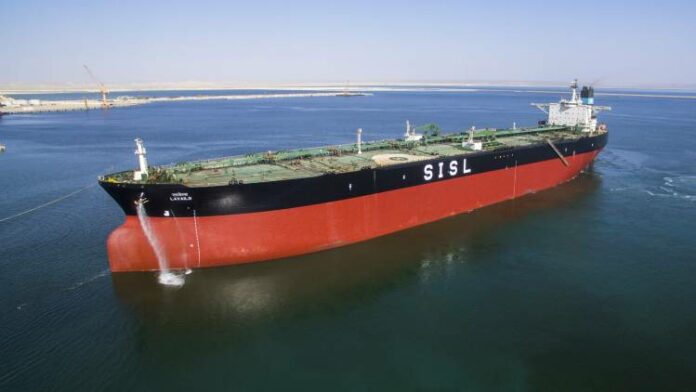
Investment company Fairfax India has spent INR5bn ($72.1m) buying a 41.4% stake in India’s second largest tanker company, Seven Islands Shipping.

Mumbai-headquartered Seven Islands said will use the proceeds to expand its fleet, which today stands at 14 vessels of about 1m dwt.

“We are very impressed with Seven Islands’ growth under the leadership of its managing director, Captain Thomas Pinto. The company has an impressive track record of acquiring vessels and deploying them effectively to earn attractive returns over the course of life of the vessel,” said Prem Watsa, chairman of Fairfax India.

Pinto responded, saying, “We will now expand our fleet with the objective of becoming one of the leading shipping companies in India.”

Source:splash247

Seaspan presses ahead with $200m Swiber investment

0

Singapore offshore company Swiber Holdings has taken a significant step forward in its restructuring with the signing of an investment agreement on Friday with Canadian boxship leasor Seaspan Corporation worth up to $200m.

Swiber, a marine engineering group, has been in judicial management for the past two years.

Under the new agreement, Seapsan will invest $10m to take an 80% shareholding interest in a new holding company to be incorporated into which certain assets of the existing Swiber Group will be transferred.

Further down the line, upon securing a development stage LNG-to-power project in Vietnam and achieving major project milestones, a subsequent tranche of $190m will be used to subscribe for preference shares in Equatoriale Energy, a wholly-owned subsidiary of Swiber, which will also form part of the New Swiber group.

If a restructuring is successful, certain secured creditors of Swiber will be issued five-year zero coupon secured redeemable convertible bonds amounting to $120 million in New Swiber. This will allow New Swiber and the restructured New Swiber group to continue to operate the Swiber Group’s key assets, which include certain specialised construction vessels and its headquarters building, which are currently secured to such secured creditors.

In connection with the restructuring, it has been proposed that the unsecured creditors of Swiber, existing shareholders and certain management and professionals involved in the judicial management of Swiber will receive new shares in New Swiber, which will constitute 14%, 3% and 3% shareholding interest respectively in New Swiber immediately following completion of the initial Seaspan investment.


DNV GL confirms SHI’s INTELLIMAN Ship software complies with EU-MRV and IMO-DCS

0

Leading classification society DNV GL announced that Samsung Heavy Industries (SHI) INTELLIMAN Ship software complies with the EU-MRV and IMO-DCS regulations. DNV GL issued a factual statement confirming compliance in a ceremony at the SHI R&D Center in Daejeon, South Korea.

SHI has been developing smart ship technology since 2016 and it has been applied to certain ships including LNG carriers and large container ships. The INTELLIMAN Ship is an integrated smart ship solution which facilitates data management from fleet operation to life-cycle service both on shore and on board with the latest ICT in a cloud data center developed by Samsung Heavy Industries. The EU-MRV and IMO-DCS software in INTELLIMAN Ship is an optimized solution to respond to CO2 emission reduction regulations: EU-MRV and IMO-DCS, which came into effect in January 2018 and January 2019 respectively.

"We are working to provide our customers with useful smart ship solutions. As a result, we have developed effective solutions for meeting demands of maritime environmental regulations through collaboration with DNV GL. We will continue to focus on developing safe and environmentally friendly smart ships," said Yong Lae Shim, Vice President of SHI Ship and Offshore Research Institute.

DNV GL’s Software advisory team in Hamburg assessed the compliance of the Samsung’s INTELLIMAN Ship software with the EU-MRV and DCS regulations, including the corresponding standard templates, by remote testing the monitoring-reporting process in terms of both content and functionality. DNV GL also confirmed that the software can be used as a recording and reporting tool fulfilling the requirements of the EU-MRV and DCS regulations, and is applicable to all ship types built at the SHI shipyard.

“We are pleased that SHI asked us to work with them on the verification of this software. The IMO DCS and EU MRV will be important regulations in terms of shipping meeting its carbon reduction goals,” said Vidar Dolonen, Regional Manager of DNV GL Korea & Japan. “At DNV GL we are always working to help our customers make the right decisions and prepare for compliance with upcoming regulations. The support from our Software advisory team in Hamburg shows how DNV GL’s global network enables us to provide our customers service efficiently, utilising the best expertise from around the world.”

Source:portnews

Port of Long Beach issues forecast for 2019

0

A slowing domestic economy will likely lead to a moderate uptick in container imports through 2019, following a robust year that was marked by record-high cargo growth amid a trade dispute with China, experts said Wednesday at the Port of Long Beach’s 15th annual Pulse of the Ports Peak Season Forecast, the company said in its release.

North American imports are projected to grow a modest 1.8 percent in 2019, demonstrating a significant slowdown from the 6.1 percent increase reported for U.S. imports last year, said Melissa Peralta, senior economist and forecaster for TTX, a railcar pooling company based in Chicago.

Retailers are expected to pump the brakes on imports during the first half of 2019, primarily because many companies rushed shipments in order to avoid a tariff hike that was supposed to be implemented in late 2018 and then early 2019, but never materialized, Peralta said.

Imports will be further impacted during the second half of the year in response to a sluggish U.S. economy as the initial effects of the federal Tax Cuts and Jobs Act of 2017 start to fade, Peralta said. She also estimated the overall U.S. economy will expand 2.7 percent this year.

Peralta also noted that Long Beach and other West Coast ports might benefit from the International Maritime Organization’s requirement that container ships reduce the sulfur content of vessel fuel from 3.5 percent to 0.5 percent starting on Jan. 1, 2020.

Although Asian imports have steadily climbed over the past decade at East Coast ports, Peralta said that increased costs associated with the new fuel regulations could drive shippers back to shorter routes leading to West Coast ports.

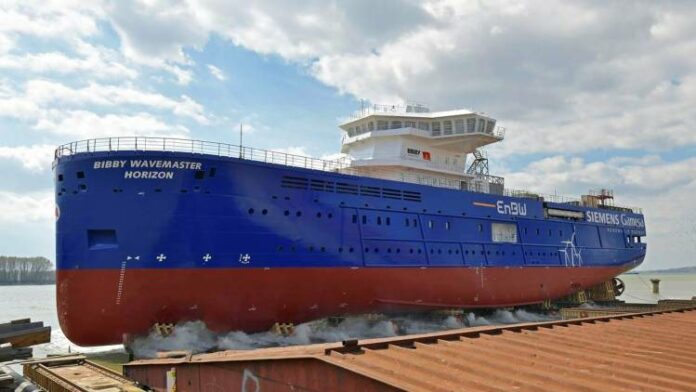
Bibby WaveMaster Horizon launched and named at Damen Shipyards Galati

0

On March 29th, Damen Shipyards Galati in Romania launched Bibby Marine Services’ second Service Operations Vessel (SOV) 9020, the company said in its release. During the same event, the vessel was officially named Bibby WaveMaster Horizon. Upon delivery later this year, the SOV will begin maintenance work on two EnBW and Enbridge-owned windfarms in the German North Sea – Hohe See and Albatros – for Siemens Gamesa Renewable Energy and EnBW.
 
Damen developed the SOV 9020 vessel following close consultation with the offshore renewable energy industry. The design combines walk-to-work capabilities with DP2 and an innovative hull along with a revolutionary interior and comprehensive features ensuring maximum efficiency of operation.
 
Damen began construction of the second SOV at the same time as the first vessel, the Bibby WaveMaster 1. This meant that, when Bibby Marine Services and Siemens Gamesa confirmed their contract at the end of 2017, Damen was able to accelerate construction rapidly. 
 
“This is one the principal benefits of Damen’s philosophy of standardised shipbuilding,” explains Damen sales manager Arjen van Elk. “Building in series means that we are able to deliver reliable, proven ships in the fastest possible timeframes, at competitive prices. 
 
“We have received very positive feedback from Bibby Marine Services regarding the Bibby WaveMaster 1, as a result of which we have every confidence that Bibby WaveMaster Horizon will make a fantastic asset for Bibby and for their clients. From the very outset of the development of the SOV, we have enjoyed a terrific collaboration with Bibby and I’m very pleased to see this continue.”
 

Stephen Bolton, Managing Director at Bibby Marine Services, said: “It is with great pride today that we launch and christen the Bibby WaveMaster Horizon. This vessel builds on the amazing track record of the sister ship the Bibby WaveMaster 1. Since delivery in September 2017 the Bibby WaveMaster 1 has worked continuously in the offshore wind and oil and gas sectors proving her design and Bibby’s management model on a daily basis. We are therefore confident that the Bibby WaveMaster Horizon will perform equally well for our clients Siemens Gamesa Renewable Energy and ENBW and set a new benchmark in the offshore wind operations and maintenance sector.”

The godmother of the Bibby WaveMaster Horizon was Mrs Mirna Robert-Du Ry van Beest Holle, wife of Damen’s Director of Special Projects Peter Robert. Peter, as then Director of Business Development at Damen, was instrumental in the development of the SOV 9020 from its inception. 

Australia grows environmental transparency for offshore projects

0

The Australian Government announced that the transparency will be increased, in support of all environmental plans for offshore oil and gas activities. All plans will be published and draft environment plans for offshore seismic and exploration drilling activities will be open for public comment concerning changes to environmental regulations.

Specifically, Minister for Resources and Northern Australia Matt Canavan reported that the new requirements are part of changes to enhance and boost transparency of the country’s offshore petroleum work.

He continued that Australians should be confident that oil and gas activities being carried out offshore meet the stringent environment regulations, and that all environmental risks and impacts of the proposed activity are taken into account.

Minister Canavan commented "The public will have a 30-day comment period to give feedback on the environmental management of proposed seismic and exploration drilling activities, providing a new level of accountability."

In addition, the official environmental plans concerning the offshore activities will be published and issued to the National Offshore Petroleum Safety and Environmental Management Authority (NOPSEMA) before they are assessed.

Moreover, he stated that if NOPSEMA accepts the plan, it will be published, along with an explanation of how public comments have been taken into account, enabling the community to see how their concerns have been addressed.

Concluding, the new regulations will come into force on April 25. All draft environment plans submitted from that date onwards will be published on the NOPSEMA web site, along with information on how to make comments on the plans.

Heavy Lift Ship Hits Barge at Ingalls Shipbuilding

0

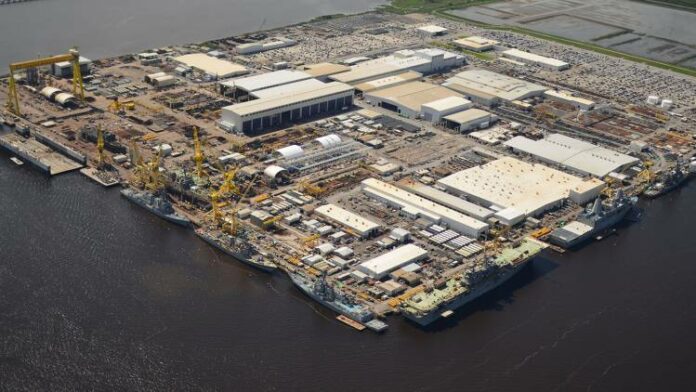
On Friday morning, a heavy lift ship allided with a test barge at Huntington Ingalls Industries' yard in Pascagoula, Mississippi, pushing the barge into a newbuild destroyer.

The heavy lift ship was arriving from Qingdao with a new Chinese-built floating drydock on board. According to HII, the test barge was alongside DDG 119, the USS Delbert D. Black, at the time of the allision. The barge was supporting electrical work on board the destroyer, and the impact pushed it against the newbuild's hull. Several individuals suffered minor injuries and were treated at the scene. 

The cause of the incident is under investigation. 

Images from the scene identify the heavy lift ship as the Hawk, one of the largest semi-submersible vessels of her kind. She is operated by an Oslo-based heavy lift firm. She last made the the news in 2016, when she carried the damaged drill rig Transocean Winner away from the Isle of Lewis, UK. 

DDG 119, the USS Delbert Black, is the first ship named after a master chief petty officer of the Navy (MCPON).  Her namesake, Delbert D. Black, was a veteran of WWII and the first master chief petty officer of the Navy.

DDG 119 was christened in 2017 and will be fully manned by the fourth quarter of 2019. She is the 32nd Arleigh Burke-class destroyer built by Huntington Ingalls. 

Source:maritime-executive

Technology may boost future oil supply

0

Wood Mackenzie stated that an oil supply gap is approaching. In case that oil demand peaks  at 110 million b/d in 2036, the inexorable decline of fields in production or under development today creates a yawning gap of 50 million b/d by the end of that decade.

This gap could be filled with the preoccupation of the E&P sector. Harry Paton, Senior Analyst, Global Oil Supply, identifies the contribution from each of the traditional four sources.

  • Reserve growth

12 million b/d or 24% will be produced from fields that are already operating today or are under development. These reserves are commonly to the lowest risk and have a lower cost, readily tied-in to export infrastructure already in place. Around 90% of these future volumes break even below US$60 per barrel.

  • Pre-drill tight oil inventory and conventional pre-FID projects

They will bring another 12 million b/dy. That’s up on last year by 1.5 million b/d, representing the industry’s success in beefing up the hopper. The majority of the increase is from the Permian Basin.

Tight oil plays in North America now account for over two-thirds of the pre-FID cost curve, though extraction costs increase over time. Conventional oil plays are a smaller part of the pre-FID wedge at 4 million b/d.

Brazil deep water is amongst the lowest cost resource anywhere. Whereas mature areas as the North Sea have succeeded in getting lower down the cost curve although volumes are small. Guyana, shows how new conventional basins can change the curve.

  • Contingent resource

These discoveries could deliver 11 million b/d, or 22%, concerning future supply. This cohort forms the next generation of pre-FID developments, but each must overcome challenges to achieve commerciality.

  • Yet-to-find

The Senior Analyst comments that it is still being calculated how new discoveries bring in 16 million b/d, the biggest share and almost one-third of future supply.

This number is based on experience, based on past discovery rates, future assumptions for exploration spend and prospectivity.

Nowadays, there's a challenge that new discoveries, with higher cost, will mitigate if demand's s not there or new, lower-cost supplies emerge. Tight oil’s rapid growth has disrupted the commercialisation of conventional discoveries this decade and is re-shaping future resource capture strategies.

The technology arising might be a challenge to future exploration. Evolving technology has always played a major role in boosting expected reserves from known fields.

Yet, Woodmac comments that what's different in 2019 is that the industry is on the cusp of what might be a technological revolution.

Advanced seismic imaging, data analytics, machine learning and artificial intelligence, the cloud and supercomputing will shine a light into sub-surface’s dark corners.

If global recovery rates could be increased by a percentage or two from the average of around 30%, reserves growth might contribute another 5 to 6 million b/d in the 2030s.
Source:safety4sea

ClassNK launches its cyber security approach

0

ClassNK launched its ClassNK Cyber Security Approach which focuses on a basic approach to ensure onboard cyber security for ships. The response was compiled to assist stakeholders take appropriate measures to ensure the vessel's safety and is based on trends in international institutions and maritime bodies.

Specifically, the ClassNK Cyber Security Approach has as a priority ensuring the navigational safety. To achieve it, it is important to ensure availability of systems in terms of operation technology as well as information technology systems, which support operation of ships.

In order to eliminate cyber risks in IT and OT, the Society proposes measures based on a balanced combination of physical, technical, and organizational approaches, such as designing ships and onboard equipment with security by design, constructing management systems during service, etc.

Moreover, the Approach categorizes cyber security controls into different layers, and clarify what each stakeholder should do for each layer by adopting requirements from the existing standards on cyber security that are considered applicable to ships.

In light of the increased use of IT for the operation of ships and international trends in cyber security, the Society will analyze the latest information with experts and propose current best practices in cyber security controls for ships.

In the meantime, ClassNK along with partners contributed to the publishment of the revised 'Guidelines for Designing Cyber Security Onboard Ships for newbuilding designs, aiming to shipyards and ship-building owners.

As part of the ClassNK Cyber Security Series, ClassNK will also be releasing the Cyber Security Management System for Ships that targets ship management, and Software Security Guidelines that target ship software in the near future.

Tallink Grupp Orders LNG Ferry

0

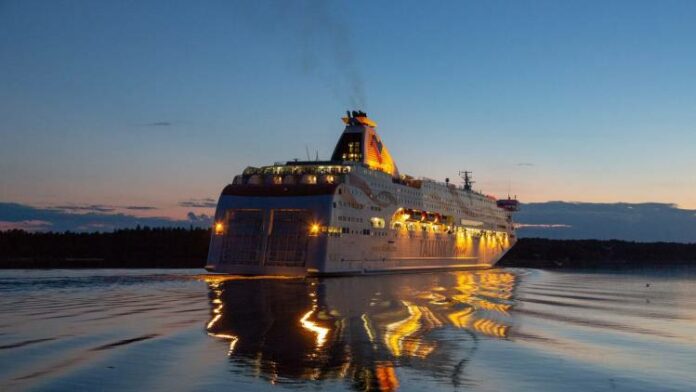
Tallink Grupp, the largest passenger and cargo shipping company in the Baltic Sea region, and Finnish shipbuilding company Rauma Marine Constructions (RMC) signed the contract for the construction of a new LNG-powered fast ferry for the Tallinn – Helsinki route shuttle operations.

Similarl to the group’s newest vessel Megastar, the new shuttle ferry will also be dual fuel operated, its overall length will be approximately 212 meters and with a passenger capacity of 2,800, said a press release from the Estonian shipping company operating Baltic Sea cruiseferries and RoPax ships from Estonia to Finland.

The vessel will cost approximately 250 million euros and it will be built at the Rauma shipyard in Finland, with delivery expected in January 2022.

The new vessel is another step for Tallink Grupp towards achieving even greater energy efficiency and eco-friendliness for its shipping operations. The new shuttle ferry, with a gross tonnage of approximately 50,000 and a service speed of 27 knots, will use LNG as main fuel and meet all the current and future known emission regulations.

According to the contract, 30 percent of the total cost will be paid during the construction period and the rest after the delivery of the vessel. AS Tallink Grupp plans to finance 70 percent of the new ship cost in 2022 by long-term loan.

Commenting on the contract, Paavo Nõgene, the CEO of Tallink Grupp, said: "The construction of Megastar and bringing this next generation vessel onto the Baltic Sea, has transformed our shuttle service between Tallinn and Helsinki. The vessel has been extremely well received by our customers, with over 4 million passengers already having traveled on the vessel. In addition to the increased passenger comfort, just as importantly, Megastar has taken our operations also to the next level in terms of environmentally friendly operations and increased efficiency."

Paavo added: "It was therefore only logical that a similar vessel should be built for the route sooner or later to enhance our operations on this important route for us even further. We are pleased to have signed the construction contract with RMC, thus supporting also our regional economies due to the construction taking place in Rauma, and we look forward to starting the shipbuilding process.“

Commenting on the contract, Jyrki Heinimaa, the CEO of RMC, said: "The project itself is extremely awaited in Rauma, since it allows us to continue our amicable co-operation with our colleagues at Tallink, of which we have had great experiences already since the beginning of the millennium, when M/S Romantika was under construction in Rauma as the first newbuilding ferry of Tallink Grupp.“

AS Tallink Grupp employs over 7,400 people in Estonia, Finland, Sweden, Latvia, Russia and Germany. In 2018, Tallink Grupp provided services to 9.8 million travelers and transported approximately 385,000 freight units of goods.  

Source:marinelink