8.5 C
New York
Home Blog Page 1093

Gazprom Neft in joint programs with Schlumberger, IBM

0

 Gazprom Neft and Schlumberger have signed a co-operation agreement on well logging.

Schlumberger will work with the Russian company’s subsidiary Gazpromneft-Noyabrskneftegazgeofizika, supported by Gazprom Neft R&D centers.

In addition, Schlumberger will provide engineering support to Gazprom Neft and train staff at the company’s operating units. This is a follow-up to a co-operation the two sides started in 2011.

More than 30 Gazprom Neft geologists have been sharing knowledge and experience with IBM Research Brazil machine-learning scientists, under the Cognitive Geologist project. This is another co-operation agreement designed to further development of AI technologies such as knowledge-enhanced Machine Learning.

Both parties are looking to optimize analytical processes and characterize the value of information related to the most relevant geological models to help advance exploration workflows and automate model creation for exploration.

AI technologies will help automate routine operations and improve geological and geophysical data analysis for oil exploration or production activities, Gazprom Neft said.

Source:offshore-mag
Nova Scotia revokes tidal licence

0

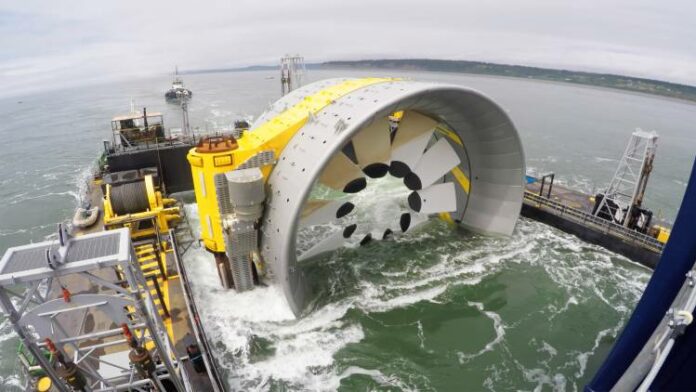
The Nova Scotia government has revoked the marine renewable-electricity licence issued to Cape Sharp Tidal after it deemed the venture no longer has the financial ability to deliver a 4MW project in the Bay of Fundy.

The Canadian province issued the license in May 2018 to the jv between Irish tidal developer Open Hydro and local utility Emera.

Cape Sharp Tidal connected a 2MW Open Hydro turbine to the Nova Scotia grid last July but the device was damaged two months later.

The machine remains at the bottom of the Minas Passage, an inlet of the Bay of Fundy.

In a statement, the Nova Scotia government said Cape Sharp Tidal is also in violation of its feed-in tariff approval and, as a result, that agreement has also been revoked.

“The company is now required to retrieve its turbine in the Minas Basin. If that does not happen in a reasonable timeframe, government will begin the process of accessing the security that remains in place,” it said.

The turbine “continues to be monitored and it presents no danger to marine life or the environment,” it added.

Emera pulled out of the Cape Sharp Tidal venture in August after Open Hydro filed for bankruptcy protection during the previous month.  


Maersk ultra-deepwater semi wins long-term contract off Australia

0

 Maersk Drilling’s ultra-deepwater semisubmersible Mærsk Deliverer has received a three-year contract from Inpex Australia and joint venture participants for drilling at the Ichthys gas and condensate field in the Browse basin offshore Western Australia.

The estimated contract value is $300 million, including mobilization. The contract is expected to begin in 2Q 2020. It also includes two one-year options.

Delivered in 2010, the Mærsk Deliverer is currently operating offshore Timor-Leste.

Jørn Madsen, CEO of Maersk Drilling, said: “With this contract award we retain a well-balanced forward coverage in the floater market with long-term contracts while maintaining exposure to a market recovery.”

Source:offshore-mag

ClassNK supports IMO 2020 with sulphur cap guidance

0

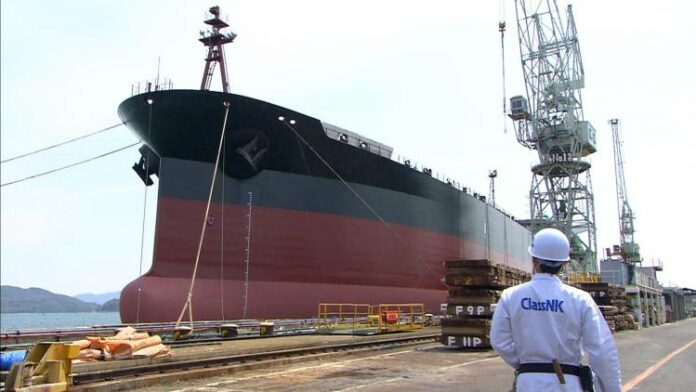
Japan’s ClassNK has come out in support of the IMO 2020 regulation by developing a guidance on the use of 0.5% fuels and a sample implementation plan for switching to compliant fuels.

ClassNK said it has developed the ‘Guidance for onboard use of compliant fuel oil with SOx regulation from 2020’, underscoring the classification society’s support and provision of related services for the upcoming 2020 fuel sulphur cap.

“Compliant fuel oil is anticipated to include more low sulphur blend stocks than ever before in addition to light distillates. ClassNK has identified five properties of compliant fuel oil that should be taken into consideration with its use: compatibility, low viscosity, cold flow properties, cat fines, and ignition/combustion quality,” ClassNK stated.

The ClassNK guidance explains the basic characteristics of each property, and the potential safety implications associated with them.

ClassNK has also provided a sample of ‘Ship implementation plan’ that shows how ships can prepare for the 0.5% sulphur cap. The ship implementation plans include the items listed in MEPC.1/Circ.878. Additionally, it provides other appraisals tailored to individual client needs for confirming facts such as whether a fuel tank has been cleaned before switching to compliant fuel oil.

From 1 January 2020, all oceangoing ships are required to burn bunker fuels with a maximum sulphur content of 0.5%, down from the current limit of 3.5%, under IMO’s Marpol Annex VI regulations.

Source:seatrade-maritime

Three Cruises on Oasis of the Seas Canceled After Drydock Accident

0

The cruise ship Oasis of the Seas is headed for a shipyard in Cádiz, Spain for repairs after suffering damage in a drydock accident at Grand Bahama Shipyard.

Three sailings departing Port Canaveral on April 7, 14 and 21 have been canceled due the unscheduled repairs. Her next sailing will be a May 5 departure out of Barcelona, the first cruise of her European summer season. 

Affected Royal Caribbean customers will  receive a full refund, a 100-percent credit towards a future cruise and a limited reimbursement for airfare change fees. Any prepaid excursions booked through the cruise line will also be refunded. 

On Monday, the Oasis suffered an unspecified casualty during propulsion repairs in the yard's largest floating drydock, Dock 2. Niklas Sandström, a project manager who was on board Oasis at the time of the casualty, told Finnish media that the vessel took on a list to starboard of approximately seven degrees. A crane on the drydock's starboard side also toppled over onto the amphitheater on the Oasis' stern. 

Eight shipyard workers were hurt in the incident, though none suffered life-threatening injuries. Separately, contractors who were staying aboard the Oasis evacuated onto shore, walking directly underneath the wreckage of the crane to reach the gangway (video at top of page). 

Most media reports have characterized the accident as a crane collapse, but Royal Caribbean described it as an "issue in the dry dock structure." In a brief statement Monday, Royal Caribbean indicated that the dry dock itself may have suffered damage in the incident. "We are aware of damage to the dock structure and to construction cranes. We are assessing damage to the ship," the cruise line said. 

Source:maritime-executive

Yara Marine’s MARPOL Test Successful

0

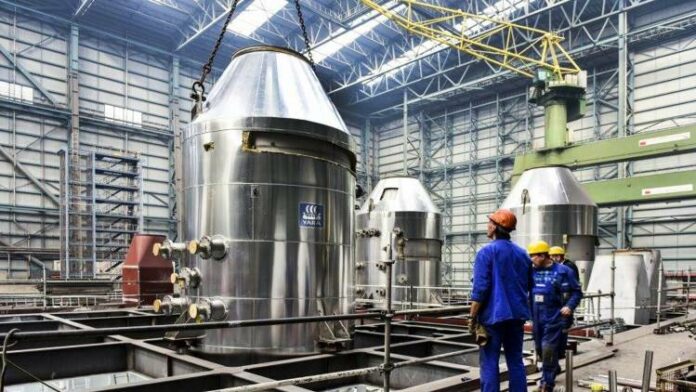
Norway-based emissions control technology company Yara Marine Technologies announced the successful installation of an inline hybrid scrubber system for an undisclosed customer in the ultra-large container segment.

"This is the biggest ship engine ever to be successfully fitted with an inline hybrid scrubber system," said a press release from the company that offers a complete SOx and NOx product portfolio to the marine segment.

The project marks an important milestone in expanding areas where shipowners can achieve full and cost-efficient IMO compliance with SOx scrubbers. The inline hybrid scrubber system also covers the vessel’s five auxiliary engines.

“The installation of Yara Marine’s inline hybrid SOx scrubber on the vessel confirms our customer’s commitment to protect the environment, not only from IMO-regulated SOx emissions, but also Particulate Matter (PM) and other hazardous substances from exhaust gas,” says Yara Marine Chief Sales & Marketing Officer Kai Låtun

“We appreciate our customers’ environmental strategies and we want to support them in the accomplishment of these ambitions. With the successful operation of this ultra-large container ship, we believe more vessel operators will follow in the same direction,” Låtun explains.

The successful MARPOL test is a confirmation of the scalability of Yara Marine scrubbers and their ability to provide efficient SOx treatment on larger vessels, such as in the container segment.

“We believe that with the successful MARPOL test on the vessel, we have inspired and convinced more shipowners about the feasibility of Yara Marine scrubbers,” says Yara Marine CEO Peter Strandberg.

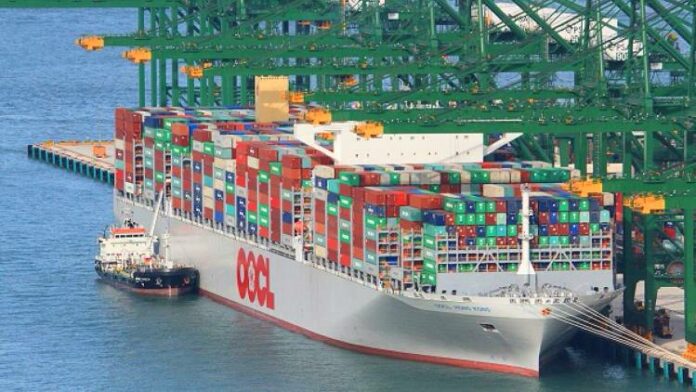
The vessel, with an 80MW 2 stroke main engine and five (each approximately 5MW) auxiliary engines, is already in full operation in its dedicated trading route.

Source:marinelink

ABS partners with Mission Secure to deliver new cyber technology to the maritime industry

0

ABS Advanced Solutions (ABS) announced a partnership with Mission Secure™ Inc. (MSi) to provide more comprehensive and streamlined cyber protection.

Building on the success of the FCI Cyber Risk™ Methodology, integration of the MSi platform gives ABS clients significantly enhanced cyber defense of industrial control systems that operate modern day vessels and offshore platforms.

FCI Cyber Risk™ Methodology provides industry a simple and practical way to count and quantify risk. Integrating the MSi platform with the FCI Cyber Risk™ method delivers a comprehensive shared understanding of cyber risk across assets, in combination with continuous 24/7 network monitoring and protective solutions. The platform is powered by an on-board or cloud-based dashboard for centralized management at all levels.

Rather than a one-size fits all approach, ABS offers a solution designed to respond to individual clients’ needs, whatever the maturity of their cyber program. For ABS clients using the Nautical Systems marine-focused ERP solution, this serves as an extension to allow more data-driven insights that enable smart decision-making and swift incident response.

The ABS FCI Cyber Risk™ Methodology was developed following a two-year research contract with the Maritime Security Center—a U.S. Department of Homeland Security Center of Excellence—led by Stevens Institute of Technology and including the US Department of Defense.

OOIL, JD Logistics invest in COSCO’s Eshipping platform

0

Hong Kong-based Orient Overseas (International) Limited (OOIL) announced the signing of an investment and cooperation agreement, through its subsidiary Gold Talent, with COSCO Shipping Logistics and JD Logistics, pursuant to which the Parties have agreed to establish a joint venture investing in COSCO's online logistics platform Eshipping.

The Joint Venture Formation will involve:

  • the injection of the JD Onshore Company into the Joint Venture by JD Logistics and the acquisition of the JD Offshore Company by the Joint Venture funded by JD Logistics;
  • the acquisition of Eshipping by Gold Talent and COSCO SHIPPING Logistics;
  • the injection of Eshipping into the Joint Venture; and
  • the capital injection into the Joint Venture by JV ESOP and Eshipping ESOP.

At Completion, Gold Talent, COSCO Shipping Logistics, JD Logistics, JV ESOP and Eshipping ESOP will be interested in the Joint Venture as to 22%, 18%, 45%, 11% and 4% respectively.

COSCO Shipping Logistics and Eshipping are subsidiaries of China COSCO Shipping , which has 75% indirect controlling interest in the Company.

Eshipping was established in July 2014 and it carries the “Internet Plus” mission of the group. It offers a platform to integrate international supply chain resources, including logistics, warehousing, courier, logistics financing, trading and other market resources, to provide small and medium-sized enterprises and cross-border retailers one-stop logistics services covering landside transportation, ocean freight forwarding, air freight forwarding, overseas warehouses, supply chain finance etc.

Pursuant to the Listing Rules, COSCO Shipping Logistics, Eshipping and China COSCO Shipping are connected persons of the Company, the Transaction therefore constitutes connected transactions of the Company under Chapter 14A of the Listing Rules.

As one of the applicable percentage ratios in respect of the Transaction exceeds 0.1% and all of the applicable percentage ratios are less than 5%, the Transaction is subject to the reporting, announcement and annual review requirements under Chapter 14A of the Listing Rules and is exempt from the independent shareholders’ approval requirement pursuant to Rule 14A.76(2) of the Listing Rules.

Source:safety4sea

Torqeedo’s Propulsion for VIKING LifeCraft

0

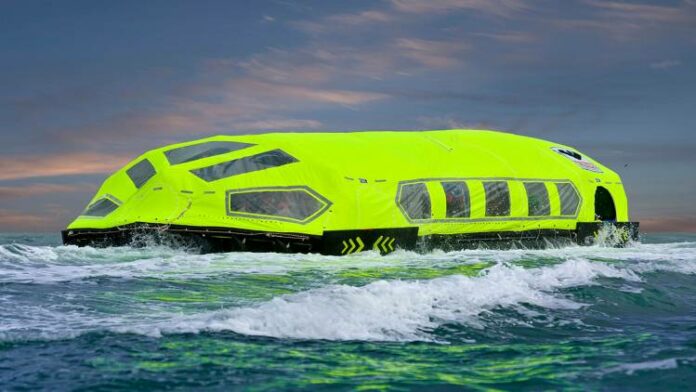
Torqeedo developed a specialized high-thrust electric propulsion system for VIKING’s revolutionary new LifeCraft survival craft, which are designed to speed safe evacuation of hundreds of passengers from ships at sea.

The 203-passenger LifeCraft is a motorized inflatable vessel designed to deploy from a shipboard storage/launch station. Passengers board the boats through escape chutes. Once each boat is fully loaded, the crew maneuvers it to a safe standoff distance from the ship using the electric motors.

Torqeedo’s electric propulsion system is a key enabling technology for the self-propelled inflatable survival craft because they don’t require frequent access to fuel, oil and ignition systems for maintenance when stowed on board. This allows the electric motors and batteries to be integrated into the compact self-inflating design.

The LifeCraft’s propulsion package consists of multiple, smaller motors for redundancy and maneuverability. Each craft has four Cruise 4.0 electric pod drives installed, powered by Power 24-3500 lithium-ion batteries in 48-volt banks. One motor is installed at each corner of the boat and all are networked into an integrated energy monitoring system, giving the operator a clear view of motor and battery status at a glance.

The electric boats successfully completed heavy weather sea trials in October, proving their ability to deploy and operate dependably under the most extreme wind and sea conditions. The tests, witnessed and approved by DNV-GL, took place in the North Sea. Wave heights were between 3.6 and 4.6 meters (11.8-15.1 ft) with peaks up to 10 meters (32.8 ft) – 50 percent above the stipulated heavy weather testing requirements – and wind gusts up to 18 meters per second (40 mph) were recorded. The boats were launched and maneuvered along the weather and lee sides of the ship, demonstrating their flexibility to move rescue capacity to wherever it is most needed. Then they performed a 24-hour controlled drift test in battering seas with no damage to the vessels.

VIKING received official approval for the LifeCraft survival craft on March 8 from the Danish Maritime Authority (DMA) as a “Novel Life-Saving Appliance” meeting the requirements for replacing conventional lifeboats on passenger ships.


NextDecade, Shell Seal Rio Grande LNG Deal

0

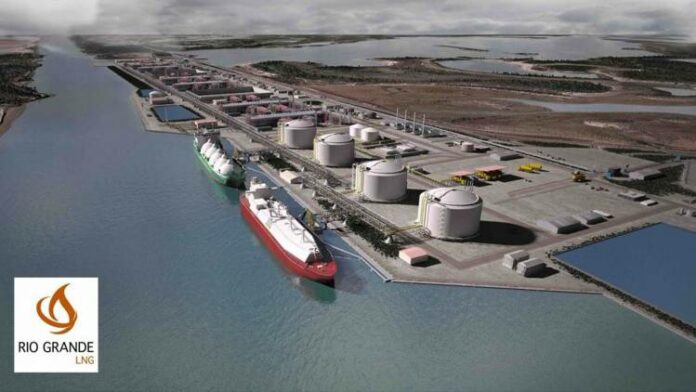
The liquefied natural gas arm of oil giant Shell has become the first customer at U.S. company NextDecade Corp 's proposed $15 billion Rio Grande LNG export terminal at the Port of Brownsville.

NextDecade signed a 20-year binding sales and purchase agreement (SPA) with Royal Dutch Shell for the supply of two million tonnes per annum of LNG.

Pursuant to the SPA, Shell will purchase LNG on a free-on-board basis starting from the commercial operation date of Rio Grande LNG, currently expected in 2023, with approximately three-quarters of the purchased LNG volumes indexed to Brent and the remaining volumes indexed to domestic United States gas indices, including Henry Hub.

The SPA is the first-ever long-term contract with LNG produced out of the United States to be indexed to Brent and comes with full destination flexibility.

We are honored to have Shell as the first foundation customer of our Rio Grande LNG project,” said Matt Schatzman, NextDecade’s President and Chief Executive Officer.

“Shell is not only the largest portfolio LNG company in the world, Shell is also a recognized pioneer in the global LNG business. Shell was the first to sign a long-term SPA from the United States indexed to Henry Hub in 2011, and so it is fitting they are the first to sign a long-term SPA from a U.S. LNG project indexed to Brent. We look forward to finalizing additional commercial agreements and to proceeding with the development of our Rio Grande LNG project,” Matt said.

“LNG continues to be the fastest-growing gas supply source to 2035,” said Slavko Preocanin, Vice President, Shell LNG Marketing & Trading. “This agreement secures more volume for our portfolio in the 2020s and ensures we can meet the growing demand for secure, flexible and cleaner energy from our global customers. We look forward to working with NextDecade in the years to come.”

Consistent with previous guidance, pending the achievement of further commercial milestones and receipt of requisite regulatory approvals, NextDecade anticipates making a positive final investment decision on up to three trains (Phase I) of the Rio Grande LNG project by the end of the third quarter of 2019.