6.1 C
New York
Home Blog Page 1094

Fujitsu using AI to prevent ship collisions

0

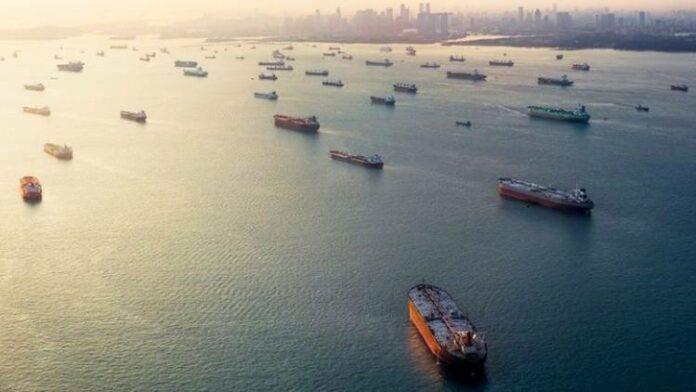
The Maritime and Port Authority of Singapore (MPA) and Japanese technology firm Fujitsu have revealed details of trials of a new anti-collision technology.

A two-year trial of the system, called Fujitsu Human Centric AI Zinrai, has recently concluded.

The system uses artificial intelligence to detect ship collision risks and predict hot spots where risks are higher.

Fujitsu claims its risk detection technology is able to give operators about five minutes’ lead time to warn ships of any possible collision. Moreover, Fujitsu claims its dynamic risk hot spot detection technology can detect risks up to 15 minutes in advance.

Source:splash247

Rotterdam agrees efficient inland shipping partnership

0

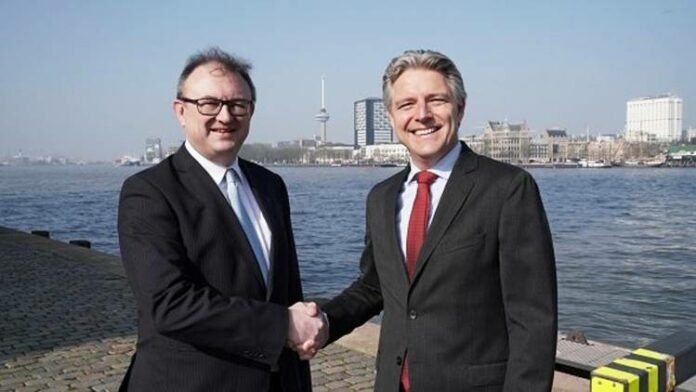
The Port of Rotterdam Authority has signed a partnership agreement with Multimodal Coordination Foundation and Brabant Advice Centre (MCA Brabant) to boost container transport via inland shipping routes.

Over 8.6 million containers were transhipped in Port of Rotterdam during 2018, with more than 1 million being moved to North Brabant, one of Rotterdam’s most important hinterland regions.

According to a statement from Rotterdam, the transport of this cargo by road is placing increasing levels of pressure on its road networks.

By increasing the volume of freight carried via inland shipping routes, instead of by truck, Rotterdam projects that it will make the port and surrounding area more accessible, as well as increasing the efficiency of its logistics chain.

Emile Hoogsteden, Director of Containers, Breakbulk & Logistics at the Port of Rotterdam Authority, said: “Smart connections between the Port of Rotterdam and Brabant will result in structurally higher multimodal transport reliability, and this will contribute to the sustainable accessibility and growth of one of the most important logistics hotspots in the Netherlands."

A feature of the collaborating organizations’ partnership, in 2019, will be the scaling-up of digital information exchange between the Port of Rotterdam and Brabant’s inland shipping terminals.

By sharing data about the arrival of sea-going vessels and containers, in addition to any delays impacting transport, all parties will be able to plan more effectively.

Hendrik-Jan van Engelen, Director of MCA Brabant, also commented: “Good connections by water with the Port of Rotterdam are essential in enabling the further growth of Brabant shippers and transport companies."

“This does not only take a lot of trucks off the roads; good connections also ensure the reliability of the total supply chain. We are very much looking forward to all initiatives that this partnership aims to set in motion.”

The partnership also continues a previous agreement made by the Port of Rotterdam Authority to bundle more container freight and transport it using a fixed sailing schedule.

Leading to the establishment of the West-Brabant Corridor in 2018, this link between deep-sea container terminals on Maasvlakte and facilities in Moerdijk, Oosterhout and Tilburg has already resulted in 20% more freight via inland vessels.

Source:porttechnology

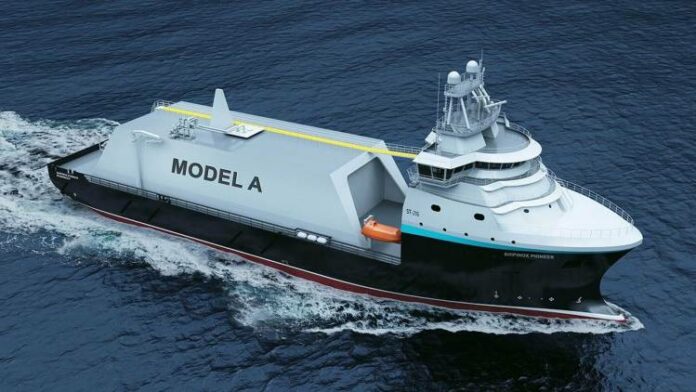
DNV GL awards ShipInox first AiP for OSV based LNG bunker vessel design

0

Classification society DNV GL has presented ShipInox with an Approval in Principle (AiP) for its new small-scale LNG carrier/bunker vessel design. It is the first ever class-approved design based on an offshore supply vessel (OSV). With a length of 92 meters the ship will have a carrying capacity of 6,000 cubic meters.

Interest in gas as a marine fuel is on the rise in the shipping industry. DNV GL’s most recent forecast predicts that by 2050 over 20 per cent of total shipping energy will be provided by LNG. In the shorter term, with the Sulphur cap on fuel entering into force in January 2020, the combination of technical maturity, efficiency, availability, and emissions reduction means that LNG is a viable option for many vessels, especially for newbuilding projects.

“The enthusiastic support we have received throughout the challenging development of this design makes us feel very humble,” says Rune Østbøe, CEO of ShipInox. “Not only DNV GL and the Norwegian Maritime Authority (NMA), but a diverse range of companies spanning Innovation Norway, to the LNG-specialists at Torgy, and Fearnleys have all enabled us to deliver on this design. We are now in a position where we can help to accelerate entries into small-scale LNG with this fast-to-market and low-cost LNG carrier.”

“We are very proud that ShipInox asked us to be part of this interesting and innovative project,” says Trond Hodne, Senior Vice President at DNV GL – Maritime. “This design could be a viable option for owners looking to move into different segments in a challenging market, especially as the gas segment continues to gain importance in shipping.”

“This AiP is the result of an excellent cooperative process that included a feasibility workshop with the designers, the Norwegian Maritime Authorities, an OSV owner, and DNV GL experts,” says Johan Petter Tutturen, Business Director for Gas Carriers, DNV GL – Maritime. “We have been able to ensure that this novel design is in full compliance with the 2016 IGC Code and with the relevant class rules. It is a testament to the expertise and engagement of all parties involved that we could realise this challenging concept, and we look forward to seeing the first projects hit the water.”

“Our strong focus on green shipping and fuel development and our experience in handling novel designs make us an asset in projects that challenge the standard set-up,” says Karolina Lundgren, Norwegian Maritime Authority. “We are pleased that Shiplnox decided to involve us early in the process. For future developments, it is a great advantage that the most problematic issues have been carefully considered both by Shiplnox and DNV GL and that the need for alternative designs has already been identified.”

An Approval in Principle is an independent assessment of a concept within an agreed framework, confirming that the design is feasible and no significant obstacles exist to prevent the concept from being realized. The AiP is typically carried out at an early stage of a project to confirm its feasibility towards the project team itself, company management, external investors or future regulators.

CMA CGM integrates MacAndrews into Containerships

0

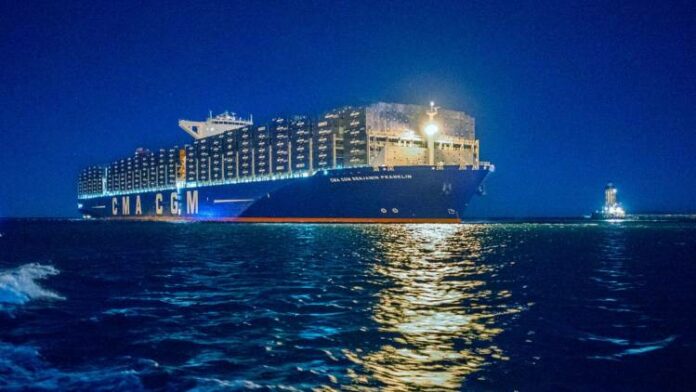
France’s CMA CGM Group has announced that is has integrated its multimodal unit MacAndrews into the Containerships brand to strengthen its intra-European multimodal transport business.

Containerships and MacAndrews operate a combined fleet of 32 vessels and 700 trucks, calling 64 ports through 26 maritime services and 8 inland services.

CMA CGM said the single Containerships brand will be able to unlock major synergies and focus on commercial growth and on the development of high-quality services for its customers, while the integration of the local agencies networks will allow for the creation of a tailored intra-regional service.

“By joining two recognized and complementary intra-European experts, the CMA CGM Group will create and develop a multimodal transport intra-European leader. The new, innovative Containerships brand integrates into the Group’s strategy aimed at densifying its regional coverage and at developing tailored end-to-end solutions for its clients,” said Guillaume Lathelize, CMA CGM’s senior vice president, short sea lines Med & North Europe.

Claude Lebel, current CEO of MacAndrews, has been appointed as the new CEO of Containerships. He replaces Kari-Pekka Laaksonen , who resigned last week.

CMA CGM merged its subsidiaries MacAndrews and OPDR in January last year and completed the acquisition of Containerships in November of the same year.

Source:splash247

Belships Adds Supramax Bulker to Fleet

0

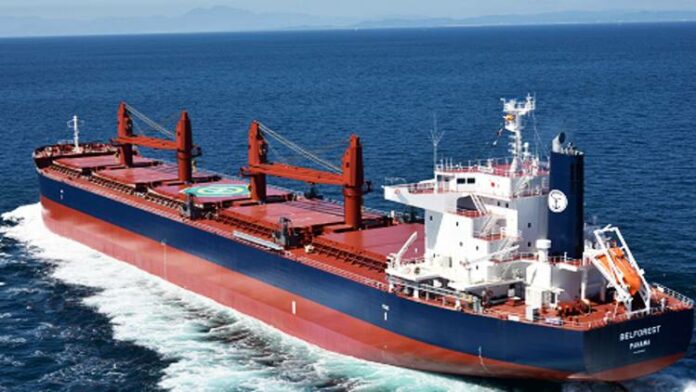
Norway-based bulk ship operator and management company Belships has signed an agreement to acquire a 58,700 dwt bulk carrier from Wenaas Shipping AS.

The vessel was built at Tsuneishi Heavy Industries (Cebu), Inc. in the Philippines in 2008, informed a press note from the dry bulk owner.

The agreed purchase price is USD 13.0 million, of which half will be paid in cash. The remaining consideration will be settled through a proposed issue of 8,060,650 new Belships shares to the seller of the vessel. The agreed share price in the transaction is NOK 7.00 per share.

Belships expects the cash payment to be fully financed within the previously announced financing package. (Belships Group had secured a USD 140 million loan facility.) Hence, the vessel purchase is not expected to significantly influence the Group's cash holdings.

Delivery of the acquired vessel is expected in the second quarter 2019. Following the transaction, the Belships fleet will count 16 supramax/ultramax bulk carriers. Furthermore, the Group will take delivery of a newbuilding in the first half of 2020.

Belships strategy going forward is to grow accretively as a fully integrated shipowner and operator of geared bulk carriers. The proposed share issue will, in accordance with the Group's shareholder strategy, expand Belships' shareholder base and improve share liquidity.

Source:marinelink

SeaTwirl lines up Belgian, Norwegian partners

0

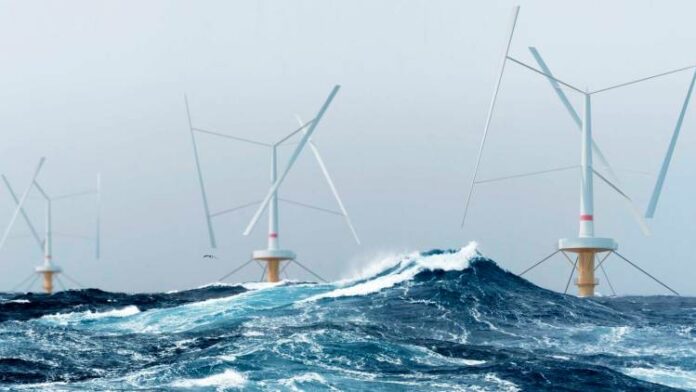
Swedish company SeaTwirl has signed a letter of intent with Belgium's Colruyt Group and Norwegian outfit Norsea Group to collaborate on financing, developing and installing the former's S2-1MW floating vertical access wind turbine.

The scope of the investment in the S2-1MW, which is the second scale-up of SeaTwirl’s technology, is Skr70m (€6.7m), provided certain milestones are met, the company said.

When the undisclosed milestones are met, Colruyt Group and Norsea Group will each own approximately 19% of the company.

SeaTwirl chairman Roger Cederberg said: “Having NorSea Group and Colruyt Group/Parkwind as partners would enable to take SeaTwirl to a whole new level with the respective companies’ expertise in offshore operations and the establishment of offshore wind farms.”

NorSea Group has experience in offshore and marine operations and contributes to the development, service and installation in the sea.

Colruyt Group, via its subsidiary Parkwind, develops, builds and operates offshore wind farms.

The letter of Intent outlines the key terms and conditions of the contemplated partnership and capital increase, which is subject to confirmatory due diligence proceedings with both partners.

NorSea Group chief executive John Stangeland said: “The global demand for clean and sustainable wind energy is growing fast. NorSea Group, together with our owner, the leading global maritime group Wilhelmsen, wants to contribute with experience and resources into the green and renewable sector."

We recognize that the industry will need to move further offshore into water depths where fixed-foundation turbines are not feasible and at the same time improve the cost for the total supply chain for floating solutions.

The vertical, less complex and anchored SeaTwirl design has the potential to improve the whole supply chain.

“NorSea Group is excited to join SeaTwirl and Colruyt Group in further technical, concept development and testing of the SeaTwirl pilot.”

SeaTwirl chief executive Gabriel Strangberg said: “We have received exactly the competence we wanted from our partners and we are very satisfied. These partnerships are an important step in our continued journey.”

Source:renews

Global Ports and Royal Vopak sold their 100 effective share ownership in AS Vopak E.O.S.

0

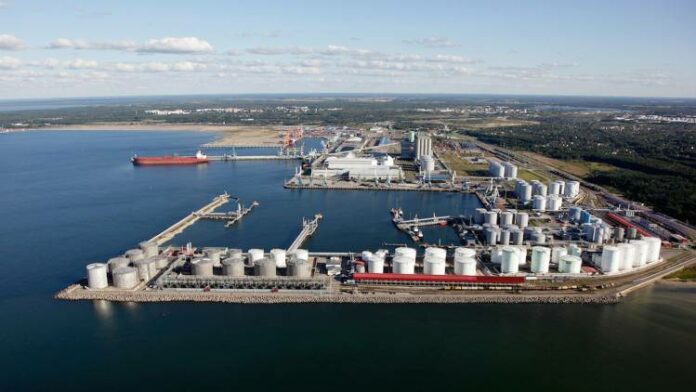
Global Ports Investments PLC today announces that it and Royal Vopak, the world’s largest independent tank storage provider1, have sold their 100% effective share ownership in AS Vopak E.O.S. (VEOS), to Liwathon. VEOS was a 50/50 joint venture of Global Ports and Royal Vopak. The parties agreed not to disclose the price of the transaction.

The decision to sell VEOS was driven by the Group’s strategic focus on opportunities in its core business where the Group sees attractive long-term prospects for itself. The divestment will enable the Group to designate more funds to ongoing deleveraging and to continue developing additional revenue streams.

AS Vopak E.O.S., an independent oil products terminal operator in the Baltic states, operates four modern terminals with the total storage capacity of 1,051,800 cbm located in the ice-free Port of Muuga within the Port of Tallinn. 

Global Ports Investments PLC is the leading operator of container terminals in the Russian market by capacity and container throughput2

Global Ports’ terminals are located in the Baltic and Far East Basins, key regions for foreign trade cargo flows. Global Ports operates five container terminals in Russia (Petrolesport, First Container Terminal, Ust-Luga Container Terminal3  and Moby Dik4 in the Russian Baltics, and Vostochnaya Stevedoring Company in the Russian Far East) and two container terminals in Finland5 (Multi-Link Terminals in Helsinki and Kotka). Global Ports also owns inland container terminal Yanino Logistics Park6  located in the vicinity of St. Petersburg. 

Global Ports’ revenue for 2018 was 343.6 USD million7 and Adjusted EBITDA was 217.3 USD million8. Consolidated Marine Container Throughput was 1,352 thousand TEU in 20189.

Global Ports’ major shareholders are Delo Group, one of the largest private transportation and logistics holding companies in Russia (30.75%), and APM Terminals B.V. (30.75%), whose core expertise is the design, construction, management and operation of ports, terminals and inland services. APM Terminals operates a global terminal network of 74 ports and 117 inland services facilities, giving the company a global presence in 58 countries. 20.5% of Global Ports shares are traded in the form of global depositary receipts on the Main Market of the London Stock Exchange (LSE ticker: GLPR).

Source:portnews

Jack-up Jill joins Windcarrier

0

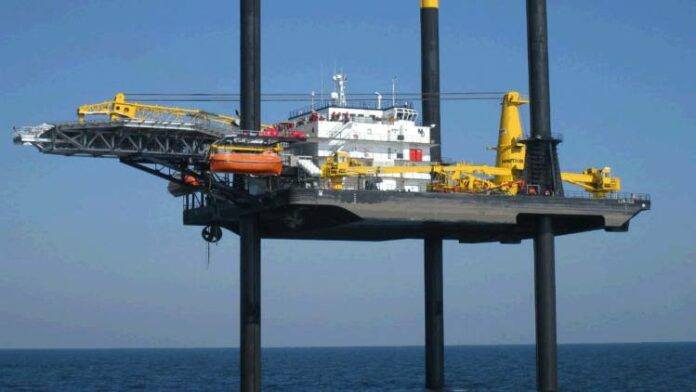
Fred Olsen Windcarrier has signed a long term time charter with Falcon Global for the latter's jack-up vessel Jill for work in the offshore wind sector.

The vessel (pictured) will be integrated into the Fred Olsen Windcarrier jack-up fleet for mainly operations and maintenance work in Europe.

Work in Europe will start in mid-April when Jill returns from a charter in the Gulf of Mexico.

Jill´s first job will be suction bucket installation tests out of Frederikshavn in Denmark together with Universal Foundation.

The first contracts for main component exchanges will take place shortly after arrival, Fred Olsen Windcarrier said.

The company added that Jill is a smaller and lighter jack-up vessel than the existing Terns in its fleet.

She is equipped with 102-metre long legs, a rack and pinion hydraulic jacking system, a large cargo deck, a main crane and three auxiliary cranes.

Jill can accommodate 132 people in addition to crew, but this will be limited to a total of 80 people in Europe.

The vessel is capable of transporting turbine components up to 5MW and can carry major components such as gearboxes, generators, transformers, blades and full drive trains for O&M jobs.

Fred Olsen Windcarrier chief commercial officer Casper Toft said: “With Jill joining our fleet, Fred Olsen Windcarrier can provide a competitive vessel to the O&M market for the 3-5MW offshore wind turbines."

Jill is capable of servicing up to 80% of the installed offshore wind base and we look forward to showing the offshore wind market what this vessel is capable of.

“Apart from using her for major component exchanges within O&M, she can among other things also be used for offshore accommodation and for blade transportation.”

Source:renews

EMEC to run rule over New York tidal

0

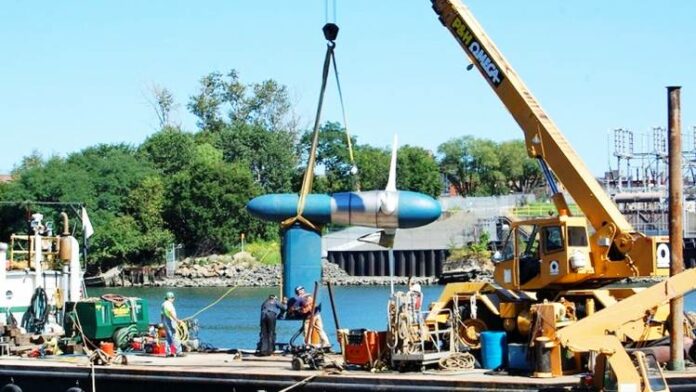
The European Marine Energy Centre (EMEC) is to provide an independent performance assessment of Verdant Power’s next-generation tidal technology to be deployed next year off New York City.

The Orkney test centre will measure the results of three Gen5 turbines to be installed in the East River as part of Verdant’s 105kW Roosevelt Island tidal project.

EMEC aims to be the first marine energy test laboratory to issue a power performance assessment through the IEC System for Certification to Standards Relating to Equipment for Use in Renewable Energy Applications (IECRE).

The independent measuring of the performance of Verdant’s system by EMEC will set a “new standard for tidal technology developers to meet globally,” the Orkney outfit claimed.

“This will be the first time EMEC has carried out an off-site performance assessment, and potentially the first marine energy test report issued through the IECRE,” said EMEC technical manager Elaine Buck.

Verdant Power president Ron Smith added: “The addition of EMEC’s technical expertise and particularly their independent third-party verification of our system’s performance is key as we bring the technology to market.”

Source:renews

Watch: Autonomous manoeuvring ships trials carried out on North Sea

0

A series of tests took place on 19 and 20 March with autonomous operations in the North Sea, about 5 nautical miles from the coast at Den Helder. The SeaZip 3, a Damen Fast Crew Supplier 2610 'Twin Ax' was equipped with intelligent control to avoid collisions and took part in various runs of nautical scenarios to enable interaction of the ship with other shipping traffic.

The tests were carried out under the Joint Industry Project Autonomous Shipping, a two-year research and innovation project on autonomous operations of sea-going vessels that started in 2017.

A total of eleven scenarios were implemented in which the SeaZip 3 interacted with two other ships. By testing the scenarios, the partners showed how the decision-making process works from an autonomous system that sails safely and makes time for other shipping.

The autonomous system of was connected to the operating system of the SeaZip 3 and conducted the maneuvers in a safe manner. The partners decided that more development of autonomous systems is needed to respond efficiently to complex shipping situations.

"The demonstration provides input for a roadmap to autonomous shipping, thanks to the insights into the state of current technology, the obstacles to be taken and the potential of technology. The Roadmap gives direction to development within the maritime industry, knowledge institutions, universities and governments. In addition, it provides insights into regulations and aspects such as risk management"...Netherlands Maritime Technology said.

Source:safety4sea