10 C
New York
Home Blog Page 1092

SBM Offshore orders up to four FPSO hulls at China Merchant Heavy Industry

0

Dutch FPSO operator SBM Offshore has signed contracts with China Merchant Heavy Industry (CMHI) for the construction of up to four FPSO hulls.

The contract consists of a firm order for one unit and options for another three. The hulls will be built at CMHI’s yard in Haimen, Jiangsu. It is also CMHI’s first ever FPSO construction project.

The construction of the first unit is expected to be completed in 24-30 months.

The latest newbuilding project is part of SBM Offshore’s Fast4Ward program.

“SBM Offshore is uniquely positioned to benefit from the current upturn. The most economically attractive deepwater developments require high production capacities, which can benefit most from shorter cycle time to first oil, combined with larger and more complex processing capacities. Fast4Ward facilitates this goal, lowering costs and providing a reliable execution plan,” SBM Offshore’s CEO Bruno Chabas said last year.

Currently SBM Offshore has another two FPSO hulls under construction at Shanghai Waigaoqiao Shipbuilding with options for another three.

Source:splash247

First Geneva Declaration on Human Rights at Sea Published

0

The first version of the inaugural Geneva Declaration on Human Rights at Sea has been published by Human Rights at Sea after the initial drafting session was held in Switzerland in March 2019 at the Graduate Institute of International and Development Studies, Geneva.

The principal aim of the Declaration is to raise global awareness of the abuse of human rights at sea and to mobilize a concerted international effort to put an end to it. 

The concept of human rights at sea rests on  four fundamental principles: 
1. Human rights apply at sea to exactly the same degree and extent that they do on land.
2. All persons at sea, without any distinction, enjoy human rights at sea.
3. There are no maritime specific rules allowing derogation from human rights standards.
4. All human rights established under treaty and customary international law must be respected at sea.

The Declaration recognizes established International Human Rights Law and International Maritime Law, highlights the applicable legal assumptions and reflects the emerging development and customary use of the increased cross-over of the two bodies of law.

The Declaration was first announced to students in Malta on April 4 at the IMO International Maritime Law Institute (IMLI) during the second Human Rights and the Law of the Sea workshop held in co-ordination with the Stockton Centre for International Law; and has now been briefed at the World Maritime University, Malmo, Sweden, during the Empowering Women in the Maritime Community conference by the charity’s Iranian researcher, Sayedeh Hajar Hejazi.

The core drafting team comprises: Professor Anna Petrig, LL.M. (Harvard), University of Basel, Switzerland, Professor Irini Papanicolopulu, University of Milano-Bicocca, Italy, Professor Steven Haines, Greenwich University, United Kingdom and David Hammond Esq. BSc (Hons), PgDL, Human Rights at Sea, United Kingdom. It is supported by Elisabeth Mavropoulou LL.M. (Westminster), Sayedeh Hajar Hejazi LL.M. (Symbiosis India).

The first drafting round was supported with input and observers from multiple U.N. agencies, leading human rights lawyers, international and civil society organizations.

The second drafting session will be held in Geneva in May.

The Declaration is available here.

Source:maritime-executive

Jan De Nul orders next-gen jack-up

0

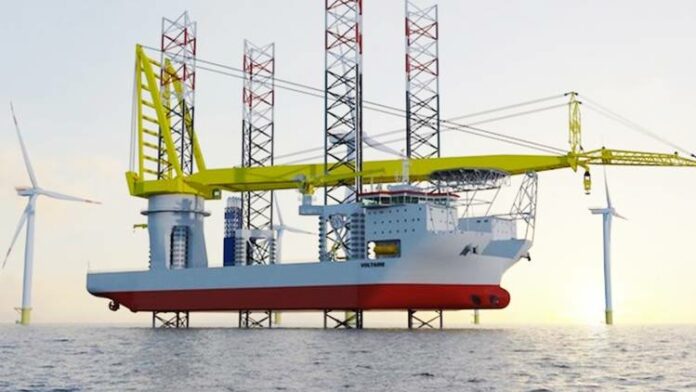
Jan De Nul Group has ordered a jack-up vessel that will have crane capacity for next-generation offshore wind turbines.

The Voltaire vessel will be built at COSCO Shipping Heavy Industry in China and will be Jan De Nul's third jack-up when it is delivered in 2022.

Voltaire will be specifically designed to transport, lift and install offshore wind turbines, transition pieces and foundations and will have better operational limits compared to existing jack-ups, the company said.

It will have a 3000-tonne main crane, an operating depth of approximately 80 metres, a payload of about 14,000 tonnes and accommodation for 100 people.

Compared with Jan De Nul’s two other jack-up vessels, the Vole au vent and the Taillevent, the new vessel will have almost 100% more deck space, the company said.

Jan De Nul Group offshore director Philippe Hutse said: “Upon her delivery in 2022, we will be capable of efficiently installing the next generation of offshore wind turbine generators and foundations."

This investment is a logical step forward in the development of our offshore wind capacities.

The third jack-up vessel will enable us to cope with our increased number of offshore wind projects worldwide.

“In addition, we recognise the global trend towards larger wind turbines for increased green energy demands. The Voltaire will have all the required specifications to meet the upcoming challenges.”

The vessel is named after the French writer, historian and philosopher François-Marie Arouet, known by his pseudonym Voltaire.

Source:renews

ABB, SINTEF Test Fuel Cells of Hydrogen Hybrid Ferry

0

Swiss-Swedish multinational corporation ABB and European independent research organisations SINTEF Ocean laboratory in Trondheim test fuel cells for the world’s first conversion of a hydrogen hybrid ferry.

The tests aim to provide answers needed for Norwegian shipyard Fiskerstrand to convert an existing ferry to run on a combination of batteries and hydrogen fuel cells.

The tests will also provide answers into the introduction of hydrogen fuel cells for future reviews of the rules covering shipboard use of hydrogen.

In addition, the tests will simulate the conditions the ferry is expected to face on a high frequency 10km route to make sure that the propulsion systems including fuel cells are robust enough for repetitive, short-burst service duties.

"We expect to gain real insight into what we need to deliver a ferry with hydrogen-based fuel cell operation to our HYBRIDskip project," says Kåre Nerem, project manager at Fiskerstrand.

"ABB's knowledge of system integration combined with SINTEF Ocean's long experience with maritime propulsion systems and SINTEF Industry's expertise in fuel cell technology, becomes the key to the solution here. These are neolithic work and together we will ensure that the solution is optimal for the particular route and ferry," Nerem added.

Hydrogen fuel cells are considered a promising option for reducing ships' greenhouse gas emissions. Combined with more established shipboard battery technology, they can improve energy density in zero-emission marine operations while also improving vessel endurance.

Source:marinelink

Laser sensor proves positioning capability in Caspian Sea trials

0

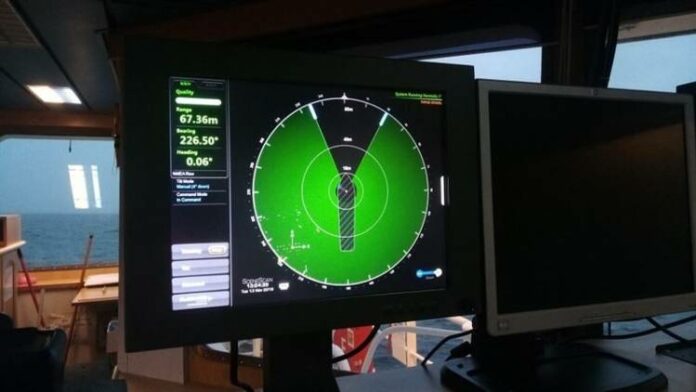
Wärtsilä has completed sea trials of its SceneScan system, which the company describes as the world’s first ‘target-less’ dynamic positioning (DP) laser sensor.

No reflector target needs to be deployed, and this improves safety and operational uptime, the company added.

Guidance Marine, a group subsidiary, developed the technology, with testing performed onboard the Topaz Energy and Marine offshore support vessel Topaz Citadel.

The SceneScan was connected to the vessel’s existing Wärtsilä DP system. Following the 90-day tests, Topaz indicated that it would keep the system on the vessel and start a phased roll-out to additional vessels.

The initial order includes upgrades to DP sensor systems onboard four Topaz vessels, with Wärtsilä also responsible for installation and commissioning.

“The testing and evaluation was carried out and proven under actual DP operations with offshore platforms in the Caspian Sea,” said Andrew Stead, Head of Business Development, Guidance Marine.

SceneScan’s rotating laser sensor provides positional information to allow automated approach and/or station keeping relative to a structure or vessel.

It provides tracking information relative to natural or man-made structures within the sensor field of view, by matching its current observation of the scene against a map generated from previous observations.

Source:offshore-mag

IMO’s sulphur regulation to result to deficit of marine gasoil in 2020

0

Consultancy Rystad Energy stated that IMO's 2020 regulation, concerning sulphur emissions, will result to a deficit of 600,000 barrel per day of marine gasoil in 2020. The share of VLSFO and other compliant fuel oil blends will be low, because ship owners seem reluctant to adopt the new fuel immediately; first, they aren’t confident that these fuels will be widely available already in 2020, and second, because they are unsure if the low sulphur fuel oil offered at different ports will be compatible.

Generally, IMO's regulation is to come into effect on January 1, 2020. The sulphur content limits in bunker fuels that are used outside ECAs will be decreased to 0.5%, from 3.5% to reduce air emissions from shipping.

For the time being, high sulphur fuel oil reflects the 80% of the 5.0 million bpd global bunker demand, which will become non-compliant.

According to the consultancy, ship owners have three options:

  1. Switch to compliant fuels, such as oil products with low sulphur content or alternative fuels such as LNG;
  2. Install SOx scrubbers (exhaust gas cleaning systems);
  3. Fail to comply with regulations (non-compliance).

Moreover, it is estimated that about 700.000 bpd of VLSFO will be available in 2020, which is seen to be increased to 1.3 million bpd in 2025.

Yet, in 2020 it is estimated that additional 600.000 bpd of marine fuel demand will be satisfied by blends manufactured from existing low-sulphur fuels, middle distillates and high sulphur fuel oil, which they call MGO & FO blend.

In addition, about 15.000 bpd of the marine fuel demand will be met by other fuels, as the LNG. Yet, the 1.5 million remaining is expected to keep on using HSFO through the installation of scrubbers and non-compliance.

Concluding, Rystad Energy estimates that by the end of 2020 the marine industry will have installed about 2.800 scrubbers, consuming 690.000 bpd of HSFO. In the meantime, non-compliance will reach the 860.000 bpd of HSFO demand in 2020, coming from sectors where compliant fuel is not readily available or with low monitoring.

Source:safety4sea

Supply chain attacks worsen with arrival of new malware

0

In April's edition of Phish and Ships, cyber attacks are on the spotlight. Although they are devastating, they are sophisticated and ShadowHammer is here to prove it. Gideon Lenkey, President of Ra Security Systems Inc and Epsco-Ra Maritime Cyber Security, focuses on the importance of cyber security.

Recently, Kaspersky Lab uncovered Shadow Hammer, a malware that presents all of the hallmark traits of an Advance Persistent Threat (APT) effort.

APTs are tracked by numbers and they are thought to be nation state actors. Also, one can identify them by their methods, tools, targets and goals.

As Lenkey reports, APT 38 is attributed to North Korea and targets financial institutions.

The difference on this malware in comparison to the rest, is that it attacks the early stages of the end userʼs product life cycle. Specifically, the attack is on ASUS computers by placing its malware directly in the official update utility distributed by ASUS.

So, in order to run the software without sticking out like a sore thumb, it has to be digitally signed with a certificate validated from a trusted certificate authority. The certificate identifies the creator of the software as a way for the user to validate the software is genuine. In this case, the attacker stole the certificate and signed their malware so Windows wouldnʼt complain when the user installed it. They also were able to put their trojaned version of the update utility on the official download site. This means that they had either direct access to the servers or access somewhere along the way from the developers to the distribution point.

The Shadow Hammer, in comparison to the attack stated above, differentiates as rather than the malware running on every computer that downloaded the update utility from the ASUS site, the malware only ran on systems with specific MAC IDs. A MAC (Media Access Control) ID is a unique identification number assigned to a network interface such as a WiFi or Ethernet card. Generally speaking, no two are the same. The ShadowHammer malware had a list of 600 MAC IDs which would equate to 600 specific users they were targeting.

This implies that the attacker has a very specific end goal and that they knew their target was in possession of computers that it had narrowed down to a group of 600. It is not known at this time, or if it is it hasnʼt been made public, whether the whole 600 were the target or there was a subgroup within the 600. Either way it implies a sobering level of targeting intelligence.

Moreover, he highlights that malware communicates over the network and that is a crucial threat to a malware's existence. In other words, he supports that the network has to be monitored. The network is a lot more independent and a better way to detect malicious activity on endpoints.

Concluding, the cyber security specialist urges maritime owners and managers to be informed of this new kind of cyber attack, because at this point it appears to be a nation state actor with a very specific target, these attack methodologies and tools quickly transfer to the criminal element.

Source:afety4sea


DNV GL joins EU blockchain initiative

0

DNV GL announced that it joined INATBA, the International Association of Trusted Blockchain Applications. This is an EU backed initiative, aiming to establish a framework that will enable blockchain to flourish.

The members of INATBA aspire to promote an open and transparent governance model that serves stakeholders in the private and public sectors. Namely, the initiative has the following main objectives:

  • Promote an open, transparent and inclusive global model of governance for blockchain and other distributed ledger technology infrastructures and applications. A model that reflects the shared interests of stakeholders from industry, start-ups and SMEs, civil society organizations, governments and international organizations;
  • Support the development and adoption of interoperability guidelines, specifications and global standards, to enhance trusted, traceable, user-centric digital services. Upholding an open, transparent and inclusive method of multi-stakeholder cooperation;
  • Develop sector-specific guidelines and specifications for the development and acceleration of trusted sectorial blockchain and DLT applications in specific sectors (i.e.financial services, health, supply chain, energy and financial inclusion).

DNV GL has already used blockchain based solutions, like 'My Story', powered by VeChainThor. This solution tells the verified history of a product.

Providing a comment on DNV GL joining INATBA, Luca Crisciotti, CEO of DNV GL-Business Assurance, said that:
"Blockchain is an inherently transparent technology that is already enhancing many of our verification and certification processes. Establishing INATBA will facilitate an open dialogue between stakeholders and establish a framework that documents best practices, which will build society-wide confidence in blockchain. We look forward to engaging with partners across the entire blockchain ecosystem."

Source:safety4sea

Baleària commits to innovation and sustainable growth

0

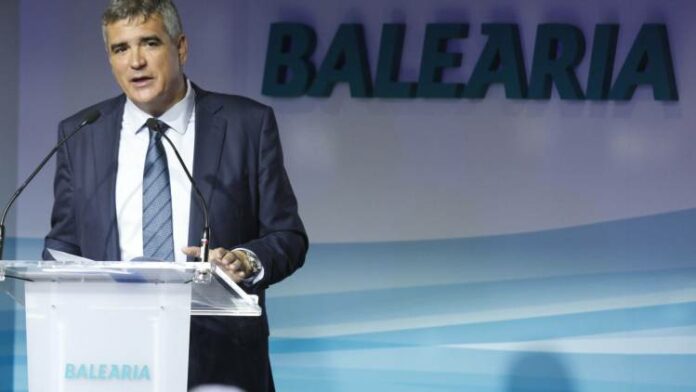
In 2018, Baleària handled 4.320.000 passengers, an increase of 11% and 1.209.000 vehicles, an increase of 17% on its 23 routes with an overall of 1.109.000 on its five international routes. Cargo accounts for half of Baleària's business, with a growth of 3.5%.

Specifically, Adolfo Utor, Baleària's President, announced at a press conference that the passenger development reached the 26% while sales exceeded 84 million euros (16% more).

In the meantime, half of the group’s passengers, 2.277.000, travelled the lines connecting the Iberian Peninsula to northern Africa (Morocco, Algeria, Ceuta and Melilla); The President noted that the northern Africa is the area where the Valencia-based shipping company is growing the most.

Referring to cargo, he stated that it makes half the business for Baleària, as 5.800.000 linear metre goods were transmitted.

Cargo is currently concentrated in the Balearic Islands with 79% of the total but it’s a very mature market meaning growth comes from the rest of the routes.

Moreover, Baleària is at the peak of expansion, concerning the new routes on the Alboran Sea and around the Canary islands.

Concerning the company's economic results, the high cost of the start-up of the new traffics to be consolidated, together with the increase in the price of fuel in 2018, concluded to a reduced profitability. Specifically, in spite of the shipping company bringing in €381,400,000 (5% more), EBITDA was 14% lower (€70,300,000) and the net profit was 37% less (€27,400,000).

Utor forecasts that this trend will remain stable through this fiscal year, as new traffic routes will be consolidated and the ship engine refittings that are under schedule, will be completed.

In the meantime, Utor talked about the company's sustainability, as the economic development will be compatible with the environmental preservation, social inclusion and equal opportunities.

He highlighted that the company seeks competitiveness without forgetting these criteria.

As an example, he referred to the company using LNG, commenting that it was the company's contribution to fight climate change.

"Natural gas is a cleaner energy which goes hand in hand at Baleària with digitization. They are two strategic lines that perfectly combine in our smart ships."… Utor stated.

Additionally, by the end of 2019, Baleària will have nine gas-propelled smart ships, three of which will be newly-built and six of which are already in its fleet, but will have new engines (partially funded by the EU).

Thus, the Hypatia de Alejandría, which was finished in 2018, and the Nápoles, the engine change for which began that same year, have made the use of natural gas at Baleària a reality.

"Baleària’s sailing in 2018 was more eco-efficient"… Utor highlighted, based on the fact that the miles sailed by the fleet increased by 13% yet its CO2 emissions only rose by 6.5%.

As far as the four eco fast ferries added to the Eivissa-Formentera route in 2018, the ratio of CO2 emissions per mile dropped by 36% in comparison to the fleet operating previously.

Borssele 1&2 TPs take shape on Teesside

0

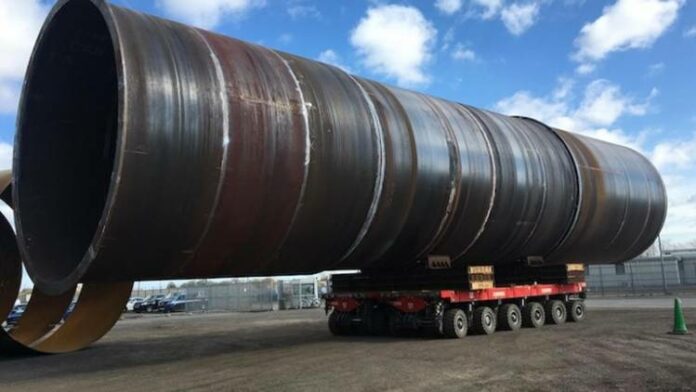
Teesside fabricator EEW Offshore Structures Britain has rolled out the first steel structures for the transition pieces for Orsted’s 752MW Borssele 1&2 offshore wind farm, which will be located off the Dutch coast.

The company said the structure, the first of the 35 TPs EEW OSB will make, was on its way to the blast shed.

Danish outfit Bladt Industries will supply the other 59 transition pieces for the project.

Sif and EEW SPC will each deliver half of the 94 monopile foundations.

Borssele 1&2 will feature 94 Siemens Gamesa 8MW turbines and is scheduled to come online in 2020.

Source:renews