11.9 C
New York
Home Blog Page 1091

Autonomous Shipping Tested in North Sea Trials

0

The first autonomous manoeuvring vessel trials as part of the ‘Joint Industry Project Autonomous Shipping’ have been held on the North Sea.

The two-year research and innovation project led by Netherlands Maritime Technology (NMT) began in 2017, and is being supported by a consortium of stakeholders such as Damen Shipyards, SeaZip Offshore Service and Robosys Automation.

Marnix Krikke, Innovation Director at NMT, said: “A total of 11 scenarios were run in which SeaZip 3 interacted with two other vessels, Octans, a training vessel of the Maritime Institute Willem Barentsz and Guardian, an Emergency Towage Vessel operated by The Netherlands Coastguard."

“These scenarios are the outcome of research by Technical University of Delft, MARIN and TNO. The scenarios were first tested in the MARIN simulator centre in Wageningen and now, last week, in a real-life environment on the North Sea.”

The trials conducted on the North Sea demonstrated how the decision-making processes of an autonomous ship ensure safe sailing and prevent collisions with other vessels.

The system which guides the smart vessel, provided by Robosys Automation, is connected to the on-board autopilot and machinery control system and can perform “evasive manoeuvres” in a safe way.

While the tests were deemed successful, they also highlighted that autonomous systems must be developed further to efficiently handle more complex marine traffic situations.

In order to continue the progress of autonomous shipping, a roadmap is being built which will define the lessons learned, obstacles faced and technology required to realize smart vessel aims.

Mark van der Star, Managing Partner at collaborating organization SeaZip Offshore Service, commented: “We are continually busy with innovation at SeaZip Offshore Service and proud that our offshore service vessel SeaZip 3 is the first ship to carry out a fully autonomous test on the North Sea."

Participating in this project has enhanced our knowledge in a wide range of fields and will help us grow further as a shipping company in the future.

Source:porttechnology
Key shipowner trade associations sign agreement to improve cooperation

0

On April 8 in Singapore, the International Chamber of Shipping (ICS), the Asian Shipowners’ Association (ASA) and the European Community Shipowners’ Association (ECSA) signed a joint memorandum of understanding. The MoU enhances the level of co-operation that already exists between these international trade associations and provides a framework for their closer co-operation.

Specifically, the agreement recognises the organizations' respective memberships of national shipowners' associations and the relationship which their members enjoy with their national governments.

It also confirms the roles of ICS, ASA and ECSA as the principal global and regional associations, representing shipowners and operators, in all shipping sectors and trades, with those global and regional organisations, regulators and other bodies which impact and affect the interests of international shipping.

Namely, the associations agreed on the following:

  • Encourage high standards of operation and the provision of high quality and efficient shipping services;
  • Strive for a regulatory environment which embraces safe shipping operations, protection of the environment, maintenance of open markets and fair competition based on free trade principles, as well as adherence to internationally adopted standards and procedures;
  • Support such regulation of shipping at a global level, in particular at the United Nations International Maritime Organization (IMO) and the International Labour Organization (ILO);
  • Oppose, where appropriate, unilateral and regional action by governments;
  • Press for recognition of the commercial requirements of shipping and of the need for operators who meet the required standards to secure a proper commercial return;
  • Remain committed to the promotion and updating of industry guidance on best operating practices;
  • Cooperate with other organisations, including intergovernmental, regional, governmental and non-governmental bodies, in the pursuit of these objectives;
  • Promote the industry’s profile as a safe, clean, energy efficient, well regulated and responsible facilitator of global trade;
  • Anticipate whenever possible, and respond whenever appropriate, to policies and actions which may conflict with the above.
  • Share information about international, regional and national developments that may potentially affect or impact upon the interests of international shipowners and operators;
  • Participate, as appropriate, in the work of their respective associations’ Annual General Meetings and policy making committees, with reciprocal rights of attendance at meetings;
  • Contribute to the development of, and ENDORSE AND PROMOTE, as may be appropriate, joint policy positions and papers with governments and regional bodies;
  • Invite comment on draft policy positions and initiatives on which the other associations may have legitimate interest in expressing their views;
  • Disseminate and exchange any other information that may be relevant to the activities and interests of their respective associations, member national shipowners’ associations, and the industry which they collectively exist to serve;
  • Respect and protect intellectual property rights and confidentiality requests of the respective lead associations. The three associations undertake not to distribute each other’s materials, including circulars, to their members that are not members of the lead association without first obtaining permission and to acknowledge the source.
  • Recognise that closer cooperation on relevant issues of maritime affairs will be in the interest of all shipowners and operators, ICS, ASA and ECSA commit to closer cooperation as outlined herein.

ICS Chairman, Mr Esben Poulsson, stated:"Shipping is a global industry requiring global rules. It is only natural that as the representatives of the world’s national shipowner associations that we should further cement our relationships to ensure that we work as effectively as possible in support of a global regulatory framework for shipping and in opposition to unwelcome regional or unilateral initiatives that may impede the efficiency of maritime trade."

For his side, ASA President, Mr Bhumindr Harinsuit, noted that it is very important for the interests of Asian shipping to be properly represented at the global level, especially with the increasing importance of Asian economies to overall demand for shipping services.

Finally, ECSA President, Mr Panagiotis Laskaridis, highlighted that 'the maritime policies of the European Union have a significant impact on regulatory developments at fora such as the UN IMO, with major implications for ship operators in Europe and globally.'

Cooperation with ICS and ASA allows us to enhance our joint efforts to represent the best interests of shipowners, whether at bodies such as IMO or when dealing with the EU institutions

Source:safety4sea

IMO: Electronic information exchange mandatory for ports from 8 April

0

A mandatory requirement for national governments to introduce electronic information exchange between ships and ports comes into effect from 8 April 2019, as the IMO's Facilitation Committee meets for its 43rd session, on 8-12 April. The aim is to make cross-border trade simpler and the logistics chain more efficient.

The requirement, mandatory under IMO's Convention on Facilitation of International Maritime Traffic (FAL Convention), is part of a package of amendments under the revised Annex to the FAL Convention, adopted in 2016.

"The new FAL Convention requirement for all Public Authorities to establish systems for the electronic exchange of information related to maritime transport marks a significant move in the maritime industry and ports towards a digital maritime world, reducing the administrative burden and increasing the efficiency of maritime trade and transport,"…said IMO Secretary-General Kitack Lim.

The Facilitation Convention encourages use of a "single window" for data, to enable all the information required by public authorities in connection with the arrival, stay and departure of ships, persons and cargo, to be submitted via a single portal, without duplication.

The requirement for electronic data exchange comes into effect as IMO's Facilitation Committee meets for its 43rd session. Alongside other agenda items, the Committee will continue its ongoing work on harmonization and standardization of electronic messages.

Phase one of the review of the IMO Compendium on Facilitation and Electronic business, including the data elements of the FAL Convention is expected to be completed and the revised Guidelines for setting up a single window system in maritime transport are set to be approved.

The Committee will also receive an update on a successful IMO maritime single window project, implemented in Antigua and Barbuda, with Norway's support. The source code developed for the system established in Antigua and Barbuda will be made available to other interested Member States. A presentation on the system will be made during the Facilitation Committee.

The IMO Standardized Forms (FAL 1-7)

The Facilitation Convention (Standard 2.1) lists the documents which public authorities can demand of a ship and recommends the maximum information and number of copies which should be required. IMO has developed Standardized Forms for seven of these documents.

They are the:

  • IMO General Declaration
  • Cargo Declaration
  • Ship's Stores Declaration
  • Crew's Effects Declaration
  • Crew List· Passenger List
  • Dangerous Goods

Five other documents are required, on security, on wastes from ships, on advance electronic cargo information for customs risk assessment purposes, and two additional ones under the Universal Postal Convention and the International Health Regulations.

Source:safety4sea

NAVTOR NavBox tackles industry’s ‘number one threat’ with cyber security certification from DNV GL

0

Set against the background of increasing cyber threats to the maritime industry, e-Navigation specialist NAVTOR has moved to demonstrate the integrity of its innovative NavBox solution with ‘cyber secure’ certification (IEC 61162-460 Gateway) from DNV GL, the company said in its release. NavBox, which automates the distribution and updates of digital charts, publications and other navigational data, now guarantees both complete regulatory compliance and security for an increasingly digitized generation of shipowners and operators.

NAVTOR’s announcement comes the day before the Norwegian Shipowners Association Annual Conference in Oslo, where it will reveal, as part of its Outlook Report 2019, that cyber crime is its members’ number one security concern.

NavBox offers a range of security features including an encrypted connection – transferring data in a format only recognised by NAVTOR software – CRC checks, the non-transferral of executable files (a key source of malware) and communication through secure servers. The unit also operates as a ‘blackbox’, with no screen, keyboard or mouse, diminishing risk from human interaction.

NAVTOR designed NavBox to slash administration duties for navigators, allowing for greater efficiency and resource use, while ensuring that the very latest charts and publications are always available on-board, leading to total regulatory compliance. In addition to the vessel-based benefits, NavBox also provides shore-based teams with a full insight into chart usage, equating to more effective cost control and fleet management. The solution is available as PC software or as a separate hardware box that connects to a vessel ECDIS.

NAVTOR has established itself is a world leader in e-Navigation since launching in 2011.

In 2012 the firm released the first type approved Pay As You Sail ENC service, following in 2014 with the launch of NavStation, the world’s first digital chart table. The company has since built a worldwide customer base and network of offices, spanning Norway, Singapore, Japan, Sweden, Russia, the US, and the UK.

Source:portnews

New Subsea Laser Technology Models Historic Plane Wreck

0

Subsea imaging company 3D at Depth has used new laser technology to create a 3D reverse engineered model of the wreck of an historical U.S. Navy plane.

The company used an underwater survey technique that integrates photogrammetry with Subsea laser LiDAR technology on the U.S. Navy Douglas TBD-1 Devastator aircraft that is largely intact on the bottom of Jaluit Lagoon in the Marshall Islands. Of the 129 Devastators built, all were either lost in battle, destroyed in operational accidents or scrapped before the end of World War II. 

The new modelling technique was developed during an October 2018 expedition with the nonprofit Air/Sea Heritage Foundation to document the wreck. Part of the ongoing Devastator Project, the expedition was developed to capture precise, repeatable, millimetric data to build an accurate 3D model to serve as a pre-disturbance survey for the proposed recovery of the plane for the National Museum of the United States Navy in Washington, DC. 

This particular plane, U.S. Navy Bureau of Aeronautics Number (BuNo) 1515, formerly assigned to Torpedo Squadron Five (VT-5) aboard the aircraft carrier USS Yorktown (CV-5) is located in a sensitive marine habitat. Although Devastator 1515 appeared largely intact from previous research expeditions, the sensitive nature of the wreck and often low water clarity conditions around the site provided limitations for most of the standard data collection processes and other optical imagery collection methods.  

Over a period of six days on site, dozens of dives were conducted to the wreck located under 130 feet of water. 3D at Depth’s SL3 laser was deployed at varying ranges from the wreck site. The SL3 pulsed at 40,000 measurements/sec for each scan position acquiring very high-density sector scans. 3D at Depth’s patented index of refraction correction algorithm was able to deliver repeatable data sets in low clarity water quality where other optical solutions would struggle to operate.

In total, the SL3 LiDAR laser delivered a total of 92 million points and the photogrammetric data after processing produced 5.7 million vertices. Each dense point cloud was then surface modeled and moved into a 3D design computer. Optical imagery from photogrammetry, 360 VR and stills were integrated into the designs to render an exact 3D model of the Devastator. Along with the laser LiDAR data, the team captured 1,398 still images with photogrammetry. 

Source:maritime-executive

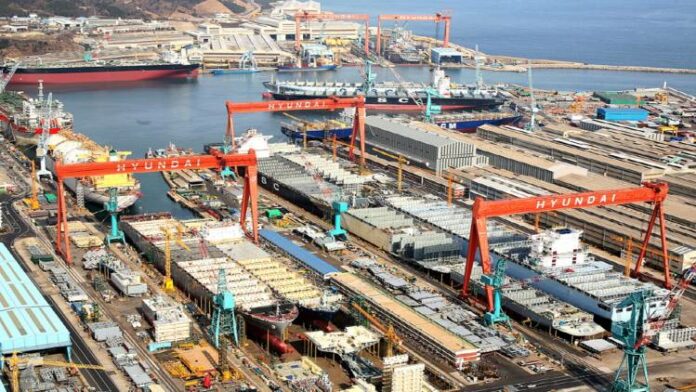
HHI/DSME merger a first step toward regaining FPSO market share

0

Westwood Global Energy anticipates final investment decisions for 83 offshore greenfield developments this year, incurring total expenditure of $115 billion on infrastructure, equipment, and associated drilling services.

This figure includes $19.2 billion on FPSO/FLNG vessel awards, of which $5.5 billion will likely go on newbuild FPSOs.

According to Westwood senior analyst Mark Adeosun, the three South Korean yards – Samsung Heavy Industries (SHI), Hyundai Heavy Industries (HHI), and Daewoo Shipbuilding & Marine Engineering (DSME) – dominated this sector until recently, accounting for 55% of orders and 73% of spending between 2004 and 2013.

However, oil companies have revised their approach to procurement in recent years, and this, alongside the improving EPC capabilities of rival yards in Singapore and China, has cut the South Korean share to 38% of orders and 50% of expenditure over the past five years.

Recent FPSO tenders such as Equinor’s Johan Castberg in the Barents Sea, Energean’s Karish

in the Mediterranean Sea, and BP’s Tortue offshore northwest Africa, all went to non-Korean yards, via engineering specialists such as BW Offshore or TechnipFMC.

This was on reason for HHI’s proposed acquisition last month of DSME, which should close by 4Q, with HHI purchasing Korea Development Bank’s (KDB) 55.7% stake in DSME for around $1.78 billion.

In a statement, KDB chairman Lee Dong Gull said: “In order to fundamentally enhance the competitiveness of the industry, it is crucial to eliminate the inefficiency caused by overlapping investment under the current ‘Big Three’ structure.”

HHI reported last month that KDB would make a contribution-in-kind to the tentatively named Korea Shipbuilding & Offshore Engineering (KSOE), which will be established as a sub-holding company spun off from HHI to control the group’s shipbuilding companies, including HHI, by transferring its shares in DSME in return for an equity stake in KSOE.

In addition, the parties plan to establish the Korea Shipbuilding Industry Development Commission (again a tentative name), comprising industry, government, and academia experts to restore the shipbuilding industry’s ‘ecosystem.’ DSME’s management structure would remain unchanged

HHI will hope that improved cost efficiencies and reduced competition arising from the merger will position it better to challenge for the $30 billion of newbuild FPSO/FLNG projects set to be awarded over the next five years, Adeosun said. However, it still requires approval from anti-trust regulators in various countries especially from rivals elsewhere in Asia.
Source:offshore-mag

GKinetic receives US Patent approval

0

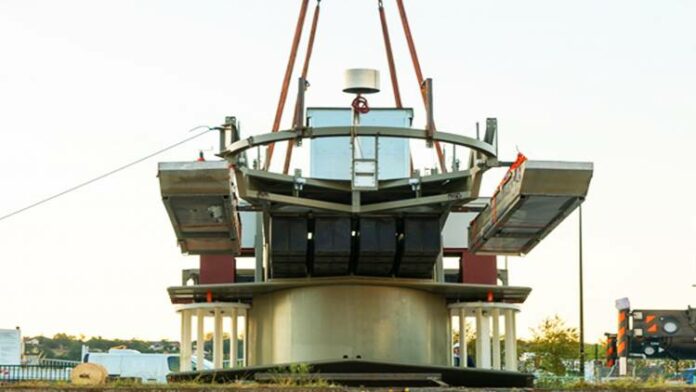
Irish tidal energy developer GKinetic Energy said it is now patent protected in the United States of America for the “Water Turbine Assembly” aspect of its tidal energy technology.

The news of the company’s first North American patent came last week following its Chinese patent approval they secured in mid-March.

GKinetic now has patents in Europe, Australia, China and now the USA enabling the company to enter key markets with viable tidal energy potential to further develop the technology.

The company is strategically leading the scaled research and development of the GKinetic turbine through multiple collaborative projects this year across Europe.

GKinetic is currently supporting its strategic partner, DesignPro Renewables on the testing of their 25kW currently deployed at the SEENEOH demonstration site as well as the build of a larger, 60kW device.

As consortium partners in the Horizon 2020 +CityxChange, the company is working with a diverse group of companies and government representatives to make Limerick, Ireland and Trondheim, Norway EU Smart Cities through the development of sustainable infrastructure and renewables including tidal energy.

In September this year, the company said it will be tank testing to upscale to a 250kW submersible device at Ifremer in France working with NUI Galway through the Marinet 2 Programme.

The company continues to take an innovative step by step approach in the development of their tidal technology with a future plan to design, build and deploy a 250kW device with a commercial partner.

Esvagt widens Triton role

0

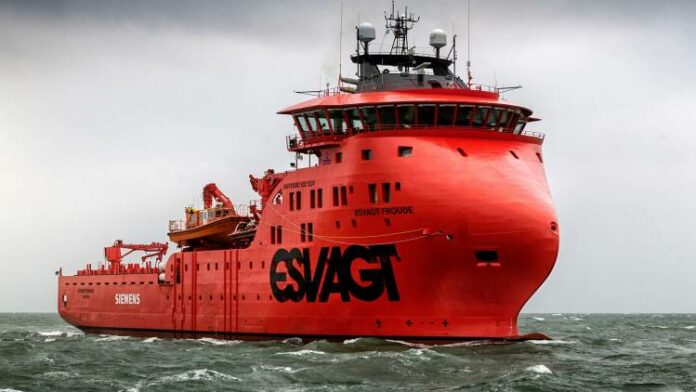
Innogy has contracted Danish shipping company Esvagt to provide a service operation vessel to support construction of the Triton Knoll offshore wind farm off the east coast of England.

Esvagt Froude will assist with the installation of the 90 MHI Vestas V164-9.5MW turbines.

Triton Knoll project director Julian Garnsey said: “Triton Knoll will be built around 30km off the coast and highlights the challenge of building larger turbines, further offshore and in deeper waters."

This has prompted a strategic decision by Innogy to place its construction management team offshore.

Traditionally, our offshore construction was coordinated from an onshore base, but as wind farms get bigger and further from shore, we needed to do more to cut down on transit times and improve our ability to respond quickly.

The Esvagt Froude provides a fully integrated on-site solution to offshore construction and so is far more cost-effective, helping to drive down the costs.”

Esvagt head of commercial Ib Hansen said: “We are really looking forward to working together with Innogy and to supplying safe and efficient transportation of personnel and equipment.”

Esvagt is also building another SOV that will support servicing of Triton Knoll project once the wind farm is completed.

Source:renews

ICTSI Supports Terminal Utilization Initiative

0

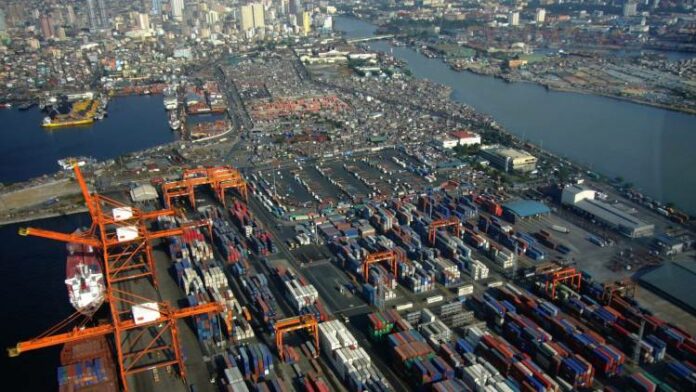
Leading terminal operator International Container Terminal Services Inc. (ICTSI) has praised the Philippine government’s efforts to clear overstaying cargo from ports in Manila.

On March 15, 2019, the government led various port stakeholders such as ICTSI, Asian Terminals, Inc. (ATI), and international shipping lines in the signing of a “Manifesto of Support”, ensuring the efficient utilization of Manila ports and immediate retrieval of empty cargo.

Following an ultimatum from the Philippine Ports Authority (PPA), issued with the support of Department of Transportation (DoTr), the Department of Trade and Industry (DTI), and the Bureau of Customs (BOC), the “swift disposition” of overstaying containers was arranged.

Christian R. Gonzalez, ICTSI Global Corporate Head, commented: “We thank the Philippine government for taking a hard stand in fast-tracking the disposal and reduction of overstaying and empty containers at Manila ports."

“The results have been immediate and goes to show what determination and focus of purpose can do.”

As a result of this, yard utilization at ICTSI’s flagship Manila International Container Terminal (MICT) quickly decreased from 90% in January 2019 to 70% at the start of April.

According to a statement, the healthy drop in utilization occurred despite a higher volume of containers being handled during the same period, including record TEU throughput in March 2019.

Source:porttechnology


ABS launches Global Sustainability Center in Singapore

0

As decarbonising shipping becomes mission critical for the industry classification society the American Bureau of Shipping (ABS) has launched a Global Sustainability Center in Singapore.

Shipping faces a major challenge from the International Maritime Organization (IMO) to reduce its Greenhouse Gas emissions by at least 50% by 2050, a target that it is widely acknowledged cannot be reached without the introduction of new technologies, propulsion systems and fuels.

The new centre located in Singapore will be ABS’ (Sea Asia stand B2 – E01) flagship for its sustainability activities worldwide.

“Decarbonizing shipping is a challenge that will compel the industry to reach new technology frontiers. At the same time, it is an opportunity to transition to a more sustainable world economy enabled by efficient, low-carbon transportation,” said ABS chairman, president and ceo Christopher J. Wiernicki.

“To facilitate the journey toward decarbonization targets, ABS established its Global Sustainability Center to coordinate initiatives that advance innovation and technology development focused on safety, practicality and the commercial viability of proposed solutions.”

The centre will be headed by Gurinder Singh, ABS global director sustainability, backed by an experienced team of professionals and the worldwide organisation of ABS.

The centre will bring together various sustainability projects from the classification society. These include – studying the viability of new energy sources and fuel for shipping, the use of digital technology to increase efficiency and simplify transactions, certifying and validating new technologies, and analysing decarbonisation pathways.

Singh commented: “Today’s world is quickly changing, and the shipping industry is navigating a complex regulatory landscape and rapid technology changes. The IMO Green House Gas reduction targets will present an unprecedented challenge to the industry—as the targets cannot be achieved with today’s technology. The Center has a vital role to play in helping the industry manage the transition safely.”

With the scale of the task that faces shipping the new ABS Global Sustainability Center plans to work collaboratively with other institutions in the same field in Singapore.

“Singapore is an ideal location for the Center as we build upon our strong collaboration with leading Universities and Sustainability Centers of Excellence here. The Center is a home for innovation and creativity that brings together industry and academia working hand-in-hand toward a sustainable future,” Singh added.

The centre will also hold an industry education programme, seminars and lectures, designed to raise awareness of maritime sustainability technologies.

Source:seatrade-maritime