11.9 C
New York
Home Blog Page 1090

TechnipFMC to supply flexible pipes for Lapa offshore Brazil

0

Total E&P do Brasil Ltda. has contracted TechnipFMC to provide flexible pipes for the Lapa field in the presalt Santos basin.

The contract covers the supply of flexible pipes for oil production, gas lift and gas injection as well as associated accessories.

The Lapa field is in the BM-S-9A concession in 2,150 m (7,054 ft) water depth. The field is connected to the FPSO Cidade de Caraguatatuba, already in operation.

The Lapa Field Consortium consists of Total (35%), Shell Brasil Petróleo Ltda. (30%), Repsol Sinopec Brasil S.A. (25%), and Petrobras (10%).

Source;offshore-mag

ClassNK launches Internet of Ships platform at Sea Asia

0

ClassNK (B2 – T01e) chose Sea Asia 2019 to announce the launch of its global data utilization platform IoS-OP (Internet of Ships – Open Platform), by its wholly owned subsidiary Ship Data Center Co Ltd (ShipDC).

With many shipowners, managers and service providers keen to access the power of big data the IoS-OP is a platform for data distribution and utilization under common rules.

The IoS-OP aims to create what ShipDC characterises as a “new maritime cluster for the digital age”. The IoS-OP will establish a cooperative domain where users will collect and safely store data at ShipDC and the data will be distribute

Ship data is shared among stakeholders without compromising the position of the data providers such as shipowners, ship operators allowing for data driven innovation which can lead to new business models and services.

Yasuhiro Ikeda, president of ShipDC said: “We have prepared a platform where everyone could have a win-win relationship under the agreed rules. Now, it is time to invite everyone to join the initiative to create innovation in the maritime industry.”

Havila Kystruten and KONGSBERG signs long-term service agreement

0

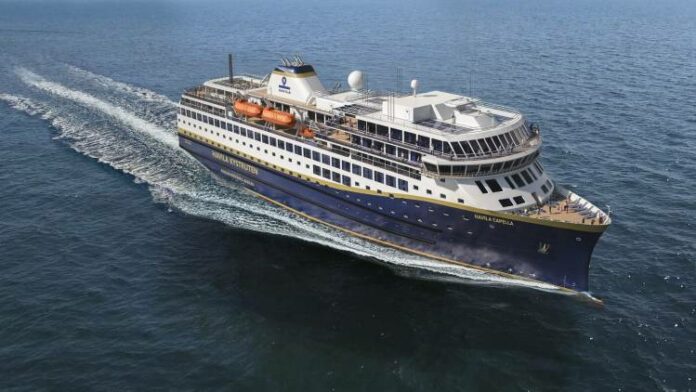
Havila Kystruten AS and KONGSBERG have signed a ten year long “Power-by-the-Hour” service agreement for four new coastal cruise vessels that is currently under construction.The contract value is 150 MNOK, the company said in its release.

Power-by-the-Hour was launched in 2017, and was first sold to the cargo operator NorLines the same year. The agreement means that the vessel owners is handing the responsibility for service planning and performance back to the equipment’s supplier, Kongsberg Maritime.

The customer pays a fixed charge per hour of operation, per ship. Kongsberg Maritime monitors the equipment aboard each vessel from on shore, collecting data from onboard sensors. KONGSBERG’s engineers will be able to connect to the ship and carry out service activities remotely or, if necessary, send out a service engineer to do the job.

The agreement also covers planned maintenance, while day-to-day maintenance aboard ship will be carried out by the shipping company itself.

From January 2021, Havila Kystruten will operate four passenger ships on the coastal route between the cities of Bergen in south western, and Kirkenes in northern, Norway. The ships will be equipped with a large equipment package from Kongsberg Maritime, including main propulsion thrusters of type Azipull with Permanent Magnet (PM) drive motor, PM tunnel thrusters, and stabilisers.

Kongsberg also delivers the ships LNG systems, which include four Rolls-Royce Bergen gas engines.

KONGSBERG is an international, knowledge-based group delivering high technology systems and solutions to clients within the oil and gas industry, merchant marine, defence and aerospace. KONGSBERG has close to 11,000 employees located in 40 countries.

France calls for shipping speed limits

0

France has made a submission to the International Maritime Organization (IMO) urging for a swift global speed limit for shipping in a bid to slash the industry’s emissions.

Under president Emmanuel Macron, the architect of the 2016 Paris Agreement on climate change, France has become one of the most aggressive advocates of society moving quicker to decarbonise. France believes that in order to meet climate goals set out in the Paris Agreement shipping needs to act faster than goals set out by IMO to get decarbonisation regulations moving by 2023.

Reducing speed for most ship sectors would work as an “excellent transitionary and early measure”, it stated in its submission, albeit admitting it would be merely a temporary measure. The French submission concedes that for certain ship types the measure would not work. These ship types included passenger ships and vessels carrying time sensitive cargo that would be forced to go on greater polluting forms of transport if a speed ban came in.

France has not specified by how much ships should slow, seeking discussion with IMO member states on the matter.

As a second step, France is proposing a global goal-based approach to be susbsituted for the presciptive speed regulations, something to cover the entire global merchant fleet and a regulation that would reward innovation. This longer term ambition sees France call for a 40% cut in emissions by 2030 and 70% by 2050, greater than the agreed 50% deal hammered out last year. France is calling for shipowners to annually peak their greenhouse gas emissions.

Commenting on the speed limit idea, Michael van Roozendaal, president of ship equipment manufacturer, said he felt it was a good move.

Unsure about the French submission was Rajesh Unni, founder of shipmanager Synergy Maritime Group, who said: “We need more thinking before making a decision like this. Can we find better ways rather than dictating what a ship can do at sea? We need to think this in more detail before coming out with kneejerk reactions.”

Philippe Louis-Dreyfus, the president of Louis Dreyfus Armateurs (LDA), for years, has been making the mandatory slow steaming call. The nation’s shipowner’s association, Armateurs de France, has backed the government idea. Jean-Marc Roué, president of the associaton said, “Speed reduction is an effective solution to the environmental challenge facing shipping.”

With slower speeds, Macron’s move could also dig shipping out of its malaise. Moving slower will require more ships in the supply chain and likely force up rates.

Source:splash247

Singapore project on 3D printing helping the industry

0

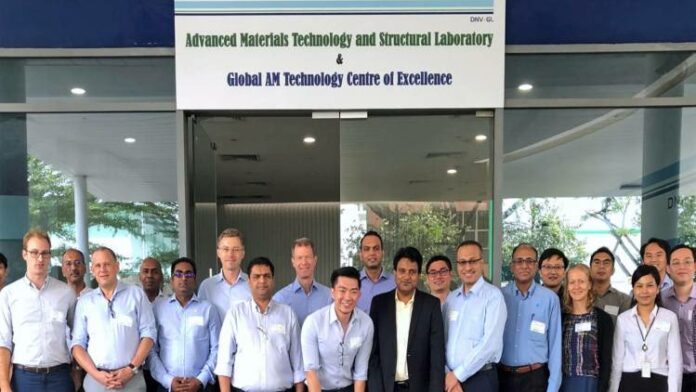
A joint industry program between Maritime Port Authority of Singapore (MPA) and DNV GL class society was announced on April 9. The joint program will consist of ten member companies of the Singapore Shipping Association (SSA) to examine how spare parts produced by 3D printers can help the industry to cut costs and downtimes.

Specifically, the aim of this joint effort is to launch a list of commonly-ordered parts that are feasible for 3D printing with or without certification respectively not feasible for 3D printing.

The findings of this research will help the maritime industry adopt additive manufacturing to optimise their spare parts supply.

Additive manufacturing technology has the potential to revolutionize the way marine spare parts are designed, manufactured, and distributed to end users. In addition, on-site manufacturing for maintenance becomes an important application of AM.

"Additive manufacturing holds great opportunities for the maritime industry."… stated Cristina Saenz de Santa Maria, Regional Manager South East Asia, Pacific & India, DNV GL – Maritime.

In addition, the Singapore Shipping Association (SSA) underlined the disruptive potential of 3D printing, which so far has seen only a moderate uptake in the industry.

"This technology can help not only to reduce costs of producing spare parts for vessels, but also to radically reinvent the production and logistics including using completely new and more suitable materials."… Steen Brodsgaard Lund, chairman of the SSA technical committee commented.

Source:safety4sea

Port of Gothenburg launches bunkering app

0

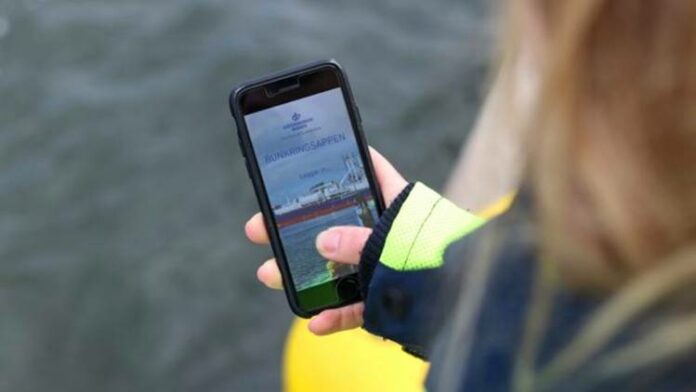
The previous week, the port of Gothenburg launched a digital application to make bunkering operations at the port easier and more efficient. The 'bunkering app' is one of the first in the world to offer this range of functionality.

Mainly, the Port of Gothenburg Energy Port is the largest open access energy port in the Nordic region, handling over 2.500 calls and more than 23 million tonnes of energy products annually. The Energy Port is also one of the world's larger bunkering hubs.

The application is available to all bunkering operators at the Energy port. Instead of traditionally reporting manually through email or phone, they submit advance bunkering notification using the app.

The app reports for available collection points for loading marine fuel onto bunker vessels.

In addition, the app consists of bunkering statistics, facilitating the work of the Swedish Maritime Administration Vessel Traffic Service (VTS) and other organisations at the port. The idea behind the app is to make it simpler for bunker operators to plan and carry out their work effectively.

In January 2019, the port began a test season with selected users in order, for those interested, to contribute valuable input in the lead-up to the official rollout last week.

Amongst the participators is Bunker One, bunkering company, that now uses the app as part of its regular operations.

Karolina Skoglund, bunker operator at Bunker One commented.."Overall, I think the app is already working very well, although the coastguard and VTS notification function needs to be more user-friendly. Booking quay space and the quay plan are excellent, giving us better foresight, which in turn helps us in our day-to-day work."

Also, the application is useful to the Energy Port's security coordinators who save time by not acting as intermediaries between the different parties, as it was happening before.

In the meantime, Dan-Erik Andersson, head of Operation at the Energy Port highlighted that although the application provides many benefits to those using it, but also to the port, it is not the port's intention to replace daily contact with the customers.

Concluding, the bunkering app is another step closer to the digitalization and automation of the Energy Port.

Source:safety4sea

Formosa 1 foundations sail to Taiwan

0

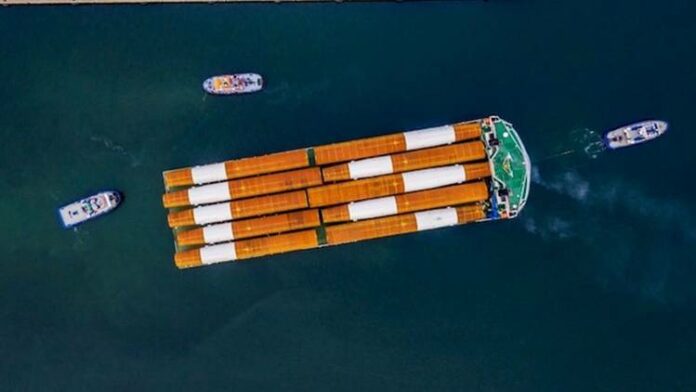
All 20 monopile foundations have left EEW SPC's yard in Germany for the 120MW Formosa 1 phase two offshore wind farm in Taiwan, according to the project's main contractor Jan De Nul.

The monopiles have been loaded onto two heavy transport vessels, which have set sail for the port of Taichung – the marshalling harbour for Formosa 1 – the company said.

Jan De Nul’s scope covers the procurement and installation of the foundations, including scour protection and cables.

The company said that, as well as overseas procurement and services, it has finalised various service and subcontract agreements with the local supply chain in Taiwan.

This includes quarry rock production for the foundation scour design, rock load-out operations, storage and transport of the foundations, installation of transition joint bays and land cables.

Jan De Nul offshore director Philippe Hutse said: “Our local integration has been ongoing for years thanks to our various marine activities throughout the past years in the region. In the past months, we have signed several agreements with local suppliers for this project in Taiwan."

These engagements fit perfectly in our philosophy of involving the local supply chain as much as possible.

Phase two of Formosa 1 will feature 20 Siemens Gamesa 6.0-154 turbines.

Construction will be completed later this year.

The wind farm is being developed by a a partnership of Orsted (35%), JERA (25%), Macquarie Capital (25%) and Swancor Renewable Energy (15%).

Source:renews

Sea Asia 2019 – Addressing the challenges ahead for the maritime industries

0

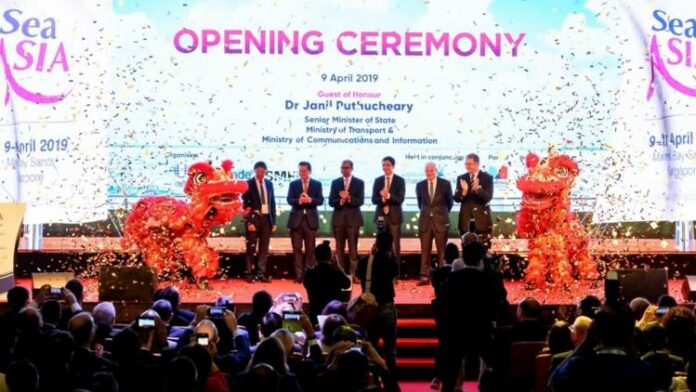
The changing times in maritime and shipping were in focus at the opening ceremony of Sea Asia 2019 on Tuesday morning, with Singapore’s Senior Minister of State for Transport Janil Puthucheary highlighting some of the challenges the industry is facing.

In his speech to the opening ceremony Minister Puthucheary noted that despite the current turmoil the maritime sector remained more relevant than ever before with 90% of global trade carried by sea and demand continuing to grow each year, with Asia one of the strongest growing regions for the next few years. Asean too was a key driver with a population of 650m and projected to become the world’s fourth largest economy by 2030.

However, many challenges also lie ahead with disruption and digitalisation, tighter environmental regulations and the manpower crunch. “But it is not going to be business-as-usual for the maritime sector, it can’t be business as usual,” the Minister stated.

Puthucheary noted the challenges faced by shipping from non-traditional players such as Alibaba and Amazon, and new business models that could disrupt players with traditional business models.

He spoke of the opportunities presented by digital connectivity, and also noted the hype cycle around some of the technology, but that these technologies would bring change.

For Singapore this means harnessing the power of digital technologies to remain competitive and one such example was Singapore’s shipping community and government agencies coming together to develop an electronic Bill of Lading (eBL) under Singapore’s TradeTrust Framework.

On the challenge of cleaner shipping the Minister said that Singapore was prepared for the introduction of the IMO 2020 0.5% sulphur cap for marine fuels with minimum disruption to the industry. He noted Shell and BP had selected Singapore as key location where low sulphur fuel would be available and there was a list of 49 licensed bunker suppliers of low-sulphur fuels in the port.in

On the competition for talent Singapore continued to invest in people to ensure a continuous pipeline of maritime manpower. Included in this investment is the Maritime Cluster Fund Manpower Development Programme, administered by Maritime & Port Authority of Singapore, which co-funds training for more than 5,000 individuals a year.

Chris Hayman, chairman of Seatrade, Informa Markets, also spoke of the opportunity Sea Asia presents industry players to collaborate and address the challenges posed by digitisation, the global economic outlook and the sulphur cap.

Singapore Maritime Foundation chairman, Andreas Sohmen-Pao, commented on the challenges faced by the industry and the need for events such as Sea Asia to gather together to share ideas and find solutions to the numerous challenges ahead.

“Singapore has an important role to play in this, as a leading maritime centre, and as a wonderful gathering place for talent and ideas. You all know what a responsive government we have here, channeling efforts to support business success,” Sohmen-Pao said.

“Those of you from overseas might be amazed to see how much innovation is happening here. This year we have the Innovation Arena at Sea Asia, which will showcase eight start-ups. As some jurisdictions around the world become less friendly to business, you may wish to consider beefing up your presence here.”

Vopak Sells 3 Terminals First State Investments

0

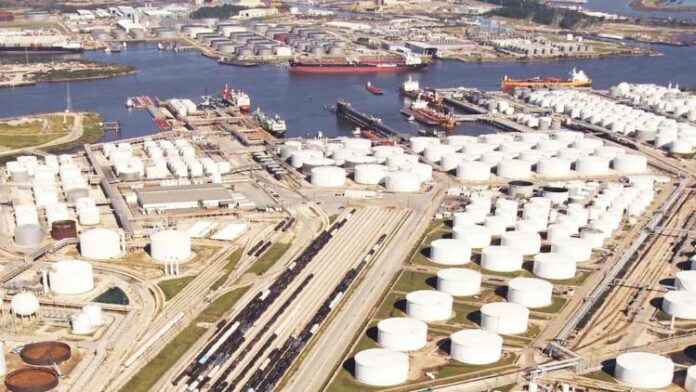
Dutch oil and chemicals storage company Royal Vopak has agreed to sell three terminals – Algeciras, Amsterdam and Hamburg – to First State Investments for 723 million euros ($812 million).

"This divestment follows the strategic review of these terminals as announced on 17 August 2018. The transaction is subject to certain customary closing conditions and is expected to complete in the second half year of 2019. The combined operational capacity of the three terminals is 2,288,000 cbm," said a press release from the company.

The total agreed transaction value of EUR 723 million includes a contingent consideration of EUR 15 million, which is subject to certain revenue conditions. The transaction is expected to generate a net pre-tax cash inflow for Vopak of approximately EUR 670 million at completion in 2019. The total expected exceptional gain before taxation will be around EUR 200 million, to be recorded in the second half of 2019.

The transaction is accretive to the return on capital employed for Vopak and has an implied multiple of more than 10x EBITDA. At the completion of this transaction, the use of the proceeds will be considered in line with the strategy and financial framework as presented at the Vopak Capital Markets Day 27 November 2018.

Eelco Hoekstra, CEO Vopak said:  "This  announcement is a next step in the delivery of our strategy and the alignment of our portfolio based on long term market developments. In Europe, our main focus is to further strengthen our position in the major industrial clusters Rotterdam and Antwerp."

Eelco added: "Globally, we currently have more than 2 million cbm under construction and new projects will be announced to grow our portfolio with a focus on industrial, chemical, and gas terminals and to maintain our strategic position in hub locations."  
 
Marcus Ayre, Partner First State Investments said: "We are delighted to have reached an agreement with Vopak on the acquisition of the terminals in Algeciras, Amsterdam and Hamburg. This diversified portfolio of world-class oil product storage terminals provides an excellent fit with First State's long term infrastructure investment philosophy."

Source:marinelink

Seacat bolsters offshore wind fleet

0

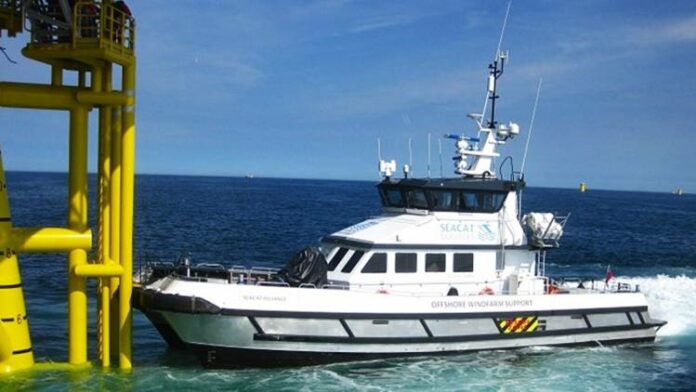
Marine energy support vessel operator, Seacat Services, has signed a multi-million pound contract to build a next-generation catamaran for offshore wind.

Seacat Weatherly, designed by Southampton-based naval architect Chartwell Marine, is scheduled for completion in March 2020.

The vessel will be constructed on the UK south coast by Isle of Wight-based companies Diverse Marine and Aluminium Marine Consultants.

The catamaran has been developed by Chartwell Marine with input from Seacat Services, offshore wind farm operators and turbine manufacturers.

The contract includes an option for a further vessel for the Seacat Services fleet.

Seacat Weatherly will be able to accommodate 24 industrial personnel, alongside four crew.

According to Seacat Services, the vessel will have one of the largest foredecks on the market, for carrying more cargo, and has also been optimised for safety, with designated walkways, handrails and safety sliding rails positioned for safe, repeatable crew transfer.

Skippers will benefit from a unique wheelhouse configuration that provides total control and complete visibility during complex logistical and crew transfer operations, said the company.

Seacat Services managing director Ian Baylis said: “Despite ongoing uncertainty in Westminster and Brussels, the offshore wind sector has repeatedly demonstrated its capacity to get on with the job in hand – and, frankly, faced with rising demand for high quality vessel support, this was an order that couldn’t wait.”

Chartwell Marine managing director Andy Page said: “The Chartwell 24 is a vessel design that has been developed by the industry for the industry, with involvement throughout the offshore wind supply chain.”

Source:renews