11.1 C
New York
Home Blog Page 1085

ClassNK launches its Cyber Security Management System for Ships

0

ClassNK releases guidelines and standards that outline cyber security measures based on the recently-released ClassNK Cyber Security Approach that outlines ClassNK’s basic approach to ensuring onboard cyber security for ships.

Specifically, the Cyber Security Management System for Ships provides guidance on ensuring, implementing, maintaining, and continuously improving the cyber security management system of companies and ships with the goal of safe navigation.

The system includes management measures regarding protection against cyber risks in not only the navigation stage, but also in the construction/design stage of ships through Security by Design.

The standards are based on the Information Technology (IT) and Operation Technology (OT) that support ship navigation, and were created with reference to the latest IACS recommendations and ISO27001 and ISO27002 Information Security Management System global standards.

As ISM Code states, the handling of cyber risks within the safety management system of companies is recommended beginning in 2021, and by implementing the requirements of these standards into the management process, companies and ships are able to realize appropriate evaluation and management of cyber risks.

Watch: Spectrum of the Seas Delivered

0

Royal Caribbean International has taken delivery of Spectrum of the Seas from Meyer Werft. The first cruise ship of the Quantrum-Ultra class, she is designed for the Asian cruise market.

Spectrum of the Seas has a rating of 169,000grt, measures 347.1 meters (1,139 feet) in length and 41.4 meters (136 feet) in width. She has 18 decks with 2,137 cabins offering space for 4,246 passengers in double occupancy.

Like her sister ships Quantum of the Seas, Anthem of the Seas and Ovation of the Seas, the new ship has the glass capsule North Star, the Flow Rider surf simulator and the Rip Cord skydiving simulator. New features include the Sky Pad: a virtual reality bungee trampoline experience located on the aft of the ship.

Spectrum of the Seas, like her three sister ships, is fitted with a hybrid scrubber. She has a diesel-electric pod drive, optimized hydrodynamics and energy-efficiency systems such as heat recovery, effective hull coating and LED lighting.

Spectrum of the Seas will now leave Bremerhaven. Her maiden voyage to Asia will begin in Barcelona on April 18, and she will homeport from Shanghai starting June 2019

Details

Dimension: 169,000 gt
Length overall: 347.1m
Moulded breadth: 41.4m
Number of decks: 18
Draught: 8.50m
Engine output: Wärtsilä 2x12V 2x 16V totally 67,200kW
Propulsion power: 41,000kW
Speed: 22, knots
Number of passengers: 4,284
Number of passenger cabins: 2,137
Number of outside cabins (including suites): 1,759
Number of inside cabins: 378
Crew: approximately 1,550
Number of theater seats: 1,281
Number of restaurants: 18
Number of bars/lounges: 12
Total weight of applied paint: approximately 300t
Total length of laid cables: 2,900km
Total length of laid pipes: 400km
Flag: Bahamas
Classification: DNVGL

Diligent Holdings continues supramax spree

0

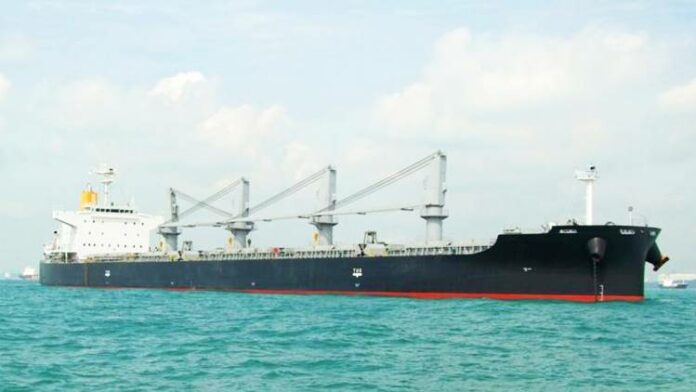
Dimitris Mihalos and Diligent Holdings continue to earnestly build up their fleet of secondhand Japanese supramaxes.

Both Seasure Shipbroking and Advanced Shipping & Trading report that the Greek firm has acquired Mitsui Tamano-built supramax bulker Future Lily (2012) from Japan’s Doun Kisen. Advanced reports the price at low $15m, and Seasure reports $15.5m, while the valuation by VesselsValue is $15.7m.

The Future Lily takes the Diligent fleet to 13 vessels and is the second Japanese supramax acquired by the company this year. In February, Diligent paid $12m to Japan’s Mitsui Soko for the 2008-built supramax Alster Bay. The vessel has since been renamed to Oreo.

Three years ago, Diligent was a single-vessel owning company. It went on a handysize spending spree in 2016 and 2017 to take its fleet to six vessels, and has since switched its attention to supramaxes adding five in 2018 and two this year to date.

Source:splash247

Support For BIMCO Proposal At IMO To Harmonize Data

0

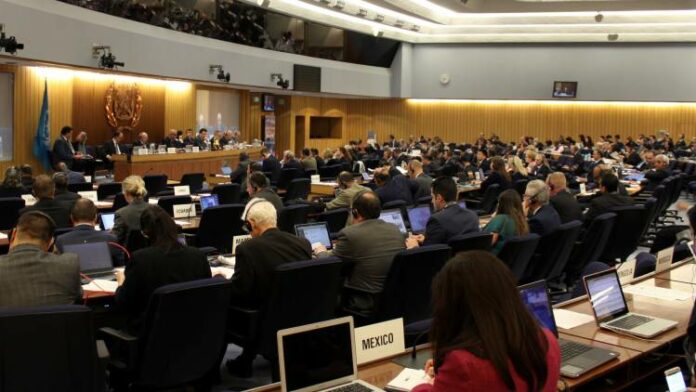
BIMCO gained solid support for a submission at the 43rd session of the Facilitation Committee meeting (FAL 43) held at the IMO Headquarters on 8-12 April that will ensure harmonisation of data exchanges and reduce the administrative burden for ships.

The submission proposed the inclusion of additional e-business solutions that supplement communication stipulated in the FAL Convention.

On 9 April 2019, a new mandatory requirement entered into force, whereby all Public Authorities have to establish systems for the electronic exchange of information. The authorities have two years to implement the new regulation from 9 April.

“This new requirement changes the way the maritime industry and ports will be communicating. Shipping is entering into the digital world, and this change will reduce the administrative burden and increase the efficiency of maritime trade and transport,” says Jeppe Skovbakke Juhl, Manager, Maritime Technology & Regulation at BIMCO.

The positive news is, that the FAL Committee made significant progress in the harmonization and standardization of electronic messaging by approving a new IMO Reference Data Model.

“Though the software platforms may differ, the proposal BIMCO put forward will ensure that ships and shore will use the same data structure when communicating,” he adds.

Data models like the new IMO reference Data Model comprises all data requirements covered by the FAL Convention. The model will over the next years be expanded to cover additional information that is normally exchanged between the ship and shore to get clearance.

“This is a giant step forward for harmonising the machine-to-machine data exchange communication with the shoreside,” Jeppe Skovbakke Juhl says.

Sapura Energy secures Rm1.3 bn new wins, including first contract for the Royal Australian Navy and entry into Egypt

0

Sapura Energy Berhad (Sapura Energy) registered a strong start to its financial year with five new contracts valued at approximately RM1.3 billion for its Engineering and Construction as well as Drilling segments. Among the new wins is the Submarine Rescue Service contract for The Royal Australian Navy, which is a first undertaking for the Group. Sapura Energy also marked a new entry into Egypt for works in the Gulf of Suez, along with other wins across Malaysia and Indonesia.

The contract wins demonstrate Sapura Energy’s continued pursuit to deepen its presence in existing core markets, break into new markets and expand its scope of services. The growing orderbook is expected to increase asset utilisation for the Group and contribute to improving its financial performance. The Group now has 10 key operating centres to execute work strategically around the globe.

First entry into Egypt for deep water works

Marking a new footprint in Egypt, Sapura Offshore Sdn Bhd (Sapura Offshore) has been awarded a subcontract by Pan Marine Petroleum Services Company. The scope of work comprises the installation of six new subsea pipelines in the Gulf of Suez for the Gulf of Suez Petroleum Company (GUPCO), a joint venture between BP plc and Egyptian General Petroleum Corporation, the National Oil Company of Egypt. Works will be carried out in various locations in the Morgan field, with an expected total pipelay of approximately 57 kilometres.

Mobilising two drilling rigs in Malaysia

For its Drilling segment, Sapura Drilling Asia Sdn Bhd (Sapura Drilling) has secured two new contracts. The first contract is from ExxonMobil Exploration and Production Malaysia Inc. for the provision of its tender assist drilling rig, Sapura T-9. The scope comprises the provision of barge tender assisted drilling rig services for a period of three years at the Tabu field, offshore Peninsular Malaysia. Sapura Drilling has also been awarded a contract extension by PETRONAS Carigali Sdn Bhd for the provision of semi tender assisted drilling rig, Sapura Berani. The contract entails the drilling of nine wells at the Sumandak, Erb West and Dulang facilities, offshore Sabah and Peninsular Malaysia.

Deep water EPCI works for ENI

In Indonesia, Sapura Offshore, in a joint venture with PT Timas Suplindo, has won a contract from ENI East Sepinggan Limited, a subsidiary of multi-national oil company ENI S.p.A. The contract is for Engineering, Procurement, Construction and Installation works of two 16-inch diameter offshore rigid pipelines from the Jangkrik facility to a future manifold near Merakes drilling centres. Works will be carried out at water depths of between 70 metres to 1400 metres. The total length of the pipeline system is approximately 95 kilometres. The scope of work includes design, fabrication and offshore installation of foreseen structures, deep water pipeline end terminations (PLETs) and in-line tee (ILT) systems for the East Sepinggan Block, East Kalimantan, Indonesia.

Rescue system for The Royal Australian Navy with capability to support NATO

Undertaking its first contract for The Royal Australian Navy, Total Marine Technology Pty Ltd (TMT), a subsidiary of the Group, has been awarded key roles in the Submarine Rescue Service contract by Phoenix International (Australia) Pty Ltd. TMT has been selected to design and fabricate a Remotely Operated Vehicle, including to design and supply the external propulsion and non-life support-related electrical and control systems as well as the Submarine Rescue Bell. The rescue system will be accepted into operational service in 2022 and will be one of four air transportable systems in the world. The ‘primary mission’ of the system is to deliver rescue capability to The Royal Australian Naportnewsvy’s submarine fleet. The system will also be capable of supporting other submarine operating nations by means of the NATO (North Atlantic Treaty Organisation) standard escape hatch.


 

Denmark deploys sniffer drone

0

Denmark continues to deploy smart technology to crack down on ships that fail to comply with environmental regulations.

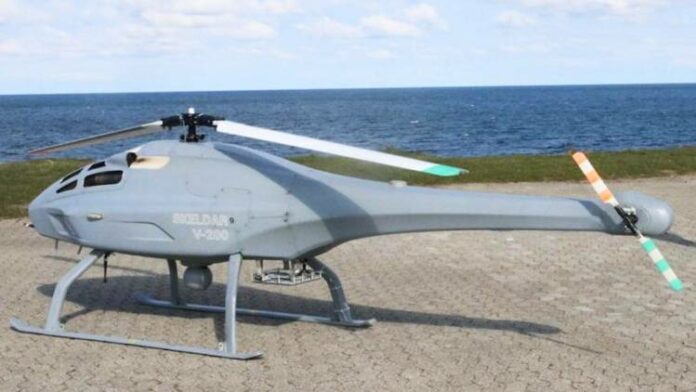
The Scandinavian nation already has so-called sniffer technology on the underside of bridges to check emissions of ships coming into its waters. In the coming months, a large drone will check emissions from ships in Danish waters to make sure they comply with the sulphur limit. The drone has been provided by the European Maritime Safety Agency.

The drone is fitted with a so-called sniffer capable of measuring sulphur emissions. Entering the ship’s exhaust gas plume, the drone can register the amount of sulphur in the fuel. The data is immediately available to Danish authorities, who can follow up if a ship does not comply with requirements.

The drone will operate in an area north of The Great Belt, where many large tankers pass when going to and from the Baltic Sea.

Source:splash247

World’s Major Shipping Bodies Sign MoU

0

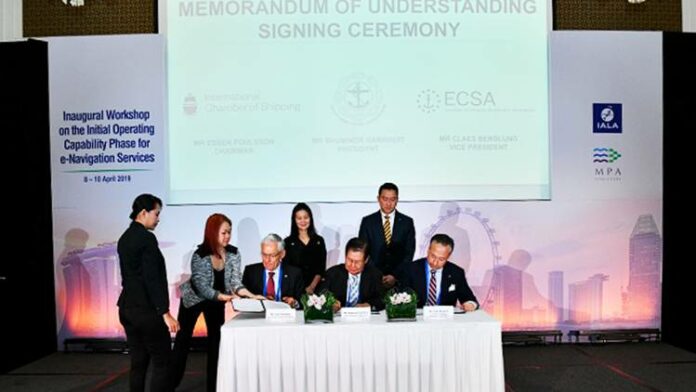
A Memorandum of Understanding has been signed by the International Chamber of Shipping (ICS), Asian Shipowners Association (ASA) and the European Community Shipowners Association (ECSA), setting out formal terms for how three of the world's biggest shipping trade bodies will work together in future.

The three associations, who represent over 90% of the world’s merchant fleet, have signed the agreement to formalize their existing cooperation, as well as establishing a framework for working together more closely in representing the interests of shipowners and operators.

“Shipping is a global industry requiring global rules. It is only natural that as the representatives of the world’s national shipowner associations that we should further cement our relationships to ensure that we work together as effectively as possible,” said the chair of ICS, Esben Poulsson.

The ASA’s president, Bhumindr Harinsuit, added: “It is vital that the interests of Asian shipping are properly represented at the global level, especially with the increasing importance of Asian economies to overall demand for shipping services."

"Likewise, shipowners outside our region must be made fully aware of local developments that may affect their operations.”

ECSA president Panagiotis Laskaridis also made a statement: “The maritime policies of the European Union have a significant impact on regulatory developments worldwide, with major implications for ship operators globally."

"Cooperation with ICS and ASA allows us to enhance our joint efforts to represent the best interests of ship owners, whether at bodies such as IMO or when dealing with the EU institutions.”

ICTSI Argentina Opens TecPlata Terminal

0

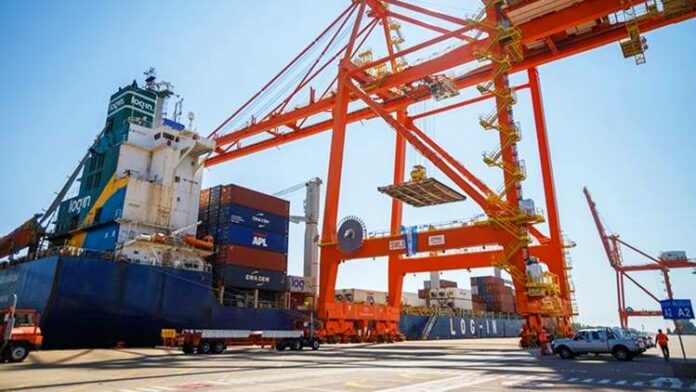
International Container Terminal Services Inc (ICTSI) has inaugurated container operations at TecPlata, located in Argentina’s Puerto de La Plata.

The opening ceremony was attended by the vice governor of the province of Buenos Aires, the Minister of Production and several other national, provincial and municipal officials.

The opening rites were highlighted by the arrival of Jacarandá, a vessel of Log-In, a Brazilian shipping line specializing in door-to-door logistics solutions which recently signed an agreement with TecPlata, a subsidiary of Philippine-based port operator International Container Terminal Services Inc. (ICTSI).  

The arrival of the vessel, which has an overall length (LOA) of 218 meters and a cargo capacity of almost 38 tons, marked the start of Log-In’s fortnightly operations at the terminal.

“This a first step for the company, and we firmly believe that this will pave the way for new agreements with more operators to maximize our current installed capacity of 450,000 TEUs,” said Bruno Porchietto, TecPlata CEO. He added: “The terminal may also be expanded to twice its existing capacity to over 1 million TEUs.”

Referring to the start of TecPlata’s operations, he said: “This was a long-awaited milestone and, from hereon, our terminal will stand apart for its efficiency, competitiveness and transparency.”

TecPlata, an investment of US$450 million, is the most modern port in Argentina equipped with the latest infrastructure, equipment and computer systems in the industry. It is located only 60 kilometers from Buenos Aires, the country’s capital, and has a total area 41 hectares, 25 hectares of which have been allotted for containers.

Estonia Blocks $1.9B Offshore Wind Project

0

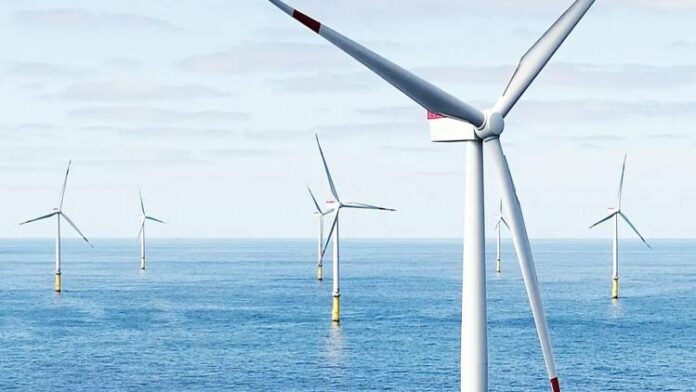
The Estonian government has refused to start the permitting process for the building of a $1.9 billion, 600-MW offshore wind farm off the west coast of the island of Saaremaa, citing national security concerns.

The Estonian developer Saare Wind Energy OU had been drawing up plans for four years and had applied for a 50-year building permit for 100 six-megawatt turbines off the island of Saaremaa, said a report in Bloomberg.

The wind farm was to consist of 100 turbines of 6 MW each 10 to 27 kilometers off the western coast of the island. The company sent a request to the government at the end of 2017 asking it to initiate a construction permit issuance procedure.

“The reason for refusal is a suspicion that the applicant may threaten public order, safety of the society and national security,” the report quoted the agenda of a government’s meeting.

Justice Minister Urmas Reinsalu in February cited an assessment by the security service that the project “could carry potential security threat due to background of investors,” without being more specific.

According to local media reports, one of the main concerns is that funding for the project may come from ”Russia or any other hostile country.” However, Saare has dismissed this claim, saying that the financing offers came from the UK and Germany.

The projected wind farm’s annual output was expected to be 2,800 GWh, which is equal to 30.9% of Estonia's total electricity output.

source:marinelink

Port of Colombo upgrades with $25 million crane order

0

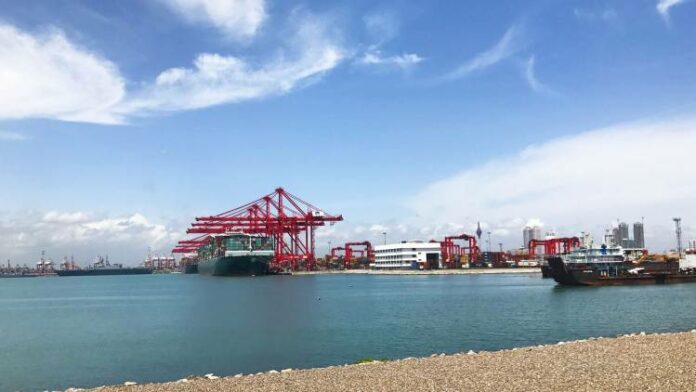
The Sri Lanka Ports Authority announced the government's green light, concerning the order for three-to-shore cranes for the Jaya Container Terminal (JCT) in Colombo. The new cranes, that costed approximately US$25 million, will be an important step for the JCT 5 expansion project.

Mainly, in 2018, the port of Colombo saw a US$70 million investment, approved by the Sri Lankan Government, coming with new, high-tech equipment.

Sagala Ratnayaka, the Minister of Ports & Shipping and Southern Development in Sri Lanka's Cabinet of Ministers commented that the Authority will continue to listen and improve the port, following the market conditions.


In the meantime, the STS crane order reflects the steps the port takes in light of an expansion program for growing demand from their customers.

The Minister also acknowledged that the new cranes and wider expansion will be crucial for the Colombo Port to compete across the region.

"The port must attract greater transhipment cargo volume if it is to generate greater foreign exchange earnings"... Minister Ratnayaka highlighted.

He concluded reporting that in order to achieve a greater transhipment volume, the port should be more attractive to all neighbouring ports, not only financially, but also in terms of efficiency and ease of doing business.

In the meantime, Port of Colombo is taking steps to a more digitalized future, as in February the port authority announced that it will upgrade its entire IT infrastructure as part of its smart port transformation.

source:safety4sea