11.1 C
New York
Home Blog Page 1084

Romania approves Midia gas development project

0

The Romanian government through the National Agency for Mineral Resources (NAMR) has approved the field development plan for the Midia gas development project in the Black Sea.

Black Sea Oil & Gas (BSOG) and its partners Petro Ventures Resources SRL and Gas Plus International B.V. took the final investment decision on Feb. 6, 2019.

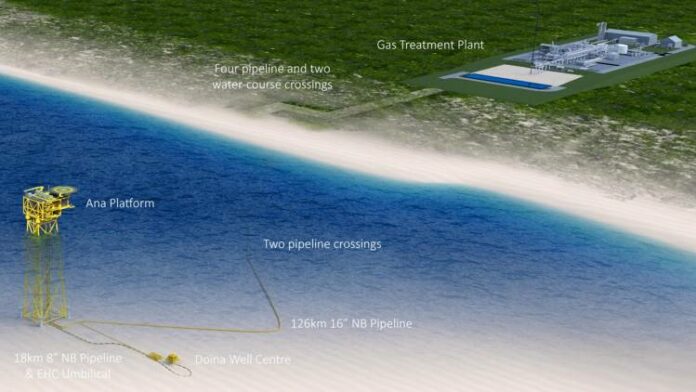
The Midia gas development project comprises the Ana and Doina natural gas fields. The project consists of five offshore production wells – one subsea well at the Doina field and four platform wells at the Ana field – a subsea production system over the Doina well which will be connected through an 18-km (11-mi) pipeline with a new unmanned production platform over Ana.

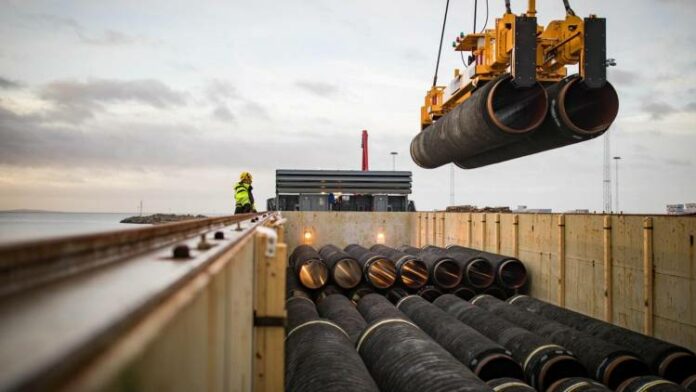
A 126-km (78-mi) gas pipeline will link the Ana platform to the shore and to a new onshore gas treatment plant (GTP) in Corbu commune, Constanta county, with a capacity of 1 bcm/yr, which represents 10% of Romania’s consumption. The processed gas will be delivered into the National Transmission System operated by SNTGN Transgaz SA at the gas metering station to be found within the GTP.

This year the company expects to complete the project’s detailed engineering, start the fabrication of the Ana wellhead platform at the shipyard in Agigea, begin the civil constructions at the gas treatment plant site in Corbu, and purchase many long lead items.

Gigi Dragomir, NAMR president, said: “The development of the Ana and Doina gas fields offshore Romania is a top priority for NAMR, which supports the implementation of the Romanian offshore project that could lead to the diversification of the supply sources in Romania.”


New Australian Icebreaker Receives Unique Steering System

0

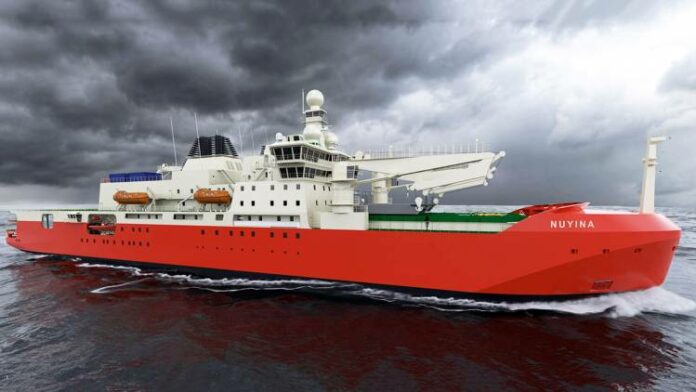
The Antarctic Supply Research Vessel Nuyina being built for the Australian government’s Antarctic Division has been supplied with unique rudders and steering gear.

The rudders have been designed and engineered by project-lead Damen Schelde Naval Shipbuilding (DSNS) as free-hanging, full-spade rudders. These deliver optimum hydrodynamic properties but until now were unheard-of for an icebreaking vessel of this class given the forces involved. Other innovative features include the integrated mechanical rudder stoppers, which are located between the rudder blade and (hull) skeg structure rather than on the outside hull due to the latter’s radical design. 

Damen Marine Components (DMC) completed the supply and installation of a number of critical systems. These had to be fabricated to exceptionally high standards to cope with the ice that the vessel will encounter in the Southern Ocean. DMC, under its Van der Velden Marine Systems brand, is responsible for the detail engineering and manufacturing of the rudder and steering gear system. 

To deliver all the necessary steering system components from the bridge to the rudder, including hydraulics, control and power systems, while meeting the unprecedented performance requirements, DMC pooled its expertise in this field with that of MacGregor Hatlapa. Working to DMC’s specifications, MacGregor manufactured and supplied the steering gear assemblies and the hydraulic systems that power them based on a highly-customized version of its proven Poseidon series. DMC delivered the rudder system, neck and carrier bearing systems steering gear foundations, electrical system, and the primary steering control system.

With so many of the systems breaking the boundaries of normal icebreaker design and build, DMC worked closely with Lloyds Register’s polar division throughout the process to ensure that the required standards were established and achieved. The results of this cooperation include rudders that are by far the heaviest per square meter that DMC has ever built and rudder stocks with a diameter of over a 1,000mm. This together with the materials used made them very challenging to manufacture and install.

These high specification components are vital to the safe and reliable operation of the vessel. Her combination of icebreaker classification and high polar class notation creates the need to enhance her structural integrity such that, while the maximum design speed of the vessel is actually around 16 knots, most of the components have had to be designed to cope with theoretical speeds in excess of 31 knots. 

This joint-venture approach was chosen due to DSNS requiring proven technology and a single supplier, yet the specifications were such that no standard products available from DMC and its leading competitors came close to being able to withstand the expected forces. 

While being only 160 meters (526 feet) in length, the stresses imposed on the hull and its components are equivalent to those found on a normal vessel of 300 meters (984 feet) or more. 

The Nuyina is being built at Damen Shipyards Galati and is due to be delivered in April 2020.

The Nuyina

The RSV Nuyina is the main lifeline to Australia’s Antarctic and sub-Antarctic stations and the central platform of our Antarctic and Southern Ocean scientific research. It is faster, larger, stronger and offers increased endurance compared with Australia's existing vessel, the Aurora Australis.

The Nuyina will provide a state of the art platform to conduct multidisciplinary science, both in sea ice and open water. It will also deliver personnel, cargo and equipment to and from Antarctic and sub-Antarctic stations. The icebreaker will be able to handle:

• waves up to sea state 9 (14 meters (46 feet) plus significant wave height)
• wind speed up to Beaufort 12 (hurricane)
• air temperature ranging from −30° Celsius to 45° Celsius, and
• water temperatures ranging from −2° Celsius to 32° Celsius.

She will have the capability to:

• travel at an efficient cruising speed of 12 knots, with a maximum sustained speed of 16 knots in open water
• break ice at a continuous three knots in ice of 1.65-meter (5.4-foot) thickness
• transfer personnel and cargo from the icebreaker to the stations using a range of means over water, over ice and by air, including the capability to operate and support four light helicopters or two medium helicopters
• handle, stow and transport up to 1,200 tonnes of solid cargo consisting primarily of containers and break bulk cargo, including large items of plant and equipment using the ships own cargo cranes, and
1,900,000 liters of bulk liquid cargo (Special Antarctic Blend diesel used for station operations)
• support voyages for up to 90 days, which includes the ability to remain within the Antarctic area for up to 80 days
• accommodate 117 personnel with modern services including a specialised medical facility, and
ensure a high standard of environmental compliance.

The vessel will be able to sustain multidisciplinary and concurrent science operations, and support numerous sample and data collection systems, including for sea-floor, sea-ice, sea life and atmospheric research. It will have the capability to deploy, operate and with location precision recover a range of equipment and instruments in a range of conditions including:

• drop keels and a moon pool to support a wide range of scientific research operations and modes
• a multi-beam bathymetric echo sounder for mapping the sea floor at full ocean depth
• sub-bottom profiler to analyze the physical properties of the sea floor
• scientific echo-sounders for biomass assessment and fisheries sonar systems, and
• hydrophones and underwater cameras.

She will have a dynamic range of fixed and portable work spaces, facilities and services to support experimentation and analysis and the capability to deploy a specialized marine tender.

Length overall: 160.3 meters (526 feet)
Maximum beam: 25.6 meters
Maximum draft: 9.3 meters
Displacement: 25,500 tonnes
Icebreaking: 1.65 meters at three knots
Speed: 12 knots economical, 16+ knots maximum
Range: > 16,000 nautical miles
Endurance: 90 days
Cargo fuel capacity: 1,900,000 liters / 1,671 tonnes
Container capacity: 96TEU
Cargo weight: 1,200 tonnes
Passengers: 117
Crew: 32

Source:maritime-executive

IMO Sets New Anti-Corruption Agenda

0

The IMO has agreed to address maritime corruption by including the issue in its work program for the Facilitation Committee. The IMO will now work on a guidance document to address maritime corruption. This is expected to be completed by 2021.

According to the Maritime Anti-Corruption Network's anonymous reporting mechanism, which was set up in 2011, there have been over 28,000 incidents already reported, confirming that this is a widespread issue. 

The decision to include an anti-corruption agenda came at the latest meeting of the IMO’s Facilitation Committee in response to a submission from Liberia, Marshall Islands, Norway, United Kingdom, United States and Vanuatu. The International Chamber of Shipping co-sponsored the submission along with a number of other NGOs. 

It is anticipated that the guidance developed by IMO would align IMO regulations and requirements for the maritime industry with the United Nations Convention against Corruption (UNCAC), adopted in 2003, which entered into force in 2005, and which currently has 186 parties.

The International Chamber of Shipping supports the move, with Secretary General Guy Platten saying: “Corruption erodes trust in government and undermines the social contract. Corruption impedes investment, with consequent effects on growth and jobs. This is a global issue, but we all need to work to eradicate corrupt practices. We are pleased that the IMO will be working to address this important issue and we will support the member states in stamping out this scourge.” 

The Maritime Anti-Corruption Network (MACN) applauds the efforts the IMO has taken to address maritime corruption as a regular work item. MACN’s Director, Cecilia Müller Torbrand, commented “It is important for the industry to have maritime corruption recognized as a problem by the IMO in its role as the international regulator for shipping. Issues such as the wide discretionary powers held by some port officials have the potential to impact all ship owners, managers, and operators. The requirements for port entry too often lack transparency, are deliberately misapplied, or widely interpreted for private gain.”

Danish Shipping welcomed the support from the international community for this initiative. “We have a long-standing commitment to stamping out maritime corruption. Thanks to the targeted efforts of MACN, we have seen tangible change in locations such as the Suez Canal, where facilitation payments have decreased considerably. With the IMO’s 174 member states working together on this agenda, we will stand even stronger in the fight against maritime corruption. Putting maritime anti-corruption on the IMO agenda marks a significant milestone for the maritime community as a whole,” said Anne H. Steffensen, Director General and CEO at Danish Shipping. 

Source:maritime-executive

HHI clinches bumper $630m gas and tanker newbuild orders

0

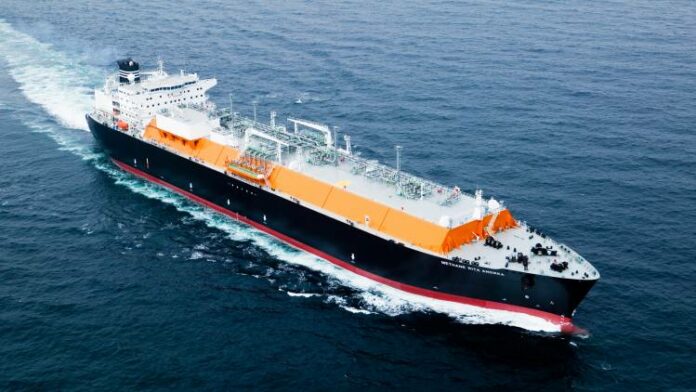
Hyundai Heavy Industries (HHI) has announced on Sunday an order win for a 174,000-cu m LNG carrier, bringing its recent newbuilding orders to a total value of KRW700bn ($630m).

With this latest LNG carrier contract from a Greek shipowner, the South Korean shipyard has clinched five orders in two weeks, worth KRW700bn.

Earlier this month, HHI secured orders to build a LNG carrier from a Japanese shipowner, followed by an order to build a LPG carrier from a Korean shipping company and orders to construct two oil tankers for a Greek company.

HHI said the latest LNG carrier newbuild will be equipped with a Hi-ALS self-developed air lubrication system on the bottom of the hull to improve fuel consumption. The air lubrication system is expected to cut fuel consumption by 8%.

“Demand for LNG vessels is rising steadily as environmental regulations are forcing shipping companies to replace old ships with new ones,” a HHI official was reported saying. “We will continue to lead the industry based on our differentiated technologies.”

According to Clarkson Research, LNG carrier orders globally are projected to reach 69 units this year, up from 65 in 2018 and 17 in 2017. Demand is being driven in part by China’s growing use of LNG and an increasing adoption of LNG globally as a more environmentally friendly fuel.

Between 2020 to 2027, 63 LNG carriers are expected to be ordered on average each year.

According to a DNV GL forecast, LNG as ship fuel is expected to take up 12% of shipping’s energy mix by 2030 before increasing further to 23% by 2050.

Source:seatrade-maritime

Vattenfall selects Siemens Gamesa 10MW for HKZ

0

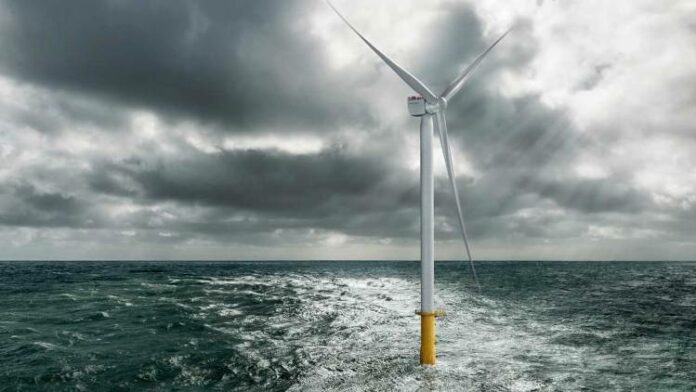
Vattenfall has selected Siemens Gamesa 10MW turbines for use at its 760MW Hollandse Kust Zuid 1&2 wind farm off the Netherlands.

The developer will install 76 of the 193-metre rotor diameter turbines at the project, which is due online by 2023.

Siemens Gamesa said it is "in final negotiations" over the potential deal, which also includes an agreement with Vattenfall to install the same hardware at the neighbouring 760MW Hollandse Kust Zuid 3&4 project.

The developer has submitted a bid for the right to develop Hollandse Kust Zuid 3&4, which is due to go live in 2024.

Vattenfall's vice president Gunnar Groeblar said there were many benefits to using 10MW-rated turbines at the project.

The German-Spanish manufacturer claims the hardware can deliver 30% more annual energy production than the 8MW, 167-metre rotor offering.

"Due to the increased capacity, we require fewer turbines to be placed at Hollandse Kust Zuid which clearly reduces the environmental impact of this wind farm compared to earlier ones,” Groeblar said.

“Larger turbines and greater availability also lead to major advantages in terms of electricity generation, which is particularly important in a subsidy free environment. Having fewer turbines to install also means lower costs and fewer risks during the installation process".

Siemens Gamesa offshore chief executive Andreas Nauen said: “We look very much forward to increasing our collaboration and teamwork with Vattenfall through these projects. Vattenfall once again demonstrates their confidence and interest in our products.”

The tender process for Hollandse Kust Zuid 3&4 is ongoing and the Dutch government will select a developer for the site later this year.

Vattenfall, Orsted and a consortium of Shell, Eneco and Van Oord are among the bidders for the site.

A prototype of the Siemens Gamesa 10MW platform will be installed at the Osterild test site in Denmark this year.

Source:renews

Operator accuses Denmark of trying to delay Nord Stream 2 pipeline project

0

Nord Stream 2 AG, a subsidiary of Russia’s Gazprom and operator of the Nord Stream 2 offshore gas pipeline, has submitted a third application for a route through Danish waters while accusing Denmark of making deliberate attempts to delay the project.

This third application for the pipeline route through Danish waters was submitted on Monday, April 15 more than two years after submitting the first application.

The pipeline operator said on Monday that the third application, together with the Environmental Impact Assessment (EIA), covers a route in the Danish exclusive economic zone (EEZ) in the waters south of Bornholm. This application and the EIA has been submitted in accordance with the decision made by the Danish Energy Agency (DEA) on March 26, 2019.

According to the operator, the EEZ border between Poland and Denmark was previously disputed and therefore the area was not available for any project developer. An agreement has been reached between the two countries, which, however, has not yet been ratified by Poland, the pipeline operator explained.

Nord Stream 2 already has two pending applications with the DEA.

Namely, in January 2018, the amended Danish Continental Shelf Act entered into force with retroactive effect only for the Nord Stream 2 project. The law gives the Danish Minister of Foreign Affairs the right to veto infrastructure projects running through territorial waters on political grounds. Such a judgement from the Ministry of Foreign Affairs has now been pending for 16 months. Nord Stream 2 AG has not received any response at all.

In August 2018, after 8 months without any indication of the timing of the Minister of Foreign Affairs recommendation, Nord Stream 2 was therefore forced to apply for a second, alternative route outside Danish territorial waters, north-west of Bornholm through the Danish EEZ.

Nord Stream 2 AG claims that both permitting processes, which included consultations with the public and expert authorities, nationally and internationally (the so-called Espoo procedure), have shown that all technical and environmental prerequisites are fulfilled and a construction permit could be granted for either route.

Keppel, DNV GL ink agreement to boost uptake of LNG as fuel

0

DNV GL and Keppel Marine and Deepwater Technology (KMDTech), a subsidiary of Keppel Offshore & Marine, have signed a framework agreement to boost the uptake of LNG as ship fuel.

The agreement covers potential newbuilding projects including LNG bunker vessels, small-scale LNG carriers and FSRUs, as well as LNG related assets employing battery and hybrid technologies.

As the first delivery in the agreement, DNV GL will issue Approval in Principle (AiP) certificates for two LNG bunker vessel designs from KMDTech, namely a 7,500-cu m small-scale LNG carrier with bunkering capabilities and a 7,500-cu m small-scale LNG carrier with bunkering capabilities and hybrid battery propulsion.

Both the LNG carriers will feature engines that can run on both diesel and LNG, and they will also have a class notation for bunkering which enables the provision of LNG bunkering services if required.

“One of the objectives of our collaboration with Keppel is to facilitate the increased supply of LNG bunkering infrastructure by being future ready through design approvals of different sizes of LNG bunker vessels, and LNG-related assets such as small-scale LNG carriers and FSRU,” said Johan Peter Tutturen, business director gas carriers in DNV GL.

The parties also plan to establish round table discussions involving all stakeholders in the LNG-as-fuel value chain, including gas and LNG bunker suppliers, designers, shipbuilders, shipowners and operators, in an effort to increase the uptake in demand for LNG bunkering in Singapore and beyond.

In light of the upcoming IMO 2020 global sulphur cap regulation, LNG as marine fuel is viewed one of the options for deep-sea shipping.

DNV GL’s Maritime Forecast to 2050, part of the research behind the DNV GL Energy Transition Outlook 2018, projects that more than 10% of the world’s shipping fleet will be powered by LNG by 2030, compared to less than 0.3% in 2019. The report anticipates that LNG-powered vessels will make up 23% of the world’s fleet by 2050.

Source:seatrade-maritime


MPA grants $480,500 seed funding for 13 technology start-ups

0

The Maritime and Port Authority of Singapore (MPA) has announced the awarding of SGD650,000 ($480,500) seed funding to 13 technology start-ups from the Smart Port Challenge (SPC) 2018 for the development and test-bedding of their innovative solutions.

Each of the 13 start-ups will receive SGD50,000 in seed funding from MPA.

The SPC is part of the Port Innovation Ecosystem Reimagined @ BLOCK71 (PIER71) launched in June 2018, a collaboration between MPA and NUS Enterprise, the entrepreneurial arm of the National University of Singapore (NUS). PIER71 comprises of three components, namely SPC, an eight-week acceleration phase and ecosystem building.

“MPA and NUS Enterprise jointly launched PIER71 last year to spur digital adoption in the maritime industry,” said Professor Wong Poh Kam, senior director, NUS Entrepreneurship Centre, NUS Enterprise.

“These technology start-ups have expertise in various technology areas, such as artificial intelligence, blockchain, Internet-of-Things and augmented reality. This encourages the adoption of latest technologies and emerging innovations for a more productive and competitive maritime sector in Singapore,” Wong said.

One of the recipients of the seed funding was Claritecs. The Singapore homegrown firm developed BunkerMaestro, an algorithm-based software to assist bunker operators in bunker tankers scheduling so as to achieve higher work efficiencies.

To adopt a more targeted approach, PIER71 has grouped these start-up solutions into three clusters, namely enabling platforms, port and cargo operations, and crossed industry/border innovation. This approach addresses the need for higher network speed and encourages cross-sharing of services.

Kenneth Lim, cto of MPA, commented: “Although increased digitalisation and innovative technologies have resulted in unprecedented change in the maritime sector, it has also brought about cost- and time-savings, growth and new capabilities."

“Through initiatives under the Sea Transport Industry Transformation Map and continued collaboration across the maritime ecosystem, Maritime Singapore will be able to ride the next wave of innovation-driven growth and move up the value chain, to maintain our standing as a global maritime hub,” Lim said.

Golden Energy Offshore PSV scores contract with Shell

0

Norway’s Golden Energy Offshore Energy Scout has announced that 2005-built platform supply vessel Energy Scout, previously on a spot contract with Shell Petroleum Development Company, has been awarded a medium-term contract by Shell.

The contract has already commenced, is firm until the end of July, and includes further options to extend.

Golden Energy Offshore did not reveal the contract value, saying that terms reflect the market in the region.

Earlier in the month, Golden Energy Offshore secured a contract extension with Wintershall Norge for 2005-built PSV Energy Swan.


BP, Nouryon and Port of Rotterdam partner on green hydrogen study

0

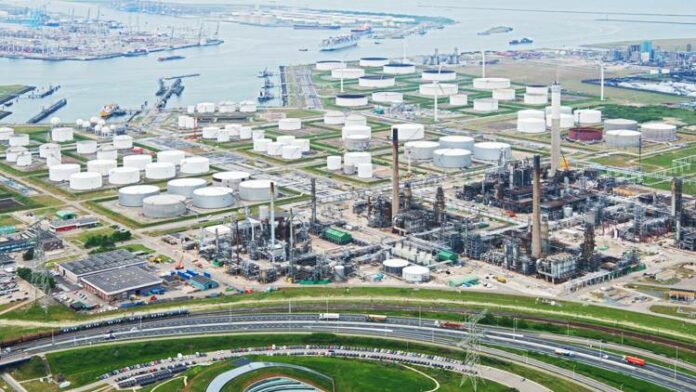
BP, Nouryon (formerly AkzoNobel Specialty Chemicals), and the Port of Rotterdam have joined forces to explore the opportunity of making “green hydrogen” via water electrolysis for BP’s refinery in Rotterdam, the Netherlands, which has the potential for significant reductions in CO2 emissions, Port of Rotterdam said in its release.

The refinery currently uses hydrogen made from hydrocarbons, to desulphurize products. Replacing this entirely with green hydrogen produced from water using renewable energy could potentially result in a reduction of 350,000 tonnes of CO2 emissions per year based on current circumstances.

The parties have signed a memorandum of understanding to study the feasibility of a 250-megawatt water electrolysis facility to produce up to 45,000 tonnes of green hydrogen yearly using renewable energy. It would be the largest of its kind in Europe.

Nouryon would build and operate the facility based on its leadership position in sustainable electrochemistry. The Port of Rotterdam would facilitate local infrastructure and investigate options for further development of a green hydrogen hub in the area. The partners intend to take a final investment decision on the project in 2022.