2.8 C
New York
Home Blog Page 1081

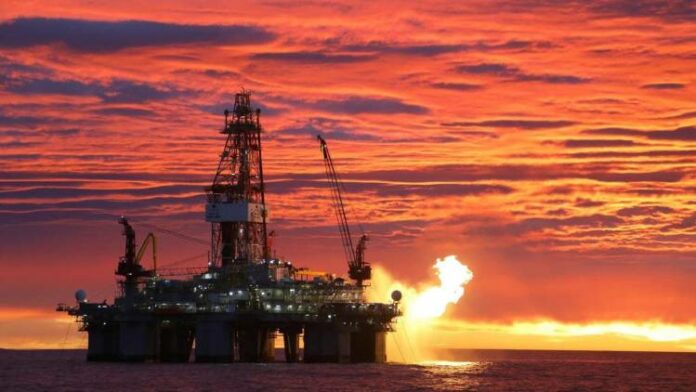
Keppel FELS to upgrade Diamond semisub

0

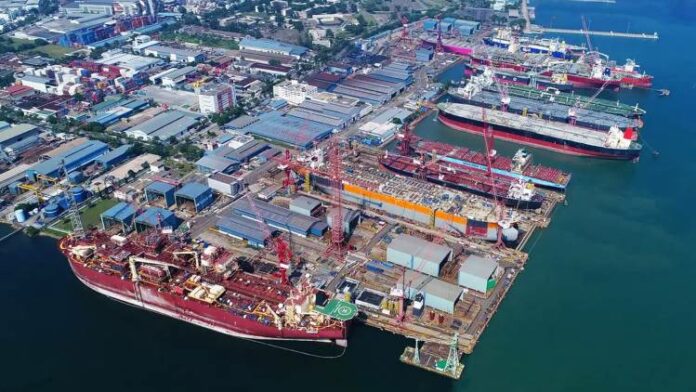
Keppel Shipyard Ltd. and Keppel FELS Ltd. have secured integration and upgrading contracts worth a combined value of about S$160 million ($118 million).

An unnamed production vessel operator has contracted Keppel Shipyard for fabrication and integration work on an FPSO vessel. The work scope includes the fabrication of several topsides modules, the riser balcony, the spread-mooring and the umbilical support structures as well as installation and integration of associated equipment and all topsides modules onto the FPSO.

Work is expected to begin in 3Q 2019, and delivery is scheduled for 2021.

Diamond Offshore has contracted Keppel FELS to upgrade the semisubmersible drilling rig Ocean Onyx. The work scope includes the engineering, fabrication, and installation of new pontoons, columns, bracings, and a wing deck. Scheduled for delivery in 2H 2019, the Ocean Onyx will initially be deployed offshore Australia.

The Ocean Onyx was first upgraded in 2012 by Keppel AmFELS, Keppel O&M’s yard in the US, from an old semisubmersible rig.

Since 2005, Diamond Offshore and Keppel FELS have collaborated on more than 12 projects.

Source:offshore-mag

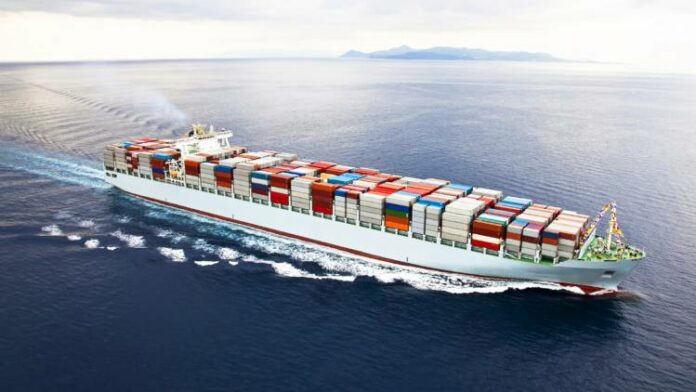
ABS teams with industry leaders to improve container vessel safety

0

ABS and leaders representing the Cargo Incident Notification System (CINS) are teaming up to develop actionable recommendations to help mitigate risks posed from the stowage of dangerous goods on containerships, ABS said in its release.

ABS has been working with CINS members over the past six months to develop best stowage strategy guidelines. Following a three-month trial, the best practice guidelines will be published on the CINS. The collaboration assembles key industry stakeholders to examine the challenges and risks containership owners and operators face when stowing dangerous goods.

The objective of this project is the compilation of a comprehensive set of best practices to improve stowage planning and hazard mitigation for dangerous goods carriage, leading to a focused application of existing risk assessment processes.

For more than 50 years, ABS has been a trusted technical advisor for the containership sector. From the very first containership in operation to today’s most advanced ships, ABS is an industry leader. As a classification society, ABS has a strong track record for aiding the containership sector in identifying and leveraging new concepts to improve operations, protect the environment and enhance safety.

Remote inspection techniques on the rise

0

New technologies – such as drones, climbers and robot arms – are rapidly entering the inspection era, adhering to the contextually digital transformation trends. And, in turn, major classification societies are embracing the so-called Remote Inspection Techniques (RIT) for their class surveys prosecution. For those wondering the reasons why, safer and less intrusive surveys is the answer!.

Without requiring confined space entry, RITS are considerably less expensive than other methods. Likewise, they’re far safer than traditional methods of inspection that involve sending inspectors into unsafe conditions. Analytically, the pros of RITS in conjunction with class surveys are as follows:

  1. improve efficiency of inspection techniques
  2. reduce the survey time (real time streaming through RVIs)
  3. reduce the survey costs
  4. lessen the need to access potentially hazardous inspection areas (i.e locations at height)
  5. reduce risk for surveyors and inspectors
  6. set limits on conventional risk evaluation
  7. ensure comprehensive risk assessment
  8. are easy to operate
  9. are environmentally friendly

Important dates:

  • October 2018: MPA Singapore accepted remote inspection techniques for the conduct of surveys onboard Singapore-Registered Ships. According to the Port Authority, a remote inspection technique may be used to facilitate the required external and internal examinations. The methods applied will provide the survey results normally obtained for/by the Surveyor.
  • January 2019: DNV GL approved the use of service suppliers to provide close-up surveys using remote RITS – drones, climbers or remotely operated vehicles (ROVs). That said, RITs can be used as alternatives for close-up surveys in both DNV GL rules and IACS Unified Requirements. Service suppliers must be able to successfully perform a close-up survey according to the requirements given by the classification society. The attending DNV GL surveyor will watch the details of the close-up inspection through a live video stream. The data obtained during RIT surveys will later be compiled into a final report.
  • March 2019: ABS published guidance notes on the use of remote inspection technologies, detailing best practices for their use on class surveys and non-class inspections.

“The use of RITs can reduce risk for Surveyors and inspectors by lessening the need to access potentially hazardous locations at height, or other hazardous inspection areas. This guidance facilitates safer, more effective and efficient, use of these technologies” – John McDonald ABS Senior Vice President, Western Hemisphere Operation

6 most common types of RITS

  1. UAVs (Unmanned Aerial Vehicles)
  2. ROVs (Remotely Operated Vehicles)
  3. Robotics (i.e. crawler)
  4. Divers
  5. Climbers
  6. Fixed (sensors deployed in a fixed location)

11 RITS inspection types for Classification Surveys:

  1. General external surveys (air)
  2. Tank testing
  3. Hull surveys
  4. Overall survey of cargo holds
  5. Overall survey of enclosed spaces
  6. Close-up survey of cargo holds
  7. Close-up survey of enclosed spaces
  8. Thickness measurement of enclosed spaces
  9. Thickness measurement of non-enclosed spaces
  10. In-water mooring chain visual inspection up to a depth
  11. Mooring chain thickness measurement up to a depth

5 things to taken into consideration

Understanding how the aforesaid basic concepts of each RIT meet specific needs are of great importance when selecting equipment.

  1. Highly trained operators are required
  2. Electrical source is required in most applications
  3. Additional tests needed when applying in complex areas
  4. Proper data management is always required
  5. Operational limitations of RITs may be faced

It goes without saying that RIT technologies are transforming operating models as well as risk understanding. However, the ESP Code is not clear on the applicability of RIT. Therefore, as DNV GL well mentions – acceptance from flag authorities is necessary before RIT is used for class surveys on ESP ships (oil tankers and bulk carriers).

Source:safety4sea

Green light for VSA between Eimskip and Royal Arctic Line

0

The Icelandic Competition Authority has approved exemption for the cooperation between Eimskip and Royal Arctic Line, the national carrier of Greenland.

As part of the cooperation, three 2,150 teu boxships are being built in China with expected delivery later this year. Two vessel are being built for Eimskip and one for Royal Arctic Line. The vessels will be used in weekly services between Greenland, Iceland, the Faroe Islands and Scandinavia. The cooperation is built on a vessel sharing agreement.

The vessels will be the largest containers vessels that Eimskip has had in its service and are designed and built for the conditions in the North Atlantic, in accordance with the Polar Code. Eimskip is readying a sale of two of its older ships – Goðafoss and Laxfoss. – as it readies to take the new ships.

Vilhelm Þorsteinsson, CEO of Eimskip, commented yesterday: “The cooperation creates opportunities for a more efficient sailing system for Eimskip as well as opening new sailing routes to and from Greenland enabling our customers to increase business with Greenland.”

Source:splash247

ZIM joins TradeLens aiming for transparency in global shipping

0

ZIM is another company to be joining TradeLens, a platform that was launched last year, as a joint venture between Maersk and IBM. Israeli carrier ZIM has signed up to participate in TradeLens, a blockchain-enabled documentation system designed to smooth bureaucracy between carriers, freight forwarders, customs officials and port authorities.

ZIM has a vision to promote technological innovation in all aspects of its operations.

In addition, by joining TradeLens, ZIM can continue digitizing its processes to enable efficiencies and cost savings to the company and the customers by enabling greater transparency and more efficient processes.

In light of ZIM's addition in TradeLens, Eyal Ben Amram, ZIM’s CIO noted "ZIM endorses a proactive approach of promoting and investing in innovative digital solutions, such as the pioneering blockchain-based electronic Bill of Lading initiative, in collaboration with Wave Inc, and the recent investment in Ladingo, a ground-breaking e-commerce solution."

In the past, Maersk and IBM experienced problems concerning their blockchain project, TradeLens. Yet, both companies seem to have overcome their difficulties by having Modern Terminals joining and supporting the project and ports such as Port of Valencia, Port of Montreal, Saudi Arabia and Port Authority of Bay of Algeciras.

Source:safety4sea

A floating world Wärtsilä

0

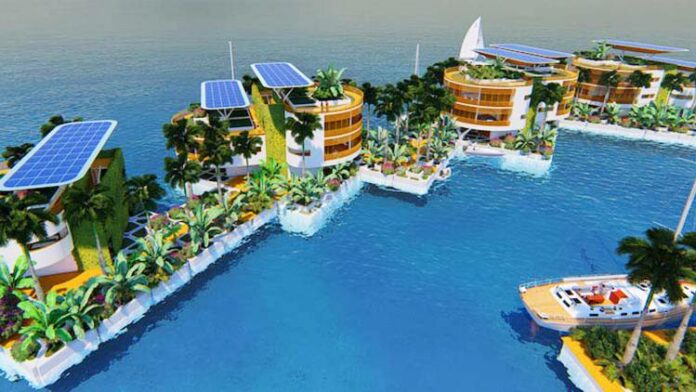
A floating pen for mariculture with no environmental footprint; Offshore Membrane Enclosures for Growing Algae to produce biofuel; a self-sustainable, submerged astronaut training facility to simulate living in the depths of space; ocean thermal energy conversion, floating solar-powered bike paths, floating solar and wind farms, floating urban dairy farms and even autonomous floating communities or cities with their own cryptocurrencies!

This is not a sneak peek into the future but a reality that’s already taking shape across oceans and seas around the world.

Why float? Well, because given the expected population growth, there just won’t be enough land for human beings in the future. The United Nations projects that the world’s population will increase by 1 billion in the next 15 years. That’s almost two-thirds of China total population in 2018. It estimates that world population will reach 8.5 billion by 2030, 9.7 billion by 2050 and 11.2 billion by 2100.

According to a Stanford University research, by 2050, all the reserve land in the world will be used on account of increasing demand for food, biofuels, industrial forestry, and urbanisation. Experts expect additional pressure on coastal regions because of rising sea levels due to climate change. Add the fact that oceans and seas account for half the surface of the earth and one can understand why there’s a need or fascination to build a new ‘floating world’ that is both environment-friendly and mobile.

Sea of opportunities
“Nothing lasts forever, and in order to survive, we must adapt. Currently, there is a shortage of land, what if you could create more where it’s needed? The price of a barge is roughly one-third of the price of land of similar size in the capital cities of the world, and the barge already has the expensive infrastructure and foundation necessary to erect buildings on top,” says Amos Ahola, Director, communications and branding, Wärtsilä, who has been very interested in and fascinated by the concept of floating cities for quite some time now. Ahola had even pitched the idea of floating cities to Wärtsilä’s Venture Board, in 2017. His idea was one of the seven that were shortlisted (from a pool of 96 submissions) by the board.

“What if you could move the land around if and when needed? This would significantly reduce risks associated with the construction industry. Perhaps this opens an even bigger opportunity,” he wonders.

The Seasteading Institute, a non-profit think tank (seed funded by Peter Thiel, co-founder of PayPal) has been working on the concept of creating settlements on the sea called ‘seasteads’ since a decade. It is in the midst of executing a pilot project to build a floating settlement with 300 homes along with the government of French Polynesia.

“The cruise ship industry has already developed what I call pre-steading. Each cruise ship is self-governing by default. They often fly the flags of small countries like Panama or Liberia. Passengers sign a contract for onboard security and health care. If cruise ships floated permanently in international waters, they would be seasteads,” says Joe Quirk, author and communication director, The Seasteading Institute.

“Oil rigs use a technology for floating permanently at sea, and cruise ships are a technology for self-governance at sea. If we combine these technologies, we could have seasteads floating permanently and governing at sea,” he adds.

Cruising together
Take for instance the case of the world’s largest private residential ship, ‘The World’. This 644 feet facility was launched in 2002 and has 165 residences for luxury vacations. ‘The World’ has circumnavigated the globe across several ports and exotic destinations. Residents of ‘The World’ own their individual residences and collectively own the ship. This ensures that they build their experiences based on the standards they choose themselves.

In the past, several other such projects including the Freedom Ship (a luxury seafaring vessel for 50,000 people to live, work, retire, vacation or visit with its own international airport) and the Lilypad, a self-sufficient floating city to provide shelter for future climate change refugees, have also been proposed. With more industries and sectors like energy, infrastructure, etc. looking at ‘floating structures’ as an option, the world as we know it will change in a big way.

Ahola says, “Innovations will be centred around modular building and making the floating structures safe and steady in any weather. I believe that floating boroughs will start to grow around the world’s coastal cities in less than ten years.”

Welcome to the blue frontier
That, in turn, is expected to change the way future generations will live and behave. “Today’s toddlers will be known as the Aquatic Generation, and many of them will live in mobile, modular floating societies that allow them to detach from seasteads they don’t like and attach to those they do. Their start-up societies will set examples that will change the old land-based nations as significantly as Hong Kong changed China. Our grandchildren will consider our unsustainable land-based nations primitive because they will take for granted the innovations unleashed on the Blue Frontier,” says Quirk.

Experts say this ‘floating world’ is a huge window of opportunity for the global shipbuilding and design industry which is mandatorily bound to reduce emissions by 50% by 2030 as prescribed by the IMO early this year. Experts say that modular construction and 3D printing are helping speed things up in creating this new floating world. Thus, the new horizon is much closer to reality than envisioned before.

Day of the Seafarer 2019 to focus on gender equality

0

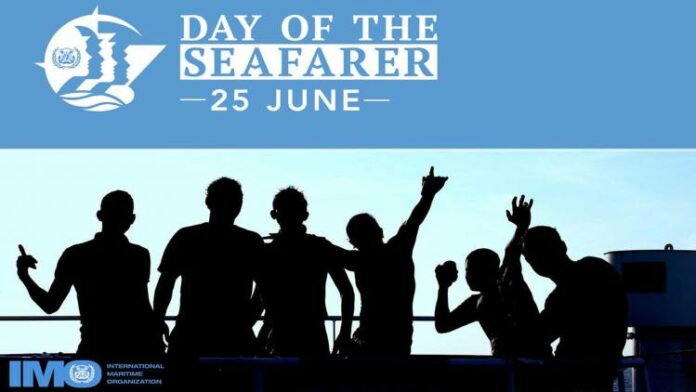
This year, as always, the annual Day of the Seafarer (DotS) will be celebrated on 25 June. Throughout 2019 there will be a strong emphasis on the importance and value of women within the professional ranks.

Much of this is being driven by the World Maritime Day theme: Empowering Women in the Maritime Community, which has a very strong and far-reaching resonance.

"It provides an opportunity to highlight opportunities for women (as well as the contributions they are already making) in a wide range of maritime careers and professions, but the focus will be very firmly on one aspect of that community – seafarers." IMO said.

As in previous years, the campaign will be centred on social media. All IMO's social media platforms are likely to feature, with Twitter, Facebook and Instagram accounting for most activity. This year, the campaign hashtag is: #IAmOnBoard. The hashtag can be used by anyone taking part in the campaign, male or female, to show their solidarity for gender equality in seafaring.

IMO will also have downloadable cards bearing the hashtag, the SDG 5 icon and the Day of the Seafarer logo. It will also invite all campaign supporters to take selfies or other photographs which include the card and to post them on social media with the hashtag.

In addition, a more specific and targeted element of the overall campaign will be 'Make one change'.

Namely, IMO will invite campaign participants to think about what they would do if they were able to make just one change to improve diversity in seafaring.

We will develop an interactive on-line space in which participants' responses can be submitted and captured IMO explained.


MSC Cruises reveals development plans for digital concierge Zoe

0

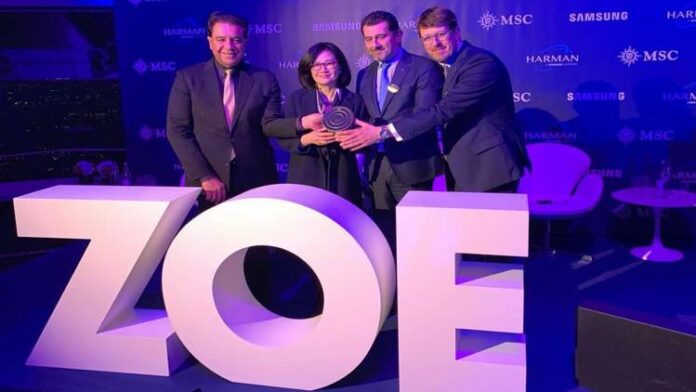
MSC Cruises has launched its artificial intelligence and machine learning-based cabin concierge Zoe – a first-of-its-kind for the cruise industry – and revealed plans for its development.

MSC Cruises chief executive Gianni Onorato told a conference session on innovation at Seatrade Cruise Global that Zoe was the “most exciting innovation we have launched”. The digital concierge has been launched on newly-delivered MSC Bellissima, in each of the 2,217 cabins. It will next be rolled out on MSC Grandiosawhen it is delivered in November this year.

The digital cruise assistant was developed by the MSC innovation department along with experts from connected technology specialist Harman, part of Samsung Electronics.

Zoe is not linked to a cloud system, but to an onboard server as MSC Cruises “wants to ensure a very rapid connection independent from the satellite connection,” Mr Onorato said.

Mr Onorato said of Zoe, “It gives the opportunity to provide answers to customers’ questions. Zoe will start with 800 answers, but being an artificial intelligence product, it will learn by use.” Every time there are new questions and Zoe does not yet know the answers, they will go into the server to collect the answer. He said that the 800 questions were a “starting point”.

The system underwent extensive testing in areas such as speech recognition, ability to transform speech to text and vice versa, and other behavioural and performance tests. Mr Onorato pointed out that 400 people trained Zoe.

She will start with seven languages, but the aim is to boost this to 10, while 30 different accents from across the globe have been included after these were analysed during the testing period.

Zoe has been integrated into the MSC for Me digital platform, which was launched in 2017. It connects to bluetooth transmitters around the ship to provide passengers with tailored services and suggestions. As part of MSC for Me, if a customer wants to book an excursion, Zoe connects to the in-cabin television to provide the booking page on the screen.

Mr Onorato said customers can also connect Zoe to their mobile phone and bluetooth to play music.

The cruise operator is already looking to the future and considering ways of developing Zoe. Mr Onorato said "We are already planning what the future is for Zoe, to offer more and more personalised experiences using machine learning activity to satisfy [the customer] but this is obviously a long process.”

He added that the company will do “more and more” in terms of artificial intelligence, to create a more customised and more personalised service. He said “There will be expectations to create an internet of things.” He gave an example:  if there is a shore excursion at 9 am and the wake-up call has been set, the time will automatically be made later if there is a delay in the excursion.

Santos confirms strong gas find at Corvus offshore Western Australia

0

 Santos says appraisal drilling of the Corvus field offshore Western Australia has confirmed a significant gas resource.

The jackup Noble Tom Prosser drilled the Corvus-2 well in 63 m (207 ft) of water in the WA-45-R permit in the Carnarvon basin, 90 km (56 mi) northwest of Dampier, to a TD of 3,998 m (13,117 ft).

Highlights of the well included a 638-m (2,093-ft) gross interval, one of the largest columns ever discovered on the North West Shelf, the company claimed.

Wireline logging has so far revealed 245 m (804 ft) of net hydrocarbon pay across the North Rankin and Mungaroo formations, at depths between 3,360 and 3,998 m (11,023 and 13,117 ft).

Drilling also encountered higher permeability zones than in the 2000 discovery well Corvus-1, 3 km (2 mi) to the northeast, and a higher condensate-gas ratio of up to 10 bbl/MMcf, with a similar CO2 content of 7%. 

Santos managing director and CEO Kevin Gallagher said: “Corvus-2 has delivered a fantastic result and has opened up a number of additional exploration opportunities in the region."

It is particularly exciting to have realized a higher liquids content and significantly bigger resource volume than we expected.

Corvus could be tied back to either our Devil Creek or Varanus Island gas plants, where it has the potential to increase the utilization of our existing facilities as well as provide backfill and extend plateau well into the 2030s.”

After P&A’ing Corvus-2, the rig will move north to start appraisal drilling of the Dorado oil discovery. Santos gained control of both discoveries through its acquisition last year of Quadrant Energy.

Wood Mackenzie senior analyst Daniel Toleman said: “Based on limited information, our initial estimate is a 2.5 tcf gas and 25 MMbbl condensate resource. This will be the largest gas discovery in the Carnarvon basin since the Satyr-4 exploration well drilled by Chevron in 2009…"

The field is near to Santos’ Reindeer development and if the resource comes in over 2 tcf, we believe Santos will explore opportunities to export the gas as LNG. This is due to Corvus’ proximity to the Burrup Peninsula, and a well-supplied domestic market in the short to medium term.

“The North West Shelf has LNG production capacity available from 2021. The Corvus discovery could fill this ullage. If an LNG backfill development is to progress, we expect Santos will look to sell down, as it currently holds 100% in the find.”

Source:offshore-mag

SME Bags Close to £3.5M for Nova Scotia Tidal Energy Project

0

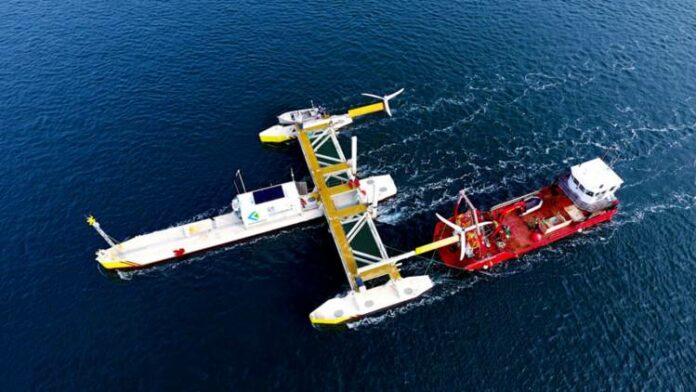
Tidal energy company Sustainable Marine Energy (SME) has secured equity investment of £3.46 million to further develop its PLAT-I tidal energy platform system.

The Edinburgh-based business has closed its latest funding round, to which the Scottish Investment Bank (SIB) has committed £1 million on behalf of the Scottish Government via the latter’s Energy Investment Fund (EIF).

Marine propulsion and renewable energy company Schottel Hydro (Schottel) has contributed £2.46 million to the fund-raise.

SME undertook initial testing of the PLAT-I system near Connel, Argyll and Bute in 2018. The device was then transported to Grand Passage, Nova Scotia, where it generated power for the first time in February this year. There it is continuing SME’s testing and demonstration programme in preparation for the build out of a larger project at the Fundy Ocean Research Centre for Energy (FORCE) located in the Minas Passage of the Bay of Fundy.

Jason Hayman, the managing director of Sustainable Marine Energy, said: “It is fantastic, and a great testament to the team for all their hard work to close this funding round. Securing new investment from the Scottish Investment Bank and commitment from SCHOTTEL for our work in Nova Scotia will enable us to take a significant step forward on our renewable energy journey.”