2 C
New York
Home Blog Page 1080

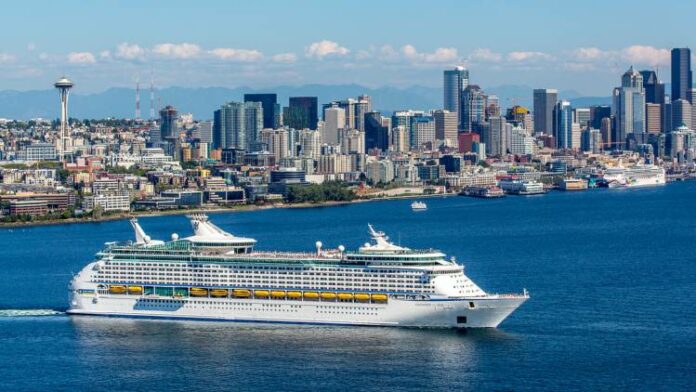
Seattle Celebrates 20 Years as a Cruise Port

0

The Port of Seattle is celebrating its 20th year in operations as a cruise homeport, and it is expecting a record-breaking season ahead. 

Over twenty years ago this community turned a novel idea into a nearly $900 million industry and helped [Seattle] become the most environmentally progressive home port in North America,” said Port of Seattle Commission President Stephanie Bowman. “Alaska cruises are a ‘bucket list’ item for people all over the world, and we look forward to hosting them for decades to come.”

The first cruise ship of the year, the Celebrity Eclipse, arrived at Seattle's Pier 66 on April 15. She is the first of many ahead: the Port expects to see an estimated 1,200,000 cruise passengers this year, breaking last year’s record of 1,115,000. This season, Seattle will host the three largest cruise vessels on the West Coast – the 4,000-passenger sister ships Norwegian Joy and Norwegian Bliss and the 4,200-passenger Ovation of the Seas.

Based on a recent economic impact study, the Port estimates that each homeported vessel call will support a total of $4.2 million in economic activity in the Pacific Northwest. Overall, it estimates that the total economic impact of cruise ships to the state economy is roughly 5,500 jobs, $260 million in labor income and nearly $900 million in business output per year. 

Seattle expects its long-running cruise growth streak to continue, and to make room, the port is seeking a private partner to redevelop an existing container terminal – T-46 – for cruise ships. The site is just south of downtown Seattle, and it has about 3,100 feet of berthing, 50 feet of depth and about 86 acres of space. The northern portion of the berth will be available for cruise uses, including the construction of a 5,000-plus passenger terminal. The south end will be used for breakbulk cargo.

Source:maritime-executive

Damen launches two hybrid-electric ferries for BC ferries

0

Damen shipyards launched a pair of hybrid-electric ferries for the Canadian ferry operator, BC Ferries. Both vessels are now fitted out in order to begin operations next year. The vessels will have the capacity of carrying 300 passengers and crew and 47 vehicles.

Mainly, according to Damen's press release, BC Ferries is upgrading its fleet, and will see a number of new vessels operating in the province of British Colombia, on Canada’s Pacific coastline.

The twin Damen Road Ferry 8117E3 will serve the Northern Gulf Islands off the coast of Vancouver, replacing vessels that are now over fifty years old.

Paul Catsburg, director of the vessel replacement programme at BC Ferries commented

This class of vessels is very important for BC Ferries as it represents our newest vessel type, introducing a state-of-the-art, diesel-electric, hybrid propulsion system. The ships’ hybrid design is important for two main reasons; firstly to improve environmental stewardship and secondly to reduce operating costs by evolving to full electric propulsion.

He continued congratulating all those who participated in constructing the second hull and recognised the efforts that the management and workers of Damen Galati had made to reach this important milestone.

Concluding, the construction of two identical vessels will also deliver capital and operating cost savings and additional efficiencies. After-sales warranty support will be provided by Point Hope Shipyards in Victoria, British Columbia in an agreement with Damen.

Source:safety4sea

USCG: GMDSS master plan

0

In a circular issued on 4 March, the IMO announced that all information related to shore-based facilities for the Global Maritime Distress and Safety System communicated to the organization is available to all registered public account holders through the new Global Integrated Shipping Information System (GISIS) module on the Master plan of shore-based facilities for the GMDSS.

In this regard, the US Coast Guard informed that any member of the public who is registered with an IMO Web account can become a registered account holder.

The information contained in the GMDSS Master Plan GISIS module is similarly structured as the GMDSS Master Plan in previous GMDSS.1 circulars (annexes 1 to 12).

The module is divided into 12 sections, as follows:

1. Status of facilities;
2. Sea Area A1 (within range of shore-based VHF DSC coverage);
3. Sea Area A2 (within range of shore-based MF DSC coverage);
4. Sea Areas A3 and A4 (outside sea area A2);
5. Inmarsat facilities;
6. Coordination Centres (RCCs) using Inmarsat Ship Earth Stations (SESs);
7. NAVTEX Service;
8. International SafetyNET Service;
9. HF Narrow Band Direct Printing (NBDP) MSI Broadcast Service;
10. Cospas-Sarsat MCC and LUT;
11. EPIRB Registration Data; and
12. Contact Points for Global Maritime Distress and Safety System (GMDSS).

Additional functionalities to download or export the information contained in different sections are currently under development, USCG noted.


Wärtsilä Enables Innovative Simulation Hub

0

The technology group Wärtsilä is to supply and configure the software solutions for a new, state-of-the-art, purpose built simulation center being constructed near Portsmouth, England. 

The center is an expansion of the Maritime Skills Academy’s (MSA) training portfolio serving the Solent region, and is designed to meet the specific simulation training requirements of cruise, ferry and superyacht clients. MSA Solent is part of the Viking Maritime Group, headquartered in Dover, England. The software is developed by Transas, a Wärtsilä company, who will also provide technical and maintenance support to the project. The order with Wärtsilä was booked in March 2019.

The new facility will be uniquely positioned to service the needs of its targeted clients. It will be the world’s only commercial training center to have a fully integrated Wärtsilä Nacos Platinum system within the full mission bridge simulator and associated course provision. Wärtsilä will also deliver the software solutions for a full mission engine room simulator with a customized cruise ship model and various other training aids.

Prior to the center’s implementation phase, the desired simulation specifications were established in close cooperation with industry experts. This enabled the achievement of the most realistic physical environment and delegate learning experience possible.

The MSA Solent simulation center is scheduled to open in July of this year.

Transas was acquired by Wärtsilä in 2018, and is a global market leader in ship & fleet operation solutions, including bridge infrastructure, digital data and electronic charts services, and applications requiring access to real-time information. The company is also a leader in professional training and simulation solutions, ship traffic control, and AI-based decision-support tools. Transas leverages the latest advances in machine learning to create a unified cloud-based platform for managing operations across the entire marine ecosystem. The company has regional offices worldwide and a distribution network that spans 120 countries. Its workforce of approximately 1000 employees includes a large and competent team of engineers who, together with Wärtsilä’s team, work to accelerate the development of smart digital solutions.

Carbon Trust reveals floater cable winners

0

The Carbon Trust has picked five winners of a dynamic export cable competition within its Floating Wind Joint Industry Project (Floating Wind JIP).

The successful companies are Norway’s Aker Solutions, Japan’s Furukawa Electric, Greece’s Hellenic Cables, JDR Cable Systems in the UK and Zhongtian Technology Submarine Cable in China.

The first phase of the project will conclude in March 2020 and the results could help to “inform subsequent project phases to support the deployment of dynamic export cables across the industry,” according to the Carbon Trust.

Carbon Trust offshore wind manager Rory Shanahan said: “We are delighted with the response we got from the industry and we are looking forward to working with the five competition winners."

“The lack of dynamic export cables has been identified as a hurdle that needs to be overcome by industry to ensure the commercialisation of floating wind farms, and we are excited to begin work to ensure that this technology is ready in time for commercial floating wind projects.”

BPP Cables is supporting the competition, which aims to ensure that this necessary technology is a viable option for developers for commercial floating wind projects within the next five to 10 years.

Drawing on the expertise of existing offshore wind cable suppliers, as well as tapping into the oil and gas supply chain, the competition funding will support the design, initial testing and development of dynamic cables ranging from 130kV to 250kV to enable the efficient transmission of power from floating wind turbines to shore.

The Floating Wind JIP aims to accelerate and support the development of commercial-scale floating wind farms and is a collaboration between industry partners that include EnBW, Engie, Eon, Equinor, Innogy, Orsted, Shell and Vattenfall, with Scottish Government support.

The Carbon Trust and the twelve Floating Wind JIP developers will be supporting and collaborating with these cable suppliers to support the development of their cables. 

Source:renews

ECSA, ETF welcome European Maritime Single Window

0

ECSA and ETF welcomed the adoption by Members of the European Parliament of the proposal for a Regulation establishing a European Maritime Single Window environment. They stated that they look forward to the formal adoption by the Council in order for the Regulation to apply and deliver on the much-awaited administrative simplification for shipping.

ECSA and ETF believe the new Regulation creating a European Maritime Single Window environment will bring harmonisation and re-use of information and can cut the administrative burden on crew and operators caused by the previous Reporting Formalities Directive.

With the new Regulation, shipping is one step closer to enjoying a single market with facilitation and simplification.

"For several years now the maritime transport social partners have called for a reduction of the administrative burden for shipping. The endless paperwork faced today is detrimental to the motivation and functioning of the masters and officers working onboard and the onshore shipping companies’ staff, as well as to smooth shipping operations in ports"…ETF said.

Namely, ETF and ECSA are pleased to see that there will be a harmonised, comprehensive list of the data elements that needs to be provided. Additional requirements can only be allowed in exceptional and duly justified circumstances.

They also welcome the fact that harmonised spreadsheets will be established and accepted in any port and that manual reporting can be performed through a user-friendly graphical user interface that must be constructed and look in such a way that one can easily navigate through it and fulfill the reporting obligations whatever port is called at. These elements will benefit the involved staff, whether on board or in the office.

Moreover, the two organizations are in favour of the Member States ensuring the provision of adequate and necessary training for staff directly involved in the operation of the maritime National Single Window and stress the importance of having training for all relevant parties.

 ETF and ECSA see such training as an opportunity to enhance communication between ship and shore and contribute to mutual understanding and support between crew onboard and onshore staff. Such training should provide the right people with the right skills.

Finally, when the Council gives permissions, the implementation of the Regulation can begin, and ECSA and ETF called the Commission and Member States to stick to the ambition of the proposal: a real single market for shipping without an administrative burden on crew.

Source:safety4sea


USS Fitzgerald Refloated

0

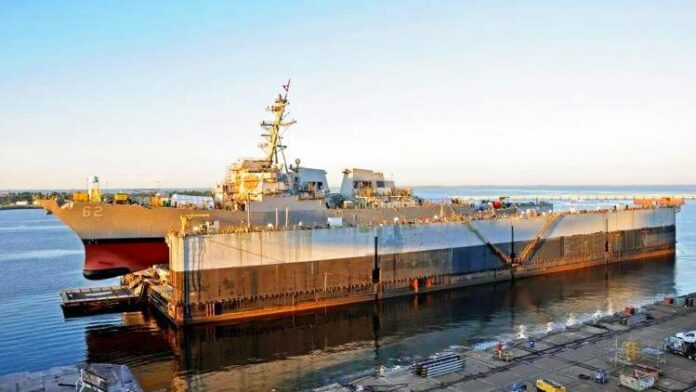
The guided-missile destroyer USS Fitzgerald launched from dry dock and is moored pier-side in Mississippi, a step closer to being fully repaired after a 2017 collision that left seven sailors dead, the Navy said.

The U.S. Naval Sea Systems Command says the USS Fitzgerald launched out of a dry dock Tuesday at Ingalls Shipbuilding in Pascagoula, Mississippi. The Fitzgerald moored alongside a pier for work that Rear Adm. Jim Downey says will now include testing and outfitting.

The ship arrived in Pascagoula on board a heavy lift ship on January 19, 2018, after sustaining extensive damage in a collision with the containership ACX Crystal on June 17, 2017.

Since the ship’s arrival at Ingalls, work has focused on restoring the integrity of the hull and topside structures that were damaged during the collision.

“The complexity of this overhaul has been challenging, but our planning team at Bath Iron Works and waterfront team at HII is executing repairs and installing upgrades so that Fitzgerald returns to our sailors lethal and mission-ready,” said Rear Adm. Jim Downey, deputy commander for surface warfare and commander, Navy Regional Maintenance Center. “We’re excited to have the ship back in the water where we can begin outfitting and testing efforts in support of getting the ship and crew back underway.”

Due to the extent and complexity of the restoration, both repair and new construction procedures are being used to accomplish the restoration and modernization efforts.

“This undocking is a step forward and brings us that much closer to getting Fitzgerald back out to sea – where the ship belongs,” said Cmdr. Garrett Miller, Fitzgerald’s commanding officer. “I’m proud of this crew’s hard work over the past year and look forward returning to the fleet with enhanced warfighting capability and lethality.”

Source:marinelink

Two CMHI designs receive DNV GL approval

0

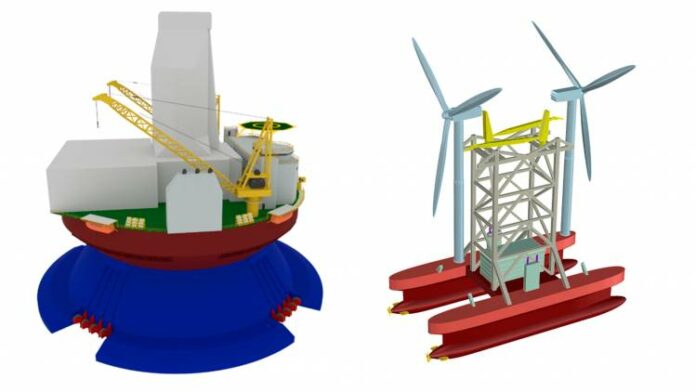
 DNV GL has awarded China Merchants Heavy Industry (CMHI) approval in principle (AiP) for the designs of an arctic single column drilling unit and a wind turbine shuttle.

The AiP confirms that DNV GL has assessed each of the two designs according to class rules and found no significant obstacles exist to prevent the concept from being realized.

The arctic single column drilling unit consists of a round floater with an upper and a lower hull, an enclosed deckhouse, and a round footing. It is designed for well work-over, exploration, and development drilling operations in water depths up to 700 m (2,297 ft) in moderate environments, including Arctic and sub-Arctic areas (open water and up to 1.5 m/4.9 ft ice thickness), moored by a 16-point mooring system.

The round conical shape of the strengthened hull structure is designed to deflect and break the ice, protecting the drilling riser and other equipment in the moonpool against level ice. DNV GL assessed the design according to a high-spec class notation string: 1A Cylindrical Drilling Unit(N) Crane-offshore(N) DRILL(N) E0 POSMOOR Non-self-propelled HELDK (S, H, N) DAT (-40) Ice(L) PC(5) Winterized(Polar, -45°C) BIS BWM(T) Clean(Design).

The wind turbine shuttle (WTS) was developed to install wind turbines at offshore wind farms. Unlike other installation vessels, the WTS has a small waterplane area twin hull (SWATH) design. This results in very low resistance at the design draught (16m) and excellent seakeeping performance, good motion behavior characteristics, and high transit speed of 14 knots, DNV GL said.

Capable of transporting and installing two fully assembled wind turbines or two wind turbine foundations, the vessel has a highly redundant dynamic positioning system installed and the wind turbine hoist tackles are equipped with an active system to compensate for the heave motion of the vessel. The WTS can provide a “one-piece” installation service for offshore wind turbines, as well as jacket foundations, piles, and other components. The design was assessed according to the class notations: 1A Column-stabilised Wind turbine installation unit Crane-offshore DYNPOS(AUTRO) E0.

Source:offshore-mag

SOFEC replaces mooring system for Petronas FLNG vessel

0

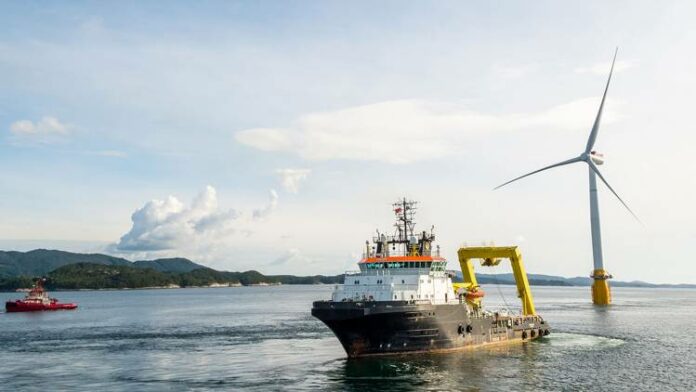
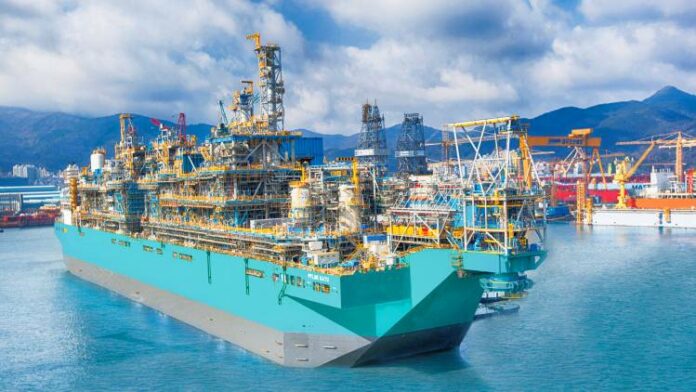
SOFEC Inc. has replaced the mooring legs and anchors for the PFLNG Satu’s external turret system.

The PFLNG Satu has an external turret moored system that was designed to be moored in water depths ranging from 70 to 200 m (230 to 656 ft).

Last month, Petronas relocated the vessel to the Kebabangan cluster field offshore Sabah. It is moored in a water depth of 120 m (394 ft), 90 km (56 mi) northwest of Kota Kinabalu.

The vessel previously operated in the Kumang cluster field offshore Sarawak in a water depth of 75 m (246 ft).

Source:offshore-mag

Seaway 7 selected as partner to develop Hollandse Kust Zuid Offshore Wind Farm

0

Subsea 7 today announced Seaway 7 has been selected by Vattenfall as one of its partners for the Hollandse Kust Zuid (HKZ) 1 & 2 offshore wind farm project.

Seaway 7’s envisaged scope of work includes the transport and installation of 76 monopile foundations and the laying of the inter-array cables and will be led from Seaway 7’s main office in the Netherlands. The contract award value related to this project will not be recognised in Subsea 7’s Group backlog until final contractual terms have been agreed. 

The HKZ 1 & 2 wind farm is being developed by Vattenfall as the first subsidy-free wind farm in the Netherlands and is located approximately 30 km from the coast in the North Sea. Once fully operational, HKZ 1 & 2 will be capable of supplying 760 MW which will be enough to meet the electricity needs of approximately 1 million – 1.5 million households. 

In addition, Seaway 7 has been chosen as one of Vattenfall’s partners for the ongoing tender for the HKZ 3 & 4 offshore wind farm. This would add 76 monopiles and associated array cables to the programme of work, if this development is awarded to Vattenfall by the Dutch Government. 

The integrated offshore installation activities for both the HKZ 1 & 2 and HKZ 3 & 4 wind farm projects are planned to be executed in 2022 using Seaway 7’s heavy lift and cable lay vessels, subject to the award of HKZ 3 & 4 to Vattenfall and pending Vattenfall’s Final Investment Decision. 

Steph McNeill, SVP Subsea 7 Renewables & Heavy Lifting, said: “We look forward to working collaboratively with Vattenfall as a trusted partner to support the installation of the Hollandse Kust Zuid wind farms and help to deliver the first zero-subsidy offshore wind projects in the Netherlands.”