2.2 C
New York
Home Blog Page 1079

Sea Europe: Horizon Europe to boost EU maritime technology

0

The European Parliament endorsed Wednesday the provisional agreement, reached by the EU institutions in late March, on Horizon Europe, the EU research and innovation programme for the next budget period from 2021 to 2027. The European Commission presented its proposal for Horizon Europe in June 2018.

"The partial agreement reached between the European Parliament and the Council of the EU is a key step in the inter-institutional decision-making process since it forms the basis for further shaping the content and the budget of Horizon Europe,"…said on the occasion the Shipyard’s & Maritime Equipment Association (SEA Europe).

Horizon Europe is fundamental to allow the European maritime technology industry to stay ahead of its global competitors in terms of innovation and to remain a frontrunner in developing and maintaining global leadership in complex high-tech ships, platforms and advanced maritime equipment, the Association noted.

These complex high-tech products are key in supporting the activities related to healthy oceans, seas, coastal areas and inland waters and thus in implementing the related mission of Horizon Europe, it added.

As part of EU's next long-term budget for 2021-2027, the Commission proposed on 7 June 2018 the next EU research and innovation programme Horizon Europe with a proposed budged of €100 billion.

In March 2019, the Council of the EU and the European Parliament reached a provisional agreement. The budgetary aspects and some related horizontal provisions such as international association of the Horizon Europe programme are subject to the overall agreement on the EU's next long-term budget, proposed by the Commission in May 2018.

"The programme will continue to drive scientific excellence through the European Research Council and the Marie Skłodowska-Curie fellowships and exchanges, and will benefit from the expertise of the Joint Research Centre….The European Innovation Council will not only boost funding for innovation but also crucially help to create a whole innovation system linking early research and market application,"…said Carlos Moedas, Commissioner for Research, Science and Innovation, said.

Source:safety4sea
Island Offshore vessel lands new Equinor agreement

0

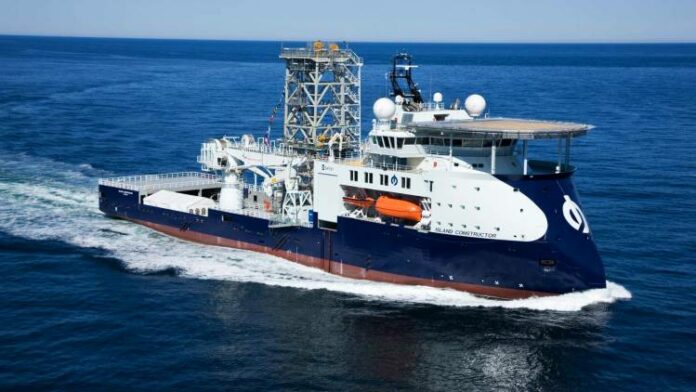
Island Offshore and TIOS, a company owned by TechnipFMC and Island Ofshore, have signed a new agreement with Equinor to continue as supplier of light well intervention services utilising Island Wellserver.

The vessel has been working for Equinor since 2009, and the new contract will commence in 2020 extending the existing contract for one year. Equinor also has three further one-year options.

Håvard Ulstein, managing director of Island Offshore Management, commented: “The last few years have really put us to the test, but as owner and operator within light well intervention we have asserted that this segment is viable. This contract proves that our services are needed.”

TechnipFMC owns 51% of TIOS, while Islandf Offshore owns the remainder. TIOS is the contracting party with Equinor, and Island Offshore is supplying the vessel and crew.

Source:splash247

Hyundai LNG Shipping announces order for one VLGC at HHI

0

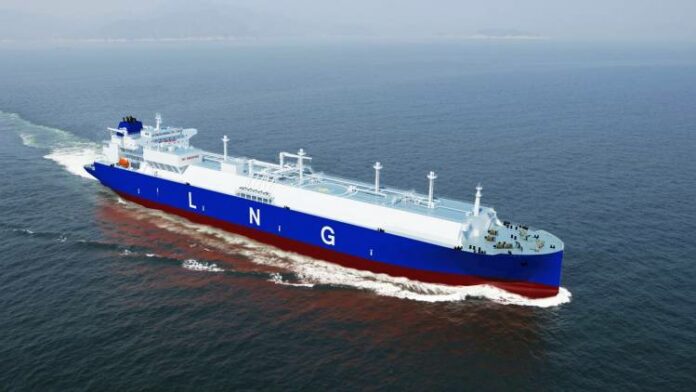
Hyundai LNG Shipping Company (HLS, the Company), South Korean owner of 10 LNG Carriers, has placed an order at Hyundai Heavy Industry for the construction of one 84,600cbm Very Large Gas Carrier(VLGC).

The vessel will be delivered in 3Q 2020 for the employment of seven year (+ option) time charter with a global energy company.

KyuBong Lee, CEO of HLS, said “We are very grateful to build meaningful relationship with a respectable charterer through long-term contract and to build the ship at the world best shipping yard. All of our employees will do our best to provide best shipping solution which will meet the customer’s needs in a very safe and reliable operation.”

HLS is the first LNG shipping company in Korea who started its first operation for Kogas twenty five years ago, and currently delivers about 28% of Korea’s import volume of FOB contracted LNG. Based on its long operation knowhow, the Company maintains its appetite for further growth in global market.

Source:portnews

CMEC secures $135m Bulgarian port project

0

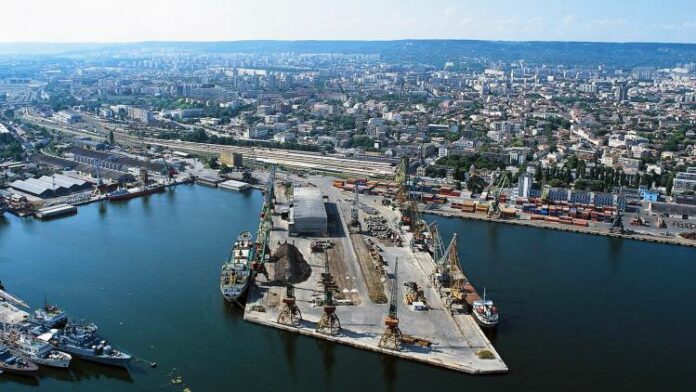
China Machinery Engineering Corporation (CMEC) inked a EUR120m ($135.5m) Bulgaria port project construction contract with Logistics Center Varna EAD to jointly develop port infrastructure in the port of Varna.

According to the contract, CMEC will take charge of the project design optimization, material supply, construction and installation as the prime contractor. The overall project construction period will be 36 months.

It is the first port project constructed by Chinese company in Bulgaria, which will enable the port of Varna to be the first modern port equipped with warehouse facilities in Bulgaria.

The project will strengthen the company’s branding in Bulgaria, Central and Eastern Europe, and greatly improve cargo handling capacity of Bulgaria, said CMEC.

CMEC is owned by China National Machinery Industry Corporation. The core business of CMEC is engineering contracting, as well as trading, investment, R&D and international services.

Source:seatrade-maritime

Facial recognition technology expands in the cruise sector

0

Facial recognition technology has made its way in the cruise industry and now there are available applications everywhere. Technology company IDEMIA has cooperated with Royal Caribbean and the US Customs and Borders Protection to trial biometric identity verification for CBP's processes at terminals in Miami, Florida and Cape Liberty, New Jersey.

Mainly, IDEMIA stated that MFace compares the facial identities of passengers disembarking with the identities of passengers who boarded, matching against images in CBP's Traveler Verification Service (TVS). TVS is a CBP-operated, cloud-based service that receives, temporarily stores and identifies passenger photos.

The company announced that the tests are now complete. Following, the Royal Caribbean published a statement according to which IDEMIA and Royal Caribbean anticipate additional deployments in other Florida ports later in 2019 that each process several million passengers annually.

In addition, the cruise company highlighted that IDEMIA’s facial recognition technology has enabled the Royal Caribbean passenger debarkation process to be both more secure and efficient. The use of IDEMIA’s MFACE technology has played a key role in enhancing the passenger experience by completing the process significantly faster than the manual verification method previously used.

Concluding, IDEMIA says that it has addressed privacy concerns carefully in its systems for RCCL. No passenger images are stored by Royal Caribbean, CBP or IDEMIA after the trip is completed to ensure that privacy is maintained.

Source:safety4sea

ExxonMobil makes 13th discovery offshore Guyana

0

 ExxonMobil and its partners have achieved their 13th discovery on the Stabroek block offshore Guyana.

Yellowtail-1 encountered about 292 ft (89 m) of high-quality oil-bearing sandstone reservoir and was drilled to a depth of 18,445 ft (5,622 m) in 6,046 ft (1,843 m) of water. The well is approximately 6 mi (10 km) northwest of the Tilapia discovery.

The discovery adds to the estimated recoverable resource of 5.5 Bboe on the Stabroek block. Yellowtail-1 is the fifth discovery in the Turbotarea, which ExxonMobil expects to become a major development hub.

The drillship Noble Tom Madden spudded the Yellowtail well on March 27. It will next drill the Hammerhead-2 well.

Exploration and development activities continue at other locations on the Stabroek block. The drillship Stena Carron is completing a well test at the Longtail-1 discovery and upon completion will next drill the Hammerhead-3 well. Later this year, the Stena Carron will drill a second well at the Ranger discovery. The drillship Noble Bob Douglas is completing development drilling for Liza Phase 1.

The company said it is also evaluating plans to add another exploration drillship, bringing the number offshore Guyana to four.

According to ExxonMobil, there is potential for at least five FPSO vessels on the Stabroek block producing more than 750,000 b/d of oil by 2025.

Startup of the Liza Phase 1 development is on track to begin by 1Q 2020 and will produce up to 120,000 b/d of oil through the FPSO Liza Destiny, which is expected to arrive in country in 3Q.

Pending government and regulatory approvals, the company said a final investment decision for Liza Phase 2 is expected soon. Upon approval, the project plans to use the FPSO Liza Unity to produce up to 220,000 b/d. Liza Phase 2 is expected to startup by mid-2022.

Sanctioning of a third development, Payara, is also expected in 2019, with startup projected for 2023.

The Stabroek block is 6.6 million acres (26,800 sq km). ExxonMobil affiliate Esso Exploration and Production Guyana Ltd. is operator and holds 45% interest. Hess Guyana Exploration Ltd. holds 30% interest and CNOOC Petroleum Guyana Ltd., a wholly-owned subsidiary of CNOOC Ltd., holds 25%.

Source:offshore-mag

Saudi Aramco tipped to lead clean tanker charge

0

As Saudi Aramco’s clientele increasingly faces east, its fleet needs are expected to change dramatically from dirty to clean tankers, according to the latest report from Alphatanker, part of AXS Marine.

The lion’s share of Saudi crude is now exported to Asia rather than across the Atlantic. As a result of this Alphatanker is predicting Aramco’s fleet – both owned and chartered – will shift towards clean tankers.

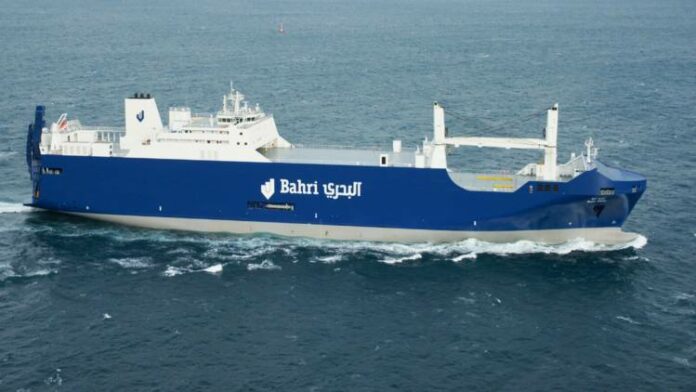
Subsidiary Bahri currently controls a fleet of 76 tankers of which 45 are VLCCs.

“It is noteworthy that Bahri has no crude tankers on order which may reflect the fact that they do not expect crude exports to increase significantly,” Alphatanker noted, adding: “As Aramco moves further into the downstream, it seems logical that it will diversify its tanker fleet as the volume of clean products it ships will rise which will see the ‘call’ on its tanker fleet increase.”

Notably, Bahri has not placed any orders for additional clean tankers to add to its fleet of 31 MRs, which leads Alphatanker to suggest that Aramco’s trading arm – Aramco Trading Company (ATC) – will either resort to spot chartering or increase its fleet of 20 vessels currently controlled under time charter.

Also of note in Aramco’s new Asia-focused business model is a recently created subsidiary, Aramco Chemicals (ACC), which will handle the sales and shipping of Aramco’s share of petrochemicals produced by its joint ventures in Asia.

Source:splash247

Construction of Brisbane’s New Cruise Terminal Underway

0

Work has commenced on a new cruise terminal in the Port of Brisbane, Australia.

Queensland Premier Annastacia Palaszczuk officiated the start of work on the A$158 million ($113 million) International Cruise Terminal this week. The terminal is scheduled to operational in October next year, and holds the potential to more than double Brisbane's cruise industry.

The new terminal will be able to accommodate larger vessels that the port's existing Hamilton facility including mega-cruise ships over 270 meters long. It is anticipated to boost Queensland's already billion dollar industry by more than a billion dollars over the next few years.

Last financial year, 520 cruise ships visited Queensland, an increase of 11 percent year-on-year. Within its first five years the terminal is expected to handle over 1,100 vessel calls and around 1.8 million passengers. The port has over 180 bookings confirmed for the 2020/21 cruising season.

“That will stimulate the industry at ports up and down the Queensland coast, as we aim to increase passenger numbers throughout the state to more than a million a year," said Palaszczuk.

The terminal building is being built by Hindmarsh, and Brady Marine and Civil is constructing the wharf.

USCG Offloads Drugs Worth $60M at Port Everglades

0

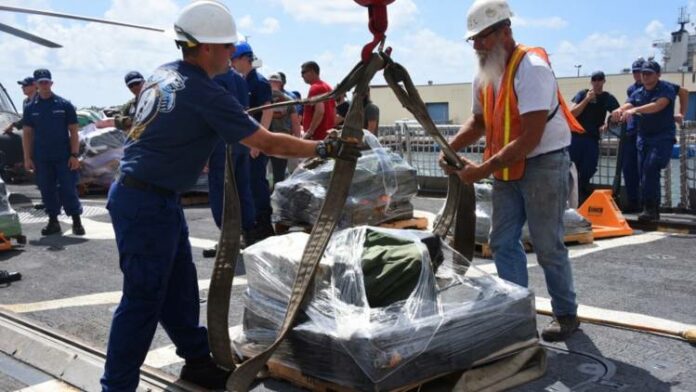
On Thursday, the crew of the U.S. Coast Guard Cutter Bear offloaded about seven tons of marijuana and nearly two tons of cocaine. The drugs are worth more than $60 million wholesale.

"I could not be prouder of this crew's accomplishments, and of the entire interagency and allied team that continue to stand the watch in an effort to stem the efforts of smugglers," said Lt. Cmdr. Andrew Dennelly, the Bear's XO. "It is through successful interdictions . . . that [we] impact these criminal organizations, regardless of the product they are smuggling."

The narcotics were seized off Mexico and Central and South America in five separate interdictions. As is usual for the Coast Guard's drug offloads, multiple vessels contributed to the Bear's haul. 

The Bear herself was responsible for two cases, seizing about 7,900 pounds of marijuana and 300 pounds of cocaine. The cutter Valiant was responsible for one case, seizing approximately 2,700 pounds of cocaine. And the U.S. Navy patrol boat USS Tornado, with a Coast Guard Tactical Law Enforcement Team on board, was responsible for two cases, seizing about 6,100 pounds of marijuana and 660 pounds of cocaine.

"Make no mistake, every bit of this product interdicted is a hit to the pocketbooks of the criminal organizations that profit from these smuggling operations," said Coast Guard Vice Commandant Adm. Charles Ray at a press conference aboard the Bear. 

In cooperation with foreign governments, the U.S. military and with other Department of Homeland Security agencies, the U.S. Coast Guard interdicts hundreds of millions of dollars' worth of cocaine every year. Multi-ton drug busts are routine for the USCG on the busy trafficking lanes of the Eastern Pacific, and the agency's everyday narcotics seizures would set new records at many U.S. ports of entry. 


Maritime Industry Pushes Back on Oakland Ballpark Plan

0

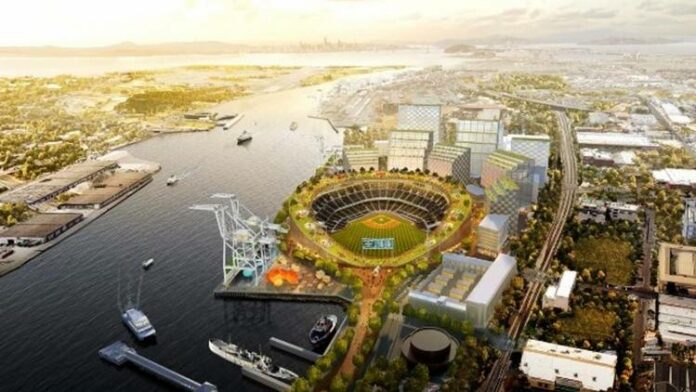
The Pacific Merchant Shipping Association and other maritime stakeholders are speaking out against the Oakand A's planned baseball stadium complex on the Oakland waterfront. The Port of Oakland is the fifth-busiest container port in the U.S., and the non-industrial use of waterfront land will create difficulties for maritime operators, according to the PMSA and its allies. 

In November, the A's released a plan to build a 34,000-seat stadium on Howard Terminal, a site in Oakland's Inner Harbor which is currently used for container storage. The new complex would include affordable housing, offices, restaurants, retail and commercial space and parks, which would help to bring in more daytime uses.

However, Oakland's maritime industy is concerned that the development would have negative effects on the port. Increased traffic could create difficulties for truckers entering and leaving other Port of Oakland terminals. Bright lights from the stadium could interfere with nighttime marine navigation, according to pilots.

The Marine Engineers Beneficial Association (MEBA)  is also concerned that Oakland would permanently lose part of its maritime industrial base. "You never get to rebuild a marine terminal," said Adam Vokac, executive vice president for MEBA, speaking to local TV. "Once you pave it over and put a stadium on it, you'll never get that land back for maritime use ever." MEBA represents American mariners, and Howard Terminal was used by Matson for American container ship operations until 2014. 

Beyond maritime conflicts, the new ballpark plan faces site-related headwinds. The location is on the other side of two train tracks and one highway from the rest of Oakland, and the project's backers have proposed to build a gondola to carry fans over both to reach the stadium – adding complexity and regulatory hurdles. The freeway itself is already congested at rush hour, and fans would likely bring more traffic to the area, critics say. In addition, the terminal site has a long legacy of industrial uses, and its soil and groundwater are known to contain hazardous toxins which would require remediation. 

Source:maritime-executive