2.6 C
New York
Home Blog Page 1078

DPU Approves Vineyard Wind Contracts

0

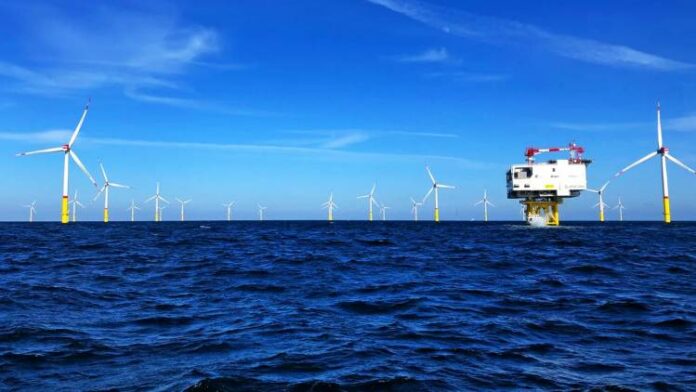
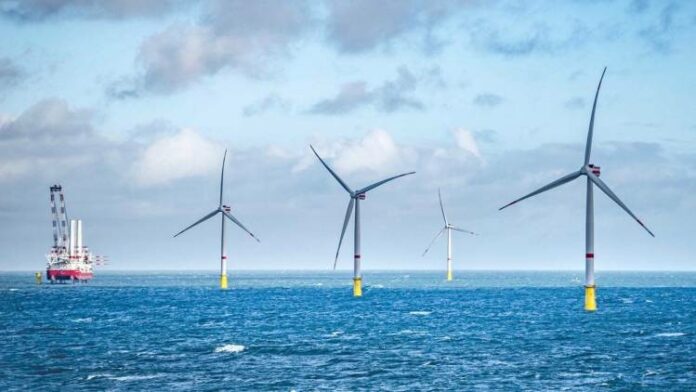
The Massachusetts Department of Public Utilities (DPU) has approved long-term contracts for 800MW of offshore wind between Vineyard Wind and the Commonwealth’s electric distribution companies.

The DPU green signal is a crucial approval needed for the offshore wind farm developer to start construction by the end of the year.

“The approval of these contracts is an important step toward the completion of the largest offshore wind project in the country, which will significantly reduce greenhouse gas emissions, provide Massachusetts residents and businesses with cost-effective clean energy and promote economic development,” said Governor Charlie Baker.

Vineyard Wind’s bid was selected for contract negotiation in May 2018 based on criteria established under a Request for Proposals (RFP) previously subject to public comment, and submitted to the DPU for review and approval on July 31, 2018.

Criteria used in the evaluation of the bids included an economic evaluation of the benefits for ratepayers, the project’s ability to foster employment and economic development in the Commonwealth, and the project’s environmental impacts and the extent to which a project demonstrates that it avoids or mitigates impacts to natural resources and tourism. As a result of a stringent review, Vineyard Wind was determined to provide the greatest overall value to Massachusetts customers by delivering approximately 800 MW of offshore wind capacity per year while providing substantial ratepayer benefits.  The DPU’s Order approved the selection and found that these contracts are cost-effective as well as in the public interest.

“This approval by the Department of Public Utilities ensures that this project offering competitively priced and locally produced offshore wind energy to the Commonwealth can move forward,” said Energy and Environmental Affairs Secretary Matthew Beaton. “The administration looks forward to continuing to grow its emerging offshore wind industry while leading the nation in in combating climate change.”

“Massachusetts is committed to being a leader in the U.S. offshore wind industry,” said Department of Public Utilities Chairman Matt Nelson. “These contracts will provide fuel diversification in the Commonwealth and enhance reliability of the regional system, continuing the Commonwealth’s practice of leading the nation in innovation and renewable energy.”

On March 27, 2019, Massachusetts reinforced its commitment to offshore wind and clean energy when the Commonwealth’s Electric Distribution Companies submitted their second RFP to the DPU for up to 800MW of additional offshore wind.  

Source:marinelink
Total to Invest in Novateks LNG Projects

0

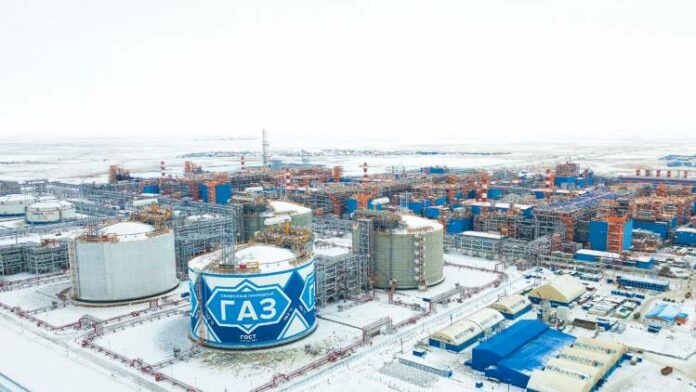
The French oil giant Total intends to buy 10% shares of the transshipment points of liquefied natural gas in Murmansk and Kamchatka, which Novatek plans to build.

Russian news agency TASS quoted the CEO of the French company Patrick Pouyanne as saying: "We have just announced that we are investing in Arctic LNG 2, but we are also investing in terminals in Murmansk as well as in Kamchatka. This is part of our agreement with Novatek. To develop Arctic LNG 2, we need two hubs — one in Murmansk, the other in Kamchatka. And Total will be a partner in these two hubs."

"All of that will account for a 10 percent share. Remember that we are also Novatek shareholders," he added.

Novatek plans to build an LNG transshipment and storage facility in Ura Bay in the Murmansk Region. The company will also establish an LNG transshipment hub in Kamchatka

The volume of annual transshipments through the future terminal in Murmansk will be 20 million tons of LNG, while the Kamchatka hub is set to facilitate the transfer of 40 million tons of LNG per year.

Novatek and Total also agreed that the French company will have an opportunity to buy from 10% to 15% in all future LNG projects of the Russian gas producer on Yamal and Gydan peninsulas. The Arctic LNG 2 is the second LNG project of Novatek. Its capacity will be 19.8 mln tonnes. The first train is scheduled to be launched in 2022-2023.

Source:marinelink

Ukraine, NATO in Talks Over Naval Escorts Through Kerch Strait

0

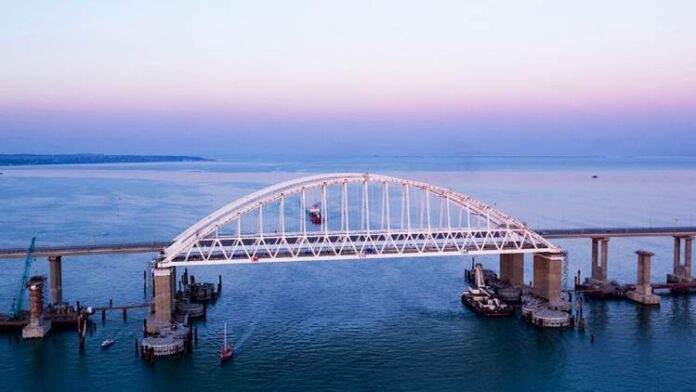
Ukraine is negotiating with NATO over the possibility of a deployment of NATO naval vessels to escort Ukrainian ships through the Kerch Strait, the narrow body of water that connects the Black Sea and the Sea of Azov. Russia has de facto control over traffic through the strait, and it has implemented a customs inspection regime which has slowed merchant traffic to and from Ukraine's Sea of Azov ports. 

Alexander Turchinov, secretary of Ukraine’s National Security and Defence Council, confirmed to TASS this week that negotiations are under way. 

If NATO decided to provide escort support for Ukrainian vessels, assets are already nearby. The U.S. Navy has rotated destroyers through the Black Sea in recent months to maintain a constant presence. USS Ross (DDG 71) took over the rotation this month and called at Varna, Bulgaria on April 15. 

The Montreux Convention, the international treaty governing the Bosporus, lays restrictions on the presence of foreign warships in the Black Sea. These terms include a 21-day time limit for warships from non-Black Sea states, meaning that individual NATO surface combatants cannot stay within the Black Sea for more than three weeks at a time.

Kerch Strait incident

On November 25, 2018, Russian forces opened fire on three Ukrainian Navy vessels near the Kerch Strait, causing damage and injuring six crewmembers. Russia's Federal Security Service captured the three vessels, the Ukrainian patrol boats Berdiansk and Nikopol and the tugboat Yany Kapu, and brought them to Russian-occupied Crimea. 

Russian authorities are holding all 24 members of the vessels' crews at a jail near Moscow. While the sailors are foreign military servicemembers, they are not being treated as prisoners of war; instead, they face civilian criminal charges of "violating the Russian border." The Lefortovo District Court in Moscow recently extended their pre-trial detention until August 25. 

"The investigation is ongoing, the degree of [the Ukrainian sailors'] fault can and must be determined by court," said Kremlin spokesman Dmitry Peskov on Friday.

Western leaders have called for Russia to return the captured vessels, release the sailors and respect international law regarding freedom of navigation.

Source:maritime-executive

AET Tankers Conduct Maiden LNG bunkering

0

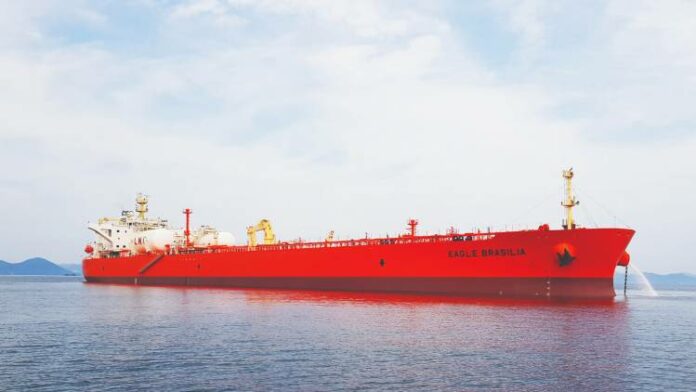
First dual-fuel sister Aframaxes owned by AET, a unit of the Malaysian shipping giant MISC, have completed their maiden ship-to-ship (STS) LNG bunkering.

The petroleum and chemical tanker owner announced in a press release that Eagle Brasilia and Eagle Bintulu have successfully completed their STS LNG bunkering at the Port of Rotterdam (POR).

The latest in AET’s eco-friendly innovation towards a sustainable industry solution that meets IMO’s 2050 goal, this is their first call to port in Europe as they make their journey and tour of duty towards the Atlantic Basin.

Commenting on this milestone occasion, Ron Wood, Global Director, Mid-Size Tankers Crude Shipping, AET, said: “This first European port call for Eagle Brasilia and Eagle Bintulu, coupled with the vessel’s exciting first LNG bunkering, is a momentous success for AET in driving LNG as a cleaner burning and viable fuel for the shipping industry and in turn, spurring other shipping companies to work towards achieving IMO’s minimum 2050 emissions reduction target.”

Each vessel was loaded with 1,040 cubic metres of LNG, filling about 60% of the receiving vessel’s total capacity, allowing them a considerable trade mileage of approximately 3,600 nautical miles running on LNG fuel.

Currently, LNG is considered a cheaper and eco-friendlier alternative than low sulphur oil and scrubber over long term, to meet the IMO 2020 regulations that require the reduction of Sulphur Oxide (SOx) emissions from 1.5% to 0.5%.

Source:marinelink

FERC Green-Lights Two Gulf Coast LNG Export Terminals

0

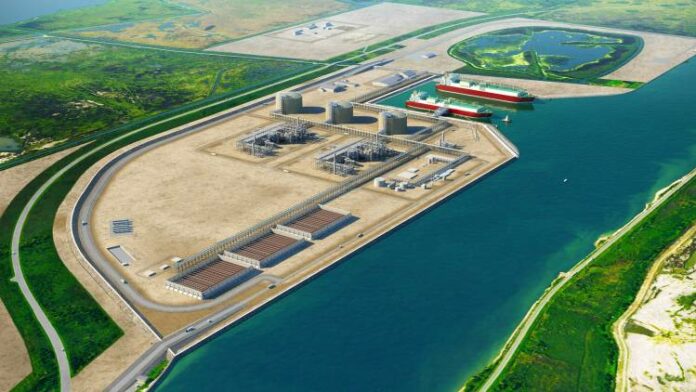
On Thursday, the Federal Energy Regulatory Commission (FERC) approved permit applications for Tellurian's Driftwood LNG and Sempra's Port Arthur LNG export terminals on the U.S. Gulf Coast. When including its recent approval for Calcasieu Pass LNG, FERC has green-lighted more than 50 million tonnes per annum (mtpa) in new liquefaction capacity since the start of the year. 

At full build-out, Driftwood  would be able to produce 28 mtpa of LNG. Port Arthur LNG would be smaller at roughly 13.5 mtpa. Neither Tellurian nor Sempra have yet made a final investment decision on the facilities approved Thursday, but both intend to finalize their plans within a year's time. 

"With today's FERC order and the commercial momentum of the Port Arthur LNG project, we are one step closer to reaching a final investment decision and delivering low-cost, reliable and clean U.S. natural gas to world markets," said Carlos Ruiz Sacristán, chairman and CEO of Sempra North American Infrastructure. "Port Arthur LNG should help us achieve our goal to become one of the largest exporters of North American liquefied natural gas."

Split over GHG emissions

The commission is split between Democratic and Republican appointees, and Thursday's 3-1 vote exposed the differences between the two sides – especially on climate change.

Commissioner Cheryl A. LaFleur, who ultimately voted in favor of the two terminals, argued that the commission is required by the National Environmental Policy Act (NEPA) to go further when considering the significance of a project's GHG emissions.

"NEPA requires that we analyze [emissions] information to determine whether a specific impact is, in fact, significant. Unfortunately, to date, the Commission has not established a framework for making a significance determination for GHG emissions," she said. "By any meaningful standard, the magnitude of the direct GHG emissions from the Driftwood LNG Project, 10,641,908 tons a year or an increase of 0.17 percent of the national emissions inventory, appear to be significant as contemplated by NEPA." 

The sole dissenting vote, Commissioner Richard Glick, cited the same issue. "Neither the [Natural Gas Act] nor NEPA permit the Commission to assume away the climate change implications of constructing and operating this liquefied natural gas (LNG) facility. Yet that is precisely what the Commission is doing today," he said, noting that the Driftwood site will directly emit more GHG in one year than all the cars in Kentucky.  

Source:maritime-executive

Boskalis acquires EUR 75M dredging contracts in Indonesia

0

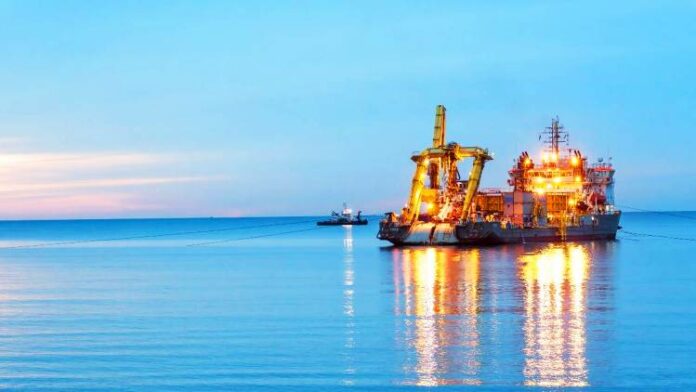
Royal Boskalis Westminster N.V. (Boskalis) says it has been awarded two contracts in Indonesia. On the island of Sulawesi, Boskalis will expand the Makassar New Port container terminal and on the island of Java it will prepare land for a new petrochemical complex. Both projects will be executed in the second half of 2019 and carry a combined value of approximately EUR 75 million.

The first project, awarded by construction company PT PP, entails the expansion of a new terminal for the Makassar New Port of port operator PT Pelindo IV by 45 hectares. The dredging scope includes the removal of soft clay followed by land reclamation work which requires the dredging and supply of sand. The port is a strategic maritime infrastructure project for the Indonesian government and designated as the gateway to the Eastern Indonesian Archipelago for international container carriers. One of Boskalis' mega trailing suction hopper dredgers will be deployed on this project for a period of approximately half a year.

For a new petrochemical complex of Lotte Chemical, which will be located in the coastal city Cilegon on the island of Java, Boskalis will prepare 95 hectares of land for construction purposes by supplying sand and improving the soil by means of vertical drainage executed by Boskalis subsidiary Cofra. This project will be executed for the engineering and construction arm of the South Korean conglomerate Lotte. Boskalis will deploy a jumbo trailing suction hopper dredger for the dredging activities.

Certification of Arkona offshore wind farm by DNV GL confirms safe and reliable power supply

0

DNV GL on April 17 announced that it awarded the Arkona Offshore Wind Farm with the project certificate.

The certification was carried out according to the German Federal Maritime and Hydrographic Agency (BSH – Bundesamt für Seeschifffahrt und Hydrographie) standard BSH7005 and covers all stages of the project development from design planning over construction to commissioning. The project certificate confirms all relevant safety features of the wind farm and validates the technical and quality compliance with the BSH standard requirements, to ensure a safe and reliable power supply.

Located in the Baltic sea, the Arkona project is 35 kilometres northeast of the German island of Rügen. The wind farm has capacity of 385 megawatts, enough to supply around 400,000 households with renewable energy, with 60 installed Siemens Gamesa turbines of the six- megawatt class.

As Germany is phasing out the fixed Feed-In-Tarif for renewable energy projects by 2020, the pressure to reduce the levelized cost of renewable energy remains high. Delivering the project within the set time frame was therefore pivotal for the timely opening of the Arkona wind farm. This was realised by meeting all milestones throughout the project development stage and providing a flexible handling of the project requirements such as working with a local team on site and involving a specialised pool of domain experts into the certification process.
1
Holger Matthiesen, Project Director Arkona for E.ON and Equinor commented: “Thanks to the great cooperation between our team of offshore experts and DNV GL’s goal-oriented and pragmatic certification approach, we managed to realise our ambitious objectives concerning our project certification timeline, which set a new standard in the offshore wind industry.”

During the certification process DNV GL worked in close partnership with the Arkona project team to ensure the ambitious timeline for the commissioning of the wind farm were met.

Kim Mørk Executive Vice President Renewables Certification at DNV GL said: “The experience of working with E.ON’s/Equinor’s team in previous projects has been vital to the success of the timely delivery of the project certification of the Arkona offshore wind farm. Ensuring that renewable projects deliver safe and reliable energy is critical to further accelerate the energy transition and we are very pleased that our partnership with the Arkona project is making a valuable contribution to reaching that goal.”

As critical milestones set by the BSH were set throughout the project, working in well-aligned partnership between offshore experts from both sides was crucial since each missed deadline set by the BSH causes costly delays in the project.

Fabio Pollicino, Director for Project Certification at DNV GL added: “With Arkona, E.ON/Equinor have set a new standard in the offshore industry with regards to the time in which the farm has been installed. We are very pleased to have proven our ability to perform the project certification on track with the ambitious project timeline, reacting flexibly to unplanned project needs and achieving the approvals from the national authority.”

Watch: Artificial Intelligence on ‘Stena Scandinavica’

0

The video, issued by Stena Line, shows how the Captain and crew onboard the cruise ferry 'Stena Scandinavica' are using Artificial Intelligence to reduce the fuel consumption on the Gothenburg – Kiel route, under a pilot study initiated back in September 2018.

The pilot study shows good results and Stena Line is now looking into which of the company’s 38 ships that will be next.

The company announced the pilot study in September 2018, in which artificial intelligence will be implemented on the vessel to contribute at the annual goal of reducing fuel consumption onboard by 2.5%.

The goal of the project is to create such a model that can provide an ultimate decision base for the captain and officers onboard when planning a trip.

In addition, the model can also contribute to knowledge transfer to the next generation.

Source:safety4sea

Watch: Maritime security in Gulf of Guinea

0

The video, issued by One Earth Future's Stable Seas, looks at the criminal activities that have historically taken place in the Gulf of Guinea and the recent strides being made in combating those illegalities.

At the centre of efforts, the 'Yaounde Code of Conduct' brings together signatory nations from West and Central Africa with an intention to cooperate to the fullest possible extent in the repression of transnational organized crime in the maritime domain, maritime terrorism, illegal fishing, and other illegal activities.

Wile in certain zones, the Code has been successful, more support is needed to improve maritime security infrastructure and coordination efforts across the region.

Source:safety4sea

World’s First Digital Arctic-Logistics Management System Implemented By Gazprom Neft

0

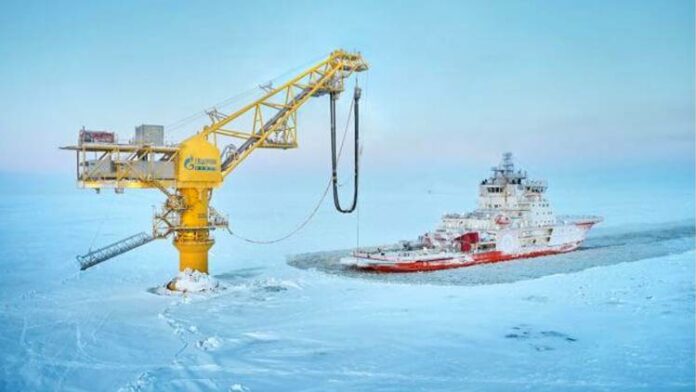
Gazprom Neft has launched the world’s first ever digital Arctic-logistics management system. This innovative project — code-named “Kapitan (Captain)” — has been developed to ensure uninterrupted year-round shipments of all ARCO and Novy Port crude produced, and to improve efficiency in logistics management.

The system, developed by specialists at Gazprom Neft, operates under three regimes: long-term and operational planning; control and scheduling of the company’s Arctic fleet; and the analysis and use of artificial intelligence (AI).

This analytical system makes use of various information sources, including daily production volumes at Gazprom Neft’s Novoportovskoye and Prirazlomnoye fields, total cumulative oil stocks, the position and movement of vessels, data on en-route ice conditions, tidal graphs, weather conditions, and scope for developing new market standards in crude supplies (“delivery lots”). Implementing the system has facilitated significant time savings in planning and coordinating oil shipment operations and optimising transportation costs.

The system’s functionality allows integrated analysis of the fleet’s operational efficiency, route speed estimates, fuel consumption and vessel load volumes to be undertaken in real time. The “Kapitan” system facilitates the online monitoring of vessels’ locations and movements, cargo handling, routes and icebreaker support. Every day the system processes approximately 7,000 input variables and issues optimum logistical solutions, working out more than one million potential options and responding quickly to any deviations. The system independently generates an optimum graphic covering tanker and icebreaker fleet usage and shipments from terminals and floating oil-storage units, synchronising all connections throughout the supply chain. Its functionality facilitates the timely generation of scheduled oil shipments over the next three years, meaning the composition of the company’s directly owned and charter fleet can be optimised.

The core objective of the new system is to manage logistics in the Arctic safely, and to ensure that all oil produced is despatched at the lowest possible cost. It monitors availability at the company’s fields and oil storage facilities round the clock, in line with forecast weather conditions, including information on ice conditions — meaning Gazprom Neft’s Arctic fleet logistics can, where necessary, be adjusted with immediate effect. In addition to this, the system can also work in predictive mode, based on accumulated historical data, which makes it possible to forecast potential limitations that might arise on vessels’ journeys, suggesting the safest and most optimum routes.

Alexander Dyukov, Chairman of the Management Board, Gazprom Neft, commented: “The question of uninterrupted ad effective logistics is critically important for Gazprom Neft’s Arctic fields, which are some distance from accessible infrastructure: production volumes are directly dependent on the timely shipment of hydrocarbons. Using digital technologies has allowed us to increase efficiency in the company’s operations in the Russian Arctic: pilot tests have already allowed Gazprom Neft to achieve cost reductions of 10 percent under the existing logistics strategy for year-round shipments of Arctic crude blends. By the end of the year this system will be demonstrating the full advantage of the company’s new approach to managing the logistics of transporting growing volumes of oil from fields located in the Arctic Circle. The Kapitan system has the potential to become part of an integrated plan for modernising and expanding key mainline infrastructure to increase freight traffic on the Northern Sea Route.”