2.6 C
New York
Home Blog Page 1077

BSOG Gets Approval in Offshore Romania

0

Romanian-based Black Sea Oil & Gas (BSOG), controlled by private equity firm Carlyle Group, said that it received approval from the Romanian government for the field development plan (FDP) for the Ana and Doina gas fields.

The Ana and Doina gas fields make up the Midia Gas Development (MGD) Project, offshore Black Sea.

The MGD Project, which is the 1st new offshore gas development project in the Romanian Black Sea to be built after 1989, consists of 5 offshore production wells (1 subsea well at Doina field and 4 platform wells at Ana field) a subsea gas production system over the Doina well which will be connected through an 18 km pipeline with a new unmanned production platform located over Ana field.

A 126 km gas pipeline will link the Ana platform to the shore and to a new onshore gas treatment plant (GTP) in Corbu commune, Constanta county, with a capacity of 1 BCM per year representing 10% of Romania’s consumption.

The processed gas will be delivered into the National Transmission System operated by SNTGN Transgaz SA (Transgaz) at the gas metering station to be found within the GTP.

In 2019, BSOG anticipates having completed the detailed engineering for the MGD Project, commenced the fabrication of the Ana Wellhead Platform at the shipyard in Agigea, commenced the civil constructions at the GTP site in Corbu and have purchased & delivered a number of company items.

Mark Beacom, BSOG CEO, said: “This approval from NAMR provides the official acknowledgement from the Romanian state that the MGD project is an approved project. We very much appreciate the swift handling of our FDP application by the Agency.”

Gigi Dragomir, NAMR President, said: “The Development of the Ana and Doina gas fields offshore Romania is a top priority for NAMR, which supports the implementation of the Romanian Offshore Project that could lead to the diversification of the supply sources in Romania.”

Source:marinelink
CSP Abu Dhabi Terminal welcomes its first visitor the CSCL Mercury

0

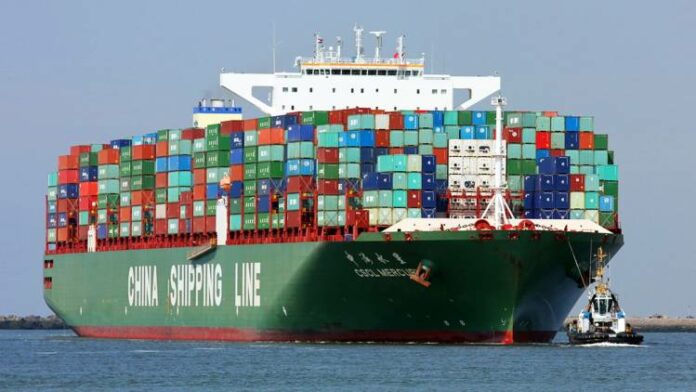
CSCL Mercury, a 14,000 teu container vessel operated by Cosco Shipping Lines, became the first to call at CSP Abu Dhabi Terminal in the United Arab Emirates (UAE).

CSP Abu Dhabi Terminal, located at the port of Khalifa, was jointly developed and operated by Cosco Shipping Ports and Abu Dhabi Ports, is the result of the 35-year agreement between Abu Dhabi Ports and Cosco Shipping Ports.

We are honoured to be the first vessel to call at CSP Abu Dhabi Terminal, which is operating efficiently and well-managed, said Liu Lei, captain of CSCL Mercury.

The vessel to call, the SCL Mercury, is registered under the flag of Hong Kong, and was delivered in 2011.

The terminal has a design capacity of 2.5m teu and starts operations with a handling capacity of 1.5m teu. The water depth of the terminal is 16.5 metres, allowing it to accommodate 20,000 teu container vessels.

The terminal was inaugurated in December last year.

Source:seatrade-maritime

Arrest warrant issued for heavy lift ship after allision at Ingalls Shipbuilding

0

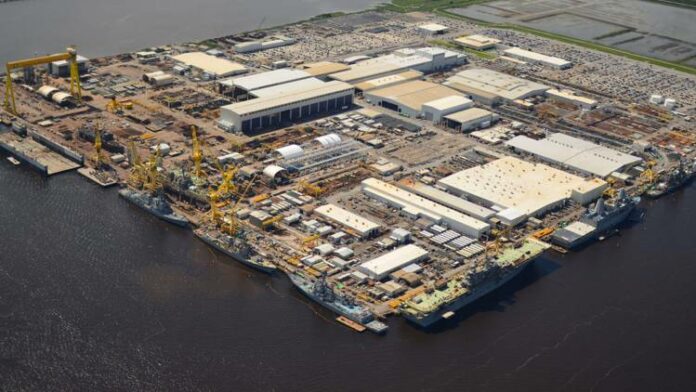
A court in Mississippi issued an arrest warrant for the heavy lift ship 'Hawk' that was involved in an allision and damage of a newbuild US warship at Ingalls Shipbuilding in Pascagoula, in late March.

On 29 March, Hawk was arriving from Qingdao with a new Chinese-built floating drydock onboard, when it allided with a test barge at Huntington Ingalls Industries' yard, pushing the barge into the newbuild destroyer 'USS Delbert Black'.

The barge was supporting electrical work on the destroyer, at that time. Some people sustained minor injuries as a result from the incident.

Huntington Ingalls Industries, the parent company of Ingalls Shipbuilding, said the owner and operator of the heavy lift ship are responsible for the incident, as the ship went off its course and lost control.

The heavy lift ship, Hawk, is one of the largest semi-submersible vessels of her kind. She is operated by an Oslo-based heavy lift firm.

The damage to the barge and wharf was estimated at US$10 million, plus another $21 million for delays and work disruption at the yard, while damage to the destroyer is estimated at $30.9 million, plus delay and disruption, local media reported.

Biggest European Shipbuilders Collaborate On Vessel Connectivity

0

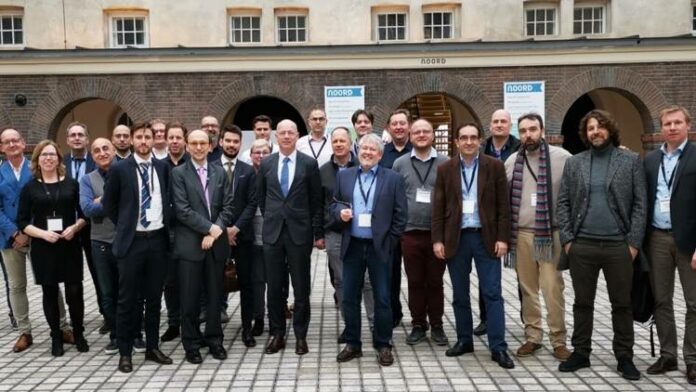
The biggest European shipbuilders have announced a new cooperative initiative to develop and demonstrate a connected vessel platform. This project is named Code Kilo.

In order to meet the digitalisation challenges of a diverse audience of stakeholders, in a robust, secure and cost-effective way, EUROYARDS members (Chantiers de l’Atlantique, Damen Shipyards Group, Fincantieri, Lürssen, Meyer Werft, Naval Group and Navantia) joined forces to harmonise data management solutions and standards. This new, ambitious project will seek for the full cooperation and engagement of all maritime stakeholders, including shipowners, shipbuilders, suppliers and classification societies, and it is supported by SEA Europe, the Shipyards’ and Maritime Equipment Association.

Ship systems currently provide large amounts of data related to equipment status, ship operations and performance. The overall purpose is increasing the opportunities to reuse, combine and gain values and insights from data. This will allow the operator, the yard and equipment suppliers to optimise their respective activities. Enhancing the vessel digitalisation through fully-fledged integration will contribute to achieving the sustainability and circularity goals at the core of the European maritime sector.

European shipbuilders are, therefore, committed to applying their knowledge of physical system integration to improve digital integration, aiming at establishing the base for future business opportunities with IoT, Big Data and AI. In this respect, the cooperation of all the stakeholders, including customers, classification societies and suppliers is essential for the success of the project.

Noble drillship awarded one-year contract by Esso

0

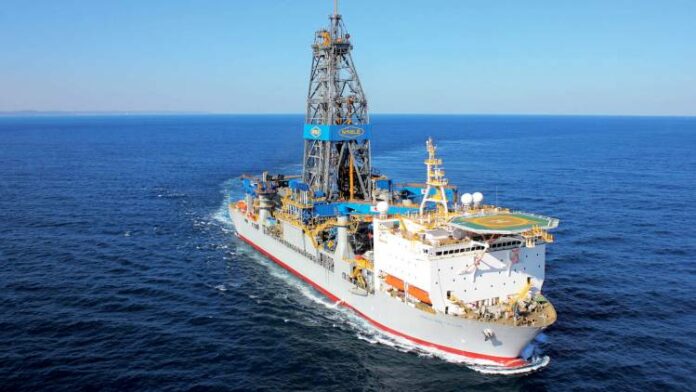
Noble Corporation has been awarded a one-year contract by Esso for 2013-built drillship Noble Don Taylor, according to the company’s latest fleet status report.

The contract, at an undisclosed rate, will see the drillship used in Guyana from October 2019 through to October 2020.

In the meantime, Noble Don Taylor has also been awarded an extension to its current contract in the Gulf of Mexico by Talos. The drillship has been on contract with Talos since November 2018, and the extension is from mid-April 2019 through to the end of June.

Additionally, semi-submersible rig Noble Clyde Boudreaux has been awarded a one-year extension by PTTEP for operations in Myanmar, from mid-March 2019 through to mid-March 2020.

MOL deploys augmented reality technology on tanker bridges

0

The bridges of many of Japan’s Mitsui OSK Lines’ (MOL) tankers are set to get the fighter jet treatment with augmented reality (AR) technology deployed.

The futuristic navigation system has been developed with compatriot Furuno and is now being installed on 21 VLCCs, after a successful pilot last year on one of the group’s new car carriers and another VLCC.

The system displays information on other vessels sailing on a vessel’s planned route and surrounding sea areas and other ocean conditions, such as shallow waters. It integrates information from the automatic identification system (AIS) and radar with real-time video images from the bridge camera in collaboration with Furuno Electric’s Electric Chart Display and Information System (ECDIS) FMD3300 series. The system provides visual support to crewmembers during their watch-keeping and ship operations by using AR technology to superimposing real-time video imagery and voyage information.

“Due to its deep draft, VLCC operations require special care when navigating on the waters such as the Straits of Singapore and Malacca, a heavily trafficked sea lane that has limited areas,” MOL noted in a release today.

MOL will install the system in its energy transport fleet including LNG carriers, as well as its dry bulk carriers.

The company stated today that the technology will play a “key role” in realising autonomous ships in the future.

Source:splash247

Mitsubishi Shipbuilding holds christening ceremony for next-generation LNG carrier “Diamond Gas Sakura”

0

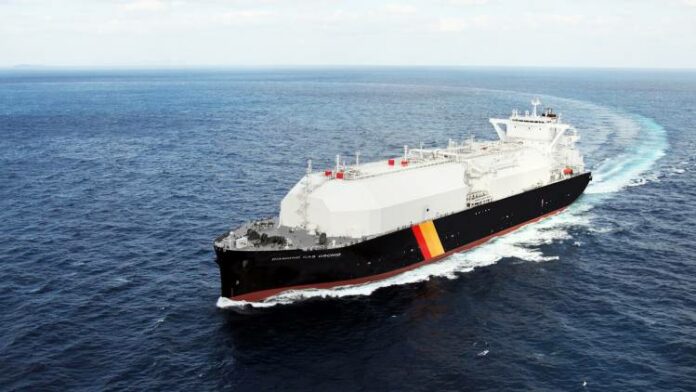
Mitsubishi Shipbuilding Co., Ltd., a Group company of Mitsubishi Heavy Industries, Ltd. (MHI) based in Yokohama, held a christening ceremony on April 19 for the next-generation LNG (liquefied natural gas) carrier, currently under construction for Mitsubishi Corporation and Nippon Yusen Kabushiki Kaisha (NYK Line), the company said in its release.

The new ship, named "Diamond Gas Sakura", is the third "Sayaringo STaGE" type vessel for the two companies, the newest model of LNG carrier featuring significantly improved carrying capacity and fuel performance due to the adoption of a more efficient hull structure and hybrid propulsion system. After completion and handover in May, the Diamond Gas Sakura will join their first two ships, the Diamond Gas Orchid and Diamond Gas Rose, in transporting LNG for the Cameron LNG Project.

The Diamond Gas Sakura has a length of 293.5m, width of 48.94m, and depth of 27.0m, with a draft of 11.05m. Deadweight tonnage is approximately 73,800 tonnes, with a total tank holding capacity of 165,000m3. Launching took place on September 15, 2018. Mitsubishi Shipbuilding received the order for the new vessel through MI LNG Company, Limited, a joint venture for the design and sale of LNG carriers established by MHI and Imabari Shipbuilding Co., Ltd. Construction was managed by Mitsubishi Heavy Industries Marine Structure Co., Ltd., an MHI Group company based in Nagasaki.

The Sayaringo STaGE is a successor to the "Sayaendo," a vessel highly acclaimed for its highly reliable and innovatively refined MOSS-type spherical tanks. The use of apple-shaped tanks allows for greater LNG carrying capacity without increases to the ship's beam, while the hybrid propulsion system further improves fuel efficiency over the previous model.

STaGE, an acronym derived from "Steam Turbine and Gas Engines," is a hybrid propulsion system combining a steam turbine and gas-fired engines. Effective utilization of waste heat from the engines for the steam turbine provides a substantial improvement in plant efficiency, allowing for high-efficiency navigation in both low and high-speed areas.

DEME Offshore announces Moray East wind farm Tier One suppliers

0

DEME Offshore, formerly GeoSea, has announced the selection of Tier One suppliers for its Moray East offshore windfarm foundation contract, many of which are based in the UK, the company said in its release.

The 950 MW wind farm is being developed by Moray Offshore Windfarm East Ltd (MOWEL) which is a joint venture company owned by Diamond Green Limited (33.4%), EDPR (33.3 %), ENGIE (23.3%) and CTG (10%).The project was initiated following the award of a £57.50/MWh Contract for Difference (CfD) by the UK Government in 2017.

DEME Offshore’s announcement of Tier One suppliers for its EPCI works marks the culmination of around 1.5 years of work, which it carried out under an early works’ contract for the design and procurement of 100 wind turbine foundations, plus three offshore substation platform foundations. DEME Offshore will perform the transport and installation of each of the foundations and the three topsides for the offshore substation platforms.

The offshore installation works will be undertaken from northern Scottish ports, including the Port of Invergordon which has been lined up by DEME Offshore to act as a staging facility under a multi million pound contract. A major portion of the fabrication works (including all final assembly) on 55 of the jackets will be done by Smulders in the UK (Wallsend, Newcastle) supported by fabrication activities in Europe. The balance of the jackets will be supplied by Dubai-based Rig Metals LLC (part of the Lamprell Group) and then shipped and offloaded to northern Scottish ports. A contract was also awarded to PSG Marine & Logistics Ltd which will manage the onshore handling works at the marshalling harbour in Invergordon.

DEME Offshore has also awarded the fabrication of 150 pin piles to the Scottish company BiFab, now owned by Canadian DF Barnes. The remaining piles have been awarded to the German fabricator EEW. Furthermore, the specialised UK-based davit crane supplier Granada is lined up to supply over 100 offshore cranes for the project.

In the coming months, DEME Offshore, together with its partner Smulders, will organise Tier Two local supply chain workshops to identify and contract other work packages with local suppliers.

Saudi Aramco to acquire Shell’s share of the SASREF refining joint venture

0

The Saudi Arabian Oil Company (Saudi Aramco) is to acquire Shell Saudi Arabia Refining Limited’s (Shell) 50% share of the SASREF joint venture in Jubail Industrial City, in the Kingdom of Saudi Arabia, for $631 million, the company said in its release.

The acquisition supports Saudi Aramco’s plan to increase the complexity and capacity of its refineries, as part of its long-term Downstream growth strategy.

For Shell, the sale is part of an ongoing effort to focus its refining portfolio, integrating with Shell Trading hubs and Chemicals. The sale is expected to complete later this year, subject to regulatory approval.

The refinery has a capacity of 305,000 barrels per day. The main products are liquefied petroleum gas, naphtha, kerosene, diesel, fuel oil and sulphur.

Digital Association of Major Carriers Officially Formed

0

Four of the world’s six largest carriers, including Maersk and MSC Mediterranean Shipping Company, have officially established the Digital Container Shipping Association (DCSA) after receiving regulatory approval.

The aim of the association, which also includes Hapag-Lloyd and Ocean Network Express (ONE), is to create common information technology standards that will improve the overall efficiency of the shipping sector.

The plan to create the DCSA was first announced in November 2018, a story PTI reported on, and each of the stakeholders is focused on driving standardization, digitalization and interoperability within container shipping.

Following the signing of an official agreement in Amsterdam, the Netherlands, where the headquarters of the new organization is based, a leadership team consisting of industry veterans and new CEO Thomas Bagge was also announced.

Bagge, a director of digital transformation programmes at Maersk, brings extensive experience of using information technology to optimize shipping operations.

One of the first projects that will be launched as part of the association will aim to overcome “the lack of a common foundation for technical interfaces and data” in the maritime industry by creating standards.

André Simha, Chief Information Officer of MSC Mediterranean Shipping Company and Chairman of the Supervisory Board of DCSA, commented: “For the first time in twenty years, the container shipping industry has come together with a common goal to move the industry into the digital era."

“With the regulatory approval in place, we look forward for the association to take up work and to begin to collaborate with multiple stakeholders from the entire value chain.”

DCSA has chosen to base themselves in Amsterdam as it provides proximity to shipping infrastructure and ease of access, as well as a good location for promising employees.

Simha added: “DCSA is working for the benefit of the entire container shipping industry, so it was important for us that the headquarters is located on neutral grounds, with no specific stakeholders or companies being favoured.”

DCSA is also looking to expand and, according to a statement, preparations for the addition of two more shipping companies are already taking place.