2.9 C
New York
Home Blog Page 1076

Port of Long Beach’s measures to reach zero emissions

0

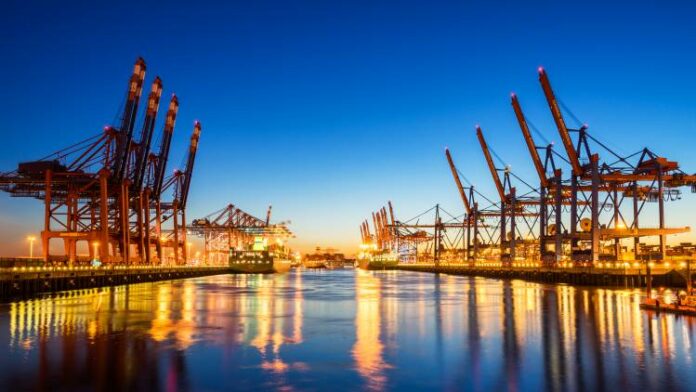
The Port of Long Beach has implemented aggressive goals for zero emissions goods movement. The 2017 Clean Air Action Plan Update set the Port of Long Beach on the path to zero-emission goods movement, with a target of transitioning terminal equipment to zero emissions by 2030 and on-road trucks by 2035.

The Port has recently received almost $80 million in total grant funding from the California Energy Commission and the California Air Resources Board to proceed with six projects to demonstrate zero emissions equipment and advanced energy systems in Port operations.

Port Community Electric Vehicle Blueprint

The Port is creating the first ever Port Community Electric Vehicle Blueprint to identify the path toward zero-emissions and to provide an economical approach to EV planning that other California seaports can replicate.

To achieve that a Dynamic Energy Forecasting Tool (DEFT) enables terminal operators to project energy demand and infrastructure costs given a deployment of zero-emissions terminal equipment. The DEFT will be available for download in 2020.

In addition a Zero-Emission Port Equipment Workforce Assessment focused on workforce development and training programs needed to build a regional workforce to support the future adoption of zero-emission port equipment.

Sustainable Terminals Accelerating Regional Transformation (START)

The California Air Resources Board granted a $50 million grant for a transformative demonstration of a near-zero and zero-emissions supply chain. The larger START project includes the ports of Oakland and Stockton and more than 100 pieces of zero-emission terminal equipment.

At the Port of Long Beach’s Matson Navigation Co. Pier C terminal, the project will fund 34 pieces of zero-emission cargo-handling equipment, two of the cleanest container ships to call on the West Coast, an electric-drive tugboat, five electric trucks at an off-dock container yard, and two heavy-duty truck charging outlets.

Zero-Emissions Terminal Equipment Transition

The California Energy Commission awarded a $9.7 million grant to the expected $13.7 million total cost of this project, for the deployment for zero-emissions cargo-handling equipment. The project will be carried out at Piers J, T and F and includes nine electric rubber-tire gantry cranes, 12 yard tractors, and four hybrid and electric drayage trucks along with workforce development training programs.

Port Advanced Vehicle Electrification (PAVE)

The Port Advanced Vehicle Electrification Project will design, install and use electrical charging infrastructure, including electrical conduit, wires, switchboards, transformers and switchgears, to support battery-electric yard tractors and forklifts at Total Terminals International’s facility at Pier T. The California Energy Commission granted $8 million for the $16.8 million project.

Microgrid – Resilience for Critical Facilities

A microgrid project at the Port of Long Beach’s Joint Command and Control Center will enable the Port to learn about the design, installation and operation of microgrid systems. Microgrids – systems of onsite power generation, storage and controls that can isolate from the grid can also protect electricity-reliant marine terminals against grid failures. The California Energy Commission awarded a $5 million grant for the $7 million project.

C-PORT Zero-Emissions Demonstration

The Port in cooperation with SSA Marine at Pier J and Long Beach Container Terminal at Pier E, will present five zero-emissions cargo handling vehicles, including three never-before-tested battery-electric top handlers and a head-to-head comparison of a hydrogen fuel truck and a battery-electric yard truck. The California Air Resources Board awarded a $5.3 million grant to fund the demonstration.

Source:safety4sea
Wallenius and Swedish Orient Line create new shipping company

0

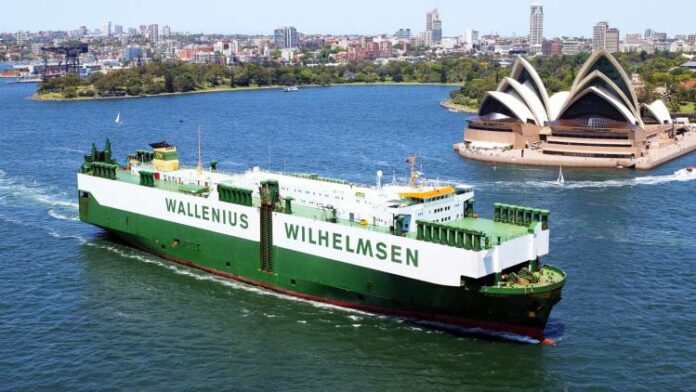
Scandinavia has a new shipowner. Wallenius SOL has started operations this month out of Gothenburg ads a joint venture between two local owners, Wallenius and Swedish Orient Line (SOL).

The new company will transport forestry products and other goods in a network covering the Gulf of Bothnia, the Baltic Sea and the North Sea.

The first customers to sign long-term agreements with this new green-focused line are Finnish renewable materials firm Stora Enso and Sweden’s Metsä Board, a producer of fresh fibre paperboards.

“Together we can offer a strong mix of experience and competence, which can support a growing forest industry,” said Ragnar Johansson, managing director of the new line. Johansson is also managing director at SOL.

“Wallenius has experience from industrial shipping, shipowning, shipbuilding and shipmanagement. SOL brings the competence of logistics from forest industry and other types of cargo in this geographical area,” Johansson added.

Wallenius SOL will have services in the region around the Baltic Sea including Gulf of Bothnia, operating from five ports with regular calls to the continent and the UK.

“We rely on efficient and sustainable transports for our products,” commented Knut Hansen, SVP logistics global at Stora Enso. ”The partnership with Wallenius SOL will enhance our opportunities to compete globally, while at the same time the new vessels will reduce environmental impact.”

Specially designed vessels built to Finnish/Swedish ice class 1A Super will ensure year-round service, even in the the Gulf of Bothnia. The fleet in service in the Baltic Sea will initially consist of five vessels. Up to four new vessels have been ordered and delivery of the new vessels is planned for 2021. These vessels will be LNG-powered and will also have other features that make them among the most environmentally efficient vessels in the area.


Oceaneering expands multi-service vessel fleet

0

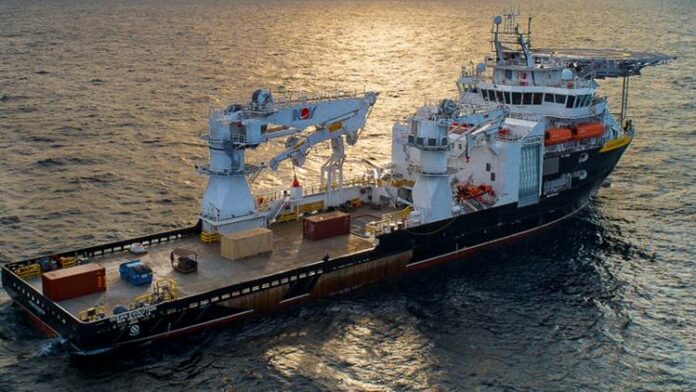
 Oceaneering International Inc. has taken delivery of the subsea construction support vessel Ocean Evolution.  

The vessel has completed sea trials and received all necessary ABS and US Coast Guard certifications. It is currently in Port Fourchon, Louisiana, completing final outfitting and preparing for project work scheduled to begin in June.

Measuring 353 ft (108 m) long, 72 ft (22 m) wide and weighing 6,900 tons, the Ocean Evolution is an ABS class DP-2 subsea multi-service vessel built in the US under Jones Act requirements for coast-wise trade of personnel and equipment. The vessel has accommodations for 110 persons, a helideck, and a working moonpool measuring 23 ft x 23 ft (7 m x 7 m).

The vessel’s 12,595-sq ft (1,170-sq m) steel-constructed deck is designed to carry heavy loads and equipment. The deck is rated to support 10 metric tons/sq m with a total cargo carrying capacity of 1,900 metric tons.  

It is equipped with a 250-metric ton active heave compensated main crane with a 13,000 ft (4,000 m) working depth capacity. This crane has a special lifting mode that allows heavy lifts with alternate reeving of the boom eliminating the jib that provides increased hook heights of 118 ft (36 m) above the main deck. This, the company said, provides the ability for crews to lift tall wellheads, large pin piles, and other oversized equipment off the deck using the maximum lifting capacity of the crane. A second auxiliary crane on deck adjacent to the working moonpool is capable of 40 metric tons for lifting and handling of equipment on deck and to water depths of 600 ft (180 m).

The Ocean Evolution features a layout bridge, configured with port and starboard redundant control stations. These control station locations are said to provide bridge officers and DPOs a better view of crane operations, ROV deployment and simultaneous operations with other vessels and platforms on each side of the vessel.  

The vessel has five low-emission EPA Tier 4 diesel engines with a combined generating capacity of 16 MW on a three-bus system. The Tier 4 rating is the EPA’s strictest emission requirements for non-road diesel engines, the company said, and the combination of five engines and third bus provides enough excess capacity to allow full capability and redundancy of the vessel if one engine is down for maintenance.   

The Ocean Evolution features enhanced station keeping capabilities, which allows it to maintain position even during extreme weather conditions. The vessel’s position is held using two tunnel thrusters and a drop down thruster in the bow along with two Azipull thrusters in the stern. Props on the propulsion systems can be turned 360⁰ and were designed to optimize dynamic positioning of the vessel.

According to the company, the vessel’s design and construction were done with well stimulation and light well intervention in mind as a key capability. The underdeck storage capacity of up to 109,000 gal (413 cu m) of special products maximizes use of the critical deck space for pumping and intervention equipment. The vessel’s layout and safety systems meet ABS class requirements for a special well stimulation and well intervention notation.

It is also equipped with two Oceaneering work-class ROVs. One 220-hp Millennium Plus and one 250-hp NEXXUS systems are onboard each with active heave compensated launch and recovery systems installed in a custom indoor hanger for port and starboard launch. Integrated survey and communication systems round out permanently installed equipment that provide positioning and data services for all operations.

Source:offshore-mag

USCG issues Arctic strategic outlook

0

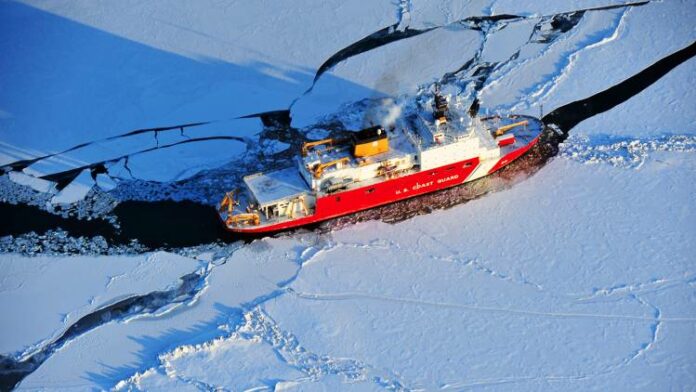
As the Arctic region continues to open, strategic competition drives more actors to look to the Arctic for economic and geopolitical advantages. In this context, USCG released its newest strategy to address its expanding role in the Polar Regions, in line with a growing demand for effective leadership and presence in the region.

"As the only US Service that combines both military and civil authorities, the Coast Guard is uniquely suited to address the interjurisdictional challenges of today’s strategic environment by modeling acceptable behavior, building regional capacity, and strengthening organizations that foster transparency and good governance across the Arctic,"…USCG explained.

From 2006 to 2018, satellite imagery observed the 12 lowest Arctic ice extents on record. This has led to greater access through Arctic shipping routes. While the near-term future of these routes is uncertain, a polar route has the potential to reduce transit times of traditional shipping routes by up to two weeks.

Since the release of the Coast Guard Arctic Strategy in 2013, the resurgence of nation-state competition has coincided with dramatic changes in the physical environment of the Arctic, which has elevated the region’s prominence as a strategically competitive space. Such changes include:

  • Geostrategic Change: US' two nearest-peer powers, Russia and China, have both declared the region a national priority and made corresponding investments in capability and capacity to expand their influence in the region. For example, Russia’s establishment of a Northern Sea Route Administration, along with the use of high ice-class LNG tankers built specifically to export natural gas from its Yamal LNG facility, have contributed significantly to the increase in commercial shipping traffic in the Arctic.
  • Environmental and Economic Change: The Arctic's role in geostrategic competition is growing, in large part, because it is no longer "self-secured" by permanent sea ice. The warming of the Arctic has led to longer and larger windows of reduced ice conditions.
  • Uncertainty and Risk: While long-term trends point to a more consistently navigable Arctic, other environmental factors make it difficult to predict what the near-term conditions will be. Though the Arctic continues to lose increasing amounts of multiyear sea ice, the remaining ice is becoming less predictable. For example, heavy pack ice conditions rendered the Northwest Passage impassible for cruise ships in 2018, despite it being one of the warmest years on record.

With respect to the above, the Outlook cites the following principles to be adhered by USCG to seize the opportunities by the changing environment:

  • Partnership. The Arctic is an exceptional place that demands collaboration across national boundaries. The Coast Guard will partner with the Arctic Nations, as well as partners and allies with Arctic interests, to contribute to keeping the Arctic a conflict-free region. The Service will continue to dedicate resources to forums, such as the Arctic Council, and to combined operations and exercises to safeguard and secure the Arctic domain. The unique and valuable relationship the Coast Guard has established with tribal entities builds mutual trust and improves mission capacity and readiness. We will continue to incorporate lessons-learned from engagements with Alaska Native communities, as well as industry and other Arctic residents, in the development and implementation of policy and strategy.
  • Unity of Effort. The Coast Guard will advance the Nation’s strategic goals and priorities in the Arctic and exercise leadership across the Arctic community of federal, state, and local agencies. As a military Service, the Coast Guard will strengthen interoperability with the Department of Defense and complement the capabilities of the other military services to support the National Security Strategy and the National Military Strategy.
  • A Culture of Continuous Innovation. The Coast Guard cannot meet the challenges of tomorrow’s Arctic with today’s paradigms. Rapid technological advancements within the maritime industry, combined with robust investments by strategic competitors, have raised the stakes. The Service must take this opportunity to leverage transformative technology and lead the employment of innovative policies to solve complex problems.

Source:safety4sea

Qatar Petroleum initiates order for up to 100 LNG carriers

0

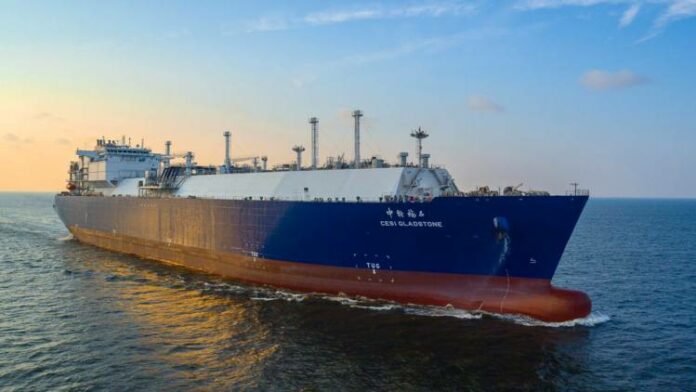
Qatar’s state-run energy group Qatar Petroleum has issued an invitation to tender for a major LNG carrier newbuilding program to support the expansion of its North Field Expansion (NFE) Project.

As well as covering the NFE project, which will significantly increase the company’s  LNG production capacity, the tender also covers shipping requirements for the LNG volumes that will be purchased and offtaken by Ocean LNG, a joint venture between Qatar Petroleum (70%) and ExxonMobil (30%), from the Golden Pass LNG export project in the United States. It also includes options for replacement requirements for Qatar’s existing LNG fleet.

According to Saad Sherida Al-Kaabi, Qatar’s minister of state for energy affairs and the president and CEO of Qatar Petroleum, the major LNG shipbuilding campaign is expected to initially deliver 60 LNG carriers to support the planned production expansion, with a potential to exceed 100 new LNG carriers over the next decade.

Qatar Petroleum confirmed the massive newbuilding plan in February and the company has recently toured yards in China, Japan and South Korea ahead of proceeding with this giant order which is likely to include more 210,000 cu m Q-Flexes and 266,000 cu m Q-Maxes.

The last time Qatar ordered a large volume of ships, between 2004 and 2007, South Korea’s major three yards won all the contracts.

“This tender, along with the recently released engineering, procurement and construction tender for four new mega LNG trains planned as part of the North Field Expansion Project, constitute two monumental and historical milestones as we make major strides in our commitment towards the further development of the world’s largest non-associated gas field,” Al-Kaabi said.

Qatar Petroleum has entrusted Qatargas to execute the newbuilding program on its behalf. Qatar Gas Transport (Nakilat) is the largest owner of LNG carriers in the world, with a fleet comprising of 65 LNG carriers.

Last month, Nakilat and John Angelicoussis’ Maran Gas formed a joint venture to own four 173,400 cu m LNG carriers currently under construction in South Korea.

The promising outlook for the LNG shipping market has boosted the LNG carrier newbuilding market. VesselsValue data shows that a total of 101 LNG carriers have been ordered since January 2018, compared to just 17 in 2017. Spot rates for LNG carriers have also increased by more than 100% compared to levels  in 2017.

Source:splash247

Sapura Energy secures work offshore Egypt, Malaysia, Indonesia

0

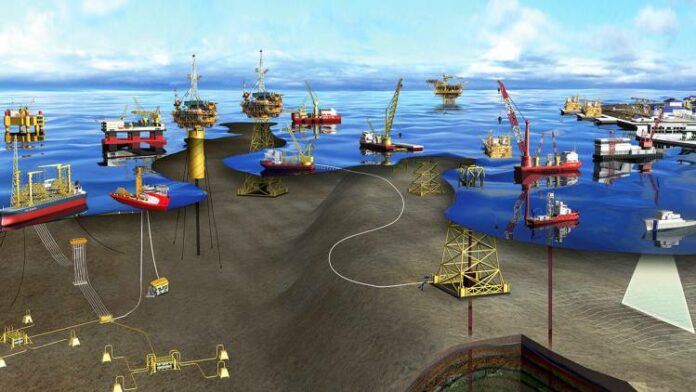
Two Sapura Energy subsidiaries have received engineering and construction and drilling contracts.

Sapura Offshore Sdn Bhd has received a subcontract from Pan Marine Petroleum Services Co. The work scope includes the installation of six new subsea pipelines in the Gulf of Suez for the Gulf of Suez Petroleum Co., a joint venture between BP plc and Egyptian General Petroleum Corp., the national oil company.

Works will be carried out in various locations in the Morgan field, with an expected total pipelay of 57 km (35 mi).

In Indonesia, Sapura Offshore, in a joint venture with PT Timas Suplindo, has won a contract from Eni East Sepinggan Ltd. The EPCI contract is for two 16-in. diameter offshore rigid pipelines from the Jangkrik FPU to a future manifold near the Merakes drilling centers.

Works will be carried out at water depths of between 70 m (230 ft) and 1,400 m (4,593 ft). The total length of the pipeline system is 95 km (59 mi). The scope of work includes design, fabrication, and offshore installation of foreseen structures, deepwater pipeline end terminations, and in-line tee systems for the East Sepinggan block, East Kalimantan.

Sapura Drilling Asia Sdn Bhd has secured two new contracts. ExxonMobil Exploration and Production Malaysia Inc. has awarded the tender assist drilling rig Sapura T-9 a three-year contract for services at the Tabu field offshore Peninsular Malaysia.

Petronas Carigali Sdn Bhd has awarded a contract extension to the semisub tender assisted drilling rig Sapura Berani. The contract entails the drilling of nine wells at the Sumandak, Erb West, and Dulang facilities offshore Sabah and Peninsular Malaysia.

Source:offshore-mag

Oman LNG Settles $2bln Loan in Advance

0

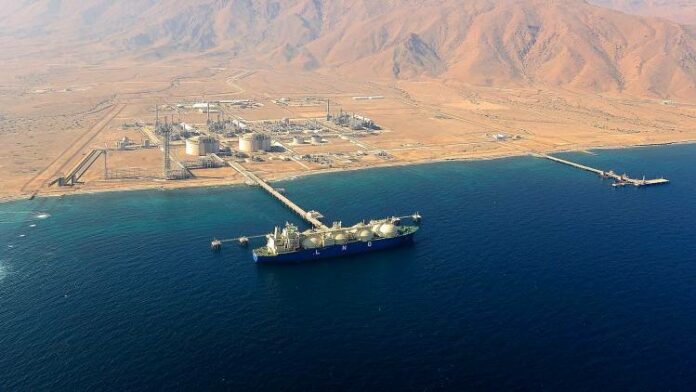
Oman Liquefied Natural Gas LLC has announced that it has successfully repaid its US$2 billion loan facility obligation ahead of schedule, saving interest costs.

According to Oman News Agency, the move is part of the company’s ongoing efforts to reduce financial costs and support Oman’s credit rating.

The agency quoted Dr Mohammed bin Hamad al Rumhi, Minister of Oil and Gas and chairman of Oman LNG, as saying: “The early repayment of the loan by Oman LNG demonstrates the financial robustness of the company and confidence in the oil and gas industry and Omani economy at large. Oil and gas industry provides a great investment opportunity like other sectors of the Omani economy.”

He added that Oman LNG has managed to repay its loan obligations in full, without default and ahead of schedule, hence rendering the company debt free.

Oman LNG project finance started in 1997 when lenders granted the company with a loan of US$2 billion. The financing of the project was regarded as one of the largest limited recourse financing arranged in the Middle East as the gas liquefaction project was the largest venture undertaken by the Sultanate at that time, with strategic importance to the national economy.

Source:marinelink

Watch: The first offshore wind farm in the Mediterranean

0

This video depicts Taranto, the first offshore wind farm in the Mediterranean Sea, in the Italian Apulia region. The wind farm will be installed on monopile foundations in a water depth ranging from 3 to 18 metres.

Senvion has adapted its 3.0M122 onshore turbines to the particularly challenging offshore environment and developed an installation procedure suitable for the near shore wind farm.

The company has also agreed to provide ten of its 3.0M122 turbines for the 30MW project.

The units will be installed in front of Taranto harbor in the Apulia region, in Southern Italy, on monopile foundations in water depths ranging from 3 to 18m.

Source:safety4sea

Port of Huelva renews EcoPorts’ environmental management standard

0

The Spanish Port of Huelva renewed its EcoPorts’ environmental management standard (PERS) after obtaining it for the first time in 2016. Following this development, ESPO congratulated the Port for this achievement.

To receive PERS certification, ports need among others to improve communication with the local community and increase transparency by making their environmental report publicly available. It also means that the port is effectively monitoring the environmental challenges and is implementing an improved environmental management.

"Relationship with the local community has been a great priority for European port authorities, being continuously on the Top-10 of the environmental priorities since 2009. Further enhancing and communicating their environmental policies and engaging citizens has been a driving force for ports and PERS contributes significantly to that end"…ESPO’s Secretary General, Isabelle Ryckbost, stated.

Ms. Ryckbost also congratulated the Port of Huelva for renewing its PERS certification, saying that 'for a port, it is getting more and more important to be transparent about its environmental performance towards the local community.'

Until now, the number of ports that have received the environmental standard is going up with 34 out of the 114 EcoPorts members already PERS certified. EcoPorts allows its members to further improve their environmental performance and deal with challenges such as climate change, air quality and noise.

What is more, data submitted to EcoPorts enables ESPO to come up with an annual Environmental Report and port sector’s environmental benchmarks. This information is made publicly available, enabling local communities, policy makers, research and civil society to check the annual progress of the sector.

Lloyd’s Register is assessing compliance with the PERS standard and the certificate has a validity of two years. PERS is revised after a 2-year period to ensure that the port still meets the requirements.

Source:safety4sea

BP Sanctions $6 Billion Development Offshore Azerbaijan

0

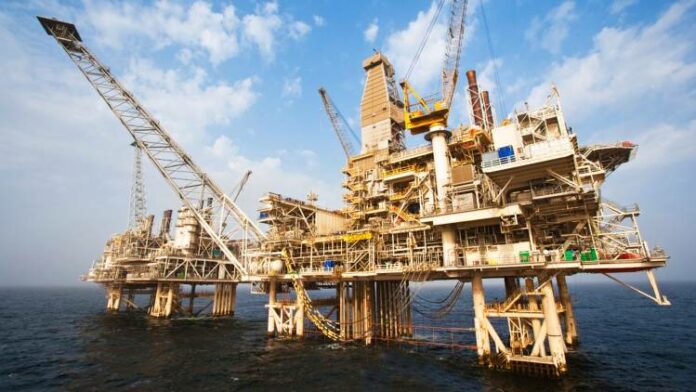
BP and partners have sanctioned the Azeri Central East project, the next stage of development of the giant Azeri-Chirag-Deepwater Gunashli (ACG) oilfield complex in the Azerbaijan sector of the Caspian Sea. 

The $6 billion development includes a new offshore platform and facilities designed to process up to 100,000 barrels of oil per day. The project is expected to achieve first production in 2023 and produce up to 300 million barrels over its lifetime.  

The move is the first major investment decision by the ACG partnership since the extension of the ACG production sharing agreement to 2049 was agreed in 2017. More than $36 billion has been invested into the development of the ACG area since 1994.

ACG currently has eight offshore platforms – six production platforms and two process, gas compression, water injection and utilities platforms. The platforms export oil and gas to the Sangachal Terminal, one of the world’s largest oil and gas terminals, onshore near Baku. In 2018, total production from ACG averaged 584,000 barrels per day, of which Equinor has an equity production of approximately 43,000 barrels per day.

The Azeri Central East project is centered on a new 48-slot production, drilling and quarters platform located mid-way between the existing Central Azeri and East Azeri platforms in a water depth of approximately 140 meters. The project will also include new infield pipelines to transfer oil and gas from the platform to the existing ACG Phase 2 oil and gas export pipelines for transportation to the onshore Sangachal Terminal. 

Construction activities, which will commence this year and run through mid-2022, will take place in-country utilizing local resources. It is expected that, at peak, construction activities will create up to 8,000 jobs. 

BP has a 30.37 percent stake in and operates the ACG. Partners include SOCAR/AzACG (25 percent), Chevron (9.57 percent), Inpex (9.31 percent), Equinor (7.27 percent), ExxonMobil (6.79 percent), TPAO (5.73 percent), ITOCHU (3.65 percent) and ONGC Videsh Limited (2.31 percent).

Source:maritime-executive