2.9 C
New York
Home Blog Page 1075

University students develop whale detection acoustic device

0

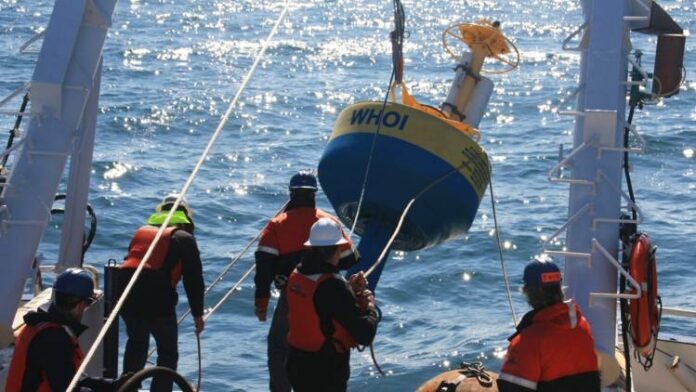
The University of Rhode Island (URI) developed and used an acoustic device to detect whales near the Block Island offshore wind farm. Specifically, MARIMBA (Marine Mammal Monitoring at Block Island Using Acoustics) was developed by six ocean engineering students who deployed it in close vicinity of the 30MW offshore wind project.

One of the students, Luke Puk stated that via this machine they were trying to detect marine mammals acoustically. Therefore, they used a hydrophone underwater that listens for the sounds of marine mammals, then sends those sounds to a server we have on campus, and we can listen to them live or record them.

In November, the students travelled to the wind farm to collect baseline measurements of the underwater noise in the vicinity and to determine the optimal location to place their device.

The group spent all winter engineering all the elements of the device and the communication platform.

In late March and early April, the team deployed two units for the time frame of two weeks.

The students retrieved them on April 12, through a R/V Endeavor. In the meantime, they collected oceanographic measurements and samples of the seafloor sediments to understand the environment from which the device was operating.

Moreover, a barrier the students faced was working from a prototype created by another team of students a year ago, but this year’s group had little understanding of the previous software and electronics.

As student Garrett Connelly commented…"We didn’t know anything about how they did last year’s project, so we had to take it and figure out what they did. We had to research the software code they used and figure out why they coded it the way they did."

The 30MW Block Island offshore wind farm comprises five GE Haliade 150-6MW turbines which went online at the beginning of 2017.

Source:safety4sea
 

HMM to expand cooperation with FESCO

0

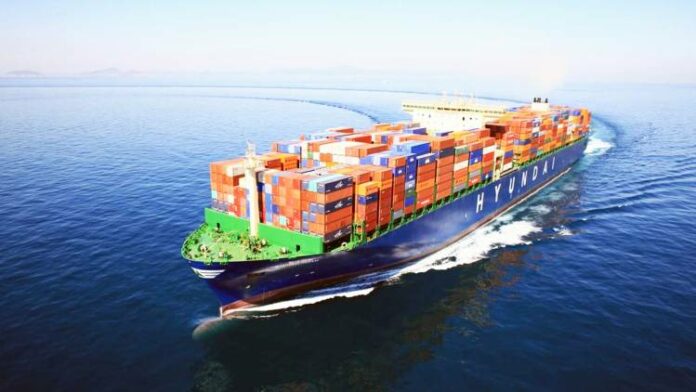
South Korean flagship carrier HMM is expanding its cooperation with Russia’s FESCO.

HMM has been jointly operating a China-Korea-Russia weekly service, under the name of CRN (China Russia North Service) with FESCO and CMA CGM.

With the expansion of cooperation, the current CRN will be reorganised and two new direct services connecting South Korea and Russia, named KR2 (Korea Russia Service 2) and KRS (Korea Russia Service’, will be introduced in the service network of HMM.

HMM will deploy a 1,000 teu vessel on the KR2 which directly connects Busan and Vostochny, while FESCO will place a 1,200 teu ship on the KRS, the direct service between Busan and Vladivostok. Both new services start in the middle of next month.

An HMM official commented, “HMM expects to provide a faster and more reliable service through increased cooperation with FESCO. Based on those three services, HMM will strengthen its market position in Russia.”


ABS, Google Cloud, SoftServe use AI to detect corrosion

0

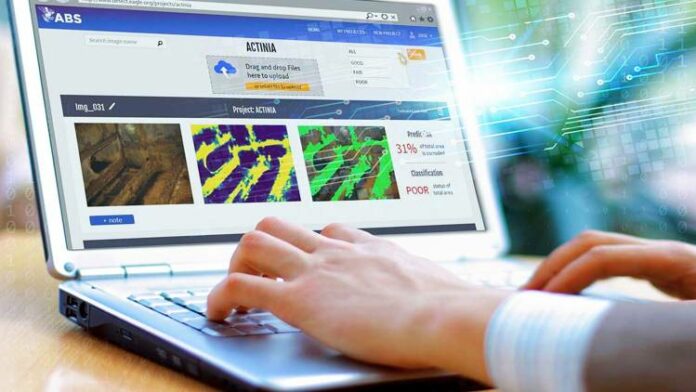
ABS, Google Cloud and SoftServe completed a pilot project applying artificial intelligence (AI) models to find levels of corrosion and coating breakdown on ships and offshore structures. The project showed the accuracy of AI in detecting and assessing structural anomalies commonly found during visual inspection.

AI techniques could also be used to analyze images over time to understand corrosion and coating breakdown trends.

Commenting on the project, ABS Chairman, President and CEO, Christopher J. Wiernicki, said that digital innovation in AI will change how surveys and maintenance strategies are executed, driving more condition-based approaches to class and maintenance.

We are building a future in which digital tools can remotely assess the condition of a ship or offshore unit, and automatically detect and measure coating breakdown and other structural issues, improving safety and reliability.

In addition, ABS Deputy Chief Digital Officer, Kashif Mahmood, expressed his excitement to work with Google Cloud and SoftServe to effectively apply AI technology to the marine and offshore industries.

He added that by combining their domain experience in offshore and marine structures with Google Cloud’s extensive knowledge of AI applications and SoftServe’s development capabilities, the partners will be able to take this idea from concept to reality.

Mitsubishi Heavy Industries takes part in Charter of Trust for Cybersecurity

0

Mitsubishi Heavy Industries, Ltd. (MHI) signed a Cooperation Agreement to take part in the Charter of Trust on Cybersecurity. This agreement comes after the signing of the LOI on February 19. This makes MHI the first Asian member company as the 17th partner in the Global Cyber Security Initiative.

The Charter of Trust was  announced at the Munich Security Conference in 2018. Launched by Siemens, it calls for binding rules and standards to create trust in cyber-security and boost digitalization.

In addition to Siemens and the Munich Security Conference, AES, Airbus, Allianz, Atos, Cisco, Daimler, Dell Technologies, Deutsche Telekom, Enel, IBM, NXP, SGS, Total and TÜV Süd signed the Charter as well.

On February 15, 2019, the BSI German Federal Office for Information Security, the CCN National Cryptologic Center of Spain and the Graz University of Technology in Austria also joined in as associate members.

Moreover, Charter of Trust member companies have established baseline requirements to make digital supply chains more secure. The partners recently announced their intention to implement these requirements in their own supply chains.

"We are honored to be invited by Siemens and the other signatories to join the Charter of Trust for Cybersecurity. Our participation in the Charter of Trust is part of our commitment to our global customers and partners, and we hope that this occasion will help to promote the 10 key principles advocated by the Charter of Trust, and that the Charter of Trust initiative will contribute to greater globalization"…Eisaku Ito, CoCTO of MHI, stated.

According to the Center for Strategic and International Studies, threats to cyber-security in 2018 led to 500 billion euros in losses worldwide.

What is more, threats to cyber-security are on the rise as the world experiences more digitalization. In fact, according to Gartner, 8.4 billion networked devices were used in 2017, which are 31% more than in 2016. This number is expected to reach 20.4 billion by 2020.


DNV GL in UK extends contract for Dana Petroleum

0

DNV GL has secured a 3-year contract across the Dana Petroleum operated assets on the United Kingdom Continental Shelf (UKCS).

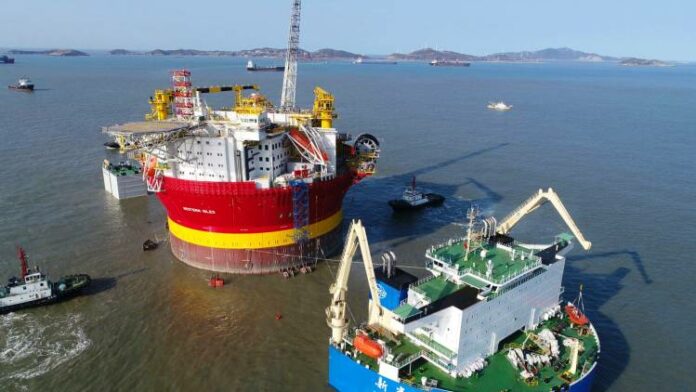
DNV GL has worked with Dana Petroleum since 2012 with the development of the Western Islesfloating production storage and offloading (FPSO) vessel. The Triton FPSO has now been added to the existing project scope. The scope involves classification and verification services, primarily, validation on whether the safety and environmental critical elements (SECEs) are suitable and maintained in adequate condition to meet performance standards in compliance with the UK offshore safety case regulations.

Angus Milne, Head of Department, UK Verification and DNV GL Project Sponsor says, “This is a really important contract for DNV GL. We feel we have a good team onboard who have a strong track record in delivering combined Class and Verification operations. I am confident that we will deliver a safe and efficient service.”

Dana Petroleum Limited has operations and interests in the UK, the Netherlands and Egypt. They are a wholly owned subsidiary of the Korea National Oil Corporation and Headquartered in Aberdeen, UK. Their operating portfolio in the UK consists of the Western Isles FSPO located 160km east of the Shetlands and the Triton FPSO located 193km east of Aberdeen. Partners in Western Isles area are: Dana Petroleum Limited (77%) and Verus Petroleum (UKCS) Limited (23%). Partners in the Triton FPSO area are: Dana Petroleum Limited (52%), Tailwind Energy (46%) and Endeavour Energy (2%).

Hari Vamadevan, Regional Manager, UK and West Africa, DNV GL – Oil and Gas, says, “We are extremely happy to have continued our relationship with Dana Petroleum Limited. We have worked hard to provide an efficient and proactive service and look forward to building a stronger bond between the two companies. It is great to see a customer reward us with an extended contract by recognizing our good service and added value.”

Arrested Swiss tanker attacked by pirates, Nigeria

0

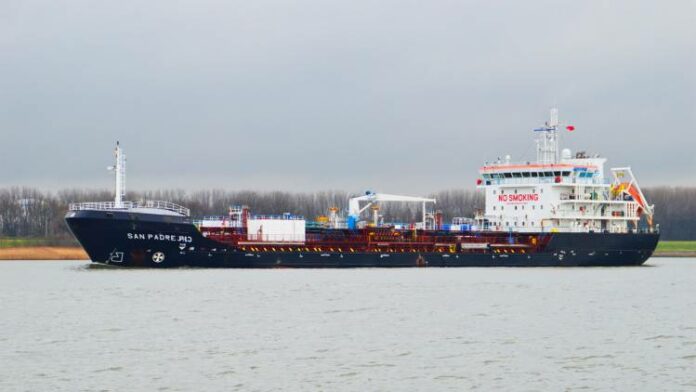
Product tanker SAN PADRE PIO was attacked by 4 armed pirates in speedboat at 2020 UTC Apr 15 at Bonny River Inner Anchorage, Nigeria, in position 04 28.1N 007 10.

1E, according to IMB report. 2 pirates managed to board the tanker and opened fire, aimed at superstructure. The onboard Nigerian naval guards returned fire, thwarting the attack. Pirates returned to boat and fled. Crew sheltered in citadel, all safe. Bonny Signal Station and Nigerian Navy were notified. One guard was injured during the shooting and later transferred to a security boat.

Understood there were only 4 Ukrainian crew on board, because tanker was seized on Jan 23 last year by Nigerian Navy for allegedly, illegal entry and illegal fuel trade, and is under arrest since then. 

Source:fleetmon

Watch: NASA drops 100 drones tiny enough to fit in a hand

0

NASA's Langley Research Center released a video last week showing four large drones (called Hives) releasing over 100 smaller drones known as 'Cicadas', at the Beaver Dam Airpark in Virginia. Cicada, developed by the US Naval Research Laboratory (NRL), stands for "Close-in Covert Autonomous Disposable Aircraft." These small drones can fit in the palm of a hand.

According to NRL, CICADA is a concept for a low-cost, GPS-guided, micro disposable air vehicle that can be deployed in large numbers to "seed" an area with miniature electronic payloads.

These payloads could be interconnected to form an ad-hoc, self-configuring network. Communication nodes, sensors, or effectors can then be placed in a programmable geometric pattern in hostile territory without directly over-flying those regions or exposing human agents on the ground.

However, NASA is also looking into usefulness of these small drones as tools for meteorologists, which could provide a valuable inside look at storm systems in the future.

The NASA-tested drones come equipped with temperature, air pressure and wind-speed sensors. The drones could one day be dropped through clouds or storm systems to gather detailed data during their descents.

Source:safety4sea

ZPMC to manufacture shipbuilding gantries for Karachi yard

0

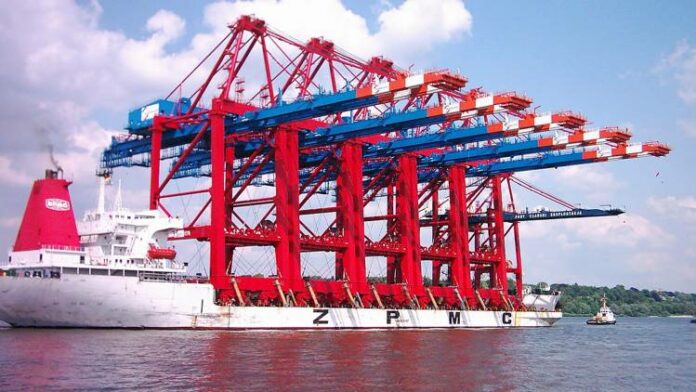
Chinese heavy equipment manufacturer Shanghai Zhenhua Heavy Industries Co., Ltd. (ZPMC) signed the contract for two shipbuilding factory gantries with Karachi Ship Building and Engineering Construction Plant of Pakistan.

The deal marks the company’s entry into the Pakistan market to support China’s development of the countries along the Belt and Road.

The gantries consist of high base and 4-link portal crane for the first time, which will be assembled on the site with the components shipped in containers.

ZPMC recently delivered the ship loading system of the general contracting project to Kuantan Port of Malaysia. It is the first oversea bulk cargo general contracting project of the company.

ZPMC, headquartered in Shanghai, has 10 production bases located in Shanghai and Nantong. The company is the largest port machinery heavy-duty equipment manufacturer in the world and owns a fleet of 25 transportation ships.

Source:seatrade-maritime

Eni, CDP, Fincantieri, Terna in Wave Power Pact

0

Italian oil group Eni is joining forces with compatriot shipbuilder Fincantieri, power grid group Terna and state lender Cassa Depositi e Prestiti (CDP) to develop wave power stations.

The Chief Executive Officers of the companies have signed a non-binding agreement today at the Eni headquarters in the EUR district of Rome to develop and build wave power stations on an industrial scale.

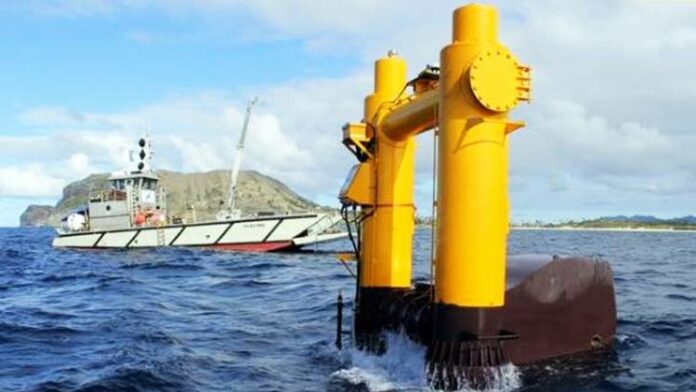
The agreement seeks to combine the knowledge of the collective companies to transform the Inertial Sea Wave Energy Converter (ISWEC) pilot project into a project on an industrial scale for immediate application and use. ISWEC is the innovative system that converts energy generated by waves into electricity. Eni installed the project at its Ravenna offshore site.

Under the terms of the agreement, Eni will share its findings from the ISWEC plant pilot project with the joint working group. The ISWEC built in collaboration with the Politecnico di Torino and the Wave for Energy spin-off, will share its technological, industrial and commercial expertise with the group, in addition to sharing information on the logistical and technological elements used at its offshore plant.

How can shipping industry collaborate effectively with start-ups

0

Start-ups have the capability to help the maritime industry adopt innovation among the increasing intrusion of digital technologies and lead its transformation. However, how exactly can they help the industry in doing so and are there any problems during this process?

The shipping industry is now changing, largely due to increased digitalization. However, many shipping companies do not have the necessary competence, tools, and sometimes understanding of the implications of digitalization, the Global Maritime Forum notes.

In order to detect the level of digitalization in shipping and how it can affect it, Rainmaking launched a start-up-corporate impact programme, called Trade & Transport Impact. Participants talked about the maritime industry’s digitalization, and how can start-ups help.

Answering on why they chose to work with start-ups, the three corporate partners of the programme said that big corporations need to be stable, so they are slow. For this reason, they lack the resources needed to be on the frontline of innovation.

This is where start-ups join. With a maritime backround, their founders may have worked for big maritime companies in the past, but are now exploring ways to work with a much smaller team. This gives them the ability to find solutions quickly and in return, corporate partners can offer them the size, sales capabilities, and market to understand the pain points of the industry.

What is more, start-ups can apply new technologies on various problems, thus helping maritime companies understand how it could be applied to theirs. For example, the Global Maritime Issues Monitor 2018 shows  that maritime leaders do not seem to think that Artificial Intelligence will play a major role in the industry in the near future. The interesting fact is that, more than half of the technological solutions that the start-ups in Hamburg had suggested included some form of Artificial Intelligence.

Nonetheless, finding a perfect match between a company’s needs and a start-up’s proposed solution can be difficult and sometimes not enough for a successful collaboration.

A major obstacle is the difficult task of aligning expectations. For this to be possible, both parties must clearly understand what they can offer, and what they require. On the other hand, open-ended conversations and vague propositions can raise difficulties in creating a concrete partnership.

Another potential problem is the pace of corporate innovation. Companies must include all relevant divisions in the discussions, which could slow down the process for start-ups. The latter need to understand that big companies must be more risk-averse than them, the Global Maritime Forum mentioned. In order for companies though to speed up the process, they should be committed to explore the collaboration from the start.

Finally, when asked about how far is the maritime industry in this educational task, the vast majority answered that the industry is ready for change. However, many companies are not sure how to proceed.

Source:safety4sea