2 C
New York
Home Blog Page 1074

Canada’s Arctic Offshore Patrol Ships to be Operational by 2025

0

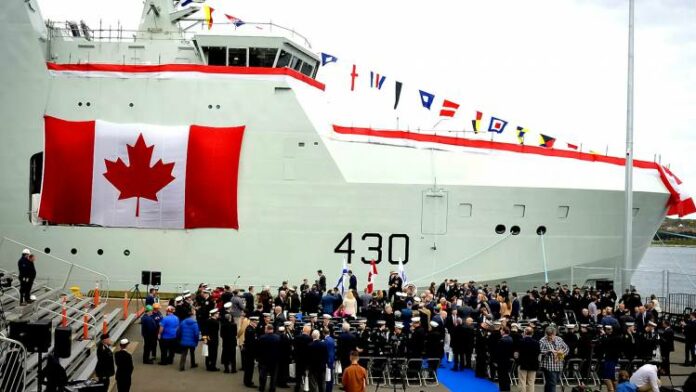
Canada's Department of National Defence has announced that the nation's fleet of Arctic Offshore Patrol Ships will be operational by 2025.

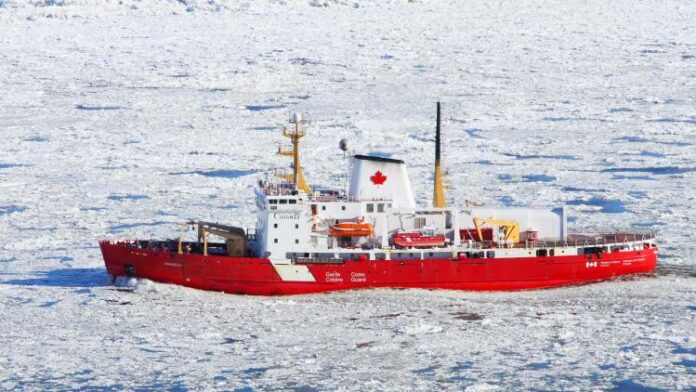
The six ice-capable Arctic and Offshore Patrol Ships (AOPS) will be used by the Royal Canadian Navy to conduct sovereignty and surveillance operations in Canada’s waters as well as to conduct a wide variety of other operations. They can respond to search and rescue and humanitarian missions anywhere in the world, along with the capability to operate in Arctic waters in sea ice up to one meter thick. The ships will also be compatible with the Royal Canadian Air Force’s new maritime helicopter, the CH-148 Cyclone.

With the official cutting of steel, the lead ship in the class, the future HMCS Harry DeWolf, entered full production in September 2015. She was officially named in October 2018 and is anticipated to be delivered delivered to the Royal Canadian Navy this year but won’t be operational until 2020. The future HMCS Margaret Brooke, entered full production in August 2016 and is also expected to be delivered this year. Jetty infrastructure projects that are needed to support the new fleet in Esquimalt, Halifax and Nanisivik are underway. 

The vessels, being built by Irving Shipbuilding, were announced in 2007 by then prime minister Stephen Harper. They were anticipated to be operational by 2013, but the project has suffered delays. Critics have also questioned why Canada is paying around $400 million per ship when Denmark received similar vessels for $70 million each, reports the Ottawa Citizen.

In November 2018, the government announced it was building a sixth Arctic patrol ship to add to the five originally commissioned from Irving Shipbuilding. But it acknowledged that ship will cost $800 million, double the price of the other vessels.

Major subcontractors for the newbuildings include Gibbs & Cox, Lockheed Martin, General Electric, Fleetway Inc., Lloyds Register, BAE Systems and L-3 MAPPS. In-service support will be provided by Thales Canada Inc. and Thales Australia Inc. 

Source:maritime-executive

Port of Hamburg interested in development of Northern Sea Route

0

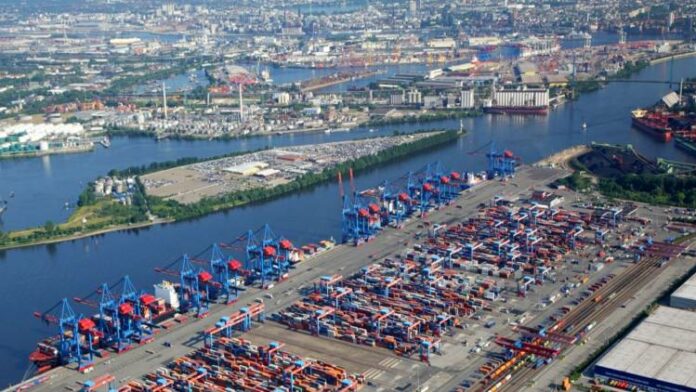
A Memorandum of Understanding (MoU) was signed between the Rosatom group and the Port of Hamburg Marketing, to strengthen and develop cooperation between the ports along the NSR and the ports in the Hamburg Metropolitan Region.

For Rosatom, the Northern Sea Route presents significant potential for shipping and cargo transport. According to the company, in 2018 about 20.2 million tons of cargo was transported in the Arctic sea trade.

In addition, year-round navigability along the NSR chould be achieved by 2030, as seen by the Russian development authority. Then, containerized freight and bulk cargo could take the shorter route on the NSR from China and Russia to Hamburg. First trial shipments were successful, and now Russia is reckoning an increase in transported goods of up to 92.6 million tons by 2024.

In the MoU signed between Rosatom and the Port of Hamburg Marketing, the two parties agreed to advance their exchange of information and experience, as well as joint design and implementation of international cooperation projects.

What is more, more collaboration will take place for the development of transport services between Northern Europe and Russia, including China is a key part of the MoU.

Ingo Egloff, Co-CEO of Port of Hamburg Marketing, highlighted that, along with Rosatom, they will study what potential for development exists with the Northern Sea Route for the ports along it, as well as for the North European economy and shipping in the Port of Hamburg.

Hamburg’s port representative Natalia Kapkajewa, stated from her side that:"Trade and shipping have linked Hamburg and Russia ever since the Hanseatic League. The Polar Ural, Yamal and Krasnojarsk regions, rich in raw materials, will develop well through a high capacity interface to international shipping. Our diversity of contacts and connections on both the German and Russian side will make a positive contribution to it."

Source:safety4se

Bolloré and WiseTech Unite for Global Logistics Solution

0

Logistics solutions group WiseTech Global has announced a strategic agreement with supply chain leader Bolloré Logistics to roll out its CargoWise One platform.

The Bolloré solution, which is used in 130 countries around the world, allows logistics service providers to execute complex transactions in areas such as freight forwarding, warehousing and shipping, as well as the tracking of cargo.

In addition to this, users are able to manage their operations on one database across multiple countries, languages, and currencies.

As a result of its partnership with WiseTech, CargoWise One will now be set up for Bolloré Logistics to use across its worldwide network, including Africa.

The roll-out will also support Bolloré Logistics’ "ONE TMS" programme, an IT solution which strengthens the company’s entire network by providing strong and integrated processes.

Richard White, Founder and CEO of WiseTech Global, commented: “The powerful, deeply integrated CargoWise One platform is designed with a global schema and aims at boosting the overall productivity through electronic integration, cost reduction, digitisation and deep automation capabilities."

We are pleased to have Bolloré Logistics roll out CargoWise One globally over the coming years to strengthen their competitiveness in a complex and constantly evolving industry.

Thierry Ehrenbogen, CEO of Bolloré Logistics, also made a statement: “We have chosen the CargoWise One single platform software solution which fully responds to our needs and ambitions."

This new tool will gradually replace all of our existing TMS software. It will also enable communication with the solutions we currently have in place like DMP, Concerto and Link.

The CargoWise One deployment will begin in 2020 following an initial configuration phase.

Source:porttechnology

E.ON, Kyuden Mirai to Develop Offshore Wind in Japan

0

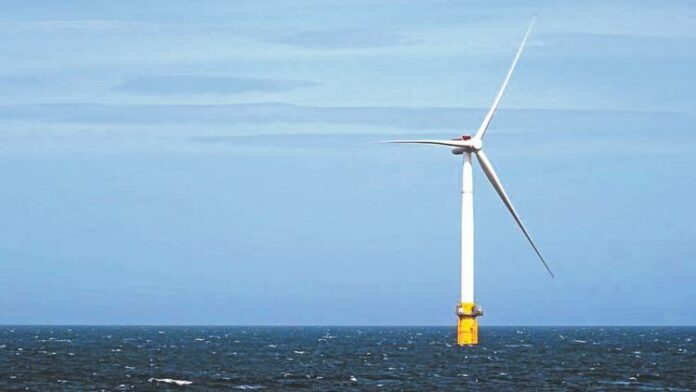
Germany-headquartered energy company E.ON and Japanese renewable energy company Kyuden Mirai Energy signed a cooperation agreement to jointly develop offshore wind projects in Japan.

A press release from the European holding company based in Essen said that the cooperation is focused on fixed bottom projects and starts with a study to jointly select a project for development, construction and operations in the Kyushu area, the southernmost island of Japan. The companies may consider expanding the partnership to other regions in Japan.

The cooperation follows E.ON’s decision to enter the Japanese wind market. E.ON intends to transfer its experience and technical know-how from its 1.8 gigawatt (GW) installed offshore wind capacity from Europe to Japan. E.ON has established a local presence with the recent opening of a Tokyo office.

Kyuden Mirai Energy is a leading developer of the Hibiki-nada Offshore Wind Farm Project in Kyushu and in parallel is studying opportunities for new offshore wind projects throughout Japan. The Hibiki-nada Offshore Wind Farm Project is the first tendered project under the revised laws of port management in Japan.

Sven Utermöhlen, Chief Operating Officer at E.ON Climate & Renewables: “Our strategy to enter the Japanese market is based on trustful and long-term cooperation with local players. We feel that Kyuden Mirai Energy is an excellent partner for us. Our capabilities complement each other while we share the same values and the ambition to drive offshore wind growth in Japan.”

Yasuji Akiyama, President of Kyuden Mirai Energy: “This year could be the memorial year for offshore wind industry in Japan with the new general sea law promoting offshore wind. It is a great timing for us to start joint activities with E.ON as the best partner for us to enter into the new market. E.ON has remarkable experience in fixed-bottom offshore wind and shares the same view on local stakeholder engagement.”

Source:marinelink

An autonomous future for offshore survey

0

Autonomous underwater vehicles are proving their value in terms of speed, safety and, more surprisingly, environmental efficiency.

In October 2018, Swire Seabed completed its inspection of Equinor’s offshore pipeline systems using a Hugin autonomous underwater vehicle (AUV); the process involved three pipelines between Kollsnes and Troll A. In total, 180 km of pipeline were inspected over two AUV dives.

While a surface vessel was also present, its role was limited to providing positional updates to the AUV and acting as a communications relay with Swire Seabed’s Bergen HQ.

Operated by Kongsberg technicians, the AUV acquired bathymetrical, synthetic aperture sonar and visual data as part of an operation to verify the continued integrity of the subsea pipelines.

Swire Seabed has since ordered a Hugin AUV of its own, for delivery in 2020. Swire Seabed chief executive Arvid Pettersen said the order “demonstrates our long-term commitment to go beyond current industry needs and gear ourselves to meet future market demands through innovation and technology.”

He continued: “We believe that the future of inspections and subsea survey is indeed autonomous and we are excited to be at the forefront of an evolving industry.”

The 5.2 m AUV is containerised and capable of performing autonomous inspections on subsea assets and seabed mapping, while simultaneously acquiring, classifying, interpreting and reporting data.

It will carry Kongsberg Maritime HISAS 1032 synthetic aperture sonar, an EM2040 multibeam echosounder and a CathX Ocean Colour camera and laser. It will also have a Kongsberg Maritime automatic pipeline tracking system.

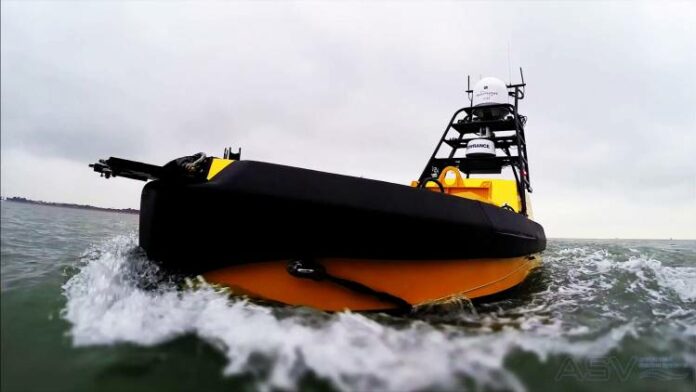
Kongsberg Maritime continues to expand its offerings in the unmanned and autonomous vehicle segment with new offerings including the Sounder unmanned surface vessel (USV).

A multipurpose platform, the Sounder is designed to work across different market segments including survey and fishery duties. It was developed as a joint venture with project partner Norsafe, chosen for its experience in the construction of vessels for operation in extreme environments.

The Sounder’s operations are managed by the K-MATE autonomous surface vehicle control system, which was developed in partnership with the Norwegian Defence Research Establishment. The K-Mate system provides autonomous, supervised and direct control abilities that allow an unmanned vessel to be programmed to follow survey patterns, autonomously follow AUVs, or track a mothership.

A range of different sensor types can be mounted on the Sounder, including Kongsberg EM2040 multibeam echosounders for mapping and HiPAP positioning and communications systems for long baseline and AUV support. Other sensor types can also be integrated, while the payload can be rapidly changed as the Sounder’s 19-inch rack hardware and hull-mounted moonpool are both removable. The system is also able to operate from ship or shore, and is compatible with launch and recovery systems. It has an endurance of up to 20 days at a speed of 4 knots

The future of inspections and subsea survey is autonomous”

Kongsberg Maritime’s geoacoustics subsidiary has also brought to the market a compact USV that mounts a lightweight sub-bottom profiler.

The GeoPulse USV has an operational range of up to 2 km and can access areas that more conventional systems are not able to, according to the company.

It mounts Kongsberg Maritime’s GeoPulse Compact sub-bottom profiler, which has more than 100 decibels of noise-free dynamic range, enabling it to provide repeatable, high-quality data without the need for user-controlled analogue pre-processing.

The system combines penetration and resolution to provide a clearly-defined return of sediment layers. It features adaptable digital processing and waveform-selection technology (2-18 khz), allowing for optimal power signatures, pulse shape and configuration for a range of survey tasks. Pulse forms available include frequency-modulated, continuous wave and Ricker.

The GeoPulse USV has only 11% of the power requirements of earlier systems in the GeoPulse range. Its electric motors give it six hours of operational capability at a survey speed of six knots, and it has an interchangeable battery pack. It can be controlled from a laptop computer using GP1000 software, which is interfaced to the deck unit via an ethernet radio modem.

Battery-powered ROVs

Elsewhere, Texas-based Oceaneering recently received the Subsea Innovation Award, sponsored by Maats Tech, at the 2019 Annual Offshore Support Journal Awards.

The subsea technology company beat stiff competition from UK-based Sonardyne International and Denmark-based NKT to win the award, in recognition of its innovative battery-powered ROV system, known as E-ROV.

Maats Tech director Lisa Edwards presented the award to Oceaneering’s ROV operations manager Arve Iversen, who said: “The concept is very daring … I would like to emphasise the importance of Equinor’s contribution. They believed in the concept and in us, making it possible to realise this as a commercial opportunity."

The E-ROV is based around an eNovus work-class ROV with modified battery technology, optimised to handle peak power consumption and launched from a subsea garage that includes a cage-mounted 100-kW battery pack and tether management system. The eNovus has a 227 kg payload and a depth rating of up to 5,000 m. It measures 2.7 m in length by 1.6 m in width and 1.8 m in height, with a weight in air of 3,400 kg.

The E-ROV can operate for extended periods of time without the need for surface recovery and incorporates technologies such as machine vision learning and augmented reality. It is piloted using Oceaneering’s proprietary Remote Piloting and Automated Control Technology from one of the company’s Mission Support centres onshore, reducing or removing altogether the need for a surface vessel to remain on site.

Connectivity is provided by a data/communications buoy that transmits ROV control data and live, high-definition video over 4G mobile broadband via securely encrypted VPN. The buoy itself features a highly engineered, robust mooring system capable of handling inclement sea conditions.

The system produces efficiencies in a range of areas, including reducing vessel days required to complete operations, reducing the carbon footprint and enhancing the ability of operators to take advantage of favourable weather conditions.

Norwegian energy giant Equinor, formerly known as Statoil, agreed in August 2018 to a three-year contract with Oceaneering for subsea inspection, maintenance and repair activities based around the E-ROV system. Under the terms of the contract, the E-ROV would be deployed in water depths up to 1,000 m on the Norwegian Continental Shelf.

Oceaneering’s origins lie in World Wide Divers, a Gulf of Mexico-focused diving company founded in 1963. World Wide Divers merged with two other diving companies in 1969 to form Oceaneering International. Since then it has expanded its offerings to include products and services that cover the full lifecycle of an offshore oil field, along with work-class ROVs, maintenance services, umbilicals, subsea hardware and tooling.

Source:osjonline

ST Engineering clinches $746m icebreaker newbuild deal from US Navy

0

Singapore Technologies Engineering (ST Engineering) has clinched a contract from the US Department of the Navy to build an icebreaker vessel worth approximately $746m.

The contract includes two options which, if exercised, would bring the cumulative value of the newbuilding deal to approximately $1.94bn.

ST Engineering’s US-based shipyard VT Halter Marine will deliver the icebreaker in 2024. If the two options are exercised, the second and third vessels are expected to be delivered in 2025 and 2027 respectively.

The design and construction contract is under the US Coast Guard’s (USCG) Polar Security Cutter (PSC) program, a multi-year program and a USCG major system acquisition to buy up to three heavy icebreakers.

VT Halter Marine has been involved in the design analysis study of the PSC since February 2017 and is currently in the production engineering studies support work since February 2019. The icebreakers will be built to a mix of military and commercial standards.

The USCG will deploy the new icebreakers in the Arctic for missions such as defence operations, national security activities, search and rescue, logistics support and vessel escort, and maritime safety.

Source:seatrade-maritime

Zhejiang Energy Group pens LNG supply agreement with ExxonMobil

0

Chinese energy enterprise, Zhejiang Energy Group has inked a sales and purchase agreement with ExxonMobil for liquefied natural gas (LNG) supply over a period of 20 years.

Under the agreement Zhejiang Energy is to receive 1m metric tons LNG annually from ExxonMobil.

This agreement represents an important milestone and provides a solid foundation for our strategic partnership with Zhejiang Energy Group, said Peter Clarke, senior vice president of LNG at ExxonMobil. ExxonMobil expects to continue the support for Zhejiang Energy during the construction, commissioning and operation of its Wenzhou LNG receiving terminal, Clarke added.

Zhejiang Energy is currently building a LNG receiving terminal in the city of Wenzhou, which is jointly developed by the company and Sinopec. The project started construction in 2018 and was scheduled for delivery in 2021.

The first phase project include one LNG terminal which can handle LNG carriers up to 266,000 cu m, four LNG storage tanks and 15 km pipeline (8.5 km submarine pipeline and 6.5 km land pipeline), with a designed receiving capacity of 3m tons.


ConocoPhillips contracts TechnipFMC for North Sea Tor subsea tieback

0

ConocoPhillips Norway has awarded TechnipFMC an integrated EPCI contract for the Tor II development, 13 km (8 mi) northeast of the Ekofisk field in the southern Norwegian North Sea.

The scope covers the delivery and installation in 80 m (262 ft) water depth of a subsea production system, umbilical, rigid flowlines and associated subsea equipment.

Arnaud Pieton, President Subsea at TechnipFMC, said: “Through early engagement and collaboration, with ConocoPhillips we engineered an integrated subsea solution enabling first oil sooner than with a traditional project execution.”

The Tor field was originally developed with a combined wellhead and processing facility tied-back to the Ekofisk field center. Production started in 1978 and ceased in 2015: according to the Norwegian Petroleum Directorate, the platform is due to be removed by 2022.

Source:offshore-mag

Chevron retains Archer for North Sea drilling services

0

 Chevron North Sea Ltd. has awarded Archer (UK) Ltd. a new five-year firm contract with two one-year options for platform drilling services.

As part of the contract, Archer will continue to provide onshore rig operations, maintenance and QHSE management, as well as offshore operations and maintenance supervision on the Alba Northern and Captain platforms in the UK North Sea.

The new contract is scheduled to start on May 1, 2019 and ensures continuity of platform drilling operations and maintenance management services on the Alba Northern and Captain platforms until at least 2024.

Source:offshore-mag

Fincantieri acquires control of Insis

0

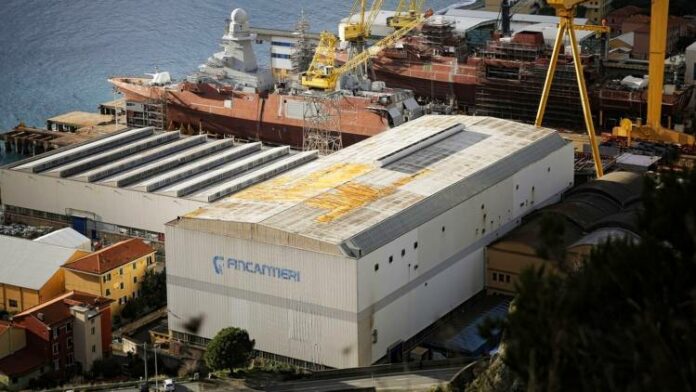
As part of the enhancement of its activities in high technological content sectors, Fincantieri has acquired a majority stake of Insis, a company headquartered in Follo (La Spezia) operating in the sectors of information technology and electronics.
 
Insis is positioned as solution provider in the defense and civil sector and ranks upon its expertise the development of products and services in the field of optronic, telecommunications, information technology and cybersecurity. In this area of activities, the company is acknowledged for the high level of technological content of its products and for having succeeded in preserving a strong customer base in a complex and fragmented market. In 2018, the company recorded revenues of 51.7 million euros with strong growth forecasts for 2019. Overall, it employs a total of 100 people, 70% of whom engineers, system engineering specialists and skilled technicians, namely a pool of expertise difficult to find on the market or which can be developed internally over a long period of time.
 
Over the last years, Fincantieri has undertaken a growth strategy run by diversification and by the widening of its product and services portfolio, shifting its focus on higher added-value solutions. Hence, this operation allows Fincantieri to have direct access to a pool of highly skilled human resources, thus creating an excellence center with very high technological content dedicated to defence systems engineering. At the same time it further guarantees the development of Insis' industrial plan, allowing the company to undertake important growth paths and further increasing its turnover.
 
The closing of the operation will be subject to customary conditions for these kind of operations, to the non-exercise of the Italian government's golden power, as well as to the authorization from the competent authorities.

Source:portnews