0.5 C
New York
Home Blog Page 1066

Wärtsilä becomes first BWMS supplier to be granted dual technology USCG

0

The technology group Wärtsilä says that its Aquarius UV Ballast Water Management System (BWMS) has been granted US Coastguard (USCG) Type Approval. With the company’s other BWMS technology, the Wärtsilä Aquarius EC, already Type Approved by USCG, Wärtsilä becomes the first manufacturer able to offer two USCG Type Approved BWMS technologies.

“Wärtsilä’s dual technology offering provides the broadest range of BWMS solutions for fleet wide regulatory compliance. This means that owners can be sure of having the most appropriate system for their particular needs from the same premium support supplier,” says Craig Patrick, General Manager, Sales, Water and Waste, Wärtsilä Marine.

The Wärtsilä Aquarius UV (Ultra-Violet) technology utilises proven filtration and UV irradiation, while maintaining a high degree of safety and operability. It retains its effectiveness regardless of the water quality.

The Wärtsilä Aquarius EC (Electro-Chlorination) system features a simple two-stage process involving filtration and electro-chlorination across the full scope of a ship’s operating and environmental conditions.

In addition to the USCG approvals, both technologies have also been awarded Type Approval by the International Maritime Organization (IMO). Wärtsilä supports its products, systems, and solutions with the marine industry’s most extensive global service network.

Wärtsilä is a global leader in smart technologies and complete lifecycle solutions for the marine and energy markets. By emphasising sustainable innovation, total efficiency and data analytics, Wärtsilä maximises the environmental and economic performance of the vessels and power plants of its customers. In 2018, Wärtsilä’s net sales totalled EUR 5.2 billion with approximately 19,000 employees. The company has operations in over 200 locations in more than 80 countries around the world. Wärtsilä is listed on Nasdaq Helsinki.
Source:portnews

Orsted primed for Changhua onshore start

0

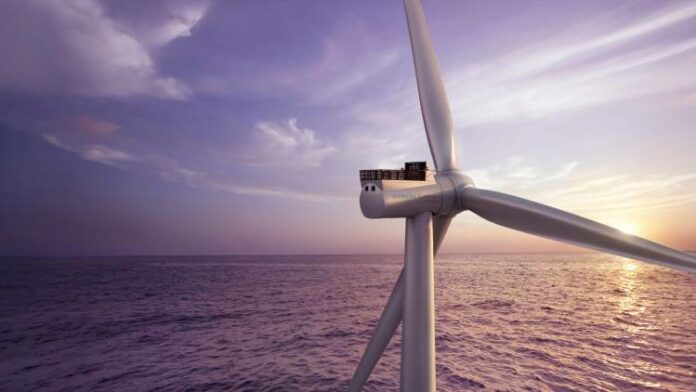
Orsted will begin construction this month of two onshore substations for the 900MW Changhua 1&2a wind farm off Taiwan.

A spokesman for the Danish developer said Taiwan Cogeneration subsidiary Star Energy will undertake the work, which will start with enabling before full construction gets underway in the summer.

The job includes engineering, procurement and construction. In addition to substations, the deal includes cable corridors, landfalls and transition joint bays.

The contract was awarded last November.

Taiwan Cogeneration chairman Chang Ming-Chieh said more than 85% of the project would be supplied by local suppliers, including electrical components such as transformers, resisters and cables. 

Orsted announced its final investment decision on the Changhua project last week, following approval of its localisation plan by the Ministry of Economic Affairs and the signing of a power purchase agreements with Taipower. 

The wind farm is expected online in 2021.

Source:renews

DNVGL Intros ML Solution for Offshore Ops

0

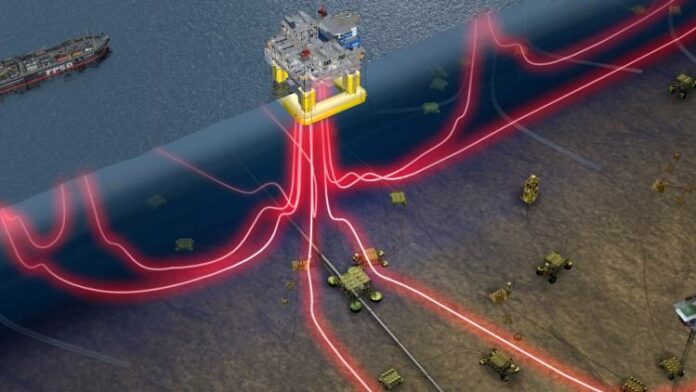
The technical advisor to the oil and gas industry DNV GL has developed a solution that reduces the risk of offshore floating vessel mooring line failure going undetected by replacing physical sensors with a machine learning algorithm that accurately predicts line failure in real time.

The Norwegean company's Smart Mooring solution addresses growing industry concern about the high frequency of mooring line failure, and a vessel’s subsequent loss of station. Over the past two decades, more than 20 incidents have been reported globally involving failure of permanent mooring systems on floating structures.

In the most severe cases, vessels have drifted and risers have ruptured, causing extended field shutdown, and risk to life, property and the environment.

Results from a numerical case study of a turret moored floating production, storage and offloading vessel (FPSO) with more than 4,000 test cases have demonstrated that DNV GL’s Smart Mooring solution can accurately identify when a mooring line has failed. Multiple pilot studies will be conducted on other offshore floating vessel types over the remainder of this year.  

“Our Smart Mooring solution can be deployed to predict a mooring system’s response to various operating conditions. It determines when a mooring line has failed, more accurately and cost-effectively than physical tension sensors currently used to detect anomalies. Conservatively, we estimate it is half the cost to implement our solution versus installing a mooring line tension monitoring system for a brownfield operation,” said Frank Ketelaars, Regional Manager, the Americas, DNV GL – Oil & Gas.      

Tension sensors can be difficult and costly to maintain, and field experience suggests that they can be prone to failure within the first few years of installation.

DNV GL’s Smart Mooring solution can be used instead of replacing failed sensors in brownfield offshore operations, or as a complete alternative to implementing sensor technology in greenfield offshore oil and gas developments.  

DNV GL’s experts developed the Smart Mooring solution by training a machine learning model to interpret the response of a vessel’s mooring system to a set of environmental conditions and are then able to determine which mooring line has failed.  

Source:marinelink

MSC joins NAMERA to participate in preservation of marine environment

0

MSC Group says it will be a new member of the North American Marine Environment Protection Association (NAMEPA), which works to preserve the marine environment by promoting sustainable maritime industry best practices and educating the public.

MSC is committed to promoting a sustainable business model, remaining true to its roots and its core family values. Regardless of the challenges and transformation we might face in today’s business world, our approach does not and will not change: we have a genuine passion for the sea, an unparalleled nautical heritage and a strong commitment to our employees and communities.

As part of this, MSC is committed to promote sustainable use of the sea and marine resources, while extensively investing in the latest generation green technologies to minimize the environmental impact of our business activities on land, oceans and populations. We promote a focus on cleaner seas, land and cargo through massive investments in low-carbon technology, energy efficiency and operational efficiency.

We are very pleased to partner with NAMEPA and leverage our ongoing efforts to create a more sustainable maritime industry. This initiative reflects our longstanding commitment to promoting responsible and environmentally sound operational practices and procedures while extensively investing in carbon reduction and cutting-edge pollution prevention equipment,” says Bud Darr, Executive Vice President, Maritime Policy and Government Affairs at MSC Group.

NAMEPA is a marine industry-led organization of environmental stewards preserving the marine environment by promoting sustainable marine industry best practices and educating seafarers, students and the public about the need and strategies for protecting global ocean, lake and river resources. For more information, visit www.namepa.net .

Carleen Lyden Walker, Co-Founder and Executive Director of NAMEPA, welcomes MSC Group as a new member of NAMEPA, noting that the two organisations share a common interest in maintaining best industry practices to “Save Our Seas”.

“MSC joins an extensive list of members that continue working to surpass their own goals as well as the expectations of others. The initiative of such organisations is why NAMEPA is proud to call them members,” Walker says.

Cyber Security challenges for the shipping industry

0

During the 2019 SAFETY4SEA London Conference, Mr. Chronis Kapalidis, Cyber Expert, Hudson Analytix, talked about cyber threats in shipping. He noted that cyber attacks are becoming more concerning and for this reason the industry must invest more in improving its cyber resilience.

Cyber threats are one of the main global risks as indicated by the World Economic Forum. According to the 2018 Global Risk Index, It is third in likelihood and fifth in potential impact . Consequently, the global trends, also presented in the same report indicate that this will only get worse because there is a rising cyber dependency in all industries, globally. Similarly, for the shipping industry, it is obvious now that we will be relying much more on digital systems and services in order to maximize productivity and cost effectiveness.

When Hudson started engaging in cyber security, the level of awareness was much lower than it is today.. But being optimistic about it, it can be argued that the industry is starting to come to grips with this new insidious threat,as we start to understand that the problem is there, but we still struggle to offer concrete solutions. Hudson’s research in partnership with research institutes in the UK, has identified three main issues for that:

  • No apparent ship-related cyber attacks;
  • No mandatory framework (Other regulations affect maritime stakeholders (GDPR, NIS);
  • Other mandatory actions required prior to the implementation of IMO’s cyber requirements in January 2021 (BWM, SC).

But there are specific researches out there that indicate how big the problem is. The Crew Connectivity Report Survey in 2018,  shows how important internet connectivity on board is on where seafarers choose to work. One of the first things that they look at is ‘will I have internet access on the ship?’. Anotehr research indicates the level of budget allocation regarding cyber security based on company size. The biggest the company, the biggest the investment. But the thing is we have a lot of small family-owned ship companies and they are not investing a lot. The third one is a big of an oxymoron, because it initially querieshow well prepared the shipping industry is and there is a positive response (64%). On the other hand, when the same people are asked how much protected their company actually is, the numbers are reversed.

My advice is that we should be able to understand what the risk is andhow a company can be affected by a cyber breach, in order to minimize risk and look at cyber security as a Return-on_investment. When I am asked how vulnerable the industry actually is, I can tell you that the industry has been a target for the last nine years. Our research indicates that it started back in 2010, but we are sure there have been unreported incidents in the past. For example, a Greek shipping company suffered the most successful pirate attacks in Somalia, because pirates paid hackers to get access to the shipping company’s system and they were able to do that through wi-fi lightbulbs. The company installed wi-fi lightbulbs in their offices, because they wanted to have the latestgadget and they never changed the username and password! So the hackers were able to gain access to the shipping company’s cargo management system and were able to identify the vulnerable targets. The industry is targeted and there is a huge problem there.

We have also conducted a research to find out what are the vulnerabilities against cyber attacks, what are the consequences of an attack and what are the affected fields for ports and shpis. Surprisingly for both entities, the vulnerability is low, but as digitalization progresses stay assured that it will grow. But if you look at the consequences of a cyber attack, they are rather conciderable. During this research we broke down the elements of a ship in different sub-components. We identified 20 sub-components in the ship’s ecosystem. The important thing to understand is that cyber security is not an IT issue. Cyber security does not only target our data, but for ships specifically and ports, cyber has a great physical element in it. So if you suffer from a cyber breach , you will have physical consequences: a ship running aground, a collision, or even loss of life. It is not only loss of data.

What should be understood is that cyber security should be dealt from a risk-based approach and this is what the IMO is saying as well. But in order to do that, you need to follow a top-down approach. You need to help and facilitate the managers to understand what the problem is, to understand that it is not only an IT issue, and then try to train all staff within the company. It is not only going to affect your balance sheet, but it is going to cause litigation problems, it is going to cause reputational problems and will affect your company both internally and externally.

A solution to that is to look at cyber security from a capability maturity approach. This is a risk-based analysis. The Cyber division at Hudson has been working on a solution that is taking into consideration all existing regulations, guidelines and best practices, and we have come up with a model that can assess your enterprise cyber risk and offer solutions.

Our analysis so far has indicated that most companies invest in cyber capabilities. So if you invest in cyber security, you will be able to minimize risk and then sustain this capability. If you do that you will not have only minimized your cyber security risk, but also the insurance risk.

But what does the future hold? Regarding the adoption of digitalization, research indicates that this is becoming a trend, since, over the last three years for different kinds of ships internet connectivity has doubled or tripled. You will have more and more digitalized services on board and this opens new doors to cyber threats.

On the port environment, UK port associations have started looking at smart ports, more connectivity and more digital solutions. This is another area that needs to be taken into consideration, which is affecting the shipping industry.

Of course there is blockchain. It is becoming a major buzzword and a lot of people are talking about blockchain in shipping. We are trying to see the value of it. From what we have seen, blockchain is  a nice to have, but is certainly not a differentiator that will contribute to cost minimization and increased efficiency.

So what should we do? The Danish government has issued the first of its kind cyber security strategy for the shipping industry. It engages all Danish flag ships and all ships sailing in Danish waters. We know that the IMO is really slow in reacting and implementing regulations, but a way of doing that is not only being industry-led, but also to look at flag states and how they can regulate that approach. It is time for once for the shipping industry to be proactive for a problem that has reached its ecosystem and is affecting day-to-day operations before it is too late.

Abu Dhabi offering three offshore blocks in second license round

0

 Abu Dhabi National Oil Co. (ADNOC) has issued details of five blocks offered under Abu Dhabi’s second licensing bid round.

Three are offshore and two are onshore, and the blocks cover an area of about 34,000 sq km (13,127 sq mi).

The successful bidders will enter into agreements granting exploration rights. Assuming they achieve their defined targets in the exploration phase, they will be given the opportunity to develop and produce any discoveries with ADNOC, under terms set out in the bidding package.

Dr. Sultan Ahmed Al Jaber, UAE Minister of State and ADNOC Group CEO, said: “The launch of Abu Dhabi’s second licensing bid round builds on the momentum of the first and very successful competitive bid round. It demonstrates how ADNOC’s expanded approach to partnerships is enabling us to utilize value-add partnerships and smart technologies to drive new commercial opportunities and efficiently accelerate the exploration and development of Abu Dhabi’s untapped resources…"

“This second bid round provides the next major opportunity for both new and existing partners… to join us in further unlocking Abu Dhabi’s substantial hydrocarbon resources in the UAE’s trusted and reliable investment environment. It signals both Abu Dhabi’s and ADNOC’s ongoing drive to realize the potential of our resource base to remain a long-term and reliable energy provider to the world.”

Offshore Block 3 is, area-wise, the largest block offered by Abu Dhabi in both the 2018 and 2019 block bid rounds, with an area of more than 11,000 sq km (4,247 sq mi). In addition, it overlaps, in certain geographical areas, with existing concessions already granted to international oil companies. So, it will be awarded to explore exclusively for potential gas in deep geological formations and potential oil in various formations, outside the existing concession areas.

Based on petroleum system studies, seismic surveys, exploration and appraisal wells data, estimates suggest the blocks in the second bid round hold multiple billion barrels of oil and multiple trillion cubic feet of natural gas.

Some of the blocks already have discoveries and, within the combined geographical area of the second bid round blocks, there are 290 targeted reservoirs from 92 prospects and leads.

The closing date for submitting bids will be at the end of November 2019.

Source:offshore-mag

Lankhorst ropes to moor Karish FPSO

0

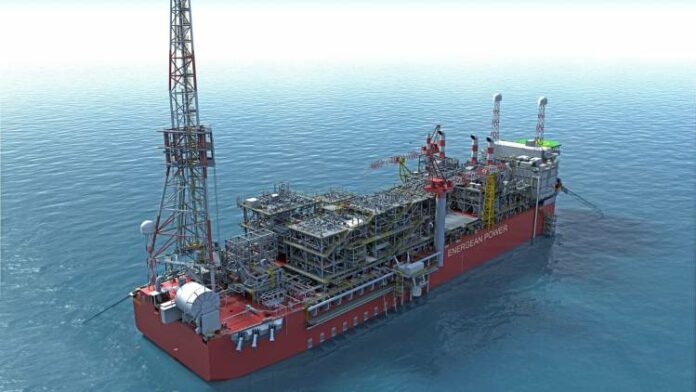
 TechnipFMC has contracted Lankhorst Offshore to supply mooring lines for the FPSO Energean Power.

The vessel will process reservoir fluids and gas from the Karish and Tanin fields, 90 km (56 mi) offshore Israel in the Mediterranean Sea.

Production will be exported to the shore via a new subsea pipeline.

The FPSO will be spread moored with 14 mooring lines in two by four and two by three clusters in a water depth of 1,750 m (5,741 ft).

Lankhorst will supply 28 rope lengths, manufactured at the company’s factory in Paredes, Portugal, and arranged in two segments per line. The total package will comprise 43,400 m (142,388 ft) of Cabral 512 deepwater mooring rope with a minimum breaking strength of 12,400 kN.

Each mooring line will feature a chain top segment, polyester rope middle segment and chain bottom segment, connected to a suction pile anchor.

Cabral 512 polyester ropes are manufactured from sub-rope cores laid parallel within an outer braided jacket. During manufacture, each sub-rope to ensure equal tension and length.

The Energean Power will be the first permanently fiber rope moored offshore facility in the Mediterranean, said Neil Schulz, sales director, Lankhorst Offshore.

Source:offshore-mag

Watch: Partners to present Titanic wreck in 3D image

0

Partners are to use 3D techniques to present the first ultra-high-resolution images of Titanic wreckage for scientists and the general public. A group of organizations will apply advanced underwater imaging technology to monitor and document the wreck that was discovered in 1985.

Specifically, RMS Titanic, Inc., an affiliate of Experiential Media Group, and the salvor-in-possession of RMS Titanic and its wreck site, along with the Advanced Imaging and Visualization Lab (AIVL) at the Woods Hole Oceanographic Institution and Marine Imaging Technologies will collaborate to preserve the site for future generations.

The group will apply advanced underwater imaging technology to data from expeditions in 1985, 1986, 1991, 2005, and 2010 in order to monitor and document the wreck while shedding light on natural and human-caused changes to artifacts on the seafloor.

Moreover, in order to conduct the 3D journey,  a new center, the RMS Titanic Survey Data Scientific Study Center, will be established and will focus on newly refined research methodologies, including underwater 3D imaging, to document the wreck over time.

For the better understanding of the expendition, the partners will cooperate with maritime heritage archaeologists on management strategies for preserving the wreck site and create documentary films, virtual reality, simulator rides and museum exhibitions.

AIVL and Marine Imaging have already created the first 2D and 3D videos of the wreck site at resolutions greater than HD, including UDHDTV (4K) and 8K (IMAX), which can be made into 2D, 3D, panoramic and VR production formats for future release to the public.

In addition, the 3D interactive models that will be produced, are going to be used by archaeologists to precisely monitor changes to the wreckage and to provide input for long-term management of the site.

As Alexandra Klinghoffer, Vice President of Collections for Experiential Media Group, commented "This new RMS Titanic leadership team offers a comprehensive approach to monitoring the ship while engaging the global community in our efforts."

Concluding, the wreck of the Titanic is at a depth of about 12,500 feet (3.8 kilometers; 2.37 miles), about 370 miles (600 kilometers) south-southeast off the coast of Newfoundland, Canada.

Source;safety4sea

Port of Rotterdam presents ‘Rotterdam Food Hub’

0

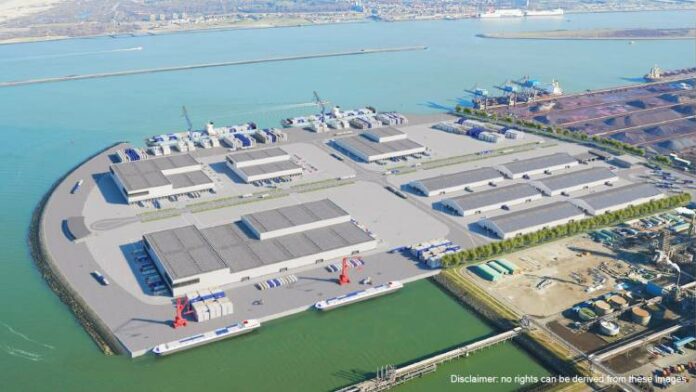
The Port of Rotterdam is attempting to expand its position as Western Europe’s biggest transit port for agricultural, horticultural and fishery sector products. Part of this strategy is the creation of the Rotterdam Food Hub at Calandkanaal, at the entrance to Maasvlakte.

This hub is a 60-hectare industrial site, offering facilities for 'agrofood' sector companies. Land allocation discussions are also taking place with interested parties for more than half of the 60-hectare industrial site near Maasvlakte.

After the US, the Netherlands is the world’s largest agriculture exporter, while nearly €92 billion was traded in 2017.

Commenting on this strategy, Emile Hoogsteden, Director of Containers, Breakbulk & Logistics at the Port of Rotterdam Authority, said that the Rotterdam Food hub will have access to multiple berths for sea-going vessels especially equipped for refrigerated cargo. Namely, berths for inland vessels will be available and warehouses will be located near to the quays to enable refrigerated and frozen cargo to be stored, processed or transported quickly.

The Rotterdam Food Hub also aims to offer several shared facilities that can be used on the site. Specifically, quays and services for transport, storage, access control and customs can be shared efficiently.

Emile Hoogsteden noted:"The Rotterdam Food Hub forms a fantastic and extremely welcome addition to the agrofood hotspots that already exist in the Port of Rotterdam, such as Cool Port and the large cold storage warehouses including at Maasvlakte and Eemhaven. Its location close to Greenports such as Barendrecht, Ridderkerk and Westland is, of course, also ideal"

Out of the 60 hectares, about 45 hectares are available for issue to companies, and land allocation discussions are already taking place with candidates for some 35 hectares. Preparatory works such as soil surveys already occurred this spring and the construction of a temporary road and utilities for the building work will start from June.

The development of the site, which will be known as 'Kop van de Beer' (Head of the Bear), will start in July with construction work for the site's first client. The first companies will be operating there by the end of 2020.

Finally, Rotterdam is a large agrofood import and export port in Western Europe. Regarding imports, the top 3 are citrus fruits, bananas and grapes. A lot of fruit juices also find their way to the consumer via Rotterdam.

Vegetables, onions and potatoes are the biggest exports, followed by pork, poultry products, cheese, outdoor plants and herring. The country to which most agrofoods are exported from Rotterdam is China, while most imported products come from South Africa, Brazil and Costa Rica.

GNS, StormGeo forge partnership to deliver navigation and weather solutions

0

GNS and StormGeo have forged a strategic partnership to bring together navigation and weather solutions for their global shipping company customers which have more than 20,000 vessels.

The new partnership will leverage on GNS’s and StormGeo’s combined competence in software and analytics, creating a strategic opportunity for joint development of new solutions and insight.

GNS, a maritime solutions company, is extending its Voyager FLEET INSIGHT online service to include key weather-related services. StormGeo, a provider of weather intelligence and decision support services, will bring forth its BVS (Bon Voyage System) and advanced decision support tools to help shipping companies with situational awareness and route optimisation.

The two companies will also collaborate to provide other tools and resources for their customers worldwide to help vessels sail more efficiently and provide shipowners, managers and charterers with enhanced levels of situational awareness, data analytics and operational insights.

Per-Olof Schroeder, ceo of StormGeo, said: “Since we acquired Nautisk last year, now integrated in the StormGeo portfolio of solutions, we recognise that the global market for navigation is bigger than we could serve alone. Partnering with the leader in navigational solutions and services that shares our strategy and vision for innovation makes good sense and reaches a larger share of the market with our solutions.”

The initial focus areas of the partnership include the shore-based use of the Voyager FLEET INSIGHT weather applications, developing onboard solutions to deliver ENCs direct to ECDIS to enhance navigation compliance and safety, provision of tailored voyage optimisation services.

Paul Stanley, ceo of GNS, commented: “Our software is capable of working with other weather and route optimisation solutions, but this relationship with StormGeo will result in a more integrated approach that will be easier for customers to use and will deliver additional value.”