-1.1 C
New York
Home Blog Page 1065

Abu Dhabi ports signs MoU with Dell technologies

0

Abu Dhabi ports announced that they signed a Memorandum of Understanding with Dell Technologies, with the aim of joining their expertise in maritime and IT to develop technology based concepts, solutions and services, mostly for the marine sector.

Dell Technologies will provide Abu Dhabi Ports with consultation services and will also enable the ports update the blockchain technology and artificial intelligence to fuel their digital transformation journey.

Moreover, the joint partnership will also provide an exchange of industry practices and expertise needed to develop truly integrated smart ports that can better serve the customers and other stakeholders of Abu Dhabi Ports.

The MoU was signed by Abdullah Al Hameli, Executive Vice President – Corporate Support at Abu Dhabi Ports, and Mohammed Amin, Senior Vice President, Middle East, Turkey & Africa at Dell Technologies.

The signing ceremony occurred at Dell Technologies World 2019 in Las Vegas.

Abdullah Al Hameli, Executive Vice President – Corporate Support at Abu Dhabi Ports commented"At Abu Dhabi Ports, innovation is at the heart of everything we do. We are excited about the growth and opportunities created by the Fourth Industrial Revolution, and we are constantly striving to deliver products and services that transpose the latest emerging technologies into a maritime context."

 

Singamas sells five subsidiaries for $565m in cash to Cosco Shipping

0

Singamas Container Holdings has entered into an agreement with Cosco Shipping Financial Holdings to sell its entire interest in five of its companies in China for a total of RMB3.8bn ($565m) in cash.

In March, Hong Kong-listed Singamas announced that this substantial disposal is expected to be transacted at between RMB3.5bn to RMB4bn to an unnamed purchaser.

The five companies include three container manufacturing factories (Qidong Singamas Energy Equipment, Qingdao Pacific Container, Ningbo Pacific Container), one R&D centre (Singamas Container (Shanghai) Limited), and one depot (Qidong Pacific Port), which is a wholly-owned subsidiary of Qingdao Pacific.

The companies’ businesses include manufacturing of dry freight, specialised and refrigerated containers, provision of terminal services and provision of technical and development of services container manufacturing in China.

Singamas, subsidiary of Pacific International Lines (PIL), said it expects to record a loss of approximately $15m from the disposal.

Amongst the total gross proceeds of $565m from the disposal, the lion’s share of $300m will be used for repayment of bank loans, while the remaining will be used for distribution of special dividend and for general working capital.

Singamas pointed out that the disposal will be an important step towards shifting the group’s business focus to logistics services and the manufacturing, R&D and sale of specialised containers.

“In light of the increasing demand for personalised and customised high value-added specialised containers, the group believes this segment will be the key growth driver in the future,” Singamas stated.

Following the disposal, Singamas said it will continue to own its entire logistics business, except for Qidong Pacific, including 10 container depots, eight at major ports in China – Dalian, Tianjin, Qingdao, Shanghai, Ningbo, Fuzhou, Xiamen and Guangxi – and two in Hong Kong and a logistics company in Xiamen, as well as containers manufacturing operations in Shanghai Baoshan, Shanghai Jiading, Yixing and Xiamen.

“From the operational perspective, instead of focusing on producing standardised containers, the remaining group will further invest in R&D and sales and marketing for promoting and developing the customised specialised containers,” Singamas said.

“Other than continue to operate its existing specialised container manufacturing business, the group will devote resources and explore new business opportunities including specialised containers for non-sea freight purposes including fish farming, housing, storing, power generating, etc. to broaden its revenue stream,” it added.

Pompeo Warns of New Geopolitical Contest in the Arctic

0

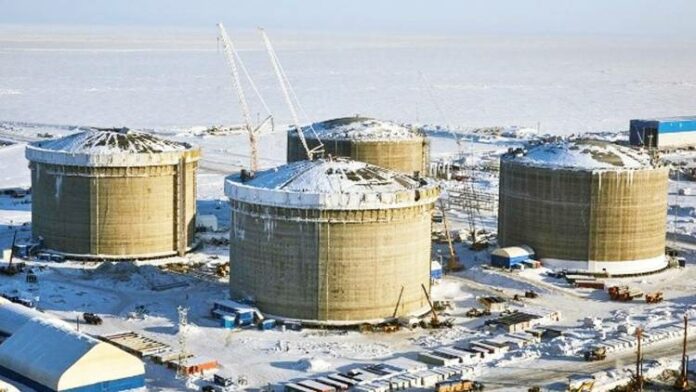
On Monday, one day ahead of an Arctic Council meeting in Finland, U.S. Secretary of State Mike Pompeo warned of Russian and Chinese ambitions in the high north, and he suggested that America's Arctic policy should be framed in terms of competition for power and resources.

"This is America’s moment to stand up as an Arctic nation and for the Arctic’s future," Pompeo said. "The Arctic is at the forefront of opportunity and abundance. It houses 13 percent of the world’s undiscovered oil, 30 percent of its undiscovered gas, and an abundance of uranium, rare earth minerals, gold, diamonds, and millions of square miles of untapped resources."

Pompeo warned that Russia and China may not proceed benevolently as they pursue their interests in far northern latitudes, and he suggested that China's investment activities could serve as a cover for the expansion of its military presence. 

"Do we want the Arctic Ocean to transform into a new South China Sea, fraught with militarization and competing territorial claims? Do we want the fragile Arctic environment exposed to the same ecological devastation caused by China’s fishing fleet in the seas off its coast, or unregulated industrial activity in its own country? I think the answers are pretty clear," he said. 

Pompeo also singled out Russia's decision to regulate marine traffic off its northern coast: Russia now insists that foreign-flagged vessels must receive permission to pass through the region, regardless of innocent passage rights, and requires that they take aboard a Russian pilot. 

Declaration on climate change

The Arctic Council is a scientific coordinating body, and it is currently negotiating the text of the document that will formally summarize its views at this week's meeting. Diplomats involved in the discussion report that America is the only nation out of eight council members opposed to any mention of climate change or any mention of the Paris climate accord in the statement. 

Pompeo did not refer to climate change in his address, though he did make note of the thaw in the high north, saying that "steady reductions in sea ice are opening new passageways and new opportunities for trade." He suggested that the Council should broaden its focus from science alone and engage with the Arctic as "an arena for power and for competition." 

Source:maritime-executive

Pangaea Logistics Solutions books two post-panamax bulkers for Baffinland contract

0

US bulker owner Pangaea Logistics Solutions has signed shipbuilding contracts with CSSC’s Guangzhou Shipyard International for the construction of two post-panamax 95,000 dwt dry bulk vessels.

The company also holds options to build two more vessels at the yard.

The two new ice class vessels will support a new ten-year contract Pangaea has secured from Baffinland Iron Mines Corporation.

“We work closely with all of our customers. Our relationship with Baffinland is special because of the extra challenges presented with high arctic shipping. The cargo contract, requiring the building of at least two new vessels with Ice Class 1A classification, marks a significant step forward in our leadership in the ice class part of our business,” said Ed Coll, CEO of Pangaea.

It is Pangaea’s first ever shipbuilding contract in China and the price for the new ships is approximately $38m each.

“The new ships, to be delivered in first half of 2021, will serve: our new ten year contract with Baffinland for summer service in the Canadian Arctic; existing customers who depend on our fleet capabilities in the Baltic Sea winters; and, old and new customers wishing to use the most modern ships to utilize expanding trade routes in high northern latitudes.  The new ship design is a fuel efficient one, making it competitive with non-ice class vessels when not trading in ice, and the ships will comply with all Polar Code requirements for safety and environmental demands,” Coll added.


Watch: How the Port of Singapore prepares for the 2020 sulphur cap

0

In this video, Luca Volta, Marine Fuels Venture Manager, ExxonMobil and Alan Lim, Deputy Director (Marine Services), MPA, discuss the latest challenges of IMO 2020, from enforcement to alternative compliance choices such as scrubbers and LNG.

Explaining how the Port of Singapore prepares for the 2020 sulphur cap, Alan Lim said that MPA Singapore is working on two fronts. The first is to ensure availability of compliant fuels at the Port. The second is to prepare the Port, as well as the ships carrying the Singapore flag.

On the first issue, MPA is receiving regular updates from their suppliers, to be sure that they are able to supply compliant fuel. For this reason, it has published a list of its bunker suppliers and the range of compliant fuels that they can supply.

In addition, MPA in cooperation with Singapore Shipping Association (SSA) have published two technical books on complying with IMO 2020. These books provide the details and the options for compliance and also what to do when ships call at the Port from 2020.

As for Exxon, it has made a long-term investment in their refineries and then continues with 0.5% sulphur content compliant fuel. These are complemented by a new range of fuels and lubricants.

Regarding open loop scrubbers, Mr. Lim explained that the Port is not banning them, but it is prohibiting the discharge of wash water from these kind of scrubbers.

Furthermore, in the future the Port of Singapore wants to be able to bunker LNG. For this reason, it has established various schemes to encourage LNG bunkering in Singapore and the results have been positive so far.

Source:safety4sea

ABB: Optimizing engine performance on land and sea

0

Innovative solution from ABB saves the environment and increases reliability.

ABB’s Measurement & Analytics business prides itself on developing instrumentation and analyzers that make solving tough measurement applications easy for customers. In this article, we discover how ABB helps the shipping and power companies save fuel and improve the reliability of large diesel engines.

Fuel costs and reliability are two of the most prominent issues facing ship owner/operators today. With new environmental legislation these factors will only increase in importance. Meanwhile, demand for seaborne trade is expected to grow.

Managing the performance of a ship’s engines increasingly requires information on a real-time basis. An optimized engine, where all cylinders are working in balance, uses less fuel and incurs less wear. An engine out of balance can quickly develop thermal and mechanical stress points that drag down fuel economy and increase maintenance costs.

ABB designed their Cylmate system specifically for continuous monitoring of the performance of two-stroke diesel engines used both in marine and stationary applications. Pressure transducers provide real-time measurement of compression in each cylinder. This combined with precise measurements of crank shaft position provide a detailed picture of the engine’s operation in real time so that combustion pressure can be tuned stroke by stroke.

Using Cylmate can reduce fuel consumption by 1 to 2 percent. That may not sound like a lot, but when you consider that large ships measure fuel consumption in tons per hour, even a small percentage gain will yield real savings. In fact, the payback time on a typical monitoring system is less than one year based on improved fuel economy alone.

Like other modes of transportation, ships are becoming more sophisticated with the majority of them equipped with electronically controlled engines. As this has become the industry norm, continuous combustion pressure measurements have become standard.

One of the largest and most advanced container vessels today such as the massive Maersk “Triple-E” class rely on Cylmate to optimize engine operations and keep costs down.

But the advance of engine technology is not limited to oceangoing vessels. Stationary engines used to generate electricity face the same challenges in terms of fuel efficiency and uptime.

ABB’s Measurement & Analytics have also helped the Barbados Light & Power company (BL&P) serve 280,000 residents with electricity primarily from diesel-powered generators. BL&P has installed two Cylmate systems at their Spring Garden power station to monitor engine performance and ensure a high level of reliability. The system has given them new insights into engine operations, for example by identifying conditions that could lead to a worn cylinder liner before experiencing a costly failure.

Whether on land or at sea, diesel engines are likely to be a vital power source for many years to come, but they will face increasing performance challenges from an economic and a regulatory standpoint. Technologies like combustion pressure monitoring and control is a vital tool in meeting these requirements.


Shipping industry is slowly coping with changes in cyber attacks

0

In the latest issue of Phish and Ships in May, Be Cyber Aware At Sea focused on cyber crime that seems to be getting more dangerous and is now becoming a highly automated business that attacks the most vulnerable part of an organisation. Based on A.P. Møller-Maersk Chairman Jim Hagemann Snabe's presentation on a panel at the World Economic Forum in 2018, the response to the NotPetya ransomware attack of the previous year had required the re-installation of 4,000 new servers, 45,000 new PCs, and 2,500 applications, all within 10 days. During this period, the company reverted to manual systems.

Concerning the cyber attack to A.P. Møller-Maersk, NotPetya showed that the cyber threat is as real for shipping as it is for any other connected business, especially where legacy systems proliferate.

In the possibility that the infection had affected onboard systems, the attack would have been much worse.

Although the shipping industry is being more aware of cyber attacks, it seems to be slower in coping with it.

In light of the Inmarsat Research Programme report 'The Industrial IoT on Land and at Sea (2018)' the maritime way of thinking is slow to change.

The 2018 study drew on testimony from 750 survey respondents across a range of industries to establish preparedness and perceptions regarding the adoption of Internet of Things (IoT)-based solutions.

According to the survey:

  • 87% of maritime respondents believed that their cyber security arrangements could be improved;
  • 55% of sizeable proportions of them identifying data storage methods;
  • 50%  poor network security;
  • 44% potential mishandling/misuse of data;
  • 39% as more likely to lead to breaches in cyber security than outright cyber attack.

Given the self-diagnosis, it is perhaps surprising to find that only 25% of maritime respondents said they were working on new IoT-based security policies.

Moreover, Mr Jim Hagemann Snabe noted that software is only a part of the answer. Vigilance for ‘the human element’ and a well-thought-out recovery strategy to mitigate against multiple, automated assaults are also critical.

Around 70% of respondents identify reducing marine insurance premiums as a main driver for IoT uptake, where insurers have shown themselves as especially sensitive to cyber threats.

At the same time, other studies have found attitudes such as “Iʼm not the target /we have security in place, donʼt we?/I will be protected by AntiVirus” alive and well among seafarers.

Inmarsat firmly supports that a collaborative approach, including shipboard systems and crew operating, is crucial in having a mature response demanded by multiple threats from cyber villains, whatever their origin.

Therefore, Inmarsat collaborated with Singtel cyber security subsidiary, providing Trustwave, bringing Fleet Secure into the industry as the first independent service designed to detect vulnerabilities, provide alerts, respond to threats and protect ships from cyber attack.

Source:safety4sea

Port of Los Angeles and partners to fight cyber threats

0

Port of Los Angeles convened a conducted a working group consisting of maritime stakeholders to discuss the creation of a cyber-resilience industry, boosting cooperation and helping manage cyber security threats.

The discussion was held on April 24, and the stakeholders varied from shipping lines, to terminal operators and representatives from the trucking industry as well.

The centre will be a collaborative effort to fight cyber threats across many companies within the port complex.

In the meantime, it will assist companies to be better-prepared against cyber risks that could be a major threat to their cargo supply chain ecosystem.

Gene Seroka, executive director of the Port of Los Angeles commented "In partnership with our maritime industry stakeholders, we have the opportunity to enhance the ability of the port ecosystem to see cyber threats on the horizon and improve information sharing to help manage respective, and collective, cyber risk."

In addition, Tom Gazsi, deputy executive director and chief of public safety and emergency management for the port noted that ports play a crucial role in the maritime sector; Therefore, they should be active in addressing cyber risks.

The Centre will share cyber threat information and follow in the footsteps of other Los Angeles Port action including the establishment of the Portʼs own Cyber Security Operations Centre. The Port is also the only port to have ISO 27001 certification for cyber security.

Source:safety4sea

How to handle data breaching

0

In May's Phish and Ships issue, Be Cyber Aware at Sea provides an insight into Ponemon's 2018 Cost of Data Breach report, according to which the average data breach costs $3.8 million and the likelihood of a recurring breach in the next two years is 27.9%. Thus, itʼs no surprise that companies are making cybersecurity a priority. Criminals are targeting sensitive data and if your company canʼt keep it safe, you will almost certainly lose customers following a breach.

Akash Bharadia, a technology specialist in the Cyber & Tech division of AXIS Capital, a global provider of specialty lines insurance and treaty reinsurance and a Phish & Ships sponsor, provides an example of the consequences when a company gets breached.

That's the time when an incident response comes in plan. The response planning has two goals:

  1. Reducing damage;
  2. Reducing recovery time.

Yet, Mr Akash Bharadia recommends that prior to writing a response plan, one better conduct a thorough risk assessment of their organisation to understand where they might be vulnerable.

As Mr Bharadia proposes"Define the key individuals who need to be 'on deck' during a cyber incident. Document roles and responsibilities as well as contact information, ensure there is an emergency communications plan in place and donʼt rely on email addresses or desk phones as they may be taken offline during the breach."

If you have cyber insurance, familiarise yourself with what it offers and how to trigger the breach response services within the policy.

It is of a great importance for one to practice an incident response by using a variety of scenarios that are relevant to the company. Review and update it following each practice run until you are confident that it covers everything you need in the event of a breach. Store it in a few different locations, both physically and digitally, and ensure that everyone can access during an incident.

For more information on 2018 Cost of a Data Breach Study, you may click here.

Source:safety4sea

Cyber pirates are a greater threat due to high tech attacks

0

In latest issue of Phish and Ships, Be Cyber Aware at Sea focused on today's cyber piracy. The modern pirates are as innovative in the tactics and technologies they use as they were in historic times. The pirates' interest in cyber tools is mostly because of the inter-connectedness of shipping with the global internet.

Specifically, as Nicholas Newman of Engineering and Technology, commented that the worldʼs 51,000 vessels that carry around 90% of the worldʼs freight are equipped with modern technologies such as industry 4.0, are vulnerable to a range of hacking incidents.

The incident vary from ghosting the GPS systems to taking over of command-and-control systems.

Andrew Fitzmaurice, chief executive of Templar Executives, a British cyber-security firm noted "There are no official records on the number of cyber-security attacks that have hit the maritime sector, despite the threat being real. This is because companies are reluctant to report for fear of reputation damage."

An oil tanker could carry up to $100m-worth of crude, a container ship might be loaded with perishable fruit and vegetables and a vehicle carrier laden with 1,200 luxury cars could be worth around $53m. Valuable cargo, data and communications are the lifeblood of the mercantile sector.

It is of a great importance for the shipping sector to acknowledge that the majority of the maritime pirates have stopped sailing in the seas looking for vessels to attack.

On the contrary, they are behind computers, trying to steal what they want and then leave.

A vessel is an easy cyber victim due to its multiple access routes, such as all the points where connected devices and systems intersect and interact with employees using employerʼs laptops, tablets and mobile phones to share operational manuals and chart updates.

These access points radiate via many devices to application groups and onwards to service sectors and locations, affecting supply chains, headquarters, ports, terminals and ships.

With greater automation and machines standardising security controls, humans are increasingly being recognised as the weakest link in a companyʼs security programme.

Concluding, it is supported that the biggest vulnerability to cyber attacks is the human factor.

Source:safety4sea