0.5 C
New York
Home Blog Page 1067

Bombora to ride Lanzarote wave

0

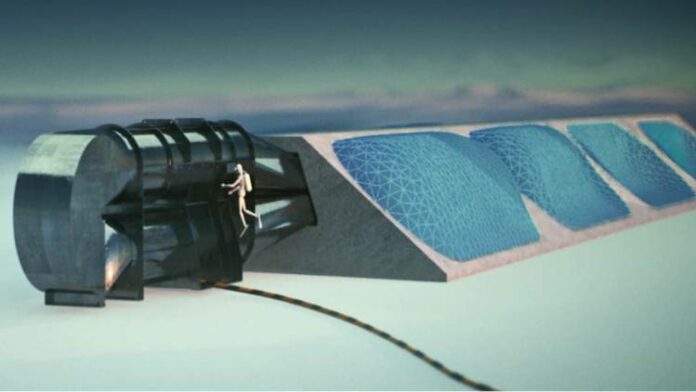
Australian outfit Bombora Wave Power is partnering with Enzen to deliver a wave energy project in waters off the Spanish island of Lanzarote in the Atlantic Ocean.

The first up to 4MW phase of the development will comprise Bombora's 1.5MW mWaves wave energy converters.

Electricity generated will supplement the island's existing power supply, which comes largely from a diesel-fuelled plant.

The partners have also formed a strategic collaboration agreement with the governing body of Lanzarote, Cabildo de Lanzarote.

The project will follow installation of a mWave device at the Marine Energy Testing Area off the Pembrokeshire coast of Wales, which is due for completion in the summer of 2020.

Bombora said the Welsh project will run concurrently with the Lanzarote installation.

Enzen Spain chief executive Harish Gopal said: “Our commitment to the Cabildo de Lanzarote, is to lead their transition of energy generation to renewable sources, developing energy solutions with low or zero impact on the physical environment to ensure conservation of land on the island."

We are delighted that as part of that programme we have selected Bombora as one of our key partners to supply a technology solution to enable us to generate energy with no visual pollution.

Bombora managing director Sam Leighton said: “This grid connected wave farm project is a very exciting opportunity for both Bombora and the people of Lanzarote and will place Lanzarote at the global forefront of wave energy commercialisation.”

Enzen and Bombora are now engaging with the local supply chain in Lanzarote to deliver the project with Bombora providing specialist engineering support from our European headquarters in Wales.

Source:renews
Van Oord team piles into noise reduction

0

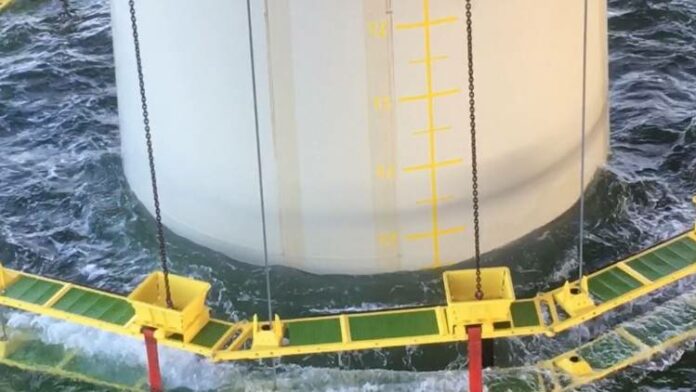
Van Oord and AdBm Technologies, with support from TNO, have demonstrated a new system for reducing underwater noise during pile driving work for offshore wind turbine foundations.

The AdBm Noise Mitigation System (NMS) uses acoustic resonators designed and produced by AdBm Technologies to reduce the noise from pile driving.

This results in less disturbance for marine mammals near construction sites.

The partners said specific frequencies that produce the most noise can be targeted by the technology.

The NMS deployment system was designed and built at Van Oord and works as if it were “window blinds that can be put up and down easily”, the company said.

Testing showed that the NMS, in combination with a big bubble curtain, meets Dutch and Belgian standards for noise emissions at sea.

Van Oord now plans to commission the NMS for work on the Borssele 3&4 and 5 offshore wind farms.

Funding for the system and the related trials came from a renewable energy grant from the Netherlands Enterprise Agency and was also supported by TKI Wind op Zee.

Source:renews

Sonardyne Tech for Canadian Seabed Observatory

0

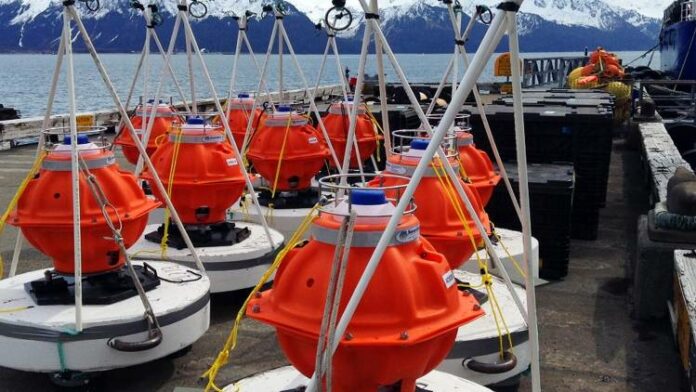
Sonardyne International is supplying acoustic sensing technology for a new seabed observatory that will provide critical information about earthquake and tsunami hazards is to be deployed offshore Vancouver, Canada.

The new Northern Cascadia Subduction Zone Observatory (NCSZO) will use a “seafloor GPS” network to monitor long-term movements of the subducting Juan de Fuca plate and overriding North American tectonic plate.

Data gathered by the new observatory will play a critical role in informing assessments of earthquake and tsunami risk to the large populations of the Pacific North-West.

The NCSZO is led by Ocean Networks Canada (ONC)—an initiative of the University of Victoria—and is made possible through cooperation of international partners that include Natural Resources Canada (NRCan) scientists at the Pacific Geoscience Centre and David Chadwell from the Scripps Institution of Oceanography.

More than 20 Sonardyne Fetch subsea sensor logging nodes, which will be deployed in depths ranging from 400 to 2,500 metres of water depth for seven years or longer at a time, will comprise the backbone of the NCSZO.

Data will be acquired up to two times a year using a technique called GPS-Acoustic method (GPS-A), the commercial application of which has been pioneered by Sonardyne. GPS-A uses acoustic positioning techniques, inertial navigation, and GPS data to periodically position the Fetch instruments to centimetre-level accuracy, using a Sonardyne transceiver mounted on an unmanned surface vessel.

These measurements will enable the Fetch positions to be related to a corresponding onshore network of geodetic stations operated by NRCan, allowing the subsea plate motion and onshore plate motion to be correlated, which has only recently been made possible.

A number of Fetch units will also be connected to ONC’s existing 900 kilometre-long NEPTUNE cabled ocean observatory to study the potential for continuous measurements. Furthermore, the cabled units will include Sonardyne’s innovative Ambient-Zero-Ambient (AZA) functionality, which enables the instrument’s high quality pressure sensor to be automatically recalibrated in-situ, by periodically measuring the sensor bias against an integrated low pressure sensor.

Source:marinelink

Trelleborg shields WindFloat Atlantic cables

0

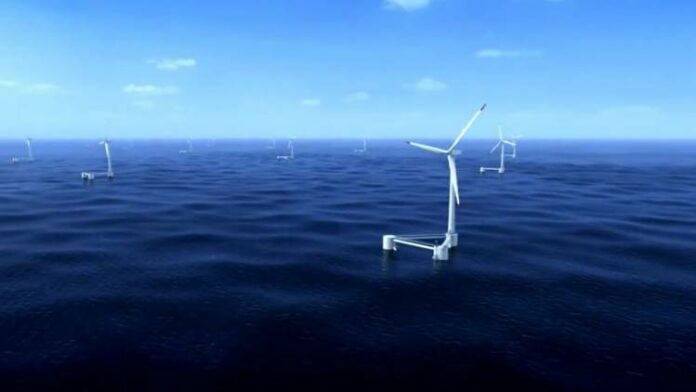
Trelleborg will provide cable protection for the 25MW WindFloat Atlantic project off the coast of Portugal.

The contract with JDR Cable Systems is for the design, manufacture and delivery of dynamic cable protection products, including distributed buoyancy modules (DBM).

Developer WindPlus is installing the project, comprising three MHI Vestas V164-8.4 MW turbines installed on ballasted, triangular, semi-submersible foundations, supplied by Principle Power.

The floating wind farm will be situated in water depths of 100m off the coast of Viana do Castelo. Installation will take place later this year.

JDR Renewables is supplying the 66kV inter-array cables for the project.

JDR renewables project manager Paul van Es said: “The harsh environment of the Atlantic is a perfect proving ground for floating offshore wind and our technology."

We believe engineering innovations such as these are essential to make a success of floating offshore wind and to enable the sector to make the most of its global potential.

Trelleborg’s UK offshore operation supplied cable protection products for JDR’s WindFloat 1 prototype in 2011.

In floating production environments, subsea electrical power cables are used to inter-connect floating structures on offshore wind farms and run between the substation and the shore.

Trelleborg’s DBMs and bend limitation products are designed to secure, guide and protect power cables from excessive movement and bending that cause fatigue damage.

The WindFloat platform is connected to the seabed by a catenary mooring system, avoiding offshore operations associated with installing traditional fixed structures, reducing potential impact on the environment.

In March JDR chose Nexans to provide the connectors that terminate the inter-array cables, as well as a flexible connection inside the turbine between the transformer and switchgear.

Source:renews

British ports are the solution to UK’s economy

0

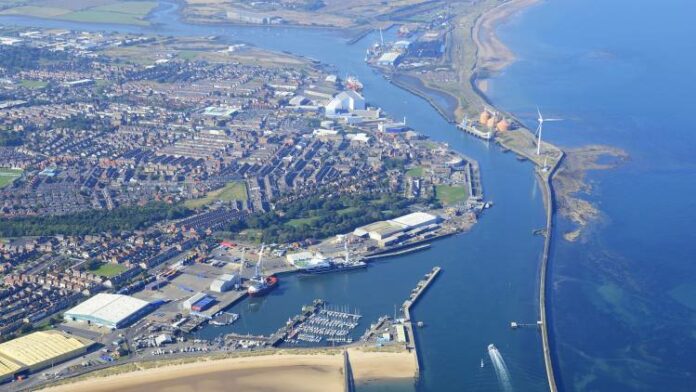
During British Ports Association’s annual lunch and AGM, on Tuesday, April 30, the guests discussed about the British ports, noting that their role is in supporting a variety of economic and environmental goals. Mr Martin Lawlor, Chief Executive at the Port of Blyth noted that ports are the solution and not the problem and should thrive in environmental improvements as they are a crucial part of UK's economy.

Maritime Minister Nusrat Ghani MP, speaking at the lunch, highlighted "Ports are key to the vitality of the UK economy – underpinning regional and national growth."

In the meantime, Mr Martin Lawlor, Chief Executive at the Port of Blyth, addressed the crucial role the ports play in UK economy and the challenges they have to deal with to be as clean and green as possible.

The British ports are hubs of regional economic employment in coastal towns and cities as well as the base of the burgeoning 'blue economy'.

"Ports are gateways for numerous maritime sectors including cruise, fishing, offshore energy, leisure and of course general cargo movement, with UK Ports handling 95% of the nation’s goods."… Mr Lawlor noted.

He continued that ports are part of the solution, not part of the problem, as they enable the entire blue economy, support safe navigation of vessels from jet skis to oil tankers and doing so independently and at no cost to the taxpayer.

"Shipping remains the most efficient way to move freight – whether it be from Brazil to the UK or from England to Scotland: your average bulk carrier is more efficient than a Toyota Prius.".. Mr Lawlor highlighted.

During his speech, he spoke in favour of the close relationship between BPA and the Government, as well as he welcomed the Government’s ambitious Maritime 2050 strategy. He calle don Minsters to provide a regulatory and economic environment that offers certainty and is open to investment and innovation.

Cocnluding, he applauded initiatives as the recent Offshore Sector Wind deal which sets out bold targets that will drive further investment in a growing and competitive industry as well as in those that support it, such as ports.

Source:safety4sea

Singapore port completes first ship-to-ship LNG bunkering

0

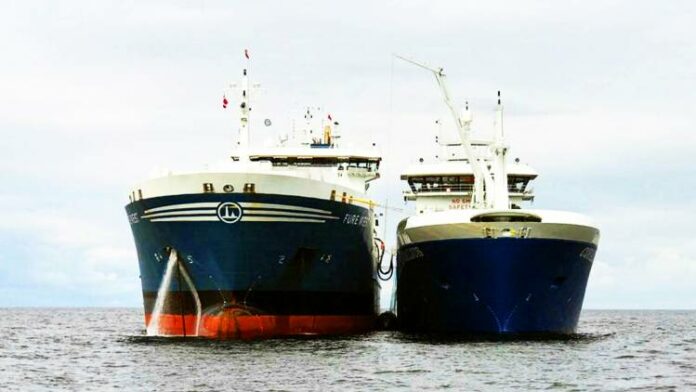
The port of Singapore has witnessed its first ship-to-ship LNG bunkering involving the transfer of LNG as a marine fuel from a small-scale tanker to a heavylift vessel.

The bunkering operation involved the reload of 2,000 cu m of LNG onto the small-scale tanker at a newly-modified secondary jetty of Singapore LNG (SLNG) terminal, followed by a ship-to-ship transfer to the receiving heavylift vessel.

The operation was performed by Pavilion Energy’s subsidiary Pavilion Gas, a licensed LNG bunker supplier in Singapore.

“Pavilion Energy’s first commercial ship-to-ship LNG bunkering operations in Singapore demonstrates our strong commitment and capability to deliver a comprehensive suite of LNG bunker supply solutions to Singapore and the region,” said Frederic H. Barnaud, group ceo of Pavilion Energy, wholly-owned by Singapore government’s investment firm Temasek.

In 2017, Pavilion Energy demonstrated its first truck-to-ship bunkering capabilities before expanding its bunker logistics with the charter of its first LNG bunker tanker newbuild in February 2019. The 12,000 cu m GTT Mark III Flex membrane LNG bunker tanker is scheduled for delivery by 2021 from Sembcorp Marine shipyard.

Tan Soo Koong, ceo of SLNG Corporation, said: “We strongly believe that LNG will become the worldwide fuel of choice for bunkering in the long term, and SLNG is well-positioned to facilitate this development. We are keen to work with all stakeholders and invest in infrastructure as necessary, to help grow LNG bunkering here.”

Source:seatrade-maritime

Oceaneering secures rig support contract from Wintershall

0

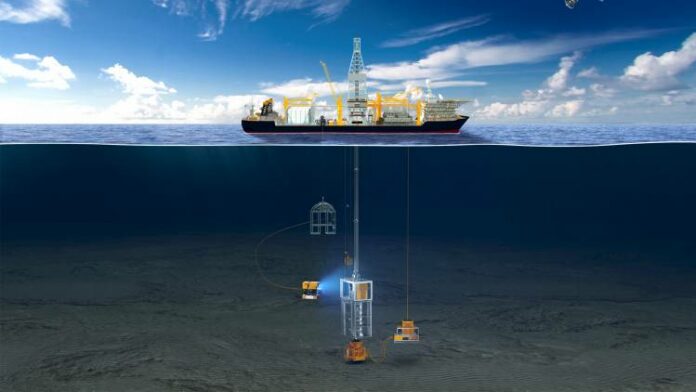
Houston-based Oceaneering International has been awarded a drilling and completion support contract for integrated services with Wintershall Norge.

The contract is for ROV services for the drilling unit West Mira, which will be drilling on Wintershall-operated fields in the Norwegian Continental Shelf, including Vega, Nova and Maria. ROV services provided will include the installation of hangar systems, remote onshore mission support services, BOP tethering systems, subsea landing bases, ROV tooling and engineering services.

The contract duration is for three years and includes two-year extension options.

Erik Sæstad, VP & country manager for Norway at Oceaneering, commented: “We are delighted to have won this contract with integrated services where we leverage our products and service portfolio and provide a lower cost solution as well as a reduced carbon footprint and reduced HSE risk as the operations will be supported from the Oceaneering’s Mission Support Center in Stavanger.”


Northern Drilling exercises drillship option at DSME

0

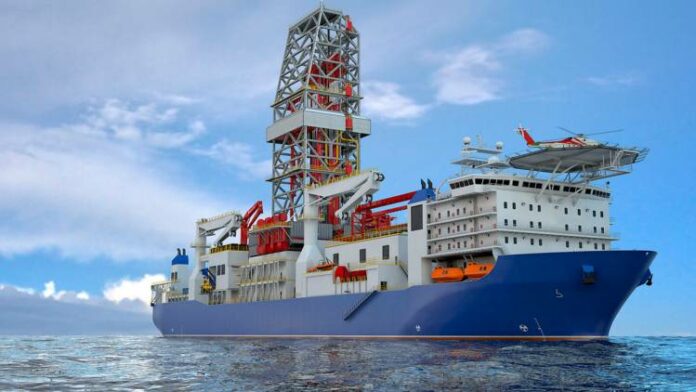
John Fredriksen’s rig investment company Northern Drilling has exercised its option for newbuild drillship Cobalt Explorer from South Korean yard DSME.

Northern Drilling is paying $350m for the drillship and delivery is flexible through to the end of the first quarter of 2021.

Cobalt Explorer was originally ordered by Vantage Drilling and terminated in 2015. Northern Drilling picked up the $350m option in May 2018, at the same time it agreed to acquire drillship pair West Aquila and West Libra for $296m each.

Scott McReaken, CEO of Norther Drilling, commented: “With the Cobalt Explorer acquisition, Northern Drilling continues to execute on our strategy and adds to our premium fleet of Tier 1 drillships, all acquired at a substantial discount to replacement cost. The Company’s two harsh environment rigs were acquired on a similar forward delivery basis and we have successfully secured contracts with premium operators at leading day rates in the North Sea. The deepwater market is showing clear signs of a recovery providing increased confidence our drillships will continue to appreciate in value and secure attractive contracts by their delivery in 2021.”

The company also announced that Wintershall has exercised the fourth and final front end option for West Mira, bringing the commencement of operations forward into mid quarter three 2019.

Source:splash247

More than 100 shipping companies support speed measures to reduce emissions

0

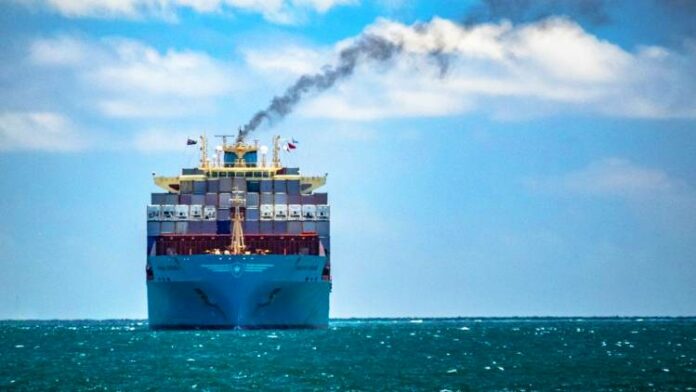
More than 100 shipping companies have publicly supported mandatory speed limits for shipping, in order to reduce GHG emissions in an open letter to member states of IMO. Among others the signatories include Tsakos Shipping and Trading, Navios Maritime Holdings, and Dynagas, Euronav and Louis Dreyfus.

According to the letter: "The signatories to this letter unite in stressing the urgent need for shipping to make its appropriate contribution to addressing climate change. As the initial step we express our strong support for the IMO implementing mandatory regulation of global ship speeds differentiated across ship type and size categories."

In 2015 world governments agreed in Paris that global temperature rise must be limited to well below 2ºC, while aiming for 1.5ºC compared to pre-industrial levels. A recent IPCC 1.5º Special Report also suggested 'deep emission reductions' to achieve these temperature goals.

Responding to this global challenge, the IMO agreed in April 2018 on an Initial GHG Strategy for international shipping. The strategy calls for shipping emissions to peak as soon as possible, for shipping’s carbon intensity to be decreased by at least 40% by 2030 and for total emissions to be cut by at least 50% by 2050 compared to 2008, while aiming for full decarbonisation.

To do so, new operational measures are necessary for both the current fleet and new ships and immediate reductions achieved by 2023.

The signatories added that since April 2018, several candidate measures have been proposed including speed regulation for all ships.

Recent history shows that reducing the global fleet’s operational speed after the 2008 economic crash led to dramatic reductions in GHG emissions. This speaks to the real-world effectiveness of a potential prescriptive speed measure in helping achieve reduction targets

However, they explained that recent studies suggest that vessels are increasing their speed as global demand increased. If this continues, any GHG gains from slow steaming over recent years will disappear, the mention.

In addition, the state that their preference would be a maximum annual average speeds for container ships, and maximum absolute speeds for the remaining ship types, which consider the minimum speed requirements. Such a regulation should be implemented as soon as possible and the obligation for compliance should be placed both on shipowners and operators, including charterers.

"We call on all Parties at the forthcoming MEPC74 to support this move"

The letter concludes.

On the other side, the UK Chamber of Shipping takes a look at a proposal to reduce emissions, which is speed reduction. The Chamber comments that this idea is not new to the IMO, but until now it has not been accepted, as it would directly impact worldwide trade.

This proposal may have a positive intention, but it does not match the risk leaving gaps in the IMO’s decarbonisation plan, while its implementation and enforcement are also problematic, the UK Chamber of Shipping notes.

Source:safety4sea

Total, Kosmos, Burullus contract EnscoRowan ultra-deepwater floaters

0

 Ensco Rowan plc has issued an update on its offshore drilling rig fleet.

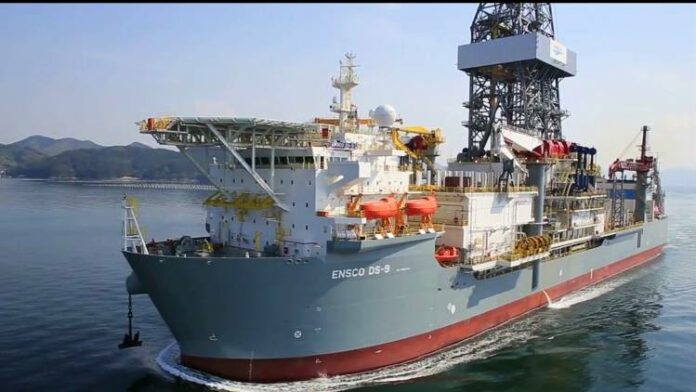
Offshore Brazil, Total has awarded the ultra-deepwater drillship ENSCO DS-9 a four-well contract that is expected to start in June 2019. The contract includes two one-well options.

Offshore Egypt, Burullus Gas Co. has awarded the ultra-deepwater drillship ENSCO DS-7 a 180-day contract that started this month. The contract includes eight one-well options.

In the US Gulf of Mexico, Kosmos Energy has awarded the ultra-deepwater semisubmersible ENSCO 8503 a six-well contract that is expected to start this August. Ankor Energy has awarded the jackup ENSCO 68 a one-well contract that is expected to start next month.

In the UK North Sea, Faroe Petroleum has awarded the jackup ENSCO 100 a nine-well contract that is expected to start in November 2019. The rig is contracted for nine P&A wells. The contract includes 12 one-well options. Petrofac has awarded the jackup ENSCO 72 a three-well contract that is expected to start in May. Neptune has awarded the jackup ENSCO 101 a one-well extension, with an estimated duration of three months. NAM has extended the jackup ENSCO 122’s contract by one well, with an estimated duration of 30 days.  

Source:offshore-mag