-2.1 C
New York
Home Blog Page 1062

SBM Wins ExxonMobil Guyana FPSO Order

0

Dutch-based floating production and mooring systems (FPSO) provider SBM Offshore has  won a contract to deliver an FPSO for ExxonMobil’s second phase of the Liza development offshore Guyana.

Esso Exploration and Production Guyana Limited (EEPGL), an affiliate of Exxon Mobil Corporation, has confirmed the award of contracts for the next phase of the Liza project in Guyana, said a press release from the company.

Under these contracts, SBM Offshore will construct, install and thereafter lease and operate for up to two years the Liza Unity FPSO. This follows completion of front-end engineering studies, receipt of requisite government approvals and the final investment decision on the project by ExxonMobil and block co-venturers.

The Liza Unity FPSO design is based on SBM Offshore’s industry leading Fast4WardTM program as it incorporates the Company’s new build, multi-purpose hull combined with several standardized topsides modules.

The FPSO will be designed to produce 220,000 barrels of oil per day, will have associated gas treatment capacity of 400 million cubic feet per day and water injection capacity of 250,000 barrels per day.

The FPSO will be spread moored in water depth of about 1,600 meters and will be able to store around 2 million barrels of crude oil.

The Liza field is located in the Stabroek block circa 200 kilometers offshore Guyana. EEPGL is the operator and holds a 45 percent interest in the Stabroek block. Hess Guyana Exploration Ltd. holds a 30 percent interest, and CNOOC Petroleum Guyana Limited holds a 25 percent interest.

SBM Offshore CEO Bruno Chabas said: “We are proud that ExxonMobil awarded SBM Offshore the contracts for the Liza Unity FPSO. The Company is confident that this project will demonstrate the value that our Fast4WardTM program brings to our clients. We look forward to continuing the cooperation with our client ExxonMobil on this second important project in Guyana.”

Source;marinelink
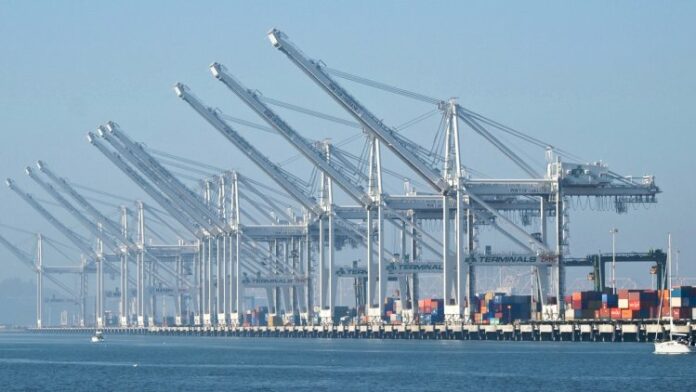
Port of Oakland discusses return of bulk shipping after 20 years

0

The Port of Oakland, in US' Pacific coast, announced it has begun negotiations with a Canadian building materials shipper to transport sand and gravel to the Port, marking return of bulk shipping operations to the Port for the first time in 20 years.

On 9 May, the Port’s governing Board authorized talks with the Vancouver-based company Eagle Rock Aggregates, which seeks a vessel berth along with 20 acres of adjacent land at the Port’s Outer Harbor Terminal.

Eagle Rock would use the property as a base for distributing sand and gravel for Bay Area construction sites.

The firm said it wants a 15-year lease for one berth on Outer Harbor. Eagle Rock would ship sand and gravel from British Columbia to produce concrete for Bay Area builders.

Oakland is one of the busiest container seaports in the US, handling the equivalent of 2.5 million 20-foot containers last year.

The Port noted that a deal for bulk shipping would not hamper container operations.

The Port has nearly 1,300 acres devoted to containerized cargo. Outer Harbor Terminal is currently used for container-related activities and berthing for vessels in lay-up for extended periods.

A deal to transport bulk cargo through Oakland would mark a new twist in the Port’s 92-year history.

The Port began life in 1927 handling bulk commodities loaded directly into the hold of ships.

Oakland revolutionized shipping in 1962 when it introduced containerized cargo to the West Coast.

The Port abandoned bulk in 1999 by adopting Vision 2000, a totally containerized cargo strategy. Now it could be going back to its roots, albeit on a small scale.

"This is an opportunity for us to perhaps diversify our business. We’ve built the Port of Oakland to be a global gateway for containerized cargo but a steady, divergent revenue stream could be beneficial,"...said John Driscoll, the Port’s Maritime Director.

Autonomous vessel makes first ever commercial crossing of North Sea

0

An autonomous boat has successfully conducted a cargo run from the UK to Belgium. The 12m-long SEA-KIT Maxlimer sailed from West Mersea to Oostende on May 6, carrying a box of oysters. In order to navigate safely in one of the busiest shipping lanes, it relied in various technologies.

According to the boat's owner, SEA-KIT International, this was the first commercial crossing of the North Sea by an autonomous ship. The vessel is able to adapt to numerous tasks, whether that is transit, hydrographic surveys, environmental missions, or marine safety and security.

In order to sail as safe as possible, the ship uses communications and control system known as Global Situational Awareness through Internet. With this technology, operators can remotely access CCTV footage, thermal imaging and radar through the boat. They are also able to listen live to the USV’s surroundings and even communicate with others nearby.

The sail lasted a total of 22 hours, as the ship can move slowly at only a few knots. In addition, it can use and recover a sonar-equipped autonomous underwater vehicle that will collect bathymetric data.

The trip was supported by numerous agencies, such as the UK MCA, the Department for Transport, the Foreign and Commonwealth Office, the European Space Agency, and partners in Belgium.

Speaking at BBC News, Ben Simpson of SEA-KIT International, explained that the vessel can do the same work as traditional vessels but using a fraction of the fuel, just 5%.


Cyber-securing the web requires a fresh start

0

Looking for regulations to invest in cybersecurity requires a fresh start, keeping in mind that the digital world is developing everyday, while guidelines and rules can not keep up and adapt to a changing environment. The best way to achieve future cybersecurity is scrapping the web of today and start over by baking protections into the new version, according to the top security official at the Maritime Administration, Cameron Naron.

Specifically, as Security Official Naron addressed during the 2019 Sea-Air-Space symposium, a dramatic change to a new web is not possible to happen anytime soon.

Security Official Naron noted.."We’re wedded to the current web, [but] it was never designed for cybersecurity. We’re unprepared for what comes next."

Gregg Kendrick, the executive director of the Marine Corps Cyber Command reported that everyone should deal with cyberspace as 'information for us'.

On a military and security context, Kendrick stated that we should focus on defending the vulnerabilities and not patch them.

Matthew O’Connor, a Google representative, said that threats and changing actors are an everyday challenge for a cyber giant as Google; Security and privacy is a priority for the company.

Naron noted that MARAD is a very different situation in comparison to Google; the latter hires people well-educated and experts on dealing with cyber threats, on the contrary, in the maritime industry there's no standardization of training and operating in cyber.

Each company follows its own track, directly following policies entirely contrary to collaboration.

Kevin Tokarski, a top official at MARAD, reported on US Naval Institute News, that he looks at cyber in a different way – not focused on people but the systems.

Source:safety4sea

Clean Arctic Alliance calls for reducing shipping black carbon impacts on Arctic

0

The Clean Arctic Alliance urged the IMO Member States to reduce the impact of black carbon emissions from international shipping on the Arctic environment, as the UN body gathers in London for a meeting of its MEPC74. During the meeting, a number of issues, including black carbon emissions and heavy fuel oil (HFO) in the Arctic will feature on the agenda.

When black carbon is emitted from ships burning heavy fuel in or near Arctic waters, particles fall on ice or snow, reducing its reflectivity and causing it to absorb more heat. This accelerates the warming of the Arctic.

Sian Prior, Lead Advisor to the Clean Arctic Alliance, a group of nonprofit organisations campaigning for a ban on use and carriage of ban HFO, commented that:

By cutting ship-sourced emissions of black carbon, IMO member states could take a quick and effective path to countering the current climate crisis, and minimise further impacts on the Arctic. We’re calling on IMO member states to champion a move away from using heavy fuel oils – shipping’s number one source of black carbon – in Arctic waters

Last year, during MEPC 72 in April 2018, a strongly-worded proposal to ban HFO as shipping fuel from Arctic waters was co-sponsored by Finland, Germany, Iceland, Netherlands, New Zealand, Norway, Sweden and the US. The ban is currently being developed within the IMO.

In this aspect, at a public discussion at the April 2019 International Arctic Forum in Saint Petersburg, Finnish President Sauli Niinistö said that there are two promising ways to mitigate black carbon emissions in the Arctic. One is modernising outdated heating and power plants. Another is investing in clean and sustainable shipping.

Russian President Vladimir Putin was in the same wavelength, saying that as the Arctic is warming four times faster than the rest of the world, vessels must convert to more environmentally friendly types of fuel.

Earlier this month, the Clean Arctic Alliance called on the need for Arctic nations to reinstate their commitment to decreasing  black carbon emissions, through cooperation within the IMO, after the Arctic Council Ministerial meeting in Finland did not manage to achieve a consensus on issuing a joint declaration for the first time in its 23-year history, because of the US refusal to support the need for collaborative action by the Arctic Council to address climate change.

The most concerning fact is that the UN’s Intergovernmental Panel on Climate Change has warned that we have 12 years to limit a climate change catastrophe. In fact, recent reports suggest that Greenland’s ice sheet is 'falling apart', with about half of the nearly 5,000 gigatons of water lost from the ice sheet since 1927 taking place in 8 years between 2010 and 2018.

Source:safety4sea

IMO: Hong Kong Convention must enter into force as soon as possible

0

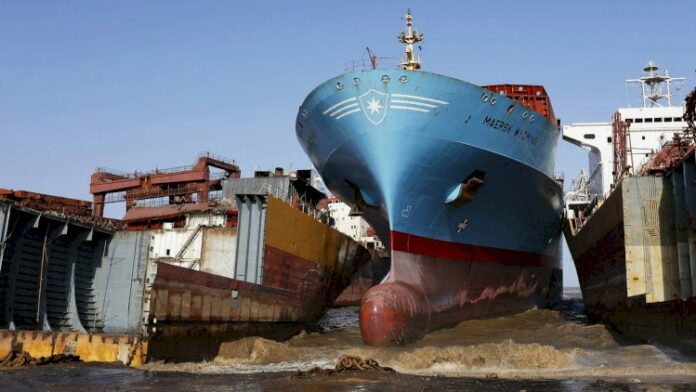
Ten years after the adoption of IMO’s Hong Kong Convention for the Safe and Environmentally Sound Recycling of Ships, in May 2009, there has been progress with voluntary application of its requirements, but the treaty needs to enter into force for it to be widely implemented. For this reason, IMO Secretary-General Kitack Lim urged Member States who have not yet ratified the Convention, to do so, in order to bring it into force as soon as possible.

Kitack Lim made these remarks at an International Seminar on Ship Recycling: Towards the Early Entry into Force of the Hong Kong Convention (10 May). The seminar was organized by the Ministry of Land, Infrastructure, Transport and Tourism (MLIT) of Japan in cooperation with the IMO Secretariat.

The seminar aims to highlight how to promote sustainable ship recycling and discuss what is necessary to move forward for the early entry into force of the Hong Kong Convention.

The Hong Kong Convention regards the design, construction, operation and maintenance of ships, and preparation for ship recycling in order to enable safe and environmentally sound recycling, without impacting the safety and operational efficiency of ships.

According to the treaty, ships must carry an Inventory of Hazardous Materials, specific to each ship. In addition, ship recycling yards have to provide a 'Ship Recycling Plan', specific to each individual ship to be recycled, specifying the manner in which each ship will be recycled, based on its particulars and its inventory.

Secretary-General Lim highlighted the work already done by IMO to establish guidelines to help in implementation, with various awareness-raising workshops, training and other similar projects, These help build capacity in ship recycling countries and establish the conditions that will enable those which have not yet done so, to ratify or accede to the Convention.

Namely, the project on "Safe and Environmentally Sound Ship Recycling in Bangladesh" (SENSREC), funded by the Government of Norway and jointly implemented by IMO, the Government of Bangladesh and the Secretariat of the Basel, Rotterdam and Stockholm Conventions (BRS), is in its second phase. It focuses on building the country's institutional capacity and implementing the training materials based on Phase I. In the meantime, Japan has been working with relevant stakeholders to enhance ship recycling in South Asia.

As of now, the Hong Kong Convention has been ratified or acceded by eleven States: Belgium, Republic of the Congo, Denmark, Estonia, France, Japan, the Netherlands, Norway, Panama, Serbia and Turkey.

The combined merchant fleets of these eleven States constitute 23% of the gross tonnage of the world’s merchant fleet and their combined ship recycling volume constitutes about 1.6 million gross tonnage.

In order for the Convention to enter into force, it requires 15 States, 40% of the world's merchant fleet and their ship recycling volume constituting not less than 3% of the gross tonnage of these contracting States' merchant fleet.

Source:safety4sea

Cosco Shipping Shanghai opens new ship repair yard in Zhoushan

0

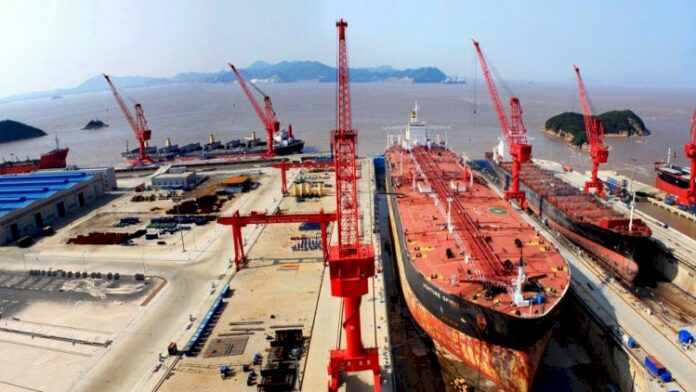
Shanghai Shipping Maritime Technology, a wholly-owned subsidiary of Cosco Shipping Shanghai branch, opens up a new ship repair base in Zhoushan, Zhejiang province.

Zhao Bangtao, general manager of Cosco Shipping Shanghai said that it established the new ship repair base is part of the company’s business consolidation and optimisation plan. He said it would improve the company’s integrated service capability and efficiency.

The company started the construction of the ship repair yard in Liuhengdao, Zhoushan in December 2018.

Cosco Shipping Shanghai is a regional company of Cosco Shipping Group, focusing on liquid chemical products transportation and storage. The company will also work with Cosco Shipping Energy Transportation to expand cooperation for the new ship repair yard.

Zhoushan is one of the leading ship repair bases in China. The yards in Zhoushan repaired around 2,000 ships last year, accounting for 20% of the nation’s total ship repair volume.

Source;seatrade-maritime

SeaTwirl secures Chinese patent

0

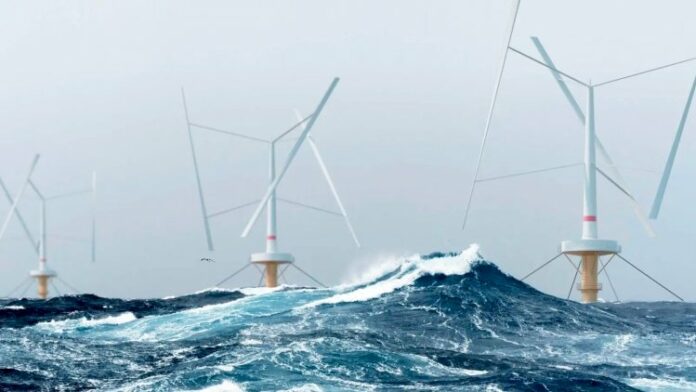
Swedish outfit SeaTwirl has had a patent approved in China for a divisible wind turbine.

The patent, which has recently also been approved in the US, protects a solution where the turbine is divisible above and below the house that holds the generator and bearing.

This means that the entire generator and bearing housing can be replaced just above the water surface by boat, SeaTwirl said.

“It facilitates and reduces the cost of installation and maintenance, and means that the downtime, ie the time when the wind turbine cannot produce electricity due to repairs and maintenance, can be minimised,” the company said.

SeaTwirl chief executive Gabriel Strangberg said: “The Chinese market is the one that stands for the most expansion of wind power in the world, and floating wind power will also be included in the future expansion, which makes it important to protect our technology even there.”

The company added that it works strategically to build a broad patent portfolio in several markets.

Source:renews

Aqualis, Braemar forge offshore alliance

0

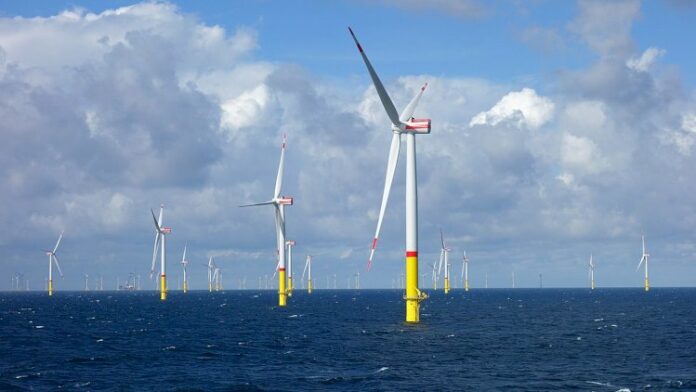
Energy consultancy Aqualis and services company Braemar Technical Services are to join forces to create a new company that will focus on offshore wind and other marine industries.

AqualisBraemar, formed through the latter’s acquisition of the former’s marine, adjusting and offshore business units, will have a dedicated renewables unit as well as three other divisions.

Braemar is to take a 26% equity stake in the enlarged consultancy, which will employ more than 430 full-time staff globally, as part of the transaction. This could rise to 33% depending on business performance.

The new company will have a broader service offering and increased scale, while minimal overlap in renewables will lead to “immediate opportunities for enhanced growth”.

Aqualis chief executive David Wells, who will also head up the new outfit, said: “By joining forces, we create a more sustainable business with strong platform for international growth."

He added: “We will be better able to support our clients’ growth by offering our joint and enhanced leading expertise. With our larger scale, more resources and our engaged and talented people, we will improve our ability to meet our clients’ needs globally.”

The merger is expected to create "significant" shareholder value through estimated run rate EBITDA synergies of approximately US$2m to be implemented in full by year-end 2021.

The combined company’s executive management will consist of Wells, CFO Kim Boman (Aqualis), group and offshore COO Reuben Segal (Aqualis) and COO insurance services Grant Smith (Braemar), with other senior divisional management selected from top talent within both companies. The head office will be located in London.

Braemar chief executive James Kidwell said: "Our respective businesses fit well together and the combination will create a market leading position in Offshore, Marine, Adjusting and Renewables services with global coverage which will enable the stronger combined business to unlock significant revenue and cost synergies."

We strongly believe that the enlarged Aqualis group, which will retain the Braemar name and trade as AqualisBraemar, will bring numerous benefits and opportunities to both clients and employees going forward.

Completion of the transaction is subject to the approval by Aqualis shareholders at an AGM, which is expected on 11 June.

The deal is not subject to any regulatory approvals and could close by the end of June.

Source:renews

Flagships secures funding for two hydrogen-powered vessels

0

European innovation project Flagships has been awarded EUR5m ($5.6m) from the EU to support the construction of two hydrogen fuel cell vessels in France and Norway.

The project includes the construction and deployment of two vessels, one in Lyon, France and the other in Stavanger, Norway.

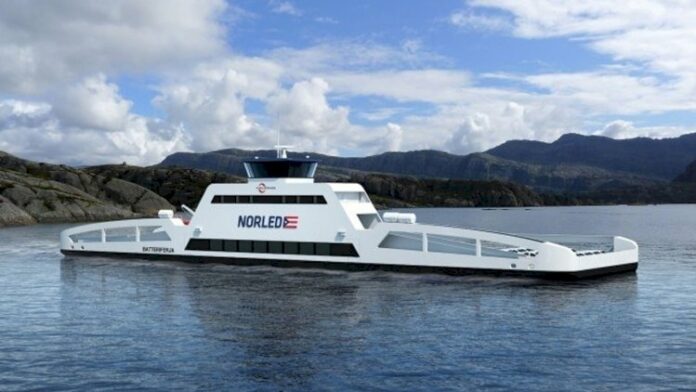
In Lyon, Compagnie Fluvial de Transport (CFT) will operate the hydrogen push-boat as a utility vessel on the Rhone river. In Stavanger, hydrogen will be used to power a passenger and car ferry operated by Norled as part of the local public transport network.

The funds have been granted from EU’s research and innovation programme Horizon 2020 under the fuel cells and hydrogen joint undertaking.

“Both the EU and the shipping industry see hydrogen as a key contributor in the work to mitigate climate change. The Flagships project sets out to raise the readiness of hydrogen-powered waterborne transport to a new level globally”, said Antti Pohjoranta, senior scientist and project manager from VTT Technical Research Centre of Finland who will be coordinating the project.

The project aims to enable truly zero-emission operation of the ships, and also create a solid basis for further local zero-emission transport deployment both at sea as well as on land.

In addition to the project funding, significant additional investment to build the ships is made by CFT and Norled as well as the consortium partners.

The project will also be the building of European support networks covering hydrogen fuel supply chains, vessel design and manufacturing competence networks as well as significantly broad-based regulatory expertise.

“Flagships is a key project to demonstrate the superior features of hydrogen fuel cells in the maritime sector: Lower CO2 and pollutant emissions and reduced noise amongst the most critical. The project will cooperate with relevant organisation such as CESNI, IMO and certification bodies to speed up the introduction of hydrogen for the maritime sector both for inland and coastal operations and for freight and passenger transportation,” said Bart Biebuyck, executive director of the FCH2 JU.

The consortium includes nine European partners in the maritime and technology sectors – Norled, CFT, ABB, LMG Marin, Ballard Europe, PersEE, VTT and NCE Maritime CleanTech. Additionally, Westcon Power & Automation is expected to officially join the consortium soon.

The project started in January and the hydrogen ships are expected to start operations in 2021.

Source:splash247