2.6 C
New York
Home Blog Page 1049

Robot drones to inspect offshore wind farms

0

A new project launched, aims to construct the world's first fully autonomous robotic inspection solution, in favour of offshore wind farms.

The project will cost $5 million, and the robots are expected to save the average of wind farm by about $33 million. In the meantime, it aspires to present the idea that offshore wind operations and maintenance missions can take place by autonomous and digital means.

The Innovate UK-funded MIMRee (Multi-Platform Inspection, Maintenance and Repair in Extreme Environments) is an ambitious two-year project bringing in expertise from the fields of robotics, non-destructive testing, artificial intelligence, space mission planning, marine and aerial engineering and nanobiotechnology.

The project consists of eight industry and academic partners, with Plant Integrity being the leader, followed by Offshore Renewable Energy (ORE) Catapult to provide the knowledge on the offshore industry, while also present the MIMRee system.

Martin Bourton, Principal Project Leader at Plant Integrity, commented…"The moment when an autonomous mothership and robotic crew sail in UK waters will be a world-first – and likely a game-changer for the offshore, oil and gas and defence industries too."

Additionally, those taking part in the project either by providing knowledge and expertise, or providing the technological means are Thales’ Halcyon autonomous vessel, a drone system provided by the University of Bristol’s Dr Tom Richardson, and the six-legged crawling repair robot BladeBUG, invented by entrepreneur Chris Cieslak.

Also, The University of Manchester’s Dr. Simon Watson will lead development of a system for transporting, deploying and retrieving the blade crawler, and Dr. Sara Bernardini of Royal Holloway University of London will lead creation of the human-machine interface that will allow personnel located onshore to analyze the data transmitted by MIMRee and intervene as necessary.

According to ORE's press release, in the possibility that the project is successful, it would initiate the digitalization in the offshore industry, by mapping and scanning wind turbine blades, and understanding when the robots should be deployed.

Onboard drones will take off from the mother ship to conduct visual and hyperspectral imaging inspection of the blades and transport crawling robots on to the blade to effect repairs using a robotic arm for resurfacing the blades (created bespoke by Dr. Sina Sareh’s team at the Royal College of Art Robotics Laboratory). An electronic skin, developed by high-tech start-up Wootzano, will ‘feel’ the surface and collect a deeper level of data on the blade surface structure.

Chris Hill, ORE Catapult’s Operational Performance Director, added .."This project aligns closely with the UK Government’s latest Offshore Wind Sector Deal and wider Industrial Strategy and will position the UK as a world leader in robotics and autonomous systems development, as well as highlighting a route to market for innovators in robotics, data and digitalisation services."

Concluding, the eight participants of the project are:

  1. Plant Integrity Ltd
  2. Offshore Renewable Energy Catapult
  3. Thales
  4. Wootzano Ltd
  5. The University of Bristol
  6. The University of Manchester
  7. Royal Holloway, The University of London
  8. The Royal College of Art

Source:safety4sea
Denmark’s digital certificate project begins its voyage

0

The Danish Maritime Authority announced the launch of a pilot project concerning digital certificates for seafarers. The Mumbai Maersk vessel sailed on May 29 from Port of Aarhus towards destinations in Europe, Africa and Asia with crew certificates that are entirely digital instead of traditional paper certificates.

According to the Authority the digitalization of certificates is simpler, faster and safer for seafarers, shipping companies and authorities.

The pilot project has as a goal to explore the benefits of providing digital certificates to the seafarers and lead the way towards their global acceptance and utilization.

The Mumbai Maersk vessel will make stops in port in Germany, Morocco, Singapore, China and South Korea, where it will collect data and knowledge about the use of digital certificates for seafarers in collaboration with Port State Control.

In the meantime, the Authority presented in the early days of May, the project of providingdigital certificates to seafarers, noting that the latter will be able to sign-on the application through a mobile phone, where the captain and the company will have access to the data provided. In addition, both the company and the captain will be able to manage the crew and validate their compliance, while also forward data details to authorities prior to arriving in the next port.

Source:safety4sea

EU will finance autonomous shipping for European waters

0

The European Commission announced its plan on financing autonomous shipping in European waters. AUTOSHIP will construct and operate two remote and autonomous vessels and the required shore control and operation infrastructure, reaching and going over TRL7.

Specifically, AUTOSHIP will build the autonomous vessels around Rolls Royce and Kongsberg, aiming to the creation of a stronger European Cluster that will result to new high skilled jobs and a safer and greener transport in Europe.

Moreover, the trial will be conducted during two pilot demonstration campaigns addressing goods mobility from the Baltic Corridor to a major EU seaport and hinterland, which are most relevant areas with growing waterborne transport market demand in EU.

The AUTOSHIP will boost the Next Generation of Autonomous ships by providing autonomous vessels in real environment Short Sea Shipping and Inland Water Ways.

The package will consist of full-autonomous navigation, self-diagnostic, prognostics and operation scheduling, as well as communication technology enabling a prominent level of cyber security and integrating the vessels into upgraded e-infrastructure. In parallel, digital tools and methodologies for design, simulation and cost analysis will be developed for the whole community of autonomous ships.

Concluding, AUTOSHIP will enable operators and shipowners to enhance the economy of scale of their investments, in order to be more competitive and upgrade their fleet, making them more competitive to replace road transport.

Source:safety4sea

Maersk Container Industry secures first order from ZIM

0

Securing an order of 500 Star Cool Integrated Reefers, Maersk Container Industry (MCI) establishes a strong relationship with customer, ZIM Integrated Shipping Services.
 
ZIM has been offering advanced transport of fruit, meat, medicines, and other frozen or refrigerated cargo to its customers for decades. ZIM has developed unique technologies to ensure that reefer container transportation is as secure, reliable, and efficient as possible. ZIM’s cutting-edge ZIMonitor system combines the latest technology with a comprehensive 24/7 response team. 
 
Dan Bartal, Container Fleet Manager at ZIM Integrated Shipping said: "We are expanding our fleet of ZIMonitor containers to accommodate our customers’ growing demand for our exclusive ZIMonitor service, and we are sure MCI’s highly advanced and energy-efficient Star Cool Integrated reefers will be a great addition to our equipment fleet,”
 
Star Cool technology has a strong track record with around 300,000 units in operation across more than 40 container lines, leasing companies and multinational fruit companies around the globe. Today, more and more customers turn to the technology not only for its proven performance and reliability but to also help meet their increasing sustainability objectives.
 
“Our Star Cool technology offers operators like ZIM the lowest total cost of ownership by combining reliability with lower operating costs, such as the most energy efficient reefer in the industry,” says Anders Holm, Global Head of Sales and Marketing at MCI. “We are pleased to see our product offering matching ZIM’s environmental ambitions so well.”

Production of the Star Cool Integrated Reefers ordered by ZIM will commence in May 2019.

Source:portnews

Blockchain-based Bills of Lading gain traction

0

Describing bills of lading as an “anachronism” a top Scandinavian shipping line a Dutch shipper have joined the blockchain push to retire the ancient paper process.

G2 Ocean, the breakbulk joint venture between Gearbulk and Grieg Star, has just concluded a successful test with Dutch client Manuchar, using CargoX’s Smart B/LTM solution on five shipments from China to Peru.

“Paper Bills of Lading are already considered a historic artefact. The Smart B/LTM solution gives both us and our clients the power of a modern, reliable, and efficient tool. It will bring cost optimisation and improved data security into their processes. The document transaction reliability in this system is undisputable,” said Rune Birkeland, CEO at G2 Ocean.

Many other shipping lines have been trialling blockchain-based Bills of Lading in recent months.

Source:splash247

Jan De Nul orders third jackup installation vessel

0

Jan De Nul Group has commissioned COSCO Shipping Heavy Industry in China to build the Voltaire, its third offshore jackup installation vessel.

The Voltaire is specifically designed to transport, lift, and install offshore wind turbines, transition pieces, and foundations. The company added that it will also be deployable for the oil and gas industry, and for decommissioning of offshore structures.

Key features include a main crane of more than 3,000 metric tons, an operating depth of approximately 80 m (262 ft), a payload of about 14,000 metric tons, and accommodation for 100 persons. The vessel will have four legs and be equipped with a DP-2 system.

Compared to the company's two other jackup vessels, the Vole au vent and the Taillevent, this new vessel has almost double the deck space (7,000 sq m or 75,347 sq ft). According the Jan De Nul, the larger deck space will also enable it to optimize installations at sea and to lower the fuel consumption and emissions.

The company said it designed the vessel to run on gasoil but fitted with an advanced exhaust gas filtering system by means of a selective catalytic reduction system and a diesel particulate filter.

The vessel is named after the French writer, historian and philosopher François-Marie Arouet, known by his pseudonym Voltaire and as an icon of the European Enlightenment of the 18th century.

The Voltaire is set to be delivered in 2022.

Knud E. Hansen provided design review and contributed to the tender design package. The company said it provided the midship section and design of the three-chorded truss work legs, jacking frames, leg wells and the main crane pedestal as well as global and local FEM strength calculations of the hull, legs, and jacking frames.

EU to fund autonomous ship development

0

Acknowledging how Asia has stolen Europe’s shipbuilding business, the European Commission yesterday vowed to fund two autonomous shipping projects. Dubbed Autoship, the autonomous projects include work started by Rolls Royce and Kongsberg.

Autoship will build and operate two remote and autonomous vessels and the required shore control and operation infrastructure. Testing will take place during two pilot demonstration campaigns addressing goods mobility from the Baltic Corridor to a major EU seaport and hinterland.

The technology package will include full-autonomous navigation, self-diagnostic, prognostics and operation scheduling, as well as communication technology enabling a prominent level of cyber security and integrating the vessels into upgraded e-infrastructure. In parallel, digital tools and methodologies for design, simulation and cost analysis will be developed for the whole community of autonomous ships.

Husky outlines near-term offshore targets

0

Husky Energy plans to raise its global production by around 100,000 b/d through 2023, the company revealed in its updated five-year plan.

The $1.6-billion West White Rose development calls for a fixed wellhead platform consisting of a concrete gravity structure and an integrated topsides tied back to the SeaRose FPSO via subsea infrastructure.

Offshore investments will be directed on growing high-netback gas production offshore China and Indonesia and completing construction of the West White Rose facilities offshore Newfoundland, where first oil is likely late in 2022.

Once subsea installations have been completed at the Liuhua 29-1 field development in the South China Sea, first gas should flow around the end of 2020. Husky has a 75% working interest in the field.

Another target is advancing the MDA-MBH and MDK gas developments offshore Indonesia. First production is now expected in 2021.

Major project schedule Capacity (Net) Startup
China – Liuhua 29-1 45 MMcf/d, 1,800 b/d 2020
Indonesia – MDA-MBH, MDK  10,000 boe/d 2021
Canada – West White Rose  52,500 b/d 2022

Source:offshore-mag

China Ocean Industry forced to transfer Nantong Xiangyu shares

0

Hong Kong-listed shipbuilding group China Ocean Industry has received an enforcement order by a court in Jiangsu, ordering the company to transfer its entire 24% equity interest in Nantong Xiangyu Ocean Equipment to creditors.

According to China Ocean Industry, its wholly owned subsidiary Nantong Huakai Heavy Industry failed to repay RMB41m ($5.9m) debt to Rugao Fugang Construction Company and RMB6.92m debt to Nantong Tongbao Shipbuilding.

The court has ordered China Ocean Industry to transfer 21.23% equity interest of Nantong Xiangyu to Rugao Fugang and the remaining 2.77% equity interest to Nantong Tongbao to settle the outstanding debts.

Upon completion of the forced transfer, China Ocean Industry will cease to hold any equity interest in Nantong Xiangyu. The company now has one fully-owned shipyard Jiangzhou Union Shipbuilding.

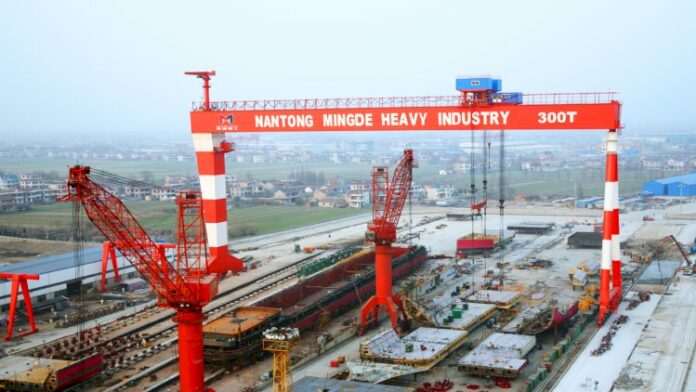
Nantong Xiangyu was established at the end of 2016 after taking over the bankrupt Mingde Heavy Industry. State run Xiamen Xiangyu Group, Nantong Wangzhe Shipbuilding and China Ocean Industry holds 36%, 30% and 24% equity interest in the company respectively, the remaining 10% is held by a trust fund.

Source:splash247

McKeil Marine Adds Chemical Tanker

0

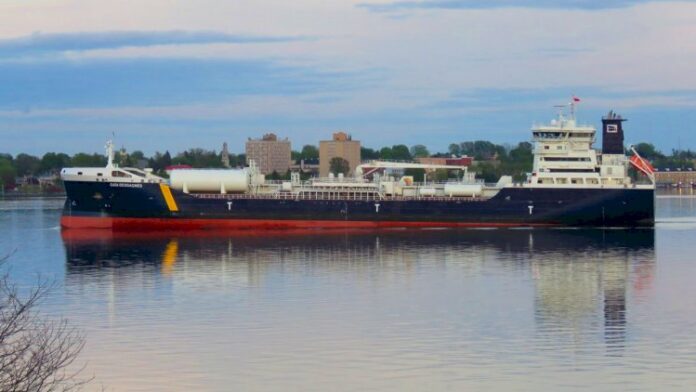
Canada’s marine services provider McKeil Marine Limited has acquired Topaz, an IMO 2, ice class 1A chemical tanker.

With this newest addition to its diversified fleet of tugs, barges, workboats and vessels, including bulkers, cement carriers, and tankers, McKeil expands its offering and is poised for additional growth.

The Panamanian-flagged Topaz built in 2009, measures 137 metres by 20 metres, with a DWT of 13,965 metric tonnes. The vessel was acquired to service the needs of McKeil’s customer Petro-Canada Lubricants Inc. (PCLI).

Her journey originated in Singapore and continued to Malaysia where she loaded a cargo for delivery to the Mediterranean. She made a brief stop in France to load a feedstock cargo for PCLI and arrived in Canada just after Victoria Day to begin her Canadianization process. The Topaz was then officially renamed the Hinch Spirit in honour of IndyCar driver James Hinchcliffe.

Petro-Canada Lubricants is an official team partner of IndyCar team Arrow Schmidt Peterson Motorsports (Arrow SPM), and driver team led by No. 5 James Hinchcliffe. “The partnership with James Hinchcliffe and the team is built upon our collective focus; technology, innovation and safety are the cornerstones of what we do. Our research and development team works closely with Arrow SPM engineers to integrate products into operations to assist on and off the track,” explains Corinn Smith, Director, Communications & Public Affairs, Petro-Canada Lubricants.

The acquisition of the Hinch Spirit (Topaz) supports our commitment to growth and provides expanded opportunities to our crew while creating value for our investors, customers, suppliers and business partners”, states Captain Scott Bravener, President of McKeil Marine Limited.

The Hinch Spirit (Topaz) will trade throughout the Great Lakes, St. Lawrence River and the Eastern Seaboard.