4.2 C
New York
Home Blog Page 1042

Fincantieri and Naval Group sign a joint venture agreement

0

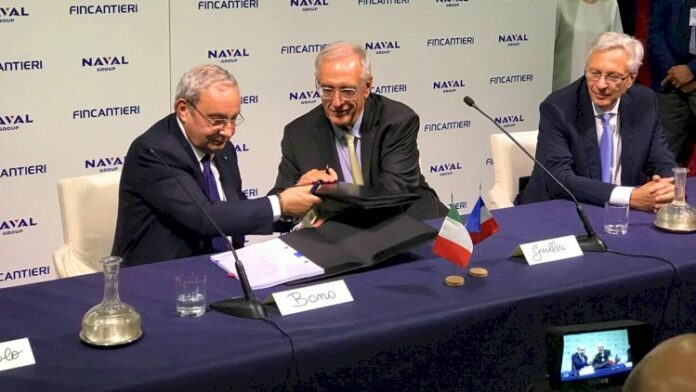
Following the announcement made on 23 October 2018, Fincantieri and Naval Group signed the Alliance Cooperation Agreement, which sets out the operational terms for the incorporation of a 50/50 owned joint venture.

The agreement, which follows the approval by the Boards of Directors of the two companies, embodies the contents of the “Poseidon” project and paves the way towards a broader alliance aimed at reinforcing their military naval cooperation for creating a more efficient and competitive European shipbuilding industry.

The agreement has been signed by the CEOs of the two companies, Giuseppe Bono and Hervé Guillou, on board of the frigate “Federico Martinengo”, moored at the Naval Base of the Italian Navy in La Spezia. The vessel is part of the Italian-French FREMM program, which underlines the soundness of the twenty-year collaboration between the two countries, their industries and the national navies.

The incorporation of the JV, expected in the coming months and in any case before the end of the year, will be subject to customary conditions for this kind of transactions and to obtaining the necessary authorizations from the relevant authorities.

Through the joint venture, Fincantieri and Naval Group will:

  • share best practices between the two companies;
  • jointly conduct selected Research and Development activities;
  • optimize procurement processes;
  • jointly prepare offers for binational programs and export markets.

Based on the agreement the company will be headquartered in Genoa with a subsidiary in Ollioules, France. The governance of the JV, as regulated in a shareholders’ agreement, envisages a Board of Directors of 6 members, 3 appointed by each company. For the first three-year term, Fincantieri will appoint the Chairman and the Chief Operational Officer, while Naval Group will appoint the Chief Executive Officer and the Chief Financial Officer..

Underlining the strategic value attributed by Fincantieri and Naval Group to this operation, Members of the Board will include Giuseppe Bono, appointed Chairman of the JV, and Hervé Guillou.

The Alliance represents a great opportunity for both groups and their ecosystems to enhance their ability to better serve the French and Italian navies, to capture new export contracts, to develop new technologies and, ultimately, to improve the competitiveness of the naval sectors of both countries.

On the sidelines of the signing Giuseppe Bono and Hervé Guillou stated: “We are very satisfied with the results achieved and, above all, we would like to thank our Governments which in the last few months have worked side-by-side with us, and continue to do so,  with the aim of finalizing an agreement that will ensure the protection of sovereign assets while promoting cooperation between the two teams. This commitment will allow us to better serve our Navies, provide the appropriate support for common export operations and effectively lay the foundations for the consolidation of the European defense industry”.

Watch: Autonomous vehicles operate at Port of Gothenburg

0

Volvo Trucks' autonomous vehicle Vera will become part of a solution to transport goods from DFDS' logistics center to an APM terminal in the Port of Gothenburg, Sweden. The vehicle has a maximum speed of 40 km/hr (25 miles/hr).

Last year, Volvo Trucks launched its first electric, autonomous solution, aimed to operate on repetitive assignments in logistics centers, factories and ports.

Now, the company introduced the technology Vera, suitable for short distances transporting large volumes of goods.

The car runs on a maximum speed of 40 km/hr (25 miles/hr), aspiring to implement a connected system which includes several Vera vehicles monitored by a control tower. The terminal has automated gates, enabling a constant flow. This is considered the first step towards applying Vera in a real transport assignment.

The project is conducted with support from the Swedish Innovation Agency Vinnova, the Swedish Transport Administration and the Swedish Energy Agency through the Strategic vehicle research and innovation program FFI.

Source:safety4sea.

Maersk Explores Arctic Shipping Route with Russia

0

Shipping group A.P. Moller-Maersk said on Friday it is in talks with Russia's state-owned icebreaker operator to send more goods via the Arctic, which is becoming more accessible as climate change reduces the sea ice.

Russia has made developing the so-called northern sea route (NSR) – which requires new ports and heavy icebreakers to move goods – a priority, with supporters dubbing the route the northern Suez Canal.

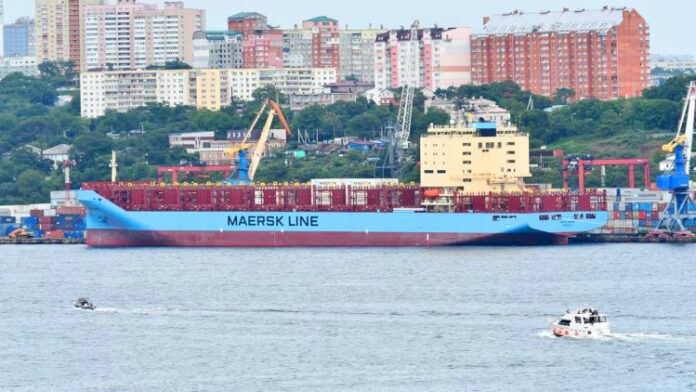
Last summer, Maersk carried out what it said was a one-off trial, becoming the first to send a container ship – loaded with Russian fish and South Korean electronics – on the route.

At the time it denied that the route could be commercially viable, partly because it is only accessible for around three months of the year due to ice.

However, Maersk is now exploring the possibility of offering a service in cooperation with Russia's nuclear-powered icebreaker company Rosatomflot, High North News reported on Friday.

"We have experienced growing demand for transport of goods from the Far East to West Russia, which we are currently exploring the possibilities of offering together with Atomflot," Maersk, the world's biggest container shipping group, confirmed in an emailed statement to Reuters.

Maersk, which offers shipping on its own vessels and in cooperation with a number of other carriers and providers, added that it has no current plans to deploy Maersk vessels in commercial service along the route.

The Northern Sea Route is significantly shorter than going via the Suez Canal and could cut sea transport times from Asia to Europe. It runs from Murmansk near Russia's border with Norway to the Bering Strait near Alaska. Ships sailing it require a permit from Russian authorities.

Sea ice around the North Pole covers the largest area at the end of the winter in March, and thaws to an annual minimum in September. The ice has shrunk in recent decades in a trend scientists have linked to man-made climate change.

Russian officials have said there is strong interest in the sea route from Asian countries and that new icebreakers will allow for year-round navigation in the 2020s.

Beijing laid out ambitions in January 2018 to form a "Polar Silk Road" by developing shipping lanes opened up by global warming and encouraging enterprises to build infrastructure in the Arctic.

Source:marinelink.

Addressing cyber risks on passenger vessels

0

In collaboration with Secure State Cyber, the Shipowners Club identifies common cyber risks on board and what actions operators can take to protect their vessels. Namely, a series of FAQs focuses on passenger ships and the cyber risks regarding on board Wi-Fi and passenger devices.

Should passenger vessel owners and operators allow availability of Wi-Fi to all passengers?

As Secure State Cyber and the Shipowners Club suggest, passengers should be offered a guest Wi-Fi network, with client isolation; this stops a user’s device from detecting and sending data to other devices on the same network. They also recommended this network to be kept separate from the Wi-Fi network responsible for controlling the ship’s crucial navigation and communication systems including that for on board administrative tasks.

"There should be clearly established controls that prevent devices accessing both the public Wi-Fi and the restricted systems. Further network segregation should also be implemented for the administrative network and the critical ship systems such as the Industrial Control System (ICS). This also extends to include the devices that can connect to critical systems on board"….the Shipowners Club says.

In addition, no passenger or crewmember should be able to use the same device to access both the public Wi-Fi and the restricted systems. Public Wi-Fi is often not secure and uncontrolled, while the ship’s critical systems should never be put at risk by having contact with it, directly or indirectly.

Are there specific signs that passengers should be cautious about when using the vessel’s Wi-Fi?

Passengers should take into consideration the following:

  • Networks that are spelt incorrectly, or that do not have a secondary measure to access the service. Members providing free Wi-Fi should make sure that passengers know they need a password to access the service and that they are aware of the correct Service Set IDentifier (SSID) or Wi-Fi network name on which to connect.
  • Using a Virtual Private Network (VPN) when using public Wi-Fi. Passengers should be careful and take precautions when using networks that are not controlled, where the network is open, and the users are not separated from each other. Public Wi-Fi should only be used for general browsing.
  • Ensuring that web browsers are kept updated. Most systems update automatically, however this is not always the case, especially if browsers are not closed/shut down.
  • Accessing websites that are secured with https. Do not ignore certificate errors that may pop-up before accessing a site as these could be an indication that the site is a malicious copy, or someone is capturing and replaying the traffic to the user. Ensure the web address entered is correct and not misspelled. Misspelled addresses can be an indication of a typo squatting attack, where malicious sites copy and have similar names to a legitimate website.

What should passengers do if they think they’ve been hacked?

They should report it to a crewmember who can communicate the issue to the captain for further investigation. Operators should ensure that the necessary resources are available to respond to and investigate any suspected events.

Should mobile phone / USB charge points be made accessible to passengers?

A simple principle to consider is that if a physical connection to a device is available, then the contents of that device can be accessed. However, there are exceptions and it is recommended that operators only provide Dedicated Charging Ports (DCPs) / USB ports to passengers for charging their devices.

DCPs supply power via USB ports without any possibility of data transfer. DCPs will provide up to 1.5 A and 5 V, which is enough for charging mobile phones or tablets. There is also an additional benefit by only offering DCP charging stations to passengers, their privacy can be ensured, and the security of their devices can remain safe.

"By offering anything other than DCPs for charging, Members and passengers should assume that data transfer is possible from their devices"…the two parties note.

Finally, having a third party assess security and provide feedback is a useful way to ensure the passengers’ and vessel’s security.

Source:safety4sea

Norway: New rules for passenger ships in Svalbard

0

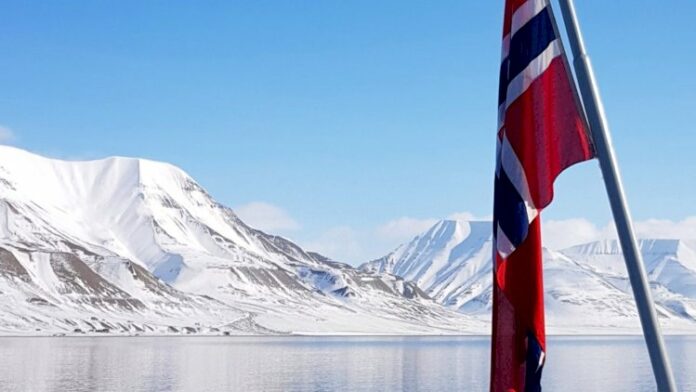
The Norwegian government introduced new rules for passenger ships in Svalbard, in the Arctic Ocean, in a bid to improve safety and security in this fragile Arctic environment. The rules apply to both Norwegian and foreign ships.

The new regulations apply in the territorial waters surrounding Svalbard and will make sure that all passenger ships are constructed, equipped and operated in a way that provides satisfactory safety of life, health, property and environment on Svalbard.

"The Government will work to ensure sustainable activity in and near Svalbard. We wish to enhance safety and security associated with increased ship traffic in the north. Therefore, it is important that we establish new rules for passenger ships operating in the waters of Svalbard. The rules are intended to prevent accidents and reduce the consequences of any accidents occurring in this remote and vulnerable area,"…said the Minister of Trade and Industry, Torbjørn Røe Isaksen.

More specifically, the regulations may involve conversions and modifications for ships not holding international certificates (SOLAS).

For these ships, a five-year transitional arrangement has been established to give the companies the opportunity to plan the phase-in of new rules and, if applicable, spread the costs over several years.

Under this regulatory work, the Norwegian Maritime Authority (NMA) has established a dialogue with the industry, particularly the Association of Arctic Expedition Cruise Operators (AECO).

Dialogue meetings were arranged in both Oslo and Svalbard prior to the consultation.

At the same time, the NMA has maintained a good dialogue with the Norwegian Coast Guard and the Governor of Svalbard, both providing generic feedback.

Up until now, companies have been allowed to carry passengers in Svalbard having various certificates and safety standards.

The IMO has previously adopted specific rules adapted to the special conditions in polar waters, as defined in the Polar Code, which encouraged Norway to consider rules for passenger ships in its waters.

Svalbard falls within the territorial scope of application of the Polar Code, and the considerations behind the implementation of the Polar Code are also applicable to passenger ships operating in Svalbard. Based on this, the NMA has assessed the need to introduce the requirements of the Polar Code for these ships as well.

For ships in Svalbard holding a Passenger Ship Safety Certificate in accordance with SOLAS, the new Regulations will have limited or few financial consequences.

These ships are already required to comply with the Polar Code, and the new Regulations will mainly involve operational changes.

Statistics from the Governor of Svalbard show that the ship traffic and number of passengers have increased significantly from 2008 to 2018:

2008:

  • 28 overseas cruise ships – Total number of passengers carried: 28,697
  • 24 expedition cruise ships – Total number of passengers carried: 10,040

2018:

  • 15 overseas cruise ships - Total number of passengers carried: 45,900
  • 59 expedition cruise ships – Total number of passengers carried: 21,000

Source:afety4sea

Risk mitigation measures after suspected tanker attacks

0

Following the two suspected attacks against tankers transiting the Gulf of Oman Thursday, INTERTANKO and OCIMF noted that these attacks appears to have been well-planned and coordinated and recommended operators to review associated BMP5 guidance.

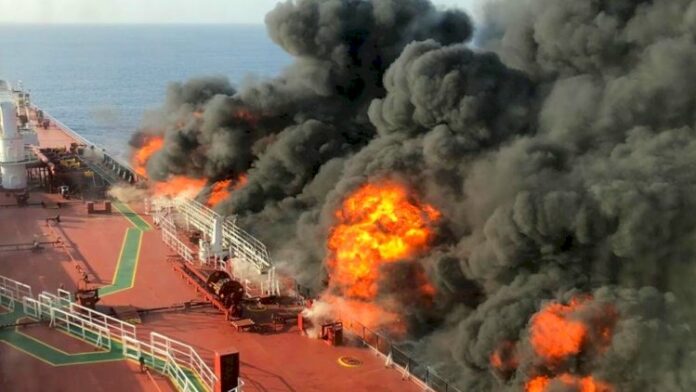
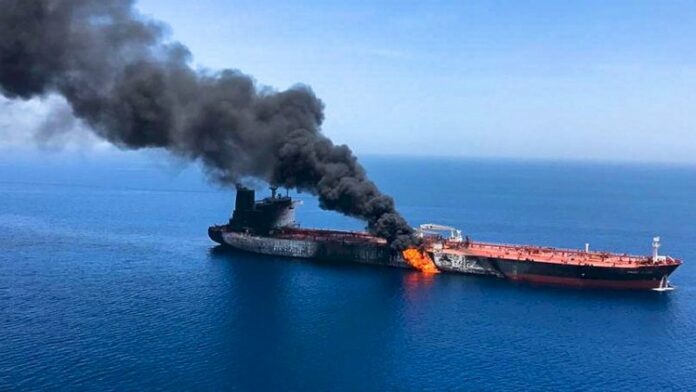
Two oil tankers, the Panamanian flagged 'Kokuka Courageous' and the Marshall Islands-flagged 'Front Altair', were hit in two suspected attacks in the Gulf of Oman on Thursday morning, leaving the one vessel ablaze and both adrift.

The incident comes amid an ongoing tension in the Middle East, only a month after a similar incident in which four tankers in the region were struck.

"It appears that each vessel was attacked by a sub-surface explosive device placed by either a remotely-operated vessel or diver. Both types of delivery method are more likely to happen when vessels are near stationary or in a very restricted waterway,"…noted INTERTANKO and OCIMF, who said are in contact with the UAE and Saudi Flag Administrations, the Combined Maritime Forces and other industry associations.

Risk mitigation measures

INTERTANKO and OCIMF recommend that companies review BMP5 and consider sending the following guidance to vessels:

  • Undertake a new ship- and voyage-specific threat risk assessment before entering any region where there has been an incident or the threat has changed.
  • After the risk assessment, review the Ship’s Security Plan.
  • Review section 2 of BMP5, which outlines threats.
  • Maintain a full and vigilant bridge watch for vessels at anchor.
  • Implement deck patrols.
  • Implement a waterborne security patrol.
  • Maintain a strict communications watch and establish communication with all vessels coming close.
  • Ensure strict boarding controls are in place.
  • Only lower accommodation gangways or ladders when necessary.
  • Rig outboard lighting where possible, particularly over the stern and rig/use searchlights if available.
  • Report any suspicious activity immediately to both the port and UKMTO +442392222060.
  • Monitor relevant VHF and other communication channels.
  • Check all fire-fighting equipment is available for immediate use. Make sure the emergency fire pump is available if any maintenance is being undertaken.
  • Keep the Automatic Information System (AIS) on. There is no need to complete the field stating the last or next port of call.

Additional measures Operators may wish to take if alerted to suspicious activity include:

  • Rotate the propeller continuously or at short, irregular intervals.
  • Operate bow and stern thrusters at zero (0) thrust.
  • Turn the rudder frequently.
  • Switch the echo sounder to transmit counter/combat swimmer/diver threat.

The attacks were the second in a month near the Strait of Hormuz, a major strategic waterway for world oil supplies. Shortly after the incident, oil prices surged by 4%.

Shipping industry condemned the attacks, with the IMO Secretary General, the International Chamber of Shipping and INTERTANKO noting that this is an intolerable situation threatening the lives of seafarers, the environment and the world economy.

Source;safety4sea

Jan De Nul plans to reduce CO₂ emissions by 15% a year

0

Jan De Nul Group has revealed its commitment to reduce CO₂ emissions by 15% a year during maintenance dredging works at the Nieuwpoort coastal marina, the company said in its release. It is the first dredging company in the world to aspire to such a reduction in a commercial application for a project. In collaboration with the Flemish government, the company also wants to include by 2020 a minimum requirement of 15% CO₂ reduction in 80% of maintenance dredging contracts in Flanders.

Upon issuing an invitation to tender for the maintenance dredging works in the Nieuwpoort coastal marina, the Flemish governmental Agency for Maritime and Coastal Services gave the market maximum opportunities to focus on CO₂ reduction through innovation. Jan De Nul Group won the contract by promising to reduce CO₂ emissions by 15% annually. This is unprecedented in the sector. Never before has a dredging company aspired to such a CO₂ emission reduction target in a commercial application for a project.

Jan De Nul Group is focusing in particular on drop-in biofuel to achieve the ambitious CO₂ reduction target. This is a high quality, sustainable replacement of fossil diesel, made of vegetable oils or waste flows. The thing about drop-in biofuel is that engines do not have to be adapted in order to use it. Furthermore, not only are CO₂ emissions reduced, but far less fine dust is released in the air. Drop-in biofuel also burns a lot more efficiently than conventional diesel. Because drop-in biofuel uses waste flows as a raw material, it is also beneficial to the circular economy. Finally, it is a very clean fuel that is extremely suitable for high-grade engines.

With this approach and by choosing Jan De Nul Group, the Agency for Maritime and Coastal Services (known by the Dutch initials MDK), within the Department of Mobility and Public Works, has showcased its pioneering profile within the Flemish government to achieve the reduction targets. Under the Paris Climate Agreement, our country has committed to reducing CO₂ emissions by 15% by 2020.

The project also is in line with Jan De Nul Group’s aspiration to play a pioneering role and to roll out a sector-wide CO₂ emission reduction programme. The dredging company wants to have a minimum 15% CO₂ reduction requirement introduced in 80% of maintenance dredging contracts in Flanders by 2022.

The announcement of the targets comes shortly after the Flemish Government’s decision to agree to a three-year pilot project for testing the CO₂ performance ladder for government contracts. This ladder was developed in 2009 in the Netherlands as an instrument and certification scheme to stimulate CO₂ reduction, and turned out to be very successful. The Flemish pilot project will kick off in September 2019 and last until September 2022. The expected result is that contractors will be awarded contracts if they offer maximum quality, minimal CO₂ emissions and a fair price.

Source;portnews

Oil Prices Jump 2procent After Tanker Attacks

0

Oil prices settled 2.2% higher on Thursday after attacks on two oil tankers in the Gulf of Oman stoked concerns of reduced crude trade flows through one of the world's key shipping routes.

The attacks near Iran and the Strait of Hormuz reignited worries about an impact to flows from the Middle East if insurance companies begin to reduce coverage for voyages through the region and additional shipping companies suspend new bookings, analysts said.

Such a disruption "could further exacerbate the supply problem," said Andy Lipow, an analyst at Lipow Oil Associates in Houston.

Oil tanker owners DHT Holdings and Heidmar suspended new bookings to the Mid-East Gulf, three ship brokers said.

"This is the second attack in a month's time," said John Kilduff, a partner at Again Capital LLC in New York. "It raises the ante for insurance risk."

Tensions in the Middle East have escalated since U.S. President Donald Trump withdrew from a 2015 multinational nuclear pact with Iran and reimposed sanctions, notably targeting Tehran's oil exports.

Iran, which has distanced itself from the previous attacks, has said it would not be cowed by what it called psychological warfare.

The episode also fed fears of a new confrontation between Iran and the United States, which blamed Tehran for the incident.

U.S. Secretary of State Mike Pompeo said the United States has assessed Iran was behind the attacks, and arrived at its conclusion based on intelligence, weapons used and the level of expertise needed for the attacks on the tankers in the Gulf of Oman.

Also supporting oil bulls were signs that Organization of the Petroleum Exporting Countries (OPEC) members were close to agreeing on continued production cuts.

Brent crude futures settled up $1.34, or 2.23%, at $61.31, having risen as much as 4.5% to $62.64.

U.S. West Texas Intermediate crude futures were up $1.14, or 2.23%, at $52.28 a barrel. WTI earlier rose as much as 4.5% to $53.45.

U.S. stocks rose after two days of declines, with the S&P energy index rising the most among the 11 major S&P sectors.

Analysts said the price swings were subdued by recent grim forecasts for global crude demand.

"It's a surprise that the market reaction has been so muted," said Derek Brower, a director at RS Energy Group. "For traders, worries about the weakening global oil-demand picture are front of mind and enough to trump real, live geopolitical threats to physical supply."

Global crude demand growth will come in at 70,000 barrels per day (bpd) less than previously expected this year, around 1.14 million bpd, OPEC projected in its monthly oil market report.

"Significant downside risks from escalating trade disputes spilling over to global demand growth remain," OPEC said in the report.

The U.S. Energy Department this week lowered its forecast of global demand to 1.2 million bpd, down by 200,000 bpd from its May forecast.

Analysts have also revised global oil demand growth forecasts lower after the U.S.-China trade war has escalated since last month with an expanding exchange of tariffs.

Energy consultancy FGE and British bank Barclays this week revised down their global oil demand growth forecasts to around 1 million bpd from around 1.3 million bpd.

The forecast revisions come as investors grow increasingly worried about trade talks between the United States and China, which may be revived at the G20 summit in Japan in late June.

"The market has settled into the idea that trade negotiations will be protracted," said Harry Tchilinguirian, global head of commodities research at BNP Paribas. "Naturally, the extension of trade disputes could weigh on economic growth."

Both crude benchmarks are set for their biggest daily rises since early January, but they are nevertheless headed for a weekly loss.

Oil prices had slumped in the previous session on an unexpected rise in U.S. crude stockpiles and a dimming outlook for global oil demand.

Source;marinelink

AKF Signs Pact with Fendercare

0

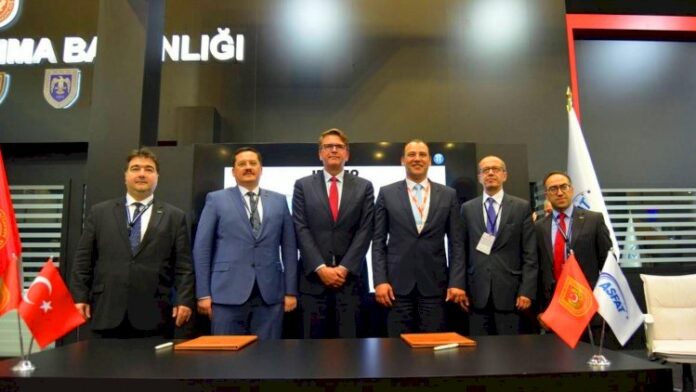
Damen Anchor & Chain Factory (AKF), the mooring and towing division of the Dutch shipbuilding Damen Group, signed a joint partnership agreement with Fendercare yesterday (June 12).

The agreement came about from a mutual understanding that both parties’ clients were seeking wider availability of products, said a press release.

Under the agreement, the partnership will build up a complementary stock of anchors, chains and chain fittings and conduct the installation of anchors and chains.

Working together in this way will ensure the partnership’s clients of product availability from numerous, well-positioned locations around the world, it said.

Speaking on the occasion of the signing ceremony, AKF managing director Walter Treffers explained the thinking behind the agreement, saying, “This partnership represents a win-win for all stakeholders. It increases the product portfolio of Fendercare with AKF’s proven product range and gives AKF products an even wider geographical distribution than before."

Walter added: "Of course, the real benefit here is for our client, as we intended. They will now have improved availability of our products, equalling shorter lead times, which, ultimately means more uptime and improved earning potential. We are very much looking forward to working together with Fendercare in the future.”

MacGregor provides automated mooring system to Yara Birkeland

0

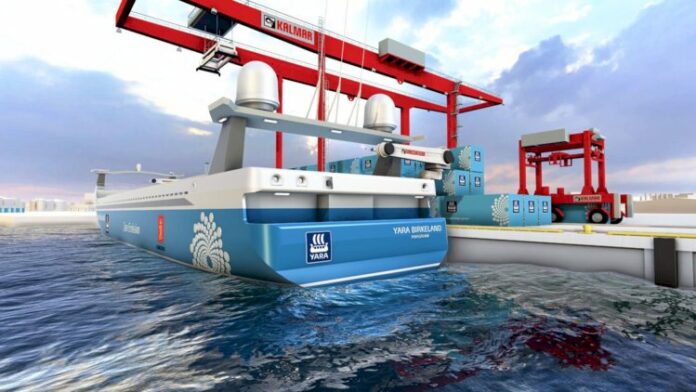
MacGregor and Kongsberg Maritime signed an agreement according to which the former will deliver automated mooring system for the world's first autonomous container ship, Yara Birkeland.

Thus, automation will enable mooring operations to be conducted with no need of human intervention and also will support effective operation of the fully electric, zero emission vessel.

According to the press release, the order was booked in Cagotec's 2018 Q4 order intake, and the partners have scheduled the automated mooring system's delivery for the second half of 2019.

In light of the automated mooring system, Bård Bjørløw, EVP Global Sales & Marketing, Kongsberg Maritime, commented.;;;"It is critical for Kongsberg to work with world-class partners and we are therefore very pleased to specify the MacGregor automated mooring solution for the Yara Birkeland container ship."

Source:safety4sea