3.4 C
New York
Home Blog Page 1040

IMO training on the ISM takes centre stage

0

IMO training on the International Safety Management (ISM) Code is underway for nine countries* in the eastern and southern Africa subregion. The code sets international standard for safe ship management and operation. Thirty-two participants are taking part in the event, which is hosted by the Tanzania Shipping Agencies Corporation (TASAC) in Dar es Salaam, United Republic of Tanzania (17-21 June).

The course is focused on how the code evolved and its importance in efforts to improve safe ship operation and pollution prevention. Participants are senior maritime administrations personnel responsible for conducting shipboard and shore-based audits for verification of compliance with the code’s requirements.

The training, which is supported by the Maritime and Port Authority of Singapore, includes interactive country-specific presentations focusing on the administrations’ tonnage, type of vessels, knowledge and perspective on ISM code implementation.

Smart Solution for the Dredging Industry

0

Royal IHC (IHC) and Semiotic Labs have signed an agreement to develop smart solutions for the dredging industry. As part of the collaboration, both companies will combine their knowledge in the field of shipping and the dredging industry with smart Internet-of-Things sensors and artificial intelligence, which together will increase the availability and reliability of production resources.

Jan van der Wouw, Director Digital Business at IHC, said: “As a market leader in the development and production of dredging vessels, we are constantly looking for innovative solutions to further increase the reliability and availability of our vessels. Digital transformation plays an important role in this.

“The combination of sensors, artificial intelligence and smart applications ensures that our customers gain valuable insights into the condition, performance and energy consumption of machines on board. This in turn allows them to optimise their use.

At the forefront of digitalisation

“Our collaboration with Semiotic Labs allows us to combine our industry expertise with their specialist technical knowledge. The agreement is a direct result of our ambition to be at the forefront of the development of digital tools on board ships.”

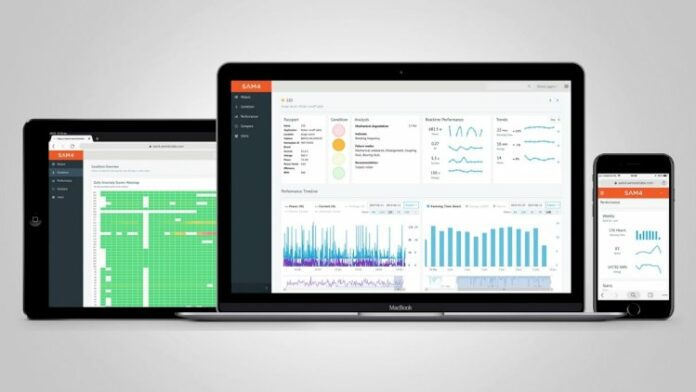
Semiotic Labs has developed SAM4, a condition monitoring solution that consists of sensors, artificial intelligence and a dashboard that displays information about the condition, performance and energy consumption of electric motors and rotating assets, such as pumps, compressors and conveyor belts. Unlike traditional systems that measure vibrations on the asset in the field, SAM4 measures electrical signals from the motor control cabinet. This is relevant for shipping, because many assets are located in hard-to-reach places on board the ship. The motor control cabinet is easily accessible, making it possible to remotely monitor the condition of assets.

Dream partnership

Simon Jagers, founder of Semiotic Labs, says: “IHC has been on our list of dream partnerships for a long time. The company has a clear digital transformation vision and is the leader in its industry. Together we share the conviction that innovative solutions must primarily have a practical application.

“Our collaboration allows us to benefit from IHC’s domain knowledge and helps us to focus on developing tools that provide value in day-to-day operations. We certainly hope to return the favour by adding our data science and software development skills to the mix.”

MACN to Develop Global Port Integrity Index and Scale Up Collective Action in West Africa

0

The Maritime Anti-Corruption Network (MACN)—a global business network of over 110 companies working together to tackle corruption in the maritime industry—today announces a new partnership with the Ministry of Foreign Affairs of Denmark (MOFA). The partnership will allow MACN to develop and launch the first ever Global Port Integrity Index and to scale up its collective action activities in West Africa.

The Global Port Integrity Index will provide an overview and comparison of illicit demands in ports around the world. It will be based on the unique first-hand data gathered from captains calling port around the world through MACN’s Anonymous Incident Reporting Mechanism. To date, MACN has collected over 28,000 reports of corruption in ports.

“Through the support from the Ministry of Foreign Affairs of Denmark, MACN can take our world-leading incident data to the next level and turn it into a powerful advocacy tool. This index will be instrumental in highlighting the need for further investments and initiatives addressing integrity challenges in ports to promote fair global trade,” says Cecilia Müller Torbrand, Executive Director of MACN.

The partnership with MOFA will also allow MACN to expand its collective action program in West Africa and to deepen its current engagement in the region.

MACN has been active in Nigeria since 2011 and has, in collaboration with the Convention on Business Integrity (an internationally-recognised NGO specialized in ethics and anti-corruption in West Africa), worked to promote integrity and good governance in the port sector in Nigeria. Actions to date have included the training of over 1,000 government officials in the ports of Lagos, Calabar, Onne, and Port-Harcourt.

Through the new project, MACN will work with the international and local maritime industry and with key government authorities in Nigeria to improve the business climate and reduce corruption in the port and maritime sector.

 “Increasing transparency and ease of doing business in the port and maritime sector is a political priority of the Nigerian government, and a network like MACN has a key role to play in enabling change that is both business-friendly and that promotes integrity and business ethics,” comments Soji Apampa, Executive Director and Co-Founder of the Convention on Business Integrity. “The members of MACN have significant commercial buying power when acting collectively. This is important for incentivizing local stakeholder from both the public and private sector to engage with us and actively address corruption”.

 The MOFA support for MACN is part of a global anti-corruption programme for 2019-2022, which extends support to civil society organisations, multilateral organisations/governments, and private sector-led initiatives.

Norway mulls 3.5GW offshore wind drive

0

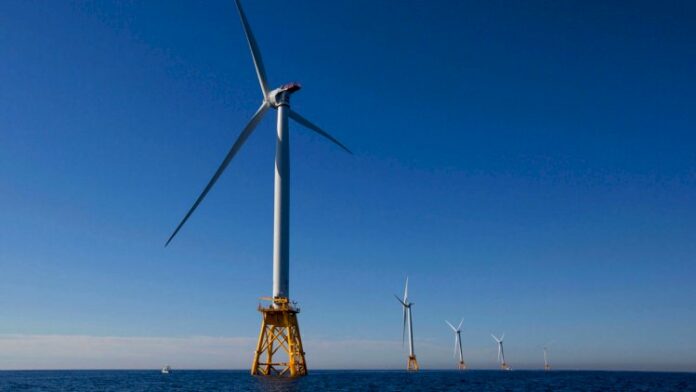
The Norwegian government is considering allowing offshore wind developments of up to 3500MW off the country's coast.

The Ministry of Petroleum and Energy will send a proposal before the summer for a hearing to open the Utsira North area off the coast of Rogaland and will request input for the Southern North Sea 2 area.

Utsira could support between 500MW and 1.5GW of offshore wind, while Southern North Sea 2 could deliver 1GW to 2GW, the ministry said.

Minister of Petroleum and Energy Kjell-Borge Freiberg said Utsira Nord is suitable for floating wind power.

“I would ask for input on whether we should also open the area Southern North Sea 2, which is close to the territorial boundary with Denmark and therefore can be suitable for connection to the energy system on the continent,” he said.

The government presented a strategy for floating wind power in the state budget for 2018, with the aim for Norwegian companies to increase exports of goods and services from the sector.

Freiberg said: “Offshore wind power offers great opportunities for Norwegian companies. Norway can build on unique experience from the oil and gas industry, shipping, shipbuilding and renewable energy."

The cost of wind power has fallen a lot, and it is likely that they will fall further.

Source:renews

Minesto wins €1m tidal boost

0

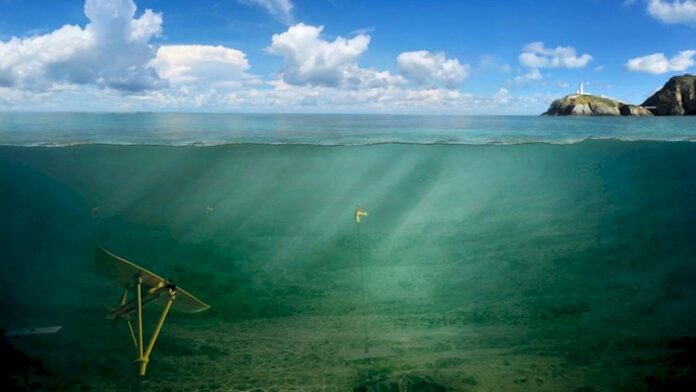
Tidal energy outfit Minesto has been granted more than €1m from the Swedish Energy Agency to develop its Deep Green turbine technology.

The SEK12.5m (€1.17m) grant will be used to further Minesto’s Deep Green 100 (DG100) commercial-scale turbine rated at 100kW.

The first DG100 systems will be installed in the Faroe Islands, for which Minesto recently received funding from the European Commission.

We now have two public bodies from the EU and Sweden that independently support the roadmap to bring our product to the market,” said Minesto chief executive Martin Edlund.

“In the Faroe Islands we are part of one of the world's most ambitious energy transition projects. It is the perfect context to show how tidal energy by Minesto's technology complements solar and wind to create sustainable energy systems,” he added.

Source;renews

BP Rig Zigzags in Chase with Greenpeace Ship

0

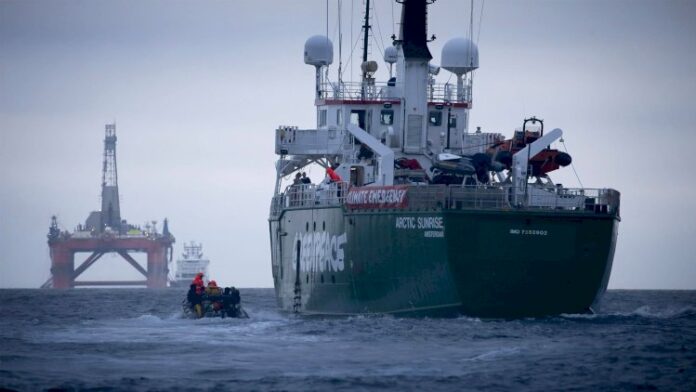
A BP drilling rig heading to an oilfield in the British North Sea has been forced to turn away twice over the past two days as a Greenpeace vessel protesting climate change tries to hamper its progress.

The high-sea chase is the latest step in Greenpeace's nine-day effort to stop the 40,000 tonne Paul Loyd JNR rig from reaching the Vorlich oilfield to start its drilling campaign.

The vessel left Cromarty Firth, north of Inverness, Scotland on Friday after police twice removed activists who had climbed and spent several days on one of the rig's legs.

But it was forced to turn away twice from its destination over the past 48 hours as Greenpeace's Arctic Sunrise vessel followed it, the activist group said.

The Paul Loyd JNR is currently heading west towards Peterhead and away from the Vorlich field, according to Greenpeace and www.marinetraffic.com ship tracking website.

"We are determined to stop BP drilling new oil wells in the North Sea," Sarah North, Greenpeace International climate activist on the Arctic Sunrise said in a statement.

BP slammed Greenpeace and said it had secured an injunction against the Arctic Sunrise.

"Given Greenpeace's repeated interference and reckless actions directed at our lawful business and their continued illegal defiance of court orders and police action, we have … this injunction as a precautionary measure to protect the safety of people and operations," a BP spokesman said in a statement.

BP announced last year plans to invest 200 million pounds ($251.16 million) to develop the Vorlich field in the central North Sea which holds some 30 million barrels of oil and gas equivalent.

It is expected to start production in 2020 with an output of 20,000 barrels per day, according to BP's website.

Source:marinelink

ABB Wins Dredger Package Deal

0

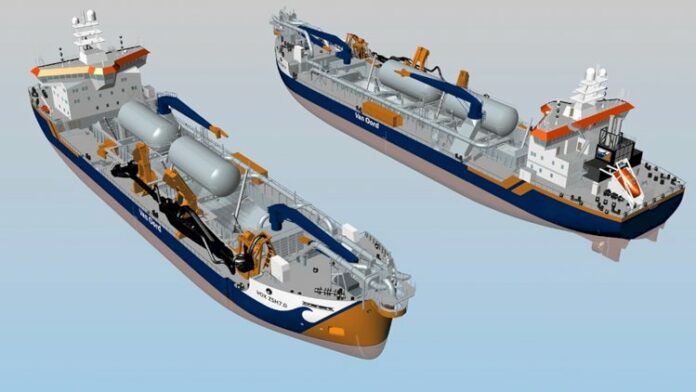
ABB was contracted to deliver integrated vessel systems to two dredgers being built by Keppel Offshore & Marine for Van Oord, a key contract win for a new market: specialized dredgers.

This is ABB’s largest dredging vessel project for a European end customer, a contract that covers integrated electrical power, automation, control and navigation packages for a pair of 10,500 cu. m. capacity trailing suction hopper dredgers built for the Dutch dredging and marine contractor Van Oord. The vessels, which will feature dual-fuel engines, are being built by the Singaporean yard Keppel Offshore & Marine and are due for delivery in 2021.

The scope of supply includes generators, main switchboards, distribution switchboards, propulsion drives with associated control systems and transformers. ABB will also supply a Power Management System, an Alarm Management System and a Vessel Management System based on ABB AbilityTM System 800xA, as well as a highly customized dredging control system, which will help increase the efficiency of dredging operations.

Additionally, ABB will deliver a complete bridge solution, which will include custom-designed ergonomic consoles, a remote-control system, pilot chairs, and a navigation system. As part of the navigation package, ABB will integrate the Synapsis NX INS bridge and navigation technology from Raytheon Anschütz. The system includes multifunctional workstations, autopilot and track control system, radars, navigation sensors that fully integrate with ABB’s propulsion, automation and control.

Source:marinelink.

Spotlighting IMO’s actions on climate change

0

IMO is at the UN climate change conference in Bonn, Germany (17-27 June), where governments are meeting to work towards significantly accelerating the pace of climate action. IMO is reporting to the Subsidiary Body for Scientific and Technical Advice (SBSTA 50) on the latest and ongoing work to implement the Initial IMO Strategy on reduction of GHG emissions from ships. The strategy sets out a vision confirming IMO's commitment to reducing GHG emissions from international shipping and, as a matter of urgency, to phasing them out as soon as possible in this century.

Specifically, IMO has highlighted the achievements of the Marine Environment Protection Committee (MEPC 74), which approved amendments to strengthen existing mandatory requirements for new ships to be more energy efficient; initiated the Fourth IMO GHG Study; adopted a resolution encouraging voluntary cooperation between the port and shipping sectors to reduce emissions from shipping; and, importantly, approved a procedure for the assessment of impacts on States of new measures proposed.

Capacity-building and technology transfer feature heavily in IMO's work, including the continued successful execution of important capacity-building projects, the GEF-UNDP-IMO Global Maritime Energy Efficiency Partnerships (GloMEEP) and the European Union-IMO GMN (Global Maritime Technology Cooperation Centres Network). An international project to support the initial IMO GHG strategy has been launched – the GreenVoyage-2050 project, a collaboration between IMO and the Government of Norway.

Source:portnews

Damen signs Phase II contract with International Organization for Migration for nine additional SAR 1906 search and rescue boats

0

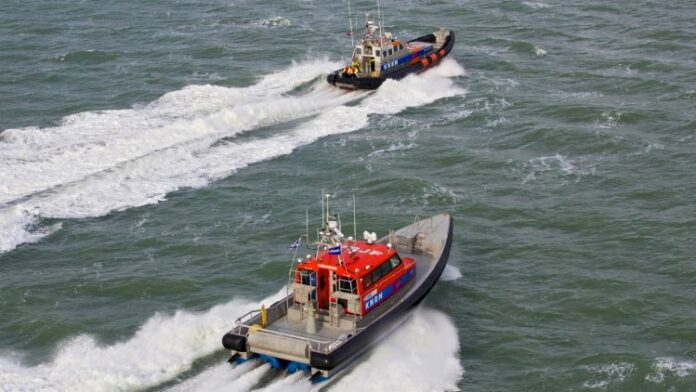
At a signing ceremony held at the International Organization for Migration (IOM) offices in Ankara, Turkey, Vladimer Gvilava, chief of mission IOM in Turkey, and Boran Bekbulat, Damen sales manager Turkey, signed a contract for the building and delivery of nine Damen SAR 1906 search and rescue boats for the Turkish Coast Guard Command. 

Financed by the European Union, these 19-metre boats will be in addition to the six vessels of the same class ordered in 2016, which were delivered to Turkish Coast Guard Command the following year. The first two of the new order will be delivered in the summer of 2020 with the remaining seven due to come into service over the following 12 months. The state-of-the-art vessels will be built to the same specification as their predecessors with some additional fine tuning and will also be operated by the Turkish Coast Guard Command to support their ongoing migrant rescue operations.

The SAR 1906 has been developed by Damen in close cooperation with KNRM (Royal Netherlands Sea Rescue Institution), TU Delft and maritime design bureau De Vries Lentsch, as a fast, harbour-based, all weather, self-righting rescue boat. The design has been further improved in close cooperation with the Turkish Coast Guard Team and modified for their specific operations. Turkish design office DzaynGate, located in TeknoPark in Pendik-Istanbul, also worked on the adaptations of the design for the new series.

The SAR 1906 has an aluminium hull and a composite wheelhouse. With its hull design based on Damen’s Axe Bow technology with certain adaptations to optimise it for rescue operations, it can achieve a top speed of more than 33 knots and has a range of 300nm at full load.

The construction of the boats will take place at Damen’s Turkish yard, Damen Shipyards Antalya. Located in the Antalya Free Zone, the yard has accomplished some significant export figures since its establishment in 2013, having delivered to international customers more than 70 vessels ranging from 10-metre fast boats to 80-metre RoRo ferries. The yard currently has 360 local employees plus an average of 200 subcontractors working on-site at any time. The yard’s managing director, Auke van der Zee, who is notably the only foreigner amongst his Turkish colleagues, notes, “We kept our promises in delivering all the SAR 1906 boats for the first phase as quickly as possible in response to the need for ongoing migrant rescue operations, and we are dedicated to doing the same for this second phase.”

“We are so proud and glad to receive a continuation contract from our client,” added Damen’s Boran Bekbulat. “The cooperation among all the parties involved in the first phase was very successful. We are very excited to be teaming up again to make a new success story together.” 

Source:portnews

SEA Europe: EU shipbuilding needs more investments in innovation

0

The European Maritime Technology Sector needs more significant investments in research, development and innovation for the further development of digitalisation, automation and autonomy in the shipbuilding processes, to secure its competitiveness, as well as to cope with its societal challenges, SEA Europe said in a new statement.

"The existing business opportunities for waterborne transport and ICT industries can boost Europe’s competitiveness, if a worldwide IP and data protected, cyber safe and equal level-playing field is established for the benefit of the European Maritime Technology Sector. At the same time, Europe can aspire to become again competitive in the building of standard ship’s types, currently built in Asia, on the condition that complex ICT integration expertise remains in Europe,"

said SEA Europe’s Secretary General, Christophe Tytgat.

In addition, SEA Europe stressed, there is also a need to develop an adequate framework for educating and training current and future employees in shipyards and equipment manufactories.

Also, the operation of autonomous ships has the potential to create a competitive advantage for the European Maritime Technology Sector provided that Europe remains amongst the fastest developers and that the necessary international regulatory changes are taking place fast enough.

As automation evolves as a trend in shipping, communication systems between autonomous ships and shore/authorities need to be properly developed, according to different situations such as open sea, coastal and inland navigation, port areas, or offshore operations. These communication systems will increase the overall safety and security.

In this regard, the IMO needs to properly consider the timely adaptation of the international regulatory framework, able to embrace the safety aspects, the human element aspects and the technology developments all the way up to the highest levels of autonomy in a goal-based approach.

In this regard, SEA Europe recommended that the EU takes the first concrete steps with regard to inland, coastal, offshore activities and short sea shipping, inter alia, by facilitating safe trial operations in European waters and by supporting fast development of innovative technology and cyber-safe standards.

"The security strategy needs to be addressed primarily from the ship digital infrastructure with well designed and implemented responsiveness to cyber threat or attack,"

noted Christophe Tytgat.

Source;safety4sea