3.4 C
New York
Home Blog Page 1039

BHGE Opens Subsea Centre of Excellence in Montrose

0

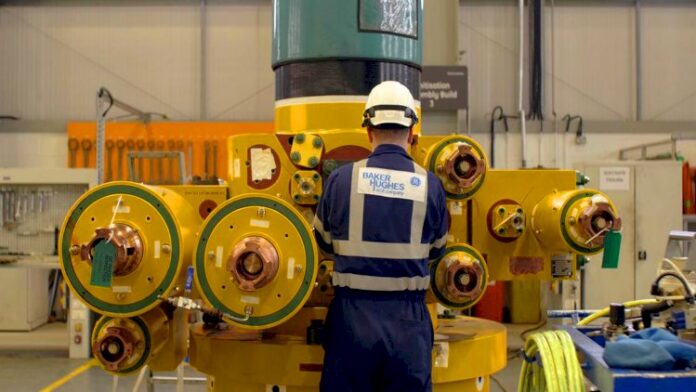
Baker Hughes, a GE company opened its transformed Centre of Excellence (CoE) facility today at an inauguration ceremony with Minister for Energy, Paul Wheelhouse, customers and employees. The world-class CoE will deliver engineering, manufacturing, test and assembly and services to advance deepwater technology for customers. 

The campus, which sits on more than 35 acres, is an important milestone for BHGE globally. The expansion represents a £31 million investment by BHGE and supported by a £4.9 million grant from the Scottish government, through Scottish Enterprise. The upgraded and expanded campus enables BHGE to offer product innovation from design to delivery from one location servicing customers globally. The advanced manufacturing technologies serve global oil and gas activities today and enable continuous product innovation and technology advancements for the future. The commitment by BHGE and Scottish Enterprise to invest in people development will also drive long-term business sustainability globally. 

Moving the new-build operations to one campus will bring greater efficiency for customers and eliminate extra transportation between sites, helping to reduce environment impact. 

Neil Saunders, CEO, BHGE Oilfield Equipment, said: “BHGE is committed to bringing the most innovative subsea technology and solutions to market to help our customers improve productivity. Our industry is transforming and sites like this will enable us to continue to invent and produce these technologies at an accelerated pace. This facility benefits from great backing by the Scottish government; the support demonstrates the commitment we all have to this region and the people who work here.” 
Last year, BHGE announced its Subsea Connect vision, a new way of doing business that delivers lower costs, increased productivity and a simpler approach to subsea development.

The CoE is the home of the Aptara Design Centre, dedicated to the design and development of the Aptara™ Totex-lite subsea system, the cornerstone of Subsea Connect. This new family of products has been designed for the life of field and features a range of lightweight, modular technology solutions re-engineered to cut the total cost of ownership in half and be more responsive to changes over the life of field. 

The new campus will benefit from advanced manufacturing tools and processes, designed to improve efficiency and productivity, including:
• Virtual reality tools and training opportunities to help technicians assemble equipment digitally and troubleshoot issues before construction begins;
• Automation to boost efficiency on activities like welding, testing and material-handling;
• Sensor-equipped machines that allow customers to view updates of manufacturing activities and equipment test results via tablet in real-time. The sensors will also enable BHGE to analyze critical data to improve operations and increase productivity;
• 3D printers to help quickly develop fully-functional prototypes of components and highly complex structures, as well as actual production parts;
• Laser measuring devices, including trackers and scanners, allowing engineers and designers to make better, faster measurements of components and improve equipment build accuracy.

The Montrose campus will develop the next generation of the workforce through a series of investments and trainings that will directly support the STEM program as well as local schools. BHGE has doubled their apprenticeship intake in 2019 by launching a program that develops the skills of their current and future employees.

Paul Lewis, Managing Director, Scottish Development International, said: “The energy industry is one of Scotland’s leading sectors and Scottish Enterprise is honoured to support BHGE in the creation of this Center of Excellence and advanced manufacturing campus in Montrose. This is a major investment by BHGE and is further evidence of Scotland’s attractiveness as the top location for inward investment in the UK after London. The opening of these facilities marks an exciting milestone and reflects the hard work by the project team to get here. They should be proud of the leading-edge solutions for the subsea sector that will be created in Montrose and exported around the world.”
Equinor and partners fully align interests in the Carcará oil discovery in Brazil

0

Equinor and Barra Energia (“Barra”) have completed their transaction announced on 4 July 2018, whereby Equinor has acquired Barra's 10% interest in the BM-S-8 block in Brazil's Santos basin for a total consideration of USD 379 million.

Upon the completion of this transaction, Equinor, ExxonMobil and Galp have also completed the two further transactions previously announced on 4 July on terms equivalent to those for the Barra transaction.

As a result, Equinor’s and its partners’ interests across the two licences for the Carcará area are fully aligned.


Port of Rotterdam Authority to collaborate with four new companies

0

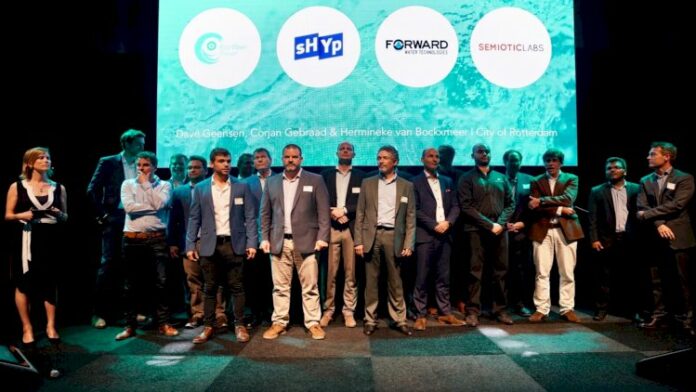
During the finale of the 4th edition of the annual innovation programme PortXL, the Port of Rotterdam Authority signed individual Letters of Intent with four enterprising new companies that are expected to help make the port more sustainable, more efficient and ‘smarter’. The firms in question are Richtlijn Geodesie, Flower Turbines, Ladar Ltd and Planys Tech. In addition, the Port Authority issued a so-called Letter of Support to Eco Wave Power.

PortXL is a three-month accelerator programme in which fledgling firms receive intensive coaching from mentors and experts from the private sector. This support is intended to supercharge the further development of their initiative. The products presented by these promising start-ups range from new uses for compact wind turbines to the development of smart sensors that can be installed along quay walls. A total of 16 start-ups participated in the most recent edition of this innovation programme.

The companies that have signed a Letter of Intent

The Port Authority plans to jointly determine with Richtlijn Geodesie the feasibility of a pilot project – in partnership with the Municipality of Rotterdam – that involves installing smart sensors at various quay walls in the port area. It will work together with Flower Turbines on a joint study into the sustainable, decentralised generation of power in port projects. These wind turbines are easy to fit due to their small size. Ladar Ltd’s sensors rely on laser technology and are used to increase our insight into the movements of recreational shipping traffic. The main objective of this pilot project is product comparison.

With Planys Tech, the Port Authority will be starting a joint pilot project that uses a remote-controlled vessel to measure the wall thickness of sheet pile walls. This project will mainly focus on locations that create safety issues for human divers. Eco Wave Power is an innovative company that develops advanced floats that can convert wave motion into power. The Port Authority has issued this initiative with a letter of support and will be following the technological progress of this promising scale-up with keen interest.

Richtlijn Geodesie
Richtlijn Geodesie collects exact geo-data. Its DefoCube product is based on a low-cost GPS monitoring system that provides highly accurate insight into the real-time status of civil engineering assets.

Flower Turbines
Thanks to their modest span of 3 to 6 metres, Flower wind turbines can be used for a range of applications. In addition, they combine relatively high efficiency with low noise levels and are bird friendly thanks to their relatively closed surface. Through this partnership, the Port Authority hopes to give new impetus to the generation and consumption of sustainable power.

Planys Tech
Planys Tech is a deep-tech start-up that presents innovative solutions for the inspection and maintenance of underwater assets in a range of sectors and segments, including ports, shipping, oil and gas, process industry, electricity, desalination, dams and bridges.

Eco Wave Power
The wave converters manufactured by Eco Wave Power are based on uniquely formed float designs that convert vertical wave movements into power.

Ladar Ltd
Ladar Ltd develops laser-based sensor technology for various applications in the offshore and maritime sectors – autonomous shipping, for example. The collected data can be used for the monitoring and maintenance of infrastructure, platforms and vessels and for surveillance purposes.

Samskip Readies Multimodal Network

0

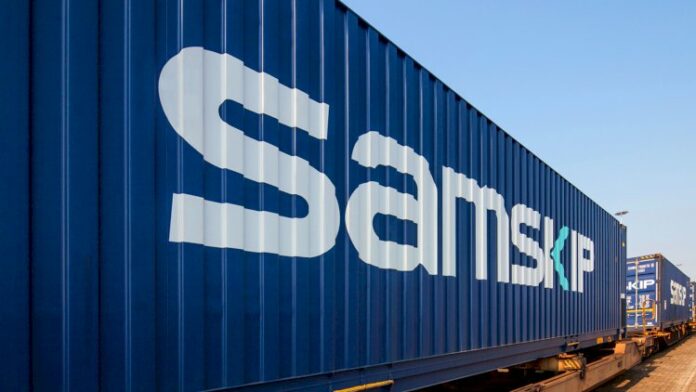
Europe's largest multimodal transport group by freight volume Samskip said it is fully prepared for a North Sea container traffic surge, as attitudes harden in the run up to October's revised Brexit deadline.

The global logistics company offering transport and related services by land, sea, rail and air said in a release that UK exporters and importers to start switching away from trailers and towards containerisation very soon, repeating a trend established in the run-up to the original deadline for Brexit.

“We saw a significant push in container volumes up to March 2019, especially into Hull, as decision-makers facing uncertainity opted for the reliability and proven procedures of container shipping,” says David Besseling, Samskip UK Trade Manager. “Concerns over supply chain security are fast re-emerging.”

Besseling says that stockpiling contributed to the earlier traffic surge, but adds that the experience also confirmed robustness in new Hull-Ghent and Hull-Amsterdam links established by Samskip at the end of 2018. The services add to existing high-frequency connections between Rotterdam, Tilbury, Hull and Grangemouth.        

“These additions brought more than simply shortsea capacity,” says Besseling. “Ghent and Amsterdam have brought multimodal head to head with trailers in new regional markets and opened longer distance routes across Europe.”

The Pan-European multimodal service provider services to Rotterdam are supported by 70 trains a week to destinations throughout the EU and beyond, as well as by regular barge connections but Ghent opens up northern French and Belgian markets traditionally feeding ferries into Zeebrugge.

Besseling says the added dimension of low emissions, congestion-free barge connections have also proved an attraction for the Belgian port. Meanwhile, Amsterdam has brought new flexibility and cost-efficiency, with rail services running into the port's TMA Logistics shortsea terminal itself, and space available to launch cross-docking services for customs-friendly containerisation.

Besseling says that the period after March has allowed Samskip to refine post-Brexit arrangements and lay down plans for new rail links eastward from Dutch ports to Berlin and Poland, adding to a previous focus on Duisburg and Mannheim.

“We have been able to demonstrate performance levels to UK importers and exporters where mutlimodal options have been added and fully deploy the people, resources and IT that will enable seamless customs clearance. We are also confident that cross-docking services in Amsterdam will persuade more shippers of  conventional wagon loads from Germany, Austria, Poland and Italy to containerise.”

Samskip Chief Executive Diederick Blom says that EU parliamentary elections, entrenched views from UK and EU politicians and the contest to become UK prime minister feed a deadlock that points to a ‘hard' Brexit.  

“We comment as logistics professionals not politicians but managing the supply chain is core to meeting the expectations of business and consumers alike,” says Blom. “In the run up to the original Brexit date, container transport proved reliable and efficient, and that it could handle far more freight without the risk of terminal gate tailbacks, customs red tape, driver shortages or industrial action.”


Cyber risk remains key concern for shipping

0

While the growing use of connected technology in the maritime sector is expected to be a positive for both safety and claims, technology also means cyber risk is a big concern for shipping. As more and more systems require connectivity with the shore, so vessels become more vulnerable to a cyber-attack, says Captain Rahul Khanna, Global Head of Marine Risk Consulting at AGCS.

Since 2017, when the industry was shaken by the Not Petya malware attack at the world's largest shipping company, Maersk, shipping has been attempting to redefine the way it does business in terms of cyber security.

Vessels were unaffected, but the virus impacted a number of its container terminals and took out its online cargo booking and terminal systems, requiring the company to rebuild its network of 4,000 servers and 45,000 PCs.

"High profile incidents have made people sit up and we now see more and more clients going through cyber security assessments and putting measures in place, such as contingency planning and stress testing of IT systems. Awareness is growing but the industry still has a long way to go,"…says Capt. Khanna.

The last year seemed to validate the cyber risk trend. The highlight of 2018 was a cyber breach affecting Cosco's operations in the US Port of Long Beach, on 24 July, which affected the giant’s ­­daily operations. The company’s network broke down, and some electronic communications were not available as a result.

However, operations outside the US were not affected, while, less than a week later, its network applications were totally recovered.

On 25 September, the US Port of San Diego experienced a serious cyber disruption at its IT systems, which made the port employees to work in ‘limited functionality’. It is still unclear if the two incidents were related.

The sector is also being increasingly targeted by cyber extortion attempts and business email compromise attacks – a hacking group known as Gold Galleon tried to steal almost $4mn from ports and shipping companies in 2018.

In 2017, the IMO adopted its Maritime Cyber Risk Management in Safety Management Systems resolution, which requires ship owners and managers to incorporate cyber risk management into ship safety by 2021. Shipping bodies and classification societies are also providing guidance on cyber security.

The third edition of the industry’s cyber risk management guidelines – The Guidelines On Cyber Security Onboard Ships, published in December 2018, outlines a clear cyber risk management approach including implementing activities to prepare for and respond to cyber incidents.

"The IMO’s cyber security requirement is set to come into force in 2021, however the risks are prevalent today, and shippers would do well to do more in the interim,"…adds Khanna.

Cyber risk ranked at the top of Allianz Risk Barometer 2019, along with business interruption, as the top business risks for the current year. Cyber threat was also at the no 3 of Eurasia's top political risks that are most likely to arise this year.

"Cyber is an issue for the shipping industry both onshore and at sea. A cyber-attack against a ship’s navigation system or industrial control systems could cause a grounding or a collision. It does not require much imagination to find scenarios where cyber can pose a danger to shipping, crew or cargo. Therefore, the insurance industry has to find an answer to this, including client services in addition to pure physical damage compensation, such as data forensic and emergency response support, for example,"…noted also Volker Dierks, Head of Marine Hull Underwriting, Central and Eastern Europe, AGCS.

The big unknowns for the near future are so-called “silent” cyber exposures in most traditional insurance policies which were designed when cyber wasn’t a major risk and don’t explicitly consider it.

This can create uncertainty for businesses, brokers and insurers about which loss scenarios are covered.

Port of Baku and OSCE have launched “digital route” project in the Caspian ports

0

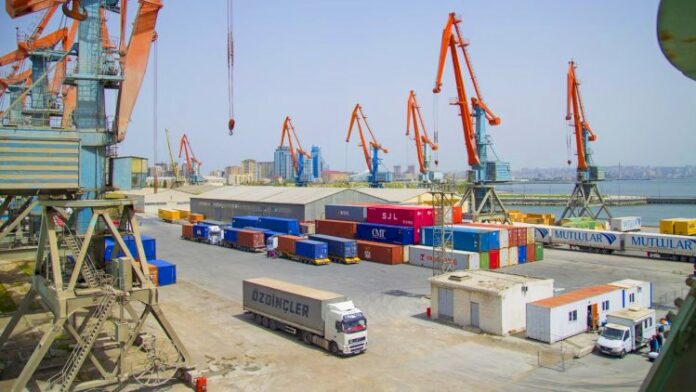
Co-ordinator of OSCE Economic and Environmental Activities together with the Director of the Port of Baku launched the project Promoting Green Ports and Connectivity in the Caspian Sea Region.

The project aims to support Azerbaijan, Kazakhstan and Turkmenistan in strengthening green ports and connectivity in the Caspian Sea Region. Feasibility studies, expert workshops and delegation visits to leading international green ports will explore how to make best use of renewable energy, digitalization and trade and transport facilitation to promote sustainable connectivity. The project will be implemented in partnership with the European Bank for Reconstruction and Development, UNECE and leading private sector experts.

During a workshop on digitalization held with the Port of Baku, participants discussed plans to establish a digital platform to facilitate data exchange between Caspian Sea Ports in Azerbaijan, Kazakhstan and Turkmenistan. At the trade facilitation workshop, participants discussed how the ports would benefit from reduced border crossing times and enhanced co-operation between authorities.

"The new Port of Baku completely operates in line with the modern standards,” said the Director-General of the Port of Baku, Dr Taleh Ziyadov. “The co-operation between the Port of Baku and the OSCE, and the sister ports of the Caspian region which starts today is another crucial step in administering further environmental protection and accelerating more efficient and timely data exchange in the Caspian region.”

The Co-ordinator of OSCE Economic and Environmental Activities, Vuk Žugić, said that through this innovative regional project, the OSCE will make a contribution to strengthening sustainability, connectivity, security and economic growth in the Caspian Sea region. “Producing more energy with less emission has become a major concern for a sustainable future. Renewable energy and energy efficiency are part of the answer to reduce the environmental footprint of the way we produce and consume energy. It is the way to go,” he said.

Ambassador Kamil Khasiyev, Ministry of Foreign Affairs of Azerbaijan Director of Regional Security, said that this project will address the facilitation of trade and transport between the three ports and the wider region, including other Central Asian States. “This project of the OSCE will serve as a concrete example of its relevance and value for enhancing regional security, stability and prosperity.”

Daniel Kroos, OSCE Energy Security Senior Programme Officer, said that economies in the region are likely to experience significant economic growth over the coming decades, sparked by growth in Asia and political and economic reforms. “The growing interdependence and stronger economic relations in the region provide an opportunity for increased collaboration on international and regional security and the need for a comprehensive approach encompassing energy, digital aspects and transport infrastructure to accommodate the fast-growing trade between Asia and Europe,” he said.

The OSCE’s work in this field is aligned with the 2030 Agenda for Sustainable Development and contributes to a range of Sustainable Development Goals: SDG 7, “Affordable and Clean Energy”, SDG 9, “Industry, Innovation and Infrastructure”, and SDG 17, “Global Partnerships”.

More arrests as US authorities take action against MSC

0

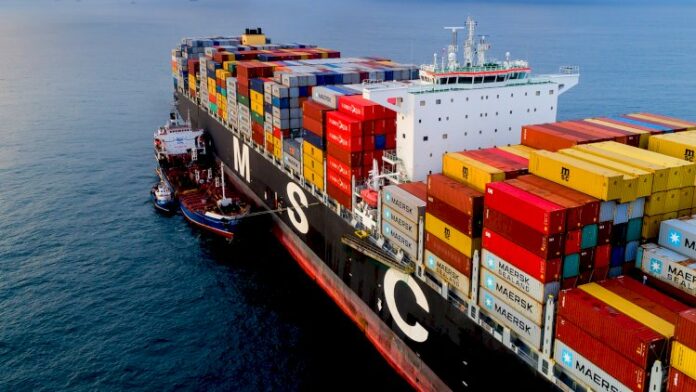
Investigators have found more cocaine than initially reported onboard the MSC Gayanewith further arrests in one of the largest drugs busts in recent American history.

Four more crew of the 9,962 teu ship have been arrested along with the initial pair as seafarers are grilled about how the illicit drug came onboard the huge ship that was raided on Monday morning when it docked at the Port of Philadelphia. The authorities have now weighed 17.5 tonnes of cocaine, one tonne more than originally reported, taking the street value of the haul to in excess of $1.1bn.

Embarrassingly for MSC, this is the second drugs bust on one of its ships at the same port in the space of just three months.

In the wake of the contraband find, the US Customs and Border Protection (CBP) has temporarily suspended MSC’s Customs Trade Partnership (C-TPAT) certification, meaning US authorities for the time being do not assess the carrier as ‘low-risk’ so more scrutiny of its shipments can be expected in the coming days and weeks. MSC admitted in a client advisory yesterday clients can expect “minimal disruption” from the C-TPAT decision. C-TPAT a voluntary partnership between governments and carriers to ensure supply chain security.

“MSC will continue to collaborate with authorities worldwide, to ensure our vessels are secure and can deliver our customers’ cargo safely and reliably,” MSC stated yesterday.

According to court documents, second officer Ivan Durasevic allegedly admitted to his role in bringing the cocaine onboard the vessel.

“Upon leaving Peru on this current voyage, he got a call from the Chief Officer to come down to the deck, at which time he saw nets on the port side stern by the ship’s crane,” the complaint said.

“Durasevic and approximately four other individuals, some of whom were wearing ski masks, assisted in the pushing of the nets toward Hold Seven or Eight of the vessel.”

Durasevic said he was paid $50,000 by the chief officer, who has not been identified.

Another crew member, identified as Fonofaavae Tiasaga, also allegedly admitted to partaking in loading cocaine on the ship, including on a previous voyage, the complaint said.

“Prior to departing on the voyage, the ship’s Electrician and the Chief Mate also approached Tiasaga and asked if he was willing to help again,” the complaint states. “According to Tiasaga, each of these four crewmembers coordinated individual loads of cocaine.”

The court documents also allege that at least twice while the ship was en route between stops in Chile and Panama, numerous smaller boats approached the MSC Gayane at sea to hand off large bundles of the illicit drug.

In March another MSC vessel, the 9,400 teu MSC Desiree, was raided when calling at Philadelphia and a stash of cocaine worth $38m was found onboard.

Teekay FPSO deal at Cheviot falls through

0

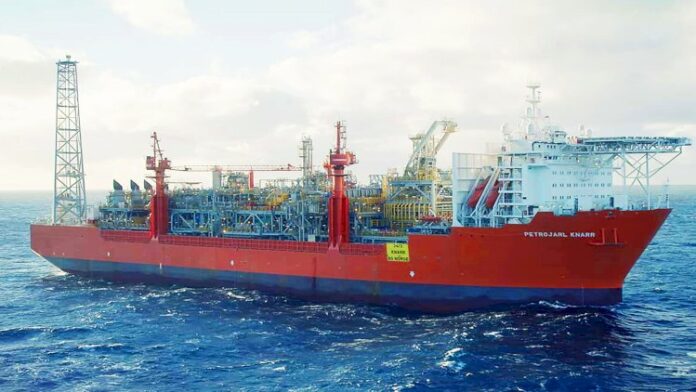
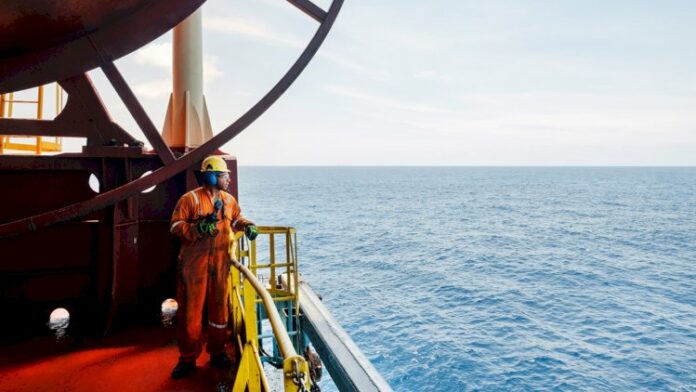
Teekay Offshore Partners L.P. (Teekay Offshore or the Partnership) entered into an agreement with Alpha Petroleum Resources Limited (Alpha Petroleum) to use Teekay Offshore’s Petrojarl Varg floating production, storage and offloading (FPSO) unit to operate on the Cheviot oil field on the UK continental shelf.

The FPSO contract was for a seven-year fixed term from first oil, which was targeted for the second quarter of 2021, after a life extension and upgrade phase for the Petrojarl Varg taking place at Sembcorp Marine’s shipyard in Singapore.

The effectiveness of the agreement remained subject to a number of conditions precedent being satisfied, including  that Alpha Petroleum provide initial funding to cover life extension and upgrade costs. As a result of this condition precedent not having been satisfied by the prescribed contractual deadline, this agreement and all commitments related thereto, have now been terminated and as such the Partnership and its subsidiaries will be immediately pursuing a range of alternative deployment opportunities for the Petrojarl Varg.

Chris Brett, President Teekay Offshore Production, commented “We have been very impressed with the creativity, competence and determination of the Alpha Petroleum team to develop the Cheviot field which remains, in our opinion, a well-developed opportunity and we wish the Alpha team all the best in their continued efforts to bring the field into production. From a Teekay Offshore perspective, we look forward to advancing the next project for the Petrojarl Varg, which could still include the Cheviot development under a revised financing model. The Varg FPSO has had a long history of reliable production on the Norwegian Continental Shelf and provides a flexible production solution for a wide range of future developments in the North Sea and beyond”.


Ørsted Chosen for New Jersey Offshore Wind Project

0

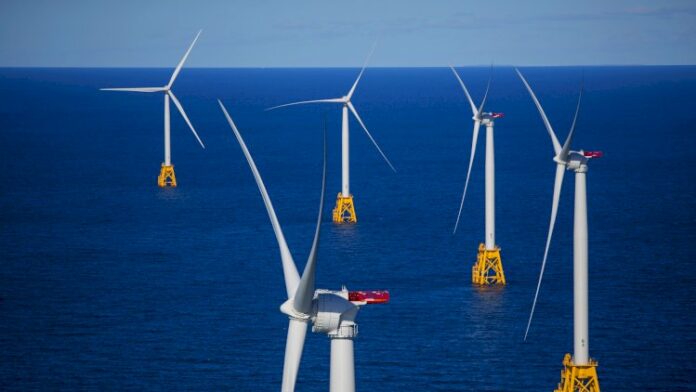
The New Jersey Board of Public Utilities (NJBPU) has selected Ocean Wind, an offshore wind energy project proposed by Ørsted with support from Public Service Enterprise Group (PSEG), to negotiate a 20-year offshore wind farm with a capacity of 1.1GW.

Located off the coast of Atlantic City, Ocean Wind will be New Jersey’s first large-scale offshore wind farm. It will also be the first offshore wind farm in the U.S. to exceed 1GW. Subject to Ørsted’s final investment decision, the wind farm is expected to be completed by 2024. 

Ørsted will work with PSEG's non-utility affiliates which will provide land for the project and energy management services. PSEG, which serves 2.2 million electricity customers in New Jersey, has an option to become an equity investor in the Ocean Wind project.

Ocean Wind will supply more than half a million New Jersey homes. The project is expected to create over 3,000 direct jobs annually through development and the three-year construction cycle. Ørsted is also proceeding with plans to establish an operations and maintenance base in Atlantic City that will provide jobs during the 25+ years lifespan of the project.

The state has set the goal of having 3.5 GW of offshore wind by 2030. Another solicitation will open in 2020 and a third in 2022. 

The award means that Ørsted has secured a U.S. offshore wind build-out portfolio with a total capacity of approximately 2GW to be completed between 2022 to 2024. Ørsted aims to optimize operations across the portfolio as well as inside the clusters:

Mid-Atlantic cluster

•     Ocean Wind (1,100MW) will deliver power to New Jersey. Expected commissioning by 2024.
•     Skipjack (120MW) will deliver power to Maryland. Expected commissioning by 2022.

North-East cluster (owned 50-50 with Eversource)

•     Revolution Wind (704MW) will deliver power to Rhode Island (400MW) and Connecticut (304MW). Expected commissioning by 2023.
•     South Fork (130MW) will deliver power to Long Island, New York. Expected commissioning by 2022.

Grid Connection

Separately, the US Department of Interior’s Bureau of Ocean Energy Management (BOEM) has published the official notice for comment on Anbaric’s proposed New York and New Jersey OceanGrids, advancing the projects along in the federal approval process. Anbaric is the first to present a planned transmission system for both New York and New Jersey and to advance its application to use federal waters for underwater cables to connect New York and New Jersey offshore wind to shore. OceanGrids will connect the offshore wind energy sought by New York and New Jersey to on-shore grids via offshore collector platforms and cables buried underwater and underground.   

IMCA warns against offline use of ECMID System

0

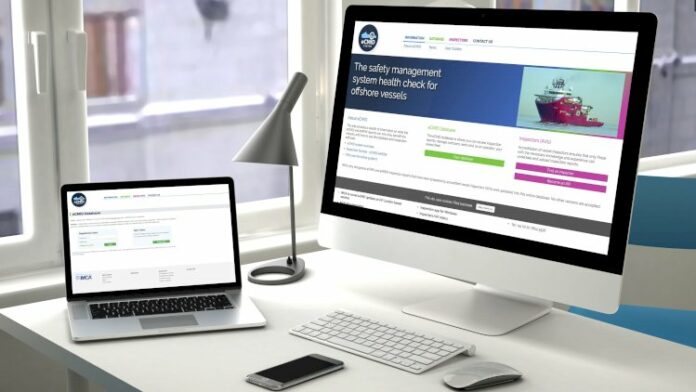
The International Marine Contractors Association (IMCA) has issued a notice setting out the benefits of eCMID, its online vessel inspection system, and warning users that offline use is no longer permitted.

Since 1 January 2018, IMCA has only recognised formal inspection reports conducted using its eCMID application and uploaded into the database website (www.imcaecmid.com). Any eCMID reports that are not uploaded to the database are not considered to be authorised vessel inspection reports.

IMCA’s Technical Director, Mark Ford sets the scene, and provides a summary of the key benefits of the online eCMID system over the traditional offline approach:

The entire eCMID system is now based on the principles set out in the ISO Standard 19011 ‘Guidance for auditing management systems’ and has been aligned with other comparable industry guidance on safety management system assurance, this means that:

  • Only Accredited Vessel Inspectors (AVIs) can upload inspection reports. This ensures that every report is completed by an Inspector who is suitably qualified, with the knowledge and current experience required for inspecting the vessel type being inspected
  • The latest question sets are always used
  • The eCMID and eMISW (Marine Inspection for Small Workboats) templates are reviewed and updated regularly to reflect regulatory and technological developments, findings analysis, and the inclusion of the valuable feedback from the eCMID user community
  • Avoid costly repeat inspections – an eCMID or eMISW report is valid for twelve months and can be accessed via the online database free of charge. This avoids the need for multiple inspections, each with similar requirements, during that period and a new client avoids the expense of commissioning a new inspection
  • Security – once a report is uploaded, vessel operators have complete control over it. The commissioning client (which may be the vessel operator itself) is automatically provided with access. All other clients/potential clients and other interested parties must request access from the vessel operator. The vessel operator is free to accept or reject such requests.

Mark Ford urges that:

If anyone is aware of offline use, including those subjected to commercial pressures from companies who are not fully aware of the online system, they should advise the IMCA eCMID team via ecmid@imca-int.com”.