-0.6 C
New York
Home Blog Page 1027

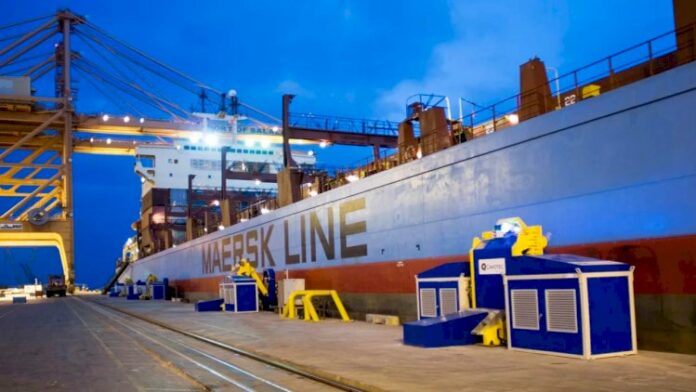
Navarino launches a new GSM service for vessels

0

GSM Connect delivers a high-bandwidth mobile data-only service to vessels, enabling for reliable and cost-effective global connectivity. 

The near-shore service allows for an alternative communication solution whilst vessels are sailing close to the coastline, or in anchorage and during ship operations in ports. Vessel business connectivity, IoT applications, remote IT connectivity and optional crew welfare can be enhanced by download speeds of up to 100Mbps depending on the mobile carrier’s network. Service can deliver an LTE/4G/3G signal up to several kilometres offshore line of sight, which depends on the vessel’s position and the distance between the vessel’s antenna and the cellular antenna location ashore.

GSM Connect is a complete end-to-end solution providing hardware, network access, and management tools. The main component of the solution is a 3-Modem eSIM router, which ensures global compatibility with LTE/4G/3G networks. eSIM architecture allows GSM Connect solution to provide access to mobile local networks around the world without the need to use and manage physical SIM cards. The Multi-modem, multi-IMSI eSIM router with network agnostic, global cellular connectivity provides access to 20+ eSIMs from leading LTE carriers around the globe.

Mammoet to acquire rival heavy lifter ALE

0

Mammoet announces it has signed an agreement to acquire ALE. Both companies are specialists in engineered heavy lifting and transport for sectors such as the petrochemical industry, renewable energy, power generation, civil construction and the offshore industry.

Paul van Gelder, CEO of Mammoet said:

“We are very happy with this agreement. Mammoet and ALE complement each other in geographical presence on all continents. Together, we have a well-balanced portfolio of activities worldwide. This enables us to improve our service proposition and create synergies, as we are able to mobilize equipment and personnel swiftly anywhere. Last but not least, Mammoet and ALE both have a strong legacy in innovations which, once combined, will enable us to grow as a technologically leading player.”

Mark Harries, Group Managing Director of ALE added:

“Mammoet and ALE share a strong ambition to be leading in the engineered heavy lifting and transport sector. Both companies have a strong track record and are renowned for their craftsmanship, innovations and fleet of equipment. We both have shaped the profession of heavy lifting and transport through numerous innovations in the past decades. The prospect of the two companies joining forces is very exciting.”

The closing of the transaction is subject to approval of the relevant competition authorities. Until that time, Mammoet and ALE will continue to operate strictly independently.

ING acted as financial advisor to Mammoet.

No further details will be given until after closing of the transaction.

NYK establishes an electronic money platform business for seafarers

0

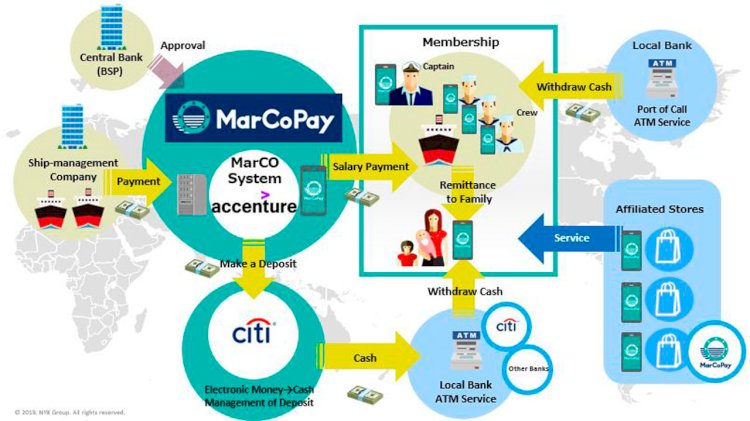
As a part of a medium-term management plan to promote digitalization, NYK formed a joint venture with Philippines-based Transnational Diversified Group (TDG) to launch electronic money platform “MarCoPay” for seafarers.

Collaborating with Accenture, a global leader in helping financial services companies become digital, and Citi, a world’s leading financial services company, NYK plans to form a world-class and highly secure platform which contributes to enhance the lives of seafarers and their families.

MarCoPay is an electronic money platform designed mainly for seafarers hired outside Japan to make digital settlements with QR codes, international remittances and withdraw cash on a smartphone app.

By using MarCoPay to receive their salaries and purchase daily supplies on ships, crew members can go cashless on board and send money to their home countries and withdraw cash from ATMs anywhere in the world.

NYK plans to expand the network in which MarCoPay can be used to shipowners and ship-management companies outside of NYK, continue to add new functions, and collaborate with diverse retailers and service providers. Thus, NYK believes MarCoPay will transform into a global platform which will support the lives of seafarers and their families around the world.

Equinor in small oil discovery in North Sea

0

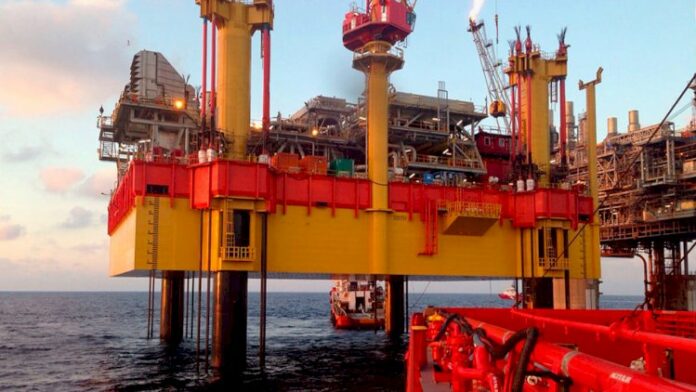
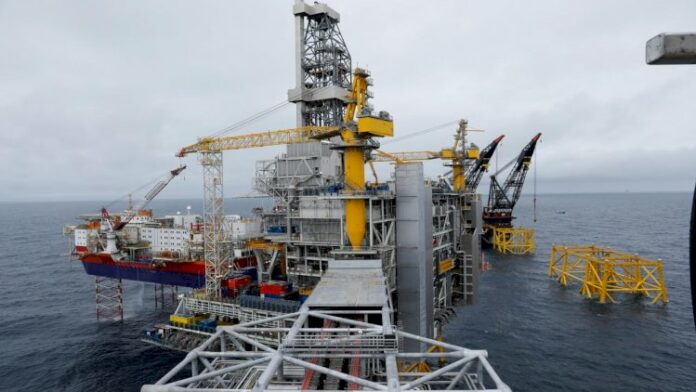
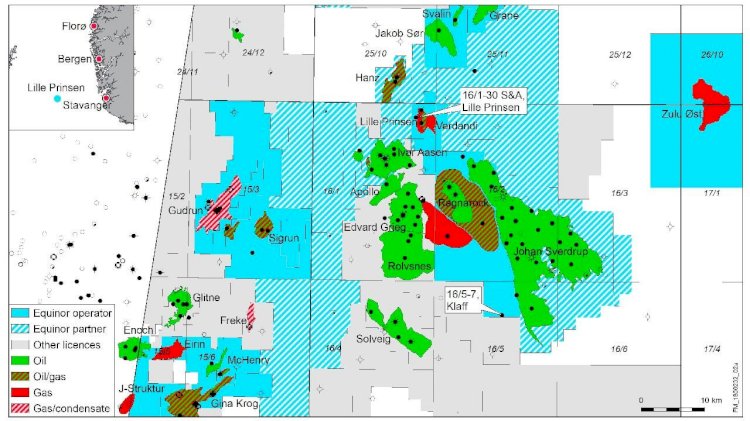
Equinor and partners Lundin and Spirit Energy have made a small oil discovery in production licence 167 at the Utsira High in the North Sea.

The Lille Prinsen Outer Wedge well is located about 1 kilometre west of Lille Prinsen Main, an oil discovery made in the summer of 2018. Lille Prinsen Outer Wedge is located 200 kilometres west of Stavanger and 5 kilometres north-east of the Ivar Aasen field.

The discovery in the main reservoir is currently estimated to contain between 5 and 25 million barrels of oil in-place. It has not yet been concluded if the discovered oil is commercial.

Evaluation of other segments in Lille Prinsen, and former discoveries in shallower formations, will determine the need for further appraisal of Lille Prinsen.

A small-size oil discovery was recently made in the Klaff well in PL 502 about 1 kilometre west of the Johan Sverdrup oil field in the central part of the North Sea.

The discovery was made in fractured basement rock, and it is currently not possible to determine whether the oil is recoverable. Pending new information and interpretation of acquired data the preliminary classification is that the Klaff well is dry.

Tallinn’s Old City Harbour to introduce automated mooring system

0

Port of Tallinn has signed contracts with maritime engineering companies Trelleborg and Cavotec for the instalment of automated mooring systems at quays 5, 12 and 13 of the Old City Harbour, which is used by passenger vessels serving the Tallinn-Helsinki route.

According to Peeter Nõgu, head of the infrastructure development division of Port of Tallinn, technological development has greatly contributed to the maritime sector, including the mooring processes of ships.

“The new automated mooring equipment installed in the Old City Harbour will fasten our mooring operations while also requiring less man-hours and contributing to environmental sustainability. The new systems are primarily used by the ships sailing on our busiest route between Tallinn and Helsinki, where every extra minute saved either at sea or in port is highly valued.”

The shipping industry uses either automated vacuum mooring or automated magnetic mooring systems. According to Peeter Nõgu, Port of Tallinn opted for a vacuum-pad based system, while the magnetic mooring systems are still at an early stage of development and usage. For this reason, the full impact of the electromagnetic waves on either a ship’s electronics or the surrounding environment isn’t yet fully known.

“The automated vacuum systems have a track record of almost 25 years, and their benefits are well known – the speed and safety of mooring, a positive effect on the environment due to the reduced use of ship fuel and a lesser need for human resources to manually moor the ship, thereby also providing a higher level of workplace safety,” noted Peeter Nõgu.

The new automated mooring systems will be installed by the end of 2020. Each quay will be equipped with six vacuum pads that will moor, hold and release the vessel. As the first vessel, Viking Line’s Viking XPRS will start using the new system in spring 2020, while Tallink’s shuttle ships and Eckerö Line’s vessel can utilise the automated system by the end of the year. Similar automated vacuum mooring system is also installed at Helsinki West Harbour.

The new mooring systems are being installed in the framework of TWIN-PORT 3 project and are being co-financed by the EU Connecting Europe Facility (CEF). It is a collaboration project between ferry operators (Tallink, Viking Line and Eckerö Line), the ports of Tallinn and Helsinki and the City of Helsinki for the years 2018-2023 with a total budget of 61.2 million euros. Port of Tallinn is investing a total of 15.8 million euros within the project. 

US Navy selects Northrop Grumman as design agent for AN/SPQ-9B radar

0

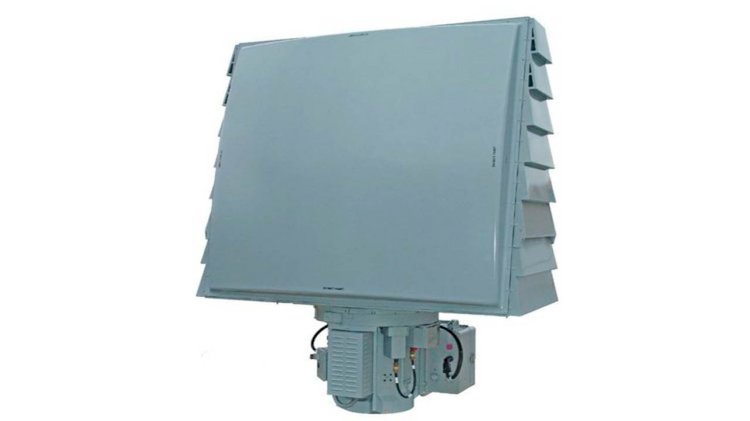
Northrop Grumman Corporation has got the role of design agent for the AN/SPQ-9B surface search and fire control radar.

As design agent, Northrop Grumman provides support to existing and future systems, troubleshoots issues, performs redesign efforts as parts go obsolete and adds new capabilities to the baseline system. This follow-on engineering services contract will continue to support the installed base of 50 AN/SPQ-9B radar systems on ships and at six land sites, as well as future systems as they are delivered to the fleet. It will provide the Navy with uninterrupted technical assistance in their system installations, upgrades and follow-on production efforts.

“We are honored to continue our support of more than two decades to the fleet,” said Todd Leavitt, vice president, maritime systems, Northrop Grumman. “By leveraging our expertise and partnership with the U.S. Navy, we have developed radar systems that increasingly support complex missions. We are committed to maximizing the design and engineering of this technology and enhancing capability that will extend to the Navy’s next generation radars.”

This engineering services contract continues Northrop Grumman’s leadership in hardware and software development for the anti-cruise missile defense mission for the fleet. The system provides fire-control quality track data in stressing, high-clutter environments to protect high-value surface combatants.

Northrop Grumman is a leading global security company providing innovative systems, products and solutions in autonomous systems, cyber, C4ISR, space, strike, and logistics and modernization to customers worldwide.

Photo: The AN/SPQ-9B surface search and fire control radar

Port of Los Angeles to create cyber resilience center

0

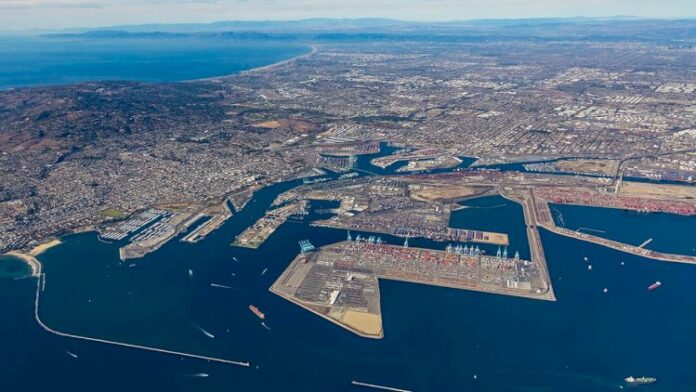
Moving forward with its plans to create a first-of-its-kind Cyber Resilience Center, the Port of Los Angeles issued a Request for Proposal seeking companies or firms interested in designing, installing, operating and maintaining the planned Center at the nation’s busiest trade gateway.

The Cyber Resilience Center will serve as a focal point for cyber threat information-sharing across companies and stakeholders at the Port, helping to identify and prepare against cyber risks potentially impacting the cargo supply chain ecosystem. The idea for creation of the collaborative Center was an outcome of a maritime industry working group meeting hosted by the Port earlier this spring.

“Collaborative cyber-threat information sharing is critical to the safety and security of our Port,” said Chief Thomas Gazsi, who serves as Deputy Executive Director of Public Safety and Emergency Management. “This Cyber Resilience Center will allow us to more quickly identify and mitigate cyber incidents that pose a threat to the maritime supply chain.”

Once awarded, the Cyber Resilience Center contract must be approved by the Board of Harbor Commissioners and the Los Angeles City Council.

In 2014, the Port established the nation’s first Port of Los Angeles Cyber Security Operations Center, operated by a dedicated cybersecurity team. The Center acts as a centralized location to proactively monitor network traffic to prevent and detect cyber incidents under Port control. The Port has also maintained its ISO 27001 certification for cyber security, the only port to have this certification.

The Port of Los Angeles is America’s premier port and has a strong commitment to developing innovatively strategic and sustainable operations that benefit Southern California’s economy and quality of life. North America’s leading seaport by container volume and cargo value, the Port of Los Angeles facilitated $297 billion in trade during 2018. San Pedro Bay port complex operations and commerce facilitate one in nine jobs in the five-county Southern California region.

Scientists published the unique video imagery of Svärdet’s discovery

0

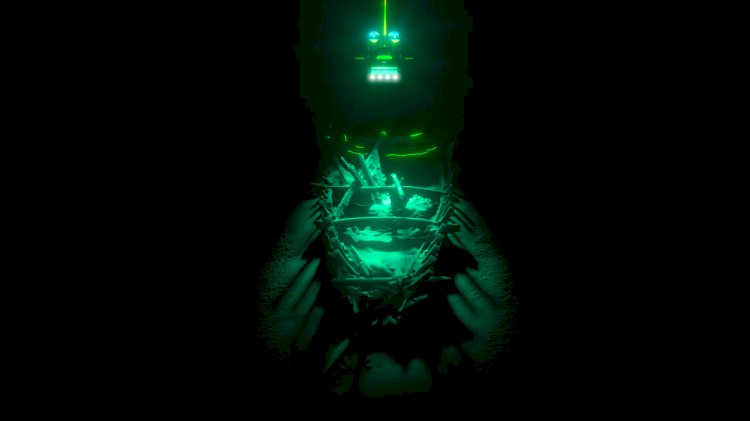
During an expedition in 2004, Deep Sea Productions & MMT worked together onboard MMT’s M/V Triad and initially located the ancient warship Svärdet. Identification and the initial examination and documentation of the wreck took place during the summer of 2011.

It has been identified as the royal ship Svärdet. This warship was discovered off the island of Öland in southern Sweden and it is one of the two Swedish warships that sank in the great battle of Öland on June 1st, 1676.  The battle is known for being the greatest loss in history for the Swedish navy. However, Svärdet’s captain, Admiral Claes Uggla, is regarded as one of the greatest naval heroes for his devotion to his country. His devotion to Sweden was displayed in his heroic but tragic decision to let his ship burn, sacrificing both himself and his crew of 600 men, rather than allowing Svärdet to fall into the hands of the enemy.

Svärdet’s discovery provides researchers with a rare opportunity to discover first-hand what happened that dreadful day of June 1st as well as to further investigate what society was like during the era of ancient naval shipbuilding. It is for these reasons that Svärdet is an important archaeological symbol of its time and is of great historical significance to many archaeologists and historians.

This project was led by Carl Douglas and Jonas Dahm from Deep Sea Productions and MMT was contracted to perform the search and initial survey of the wreck site. MMT detected the wreck Svärdet using multibeam and side scan sonar.

Deep Sea Productions and MMT are now working together with Ocean Discovery – the discoverers of the Mars, another legendary Swedish warship discovered this summer—producing a documentary film and a 3D film. MMT will contribute with its great expertise in precision ROV documentation using high def cameras and 3D modelling—much as was done in an earlier project on the so-called “Ghostship“.

Vigor Industrial has acquired by private equity

0

The combined company will create a bicoastal leader in critical ship repair services and commercial and defense-related fabrication services. Key customers include the U.S. Navy, U.S. Coast Guard, Military Sealift Command, Boeing, cruise lines, fishing fleets, barges and ferry services for local and state governments, and other key commercial and defense customers. 

The transaction is subject to customary closing conditions and is expected to close by the end of the third quarter 2019. Financial terms were not disclosed. 

Derek Whang, Principal at The Carlyle Group, said,

“We look forward to working with our partners at Stellex, Vigor and MHI to create a stronger combined company of scale, capable of providing differentiated, coast-to-coast services to the U.S. Navy, U.S. Army and other defense, infrastructure, and maritime customers. Together, Vigor and MHI are well positioned with their unique, national assets to grow in the highly attractive ship repair and fabrication markets, supported by compelling sector dynamics.” 

David Waxman, Managing Director at Stellex Capital, said,

“We are thrilled to have partnered with the MHI management team to grow the business over the last four years, including through the acquisitions of Accurate Marine and Seaward Marine, and look forward to working with the combined management teams as we expand our geographical and customer mix. MHI’s commitment to its customers and its employees has been the foundation of its growth, and we welcome the partnership with Carlyle and Frank Foti in this next stage.” 

The Carlyle Group will become majority owner of the combined company. Equity for the investment will come from the Carlyle U.S. Equity Opportunity Fund II, a $2.4 billion fund that focuses on middle-market and growth companies in the United States and Canada. As part of the transaction, Stellex Capital, MHI’s existing owner, will contribute new equity to the platform, while Vigor’s CEO Frank Foti will roll a portion of his existing Vigor ownership stake into the combined company.

A CEO search is underway for the new company. Tom Rabaut, former President and CEO of United Defense and a current Operating Executive at The Carlyle Group, and Admiral James Stavridis, a retired 4-star U.S. Navy officer, former NATO Alliance Supreme Allied Commander, and a current Operating Executive at The Carlyle Group, will both join the Board of Directors. Mr. Foti will also join the Board of Directors as Vice Chairman and will continue as Vigor’s CEO until a new CEO is retained. Tom Epley will continue to lead the MHI business. 

Vigor Industrial LLC, majority-owned by CEO Frank Foti, is a provider of complex fabrication and ship repair services. It employs 2,300 people and operates eight drydocks across the Pacific Northwest and Alaska, including the largest floating drydock in North America. Vigor excels at ship repair, specialized shipbuilding, and other complex fabrication projects in support of aerospace, defense, and infrastructure end markets. While the company is widely known for building ferries, it also builds high-performance military craft for the United States and other allied foreign governments. 

MHI Holdings LLC, owned by Stellex Capital, is a leading provider of full-range ship maintenance, repair, and modernization services to the U.S. Navy and Military Sealift Command in Norfolk, Virginia. MHI also provides hull cleaning, ship husbandry services, underwater painting and inspections, wastewater treatment, and chemical cleaning services globally. MHI is one of the only private shipyards in Norfolk that can service large surface combatants and amphibious ships.
The Carlyle Group is a global investment firm with deep industry expertise that deploys private capital across four business segments: Corporate Private Equity, Real Assets, Global Credit and Investment Solutions. With $222 billion of assets under management as of March 31, 2019, Carlyle’s purpose is to invest wisely and create value on behalf of our investors, portfolio companies and the communities in which we live and invest. The Carlyle Group employs more than 1,725 people in 33 offices across six continents.

Stellex Capital is a private equity manager that invests in and oversees U.S. and European corporate assets. With $870 million of committed capital, Stellex’s focus is on companies going through business or industry transitions, as well as special situation opportunities. Stellex seeks to identify and deploy capital in opportunities that have the potential to provide stability, improvement, and growth. Portfolio companies benefit from Stellex’s industry knowledge, operating capabilities, network of senior executives, strategic insight and access to capital. Sectors of particular focus include specialty manufacturing, industrial and business services, aerospace & defense, and government services.


Total will develop the LNG market in Benin

0

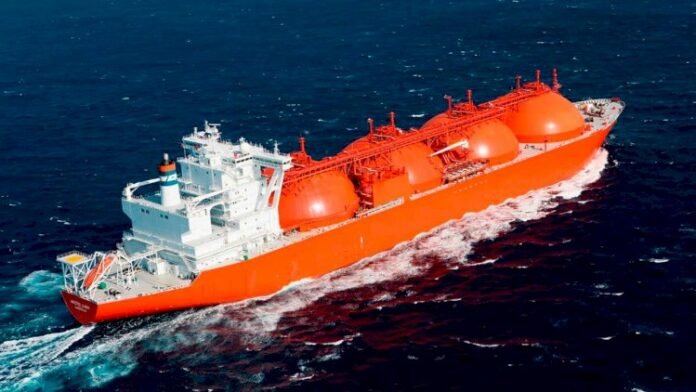
Total, the Republic of Benin and the Société Béninoise d’Energie Electrique (SBEE) have signed the Gas Supply Agreement and the Host Government Agreement for the development of a Liquefied Natural Gas (LNG) import floating terminal and the supply of up to 0,5 million tonnes per annum (Mtpa) of regasified LNG from Total’s global portfolio to Benin for 15 years, starting in 2021.

Total will develop and operate the regasification infrastructure that will comprise a floating storage and re-gasification unit (FSRU) located offshore Benin and an offshore pipeline connexion to the existing and planned power plants in Maria Gléta. 

“This project is in line with Total’s strategy to develop new gas markets by unlocking access to LNG for fast-growing economies. We are very pleased to have been entrusted by the Benin authorities to develop LNG imports and support a broad adoption of natural gas in the country,” said Laurent Vivier, Senior Vice President Gas at Total. “Access to LNG will help Benin to meet growing domestic energy demand and add more natural gas to the country’s current energy mix, hence reducing its carbon intensity”.

The Minister of Energy of Benin, Mr Dona Jean-Claude Houssou, stated,

"I congratulate the Total Group on its willingness to support the revitalisation of the energy sector, which is at the heart of the Government's Action Plan (PAG), as evidenced by the signing today of the gas import contract. I would like to highlight the Government's efforts to restore Benin's energy independence, which is the foundation of the country's ambitious economic and social development. The new legislative framework fosters the participation of private capital in the energy sector and is manifested in independent thermal, solar and hydroelectric power generation projects. The gas import project will supply plants in Benin, such as the new 127 MW power station at Maria Gléta, with imported liquefied natural gas, on preferential terms and will position Benin, capital of the WAPP (West African Power Pool), as the crossroads for gas and electricity in the subregion.”