-2.5 C
New York
Home Blog Page 1014

Triton Knoll signed Seacat Services contract for its wind farm project

0

Class-leading offshore energy support vessel (OESV) operator Seacat Services has signed a long-term deal to support the construction phase of Triton Knoll offshore wind farm. 

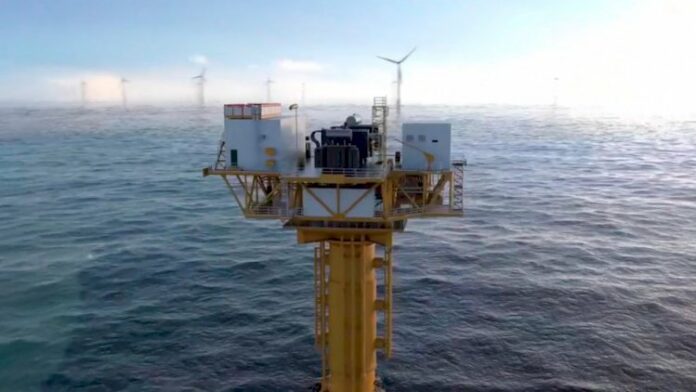
The contract, which includes options for further vessel charters, will initially see two Seacat Services OESVs – one 26-metre and one 24-metre catamaran – operating out of Triton Knoll’s new Grimsby construction base, providing specialist crew transfer and logistical support at the 90-turbine, 857MW project off the UK’s East Coast.

With offshore construction set to commence in Q1 2020, the first of the two vessels will begin preparation works at the project this winter, with the second set to join her in April 2020. Both are set to remain on the project until the end of 2021. 

Triton Knoll will be the next major offshore wind construction project to enter UK waters when the first components are installed next year, and has already made significant progress during the installation of the onshore electrical system. Once fully operational, Triton Knoll will be capable of generating enough renewable energy for the equivalent of over 800,000 typical UK households.

Throughout construction, the wind farm project continues to support the ongoing development of the domestic supply chain, and recently launched a local recruitment drive for long term operations technicians on the project. The contract with Isle of Wight-based Seacat Services extends a relationship that has already seen the project owner and vessel operator work together at Galloper Offshore Wind Farm.

Seacat Services’ entire fleet of fourteen state-of-the-art OESVs has been built in the UK, with two further catamarans currently under construction at the Diverse Marine shipyard in Cowes.
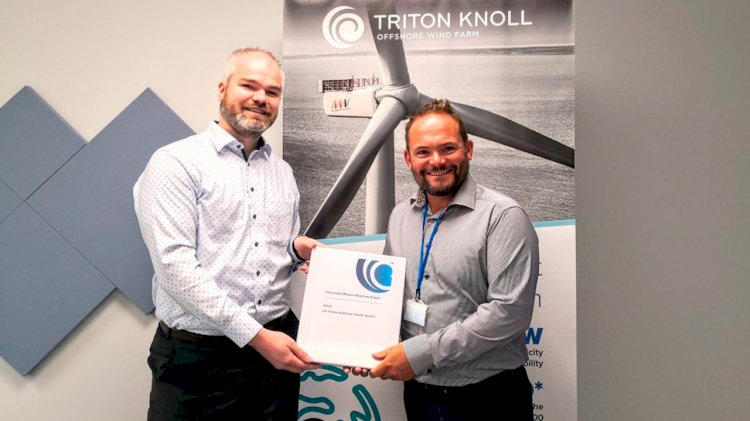
Matthias Reiker, Finance Director for Triton Knoll, said:

“We’re delighted to bring Seacat Services into the Triton Knoll team, further strengthening our project presence in Grimsby and reinforcing our commitment to the UK’s offshore supply chain.
It is vital that the construction of the project is conducted as efficiently as possible while meeting our highest safety standards. In light of this, Seacat Services has proved a natural fit as a vessel provider and we look forward to progressing our state-of-the-art project with them.”

The deal reaffirms the expertise of Seacat Services in managing complex logistical charters for large-scale offshore wind construction projects. For the duration of the contract, the pair of Seacat Services vessels will be operating out of the Port of Grimsby and will work in conjunction with the on-site Service Operation Vessel (SOV) as part of a shift-based approach that will keep them available on a 24-hour basis at the height of construction activity.

Ian Baylis, Managing Director of Seacat Services said:

“During the time-sensitive offshore wind construction phase, the importance of a finely-honed approach to vessel management cannot be understated. It not only ensures maximum ‘time-on-turbine’ for project technicians to keep the project on track but can also create wider operational efficiencies that have an impact across the board.Having worked out of Grimsby previously, we’re looking forward to returning later this year and getting the project underway.”   
Sea Machines demonstrated industry’s first autonomous spill-response vessel

0

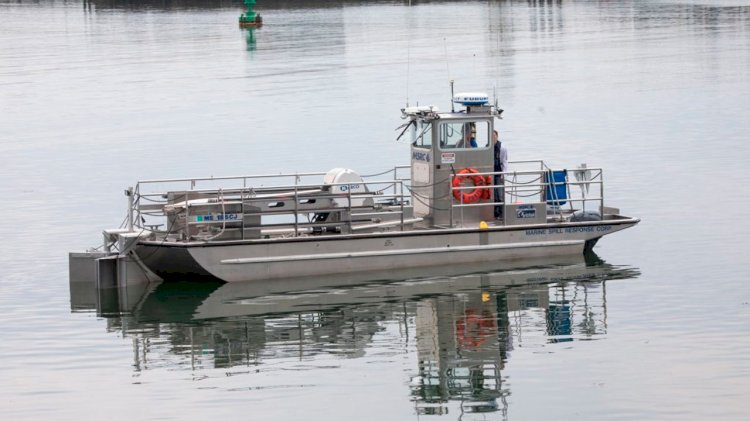
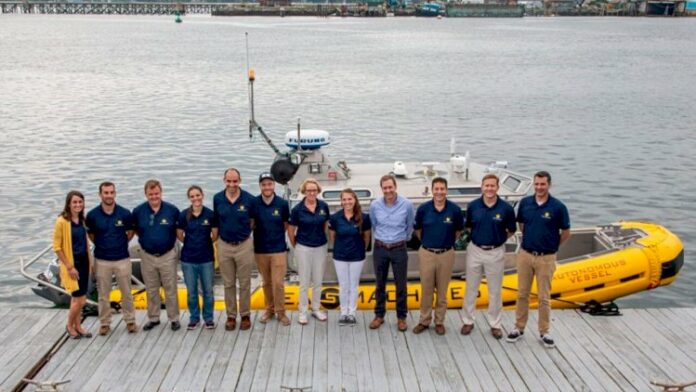
As a part of its cooperative agreement with the U.S. Department of Transportation Maritime Administration (MARAD), Boston-based Sea Machines Robotics had demonstrated its autonomous systems in action on board a Kvichak Marco skimmer boat during events held along the Portland harbor earlier.

Sea Machines’ technology opens a new era of capability for the marine industry, and today the company demonstrated its ability to increase the safety, productivity, and predictability of response for marine oil-spill operations. The on-water demonstrations took place aboard the world’s first autonomous spill response vessel – a Vigor/Kvichak Marine Industries-built skimmer boat, owned by Marine Spill Response Corp. (MSRC) – before a live audience of MARAD, government, naval, international, environmental and industry representatives.

Michael G. Johnson, founder and CEO, Sea Machines, said:

“Our operation of the world’s first autonomous, remote-commanded spill-response vessel is yet another significant industry first for Sea Machines. But even more important is the fact that we’ve proven that our technology can be applied to the marine spill response industry – as well as other marine sectors – to protect the health and lives of mariners responding to spills. We are proud to support MSRC’s mission of response preparedness and to work alongside MARAD for these important demonstrations.”

John Swift, vice president, MSRC, said:

“MSRC is excited to work with Sea Machines on this new technology. The safety of our personnel is the most important consideration in any response. Autonomous technology enhances safe operations.”

Sea Machines’ SM Series of products, which includes the SM300 and SM200, provides marine operators a new era of task-driven, computer-guided vessel control, bringing advanced autonomy within reach for small- and large-scale operations. SM products can be installed aboard existing or new-build commercial vessels with return on investment typically seen within a year.

Sea Machines is also a leading developer of advanced perception and navigation assistance technology for a range of vessel types, including container ships. The company is currently testing its perception and situational awareness technology aboard one of A.P. Moller-Maersk’s new-build ice-class container ships.

In August 2018, Sea Machines demonstrated the capabilities of its SM300 product aboard the world’s first autonomous-command, remote-controlled fireboat, owned by TUCO Marine, during the Maritime Kulturdage event, in Korsør, Denmark.

About Sea Machines

Headquartered in the global tech hub of Boston with a branch office in Hamburg, Sea Machines is the leader in pioneering autonomous control and advanced perception systems for the maritime industry. Founded in 2015, the company builds autonomous vessel software and systems, which increases the safety, efficiency and performance of ships, workboats and commercial vessels. 

About the DOT Maritime Administration

The United States Maritime Administration is an agency of the United States Department of Transportation. Its programs promote the use of waterborne transportation and its seamless integration with other segments of the transportation system, and the viability of the U.S. merchant marine. The Maritime Administration works in many areas involving ships and shipping, shipbuilding, port operations, vessel operations, national security, environment, and safety.

About the Marine Spill Response Corporation

The Marine Spill Response Corporation is a not-for-profit, U.S. Coast Guard-classified Oil Spill Removal Organization (OSRO). MSRC was formed in conjunction with the Marine Preservation Association (MPA) in 1990 to offer oil spill response services and mitigate damage to the environment. With over 25 years of experience, MSRC offers a full range of oil spill response capabilities intended to help meet the planning criteria of the Oil Pollution Act of 1990 (OPA 90).

SCHOTTEL to provide propulsion units for three newly built hybrid ferries

0

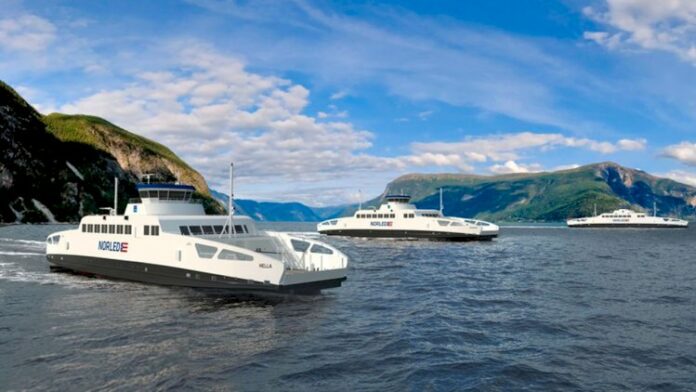
The German propulsion expert SCHOTTEL has secured a contract to provide propulsion units for three newly built hybrid ferries under construction at Sembcorp Marine, Singapore.

Each of the double ended Ro-Pax ferries will be equipped with two SCHOTTEL EcoPellers® type SRE 340 FP. The vessels will be driven by an innovative battery/diesel electric hybrid system and will be operated during their transits by green battery power. Once again, SCHOTTEL provided a customized solution and further expanded its strong position in the Norwegian ferry market.

The main propulsion for the LMG 80-DEH design ferries consists of PM motor driven SCHOTTEL EcoPellers type SRE 340 with 2.1 m diameter fixed pitch propellers. With these thrusters an economical operation of the vessels at a service speed of 10 kn and a free running speed of 12.5 kn is achieved. Beyond this, the propulsion units are designed to provide full thrust in the desired direction even with strong side winds.

With the SRE, Norled’s requirements could be optimally met: SCHOTTEL EcoPellers, covering the power range from 500 to 5,000 kW, ensure high efficiency even at very low loads. It is an ecologically clean propulsion system developed primarily for open seas and coastal operating conditions. Due to its efficiency, the azimuth thruster contributes to the ship's low fuel consumption, resulting in low operating costs and reduced emissions. In addition, the SREs improve course keeping stability and consequently reduce steering angle corrections.

In operating mode, the required power is supplied by two battery packs installed on board. These are recharged from the land grid during the eleven-minute stays on the quay. Additionally, an automatic mooring system, which holds the ferries at the quay and starts the charging process, will be integrated into the shore charging system. Only in emergencies will the vessels use generators running on 100 percent biodiesel.

The trio is tailored for Norled’s shortsea Hella-Vangsnes-Dragsvik connections in Norway. Each of the new 84.2 m long multi-deck, double-ended vessels will be able to accommodate up to 300 passengers and crew members. It will be capable of carrying 80 cars or a combination of ten cars and ten trailer trucks.

Deliveries of the ferries are scheduled to take place in the last quarter of 2020.  

BAE Systems raises the bar for multi-domain cybersecurity with XTS® Guard 7

0

BAE Systems has launched its next-generation XTS® Guard 7, which provides U.S. intelligence organizations with secure access to geospatial imagery and data through multi-directional transfer of different data types across classified and unclassified domains. XTS Guard 7 is a cybersecurity appliance solution that resides between networks with differing levels of security classification, and is a key component to secure information sharing between programs and agencies using intelligence libraries.

Equipped with the company’s Geospatial eXploitation Products™ (GXP), BAE Systems' newest guard builds on the proven, reliable XTS Guard 5 platform. XTS Guard 7 meets the National Security Agency's (NSA) recently released National Cross Domain Solution "Raise the Bar" design and implementation requirements for filtering, sanitizing, and decomposing data. Raise the Bar (RTB) is a cyber-security initiative created by the NSA to combat escalating threats while continually improving the status quo in the cross-domain community.

Douglas Steil, general manager of Cyber Security Products at BAE Systems, said:

"Our product is the guard of choice for Department of Defense and other Intelligence Community enterprises. We created a superior product predicated on design patterns outlined by the NSA, and have proven XTS Guard 7's readiness to deliver operational success for a number of U.S. government entities and agencies."

Built to support the simple plug-in of leading content filters, XTS Guard 7 offers easy and secure communication with coalition partner countries. The product's "STOP" operating system further enhances security by allowing for data heterogeneity, reducing vulnerabilities across the architectures defined by the NSA.

XTS Guard 7 protocols include Simple Mail Transfer Protocol (SMTP), Secure File Transfer Protocol (SFTP), User Datagram Protocol (UDP), Transmission Control Protocol (TCP), Hypertext Transfer Protocol (HTTP), and DSG, which is a persistent socket proprietary protocol. The product's architecture can support multi-enclave and multi-compartment controlled information sharing, with advanced administration and auditing. It supports up to 28 enclaves or domains, and is compatible with filters or Data Format Description Language libraries. Additionally, the XTS Guard 7 is available in a small form factor that handles up to 10 domains for land, sea, and airborne vehicle deployments.

XTS Guard 7 is operationally cost-effective for customers upgrading their current architectures and migrating to the RTB-accredited design patterns. BAE Systems currently offers an affordable upgrade path for existing and accredited XTS Guard 5 customers to the new XTS Guard 7 platform for customers requiring a move to the Raise The Bar architecture. The company is the only vendor to build and offer both the XTS Guard 7 and the unidirectional data diodes required in RTB solutions.

NOAA asked community to comment on proposed changes to National Marine Sanctuary

0

NOAA’s Office of U.S. National Marine Sanctuaries released a draft proposal recommending a range of potential changes to existing boundaries, regulations, and marine zones in the Florida Keys National Marine Sanctuary, to better address long-term declines to the region’s marine resources as well as ongoing and emerging threats due to changing ocean conditions.

Coral reefs like this one in the Florida Keys National Marine Sanctuary buffer shorelines from wave action, storms, and erosion, and protect wetlands and harbors.

The proposal, known as the Restoration Blueprint, provides NOAA’s perspective on how the sanctuary can assist in protecting and restoring important marine resources in the Florida Keys. These actions include proposals to both restore important reefs and seagrass beds and to modify existing sanctuary regulations regarding the use of certain areas. 

Florida Keys National Marine Sanctuary protects the only coral barrier reef in the continental United States, a marine ecosystem that annually attracts nearly five million visitors who collectively contribute to the $4.7 billion economy through marine-related activities in the sanctuary, including fishing, snorkeling, diving, wildlife viewing, and boating. The sanctuary also protects the habitat of key commercial fishing species, including shrimp, spiny lobster, stone crab, and fish such as Spanish mackerel. Commercial fishing in the sanctuary accounts for a quarter of the state’s commercial fishing revenue. 

The Restoration Blueprint seeks to protect the fragile ecosystems of Florida Keys National Marine
Sanctuary, such as this reef in the Upper Keys with a red grouper and a boulder star coral.
The Restoration Blueprint seeks to protect the fragile ecosystems of Florida Keys National Marine Sanctuary, such as this reef in the Upper Keys with a red grouper and a boulder star coral.

The proposed restoration plan takes into account more than 20 years of science, management achievements, technical experience and local community involvement. It also recognizes that new or expanded protection strategies may be necessary to restore habitats degraded from events such as Hurricane Irma, coral bleaching and coral disease. 

This is the first comprehensive review and update of the sanctuary’s boundaries, regulations, and marine zones since 1997. The first revision to the original sanctuary management plan and regulations was the modification to the sanctuary's boundaries that created the Tortugas Ecological Reserve in 2001, while the 2007 management plan revision streamlined and updated the management action plans, but did not involve changes to the regulations. 

NOAA will accept public comment on the proposals through January 31. The public comment period will span two sanctuary advisory council meetings and will include opportunities for engagement, including public meetings.

VIDEO: world’s longest wind turbine blade has arrived at ORE Catapult

0

Get a ringside view as the world's longest wind turbine blade arrives at ORE Catapult for testing.

The 107m LM Wind Power blade was manufactured in Cherbourg for GE Renewable Energy's 12MW Haliade-X turbine. It will undergo a full range of advanced testing procedures, demonstrating its ability to withstand peak wind conditions and simulating its readiness for years of operation at sea.

Haliade-X 12 MW will contribute to making offshore wind more affordable and help developers drive the global growth of offshore wind, generating substantial economic and environmental benefits.
The production of the LM 107.0 P blade represents a milestone for the entire wind industry, as the first wind turbine blade to surpass 100 meters in length.

Hanif Mashal, LM Wind Power Vice President of Engineering, said:

“LM Wind Power has broken the size record once again with this 107-meter blade. We are proud to begin its global validation program in the UK, where we have a long-term strategic partnership with ORE Catapult to test new products, including our previous record-breaking blade at 88.4 meters in length. Through LM Wind Power’s advanced technology development hub in Southampton, we look to continue our presence and cooperation with UK-based technology and R&D entities.”

Andrew Jamieson, Chief Executive of the Offshore Renewable Energy (ORE) Catapult, said:

“We’re delighted to have taken delivery of the world’s longest blade at our Blyth test facility, where we’ll put it through an extremely rigorous testing programme designed to make sure it can withstand years of operation at sea. This 107m blade, which is larger than the total wingspan of an A380 aircraft, represents a huge milestone for our industry and will be part of the innovative Haliade-X 12 MW next-generation offshore wind turbine. Testing these world-leading technologies here in the UK cements our position as a global leader in offshore wind and presents unparalleled opportunities for the UK supply chain to develop new products and services, creating jobs and generating economic benefit.”

Kongsberg and AMC eye potential for VR training with renewed support program

0

Kongsberg Digital AS has cemented its long-standing position as the primary supplier of simulation software and hardware to the Australian Maritime College (AMC), with the recent confirmation of a new Long-Term System Support Program (LTSSP).

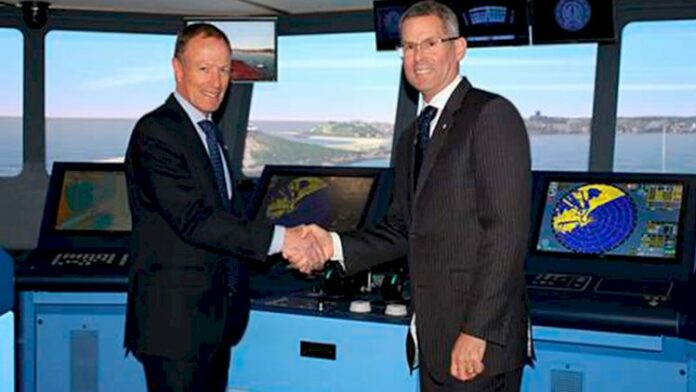
Kongsberg Digital Area Sales Manager Paul Gilkison and AMC principal Michael van Balen signed the agreement – the third successive five-year contract between the two parties – on Thursday, August 8 at the AMC’s Newnham campus in Launceston.

Kongsberg Digital simulators are the platform of choice at the AMC’s world-class Centre for Maritime Simulations; and as Mr van Balen explains, the continuing relationship with KONGSBERG provides stability in AMC’s training methodology:

“Simulation is an integral part of our training. It gives us the capability to run any number of scenarios in a repeatable fashion, which not only benefits the students but also enables us to learn in the teaching environment as well.”

Mr Gilkison adds that the agreement demonstrates Kongsberg Digital’s ongoing commitment to meeting the diverse technology and support needs at the AMC:

“Our continuing engagement allows the AMC to make sure that the product we are delivering is actually going to address the needs of the maritime community”.

Mr Gilkison points out that software is continually subject to improvements over the life of the LTSSP:

“This year, we hope to be able to roll out the new K-Sim Navigation platform for the AMC, which will provide more offshore simulation scenarios as well as handling traditional ship navigation training.”

Damien Freeman from the AMC’s Centre for Maritime Simulations says K-Sim Navigation represents a groundbreaking move into next-generation platform functionality, including virtual reality interactions (VRI):

“VRI enables a student to be placed in simulation exercises on the deck of a ship, in the engine room or on the bridge, experiencing and interacting with the simulated environment as they would in the real world. K-Sim Navigation is based on a cutting-edge technology platform and will enable more realistic training scenarios and enhanced user benefits for both instructors and students. An advanced new physical engine and state-of-the-art hydrodynamic modelling will allow vessels, objects and equipment to behave and interact as in real life.

Vessels and objects including various geographical training areas and all possible weather conditions are brought to life with a sophisticated new visual system.”

Mr Freeman adds that K-Sim functionality will enable all AMC simulators to be integrated seamlessly to enable common exercise for full crew resource management training. 

AMC’s Maritime Simulation Centre features a full mission ship’s bridge simulator, two 360° tug simulators, a full mission engine room, an advanced dynamic positioning bridge simulator, six basic dynamic positioning simulators, six ship operations cubicles and an 18-seat electronic chart display laboratory.

The simulation facilities bridge the gap between practice and theory and are used for research into port development, ship manoeuvring, improving ship and port safety, training seafarers and teaching undergraduates.

Aker Solutions to deliver subsea umbilicals for the dalma gas development project

0

Aker Solutions has won an order from ADNOC (Abu Dhabi National Oil Company) to deliver subsea umbilicals for the Dalma gas development project located offshore UAE in the shallow waters of the Persian Gulf.

Luis Araujo, chief executive officer of Aker Solutions, said:

"This is the first subsea umbilical award by ADNOC in the UAE and the first subsea award for Aker Solutions in the Persian Gulf. We are very pleased with the opportunity to further develop our relationship with ADNOC and to demonstrate our umbilical capabilities in the region."

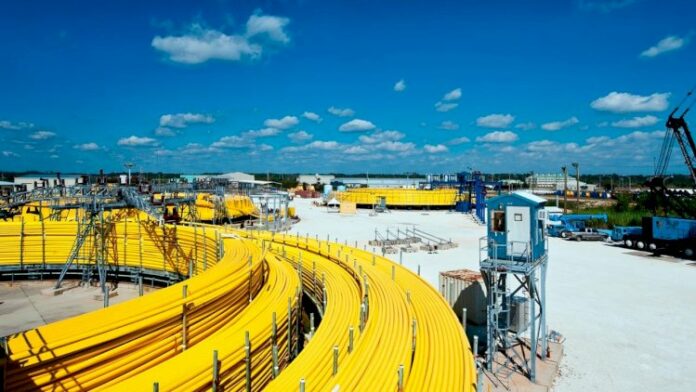
The value of the contract is about NOK 700 million. The scope includes four steel tube umbilicals totaling more than 100 kilometers. The umbilical system will provide power supply, communication services and chemical injection fluids. It will connect the subsea equipment to three new wellhead platforms and link the topside equipment located on the offshore control platform to equipment located onshore.

Aker Solutions' facility in Mobile, Alabama in the United States will support by performing the design, engineering and manufacturing of the umbilical system. The work will start up immediately and be finalized in the first quarter 2021.

The order will be booked in the third quarter 2019.
 

VIDEO: The Port of Rotterdam is gradually becoming CO₂ neutral (three steps)

0

Step 1: the industry takes efficiency measures. Residual warmth is used to heat homes, commercial buildings and greenhouses. CO₂ is captured and stored under the North Sea.

Step 2: a new energy system. In the long term, electricity and hydrogen will play a major role in making the port sustainable. This requires affordable electricity from sustainable sources such as sun and wind.

Step 3: a new raw materials and fuels system. Fossil resources are being replaced through the use of biomass, recycled materials and green hydrogen.

CCPO to implement ABB’s digital solution on 55 ships

0

ABB secured its first contract for ABB Ability™ Tekomar XPERT for fleet of 55 vessels with Hamburg based ship manager CPO Containerschiffreederei (CCPO).

ABB’s digital solution for shipping fleets helps to further reduce fuel costs and environmental footprint
CCPO offers high quality service to its charter clients and professional ship management for 111 of own and third-party ships. They were an early adopter of the smart engine performance diagnostics software, Tekomar XPERT, during its initial release in 2015. The latest Tekomar XPERT for fleet web application launched in June this year at CIMAC Congress and incorporates all standard features found in the original Tekomar XPERT application with the additional fleet functionality specifically developed to support management decisions.

Tekomar XPERT for fleet, features an easy-access web application interface, which provides accurate insight into engine performance from fleet to vessel level through key performance indicators (KPIs) such as engine health, optimization potential and fleet performance benchmarking. These KPIs provide a helicopter view of engine performance across an entire fleet regardless of engine make, type and age. Ships and fleets are listed according to current performance and provide the technical management with an immediate indication on their status.

Poor performing vessels are less cost effective and emit more pollutants into the atmosphere than necessary. Tekomar XPERT for fleet, identifies the necessary adjustments required to reach optimum engine performance and efficiency at a fleet wide level, creating both fuel and emissions savings.

Christoph Gessner, Managing Director, CCPO, said:

“We are always looking to adopt the latest technological advances to minimize our environmental footprint; this is a key driver for us when procuring services and products. With Tekomar XPERT for fleet, through optimizing our engine health, we can minimize costs and the environmental footprint, and in return we can pass on these benefits to our customers.”

Beat Güttinger, Head of Tekomar, ABB Turbocharging said:

“We are continuously looking to improve our offerings to more advanced solutions and supporting our customers to differentiate themselves in the market. Our long-standing positive relationship with CCPO, being an early adopter of our latest web application on CCPO’s entire fleet, demonstrates their confidence in ABB’s ability to deliver innovative solutions to the market.”

Tekomar XPERT for fleet solution for CCPO was delivered in July 2019 and includes additional e-learning, fleet administration and multiple access levels functionality.

Tekomar XPERT for fleet enhances the proven Tekomar XPERT desktop application with its unique diagnostics and advisory on engine performance and allows company-wide engine performance assessment with controlled and consolidated analysis across a fleet. It facilitates the benchmarking and ranking of engines, vessels and fleets and the user-friendly dashboard can be customized according to role.

Tekomar XPERT can be used with any diesel or gas engine, irrespective of manufacturer, type, age or size. There is no hardware to install and the application can be dropped into the shipping company’s normal IT system. It is subscription-based solution. More than 1,500 vessels have been equipped with the software to date.

ABB Turbocharging is at the helm of the global industry in the manufacture and maintenance of turbochargers for 500 kW to 80+ MW diesel and gas engines. Approximately 200,000 ABB turbochargers are in operation across the globe on ships, power stations, gen-sets, diesel locomotives and large, off-highway vehicles. 

ABB is a pioneering technology leader with a comprehensive offering for digital industries. With a history of innovation spanning more than 130 years, ABB is today a leader in digital industries with four customer-focused, globally leading businesses: Electrification, Industrial Automation, Motion, and Robotics & Discrete Automation, supported by its common ABB Ability™ digital platform. ABB’s market‑leading Power Grids business will be divested to Hitachi in 2020. ABB operates in more than 100 countries with about 147,000 employees.