-1.3 C
New York
Home Blog Page 1012

NYK Group to build new heavy-lift vessels

0

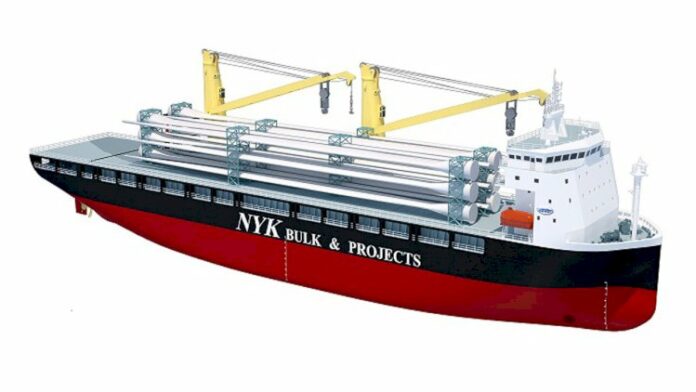
NYK Bulk & Projects Carriers Ltd., an NYK Group company, has signed a contract with Nanjing Jinling Shipyard Co. Ltd., which is part of the China Merchants Group, to build two next-generation energy-saving heavy-lift vessels.

These ships will be equipped with two 400-ton cranes and be able to lift up to 800 tons of heavy cargo. The hold will be about 95 meters in length at its maximum without any bulkheads, i.e., upright walls within the hold. The ships will be hatch coverless, which will allow for navigation with the hatch cover open, and the bridge will be placed at the ship front, enabling the loading of tall and large cargo without worry of any disruption to forward visibility during navigation.

As an environmental benefit, a significant reduction in fuel consumption has been achieved compared to existing ships of the same type with the cooperation of Japanese marine equipment manufacturers. In addition, the vessels can reduce greenhouse gas emissions and meet in advance EEDI (Energy Efficiency Design Index) Phase 3 requirements that will become effective in 2025. These energy-saving heavy-lift vessels give maximum consideration to the environment.
 

DNV GL grants rare MSA to battery maker Corvus Energy

0

Manufacturing Survey Arrangement (MSA) certifies that Corvus manufacturing processes meet DNV GL quality, safety and environmental standard.

DNV GL and Corvus Energy have completed the DNV GL Manufacturer Product Quality Assessment (MPQA) and have signed a Manufacturing Survey Arrangement (MSA), resulting in streamlined quality control processes and faster customer deliveries.

Under the terms of the MSA, Corvus Energy has been granted the ability to witness the Factory Acceptance Testing (FAT) at its plant in Richmond, British Columbia, Canada, without the presence of a DNV GL surveyor.

Abbas Nouri Zenouz, QHSE Director at Corvus Energy, says:

“We are honored to be the first battery or energy storage system manufacturer in the world to be approved for MSA certification. It’s a testament to the strict quality assurance methods we adhere to in our manufacturing operations, as well as the collaborative relationship developed between Corvus and DNV GL over the years rooted in our mutual goal of improving safety in marine battery applications.”

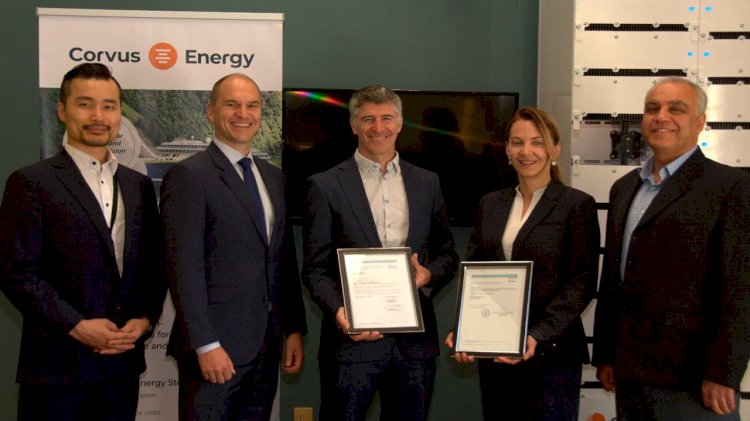
Corvus Energy proudly displays the MSA granted by DNV GL. Left to right: From DNV GL, Ham Kwang Nam, JSS Project Manager and Anders Mikkelsen, Director of Business Development; and from Corvus Energy, Brian Baker, Principal Engineer, Battery Safety & Regulation Compliance, Mariella Deltcheva, Plant Manager and Abbas Nouri Zenouz, QHSE Director.

Anders Mikkelsen, Director Business Development in the DNV GL Vancouver office, says:

“It is fitting that Corvus Energy is the first battery supplier to achieve MPQA/MSA. Corvus Energy was a pioneer in energy storage systems and the first supplier to achieve Type Approval for lithium-ion batteries back in 2013. They are still technological leaders, with single-cell thermal runaway isolation and numerous other innovations that have paved the way for safe, economical and high-performance marine electrification.”

DNV GL will conduct audits of Corvus test and control routines, procedures and equipment, as well as acceptance criteria for the energy storage products covered by the MSA to ensure continued high standards of quality.

About Corvus Energy

As the leading manufacturer of energy storage systems for maritime applications, Corvus Energy provides battery power to more hybrid or all-electric ferries than all other providers of energy storage systems combined. Corvus Energy provides high power energy storage in the form of modular lithium ion battery systems. Its purpose-built, field-proven battery systems provide sustained power to hybrid and all-electric heavy industrial equipment, including large marine propulsion drives. 

Greater Enfield Project produced first oil

0

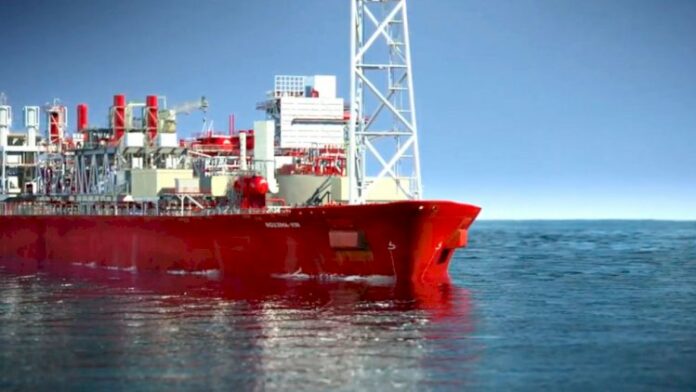
The Greater Enfield Project produced first oil through the Ngujima-Yin floating production storage and offloading vessel (FPSO) on 25 August 2019.

The Greater Enfield Project was approved in 2016, to develop the Laverda Canyon, Norton over Laverda and Cimatti oil accumulations through a subsea tie-back to the Ngujima-Yin FPSO, located over the Vincent field.
Total investment for the project was approximately US$1.9 billion (100%).

The project scope included a major refit of the Ngujima-Yin FPSO which was successfully completed at theKeppel Tuas Shipyard in Singapore. The FPSO returned to waters off the North West Cape on 5 May 2019 and production from the Vincent wells recommenced on 4 July 2019. Installation of subsea infrastructure has been completed, with all the project’s 12 development wells now also complete. 

Woodside CEO Peter Coleman said first oil from Greater Enfield was produced on schedule and under the project’s budgeted cost:

“The subsea campaign and refurbishment of the Ngujima-Yin FPSO was a significant undertaking, and the project team and our contractors should be proud of their achievement. A highlight included performing over five million work hours in the shipyard without a recordable safety incident.

The delivery of Greater Enfield is further demonstration of Woodside’s capacity to execute the major projects that will underpin our next phase of growth. The technical and project leadership capabilities applied on the Greater Enfield Project will be carried forward as we progress our plans to develop the Scarborough and
Browse offshore gas resources through the proposed Burrup Hub.”

The Greater Enfield Project is a joint venture between Woodside Energy Ltd (Operator, 60%) and Mitsui E&P.
 

VIDEO: Damen Shipyards builds a new vessel for Windermere Lake Cruises

0

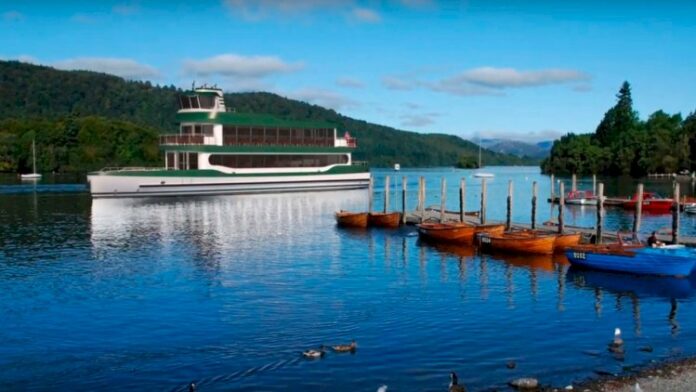
MV Swift will be the latest addition to the fleet of Windermere Lake Cruises.

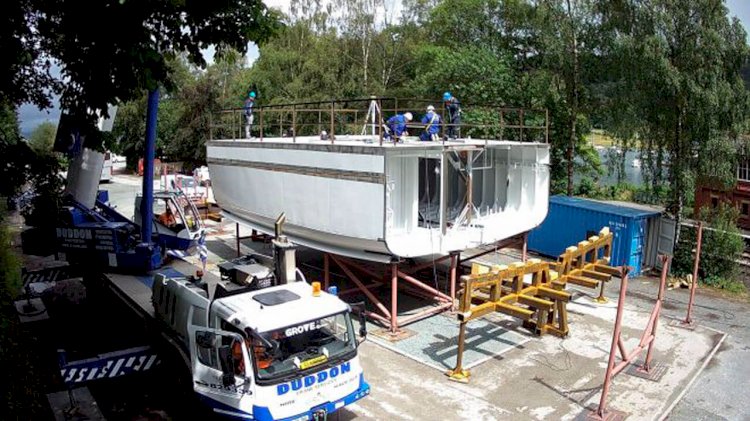
When it hits the water in 2020 it will the first vessel of this size in more than 80 years to be launched on Lake Windermere. Building a vessel on this Unesco heritage site is a challenge, especially without the availability of modern shipbuilding facilities. Damen Shipyards will build a new vessel on a parking lot on the shores of the lake.

The attraction signed a contract to make a multi-million pound investment in the new vessel, MV Swift earlier this summer, with Netherlands-based boat-builder, Damen.

When launched, during the mid-2020 season, the new addition to the fleet will be the largest craft to be introduced onto Windermere for more than 80 years.

The new vessel has been designed to operate in all seasons, 364 days a year and will increase the quality of the visitors’ experience thanks to 21st century quality, comfort and accessibility. Like Windermere Lake Cruises’ existing flagship ‘steamers’ MV Swan and MV Teal, the new vessel will boast three decks but will be slightly shorter in length to enable it to access smaller jetties to help support other businesses in the area.

Too large to transport by road fully-built, the size of the vessel means it is necessary to build it in smaller sections off-site before being transported to Lakeside for final assembly.

VIDEO: AUV Sentry to explore the ocean down to 6000 meters depth

0

The autonomous underwater vehicle (AUV) Sentry is part of the National Deep Submergence Facility (NDSF).

Sentry is a fully autonomous underwater vehicle capable of exploring the ocean down to 6,000 meters (19,685 feet) depth. Sentry carries a superior science sensor suite and enjoys an increased science payload enabling it to be used for both mid-water and near-seabed oceanographic investigations.

Sentry produces bathymetric, sidescan, subbottom, and magnetic maps of the seafloor and is capable of taking digital bottom photographs in a variety of deep-sea terrains such as mid-ocean ridges, deep-sea vents, and cold seeps at ocean margins. Sentry is uniquely able to operate in extreme terrain, including volcano caldera and scarps. Sentry's navigation system uses a doppler velocity log and inertial navigation system, aided by acoustic navigation systems (USBL or LBL).

The USBL system also provides acoustic communications, which can be used to obtain the vehicle state and sensor status as well as to retask the vehicle while on the bottom. In addition its standard sensors, Sentry has carried a variety of science-supplied sensors, including the Nakamura redox potential probe, ACFR 3-D imaging system, and the Tethys in-situ mass spectrometer.

Sentry can be used to locate and quantify hydrothermal fluxes. Sentry is also capable of a much wider range of oceanographic applications due to its superior sensing suite, increased speed and endurance, improved navigation, and acoustic communications. Sentry can be used as a stand alone vehicle or in tandem with Alvin or an ROV to increase the efficiency of deep-submergence investigations.

VIDEO: NASA’s CubeSat for next-generation marine animal telemetry

0

A vision for next-generation animal telemetry: imagine a future where a network of small satellites, CubeSats, will track the movement of marine animals with more precision than is possible today. A new video on a collaborative project between BOEM and NASA sparks the imagination to better understand and protect the marine environment and the animals that live there.

CubeSats are a class of small research-class spacecraft. NASA’s CubeSat Launch Initiative (CSLI) provides opportunities for small satellite payloads to hitch-hike on rockets planned for upcoming launches. This program engages engineering schools across the United States to develop low-cost micro satellite experiments and has been developing and launching these CubeSats at a rate as high as 100 per year.

Some CubeSats have adopted the APRS system for tracking position and relaying data of other transmitters. This is the same system that NASA maintains aboard the International Space Station for outreach to students and amateur experimenters around the world. Additional APRS transreceivers can be placed easily on the future CubeSats, as well as AUVs, ocean going vessels, and existing buoys to create a truly wired ocean.

Marine Mammals, fishes and invertebrates of particular interest for impact analysis include those species that are commercially or recreationally important, are threatened or endangered, or are keystone (for example, important prey) species. Data collected by these tags can be relayed in real-time (or delayed mode) via satellite. Due to limited bandwidth in these transmissions not all of the data can be relayed. This results in a need for some data-processing on the tag and only a subset or summary of the data being recovered.

However, as the instrument does not have to physically be recovered these tags can be deployed on animals not suitable for archival tags alone. The planet is changing quickly, through this study BOEM can be a catalyst for a truly wired ocean. Though the implementation of this project, BOEM achieves improved tools for OCS monitoring, STEM partners are engaged in an innovative program, together leading to a tech savvy workforce while filling in gaps in OCS data cost effectively.

The U.S Coast Guard’s two national security cutters commissioned in Honolulu

0

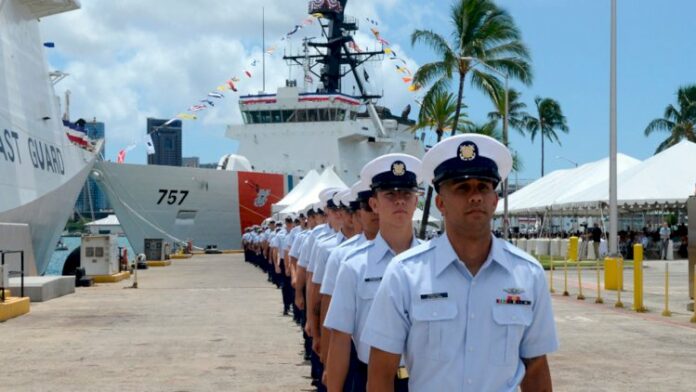
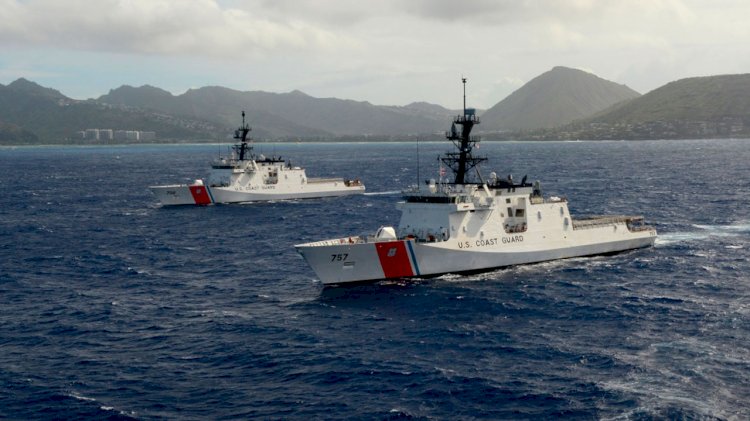
The Coast Guard Cutter Kimball and the Coast Guard Cutter Midgett were ‘brought to life’ during the rare dual-commissioning ceremony at Base Honolulu where the two cutters homeport. The Kimball and Midgett are the seventh and eighth legend-class national security cutters in the Coast Guard’s fleet.

Adm. Karl Schultz, the Coast Guard’s commandant, said:

“These national security cutters will continue our 150 years of partnership and commitment to the Pacific region – since September 1849, when Revenue Cutter Lawrence sailed into Honolulu Harbor escorted by Native Hawaiians in outrigger canoes. In today’s complex geostrategic environment with rising great power competition, the importance and demand for a strong Coast Guard presence in the Pacific has never been greater.”

The Kimball and Midgett, along with the three fast response cutters also homeported in Honolulu, will further advance the Coast Guard’s longstanding commitment to safeguard the nation’s maritime safety, security, and economic interests through critical deployments across the Indo-Pacific region.

Advanced command-and-control capabilities and an unmatched combination of range, speed and ability to operate in extreme weather enable these ships to confront national security threats, strengthen maritime governance, support economic prosperity, and promote individual sovereignty.

From the Bering Sea and the Arctic to patrolling known drug trafficking zones off Central and South America to working to strengthen the capabilities of our partners across the Indo-Pacific, national security cutters deploy globally to conduct essential Coast Guard missions.

Known as the Legend-class, national security cutters are capable of executing the most challenging national security missions, including support to U.S. combatant commanders. They are 418 feet in length, 54 feet in beam and 4,600 long tons in displacement. They have a top speed of more than 28 knots, a range of 12,000 nautical miles, an endurance of up to 90 days and can hold a crew of up to 150. These new cutters are replacing the high endurance Hamilton-class cutters (378 feet) that have been in service since the 1960s.

Klaveness’ CLEANBU made the first switch from wet to dry cargo

0

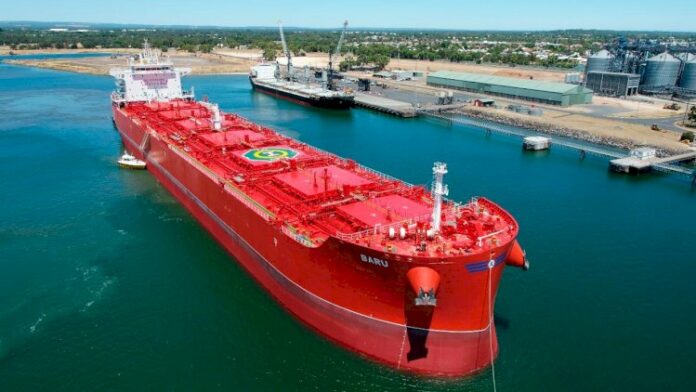
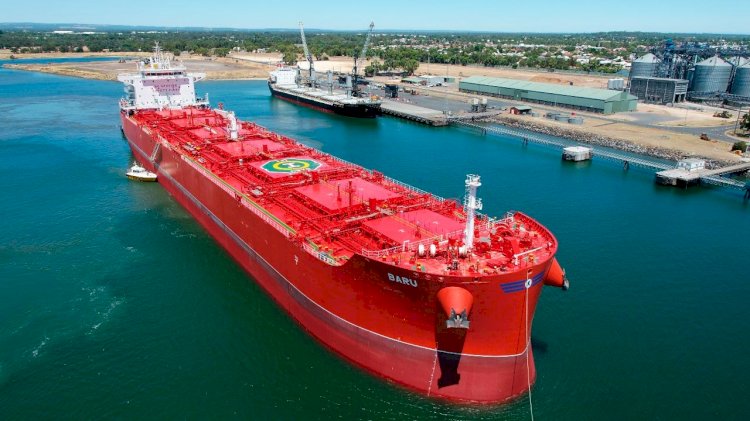
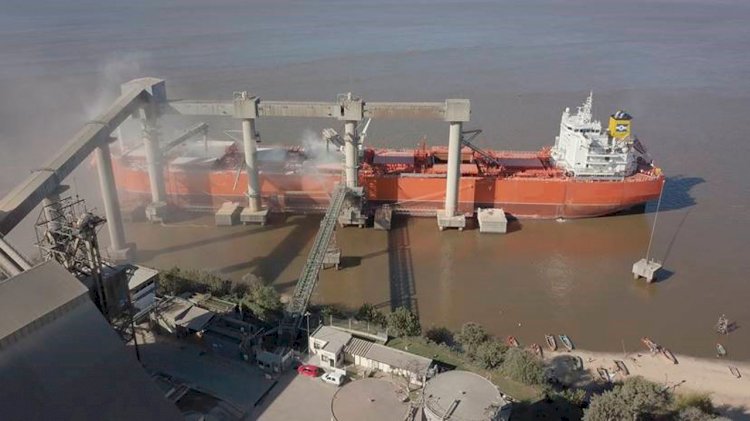
The vessel transported a full cargo of petroleum products (CPP) from India to Argentina. After discharging of CPP, MV Baru successfully completed cleaning and conversion from tanker mode (as a LR1-tanker) to dry bulk mode (as a Kamsarmax bulk carrier).

Having industry leading cleaning capabilities, MV BARU passed all the strict cleaning inspections from the grain cargo surveyors prior to her loading. The cleaning result was for the first time also available for digital inspection by customers on the new Klaveness and DNV-GL Veracity created inspection platform.

On this round-voyage the CLEANBUs safely performed the transportation work of both a LR1 tanker on the inbound leg, and a kamsarmax bulker for the return cargo. This efficient trading with minimum ballast results in significant savings in energy consumption and emissions per ton of cargo transported.

For this specific trade alone her estimated fuel savings compared to these standard vessels can be estimated to be approximately 1,200 mts. Savings in CO2 emissions are approximately 3700 mts, being equivalent of annual CO2 emissions from around 1,000 cars.

On average, a Kamsarmax vessel would have to ballast about 25 days in order to reach East Coast South America for these grain cargos, however with the inbound CPP cargo the CLEANBU ballasted for less than 2 days between these two cargoes. If a regular LR1 tanker had performed the MV Baru’s voyage, this vessel would have to reposition for her next employment, ballasting to the next loading port which could typically be back to PG, Continent, Mediterranean or US Gulf, all requiring a ballast voyage of around 2-3 weeks.


Norway Royal Salmon chooses Techano for a new prestige project

0

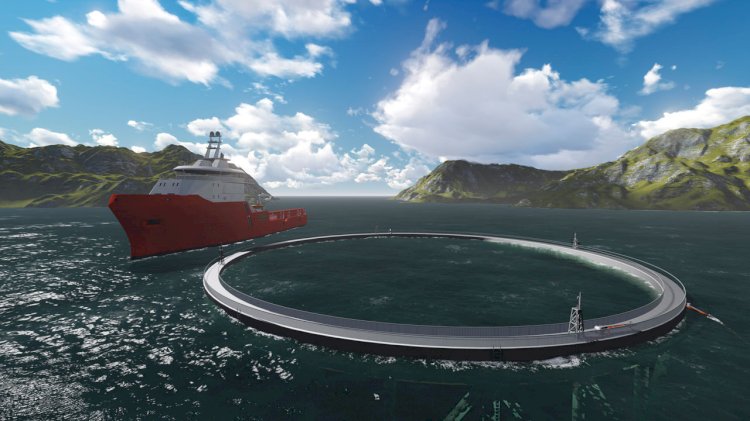
Techano has received a significant order for equipment for Norway Royal Salmon‘s newly developed aquaculture facility, Arctic Offshore Farming (AOF).

Øystein Bondevik, Sales Director at Techano, says:

«In strong competition with leading players, Techano received orders for winches for net handling, chain jacks and a boat slip for the fish food barge.»

With this, Techano confirms its world-leading position as a supplier of advanced cargo handling equipment in offshore aquaculture, a growing and important market for the future. The order goes into the series of several major orders to the Offshore aquaculture industry.

Techano recently delivered rail mounted service units (RMSU) with several cranes per unit (cargo rail cranes) to the Nordlaks project Havfarm 1, which is under construction at the Chinese yard CIMC Raffles, Yantai. The yard is very satisfied that the delivery was delivered without problems and on time.

CEO Morten Sørensen says:

«It is very nice to see that our targeted commitment to offshore aquaculture and fisheries over the years has borne fruit. We bring our high level of expertise from the offshore oil&gas industry into these new industries making them both safer and more efficient.»

With cutting-edge technology, Norway Royal Salmon will build semi-submersible offshore fish farms, designed for very harsh offshore areas. The first plant will be located outside Troms and fish are planned in the cages during the autumn 2020. By moving the plant out of the fjords, both better area utilization of Norwegian waters as well as a significantly smaller environmental footprint is achieved. AOF will be completed at Fosen shipyard outside Trondheim.


Origin of massive methane reservoir identified at the seafloor

0

New research from Woods Hole Oceanographic Institution (WHOI) published Aug. 19, 2019,  in the Proceedings of the National Academy of Science provides evidence of the formation and abundance of abiotic methane — methane formed by chemical reactions that don’t involve organic matter — on Earth and shows how the gases could have a similar origin on other planets and moons, even those no longer home to liquid water.

Researchers had long noticed methane released from deep-sea vents. But while the gas is plentiful in the atmosphere where it’s produced by living things, the source of methane at the seafloor was a mystery. 

“Identifying an abiotic source of deep-sea methane has been a problem that we’ve been wrestling with for many years,” says Jeffrey Seewald a senior scientist at WHOI who studies geochemistry in hydrothermal systems and is one of the study’s authors. 

Of 160 rock samples analyzed from across the world’s oceans, almost all contained pockets of methane.  These oceanic deposits make up a reservoir exceeding the amount of methane in Earth’s atmosphere before industrialization, estimates Frieder Klein, a marine geologist at WHOI and lead author of the study:

“We were totally surprised to find this massive pool of abiotic methane in the oceanic crust and mantle.”

The scientists analyzed rocks using Raman spectroscopy, a laser-based microscope that allows them to identify fluids and minerals in a thin slice of rock. Nearly every sample contained an assemblage of minerals and gases that form when seawater, moving through the deep oceanic crust, is trapped in magma-hot olivine.  As the mineral cools, the water trapped inside undergoes a chemical reaction, a process called serpentinization that forms hydrogen and methane. The authors demonstrate that in otherwise inhospitable environments, just two ingredients⁠—water and olivine⁠—can form methane. 

Seewald says:

“Here’s a source of chemical energy that’s being created by geology.”

On Earth, deep-sea methane might have played a critical role for the evolution of primitive organisms living at hydrothermal vents on the seafloor, Seewald explains. And elsewhere in the solar system, on places like Jupiter’s moon Europa and Saturn’s Enceladus, methane produced through the same process could provide an energy source for basic life forms. 

About WHOI

The Woods Hole Oceanographic Institution is a private, non-profit organization on Cape Cod, Mass., dedicated to marine research, engineering, and higher education. Established in 1930 on a recommendation from the National Academy of Sciences, its primary mission is to understand the oceans and their interaction with the Earth as a whole, and to communicate a basic understanding of the oceans’ role in the changing global environment.
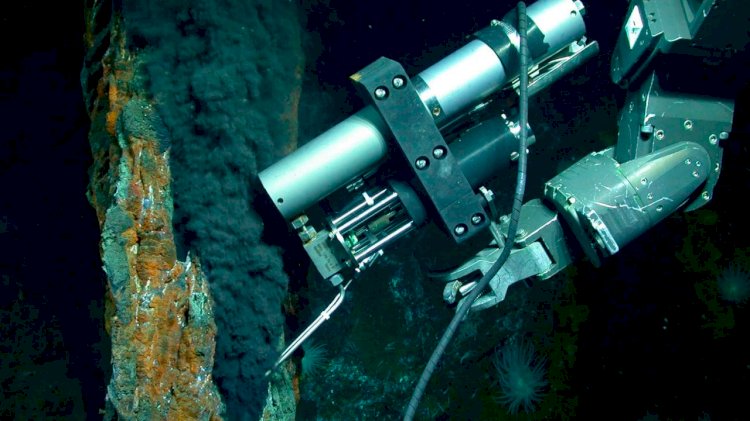
Photo: WHOI. The manipulator arm of the remotely operated vehicle Jason samples a stream of fluid from a hydrothermal vent. The fluid contains gases that are in liquid form because of the high pressure of the deep ocean.