-1.3 C
New York
Home Blog Page 1011

VIDEO: Mesobot dives into the Twilight Zone

0

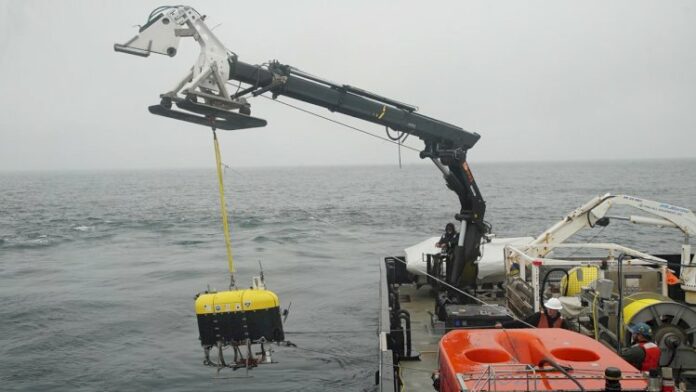
Mesobot is a brand new underwater vehicle designed to reveal what lives in the ocean’s twilight zone.

Mesobot can follow animals as they move through the darkness and as they migrate from the depths to the surface and back. The twilight zone is vast and remote, but is threatened by unregulated fishing and climate change.

The development of Mesobot is a collaboration between Woods Hole Oceanographic Institution (WHOI), Monterey Bay Aquarium Research Institute (MBARI), Stanford University, and the University of Texas Rio Grande Valley. The robot is designed to let scientists observe the twilight zone by autonomously tracking individual animals for hours, or even days, without disturbing the environment or disrupting their behavior.

Haisla Nation and Seaspan awarded LNG Canada escort and harbor tugs contract

0

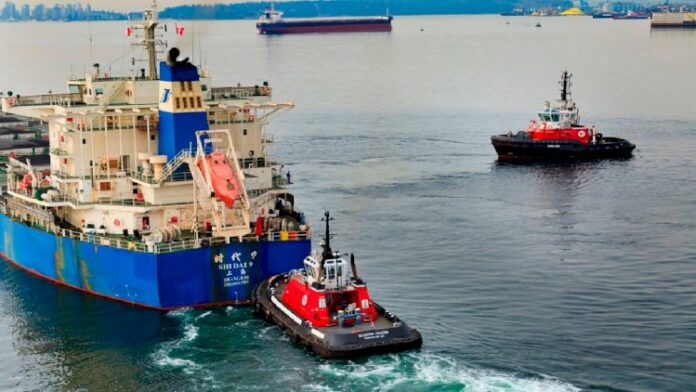
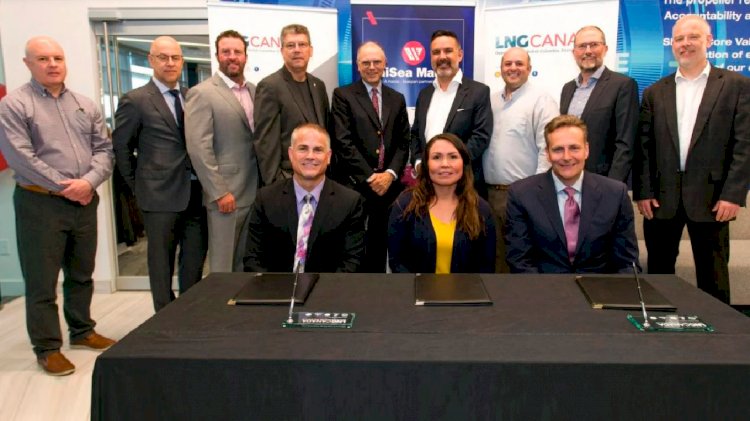
HaiSea Marine, a joint venture partnership between the Haisla First Nation and Seaspan ULC, has announced the signing of a contract award with LNG Canada to design, build and operate escort tugs and harbor tugs required for LNG Canada’s LNG export facility in Kitimat, British Columbia.

The value of the contract award is approximately $500 million over 12 years and will result in employment for approximately 70 mariners and six onshore staff, plus other roles for employees of the partner organizations.

Crystal Smith, Chief Councillor of the Haisla Nation, says:

“HaiSea Marine is majority-owned by the Haisla. Our agreement with Seaspan ensures our members will have access to employment, training and procurement opportunities on the contract with LNG Canada. The opportunity to work locally in the marine industry is of great significance to the Haisla people.”

Benefits will also be available to the Gitxaala Nation and the Gitga’at Nation through a transit agreement with the Haisla.

During operations, LNG carriers will require harbour tugs to provide berthing and unberthing assistance in Kitimat. The tugs will also provide transportation of material and personnel, marine emergency response, firefighting and oil pollution response. Escort tugs are required to escort LNG carriers from Triple Island to the facility in Kitimat, approximately 159 nautical miles. The tugs are yet to be constructed and will go into service shortly prior to production commencing, which is estimated before mid-next decade.

Frank Butzelaar, CEO Seaspan Marine Transportation, says:

“Seaspan owns a large fleet, has extensive new build experience and has the largest pool of tug masters and engineers in BC, providing us with the scale to train for and operate the project in a cost-efficient manner. Our innovative training and safety programs ensure that HaiSea mariners will be well prepared to support the safest project on earth.”

Vancouver-based Robert Allan Ltd., an independent, privately owned firm of consulting naval architects and marine engineers, has been contracted to design the new vessels.

Peter Zebedee, CEO of LNG Canada, says:

“LNG Canada has committed to ensuring benefits from our project accrue to First Nations, local communities and BC businesses, and this contract is part of that commitment. The legacy the LNG Canada project will leave, in part, is the long-term, high-skilled jobs for First Nations and local community members. HaiSea was selected because they were able to demonstrate technical capability, operational expertise, and training at world class levels.”
About HaiSea Marine

HaiSea Marine is a joint venture partnership between the Haisla First Nation and Seaspan ULC. Both partners have considerable experience and knowledge of operating in Northern British Columbia, making HaiSea a natural choice for providing responsible and dependable marine services in the region.

About LNG Canada

The LNG Canada joint venture is building a liquefied natural gas (LNG) export facility in Kitimat, British Columbia, Canada, which will initially consist of two LNG processing units, referred to as “trains.” 

NSM warns shipowners on cybersecurity vulnerabilities

0

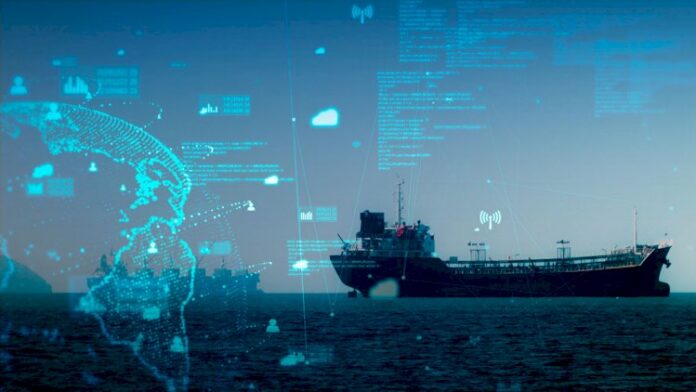
The National Security Authority (NSM) and the Norwegian Maritime Directorate warn Norwegian shipping companies, seafarers and other employees in the Norwegian maritime sector against hacking attempts through the LinkedIn service and e-mail inquiries.

The National Cyber Security Centre (NCSC) is a part of NSM, and is continuously following and analyzing situations that in the cyber domain can affect or have affected Norwegian companies and organizations. 

Since June 2019 NSM NCSC received information about cyber campaigns targeting several different sectors. The scope of these campaigns and the following incidents have been global, but companies in the United States of America, Europe, and the Middle East have been the main targets. 

The threat actors have demonstrated high ability and capacity to conduct their operations. It has been reported attempts of digital activity with malicious intent against several companies.

Based on the received information, NSM NCSC, the Norwegian Maritime Authority, and the Norwegian Shipowners’ Association assess that all types of ships and ship owners’ land-based infrastructure can be vulnerable to cyber incidents within the maritime sector. Especially ship owners that operate in MARSEC level two areas or higher should be aware of the situation. Companies and organizations should be prepared for continuous activity in the short to medium term.

NCSC encourages businesses and employees in the maritime sector to be more vigilant, and to follow the measures in Appendix 1: Recommended Measures. Suspicious incidents should be reported to the Norwegian Maritime Directorate and the Norwegian Shipowners' Association.  

Or send a copy of the request to NSM NCSC if the incident is suspected of activity as described in Appendix 2: Observed Campaigns or some other form of cyber activity. NSM NCSC can be contacted 24 hours a day on 02497 and e-mail norcert@cert.no.
 

The World’s First DNV-GL Approval for 3D printing in the maritime industry

0

The shipping industry is looking to take advantage of additive manufacturing (AM), also known as 3D printing, to print spare parts, thereby reducing lead times, costs, stock requirements, and environmental impacts. Certification ensures that AM part users can have the same confidence in an additive manufactured product as a conventionally produced one.

The newly issued certificate makes the thyssenkrupp TechCenter Additive Manufacturing the world’s first producer of 3D printed parts for maritime applications to obtain manufacturer approval from DNV GL. This means that thyssenkrupp TechCenter Additive Manufacturing is an DNV GL approved supplier for maritime and general industrial applications. Certification was important for thyssenkrupp Marine Systems as the company is working closely with international customers on the integration of additive manufactured parts on ships and submarines.

Geir Dugstad, Director of Ship Classification & Technical Director of DNV GL – Maritime, says:

“Additive manufacturing will have a significant impact on the future maritime value chain. Producing components that have the same level of quality as conventionally manufactured parts and fulfil class requirements is key. At DNV GL, we are very pleased to certify that the thyssenkrupp TechCenter Additive Manufacturing has demonstrated its ability to reliably produce metallic materials using additive manufacturing. This is the first time DNV GL has awarded its Approval of Manufacturer certificate, and I would like to congratulate thyssenkrupp on this achievement.”

The approval covers the 3D printing and processing of austenitic stainless steel parts. Certification was also awarded for the acceptance process in accordance with EN 10204 and the associated product information, particularly the chemical and physical material characteristics. Approvals for individual special components are also being prepared.

Dr. Luis Alejandro Orellano, Chief Operating Officer thyssenkrupp Marine Systems, says:

“We are delighted that with thyssenkrupp TechCenter Additive Manufacturing we now have a certified partner who can supply thyssenkrupp Marine Systems with additive manufactured parts that meet both our own and our customers’ high expectations. Together we are putting innovative solutions into our submarines and ships, setting new standards for the navy of the future.” 

DNV GL experts from multiple units coordinated to examine whether the TechCenter's processes were reliable and ensured consistent quality.

Eva Junghans, Senior Principal Engineer, Materials & Welding at DNV GL – Maritime, says:

"A team effort was particularly important here, as the certification required us to rethink traditional methods for quality evaluation and certification. I would like to thank everybody involved for their support and collaboration.”

ClassNK structural changes prior 2020 Sulphur Cap

0

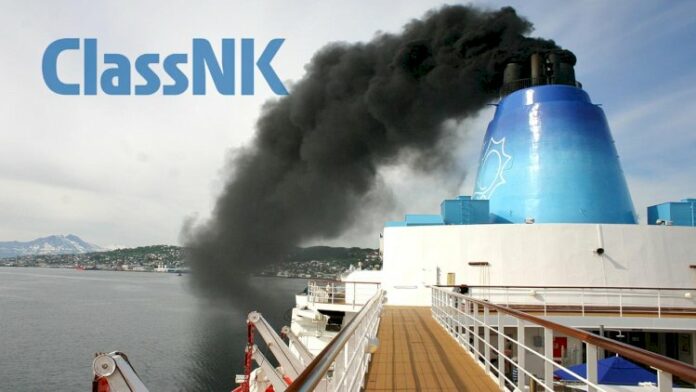
Leading classification society ClassNK has undergone structural changes that include an integration of its point of contacts in order to more quickly and efficiently support clients with the IMO’s upcoming sulphur cap which will be globally enforced starting in January of 2020.

In light of the increasingly strengthening SOx regulation, until now ClassNK had already been providing not only appropriate plan approvals/site surveys and information on international/regional regulations, but also carrying out various other initiatives to provide clients with compliant support to the new regulation. In addition to the release of the “Guidance for onboard use of Compliant Fuel Oil with SOx regulation from 2020” which outlines potential risks and mitigation measures involved with compliant fuel oil, and the “Guidelines for Exhaust Gas Cleaning Systems” which include requirement explanations for SOx scrubbers, ClassNK has also provided a sample “Ship Implementation Plan (SIP)” recommended by the IMO for switching to compliant fuel oil now that global enforcement is within sight, and many appraisal services for SIPs and fuel oil tank cleaning etc.

Future issues and damage involving machinery with the use of compliant fuels and new situations regarding Port State Control (PSC) inspections are expected. As the SOx regulation involves various fields, ClassNK reorganized its structure by integrating its point of contacts to provide faster and more efficient support to clients. The points of contact for inquiries related to the SOx regulation are as follows:


Port of Rotterdam developed the new app for electronic bunkering notification

0

Maud Eijgendaal and Marc de Vries of the Port of Rotterdam Authority developed the new innovative application.

Bunkering is the supply of fuel to vessels. Bunker specialists in the port of Rotterdam are obliged to notify the Port Authority and Customs prior to commencing each bunkering operation. These are practically the same notifications that currently still need to be made separately. This could be done smarter.

Maud Eijgendaal, Bunkering, LNG and Cruise Business Manager, said:

‘Bunkering is one of the most important maritime services in the port, and globally we are in the top 3. Annually, sea-going vessels ‘fill up’ around 20,000 times. In total, these vessels bunker around 10 million tonnes of fuel, with a total value of several billions of euros. It is important that the entire bunkering process runs as safely and efficiently as possible. But, in the bunkering market, many transactions still take place by telephone or paper. That takes an unnecessarily big amount of time and doesn’t always result in a reliable overview of bunkering activities. We developed the app because things can and must be done differently.’

The digital TimeToBunker tool is the first step towards fully paperless bunkering. Submitting electronic notifications is much more efficient than the current working method and results in a more reliable overview of planned bunkering activities. Information can also be shared more easily, and the application also allows the notification to be submitted to both the Harbour Master and Customs (optional) simultaneously. Maud Eijgendaal added: 

‘The app makes everything more efficient. Not only for our customers, who report the bunkering activities electronically via the app, but also for us. Registering 20,000 notifications is a lot of work and with manual entry, things sometimes go wrong, resulting in unreliable information. Particularly now, with the energy transition and transfer to increasingly cleaner fuels, it’s crucial that we have a reliable overview of all fuels being bunkered in the port; both the traditional fuels and the cleaner fuels such as LNG and biofuel. Without this overview it’s difficult to monitor trends and make and anticipate predictions. The new app gives us this overview.’

TimeToBunker is linked to PRONTO, the app that shipping companies, agents, terminals and other service providers use to optimise planning, execution and monitoring of all activities during a port call. Marc de Vries:

‘This overview of planned bunkering activities will enable vessel clearance to be optimised yet further. On average, 80% of all sea-going vessels bunker fuel, and this can take several hours. It is extremely important that the vessel voyage and the bunkering activities connect seamlessly. TimeToBunker supports this.’

TimeToBunker was launched in March 2019, and within a few weeks 1,000 bunkering activities had already been registered via the app. Approximately 50% of the market currently uses the app. The app’s further development is in full flow. Maud Eijgendaal:

‘We’re doing this by showing the advantages of the app to as many parties as possible, and getting them enthusiastic about it. Digital notification will be compulsory from next year. The next step is generating the electronic bunker delivery note of the bunkered fuel, which must contain certain data about the supplied fuel and can be viewed as a value document. We are already holding discussions with several parties about this, and interest is high.’
 

World’s largest floating solar energy system installed in Maldives

0

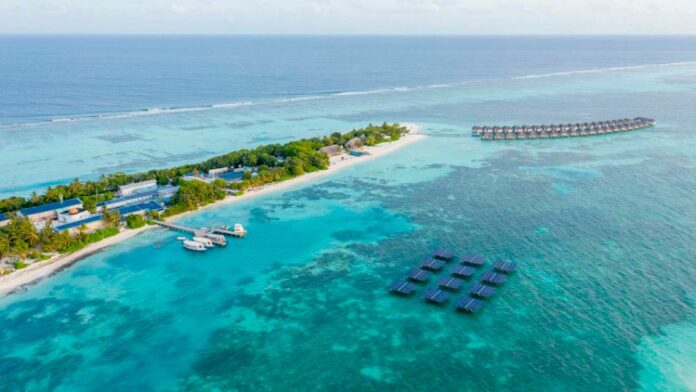
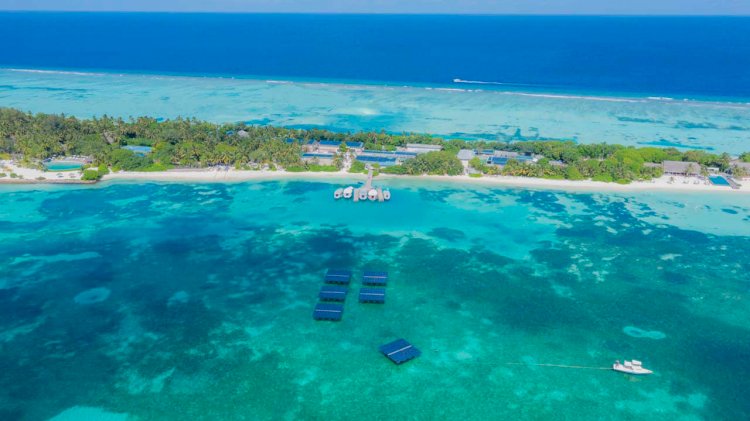
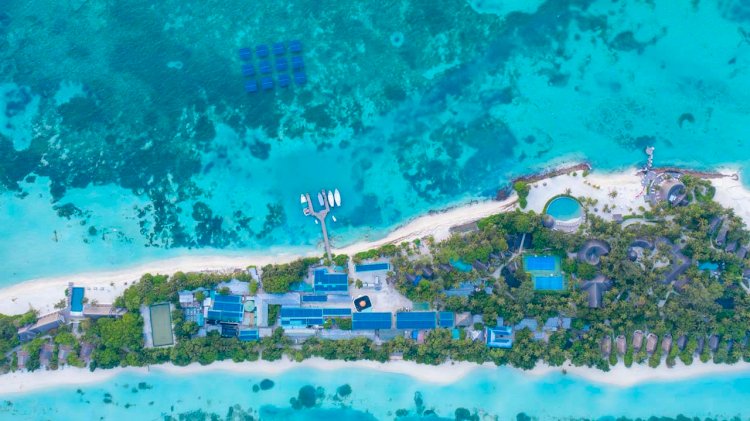
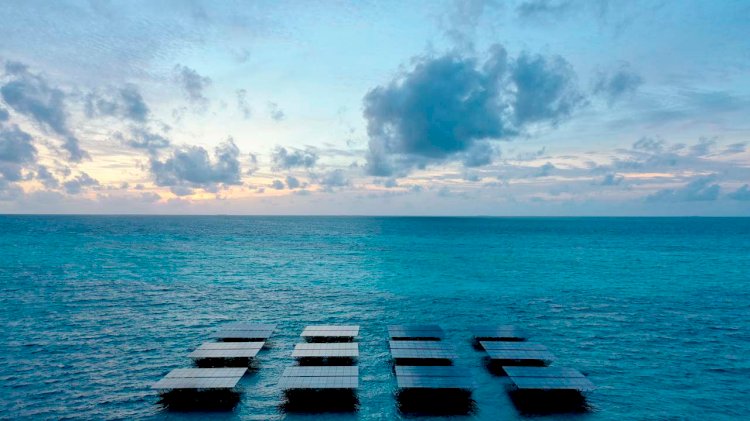
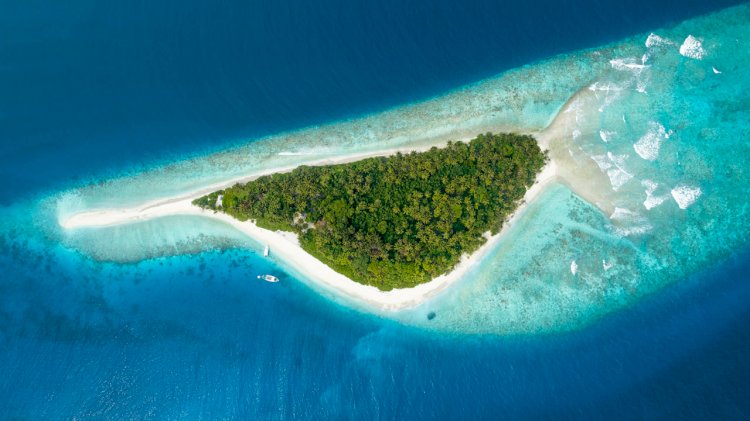
The world´s largest solar system floating at sea has been installed at LUX* South Ari Atoll. This unique technology called SolarSea gathers solar energy directly on the ocean to power the island in an eco-friendly fashion.

As part of the resort’s commitment to sustainability, LUX* South Ari Atoll has pledged to minimize carbon dioxide emissions. To achieve this goal, the five-star luxury resort partnered with the leading solar provider Swimsol, an Austrian-Maldivian company, which provided a solution to overcome the limited space available for solar panels on small tropical islands. Consequently, Swimsol developed the first and only patented floating solar system that is designed to withstand the harsh conditions of the waves, storms and saltwater.

Jonas Amstad, General Manager at LUX* South Ari Atoll, said:

“Innovation is key to achieving true sustainability, and we are happy to partner with Swimsol to work towards our goal of minimizing our ecological footprint. As one of the biggest resort islands in the Maldives, we aim to lead the way with eco-tourism and marine conservation work in our region as part of our commitment to good governance, social responsibility and respect for environmental standards.”

The resort is already using a rooftop system with the same solar company. Once all suitable roofs were covered with solar panels, the resort decided to expand beyond the shoreline with twelve SolarSea platforms. Thereby the solar capacity increased by 40% and reached 678 kWp, enough to power all guest villas with solar energy during the peak sun hours. The result is cheaper energy and a saving of more than 260,000 litres of diesel per year that previously were needed to produce the same amount of electricity with combustion engines. Additionally, guests can follow a live “solar tracker” on their in-villas IPTV that will indicate the energy produced, diesel saved as well as the equivalent of carbon dioxide emissions savings to offset the number of long-haul flights.

The ocean benefits as well – the platforms provide shelter for juvenile fish and invertebrates, acting like fish-aggregating devices. To avoid any negative effects, the platforms float above the sandy seabed, avoiding the coral reefs. Free-swimming coral larvae can even use the platforms to grow into adult colonies, which can then be replanted on the ocean floor. Today, the combined rooftop and SolarSea system at LUX* South Ari Atoll is one of the largest solar installations in the country. Plans to further increase the solar capacity are already underway.

Hussain Simad, Managing Director at Swimsol Maldives, has big plans. He said:

“Swimsol is the only company with this patented technology in the world right now and our goal is to enable every island to run purely on solar energy. It is a fantastic opportunity to work with LUX* South Ari Atoll to achieve this with their immense support and passionate enthusiasm in making a difference.”

Following in the steps of its parent company, The Lux Collective, of which the purpose is to make each moment matter and to care about what matters, LUX* South Ari Atoll is committed to contributing in any way, big or small, to make eco-tourism a success in the Maldives.

Study: Wave energy may be generated from breakwaters

0

Wave energy may be generated in the future from breakwaters, harbours and other maritime infrastructure if research by AMC PhD student Damon Howe checks out.

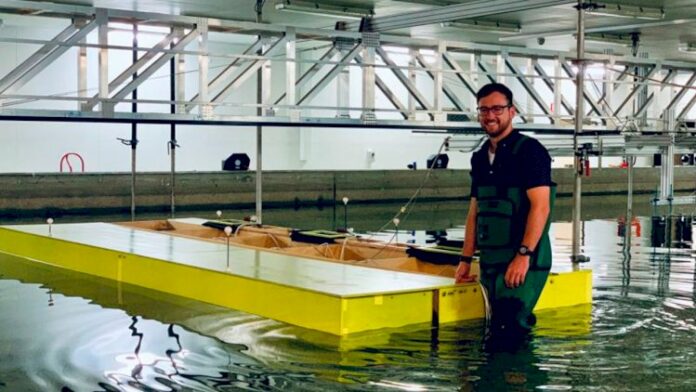
The research is looking at whether integration of wave energy devices into coastal infrastructure such as a floating breakwater can be viable.

In particular he is looking at the potential to generate energy using Oscillating Water Column (OWC) Wave Energy Converters (WECs) which operate in a way which has been described as “an artificial blowhole”.

He has carried out nearly 2000 experimental investigations in two separate episodes in July/August 2018 and in January 2019.

Damon Howe said:

“The results thus far are positive for integration of the Oscillating Water Column Wave Energy Converters into the floating breakwater. We got really good results and found that we were able to nearly double the energy absorption from our device by integrating it into the breakwater. So that would be really good for a coastal region or a harbour where it could potentially serve a multiple purpose. Recent research had been into the performance of the device in irregular seas. The results of this analysis are also very positive.”

The Bachelor of Ocean Engineering graduate has found the 35 metre by 12 metre and one metre deep AMC Model Test Basin to be the ideal facility for the research.

He said the AMC Model Test Basin has the ability to generate waves of up to 200 mm high at the operational water depth explored during his investigation.

He said:

“We are able to generate relatively big waves when operating at our intended water depth, and when you have bigger waves you are able to investigate both the performance and survivability of different device concepts and that is very important area for offshore renewables research."

Mr Howe said the experimental model had up to seven OWC wave energy converters each of which produce bi-directional air flows:

“As the waves interact with the device we get a rise and fall in the water column inside each of the chambers. It causes a rise in the water column and then it falls, which generates bi-directional air flows. Basically the water column inside each of the OWC chambers acts as a piston moving air in and out of a turbine to generate electricity.
This process has been best described by (renewable energy pioneer) Dr Tom Denniss as essentially building an artificial blowhole.”

The research also looks at the integration of the OWC wave energy conversion technology into offshore floating maritime structures where a seabed foundation is too expensive.

He said:

“If we can move these devices offshore they could serve other industries as well. It could be something that could serve the aquaculture industry which is actively looking to move offshore.These floating breakwaters will be multi purpose providing protection for fish pens, a foundation for storage of fish food and equipment as well as generating power at the precise location it is required for these operations -thus no need to connect to any shore based electricity grid.

The concept is trying to couple two beneficial structures together where we get wave energy out as well as provide storage facilitation and protection of the fish pens from storm conditions."

Damon Howe hopes that the work I have completed and the results of my investigations can be utilised throughout the Blue Economy CRC to develop an offshore energy solution.
 

New rules on medical examinations of seafarers and fishermen in Denmark

0

Henceforth, employees on board Danish ships need only hold an international approved health certificate. 

​Danish Maritime Authority has informed that on September 1, 2019, the order for medical examinations of seafarers and fishermen will be changed. Because of this change, it is no longer a requirement to hold a Danish Health Certificate when employed on Danish ships.

Rasmus Høy Thomsen, Director:

"The change removes an administrative burden and at the same time making it easier to be a seafarer on Danish ships."

In future, seafarers can use health certificates issued by an approved maritimemedicalpractitioner from their own country.

This means that:

  • Seafarers are no longer required to undergo a Danish medical examination or to hold a Danish health certificate.
  • Seafarers must be in possession of a valid health certificate based on a medical examination undertaken in a country that has implemented the STCW and the MLC.
  • It is no longer a requirement for the shipmaster or the shipping company to send the health information of seafarers to the Danish Maritime Authority after medical examinations carried out abroad.
  • The seafarer must be able to present a valid health certificate at all times during his / her employment. It is up to the shipmaster and the shipping company to ensure that the health certificate meets the necessary requirements.

Study: Ocean thermal energy “ideal” to power Maldives

0

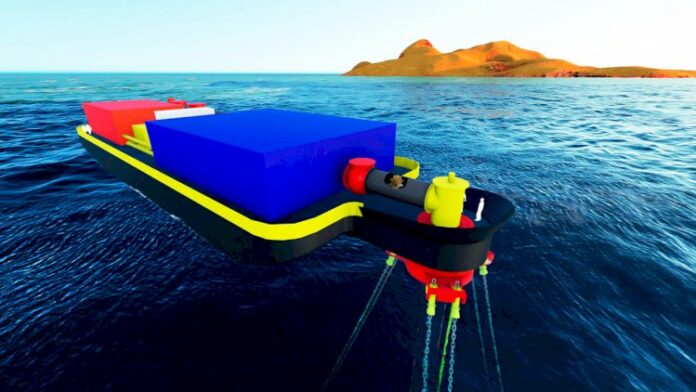
Global OTEC Resources has co-produced a paper with University of Exeter that assesses the feasibility of Ocean Thermal Energy Conversion (OTEC) in the Maldives.

The paper titled ‘Assessment of extreme and metocean conditions in the Maldives for OTEC applications’ is to be published in Volume 43, Issue 11 of the International Journal of Energy Research in September 2019.

Global OTEC Resources, a major advocate for commercial OTEC systems to provide electricity and desalination to small island states, has been awarded €250,000 in EU grant funding over the last 12 months to further its concept design.

Giovanni Rinaldi, Principle Researcher at University of Exeter, said:

“According to the climate analysis, OTEC is an ideal solution for electricity production from renewable sources in the Maldives. The extreme events investigation, including cyclones, allowed for the production of valuable information for the correct engineering of the infrastructure. This paper will accelerate the development and deployment of an OTEC platform in the Maldives.”

Dr. Ibrahim Nashid, Chairman of Renewable Energy Maldives Pvt. Ltd., (REM) added:

“As a nation of islands with the sea covering most of its territory, we are very convinced that the answers to most of our problems lie in the deep sea. As Maldives imports all of its fuel for its energy needs, energy security is important for its economic development. Indigenous energy resources such as OTEC provides security and at the same time protects our environment moving away from fossil fuels.
This paper convinces us of the viability of OTEC in the Maldives. Given the nature of power generation here currently, we are very certain that the economics would be in our favour too. In many ways, OTEC is the ideal energy solution that can provide base load energy and fresh water through the year in the Maldives.”

Professor Lars Johanning, head of ORE group at University of Exeter said: 

“The temperature differential around the Maldives bodes well for OTEC applications which have a great potential to satisfy the energy demand of the archipelago.“

Max Campbell, an Oceanographer at Global OTEC Resources concluded:

“This study has allowed us to adapt our design to better suit environmental conditions in the Maldives. Large vertical temperature gradients and benign weather conditions have reinforced our beliefs that the islands are a prime location for OTEC.”

Founder and MD of Global OTEC Resources, Dan Grech, said, “This highlights the Indian Ocean’s great potential for OTEC plants to provide baseload power in the near future and we are excited to continue pioneering developments in this sector”.

About OTEC

OTEC is an application of solar energy that exploits the heat that the ocean captures from the sun’s rays. It possesses huge environmental advantages over fossil fuels and nuclear power; avoids land-use problems associated with renewable energy technologies such as solar, wind, biomass, and hydroelectric power; and has the potential to produce far more useful and affordable energy than could be obtained from other renewable sources.

About Global OTEC Resources Ltd

Based in Newquay, Cornwall, Global OTEC Resources specialises in developing clean energy systems for off-grid communities. Their goal is to lower the entry barrier for island resorts generating energy using ocean thermals.