-0.9 C
New York
Home Blog Page 948

MOL and e5 Lab to conduct a joint study of a hybrid pure car carrier

0

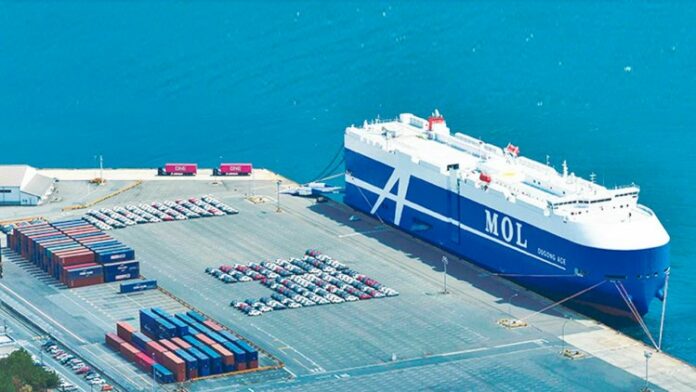
Mitsui O.S.K. Lines, Ltd. and e5 Lab. Inc., which are working to develop and promote electrically powered zero emission vessels, have concluded a Memorandum Of Understanding (MOU) to conduct a joint study of a hybrid pure car carrier equipped with a hydrogen fuel cell system and large-capacity batteries (hydrogen hybrid PCC).

The companies aim to develop a hydrogen hybrid PCC, which do not emit carbon dioxide (CO2), sulfur oxides (SOx), nitrogen oxides (NOx), or particulate matter (PM) while underway in coastal waters or in ports, in other words, achieving "zero emissions," since its propulsive force would come from electricity supplied by the hydrogen fuel cell system and large-capacity batteries. When navigating in the open sea, the hydrogen hybrid PCC’s motor would be powered by an LNG-fueled generator and the large-capacity batteries, resulting in significantly lower emissions than current vessels equipped with diesel engines that run on heavy oil.

MOL has worked to realize zero emissions of vessels while in ports since it announced its future vision for the next-generation series "ISHIN-I" car carrier in 2009. In 2012, it launched the world's first hybrid car carrier, the Emerald Ace, which is equipped with the world's largest-scale solar power generation system and batteries. The hydrogen hybrid PCC concept marks a further step ahead from these past projects, and the company is pursuing the possibility of introducing more extensive and more advanced technologies with the goal of zero emissions.

Both companies will first conduct technological and business feasibility studies of the hydrogen hybrid PCC, and when they gain positive results, they will move on to the next phase of joint development for a practical of hydrogen hybrid PCC based on the results.

MOL and e5 Lab continually engage in measures to reduce merchant vessels' environmental impact by taking full advantage of both companies' wide-ranging technological knowledge to ensure the sustainable growth of the shipping industry.

Maersk Drilling awarded three-well contract offshore Trinidad by BP

0

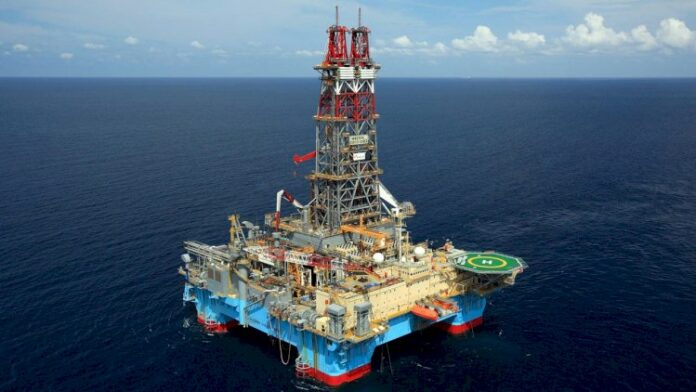
Maersk Drilling has secured a three-well contract for the semi-submersible rig Maersk Discoverer with BP for development drilling at the Matapal project offshore Trinidad and Tobago.

The contract has an estimated duration of 322 days and is expected to commence in July 2020. The value of the firm contract is approximately USD 78m, including a mobilisation fee. The contract contains an additional one-well option.

Maersk Drilling awarded three-well contract offshore Trinidad by BP. COO Morten Kelstrup of Maersk Drilling says:

“It is obviously exciting for us to see Maersk Discoverer go to Trinidad for BP, for whom the rig has performed successful operations offshore Egypt for the last six years, including the shallowest water well ever drilled in dynamic positioning mode for both BP and Maersk Drilling which delivered significant cost savings to the customer. We are very pleased that BP is recognising Maersk Discoverer’s qualities by re-signing the rig for this new campaign.”

The Maersk Discoverer is a DSS-21 column-stabilised dynamically positioned semi-submersible drilling rig, able to operate in water depths up to 10,000 ft. It is currently operating offshore Egypt.

Intertek provides TenneT with expert assurance services for offshore wind grid

0

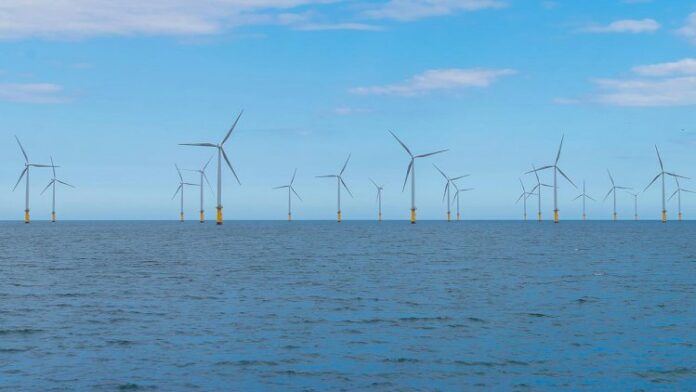
Intertek, a leading Total Quality Assurance provider to industries worldwide, has been appointed by transmission system operator TenneT to provide long-term client representation services in support of offshore wind grid connections in the North Sea.

The German government has established targets for offshore wind with a capacity of 6.5 gigawatts (GW) to be connected to the grid by 2020 and 20 GW by 2030.  As the responsible transmission grid operator, TenneT is connecting offshore wind farms in the North Sea to the onshore electricity grid.

Safety, reliability and high grid availability are key.  The company has already taken into operation twelve offshore grid connection systems in the German part of the North Sea. With their transmission capacity adding up to 7.132 GW, TenneT has exceeded the 2020 target set by the German government. By 2027 TenneT plans to have completed another four offshore projects with a capacity of 3.6 GW.

Intertek has been appointed for the full contract scope that includes specialist client representation for maritime surveys, technical inspection and maintenance work on offshore platform structures, and for subsea cable installation and repair activities. The surveys include hydrographic work, subsea cable depth measurements, erosion studies, and geotechnical exploration drilling. 

Intertek’s extensive global offshore project experience spans numerous industries and includes the planning and permitting, engineering support, and construction oversight of offshore power transmission, telecommunication cable, and offshore renewables projects. Our many services include site selection and characterization, feasibility studies, survey and installation oversight, Environmental Impact Assessments (EIAs) and scoping studies, metocean assessments, and risk management for a variety of offshore developments.

Port of Esbjerg is braced for a sea-level rise of 89 cm

0

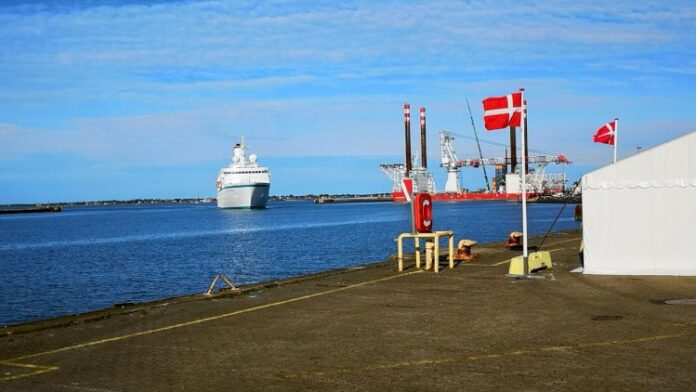
By the end of this century, the sea level at the port of Esbjerg will have risen dramatically according to the evidence of a report that has just been published. For quite some time, Port Esbjerg has been taking measures safeguarding the harbour area against extreme climate conditions to come.

If the emissions of greenhouse gases continue to rise, the sea-level at Esbjerg will have risen by 89 centimetres at the beginning of the 22nd century. This is the conclusion of a new report produced by researchers at GEUS – The Geological Survey of Denmark and Greenland.

The study shows that Esbjerg is much more vulnerable to climate changes and extreme floods than other coastal areas in Denmark, such as Skagen or Copenhagen. Here, at worst, sea levels will have risen by 77 and 64 centimetres respectively by 2100.

The researchers from GEUS operate with two scenarios in the study. In one scenario, the rise in greenhouse gases continues unchanged around the world, and it is in this scenario that the sea level will have risen by 89 centimetres in the year 2100.

The other scenario is based on the possibility that emissions are reduced as set out in the Paris Agreement. In this scenario, the researchers expect the sea level at Esbjerg to rise by 63 centimetres – compared to a rise of 51 centimetres in Copenhagen and 39 centimetres at Skagen.
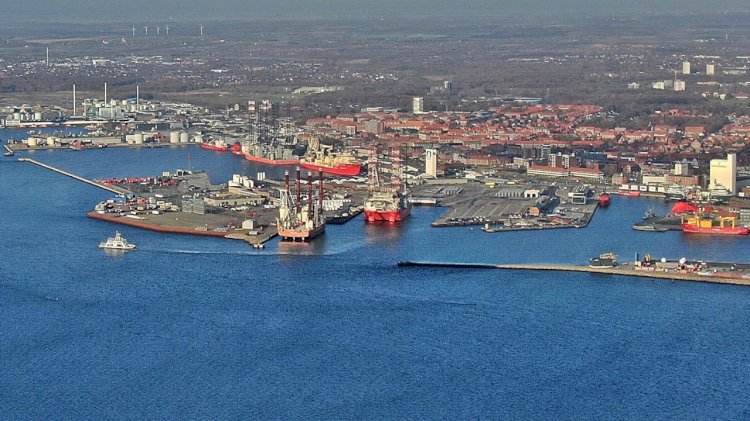
The researchers from GEUS operate with two scenarios in the study. In one scenario, the rise in greenhouse gases continues unchanged around the world, and it is in this scenario that the sea level will have risen by 89 centimetres in the year 2100. The other scenario is based on the possibility that emissions are reduced as set out in the Paris Agreement. 
 
The bleak predictions published by GEUS are taken seriously at Port Esbjerg, as the company is well aware that global warming is a reality that you would be ill advised to ignore. However, floods are not a source of concern, as Port Esbjerg is already taking measures against the global issue of rising sea levels.

Jesper Bank, Chief Commercial Officer of Port Esbjerg, says:

“We’re naturally aware that climate change is a reality; the issue is part of our day-to-day work and there’s no escaping the rising sea levels. But readiness is all, and it’s clear that we must now take steps to safeguard ourselves against the ever-increasing forces of climate change.”

This is also why the new phase-five extension of Østhavnen (the east harbour) will feature a quay height that is six metres above the normal water level, keeping safe both goods and people on the harbour front.

Port Esbjerg is already taking measures against the global issue of rising sea levels. This is why the new phase-five extension of Østhavnen will feature a quay height that is six metres above the normal water level, keeping safe both goods and people on the harbour front.

It is nothing new that Port Esbjerg focuses on the issue of rising sea levels. Jesper Jørgensen who is an engineer with Port Esbjerg, explains:

“We have been addressing the risks of high-tide flooding over quite a few years, using the current figures. This means that this issue was also taken into account when the first quays were built.”

Therefore, the quays are already built to a height of 4.5 metres, and the companies renting units safeguard their property when warnings are given of extraordinary high tides. They barricade themselves with watertight shutters where they are vulnerable and remove all sensitive equipment from the harbour front. Moreover, there are rules in place stipulating that new buildings on the old harbour must be seawater resistant.

Jørgensen says:

“We and the companies on the harbour are used to taking the sea into account in every which way and to having respect for it. Consequently, I have no doubt that the companies on the old quays will also be there in a hundred years, even if they will be lower-lying than the tenants on the new sections. They will probably just have a slightly different lay-out, so as to protect themselves against extreme weather events which may well be a little more extreme in the future.”
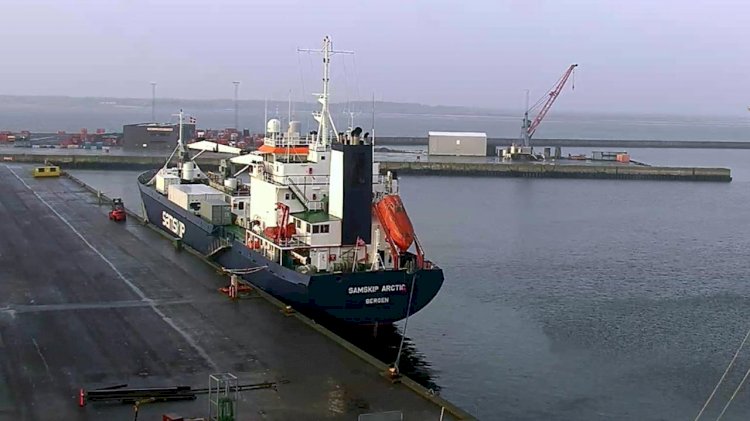
The quays at Esbjerg havn are built to a height of 4.5 metres, and the companies renting units safeguard their property when warnings are given of extraordinary high tides.

Esbjerg Local Authority is also working on a comprehensive action plan, deciding how to handle the rising sea levels in the future, and according to Port Esbjerg, it is highly beneficial to have the local authority on board, even if the harbour and the companies on the harbour are already braced to adapt to the rising sea levels.

However, the future climate changes and sea-level rises will not only affect the harbour, they will also affect the city of Esbjerg. Therefore, Port Esbjerg and Esbjerg Local Authority regularly discuss joint measures and common areas of interest. Jørgensen says:

“We obviously collaborate and will engage if joint solutions are suggested at some point.”

In Britain and the Netherlands, the basic infrastructure of many of the harbours was built several centuries ago. These harbours will face much greater challenges when sea levels rise. Bank explains:

“In the Netherlands, there are huge sea-wall projects underway, where hundreds of kilometres of sea wall are raised 5–10 metres to protect harbour infrastructure as well as towns and cities. This is an enormous investment. Compared to such challenges, we get off lightly at Esbjerg.”

Innovative vapor suppression system received LR’s certificate

0

NanoVapor announced that its innovative Vapor Suppression System has received a product type approval certificate from Lloyd’s Register (LR).

The portable ST-1000 system weighs only 45 kg, has no moving parts, and is powered by compressed air. When used with its proprietary liquid nano-suppressant, the ST-1000 delivery unit can quickly gas free a tank up to 90% faster, even if residual fuel or sludge is present.

Since normal oxygen level is preserved throughout the suppression process, the confined space is quickly made safe for entry. Only a tiny amount of the non-toxic and biodegradable nano-suppressant is needed, leaving no residue or waste to clean up.

Russell Chew, NanoVapor’s CEO, is very excited about bringing important safety and sustainability technologies to the marine transportation industry:

“Our vapor management systems have been fully tested and successfully adapted for high speed gas freeing of fuel and petrochemical tanks of all sizes. The LR Type Approval now opens the door to extend our recognition as a ‘Best Practice’ gas freeing system for land-based tanks to vessels.”

At Marintec China 2019, Ecochlor introduced the ST-1000 delivery unit to the maritime industry. Their VP of Business Development, Andrew Marshall believes that this nanotechnology will, “revolutionize tank cleaning and gas freeing of cargo and bunker tanks in preparation for dry dock or unplanned tank inspections or maintenance.”

With the imminent IMO 2020 sulfur cap deadline, the NanoVapor technology can be used to facilitate faster tank cleaning procedures and allow vessels to resume normal operation as quickly as possible.
 

Marlink introduces new online portal for Fleet Xpress users

0

Marlink has introduced a new online portal designed to give its Inmarsat Fleet Xpress (FX) customers deeper control and service status awareness. The Marlink FX Portal is a unique development that can share network data vital to service quality, availability and efficiency on board and remotely – anywhere in the world.

Enabled by XChange FX, Marlink’s on board communications management system for the FX service, the new portal allows customers to access previouslyunavailable network and service information in real-time. It delivers easy to understand bandwidth performance and traffic statistics, as well as live information on which carrier is being used; Ka-band (FX) or L-band (FleetBroadband).

As a leading Inmarsat FX re-seller, Marlink continues to introduce FX-specific innovations that add tangible value through unique functionality and support capabilities. By making the Marlink FX Portal easily accessible, users get actionable insight that enables them to secure more performance and availability from the FX service and ensures that Marlink’s global support network can react fast and effectively to any issues.

Tore Morten Olsen, President Maritime, Marlink, said:

"XChange FX introduced the possibility to leverage low-cost voice calling and opened the door to our world-class portfolio of business-critical solutions. The Marlink FX Portal goes one step further by providing our customers with unique data so that they can leverage the full power and flexibility of FX."
 

AST announced service provider for Iridium’s GMDSS

0

Applied Satellite Technology Ltd (AST), has been announced a Service Provider for Iridium’s Global Maritime Distress and Safety System (GMDSS).

The new service planned to go live in the first half of 2020 will provide truly global satellite GMDSS service to mariners and offer a new choice in satellite network and equipment. Iridium® GMDSS will be the first to feature all three GMDSS services – safety voice, distress alerting and maritime safety information messaging, as well as being able to utilize Iridium’s global voice and data services – all in one cost-effective and compact terminal.

AST’s Group Managing Director, Gregory Darling said:

“We’re delighted and proud to be at the forefront of this exciting new service, building on our strong relationship with Iridium and further expanding our capability in the maritime market. We continually invest in our own solutions and services designed to bring our customers reliability, efficiency and choice.  With our extensive experience in this market sector and our exceptional 24/7 manned global customer service capabilities we look forward to adding this life-critical service to our portfolio.”

GMDSS is a safety-of-life system created by the International Maritime Organization (IMO) designed to rescue mariners in distress while at sea. Its satellite communications capabilities are regulated by the International Mobile Satellite Organization (IMSO). The system is partially comprised of satellite networks that feed distress information to rescue coordination centers around the world and enable the dissemination of navigational and meteorological information to vessels on the world’s waterways, facilitating safer marine travel. Iridium received recognition to provide GMDSS from the IMO in 2018 and signed a public services agreement with IMSO to act as regulator of the service in 2019.

Risk Intelligence is raising the visibility of cargo theft

0

Risk Intelligence A/S announces today that they have partnered with the Transported Asset Protection Association (TAPA) to substantially enhance the visibility of cargo theft incidents inside the Risk Intelligence System.

Risk Intelligence is raising the visibility of cargo theft by incorporating a vast number of TAPA’s recorded cargo theft incidents into the Risk Intelligence System. Risk Intelligence analysts will analyse and assess these incidents individually, creating additional value from the data. This will provide clients with a dedicated cargo theft incident layer, which will enhance the user experience and substantially increase situational awareness, for logistic professionals, around hot spots and areas of interest.   

Hans Tino Hansen, CEO of Risk Intelligence says:

“Cargo theft has reached historic levels and is affecting all modes of transport across the logistic supply chain. This situation underscores the need for efficient risk mitigation tools and having access to the right incident and threat hotspot monitoring 24/7/365. Our new partnership with TAPA offers an attractive value proposition to TAPA members and Risk Intelligence clients that are members of TAPA. The Risk Intelligence System already offers a variety of tools to mitigate security risks for companies involved in land-based logistics, by road, rail or in-land waterways – our TAPA partnership will further improve our offering.”

Thorsten Neumann, President and CEO of TAPA EMEA says:

“Another great partnership with one of the leading supply chain risk management platforms supports TAPA’s important role as the security expert network for everyone in the supply chain and will increase our ability to provide our members with the best sources of cargo theft intelligence to help them increase their supply chain resilience. As the leading Association in this field, TAPA is looking to develop more of these types of partnerships to help tackle rising cargo crime in the EMEA region and globally,”

Shell Marine launched IT platform for Shell LubeAnalyst

0

Shell Marine has recently launched a new IT platform for its well-respected used oil analysis programme Shell LubeAnalyst. The launch comes after years of planning and development and is the first step in demonstrating how Shell Marine will digitalise its service offerings to customers in the future.

The Shell LubeAnalyst next generation platform offers a much simpler sample management process, which includes online sample registration and label printing that remove the need to complete sample labels manually. This helps to minimise the likelihood of errors and makes life easier for the crew onboard.

Joris van Brussel, General Manager, Shell Marine, says:

“Drawing on Shell Marine’s 30-year knowledge base of sampling, analysis and diagnostics, Shell LubeAnalyst feeds directly into maintenance programmes. It provides vital insights when operating profiles or other circumstances change, such as fuel sulphur content restrictions. Enhanced lubricant analytics and reporting are driving the digitalised technical services that optimise productivity.”

Upgrades include an intuitive customer portal with personalised dashboards, interactive charts and an easy-to-use oil analysis reporting format which allows vessel managers to oversee lubricant performance across their fleets via the Shell LubeAnalyst homepage. Users also benefit from a simple in-box highlighting action and attention comments and recommendations from Shell Marine engineers as part of the enhanced reporting functionality. Shell LubeAnalyst also gives registered owners access to Shell Marine’s complete library of recommendations covering all the key equipment and lubricant grades.

The Shell LubeAnalyst mobile app is already available. Customers will be able to read all test reports on a mobile device and use the new scan-and-go labels, turning the sample registration process into a truly digital experience.

Van Brussel adds:

“Digitalised technical services will be transformative because they help to take uncertainty out of some of the variables determining engine performance. In times of change, part of our role as a trusted partner is to ensure that customers have the right information available at the right time and in the right place.”

Shell LubeAnalyst replaces a service known as Shell Rapid Lubricant Analysis

NYK Group accredited by ClassNK for cybersecurity management

0

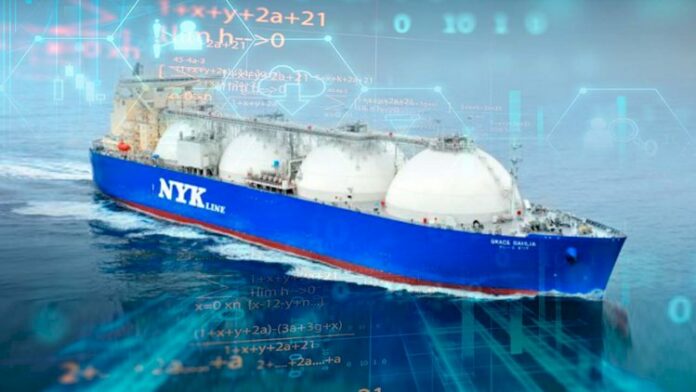
Today, NYK Group subsidiary NYK LNG Shipmanagement Ltd. (LNGSM) and LNG carrier Pacific Mimosa, managed by LNGSM, were accredited by Class NK for the ship-management company’s Cybersecurity Management System (CSMS). This is the first cybersecurity certification conducted by Class NK.

The NYK Group’s medium-term management plan, "Staying Ahead 2022 with Digitalization and Green," emphasizes digitalization and green initiatives to further enhance safety and efficiency. While promoting digitalization and ship IoT, NYK has been strengthening cybersecurity measures throughout the company, positioning cybersecurity as one of the group's most urgent tasks.

The 98th session of the IMO Maritime Safety Committee (MSC98) approved guidelines on maritime cyber-risk management in June 2017. The committee recommended that a description of cyber-risk management be included in the safety management systems (SMS manual) of shipowners and ship-management companies, thereby encouraging strengthened measures against cyberattacks internationally.

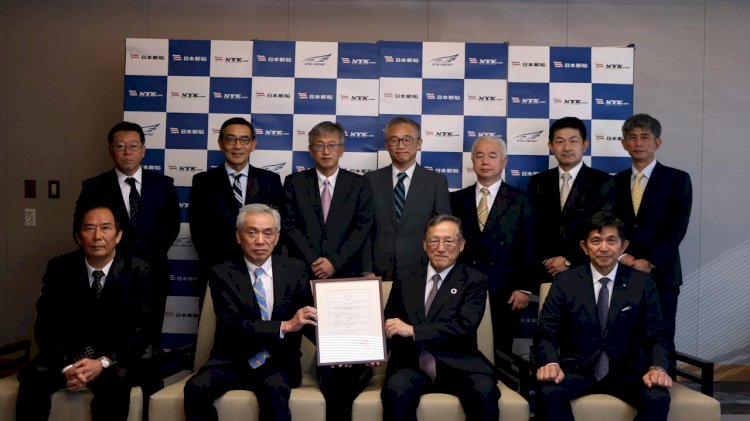
In accordance with Class NK’s CSMS guideline, NYK has revised LNGSM’s SMS manual to include measures related to cybersecurity — i.e., work procedures to prevent cyber incidents and to respond to incidents after they occur. The revised manual was then evaluated for being consistent with the CSMS guidelines in terms of the implementation of cybersecurity policies and risk assessments. On December 16, the certification was awarded to LNGSM by Class NK at NYK’s head office in Tokyo.

The NYK Group plans to strengthen cyber-risk management for other LNG carriers and other cargo vessels. The purpose of obtaining this certification is to strengthen security management through human operations (software). Together with hardware measures such as systems that NYK and Dualog in Norway are currently developing to monitor and manage the security condition of onboard equipment and ship-to-shore communications, NYK will strengthen its cyber resilience and make its operations safer.

In March 2019, ClassNK released its CSMS, which provides guidance on ensuring, implementing, maintaining, and continually improving the cybersecurity management systems of companies and ships with the goal of safe navigation. CSMS includes management measures regarding protection against cyber risks in the navigation stage.