-6.1 C
New York
Home Blog Page 929

Lundin Petroleum launches its Decarbonisation Strategy

0

Lundin Petroleum AB (Lundin Petroleum) has announced the launch of its Decarbonisation Strategy, which targets carbon neutrality by 2030.

In relation to this, and to better reflect the business today and the clear actions and targets towards a lower carbon future, the Board is proposing to change the name of the Company to Lundin Energy AB.

Lundin Petroleum recognise the challenges of climate change combined with the increasing energy needs linked to growing global population, the international community’s commitment to reduce global carbon emissions and the role that forward-thinking companies can play in this. With the Decarbonisation Strategy, the Company has formalised its ongoing commitment to reduce its carbon footprint to the lowest possible levels, through an effective combination of emissions reductions, energy efficiency, targeted research and development and carbon capture mechanisms. Also, as previously announced investment in renewable energy projects will be undertaken to replace net electricity consumption, providing these generate a good return to shareholders on a leveraged basis.

Roadmap to carbon neutrality by 2030:

  • From 2020 limit average operated and non-operated portfolio carbon intensity to below 4kg CO2 per boe and from 2023 to below 2kg CO2 per boe
  • In 2022 fully electrify Edvard Grieg and Johan Sverdrup Phase 2, to achieve carbon intensity for these assets of less than 1kg CO2 per boe
  • From 2022 replace all net electricity usage from power from shore, through investments in renewable power generation
  • To offset all business and operationally related air travel emissions through natural carbon capture, effective from 2018

By 2030 achieve carbon neutrality across our operations as an oil and gas producer

The Board of Lundin Petroleum is proposing to change the name of the Company to Lundin Energy AB. The proposed name change remains subject to shareholder approval at the Company’s Annual General Meeting on 31 March 2020.The Board believes that with the production growth pathway set towards the target of 200 Mboepd, coupled with sustainable, industry leading low operating costs and a carbon intensity which will be below 2 kg CO2 per boe in 2023 versus the world average of 18 kg CO2 per boe, it is clear that the Company is transforming what it delivers as well as how it is delivered. Lundin Energy better reflects what the Company is doing as an explorer and producer today and its role in supplying the energy transition with the most sustainable oil and gas production possible as an essential part of the future energy mix.

Alex Schneiter, President and CEO of Lundin Petroleum commented:

“I am personally very proud to announce the launch of our Decarbonisation Strategy, through which we are seeking to formalise our commitment to reducing emissions and our carbon footprint, in order to supply the growing demand for all types of energy with the most sustainably produced product we can. We have a target of 2030 to reach carbon neutrality across our operations and we have set out a realistic and deliverable pathway towards this, which clearly differentiates us as an independent oil and gas producer in our industry.“I am also pleased to announce that the Board is proposing to change the name of the Company to Lundin Energy. It represents our ambition to become carbon neutral, our position as a leading provider of oil and gas in the future and recognition of our role in the changing energy mix.”
Greater gabbard survey work carried out using cutting edge XOCEAN Technology

0

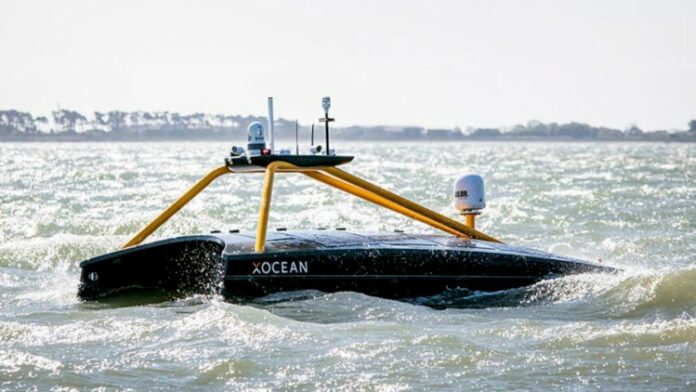
In a first for the offshore wind sector, a vessel remotely controlled from shore took to the sea off Suffolk to undertake survey work for Greater Gabbard Offshore Wind Farm, a joint venture between SSE Renewables and innogy.

The XO-450 Unmanned Surface Vessel (USV), owned and operated by XOCEAN, carried out seabed surveys on seven of the turbines at the 140-turbine wind farm, located 23 kilometres off the UK coast.

The unmanned vessel is around the size of an average car (4.5 metres) and half its weight (750kg), and can be monitored and controlled 24/7 via a satellite connection by a team at an on-shore control centre.

Throughout the survey, the data collected was monitored from shore in real-time by experts located in the UK, to validate data collection before the vessel departed the work locations. This demonstrates the highly flexible and collaborative nature of this new technology, enabling industry experts to have direct access to real time data, from any location.

XOCEAN’s USVs offer significant benefits including safety with operators remaining onshore, efficiency with 24/7 operations and environmental with ultra-low emissions which together leads to significant economic savings.

Jeremy Williamson, SSE Renewables Head of Operations, said:

“We are constantly looking for innovative ways in which we can operate our fleet of renewables assets.

XOCEAN’s vessel will allow us to carry out our work in a more efficient, and most importantly for SSE Renewables and our partners innogy, in the safest way possible. We’re really interested to see how this sort of work can help improve our industry and look forward to working with XOCEAN in future.”

Commenting on the project, James Ives, CEO of XOCEAN said:

“Our USV platform has demonstrated itself to be a safe, reliable and low carbon solution for the collection of ocean data. We are delighted to be working with SSE and innogy on this ground-breaking project.”

The 500MW offshore wind farm has been in operation since 2012, generating enough low-carbon renewable energy each year to power the equivalent of over 400,000 UK homes.

Pacific Osprey’s new upgraded crane boom is on its way to Denmark for installation

0

Swire Blue Ocean (SBO) has contracted Blue Water Shipping to transport Pacific Osprey’s new crane boom from NOV’s manufacturing yard to Denmark aboard SAL’s M/V Wiebke.

The boom was successfully loaded onto the vessel on 21 January and left the yard on 22 January. It is expected to reach Denmark around 1 March and installation on board Pacific Osprey will commence once it has been delivered. SBO expects Pacific Osprey to be back in service by 1 May 2020.

Kim Tribler, Head of Marine Operations, SBO, says:

“This is an important milestone for Swire Blue Ocean. The transportation of the crane boom to Denmark rewards months of hard work spent developing a new crane boom design with capacity for future wind turbines. We have all been looking forward to this moment and are very excited about what is coming soon.”

Pacific Osprey is a 2012 built, self-elevating Windfarm Installation Vessel, originally fitted with a 1,200 MT main crane @ 31 m radius – 97 m hook height above deck – targeted for both foundation and wind turbine generator (WTG) installations.

Pacific Osprey’s new crane boom will have a simplified design focused on providing efficient WTG installations, with optimisations driven by experience. It will be equipped as follows:

  • 1,200 MT main crane @ 31 m radius – 132 m hook height above deck.
  • 700 MT @ 50 m radius – 125 m hook height above deck.
  • 115 m boom length – Approx. 30 m gain in main hook height.

With its upgraded crane boom, Pacific Osprey will be capable of handling the next generation of WTGs, and under normal operating conditions, be capable of handling the following number of turbine sets per loadout:

  • 4 x SG 10.0-193 DD,
  • 5 x V164-10.0 MW,
  • 5 x V174-9.5 MW,
  • 3 x GE Haliade-X 12MW.

Asda’s fishing fleets equipped to tackle plastic pollution with new bags

0

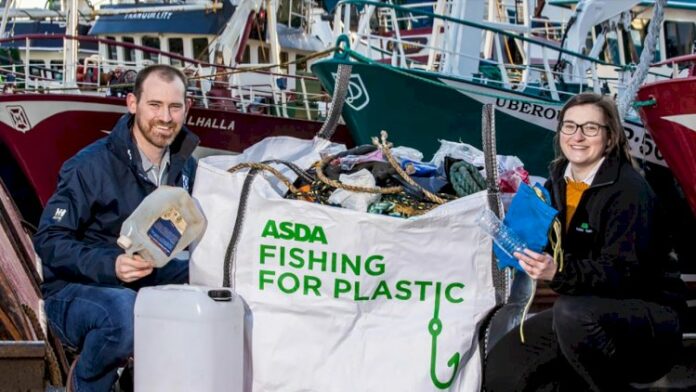
Asda Stores Ltd, a British supermarket retailer, has announced it will be stepping up the fight against plastic pollution as the retailer launches its ‘Fishing for Plastic’ initiative.

In a bid to tackle the amount of plastic that finds its way into the sea, Asda is equipping all its supplier’s fleets with hardwearing and durable bags so that crews on over 500 vessels can now collect harmful plastic waste whilst bringing in the catch.

Bottles, plastic carrier bags and marine waste are amongst some of the most commonly found plastics that pollute the waters, but now with the help of Asda’s Fishing for Plastic scheme, these items can be brought into the harbour to be disposed of.

Waste collected through the Fishing for Plastic initiative includes marine waste, as well as everyday plastic items. 

The scheme will be rolling out globally, as all of Asda’s wild caught fleets will receive the new recycling bags, with countries including Scotland, Alaska and Norway all participating.

Laura Babbs, Asda’s Sustainability Manger said:

“At Asda, we’ve worked hard to reduce and remove plastic from across the business but we always looking for ways to further our commitment to protecting the planet and working with our suppliers to tackle the wider issue of plastic pollution is vitally important.

We can’t tackle big climate change issues alone and so it’s important for us to listen to and work in partnership with our suppliers, so we can make a real difference to tackling plastic pollution everyday. This is just a small step in our ongoing sustainability journey, but together with our suppliers, we have the ability to make a big difference. "

Helen Bird, Strategic Engagement Manager from WRAP (which leads The UK Plastics Pact) said:

“Keeping plastic waste out of the natural environment is central to the aims of The UK Plastics Pact, so we welcome this move from one of our founding members. Collaborative working across supply chains is the only way we can tackle the issue of plastic pollution effectively.”

Suppliers for Asda’s Mackerel, Pollock, wild Salmon, Tuna, Haddock and Cod, the most popular dish with customers, will all now be able to help tackle plastic pollution everyday whilst bringing it the daily catch.

Since 2018, Asda has removed 8,000 tonnes of plastic and the retailer recently brought forward commitments to make almost a third of plastic packaging from recycled sources by the end of 2020, and reduce plastic by 15% by February 2021. It will also make all packaging – of whatever material – 100% recyclable by 2025.

Scientists call for global array of autonomous vehicles

0

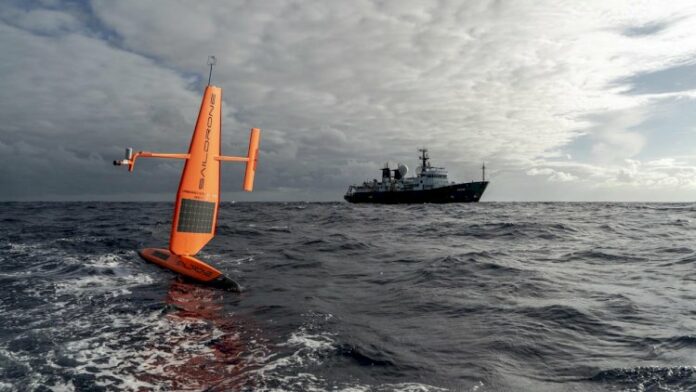
In the paper, “Air-Sea Fluxes with a Focus on Heat and Momentum,” Meghan F. Cronin, Chelle L. Gentemann, et al. discuss a need for a global, integrated observational strategy to measure air-sea fluxes that meets accuracy targets equal or better than OceanSITES reference station moorings and research vessels.

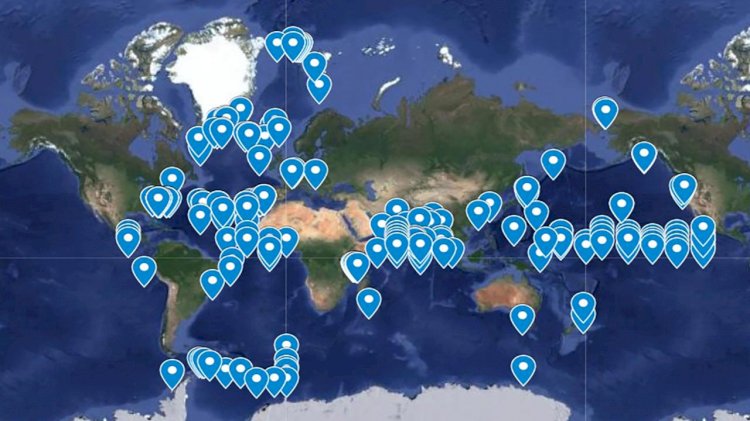
The paper calls for the establishment, by 2030, of a global array including autonomous vehicles, buoys, and research vessels for in situ observation of surface flux variables; approximately 1,000 individual platforms are needed for global coverage if each vehicle patrols roughly one million square kilometers, as well as an expanded OceanSITES network in some two dozen key regions.

OceanSITES is a relatively young network of some 22 deep-water reference stations that provide real-time data access, high-resolution measurements, and multiyear time scales for dozens of variables. The design of a global air-sea flux monitoring system will require regional adjustments and densities based on ocean conditions, flux patterns, and operational realities.

The anticipated outcome of the proposed 2030 Air-Sea Flux Observing System is improved prediction of long-term weather and climate influenced by the oceans and quantification of ocean carbon uptake and resulting ocean acidification.

More than eight essential ocean and climate variables (EOVs, ECVs) are required to compute various air-sea fluxes including sea and air temperature, atmospheric pressure, wind speed and direction, humidity, and solar radiation (longwave and shortwave). This data has historically been collected piecemeal via a diverse assortment of moored buoys, floats, and satellites. Each platform collects a different limited set of variables. Satellite sensors, for example, are unable to measure sea surface humidity or air temperature with the accuracy required to resolve air-sea heat fluxes because of the intervening atmosphere. 

Ocean processes drive large-scale planetary patterns affecting weather and climate, food supply, shipping, and socio-economic issues. Understanding these processes is critical to sustainably managing resources, planning and preparing for natural disasters, and adapting to changes taking place in the environment. 

Semco Maritime wins rig order for Seadrill

0

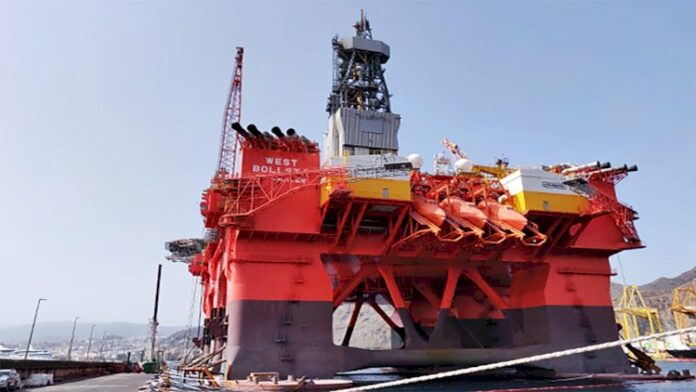
Semco Maritime has been awarded a contract by Seadrill Limited for preparation and modification of the West Bollsta prior to commencing her 10 well contract with Lundin Norway on Norwegian Continental Shelf in Q2 2020. The project will be executed at Semco Maritime’s yard at Hanøytangen outside Bergen starting mid-February 2020. 

Managing Director of Semco Maritime Norway, Lars Jønholt Halvorsen, says:

“We are excited to secure such an important contract and customer. The process between our companies prior to contract award has been professional and based on mutual trust, skilled people and close collaboration. Semco Maritime is a high quality Oil and Gas services company that has supplied the global offshore industry for the past 30 years. This contract award, on a state of the art drilling rig such as West Bollsta, further anchors our position in the top quartile of our industry. We look forward to a safe, professional and predictable project with Seadrill, the West Bollsta team and our key suppliers at Hanøytangen.”

The West Bollsta is an advanced harsh environment drilling rig, based on the Moss Maritime CS60 design, owned by Northern Ocean Ltd. and operated by Seadrill. She was finished at Hyundai Heavy Industries shipyard in 2019. 

The project is expected to employ around 100 people at Semco Maritime’s yard facility at Hanøytangen, which has Northern Europe’s largest operating dry-dock of 125x125x17 meters, accommodation with single beds for 365 workers and several quays with depth ranging from 17-90 meters at quayside. 
 

Giant APL Esplanade sets a record as the largest container ship to dock in Guayaquil

0

The Municipality of Guayaquil (Ecuador) officially inaugurated its newly deepened maritime access channel last weekend, by welcoming the first Neo-Panamax vessel APL Esplanade in the port.

After nine months of dredging, Jan De Nul Group reaches a first important milestone by concluding the deepening of the 95-kilometer long access channel to the port in record time. The maintenance of the channel for the remaining 24 years can now start.

In December 2018, the Municipality of Guayaquil and Jan De Nul Group signed a 25-year performance based concession contract for the deepening and maintenance of the 95-kilometer long access channel to the port of Guayaquil. Early 2019, Jan De Nul Group kicked off the capital dredging works to guarantee a new authorized draft of 12.5m. Today, Jan De Nul announces that the authorities approved the 12.5m as authorized depth, and even increased it to 13m under special circumstances, which opens the Port of Guayaquil to Neo-Panamax type vessels . A fleet of four medium-sized Trailing Suction Hopper Dredgers and Cutter Suction Dredger Ibn Battuta removed about 25 million m³ of sediments in only nine months’ time. The Ibn Battuta removed the hard rock formation in the access channel, known as Los Goles.

Jan De Nul Group will now operate and maintain the channel under this 25-year concession contract. The total investment of the deepening and maintenance dredging works will be recuperated by collecting a transit fee.

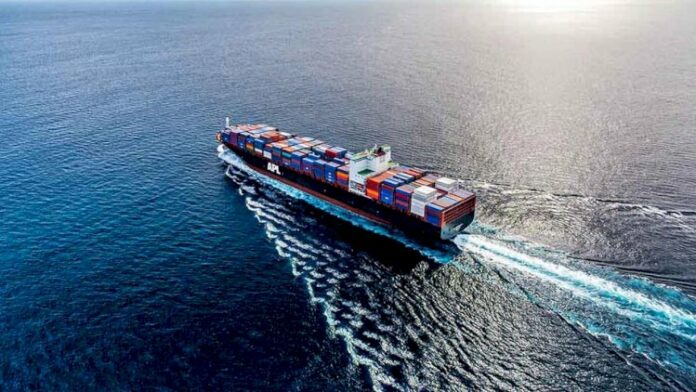
The arrival of the giant APL Esplanade marks a historical milestone for the Ecuadorian Port of Guayaquil. She sets a record as the largest container ship to dock in Guayaquil and even in Ecuador. The ship is a so-called Neo-Panamax vessel and is operated by the CMA CGM shipping company. She is 368.62 meters long and 52 meters wide, able to carry 14.000 TEU. Her length is equivalent to four soccer fields and she has the height of a 15-story building.

APL Esplanade is a trendsetter along the Pacific coast of South America, where Neo-Panamax vessels will from now on take advantage of deeper water ways generating important economies of scale for liner services and their customers.

VIDEO: MHI Vestas installs offshore wind turbine prototype

0

Following the V174-9.5 MW turbine’s market launch in February 2019, the prototype has now been successfully installed at Østerild National Test Centre in Denmark.

The robust test program at the Danish Test Centre Østerild will enable MHI Vestas to thoroughly monitor the reliability and performance output of the company’s flagship offshore wind turbine.

MHI Vestas CTO, Torben Hvid Larsen, said:

“The construction of the V174-9.5 MW prototype at Østerild is a much-needed signal that Denmark aims to retain leadership in the wind sector’s industrial testing and verification programs. Now, with our latest flagship turbine constructed, we look forward to putting the turbine through its paces ahead of our first commercial projects.”

With limited design changes, the V174-9.5 MW prototype builds on the proven V164 platform, generating more energy from lower wind speeds. With 85-meter blades, the turbine has a tip height of 197 meters. One V174-9.5 MW turbine will be able to provide power to an equivalent of 9000 UK households.

The 934 MW order pipeline for the V174-9.5 MW turbine comprises projects throughout Europe and Asia Pacific, with the first units scheduled for commercial installation as part of the German offshore wind projects, Baltic Eagle and Arcadis Ost 1, in 2022.

About the V174-9.5 MW

• A trusted choice from day one, built on the proven 9 MW platform and Vestas technology lineage with minimal design changes
• Configured for worldwide application and engineered for IEC T
• 9.5 MW rated power, with an optimal rotor to generator ratio
• Rotor diameter of 174 meters
• 85 m blades with an optimised, load minimising design profile
• Each blade weighs 35 tonnes, same as the V164-9.5 MW blade
• Swept area of 23,779 m2, more than double the area of the London Eye
• The nacelle is 21 m long, 9 m wide and 9 m high, weighing approximately 390 tonnes
• Approximate hub height of 110 m
• Approximate tip height of 197 m
• One turbine can power 9000 UK households

Ulstein tests the Energy Management System on Bernhard Schulte’s vessel

0

The Energy Management System on Bernhard Schulte’s next offshore wind vessel was recently tested in the lab at Ulstein. Soon, real-life testing will commence when the vessel leaves for sea trial.

Ulstein Design & Solutions AS has developed an Energy Management System (EMS) in order to control the energy flow between the switchboard and the batteries, firstly to be taken in use on the Yno 315 newbuild at Ulstein Verft for Bernhard Schulte.

The system is covering demanding operations for peak shaving and spinning reserve and will allow the vessel to operate only one diesel engine even in DP (Dynamic Positioning) operations.

The ULSTEIN EMS system was recently presented to the shipyard and ship owner. On this occasion, the representatives were given insight in the operation of the EMS and battery systems on board the vessel. The introduction was held in a testlab, where the EMS was connected to various signal simulators in order to create an operational environment.

This introduction was performed in a lab, but real-life testing is soon to be carried out, during the vessel’s upcoming sea trial this winter.

The newbuild is a Service Operation Vessel for the offshore wind industry and will be working for GE Renewable Energy on the Merkur Offshore Wind Farm offshore Germany.


Total E&P USA awarded Worley the FEED contract for its field in the Gulf of Mexico

0

Worley has been awarded the Front-End Engineering Design contract for TOTAL E&P USA’s North Platte field development in the Gulf of Mexico
 
Located approximately 275 kilometers off the coast of Louisiana, the North Platte field development includes a semi-submersible floating production unit (FPU) in water over 1,300 meters deep. 

The project brings together Worley’s recently acquired capability for the floating production unit topside design with Intecsea experience for the design of the hull, mooring and subsea pipelines. Now under one roof, Worley’s expanded capability to deliver flexible floating production unit designs with capital efficiency and minimal time to market proved a key contributor to this award.

Having completed the pre-FEED phase in August 2019, this award extends Worley’s involvement in TOTAL’s deepwater Gulf of Mexico project.

Karen Sobel, Group President for Major Projects and Integrated Solutions at Worley, said:

“We are delighted to continue supporting TOTAL’s return to Gulf of Mexico operations through the North Platte development. This project provides Worley with an opportunity to bring together our complimentary capability in both topside and hull design to offer complete, capital efficient and lightweight deep-water solutions. It’s an exciting prospect for our customers and our business.”

The FEED component of the project is being led by Worley’s Houston office with support from its Hyderabad office in India.

The North Platte Development forms part of TOTAL’s reentry, as an operator, into Gulf of Mexico operations with oil production expected to average 75,000 barrels per day at plateau level. TOTAL expects to make its final investment decision in 2021.