4.5 C
New York
Home Blog Page 911

BC Ferries selected Wärtsilä system for its new ferry

0

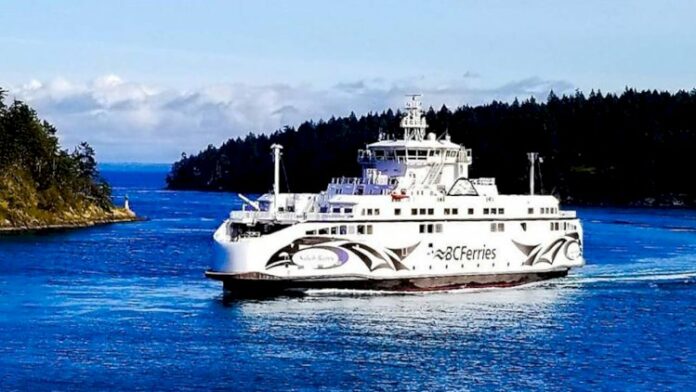
The technology group Wärtsilä has again been selected to provide an integrated system consisting of the LNG plant, dual-fuel engines, and electrical propulsion system for the latest addition to Vancouver, Canada based BC Ferries’ series of Salish Class vessels.

Three similar ferries, all operating on Wärtsilä engines fuelled by LNG, have already been delivered. As with the previous three ferries, Remontowa Shipbuilding (RSB), located in Gdansk, Poland, will also build this latest ship. The order with Wärtsilä was placed in January 2020.

Wilco van der Linden, Director of Business Development, Ferry Industry at Wärtsilä, says:

“The very best endorsement of customer satisfaction is repeat orders, and this latest contract further strengthens the partnership between our three companies. The decision by BC Ferries to again select RSB as the yard, and to opt for Wärtsilä’s proven and well-established LNG propulsion technology, provides clear confirmation of the efficiency of Wärtsilä’s integrated solution concept. It also shows that the performance of the vessel provided by the Wärtsilä solution, and based on the design by Remontowa Marine Design and Consulting (RMDC), delivers great operational benefits to the owner.”

Mark Collins, President & CEO of British Columbia Ferry Services Inc., says:

“We are proud to extend our fleet of environmentally sustainable and highly efficient Salish Class ferries. The Wärtsilä LNG solutions enable us to reliably serve our customers while helping to protect the pristine waters of British Columbia.”

The Wärtsilä scope of supply includes three Wärtsilä 20DF dual-fuel engines, operating on LNG fuel, a Wärtsilä LNGPac fuel storage, supply and control system, and the Wärtsilä Low Loss Concept (LLC). The LLC is a power distribution system that delivers higher efficiency, less weight and volume, and high system redundancy. The equipment is scheduled for delivery to the yard in Q3 this year.

The 107 metres long Salish Class ferries are designed to carry 600 passengers and crew, and up to 138 vehicles. They serve routes between the city of Vancouver and ports on Vancouver Island. In addition to the equipment for these vessels, Wärtsilä also upgraded two of BC Ferries’ larger Spirit Class vessels to LNG fuelled operation. This work was carried out in 2018.
Developing the world’s first unmanned autonomous commercial tugboats

0

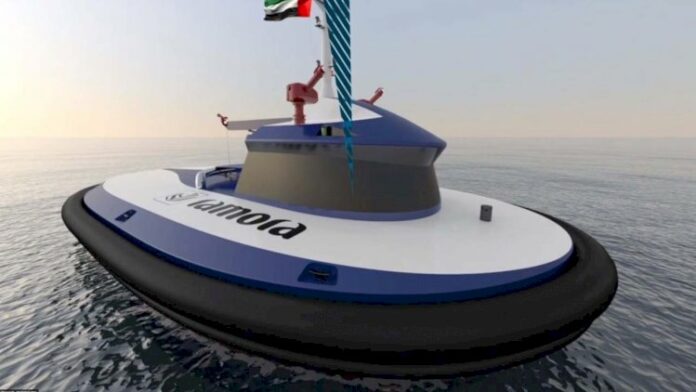
Abu Dhabi Ports has announced its collaboration with a global commercial vessel designer and tugboat leader, Robert Allan Ltd., to develop the world’s first fully unmanned autonomous commercial marine tugs.

Once developed, the tugs will join SAFEEN, Abu Dhabi Ports’ maritime service arm, which maintains an expanding fleet of world-class service vessels. One of the primary advantages of the innovative design includes greater capability, as shifting the human element from on-board to on-shore, will allow such vessels to operate in far more adverse weather conditions. Furthermore, the new technology will help increase efficiency and enhance operational safety.

Abu Dhabi Ports will work closely with one of Canada’s oldest privately-owned Naval Architectural and Marine Engineering firms on the research and development of remotely-controlled marine tugs that will be fully unmanned, and be able to operate within a wide spectrum of autonomy.

The two entities have recently signed a Memorandum of Understanding to this effect at the International Maritime Organization gathering in London.

His Excellency Falah Mohammad Al Ahbabi, Chairman of Abu Dhabi Ports said:

“In line with our leadership’s guidance, this agreement marks a milestone in our digital transformation, and confirms our commitment to ensure the Emirate of Abu Dhabi strengthens its reputation as a leading centre for digital innovation regionally and globally. It’s a top priority for Abu Dhabi Ports to lead the charge towards digitalising the region’s maritime operations, and we are committed to providing a pioneering model for the sector. Adopting digital solutions and keeping up with the changing demands of global trade have proven to be key drivers for economic growth and are integral towards achieving our goal of being a smart port.

Developing solutions and building strategic partnerships with industry experts will help achieve a paradigm shift in maritime operations worldwide, and globally in line with the directives of the leadership.”

Captain Mohamed Juma Al Shamisi, Abu Dhabi Ports Group CEO, said:

“Our cooperation with Robert Allan to develop a new generation of tugboats equipped with superior capabilities and modern technologies, reflects our commitment to ensuring that the infrastructure at Abu Dhabi Ports is at the cutting edge. We are engaged to provide smart and innovative digital solutions to the marine trade and port community, and to our valued customers.

This agreement marks another qualitative addition to our digital armoury that will enhance performance efficiency, productivity, transparency, and safety, as well as reduce costs. Continuing our investment in technology and advanced infrastructure ensures the growth and sustainability of our business, and increases our contribution towards the diversification of Abu Dhabi’s knowledge-based economy.”

Commenting on the MoU, Mike Fitzpatrick, President and CEO of Robert Allan Ltd., said:

“We are excited to cooperate with Abu Dhabi Ports in this initiative, which provides us with an optimal opportunity to develop the world’s first fleet of remotely-operated tugboats for the commercial sector. The unique aspect of this project is the active participation of all the various stakeholders in Abu Dhabi and the UAE, which should ensure that we can progress smoothly from construction of the vessels to commercial operations.

Robert Allen Ltd. has been working on solutions to the technical challenges of an unmanned tugboat for several years now, but we were somewhat stalled in progressing to a commercial construction without an opportunity like this with Abu Dhabi Ports.”

Subsea 7 awarded two contracts offshore Australia and USA

0

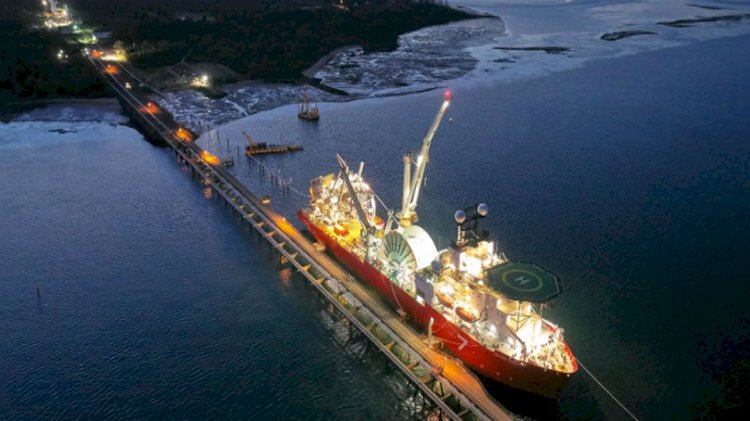
Subsea 7 has announced the award of a contract by ConocoPhillips Australia Barossa Pty Ltd to deliver the SURF scope for the Barossa Project. The Barossa field is located 300 km offshore Darwin in the Northern Territory of Australia.

Subsea 7’s scope of work includes project management, engineering, procurement, fabrication, transportation, installation and pre-commissioning of 36 km of flowlines and associated client-supplied risers, umbilicals and subsea structures in water depths between 230 and 270 metres. The offshore work scope is scheduled to occur in 2022 and 2023, using Subsea 7’s reel-lay and heavy construction vessels.

Andy Woolgar, Vice President Australia and New Zealand for Subsea 7, said:

“We are delighted to be working on this prestigious project which will utilise the full range of installation and pipelay capabilities that we have in Australia and illustrates how Subsea 7’s global technology portfolio allows us to deliver cost-effective solutions to our clients worldwide.” 

Subsea 7 has also announced the award of a contract by Murphy Exploration and Production Company – USA for the subsea installation services related to the Samurai, Khaleesi, and Mormont developments tying back to the King’s Quay semi-submersible.

The King’s Quay host facility is approximately 175 miles south of New Orleans in the Green Canyon area of the Gulf of Mexico.

This contract covers the tie back of seven subsea wells to the King’s Quay host facility. The project scope includes engineering, procurement, construction, installation and commissioning of all subsea equipment including PLETs, PLEMs, umbilicals and distribution hardware, production and export flowlines and jumpers, as well as the wet tow in the Gulf of Mexico to the fields and mooring system installation of the semi-submersible FPS.

Project management and engineering will commence immediately at Subsea 7’s offices in Houston, Texas. Fabrication of the flowlines and risers will take place at Subsea 7’s spoolbase in Ingleside, Texas, with offshore operations occurring in 2021.

Craig Broussard, Vice President for Subsea 7 US, said:

“We are honoured that Murphy has selected Subsea 7 for this key EPCI SURF and mooring project. Subsea 7 and Murphy have built a strong, collaborative working relationship over the years through the proficient execution of projects performed on budget and on schedule. This effective working relationship has set the stage for a best-in-class project delivery of one of the largest subsea development projects in the Gulf of Mexico. Subsea 7 will provide a single point contract for the SURF and mooring work scopes on this project, which allows for improved management of the interface risk.” 

NCL to eliminate single-use plastic beverage bottles across fleet

0

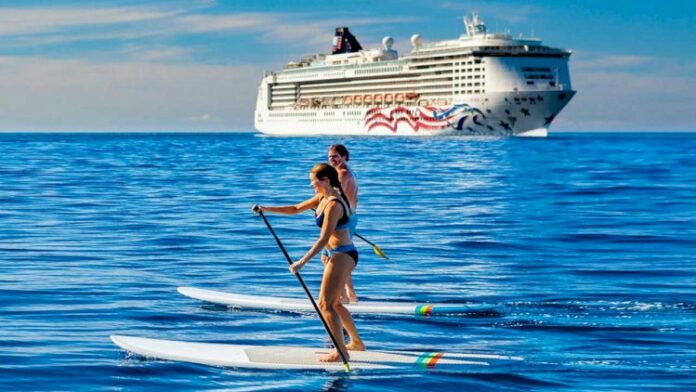
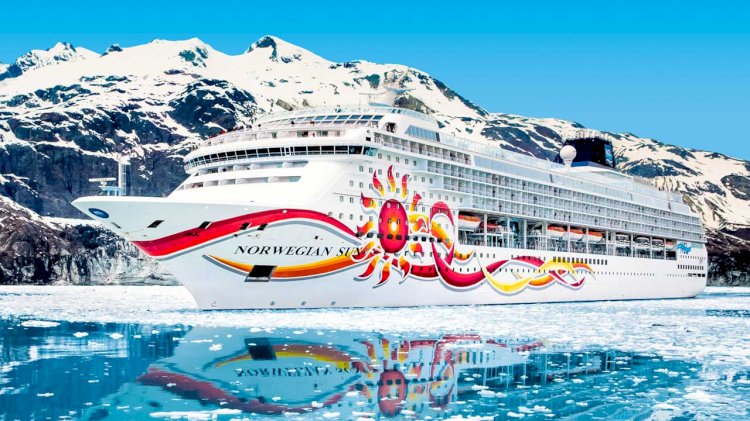
Norwegian Cruise Line, the innovator in global cruise travel with a 53-year history of breaking boundaries, is now single-use plastic beverage bottle free across its fleet. 

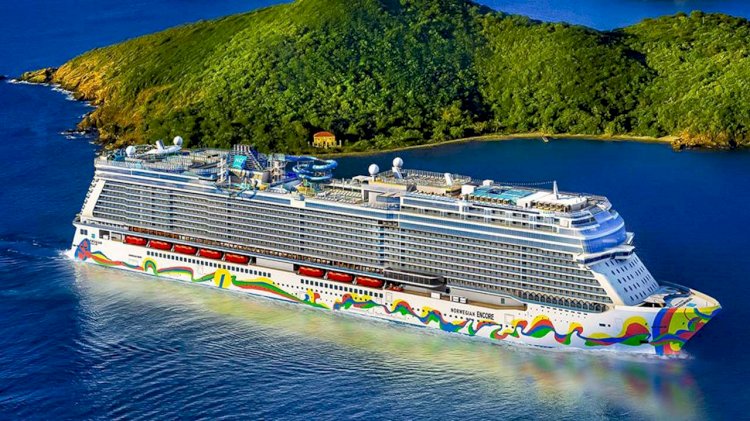
The brand announced last year that it partnered with JUST® Goods, Inc., which enabled the Cruise Line to replace all single-use plastic water bottles across its 17-ship fleet, beginning with its most recent ship, Norwegian Encore.

The achievement is one of the latest sustainable steps forward for Norwegian Cruise Line. In 2018, the Company eliminated single-use plastic straws across its fleet and private destinations, and as a result of this most recent initiative, it will replace over six million single-use plastic water bottles every year. In addition, the brand is working to eliminate single-use plastic shampoo and conditioner bottles later this year. These efforts are driven by the Company’s Sail & Sustain Environmental Program, which is its commitment to minimize waste to landfills, reduce its CO2 emissions rate, increase sustainable sourcing and invest in emerging technologies.

Harry Sommer, president and chief executive officer of Norwegian Cruise Line, said:

"This is a very special and very proud moment for us. As a leading cruise line, we are thrilled to make such an impact by eliminating single-use beverage bottles across our fleet. It's just one of the ways we are working to preserve our oceans and the destinations we visit. While this is just the beginning of what we and others can do, we are incredibly committed to our Sail & Sustain program and believe wholeheartedly in the importance of preserving our natural resources. We will continue to strive towards making environmentally conscious decisions to benefit our earth."

Envisioned and founded by American rapper, songwriter, actor and activist Jaden Smith and family, JUST takes an innovative approach to sourcing and packaging the world's most valued resource – water.  The revolutionary company focuses on an impact model, taking into consideration both how the water is sourced and packaged. JUST is 100% spring water in a plant-based carton.

The carton is made of 82% renewable materials – the paper carton is made from trees grown in responsibly-managed forests and the cap and shoulder are made from a sugarcane-based plastic. It is refillable and recyclable. JUST has a global presence with bottling facilities in Glenn Falls, NY; Ballymena, Northern Ireland; and Ballarat, Australia, thus allowing the company to meet demand around the world without shipping water from a single production source. JUST takes care to use the most efficient shipping options available.

Another cruise lines also take steps to reduce the use of plastic waste.

LOC Group set to launch a digital platform TRITΩN

0

LOC Group, the international marine and engineering consulting firm, is set to launch a digital platform, TRITΩN, which will support the signatories to the Poseidon Principles and their clients by assessing the carbon performance of assets and the alignment of investment portfolios, with the targets set out in the Principles.

The platform will be operated by LOC Digital, an LOC Group company, which is expected to be established over the coming weeks.

TRITΩN will facilitate the collection and safe and secure management of the confidential data required from the owners and financiers and carry out the required calculations, the results of which will be displayed on the platform. The system will enable registrants to navigate their multi-vessel investment portfolios, so they can make informed decisions which are aligned with the values of the Poseidon Principles. The platform is a strategic collaboration between a number of highly established partners, including; Braendler Engineering, a provider of data analytics services and software solutions, and VesselsValue, a leading online valuation provider.

LOC Digital was invited to demonstrate their solution to the Poseidon Principles steering committee and PPA, including the 17 financial institutions that have already signed up to the Poseidon Principles. The TRITΩN platform is expected to be commissioned in Q1 2020 and will be available to signatories of the Poseidon Principles thereafter. It will also be available to owners and non-signatory Financial Institutions.

The project has been led by Nikos Benetis, Head of Due Diligence Services at LOC Group, and George Savvopoulos, Shipping Decarbonisation Senior Consultant at LOC Group, who have supported the Poseidon Principles message by presenting the concept to signatory and non-signatory banks, owners, legal firms and the wider Insurance industry over the past six months.

This announcement heralds an exciting new era for LOC Group, as the Group look to proactively support the topic of Green and Sustainable Shipping by providing a value-added digital solution in TRITΩN.

Andrew Squire, Deputy Chairman of LOC Group, commented:

“We are very excited by the prospect of TRITΩN and the imminent launch of LOC Digital. We are increasingly assisting our clients on how to best transition to a lower carbon footprint and building a more sustainable business. With the launch of TRITΩN and LOC Digital, we are set to become the go-to service provider for the Stakeholders to the Poseidon Principles.”

David Braendler, LOC Digital Director, commented:

“We believe the Poseidon Principles will fundamentally change the shipping and maritime industry, so we are very proud to have developed a product that will enable the vessel owners, financial institutions and the wider industry participants to make effective decisions aligned with the Principles.”

Awake.AI and Silo.AI collaborate in brining intelligence to ports and maritime logistics

0

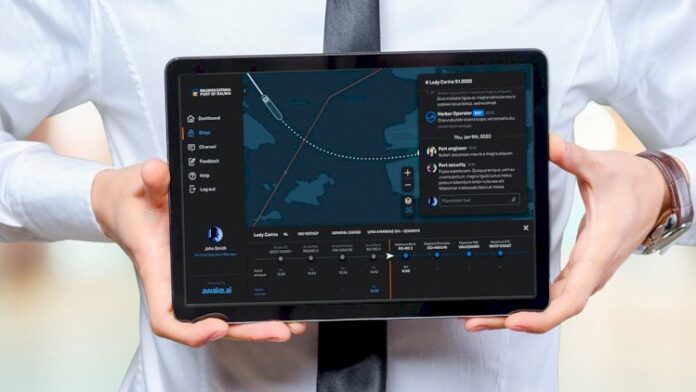
Awake.AI, a company focused on the sustainable development of maritime logistics, and Silo.AI, the largest private AI lab in the Nordics, are working together to develop smart ports and smart vessels. In 12 months the collaboration has resulted in two groundbreaking artificial intelligence solutions that are now being published.

More than 90 percent of Finland’s exports pass through ports, which makes the development of the Finnish ship and port logistics important for the country’s competitiveness. One Sea member Awake.AI and Silo.AI have teamed up to develop machine learning solutions that improve the situational awareness at ports by analyzing freight and logistics chains.

The first solution, a machine learning based cargo ship arrival time solution, creates an estimated time of arrival which provides a much more accurate and reliable forecast for vessel arrival and departure than all other current systems. The developed solution improves the predicted arrival time up to 80%.

Another result of the collaboration is a computer vision based solution that analyzes and monitors cargo and vehicles in the port in real time. The solution automates challenging manual analysis, speeds up cargo logistics planning, and improves the detection of potential exceptional situations.

Karno Tenovuo, CEO of Awake.AI, says:

"The development in ports requires cooperation with various stakeholders such as shipping companies, cargo owners, terminal operators and logistics companies. Everything is based on trust and we want to be the most trusted platform and ecosystem orchestrator globally. With Silo.AI’s top-notch expertise in AI, we have been able to scale and develop our multiple products for ports and shipping".

Peter Sarlin, CEO of Silo.AI, comments:

"We are delighted to work with Awake’s team that has such a strong background in the maritime field. In addition to their platform, their expertise as a pioneer in the development of autonomous vessels and the maritime ecosystem offers various opportunities to create value through machine learning and other artificial intelligence technologies."

In addition to the aforementioned artificial intelligence solutions, the two companies will continue to work together to develop predictive analytics and maintenance and other machine learning applications for smart ports and their logistics chains. As digitalization and smart operations in maritime develop, it will also function as a basis for improvements in efficiency, security, accessibility and digital compatibility of ports and ships.

The goal for Awake.AI is to streamline maritime logistics operations, for example by promoting planning and digital operations in the logistics chain. The longer-term vision is to prepare ports for the era of autonomous ships.

New LNG bunkering vessel is being built for Korea Line

0

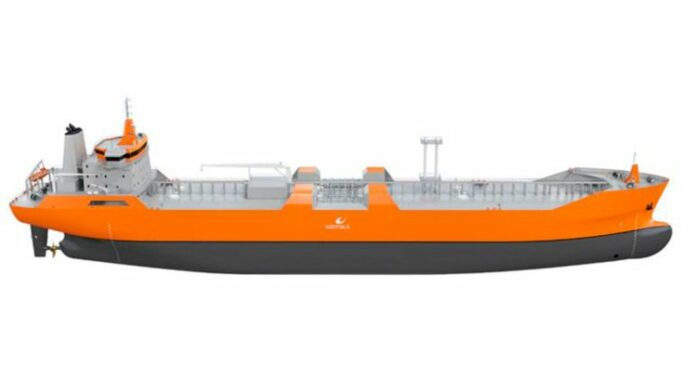
The technology group Wärtsilä has been selected to supply the cargo handling system for a new 18,000 cbm LNG bunkering vessel.

The ship is being built for Korea Line at Hyundai Mipo Dockyard in Korea. Wärtsilä’s extensive experience and impressive track record in delivering solutions throughout the small-scale-LNG value chain were key factors in the award of this latest contract. The order was placed in January 2020.

Kjell Ove Ulstein, Director Sales & Marketing, Gas Solutions, Wärtsilä Marine, says:

“This latest order cements our position as the leading supplier of small-scale LNG cargo handling systems for the marine industry. As the adoption of LNG fuel increases among all ship types, Wärtsilä’s commitment to high quality solutions backed by years of experience becomes ever more relevant.”

Mr C.I. Kim, Vice President, Project Planning Division of Hyundai Mipo Dockyard, says:

“This is a complex and state-of-the-art LNG bunkering vessel, and an experienced cargo handling system integrator was required, which is why Wärtsilä was selected.”

The contract scope includes the engineering, design, procurement, and commissioning of the overall cargo handling system, including the cargo tank design. The equipment delivery is scheduled to commence at the end of 2020, and the ship is expected to be delivered in early 2022. The contract includes an option for a second vessel.

When delivered the vessel will be chartered by Shell.

Maersk Drilling secures one-well contract offshore Egypt

0

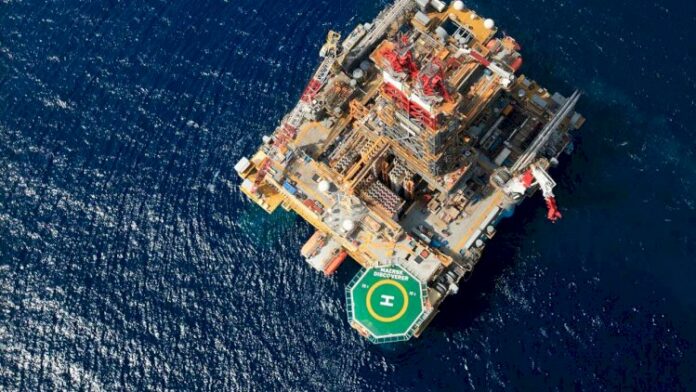
Maersk Drilling has been awarded a one-well contract for the semi-submersible rig Maersk Discoverer offshore Egypt.

The contract has an estimated duration of 21 days and is expected to commence in March 2020, in direct continuation of the rig’s current contract. The contract value is approximately USD 3.8m.

COO Morten Kelstrup of Maersk Drilling says:

“We’re pleased to add this additional well which firms up Maersk Discoverer’s schedule for 2020, meaning that the rig will have no idle time before moving to the Caribbean later this year.”

Maersk Discoverer is a DSS-21 column-stabilised dynamically positioned semi-submersible drilling rig which was delivered in 2009. It is currently operating offshore Egypt. Following the completion of the additional Egyptian well, Maersk Discoverer will perform its scheduled Special Periodic Survey, after which the rig will move to Trinidad and Tobago.

New DataPorts project aims at creating a data platform for seaports

0

Traxens, a company that provides high-value data and services for the supply chain industry, has announced today that it is now part of the new European DataPorts project, aimed at creating a data platform for cognitive ports of the future. With a total budget of €6.7M ($7.3M), the three-year project will receive €5.7M ($6.2M) from the European Union. It is coordinated by the Technological Institute of Informatics (ITI) in Spain.

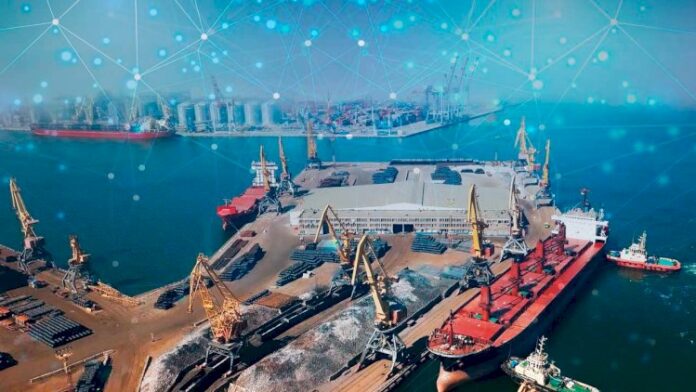
Today, only three per cent of container terminals are automated. However, the future of the industry points towards smart ports as the best way to overcome the challenges and demands that arise in the sector. Challenges include optimizing port operations, enhancing the supply chain for operators and carriers, and reducing emissions and waste.

DataPorts will take advantage of the huge amount of data generated around modern connected sea ports and the high level of digitalization these ports have so far achieved. Existing digital platforms and tools will be leveraged to establish an industrial data platform where data coming from different stakeholders and external sources can be combined and processed to achieve real value.

Today’s shippers and related stakeholders are optimizing their supply chains through digital transformation, where real-time data is key. The aim is to expose the smart assets value-added services via the DataPorts’ platforms market place. The availability of door-to-door visibility of the transport execution, with applied AI, and the use of blockchain technology will result in easier integration of reliable, trustworthy, private and secure data in different processes. Information will potentially be shared with the whole of the supply chain (in respect of the data governance rules that protect their competitive advantages), offering greater visibility, real-time tracking, waste reduction, higher security and potentially faster border clearance.

This European funded project will demonstrate the added value Traxens Smart assets services bring, on a global scale, to the whole ecosystem.

Historically, the maritime port infrastructure is relatively complex. A number of agents, including retailers, freight forwarders, carriers, consignees and port authorities, are all involved in port operations. Currently, these agents don’t always interact with each other, which leads to stagnant silos of information, meaning the full potential of data cannot be realised.

The DataPorts project aims to create a secure data platform that shares information, not only between port agents, but also with other ports. Only those with access permits and contracts can access data sharing and research new Artificial Intelligence and cognitive services.

Traxens devices provide global door-to-door visibility and fleet management capability for a variety of logistics units. Tracking and monitoring data is collected via its devices, installed on each of the logistics assets. These devices have different real-time communication facilities (cellular connectivity and IoT mesh networking). A wide range of sensors offer different capabilities, including geolocation and geofencing, temperature and humidity measurements, door open detection and client alerts on the shocks that may occur during transportation.

Santiago Cáceres, DataPorts coordinator at ITI, said:

“Even today, when seaports have achieved a mature state in terms of digitalisation, there is a clear gap in taking full advantage of digital data assets. A secure and trustworthy platform, able to grant data sharing and trading, opens up many business opportunities. Obviously, it also brings a number of challenges, but DataPorts was designed to provide the means and tools to overcome these, paving the way to creating new business models using its results.”

Dr Hanane Becha, Traxens Innovation & Standards senior manager, said:

“Participating in the DataPorts project will give Traxens the opportunity to share data between port actors and demonstrate the effectiveness of its Smart Container technology. For that purpose, it is intended that a data market will be created in which all the transport chain companies participate, so that big data solutions can be created. These will mprove the integration of data sources, making them easier to use, faster and much more reliable.”

DataPorts will establish a unique data space for all maritime ports in Europe and contribute to the European Commission’s global objective of creating a common European data space.

Allseas acquires ship for deep-sea polymetallic nodule collection

0

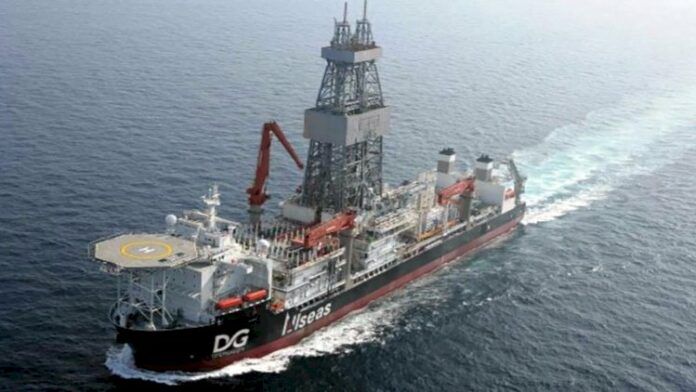
Allseas has acquired the former ultra-deepwater drill ship “Vitoria 10000” for conversion to a polymetallic nodule collection vessel. She is 228 m long, 42 m wide, and can accommodate 200 people.

In partnership with DeepGreen Metals Inc., Allseas is developing a deep-sea mineral collection system to responsibly recover polymetallic nodules from the ocean floor and transfer them to the surface for transportation to shore. The nodules contain high grades of nickel, manganese, copper and cobalt—key metals required for building electric vehicle batteries and renewable energy technologies.

The ship will be converted to accommodate the pilot nodule collection system currently being engineered by Allseas. As a former drill ship, her configuration is well-suited for modifications that will enable the deployment at sea of a 4.5 kilometre-long riser currently being developed by Allseas. After the nodules have been collected and taken to shore they will be processed using a metallurgical flowsheet developed by DeepGreen.

The strategic acquisition of the vessel represents a key milestone for the partnership, which leverages the world-leading offshore engineering capabilities of Allseas to propel DeepGreen’s mission to source the metals needed for a more sustainable future with less environmental and social impact.

Allseas Founder and President Edward Heerema says:

“Allseas is excited to be involved in the exploration of the deep ocean for these important metals. Deep-sea polymetallic nodule collection represents a new frontier and a new exciting chapter in Allseas’ history. With our offshore expertise and innovative capability, we can develop creative technical solutions for this new industry.”

Allseas expects the vessel to be operational for pilot nodule collection tests by mid 2021. DeepGreen Chairman and CEO Gerard Barron said:

“To have partners like Allseas bring their engineering excellence and passion to help get this industry started makes us, and the industry, very fortunate. The green transition is going to require hundreds of millions of tonnes of nickel, copper and cobalt, and our research shows that ocean polymetallic nodules could provide society with these critical minerals at a fraction of the environmental and social impacts associated with land-based extraction.”

In partnership with the world’s leading ocean scientists, DeepGreen is currently undertaking the world’s largest integrated ocean surface-to-seabed research program to fully understand the impact of collecting nodules from the ocean floor. In addition to generating new scientific knowledge of the Pacific Ocean, insights generated from this research will enable Allseas to design technology solutions that minimize environmental impact of nodule collection operations.