5.3 C
New York
Home Blog Page 910

Equinor and Shell collaborate on digital solutions

0

The companies have signed a Memorandum of Understanding on digital collaboration to develop solutions and methods together through the exchange of expertise within areas like  data science, artificial intelligence and 3D printing. 

The collaboration is expected to entail co-innovation across the whole value chain, such as maintenance, production optimisation and supply chain management. 

Torbjørn F. Folgerø, chief digital officer in Equinor ASA, says:

“We are already collaborating closely in the Open Subsurface Data Universe (OSDU) initiative and see many mutual benefits as both companies have applied cloud-based digital solutions as an approach to our industry’s digital transformation. Such collaborations are increasingly important to strengthen safety, reduce carbon emissions and realise value by applying digital technologies.”

The agreement will be further detailed on a project basis. It will enable the companies an agile foundation to explore specific digital initiatives and projects. 

Alexander Boekhorst, vice president for digitalisation and computer science in Shell, says:

“Open Innovation is key to accelerating digital innovation across the energy industry. Collaborating and building on others’ strengths is critical to deliver competitive and affordable technology. We are excited about this opportunity to co-develop digital technology with Equinor.”

Equinor recently increased its 2025 improvement ambition by 50%, from 2 to 3 billion USD mainly due to scaling digital solutions across our global portfolio faster than expected contributing to increased production as well as reducing maintenance, drilling and facility cost.

The speed of implementation of new digital solutions has already delivered a cashflow impact of more than 400 million USD in 2019, mainly due to earlier start-up of Johan Sverdrup and increased uptime on assets connected to our integrated operations centre. 

Folgerø says:

“Forming new partnerships and working closer with our suppliers is critical to further deliver on our improvement ambition.” 
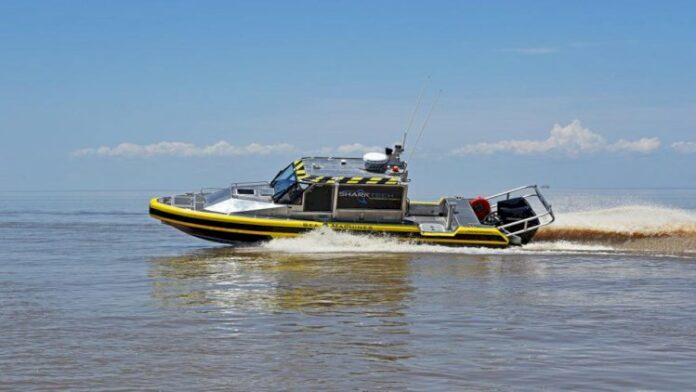
Sea Machines named four ways autonomous systems reduce risk

0

Much like the collision-avoidance and safety alert features installed in today’s automobiles, modern-day autonomous systems are now being installed aboard commercial marine vessels.

Far from replacing human operators, these advanced technologies are being used under mariner control to reduce operational risk and increase safety. There are four reasons why autonomous systems are reducing risk and protecting mariners.

1. Autonomous systems are always on watch.

Mariners today rely heavily on human eyesight as the primary sensor for vessel maneuvering and obstacle detection especially in tight maneuver scenarios. Human vision can be unreliable and, even with binoculars, may not see far enough away to prevent some incidents. Tried-and-true technologies, such as marine radar and AIS beacons, offer supplemental support, but they too have limitations, require mariner training and aren’t always available or used. By contrast, autonomous marine systems never get fatigued and consistently operate 24/7 even during times of low light or poor visibility. Commercially available systems, like those of Sea Machines’, intelligently fuse data from radar, GPS, AIS, ECDIS charts and computer vision into one intuitive display so mariners can make more timely and informed decisions. Autonomous obstacle detection and collision avoidance capabilities further reduce risk, as explained below.

2. Autonomous systems never get tired or distracted.

It is widely recognized that human error is the number one causal factor in maritime incidents. Whether the root cause of incidents be miscalculations, fatigue, inattentiveness, distraction or some other human mistake, it’s clear that today’s autonomous systems can mitigate the risk. Companies like Sea Machines are enabling new systems for commercial vessels that use a combination of advanced cameras, artificial intelligence and Light Detection and Ranging (LiDAR) technologies. While still operated with a human in the loop, today’s autonomous marine systems provide real-time data for decision making, as well as critical alerts that can help prevent collisions, groundings and other incidents that can lead to injury, environmental harm and property damage.

3. Autonomous technology never makes mistakes.

Navigation using current technology can be complex and unpredictable. With an accident rate higher than that of cars and airliners, the marine industry is at serious risk for mistakes because of its dynamic operating domain, the inherent human limitations and our reliance on situational awareness systems that don’t always provide the complete picture. As marine technology improves, however, this is changing. Current autonomous marine systems have been designed to work predictably and precisely to execute the mission – no matter the environmental or human variables.

4. Autonomy is designed to improve with each mission.

Autonomous marine systems, such as those available from Sea Machines, are based on intelligent technologies that learn from and improve with each mission. Everything from vessel handling, operator behavior and preferences, environmental and navigational data, and more is recorded and used to increase the efficiency, predictability and safety of future missions. It’s clear that today’s autonomous technologies can drastically reduce the risk of commercial vessel operations, while increasing human safety and comfort.
 

Ørsted chooses SGRE’s turbines for its offshore wind power projects

0

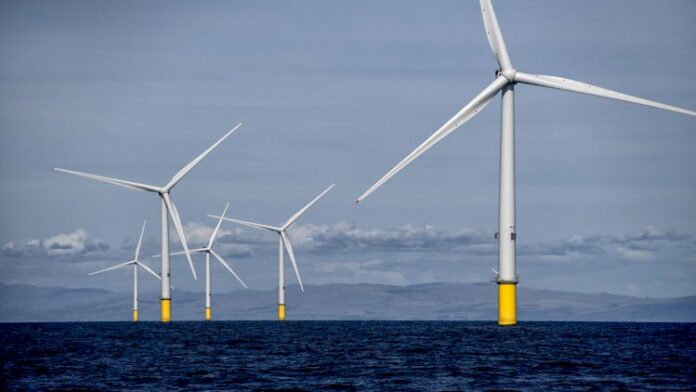
Ørsted has conditionally named Siemens Gamesa Renewable Energy as the preferred turbine supplier for two offshore wind power projects in the German North Sea totaling 1,142 GW. At both the 900 MW Borkum Riffgrund 3 and the 242 MW Gode Wind 3 sites, Siemens Gamesa will deploy its new SG 11.0-200 DD offshore wind turbine.

A five-year service and maintenance agreement is included in the preferred supplier award.

The award is subject to certain conditions including Ørsted’s final investment decision, which itself is subject to the projects receiving final grid dates and final consents from German authorities. The Borkum Riffgrund 3 project will be the largest offshore project in Germany to date.

Andreas Nauen, CEO of the Siemens Gamesa Offshore Business Unit, stated:

“In this new decade, we need to translate social and political ambition into tangible action and change. As a global leader in renewable energy, we are committed to helping move Germany towards a competitive decarbonization thanks to the implementation of our most advanced technologies. We are glad to do so together with global market leader Ørsted, and to deploy our new Direct Drive offshore turbine with a 200-meter rotor at the same time.”

Martin Neubert, Executive Vice President and CEO of Ørsted Offshore, said:

”Driving innovation is at the core of Ørsted’s DNA, and we look forward to once again introducing new turbine technology to the market. Subject to our final investment decision, we will install the new turbine on two German projects including Borkum Riffgrund 3, which will be the biggest offshore wind power plant yet in German waters, adding to the more than 1.3 GW offshore wind we have already installed in Germany.

The increasingly larger turbines and projects have been key drivers in making offshore wind cheaper than newly-built, fossil-based power generation. Electrification through renewable energy is the fastest and most cost-efficient way to achieve the decarbonization of Europe needed to fight global warming, and we’re proud of contributing to Germany’s transition to renewable energy.”

The final number of turbines for both projects remains to be determined. Ørsted expects the installation of Gode Wind 3 to begin in 2023, with commissioning being completed in 2024. The installation of Borkum Riffgrund 3 is expected to begin 2024, with commissioning being completed in 2025.
A total of approx. 1.2 million German households will be served by the projects once online: approx. 920,000 at Borkum Riffgrund 3 and approx. 250,000 at Gode Wind 3. Approx 3.7 million tons of CO2 emissions will be avoided annually compared to traditional power generation.

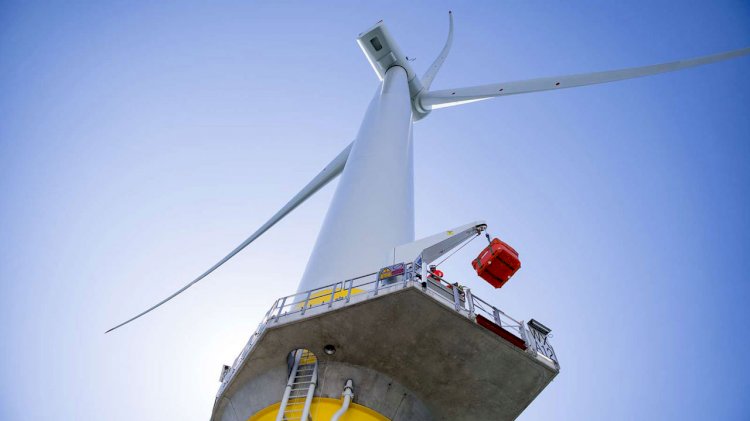
The SG 11.0-200 DD offshore wind turbine features a 200-meter diameter rotor utilizing the 97-meter long Siemens Gamesa B97 IntegralBlade. The B94 blade design has been re-used and extended to reach the new length, whereas the generator capacity remains at 11 MW, as known from the SG 11.0-193 DD Flex. The upgraded machine with 200-meter diameter rotor provides an increase of 9% in Annual Energy Production compared to the SG 10.0-193 DD offshore wind turbine with 193-meter diameter rotor.

New large-scale green hydrogen project in Oman

0

DEME Concessions and Omani partners are announcing an exclusive partnership to develop a world leading, green hydrogen plant in Duqm, Oman.

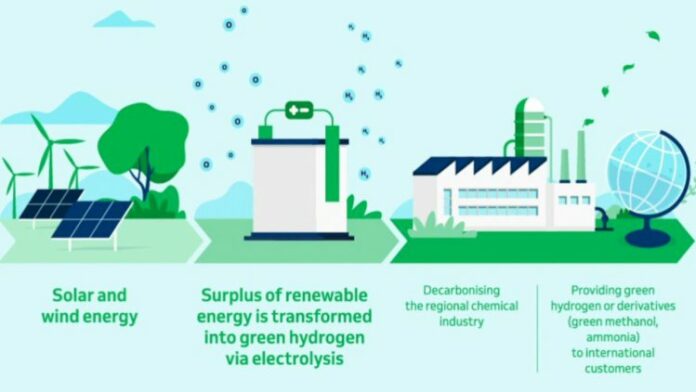
The facility will significantly contribute to the decarbonisation of the regional chemical industry in Oman, as well as providing green hydrogen and/or derivatives (such as green methanol or ammonia) to international customers in Europe, for example in the Port of Antwerp. The envisaged electrolyser capacity for a first phase is estimated between 250 and 500 MW. Following this first phase, upscaling of the installation is foreseen. The advantage of the location in Duqm is the availability of cheap renewable energy (solar and wind), as well as large, accessible sites (on- and offshore).

Together with Port of Antwerp International, DEME Concessions is already active in Duqm through a participation in the Port of Duqm Company SAOC.

If hydrogen (H2) is produced with electricity by means of electrolysis, no CO2 is released in the process. However, the hydrogen produced can only be called “green” if renewable electricity is used in the process. The potential role of green hydrogen in the energy transition is threefold: Green H2 can act as an alternative and decarbonised feedstock for the petrochemical industry, as a clean energy source for the industry and the mobility sector, and as an energy carrier and temporary storage for (excess) green electricity.

The first phase of the project will comprise an in-depth feasibility study – coordinated by the global consulting firm Roland Berger – to determine customer offtake choices, technology options, electricity feed-in options, hydrogen (derivatives) shipping options and to define the concept and scope of the commercial scale demonstration project.

The feasibility phase will be followed by the detailed design and engineering, further project development and finalisation of offtake routes and financing. A Final Investment Decision for the commercial scale demonstration project is expected during 2021.

Port of Sines starts bunkering operation with natural gas

0

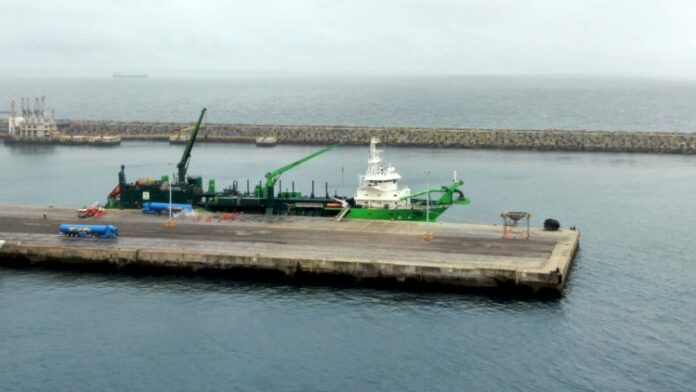
The Port of Sines adds another debut to its achievements. The first bunkering operation in mainland Portugal using Liquefied Natural Gas (LNG) was carried out in Sines last February 29. The dredge vessel "SCHELDT RIVER" inaugurated this type of operations, demonstrating the capacity of this port to adapt to the needs of its customers.

The operation carried out, known by the expression truck-to-ship, is characterized by the supplying of LNG to the ship through a tanker truck parked on the quay. In this particular case, the LNG was loaded into the tanker truck at the filling station of the Natural Gas Terminal and supplied to the ship docked at the Multipurpose Terminal, with the entire operation taking place in the Port of Sines’ ​​jurisdiction area.

Despite being an operation that does not present many risks, all procedures were activated in order to guarantee a complete safe supplying, regarding that the Port of Sines’ safety department is already trained to handle this type of product.

Procedures like this highlight the capacity and importance of the Port of Sines in the national panorama, at the same time that they meet the European Community guidelines that aim to decarbonize the economy, using Natural Gas as a transition fuel for even more ecological alternatives, reducing pollution atmospheric emissions and greenhouse gas emissions.

This type of operation was carried out in the country, for the first time, in December 2017, with the supply of the cruise ship AIDA Prima in the Port of Funchal.

Jumbo to support DEME Offshore in its scope of work on Hornsea 2

0

Jumbo has been awarded a contract to support DEME Offshore in its scope of work on Ørsted’s Hornsea Two offshore wind farm.

Jumbo’s scope of work in the project is the provision of transportation for 165 monopiles from Rostock to Eemshaven and 135 transition pieces from Aalborg to Eemshaven with a K3000 class vessel.

In addition to shipping the monopiles and transition pieces, the project will see Jumbo undertake the project management for the transport scope, including the engineering and design of both transportation and cradles.

Jumbo was awarded the contract due to its intake and lifting capacity of the Jumbo K3000 vessels. The K3000 class offers 3,250m2 free deck space, well suited to transportation of large equipment such as transitions pieces and monopiles. It also offers 3,000t lifting capacity courtesy of its dual 1,500t cranes. Another factor in the award of contract is the previous track record in projects such as this, including on the Burbo Bank Extension in the Irish Sea and the Yunlin project off Taiwan.

Jumbo Commercial Manager Renewables Boudewijn van der Garden says:

“We are very pleased to be working alongside DEME Offshore on the Hornsea Two project. This contract is an affirmation of our previous work in the offshore wind industry. Our scope here once again demonstrates the suitability of the K3000 Class in supporting the development of sustainable energy projects such as this.”

Port of Valencia will build a new passenger terminal

0

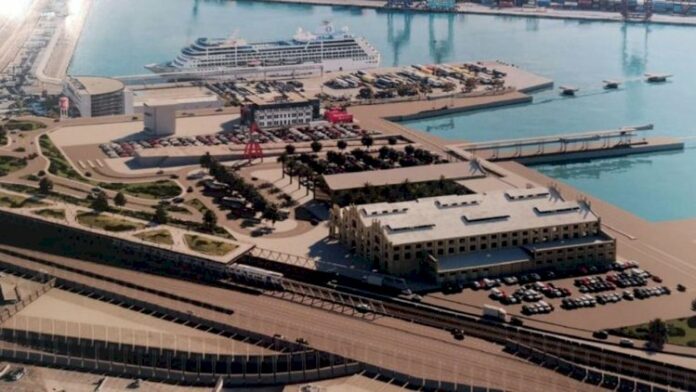
The Port Authority of Valencia (PAV) has put out to tender the administrative concession for the construction and operation of the new public passenger terminal of the port of Valencia.

This infrastructure will be located in a total area of approximately 100,000 m2 located between the Poniente Pier and the Espigón del Turia Pier, in the area previously occupied by the Unión Naval de Levante. The concession will be granted for a term of 35 years, extendable up to a maximum of 50 years. The deadline for submitting an offer ends on April 17.

In accordance with the tender specifications, the new terminal will be used to serve cruise traffic, regular lines with the Balearic Islands and Algeria as well as ro-ro traffic. For this, the new terminal must have at least four berths, allowing at least one of them the berth of a cruise of 360 meters in length and another berth of at least 250 meters in length. All berths must be equipped with a power supply network for ships. The terminal must be able to accommodate two cruise ships on the same day, one in the base port regime and the other in transit, and two ferry / ro-pax ships.

Given its characteristics, the new terminal must guarantee the independent operation of cruise passengers and passengers of regular lines. Likewise, the specifications include a building for the reception of passengers with an entrance hall, luggage storage area, security control equipped with X-rays and metal detection arches, space for customs and for the bodies and security forces of the State.

With regard to the terminal’s own services, the specifications provide that, at a minimum, it provides space for sanitation, waiting area, gateways for access from the boarding passage to the ship and vice versa with security cameras, wi-fi , tourist office, public toilets area, crew rest room and check-in area for cruise lines. Optionally, the concessionaire may provide other services such as office for the PAV, area for large groups, warehouses, VIP area, catering area, commercial area, vending, ATMs, vehicle rental areas or prayer room. The design of the terminal must guarantee accessibility for people with reduced mobility.

With regard to the outside area, the terminal must have a short-stay parking area with at least 100 seats, bus station area and collective transport with at least 10 seats, taxi rank. Likewise, it will have a waiting area for international regular line tickets for Operation Paso del Estrecho with 600 parking spaces, children’s recreational area and restaurant and services area. The new terminal will have two independent accesses: that of heavy vehicles that will arrive through the South Access and that of light vehicles that will enter the terminal through the access provided by the citizen.

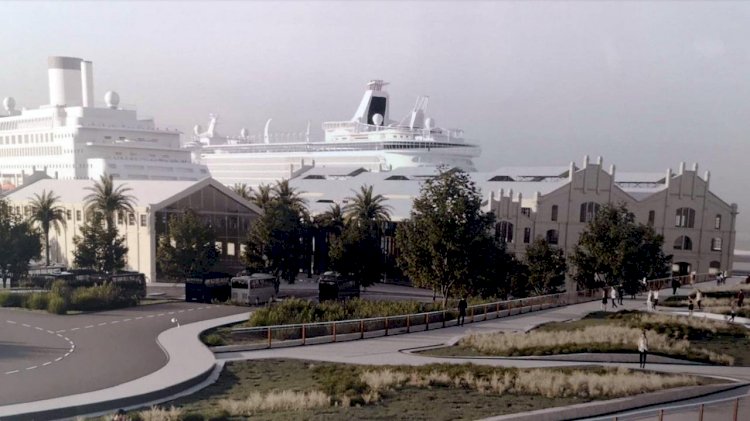
The ordination of the new terminal must respect the four elements of the former shipyard of the Naval Union of Levante cataloged by the Demetrio Ribes Chair as pieces of artistic historical value. Specifically, it is the water tank, the construction stage of ships, 2 cranes that can be placed in another location and sub-A of the ship III. In the latter case, the PAV will undertake the rehabilitation of the structure, facade and roofs of this building while the concessionaire will take care of the rest of the reform for its adaptation to the new intended use, respecting the architecture of the ship and the west facade of the same. It will be a historic and emblematic building of the Maritime València that will continue to serve the city and citizens – more than a hundred years after its construction – now, with the most modern environmental technologies.
 

AST and Proteum working together to develop a new telemetry solution

0

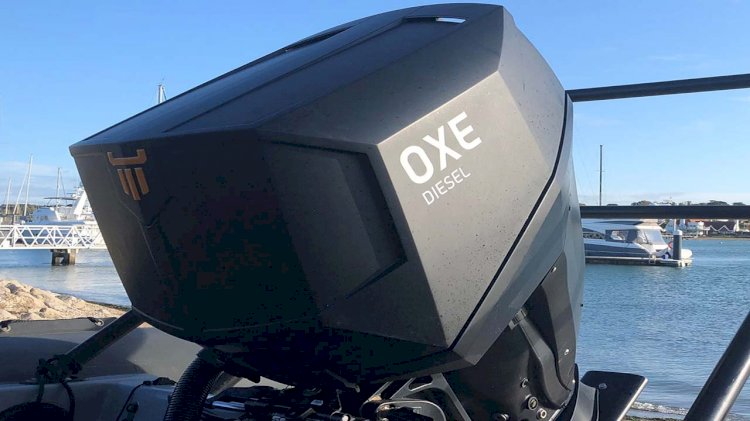
AST Marine Sciences (MSL) was approached by Proteum Ltd based in Hamble, Southampton, to develop a telemetry solution for the latest OXE high-performance diesel outboards that they distribute around the UK and Ireland.

Proteum wanted to offer this as a value-added service to their customers in order to assist with warranty and servicing of their outboards.

AST Marine Sciences Ltd (MSL) worked closely with Proteum to develop a unique solution by offering the iRAMS I/O system which reads the engine data directly from the engines via the pre-existing CAN bus wiring.

Data is sent to the portal every two minutes, giving a near real time data flow for most parameters available within the CAN bus of the engines combined with anomaly alerts via email. This is then sent via GSM to an online portal which can be viewed via PC, laptop or mobile devices. The portal view can be adjusted simply by drag and drop in order to show the captured data in a clear and concise format.

During testing the MSL system managed to save an engine due to a blocked cold-water intake sieve. iRAMS notified Proteum via email that one of the engines temperature was exceeding the allowed threshold, this resulted in a quick call to the skipper of the vessel to stop and investigate the reason, it was found that there was a build up of weed in the sieve stopping cold water from entering the engine, thus increasing the temperature to a critical level.

Following a successful period of testing, Proteum have placed a significant stock order for 50 iRAMS I/O outboard systems. MSL are also discussing partnering with Proteum to develop further telemetry solutions for inboard diesel engines and petrol outboards.

Steve Mitchell, Technical Sales Engineer for MSL, writes:

“This success shows the diversity of iRAMS I/O, offering a flexible and cost-effective system for all types of telemetry around the world.”

Newly formed consortium to help the maritime sector improve efficiency

0

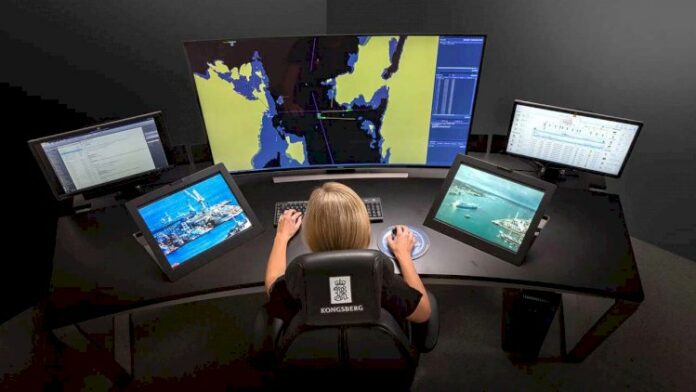
Navelink is a newly formed sea traffic management industry consortium initiated by the industrial companies KONGSBERG, Saab and Wärtsilä, three influential and significant maritime equipment manufacturers and service providers.

The aim of the consortium is to reach a new global standard enabling scalable maritime information exchange. The consortium already has the Swedish Maritime Authority (SMA) boarded and has commissioned Combitech to deliver the infrastructure needed.

Todd Schuett, Innovation Manager at KONGSBERG, says:

"Ship owners and operators, as well as coastal and port authorities and their service providers can benefit from the open infrastructure we are establishing. The infrastructure enables interoperability of e-navigation services, which is something we are all heavily invested in.”

The consortium is now taking its first step towards industrialization with its first users, three EU-projects, where the Swedish Maritime Administration (SMA) is responsible for the infrastructure solution. The projects will utilize the industrialized Navelink operated by Combitech, to authenticate users and identify the operational services in three implementation projects during the coming 18 months. All is based on the Sea Traffic Management concept, which uses the Maritime Connectivity Platform, MCP, as governed by the MCP consortium.

Tomas Hjelmberg, Head of Maritime Traffic Management, at Saab, says:

"The possibility to use a live and governed infrastructure, instead of a test bed established for the projects only, will improve the outcome of the projects, as the results are developed and tested in a live infrastructure undertaking real time interoperability."

Anders Wendel, Head of Navelink, Combitech, says:

"We are in the midst of making this project operative, and we are really looking forward to launching it."

The agreement with SMA covers three EU projects; EfficientFlow, RealTimeFerries and STM BALT SAFE (www.stmvalidation.eu/projects), and is the first collaboration between an industrialized open eco-system infrastructure and EU projects.

Dmitry Rostopshin, General Manager, Ship Traffic Control & Management Solutions at Wärtsilä, says:

"This is an example of a new kind of cross industry collaboration where the industry interacts with public organizations and brings together forces to accelerate digitalization in the maritime sector."


Port of Tyne first UK port to become a connected ports partner

0

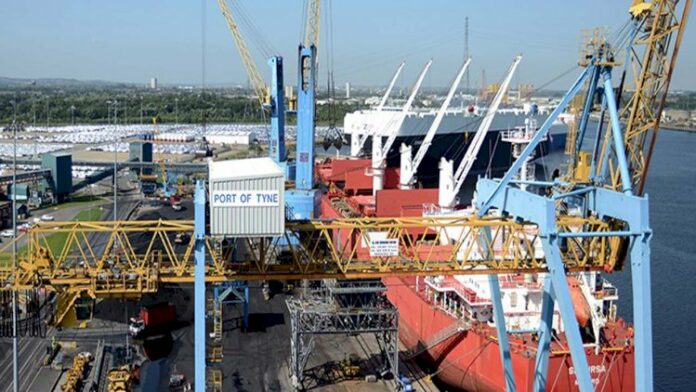
The Port of Tyne has announced it will be the first UK port to join the Connected Ports Partnership.

The global data and resource sharing initiative was welcomed by the new Maritime Minister, Kelly Tolhurst MP, as she congratulated the Port of Tyne on being at the forefront of driving innovation across the North East’s international logistics cluster.

She commented:

“The development of our world-leading maritime ports is fundamental to our success as a global trading nation and I’m delighted to see the Port of Tyne become the first in the UK to join this exciting partnership. This announcement underlines our commitment to a smarter, cleaner and more efficient maritime industry that supports 181,000 jobs and generates billions of pounds for the economy.”

Connected Ports is a collaboration between a network of global operators, which include the ports of Rotterdam, Gdansk, Helsinki, Hamburg and Los Angeles.

In order to take major steps forward in the efficiency and cost reduction of world trade lanes and reduce carbon emissions, it is necessary to have a shared logistics system. Through pooling data and resources, the Connected Ports Partners aim to transform the way ports operate.

Matt Beeton, Chief Executive Officer, Port of Tyne, said:

“We are excited to join this innovative, world-leading and collaborative initiative. We look forward to learning from each other and being the first in the UK to work towards co-creating a global hub of connected ports by extending important maritime developments such as data standardisation.”

Since launching the UK’s first Maritime 2050 Innovation Hub, the Port of Tyne has been collaborating to develop solutions to technological challenges facing the maritime sector and the wider logistics industry.

Joyce Bliek, Director Digital Business Solution, Port of Rotterdam, said:

“The Connected Ports Partnership is about co-creating new models of data exchange, and collaboration is vital for sustainable development across international gateways. Ports have a major role to play in using smart technology that can improve global logistics.”

The first step in joining the Connected Ports Partnership will see the Port of Tyne advance the seamless trade in sharing data by adopting shared technology to co-develop a mutual platform for monitoring shipping and environmental data.