6.6 C
New York
Home Blog Page 909

Canaveral Port Authority launches RO/RO division

0

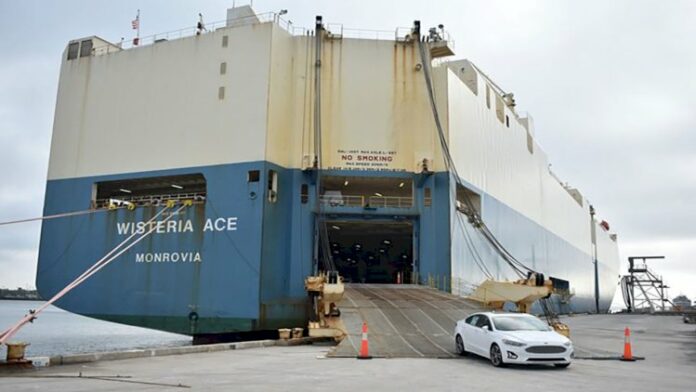
The official grand opening of the Port Canaveral vehicle processing facility was marked with the arrival of 730 new vehicles aboard the massive, 653-foot-long vessel Wisteria Ace, the first vehicle carrier to call at the Port’s facility.

The new automobiles were discharged at the Port’s 16-acre auto processing facility located alongside South Cargo Pier 4. Another carrier is scheduled to arrive next week with more than 850 new autos aboard.
 
Capt. John Murray, Port CEO, stated:

“A port-operated vehicle processing facility has inherent value for current and potential customers that aligns perfectly with our mission and translates to final-mile cost-saving advantages for vehicle importers and exporters. Operating the facility as a port authority enterprise gives us flexibility to respond to a customer’s unique requirements in a timely and efficient manner. What’s more, our location is a natural geographic center to access the high-volume, fast-paced dealer markets in Florida.”

Port Canaveral’s vehicle processing facility is alongside a dedicated berth, resulting in quick offloading of vehicles to the first and last point of rest. The secure paved facility includes a 20,000-square-foot, climate-controlled vehicle processing warehouse equipped with LED lighting and striped traffic lanes. The terminal has current capacity of 100,000 vehicles annually with potential to increase to 240,000 annually. All major markets in Florida and the U.S. Southeast are accessible within eight hours drive from Port Canaveral.

Port Canaveral assumed operation of the vehicle processing facility when the former operator’s lease expired in January. Experienced vehicle processing employees were hired for the Port Canaveral RO/RO Division to ensure operational continuity and maintain the high-quality of service to existing customers. The Port has invested in implementing a new advanced terminal operating system using cloud-based technology to allow adaptability to any OEM system. This technology is capable of integrating with the latest vehicle-tracking technologies to provide real-time reporting and facilitate tiered supplier efficiency.

In Fiscal Year 2019, some 12,514 vehicles were processed at the facility. The Port is continuing to service current customer needs and pursuing future import/export business opportunities with foreign and domestic vehicle manufacturers. Currently, NYK, Hoegh and Mitsui Ocean Line vehicle carriers call at the Port, which is working closely with multiple ocean carriers to broaden its service portfolio.
Van Oord selects Marlink for licensed VSAT connectivity in Indian waters

0

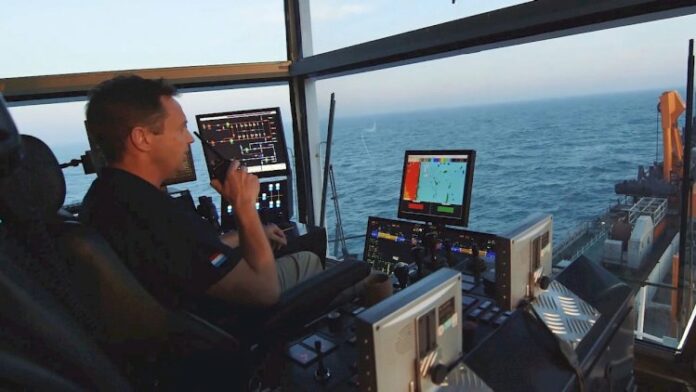
Van Oord has selected Marlink’s high throughput VSAT for connectivity in Indian territorial waters, through an agreement with India’s licensed Inflight Maritime Connectivity (IFMC) service partner, Nelco Ltd (Nelco).

Van Oord has signed a fixed term contract for Marlink’s SeaLink VSAT service after the successful conclusion of a trial in October 2019 onboard the trailing suction hopper dredger Volvox Asia.

The capacity agreement ensures that Van Oord vessels can stay connected to flexible, resilient and high-speed broadband even in areas where previously, regional regulations could prohibit or restrict their ability to stay connected via satellite. It also means that customer vessels can remain in compliance with reporting requirements of national and international regulations.

Satellite communications are subject to license restrictions when operating in Indian waters, meaning that VSAT must be turned off, unless using a licenced service provider.

The result is either increased complexity for customer ICT departments or loss of access to bandwidth used for mission critical operations, crew connectivity and compliance. Working with Nelco, Marlink can now remove these challenges, ensuring that customers do not experience any service interruptions. Van Oord is the first Marlink customer to take advantage of seamless connectivity within Indian territorial waters.

An independent family business based in the Netherlands, Van Oord is a pre-eminent contractor for dredging, marine engineering and offshore and energy projects, including oil, gas and wind, providing innovative solutions for marine engineering challenges.

Its operations in Indian waters centre on dredging; a core business for Van Oord, one it has continuously focused on since the company’s foundation, by continuously shifting the boundaries of technology.

NYK starts large-scale survey of microplastics in oceans

0

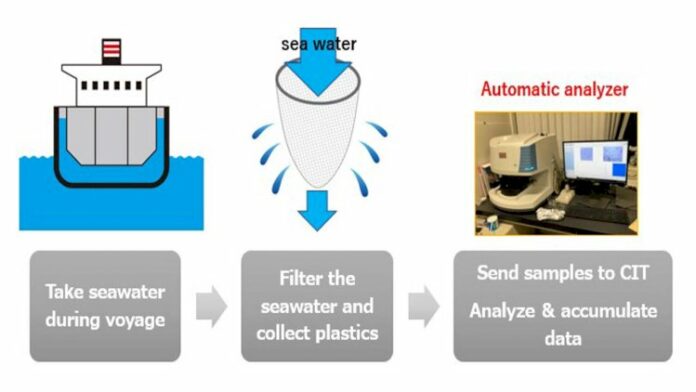
NYK has signed a memorandum of understanding with the Chiba Institute of Technology (CIT) to use a ship to collect and analyze microplastics in oceans around the world in an effort to create a solution to marine plastic pollution, a global environmental issue.

This is the world’s first initiative between a company and a research institute to conduct a survey of microplastics over a wide range of the ocean.

According to the World Economic Forum, as much as 8 million tonnes of plastic is dumped into our oceans every year, and if this situation continues, it is predicted that the total weight of marine plastic waste will exceed the total number of marine organisms by 2050.

Plastics are often not very biodegradable and can persist in the ocean for a hundred years or more. When exposed to UV radiation and waves, plastics can break down into microplastics, i.e., tiny plastic particles up to 5 millimeters in diameter. The microplastics then sit on the sea surface or the seabed. There is concern that the microplastics can be ingested by a wide range of creatures, beginning with plankton that form the basis of the marine food chain, thus endangering humans too.

However, the location, size, and type of microplastics in the world’s oceans, remain unclear, in addition to how much they are increasing each year.

NYK, which provides ocean shipping services, considers microplastic pollution to be an important social issue and will thus be using its oceangoing fleet to study the condition of the world’s oceans on a large-scale in an effort to resolve the issue.

NYK will collect microplastics during voyages by making use of its fleet of approximately 750 vessels in operation. CIT will use its cutting-edge research on microplastics to analyze the samples and create a world plastic waste map that shows the size, distribution concentration, age, etc. of microplastics.

NYK and CIT began trials using three dry bulk carriers in March. Based on the results, the types of vessels will be expanded, and the survey area widened. After establishing a method of sampling, a worldwide microplastic map will be created by collecting big data of microplastics linked to sampling information such as date and time, location, meteorological data, etc.

NYK is considering the commercialization of solutions such as a microplastic waste collection vessel with autonomous navigation technology using IoT. NYK is determined to lead initiatives for social issues and environment-friendly transportation to realize a sustainable developing society.

Babcock awarded key High Frequency Communications contract in New Zealand

0

Babcock International, the Aerospace and Defence company, is set to become a leading provider of High Frequency (HF) radio communications services to New Zealand and its international ‘Five Eyes’ allies following the awarding of a key contract.   

Babcock’s experts will deliver critical equipment replacements to support the New Zealand Defence Force (NZDF) over the near term, with an extensive customer through-life support programme forming the remainder of the contract. Initially worth $30.6 million NZD (£14.9 million) to Babcock, the new HF system is expected to be operational by August 2023.

New Zealand Defence Minister Ron Mark said:

“This is one of a number of planned investments from the Defence Capability Plan 2019 that will strengthen our national resilience. High frequency radio provides communications coverage in places that satellites cannot reach and where ordinary radio communications will not work. It is also a back-up system if satellite communications fail, are disrupted or are unavailable.

Our service women and men rely on communications to undertake the tasks required of them, whether it be humanitarian, constabulary or military operations. In undertaking these tasks, they operate in some of the most remote regions on the planet, from deep in the Southern Ocean to the vastness of the Pacific.

This is an investment in our communities. Defence’s HF radio system will support emergency services, enabling them to maintain communications during crises. The current HF radio infrastructure was installed in the 1980s and has reached the end of its life.”

Babcock Australasia CEO, David Ruff, said the contract represents a major milestone for Babcock as a world-leading, trusted provider of High Frequency communication technology.  

Ruff says:

“This contract leverages our long-standing, 18 year track record in the UK, where Babcock has been providing a Defence High Frequency Communications Service to the UK Ministry of Defence. Babcock will now provide its specialist technology and know-how to New Zealand as a key Five Eyes partner.

The contract confirms Babcock’s position as a trusted, reliable provider of Defence High Frequency Communications, ahead of similar future bids for global customers including the Commonwealth of Australia.

The contract reinforces Babcock’s long-standing commitment in New Zealand, building upon its role as the nation’s strategic maritime partner, sustaining the Royal New Zealand Navy, as well as its strategic partnership managing the ground assets of the national flag-carrier, Air New Zealand.”

The Five Eyes alliance includes New Zealand, Australia, the UK, the United States and Canada, enabling their sharing of data and information.

Nekton Institute chooses Fleet Xpress for transmission of water chemistry data sets

0

Inmarsat’s Fleet Xpress, the world’s leading maritime broadband service, has once more been chosen to provide the connectivity backbone enabling images captured by the deep ocean research institute, Nekton from the floor of the Indian Ocean to be transmitted to audiences worldwide.

The Nekton Institute is an independent, not-for-profit research institute working in collaboration with the University of Oxford. It aims to accelerate the scientific exploration and protection of the oceans.

The maritime high-speed broadband service provided connectivity to relay broadcast images from Nekton’s submersible off the Seychelles last year. Along with Associated Press, Sky News and Sonardyne, it won the 2019 IBC Innovation Award for Content Distribution and the 2020 Royal Television Society News Technology Award.

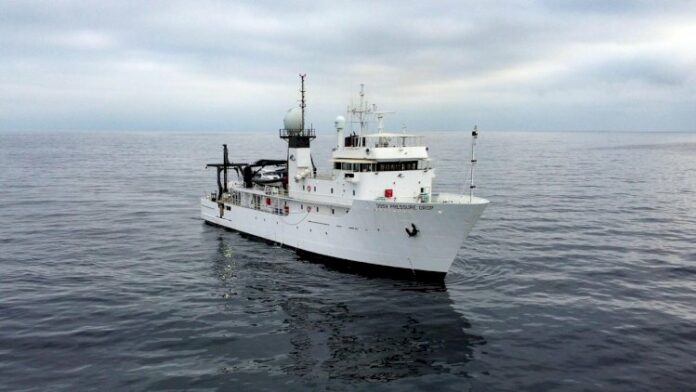
The 2020 mission entitled ‘First Descent – Midnight Zone’ will include a 35-day long voyage starting in mid-March exploring biodiversity around the Maldives, Seychelles and the High Seas. Video, audio and – for the first time – data will be transmitted from the deepest parts of the High Seas in the Indian Ocean to the research vessel Pressure Drop, then relayed via Fleet Xpress to marine science projects focusing on sustainable oceans.

President Ibrahim Mohamed Solih of Maldives said:

“The ocean is a key part of each Maldivian. 71% rely on the ocean for their primary source of income. We have committed to a 5-year initiative to advance ocean protection and sustainably develop the blue economy. This expedition will help us establish the long-term sustainability of our economic growth, livelihoods and jobs through establishing marine protected areas to build ocean resilience.”

Deep ocean locations are often also the farthest from shoreside support. For high-tech research vessels monitoring and managing subsea activities today, reliable connectivity is becoming an operational as well as a safety need.

Peter Broadhurst, Senior Vice President, Inmarsat, said:

“For all practical purposes, until now it has not been possible for research vessels in remote seas to transmit large quantities of data back to base in real time, let alone stream images suitable for high-definition TV broadcast. Nekton’s decision to work with Inmarsat has changed that.”

Pressure Drop’s video-streaming capability has already been proven through her role in the ‘Five Deeps Expedition’, supporting the world’s only manned submersible able to descend to full ocean depth (11,000m). For its new mission, data from submersibles will feed into the 2022 Indian Ocean Summit, where Seychelles and Maldivian governments, and ‘First Descent’ partners seek to create a sustainable management plan for 2,000,000km2 of ocean.

Part of the Pressure Drop project also sees Inmarsat installing Fleet Data, the maritime industry’s first secure IoT platform, which extracts data from sensors and uploads it to a secure central cloud-based database for easy access with no additional airtime cost. Its use will enable the first-ever transmissions of water chemistry and geophysics datasets.

Fleet Data will also allow scientific research to be shared onto an open source platform, with processed datasets made available so that registered marine scientists around the world can participate in a virtual Hackathon to interrogate data and publish findings within two weeks. All datasets will be blockchain-coded to ensure security, transparency, and decentralization.

Oliver Steed, Chief Executive, and Nekton, said:

“One of the biggest issues is that it can take months or even years to publish data analysis, by which time data may have less relevance and application. By using Fleet Data we can publish data in an instant via an Inmarsat API: this is ground-breaking for marine science and could accelerate the analysis and publication of ocean data.”

Inmarsat’s yachting partner YachtProjects designed, installed and commissioned Pressure Drop’s management and communications systems, including ECDIS, CCTV and open port capability.

Nekton’s research, sampling and survey technologies fully integrate with shipboard systems, with the YachtProjects’ Seawall package controlling the shipboard network and shaping bandwidth and streaming, with the terminal hardware provided by Intellian Technologies.

Well completed on world’s first offshore carbon storage

0

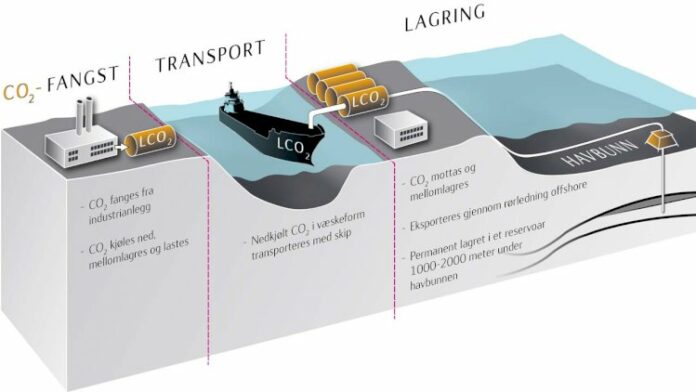
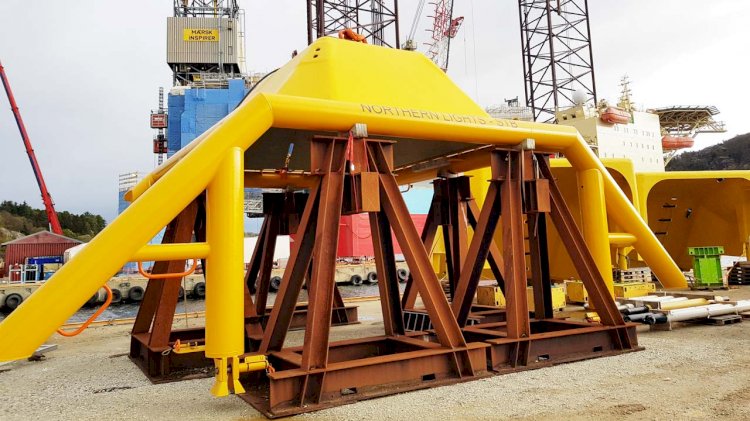
Equinor and partners Shell and Total have completed the drilling of confirmation well 31/5-7 Eos south of the Troll field in the North Sea. The purpose was to determine the suitability of the reservoir in the Johansen formation for CO₂ storage.

Geir Tungesvik, Equinor’s senior vice president for project development, says:

“This is an important milestone in realising the possibility of a CO₂ storage on the Norwegian continental shelf. The preliminary results from the well so far have been positive. The drilling results will now be further analysed before concluding.”

Extensive amounts of data have been acquired through coring, logging, sampling and a production test. So far, we have proven a sealing shale layer and the presence of good quality sandstone in the reservoir.

The partners in Northern Lights are analyzing these results as part of their final project’s decision process.

In line with a shared vision to stimulate necessary development of future CCS-projects (carbon, capture and storage) through sharing, the partnership has decided that well data can be freely shared with external parties and the information will therefore be available for download. The solution is not yet decided.

Located some 2500 metres below the seabed, this is the first well drilled in exploitation licence 001. If the Northern Lights project is sanctioned, the well will be used for injection and storage of CO₂.

The Northern Lights partners plan for a potential investment decision in the spring of 2020. Such an investment decision is subject to agreement between the partners and government authorities on an implementation agreement, as well as ESA approval of the project. The project is subject to final approval by Norwegian authorities.

SMC secures marine coordination on Formosa 2 offshore windfarm

0

SMC have secured a contract to provide holistic Marine Coordination services to the Formosa 2 offshore windfarm in Taiwan.

The Formosa 2 project represents SMC’s 5th Marine Coordination contract award in Taiwan and the company’s 40th globally. 

As with the Formosa 1 (phase 2) project, SMC will work with SeaPlanner and local communications company, Mercury Data Systems, to deliver a comprehensive marine coordination solution, comprising design, communications infrastructure, marine management software and service delivery throughout the duration of the construction phase. 

In-line with Formosa 2 and SMC’s commitment to training and developing local talent, SMC will be integrating Taiwanese nationals within the Marine Coordination team. Local personnel will work alongside SMC’s experienced marine professionals, developing key practical and theoretical skillsets and providing a vital point of liaison for local authorities and third parties. 

SMC Taiwan Manager, Dean Coates, commented: “Taiwan remains a key area of focus for SMC and we are extremely pleased to be able to build upon our early success and lessons learned in the region. As a company, we are proud of our track record in developing personnel and indeed in training local people. We now have a strong pipeline of work established in Taiwan for the coming years and it’s fantastic that we’ve been able to recruit locally, delivering knowledge and expertise that can hopefully benefit the region and its people for many years”. 

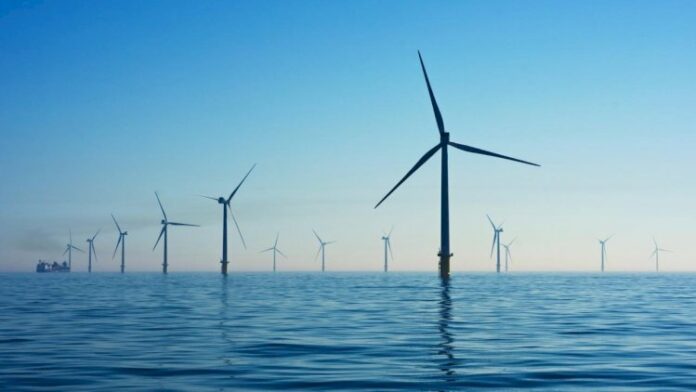
Formosa 2 is jointly owned by Macquarie, Swancor and Jera and will consist of 47 Siemens Gamesa 8.0 – 167 turbines, located four kilometres offshore of Miaoli County in the Taiwan Strait. The 367MW project will become one of the largest offshore windfarms in Taiwan once it is commissioned.

ABB and DNV GL make history with first vessel cybersecurity verification

0

In a milestone for the marine industry, ABB’s solutions on board a large passenger ship have been awarded cybersecurity verification from classification society DNV GL

As a result, this vessel became the industry’s first to achieve system compliance under DNV GL’s framework for integrated cybersecurity.

The state-of-the-art cybersecurity resilience for the vessel was enabled by close collaboration of ABB, the shipowner and DNV GL during the construction phase at a shipyard in Europe. Cybersecurity management processes will continue during the ship’s operations, with the system’s resilience maintained throughout the lifetime of the vessel.

Johann Melsted, Area Manager Benelux & France for DNV GL, said:

“It is vital that the maritime industry focusses on cybersecurity as an essential part of both design and operation. Which is why we are so pleased to be working with forward looking partners, who are prepared to engage with this emerging risk and demonstrate their commitment to tackling cyber threats.”

In order to achieve sustainable shipping, vessels are increasingly fitted with integrated automation systems and digital solutions. As part of the Fourth Industrial Revolution, the vessel’s systems are more connected than ever before, presenting threat vectors previously unheard of in shipping. This is driving the need for closer and earlier collaboration on cybersecurity between all key stakeholders in the newbuilding process. DNV GL’s Integrated Cyber Security Dependent Systems verification establishes a framework to address cybersecurity levels for the main functions of a vessel – both during construction and in operation.

Photo: ABB

While the framework is applicable to any vessel, greater sophistication and deeper integration of operational technology systems in complex vessels such as cruise ships mean that appropriate cybersecurity management is paramount. While digitalization offers opportunities to measure and manage efficiencies across the entire fleet, securing these data streams is critical to the safety of the vessels’ passengers and crew.

Juha Koskela, Managing Director, ABB Marine & Ports, said:

“ABB recognizes the importance of cybersecurity in the marine industry and is working closely with shipowners, yards and classification societies to enhance cyber resilience of ships. As vessels become more electric, digital and connected than ever before, it is of vital importance that we equip and empower seafarers with reliable solutions that are cyber secure.”

The vessel is powered by ABB Azipod® electric propulsion system. Since its introduction in 1990, Azipod® has become the industry standard for passenger vessels with its proven ability to cut fuel consumption to up to 20 percent, compared to traditional shaftline propulsion.

Connected to ABB Ability™ Collaborative Operation Centers worldwide, the vessel is part of the global support network where ABB experts monitor operational shipboard systems, coordinate remote equipment diagnostics and offer predictive maintenance services – 24/7.

Aker BP and Framo sign smart contract for offshore maintenance

0

Aker BP and Framo have entered into a long-term contract for seawater lift pumps where compensation is directly linked to facility uptime. This is an important step in the modernization of the Norwegian shelf.

In 2018, the two companies and Cognite, a global AI software company enabling the full-scale digital transformation of heavy-asset industries, embarked upon a digital pilot effort for predictive maintenance of the seawater lift pumps on the Aker BP-operated Ivar Aasen field. The pilot has been a resounding success. Therefore, on Thursday, 5 March 2020, the companies signed a new maintenance contract which covers all of the five field centers where Aker BP is the operator.

A considerable effort has been made on the part of Aker BP and Framo to establish a full-fledged smart contract. The contract represents a huge step within digitalization and predictive maintenance. Going forward, algorithms and sensor data will help us to increase uptime and reduce maintenance on our seawater lift pumps, says head of operations and field development Kjetel Digre in Aker BP.

The new smart contract has a duration of six years, with an option for an additional six years. This is a continuation of the pilot contract signed by Aker BP, pump supplier Framo and technology company Cognite during ONS in 2018.

This marks a milestone as Aker BP and pump supplier Framo are now taking the digital pilot work a step further to a long-term collaboration through Aker BP’s smart contract concept. Smart contracts are performance-based model agreements, where compensation is determined by the systems’ reliability and performance.

Cooperation with Cognite, along with sharing of data, have been essential in arriving at both algorithms, digital boards and an incentive model that ensures value for both Aker BP and Framo. This way of working is in line with Aker BP’s strategy where we create added value together with strategic partners, says Digre in Aker BP.

Since the first smart contract was signed a year and a half ago, large volumes of data have been sent back to the mainland. This became the start of an entirely new collaboration where Aker BP, Framo and Cognite have worked together in a joint project team.

Digital boards have now been developed based on sensor data from Cognite Data Fusion (CDF) and algorithms from Framo. A dedicated incentive model has been negotiated around these elements.

Basing contract models on real-time data has been uncharted territory. With the release of these data flows, Framo has been able to predict the condition of equipment, foresee what will happen with the pumps in the future, and in turn plan effective maintenance. Together with Aker BP, we have altered the traditional approach to maintenance. We are now continuing this cooperation into the future and over to the other fields, says Trond Petter Abrahamsen, Managing Director in Framo Services AS.

Coronavirus: Cruise ship blocked from docking at San Francisco

0

The Grand Princess, a Princess Cruises liner, with hundreds onboard is being held off the Northern California coast until passengers are tested for coronavirus after the state reported that its first resident to die of the virus had apparently contracted it on a cruise.

Officials said an elderly patient who had underlying health conditions and died at a hospital had tested positive for the virus after getting off the Grand Princess cruise ship in San Francisco back in February.

Some 60 other guests who were on the same ship when it sailed from San Francisco to Mexico with the patient had remained on board for a trip to Hawaii. That cruise was cut short and will eventually return to San Francisco.

The Grand Princess cruise ship is now under investigation as the Centers for Disease Control and Prevention probe a “small cluster” of patients who were aboard, according to the cruise line.

Princess Cruises said that there are no confirmed cases of COVID-19 currently on board. The U.S. Centers of Disease Control (CDC) has identified groups of guests and crew who will be tested before arrival into San Francisco.

There are fewer than 100 guests and crew identified for testing, including all in-transit guests (guests who sailed the previous Mexico voyage and remained on board for the current Hawaii voyage), those guests and crew who have experienced influenza-like illness symptoms on this voyage, and guests currently under care for respiratory illness.

To facilitate this testing, the U.S. Coast Guard will deliver sampling kits to the ship the morning of March 5 via helicopter. Princess Cruises onboard medical team will administer the test and the samples will be sent in batches by helicopter to a lab in Richmond, California, across the bay from San Francisco.

Public health officials have advised that no guests will be permitted to disembark until all results have been received. Out of an abundance of caution, all guests who have been identified for testing have been asked to remain in their staterooms.

Princess Cruises can also confirm the cancellation of the upcoming Grand Princess Hawaii cruise departing on March 7. All guests will receive a full refund of their cruise fare, Princess Air, Princess Cruise Plus pre- and post-cruise hotel packages, prepaid shore excursions and other prepaid items purchased through Princess. Unexpected expenses, such as air change fees, reimbursement of reasonable non-refundable out-of-pocket expenses will be considered on a case-by-case basis. Guests will also receive a Future Cruise Credit equal to 100% of the cruise fare paid on this voyage.