1.1 C
New York
Home Blog Page 901

TEPCO and Ørsted collaborate to develop the Choshi offshore wind project

0

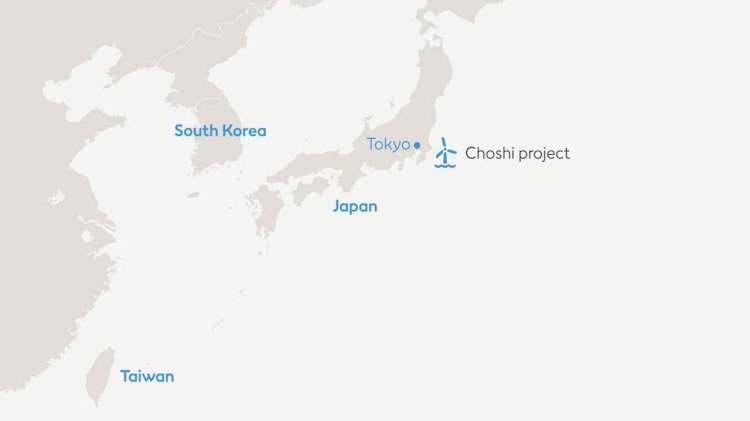
Tokyo Electric Power Company Holdings, Incorporated (TEPCO), the largest power company in Japan, and Ørsted A/S (Ørsted), the world’s leading offshore wind developer, announced today that they have agreed to establish a joint venture company, Choshi Offshore Wind Farm K.K., with the intention of working towards a joint bid in the Choshi-city offshore wind promotion area.

In January 2019, TEPCO and Ørsted signed a memorandum of understanding to work jointly on offshore wind projects and have since then been working together to establish a framework and organizational structure for joint development of the Choshi Offshore Wind Project.

TEPCO and Ørsted, having formalized their collaboration to develop the Choshi Offshore Wind Project, will submit a joint bid in the Round 1 auction once the Japanese government officially designates the Choshi-city offshore wind promotion area, and further work together on future offshore wind opportunities in the area.

TEPCO Representative Executive Officer and President, Tomoaki Kobayakawa, says:

“TEPCO and Ørsted have been making excellent progress in developing our partnership and we are ready to see successful development of the Choshi Offshore Wind Project. Our two companies have agreed to establish a unique framework that enables us to effectively integrate and leverage strengths and expertise from both sides. We are confident this is key to succeed in the Choshi Offshore Wind Project.

In April this year, TEPCO will launch its renewable energy business arm, TEPCO Renewable Power, to make renewable energy a core generating source. The partnership with Ørsted and the establishment of Choshi Offshore Wind Farm K.K. will help drive business growth for the TEPCO group and TEPCO Renewable Power.”

Ørsted Chief Executive Officer, Henrik Poulsen, says:

“I am pleased to see our close collaboration with TEPCO for more than one year has led to the successful establishment of the joint venture company for the Choshi Offshore Wind Project. With Ørsted’s strong global capabilities and TEPCO’s local expertise, we are well prepared and dedicated to participating in the upcoming auction.

This joint venture is not only a significant step in Ørsted and TEPCO’s efforts to deliver on Japan’s ambitions for domestic renewable power generation, but also a landmark moment for Ørsted’s market entry in Japan and for our aspirations to help Japan become a leading offshore wind market in Asia Pacific.”
Successful installation of two offshore substations in the North Sea

0

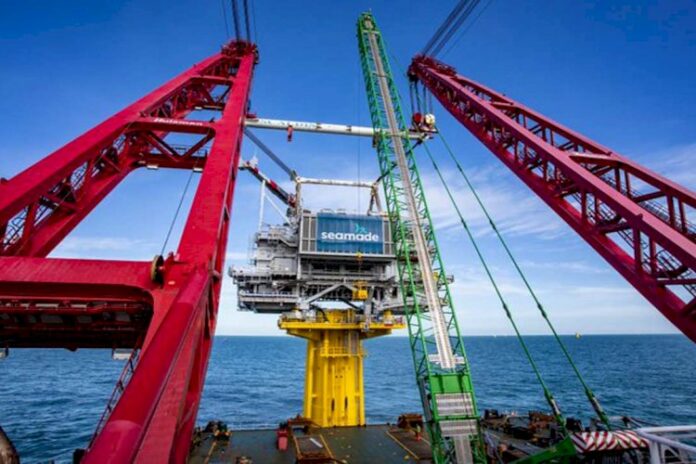
The two substations for the SeaMade offshore wind farm have been successfully installed in the Belgian North Sea. This installation marks a major milestone in the construction of Belgium’s largest offshore wind farm.

Each with a weight of 1,200 tonnes, the substations are the beating heart of the offshore wind farm. They transform the wind energy that is produced to 225 kV, which in turn allows the electricity to be brought to shore via Elia’s Modular Offshore Grid (MOG). The export cable transmitting the electricity to shore has been installed earlier with DEME’s cable installation vessel ‘Living Stone’.

The installation of the substations was executed with heavy lift vessel ‘Gulliver’, operated by DEME’s subsidiary Scaldis which is specialised in marine heavy lifting works. Earlier DEME’s offshore installation vessel ‘Innovation’ installed all of the foundations, including those for the two substations.

Bart de Poorter, General Manager DEME Offshore comments:

“Despite the challenging weather conditions over the past weeks the SeaMade project is firmly on track. The successful installation of the two offshore substations was only made possible thanks to the close cooperation between the SeaMade team and our partners Smulders, ENGIE Fabricom and Tractebel, as well as the highly skilled experts on board of our vessels.”

Mathias Verkest CEO SeaMade offshore wind farm comments:

“I am thrilled to see this oversized mecano being put together, bringing us closer step by step to the start of green energy production for 485.000 households as from autumn this year.A big thank you to the SeaMade team and all parties involved for the close cooperation and joined efforts to make this happen.”

The installation of 58 turbines will begin in spring. DEME will deploy its offshore installation vessel ‘Apollo’, which recently performed the precision foundation piling operation at the Moray East offshore wind farm in Scotland. However, this will be the first turbine installation project for ‘Apollo’. This versatile vessel has had a full orderbook since its inauguration in February last year.

In April cable installation vessel ‘Living Stone’ will start the installation of the inter array cables.

MOL launches trial of monitoring service for auxiliary marine machinery

0

Mitsui O.S.K. Lines, Ltd. has announced that it will launch a trial of a new monitoring service for auxiliary marine machinery, jointly developed with Asahi Kasei Engineering Corporation (President: Ryuji Kono; Headquarters: Kawasaki-shi, Kawasaki).

The service is based on the Vessel Vibration Visualization Monitor (V-MO), which measures vibrations in auxiliary machinery onboard a vessel (such as pumps that assist the main engine) and monitors its condition. This leads to earlier detection of potential failure resulting from abnormal vibration.

In a joint research project with Asahi Kasei Engineering on the use of vibration sensors to detect abnormalities in rotary machinery which started in November 2017, the project team monitored different types of essential auxiliary marine machinery on two newbuilding vessels and another in-service vessel (targeting about 20 pieces of auxiliary equipment) over two years. The project showed positive effects in detecting early signs of failure that could result in an engine stoppage and in managing failure tendencies on the three vessels involved. Thus, MOL determined to start trial service with an eye toward practical application.

MOL will also conduct trial services on 10 other various types of vessels (targeting about 80 pieces of auxiliary marine machinery) in addition to the above three vessels, verify the comprehensiveness of the vibration diagnosis technology, and confirm vessel-specific service content based on MOL’s expertise in vessel operation, maintenance, and ICT.
Once the system is in practical use, it will be linked to MOL’s FOCUS project.

MOL aims at practical use by March 2021 after the trial service is completed; at that time, Asahi Kasei Engineering will offer the service to other shipping companies and ship management companies as well as MOL.

MOL positions this project as part of the “ISHIN NEXT – MOL SMART SHIP PROJECT –”, and the knowledge and expertise gained through the development of this technology will be fed back to various type of ships. The project also reflects MOL’s proactive stance in development of vessel-related Internet of Things (IoT) and safe operation technologies.

BC Ferries to allow passengers on closed car decks temporarily

0

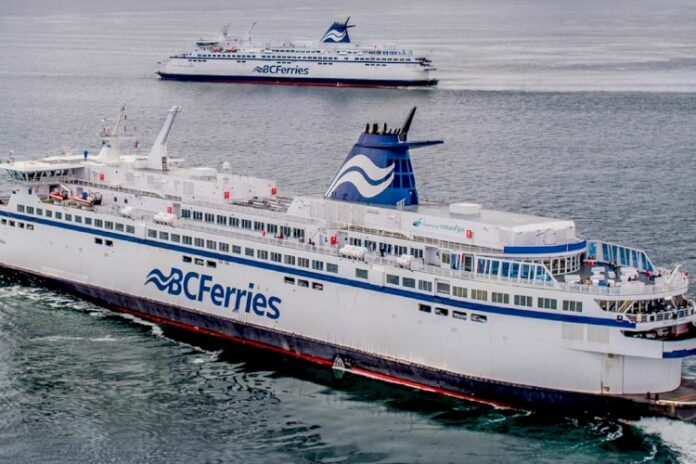
Starting today, BC Ferries will allow customers to remain in their vehicles on the enclosed car deck during the COVID-19 situation, to help support social distancing and selfisolation.

The decision is the result of collaboration between Transport Canada and the Canadian Ferry Association to provide ferry operators with important flexibility to help protect passengers and their families from COVID-19 related risks, while also ensuring additional measures are taken to ensure passenger safety.

Mark Collins, BC Ferries’ President & CEO, said:

“BC Ferries, the Province, and the Federal Government are doing everything they can to help prevent the spread of this illnessю At BC Ferries, we proactively took measures to help prevent the spread of COVID-19, including increasing cleaning on board and at our terminals, closing the Pacific Buffet, as well as posting signage encouraging customers to practice good hand washing and social distancing.”

The purpose of keeping passengers off closed car decks is to ensure their safety in the case of an emergency. Safety is the top priority for BC Ferries, and the company is committed to providing a healthy and safe environment for our customers and employees. During this temporary period, BC Ferries will increase patrols on the enclosed car deck to ensure safety in the rare event of an emergency. Passengers will not be allowed on closed car decks once the COVID-19 situation ends.

RH Marine helps improve the standard for the autopilot on vessels

0

In recent months, RH Marine experts have made an important contribution to the improvement of the new ISO standard for the autopilot (Heading Control Systems, or HCS) on seagoing vessels.

Under the old standard it was possible to supply an autopilot that met all requirements, but in practice did not function well. This has been taken into account in the new standard. Besides that, from now on, the autopilot will also be tested under difficult conditions and on different types and sizes of ships. The new ISO testing standard has already been approved and will be made mandatory within a maximum of three years.

The autopilot automatically keeps a ship on course if no one is steering. The system must meet the requirements of the International Maritime Organization (IMO). The test and inspection of the autopilot must comply with the ISO 11674 test standard. When this standard was up for amendment, a committee of experts from the Netherlands, Finland, Japan and Germany was formed. The Netherlands was represented by RH Marine, which has a lot of experience and expertise with such systems and maritime regulations.

The portfolio manager bridge Marcel Vermeulen and consultant maritime regulation Steven Kransse of RH Marine, say:

“We saw that you could meet the previous test standard with an autopilot that is not working properly. We also saw that the new standard was in danger of becoming illogical and unworkable. We have tried to change that and have succeeded in doing so.”

While other suppliers sometimes supply a box with buttons, RH Marine supplies its Rhodium NAVpilot4500 as an integrated software system in the ship’s bridge. The new standard initially seemed to take too little account of this special solution.

What was worse, for example, was that the old standard took into account the overshoot – when ships overshoot after a turn – but not the undershoot – when ships do not turn far enough and not reach their course at all.

Vermeulen and Kransse say:

“Thus you could make an autopilot that doesn’t reach track, but still could pass the test and be approved.”

As another example the autopilot initially had to tell it itself when its power went out, which is very inconvenient as the device itself can no longer do anything. This is now also better regulated; if the power of the autopilot fails, other systems have to indicate this.

Another flaw was that the autopilot was only tested for one type of ship under ideal conditions, i.e. without wind and strong current. From now on, testing is also carried out under difficult conditions on different types of ships.

Vermeulen and Kransse say:

“Furthermore, not all extra requirements for an autopilot were also checked by a test. Now they are.”

Total makes a new gas and condensates discovery in the North Sea

0

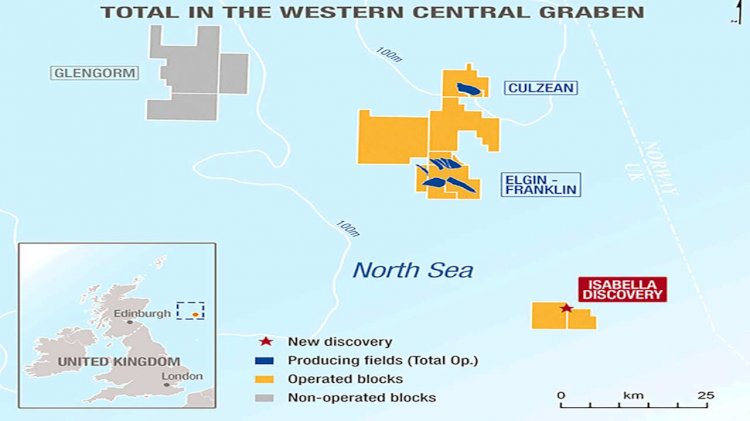
Total, Operator, and its partners have made an encouraging discovery with the Isabella 30/12d-11 well on the license P1820, located in the Central North Sea offshore U.K., about 40 kilometers south of the Elgin-Franklin Field and 170 kilometers east of Aberdeen.

The well was drilled in a water depth of about 80 meters and encountered 64 meters net pay of lean gas and condensate and high-quality light oil, in Upper Jurassic and Triassic sandstone reservoirs. The analysis of the data and results are ongoing to assess the discovered resources and to determine the appraisal program required to confirm commerciality.

Kevin McLachlan, Senior Vice President Exploration at Total,  commented:

“The initial results at Isabella are encouraging. This demonstrates that our exploration strategy in the North Sea to explore for value adding prospects nearby to our infrastructure is working.”

The P1820 license is operated by Total with a 30% working interest, alongside Neptune Energy (50%), Ithaca Energy (10%) and the wholly owned subsidiary of Edison, Euroil Exploration (10%).

DMC wins an order for sets of steering and rudder systems

0

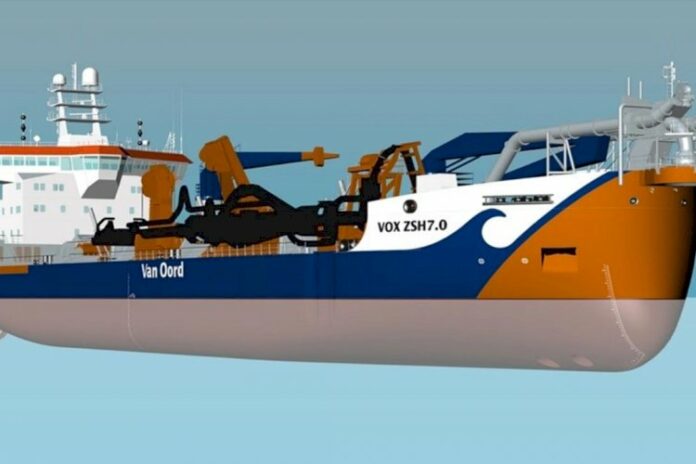
Damen Marine Components has won an order for three sets of steering and rudder systems for three dual-fuelled trailing suction hopper dredgers (TSHDs) currently being built at Keppel Offshore & Marine’s shipyard in Singapore for Van Oord.

The vessels will be 138-metres in length and have a hopper capacity of 10,500 m³. They will represent the very latest in sustainable, energy-efficient dredging and are due for delivery in 2021. The third will be handed over the following year.

Each vessel will have two Van der Velden COMMANDER™ piston-type steering systems and two Van der Velden® MASTER Rudders with fish-tail design bulb. The COMMANDER™ piston-type guarantees reliability and high quality thanks to its in-house cylinder design and is available in a range of options with regard to rudder stock connections, rudder angles and cylinders. This makes the installation process efficient and reduces the amount of space required.

The MASTER Rudder offers high manoeuvrability and has a specifically designed, high performance, fish tail profile that can be optimised to suit a wide range of vessels. In addition, the absence of movable parts makes it ideal for vessels operating in shallow waters. The rudders for Van Oord’s TSHDs will have an area of approximately 14 m², be class approved by Bureau Veritas for speeds of up to 15 knots and generate a torque of 270 kNm.

With rudder angles of up to 65º, MASTER Rudders offer high lift and their fish tail design can be optimised to the purpose of the vessel. Each rudder will be executed with rudder bulb. This improves the propeller wake field, thereby saving energy and reducing fuel consumption, and also increases thrust at higher loads.

The robust design and manufacturing ensures uninterrupted operation despite the harsh environment where it operates. The rudder profile has been optimised during model tests for best manoeuvring performance at low speed and shallow water- says Mr. Bogdan MOCANU Area Sales Manager of DMC.

SCHOTTEL to provide azimuth thrusters for a Chinese cruise vessel

0

German propulsion manufacturer SCHOTTEL has been awarded a contract to provide azimuth thrusters for a Chinese river cruise vessel.

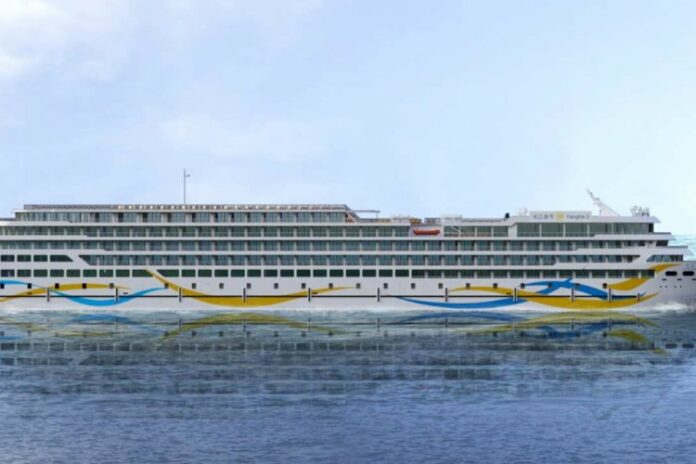
The newly built ship, owned by Changjiang Cruise Overseas Travel and built by China Merchants Heavy Industry (Jiangsu), will be equipped with three SCHOTTEL Twin Propeller systems. The CSC design vessel is intended for operation on the Yangtze River, the largest river in China.

The vessel will be powered by modern electric motors driving three twin propeller units type STP 310 with an input power of 1,000 kW each and a propeller diameter of 2.00 m. The 150 m long and 23 m wide vessel will reach an operating cruise speed of 14 knots. It will accommodate 600 guests served by 150 international crew members.

The new vessel is scheduled to enter operation in September 2021.

SCHOTTEL Twin Propellers are ideal for operating a vessel quietly and for applications with limited installation space, draught or propeller clearance. By sharing the load between two propellers rotating into same direction and of the same diameter, the risk of cavitation is minimized and tip clearance is increased. Both of these characteristics, in turn, lead to low noise and vibration levels. This concept also improves the efficiency of the propulsion system and reduces fuel consumption compared to single propeller systems.

The Yangtze River is the longest river in China and the third longest river in the world after the Nile River in Africa and the Amazon River in South America. At 6,397 kilometres in length, it crosses the provinces of Qinghai, Tibet, Sichuan, Yunnan, Chongqing, Hubei, Hunan, Jiangxi, Anhui and Jiangsu while also traversing the city of Shanghai from west to east before flowing into the East China Sea.

Three companies launch LPG pool

0

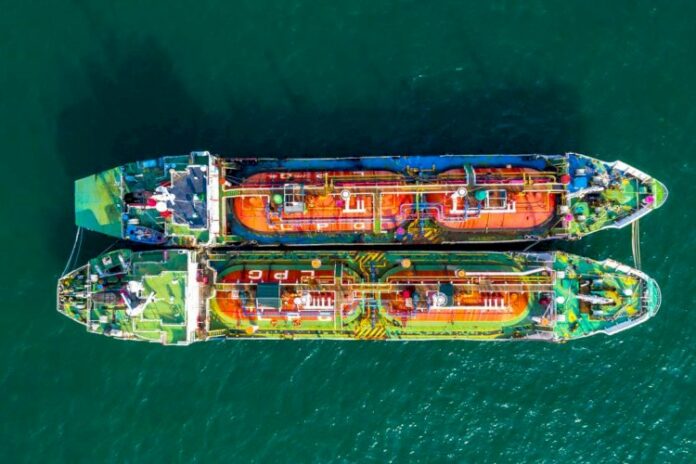
Navigator Holdings Ltd. in collaboration with Pacific Gas Pte. Ltd. (Singapore) and Greater Bay Gas Co Ltd (HK) are pleased to announce the formation of the Luna Pool.

The Luna Pool will be focused on the ocean transportation of liquefied petrochemical gas cargoes, with a specific focus on ethylene and ethane to meet the growing demands of customers.

With a combined fleet of fourteen Handysize vessels, ranging in capacities between 17,000cbm and 22,000cbm, the Luna Pool will bring enhanced flexibility and unparalleled service to the market. The Pool will commence operations in April with commercial and operational management from the Navigator Gas London office supported by the existing offices of Pacific Gas and Greater Bay Gas offices in Singapore, Shenzhen and Shanghai.

The Pool will be managed by a highly professional and experienced team formed by the partners and will have dedicated Commercial and Operational teams to ensure every cargo is efficiently and safely delivered to its destination. Technical management will not change from the current arrangements.

Navigator Gas CEO Dr. Harry Deans said:

“With the successful commencement of our joint venture Ethylene export terminal at Morgan’s Point, Houston we are seeing an increased demand for shipping gaseous products worldwide. To better serve our existing and new customers as a result of this structural change we have decided to expand our presence in the seaborn transportation of Ethylene through this strategic partnership with Pacific Gas and Greater Bay Gas. This will allow us to meet the increasing needs of our customers, giving them both global optionality and full flexibility in an evolving market place. The Luna Pool will continue to support and will effectively enhance the global virtual pipeline of the petrochemical industry.”

Greater Bay Gas commented:

“There has been strong demand for ethylene imports into Asia and this trend is expected to continue. Long haul ocean transportation of ethylene and ethane, in particular, from United States is increasing. Greater Bay Gas entered into a strategic partnership with Pacific Gas and has been operating a fleet of ethylene carriers since 2019. We are pleased to participate in the Luna Pool and believe that with the combined fleet, as well as offices and teams from both West and East, the Luna Pool will deliver significant synergies to the partners as they optimize global market opportunities whilst providing customers with seaborne transport services in a more efficient and reliable manner.“

ATL invests in a state-of-the-art nautical simulator

0

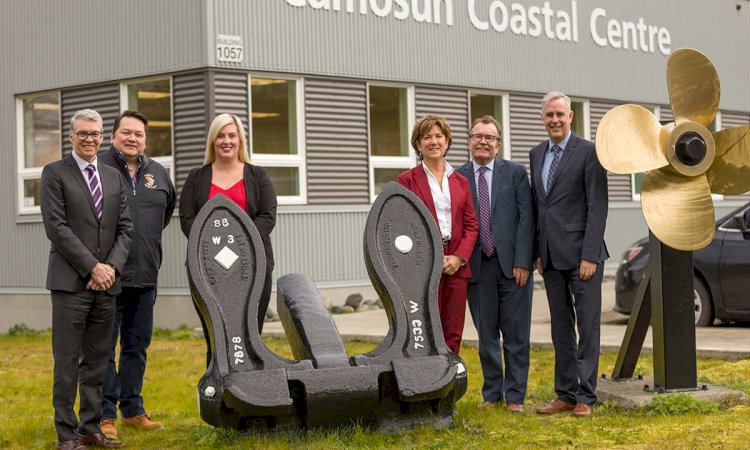
Atlantic Towing Limited (ATL) has announced approximately $700,000 in funding to support a new, state-of-the-art marine simulator for Camosun College, a community college located in Greater Victoria, serving approximately 19,000 students.

The upgrade will allow Camosun to offer a wider range of courses and develop a Cadet/Bridgewatch program, growing the number of marine professionals entering a vital industry.

Gilles Gagnon, Vice President and General Manager of ATL, said:

“We have been working with multiple Indigenous communities and Camosun College to develop Bridgewatch and Culinary programs for nearly two years. The simulator upgrade is a fantastic step forward in the Bridgewatch program.”

Sherri Bell, President of Camosun College, said:

“Our programs are focused on giving students the skills they need for a range of in-demand careers. The generous support from Atlantic Towing and Irving Shipbuilding for a new marine simulator will allow more students to train closer to home.”

Funds will be allocated over a three-year period by Irving Shipbuilding, Inc. (ISI) in an agreement brokered by ATL. This funding is part of ISI’s Value Proposition commitment to creating a sustainable marine industry across Canada as part of its involvement in the National Shipbuilding Strategy, where the Halifax Shipyard is currently constructing Canada’s future naval combat fleet.

A new Navi-Trainer Professional 5000 simulator will be supplied by Transas, recently acquired by Wartsila. A critically important upgrade, the simulator will allow Camosun to widen its scope of courses, and mariners to complete higher-level certificates.

Photo: Camosun College

ATL has been working to establish a strong presence on Canada’s West Coast. In August 2018, following a rigorous and transparent bid process, the Canadian Coast Guard awarded a three-year contract to ATL for the provision of two emergency offshore towing vessels that operate in BC coastal waters. These vessels – the Eagle and the Raven – are capable of towing large commercial ships in distress, helping to prevent potential marine pollution incidents, assist with search and rescue operations, and contributing to Canada’s Oceans Protection Plan.

In April, 2019, ATL announced that conversations with Coastal First Nation Communities had resulted in three new relationships: a Joint Venture Agreement between Songhees Events and Catering and ESS- Compass Group Canada; a contract with Salish Sea Industrial Services; and, a plan to implement Bridgewatch and Culinary training programs for local students via Camosun College.

Camosun College operates two campuses on the Traditional Territories of the Lekwungen and W̱SÁNEĆ peoples on Vancouver Island, and its Camosun Costal Centre housed on Songhees Nation Territory. The establishment of a Bridgewatch program will allow potential cadets (Indigenous and non-Indigenous) to stay on Vancouver Island to complete their training. Currently, students interested in seafaring or marine services must leave the island to receive necessary training.

Christina Clarke, Corporate Executive Officer of Songhees Nation, said:

“Songhees Nation’s economy was intimately connected to the Salish Sea for millennia. Forming Salish Sea Industrial Services with Ralmax and Esquimalt Nation is one of our strategies for returning to the marine economy. Camosun College has been a key partner for Songhees Nation for many years. We are thankful to Atlantic Towing, Limited for their support of the marine simulator. It will be a game changer for our students.”

Gilles Gagnon, Vice President and General Manager of ATL, said:

“In supporting the nautical simulator upgrade and development of the Bridgewatch program, I believe we can help grow the number of marine professionals entering the industry. This will help reduce the barriers of entry by making marine education more affordable to all and accessible to students in Western Canada. We look forward to hiring cadets local to British Columbia.”