0.6 C
New York
Home Blog Page 902

Stena Line announces 950 planned job redundancies in Sweden

0

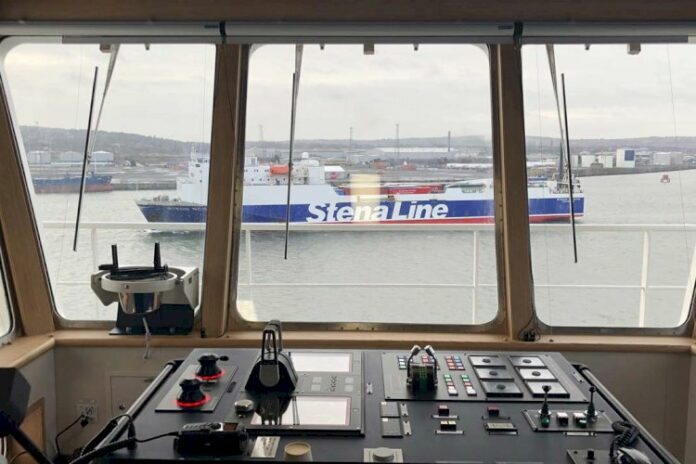
The ferry company Stena Line with its headquarters based in othenburg announces 950 planned job redundancies in Sweden. This measure is in response to the global Coronavirus (COVID-19) that has had a substantial effect on Stena Line’s passenger operations.   

Due to the coronavirus (COVID-19) and travel restrictions imposed by several countries, Stena Line has, like many other companies within the travel industry, seen a drastic decline in travel bookings.   

The effect has been the worst in Scandinavia and recent those days passenger traffic to Sweden, Denmark, Poland, Germany, and Latvia has been stopped to a large extent. 

Since Saturday, 14 March, Stena Line has completely stopped operating its Oslo – Frederikshavn route until further notice. At present, it is estimated that passenger operations will not recover before the peak season in summer. Stena Line is therefore forced to take drastic measures to adapt the reduce costs of the new business situation and to secure the continuity of their freight business.    

Today on Monday, 16 March, Stena Line will announce its planned job redundancies that will affect 950 people employed by Stena Line Scandinavia AB. The planned job redundancies concern positions onboard and offshore, on nine Swedish flagged vessels, as well as positions in the two sister companies Stena Line Travel Group and Retail & Food Services.      

Niclas Mårtensson, CEO of Stena Line, says:

“Due to the current situation we are facing, we have no choice but to adjust our operations and our costs to limit the drop in demand and secure the continuity of our freight operations.” 

Stena Line is currently evaluating its overall operations in all regions due to the sharp decline in travel bookings and does not rule out that there will be further reductions or series of changes to its timetables and/or the route network. 

Maersk launches door-to-door insurance solution

0

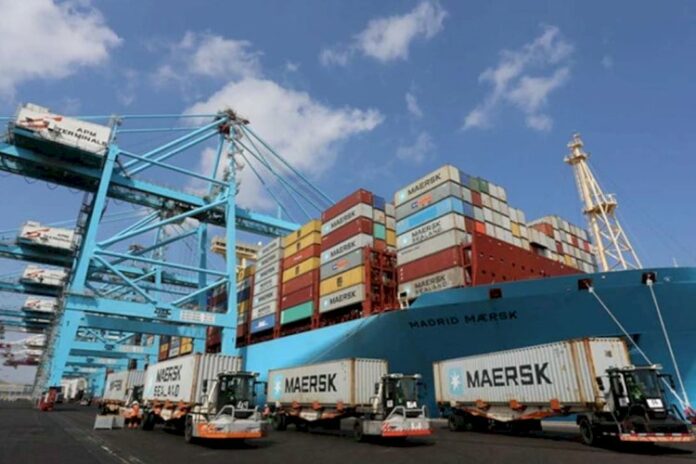
Provided by Zurich, this new service will offer customers the synergy of world-class logistics and insurance solution. 

Maersk has teamed up with Zurich Insurance Plc (Zurich) to bring Maersk Cargo Insurance, a product to protect customers goods against physical loss or damage. 

A customers’ cargo can be exposed to various risks while in transit and Maersk Cargo Insurance covers goods from the time they are first moved for loading until the completion of unloading at destination, from and to almost every country in the world. Regardless the transport or carrier used, customers can relax knowing their shipment is insured from door-to-door, and from departure to arrival. 

Kim Pedersen, Global Head of Logistics and Services at Maersk, says:

“In line with our vision to become the global integrated container logistics company, we aim to provide our customers with a variety of solutions related to their supply chain. As another step in this direction, we are now expanding our product offering and adding cargo insurance to our portfolio which our customers are able to add to their booking seamlessly online, something that is currently not available in our industry. We are proud to be taking lead to digitally transform some of the core processes in the industry to further improve the customer experience.”

Maersk Cargo Insurance is provided by Zurich, one of the largest Marine Cargo Insurers in the world. Zurich is able to have  insurance products and services  provided in over 215 countries and territories. They also possess the necessary financial capacity and credential to insure the world’s largest shipments. 

Howard Kingston, Global Head of Marine, Commercial Insurance at Zurich, mentions:
“At Zurich, we are embracing digitalization to provide customers with better and simpler services and solutions. We are excited to work with Maersk to make cargo insurance available to their customers with just a few clicks.”

Currently launching in Spain on 16 March 2020, Maersk Cargo Insurance is available for nearly all commodities, including reefer products and Special Cargo.

Diego Perdones, Managing Director for the West Mediterranean Area, expresses:

“Maersk in Spain is proud to be part of the pilot launch of a solution created to significantly elevate the customer experience. Created to meet the needs of our customers, this is the first step in offering a cargo insurance product globally and having a variety of solutions based on our customers’ interests.”

Aiming to make the customers’ supply chain easier, they have the option of deciding at each shipment to purchase insurance or agreeing to have insurance included with every shipment upfront. With the benefit of settling all bills in one place, insurance premium for Maersk Cargo Insurance is included in the regular Maersk Freight Invoice. 

Maia Parlagashvili, Global Insurance Product Manager, says:

“The launch of Maersk Cargo Insurance in Spain marks the first step in offering a cargo Insurance product globally and having a variety of solutions based on our customers’ interests. We look forward to successfully roll out the product across other countries in Europe throughout 2020.”

iXblue launches USBL system for tracking of subsea assets

0

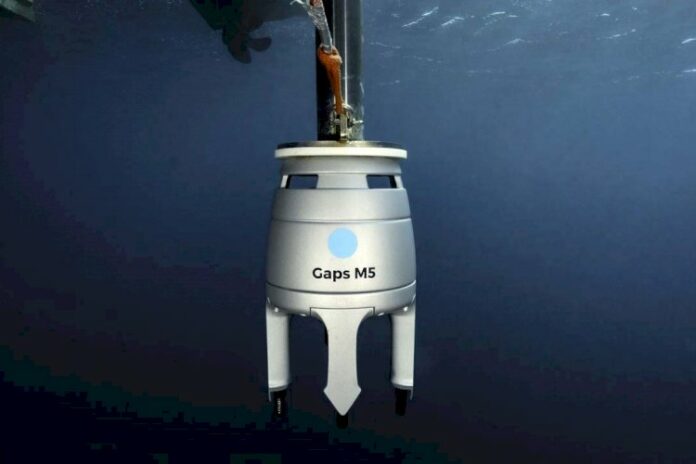
iXblue, a major provider of advanced navigation, subsea positioning and imagery solutions announces the launch of the Gaps M5, a new compact, export-free and omnidirectional USBL system for accurate location, positioning and tracking of subsea assets.

Latest addition in iXblue’s new USBL product range, the new Gaps M5 joins the renown Gaps (now Gaps M7). Gaps M5 integrates an Attitude and Heading Reference System based on iXblue FOG technology for stable heading roll and pitch compensation and a true north reference. Smaller, lighter and easy to install, Gaps M5 is ready-to-use and calibration-free. It offers an accuracy better than 0.5% up to 995m operating range, making it free of export restrictions for fast and easy shipment.

Gaps unique design has been kept in the M5 version with slightly shorter legs to reduce its size. The 3D 4-hydrophone antenna has different legs lengths to enhance horizontal tracking capabilities. With the Gaps M5, no need to tilt the antenna, the acoustic offers maximum aperture and allows up to 200° omnidirectional coverage. This is extremely efficient in shallow water and horizontal tracking conditions especially when multiple vehicles must be simultaneously located at 360°. Gaps M5 is suitable for any tracking operation, from diver- to multiple subsea assets- or inspection ROV- tracking while Gaps M7 remains the best asset for highest survey requirements, subsea multibeam and laser scan positioning , Third-party friendly, Gaps M5 can also be used for dynamic positioning as an acoustic transceiver using one single beacon in USBL mode or multiple beacons  (3+) in LBL mode.

Paul Urvoas, Product Manager at iXblue, explains:

“To address the needs of our customers for accuracy and performance for less constraining jobs, iXblue has decided to extend the Gaps Series to include the new Gaps M5. More compact, it offers a solution reducing costs while keeping its key benefits. Gaps M5 is a practical, easy to export and cost-effective USBL solution that precisely meets the needs of less demanding vertical and horizontal tracking applications”.  

Eight winners of floating wind competition announced

0

The Floating Wind Technology Acceleration Competition run by the Carbon Trust’s Floating Wind Joint Industry Project has announced eight technologies to receive Scottish Government funding and developer support.

The competition was designed to address four key industry challenge areas, that need to be overcome to commercialise floating wind. The four areas were identified in Phase 1 of the Floating Wind JIP: monitoring and inspection, mooring systems, heavy lift maintenance and tow to port maintenance. The eight technologies will receive a share of £1 million from the Scottish Government, in addition to support from the 14 leading offshore wind developers represented in the Floating Wind JIP.

The successful applicants are from a variety of sectors including oil and gas, IT and telecommunications, and engineering. The innovations range in maturity, therefore the funding will be used to support different activities from desktop studies to offshore demonstration.

The companies and their winning technologies are:

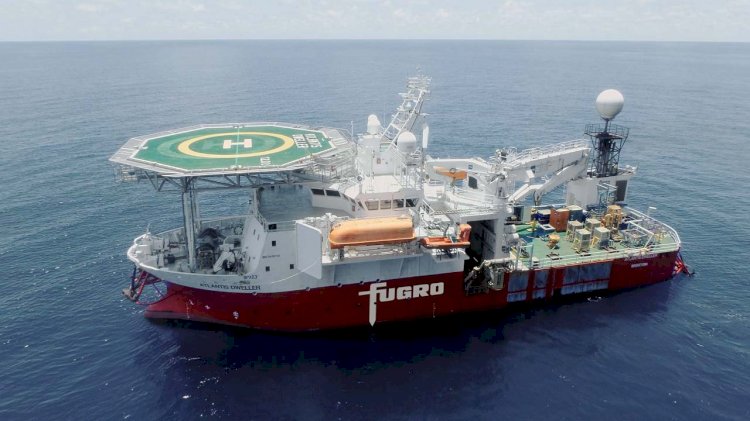
  • Fugro, AS Mosley, and University of Strathclyde (monitoring and inspection)
    Condition monitoring software which uses readily available acceleration and motion data points from floating offshore wind structures to extrapolate how the wider structure responds to stress.
  • Technology from Ideas and WFS Technologies (monitoring and inspection)
    A load monitoring system to identify stresses on mooring lines and times when maintenance is needed. The monitoring system will be integrated into an existing spring, which also acts as a dampener on mooring lines, and is powered by movement of the lines.
  • Dublin Offshore (mooring systems)
    A load reduction device that sits partway up the mooring line and pivots in the water to minimise movement of the floating platform during wave events.
  • Intelligent Mooring Systems and University of Exeter (mooring systems)
    A new pressure-based dampener which sits between the platform and mooring line to reduce the load on floating platforms.
  • RCAM Technologies and the Floating Wind Technology Company (mooring systems)
    A concrete anchor, produced using 3D printing technology, which is sunk and then embedded in the seabed through suction.
  • Vryhof (mooring systems)
    An adjustable lock on the seabed used to manipulate the tension of the mooring lines. This is an alternative to a winch sitting on the turbine platform, and enables vessels to adjust the tension of mooring lines at a safe distance from the platform.
  • Conbit (heavy lift maintenance)
    A temporary crane which sits on top of the turbine (the nacelle) to winch parts up and down for maintenance. This could enable larger turbines to be serviced offshore than is currently feasible.
  • Aker Solutions (tow to port maintenance)
    A splice box connecting two dynamic array cables, and allowing them to be wet-stored on the seabed when a turbine is towed to port. This will also enable an array of floating wind turbines to remain operational when one floating platform is removed for maintenance.

Photo: Fugro

Floating offshore wind is an emerging renewables sector, with significance for places like Scotland where water depths often do not allow for the use of fixed bottom turbines. Floating wind is forecast to scale up to 12GW of capacity globally by 2030, becoming a market estimated to be worth £32 billion.

In Scotland, the draft Sectoral Marine Plan for Offshore Wind Energy, outlines the Scottish Government’s plans to deliver up to 10GW of offshore wind, the majority of which will be in deeper waters suitable for floating wind. To achieve this scale, accelerating technology innovation to lower the levelised cost of energy from floating wind will be critical.

Paul Wheelhouse, Minister for Energy, Scotland commented:

“We are funding the Carbon Trust’s Floating Wind Technology Acceleration Competition in order to address key technical challenges in the sector. Given Scotland’s unique deep water profile, floating offshore wind will undoubtedly play a huge role in our future energy system, as we transition to a net zero economy and we know that key overseas markets are also looking to exploit floating wind technology to meet their own energy needs. The innovative solutions developed by the competition winners will help reduce costs in the sector and could allow floating wind technology to reach commercial scale deployment earlier than previously anticipated and that could prove vital as Scotland and other coastal nations seek to head off the climate emergency.”

Jan Matthiesen, Director, Offshore Wind, the Carbon Trust, said:

Floating wind is on the precipice of scaling to deliver significant capacity in the energy system. The competition is supporting a number of exciting technology innovations in critical challenge areas identified by industry. We are excited and optimistic for both the potential of these innovations to reach commercialisation and their ability to positively impact the sector.

Forth Ports places order for next generation Damen’s tug

0

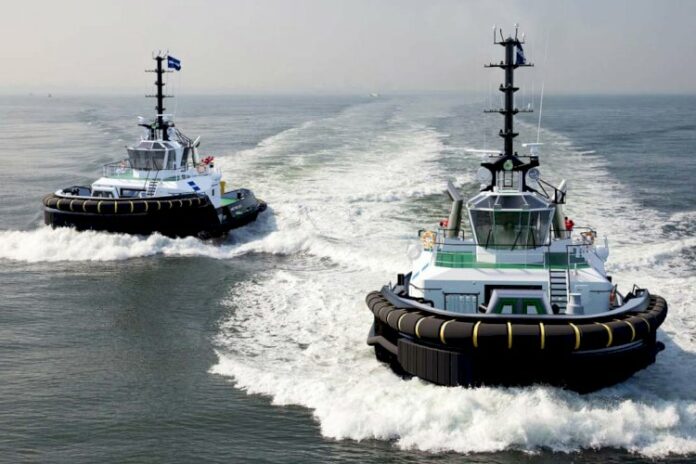
Damen Shipyards Group has signed a contract with Forth Ports Limited for an ASD Tug 2312. The signing ceremony took place in Tilbury Docks, UK on 26th February.

Representing Damen was Area Director Frank de Lange, while Forth Ports was represented by COO Stuart Wallace. The new vessel will operate as part of the Forth Estuary Towage operation, conducting towage work at various Forth Ports locations as well as providing towage services to other external customers in Scotland.

Forth Ports has a range of existing operations in the Forth and Tay Estuaries that will benefit from the acquisition of this new vessel, however, the new vessel will also provide opportunities to service new emerging markets such as decommissioning and offshore wind. The ASD 2312 is well suited to operating in such an environment with such vessels; compact, but, with 70 tonnes bollard pull, extremely powerful.

She’s manoeuvrable too – thanks to her twin fin skeg and dual azimuth thrusters. The ASD Tug 2312 is a state-of-the-art vessel, one of Damen’s next generation tugs. The evolved character of the vessel is clearly visible in its safety features. The wheelhouse, for example, offers 86% window coverage, using impact resistant safety glass.

Meanwhile, the deck is obstacle free, reducing tripping hazards. The winch is located under the superstructure, which not only frees up space, but also facilitates towing operations both forward and aft. The tug is prepared for the future, being IMO Tierr III ready. Emissions are further reduced thanks to the tug’s smooth rounded bilge, an efficient profile that cuts fuel consumption. Damen has prepared a NOx Reduction System that can be applied to IMO Tier III ready vessels at any stage for full compliance.

Meanwhile, smart layouts and compliance with MLC 20006 crew accommodation and comfort regulations ensure the six-person crew are on top form at all times.

As a result of Damen’s philosophy of standardised shipbuilding, the ASD Tug 2312 was already under construction when Forth Ports placed their order with Damen, ensuring rapid delivery of the vessel.
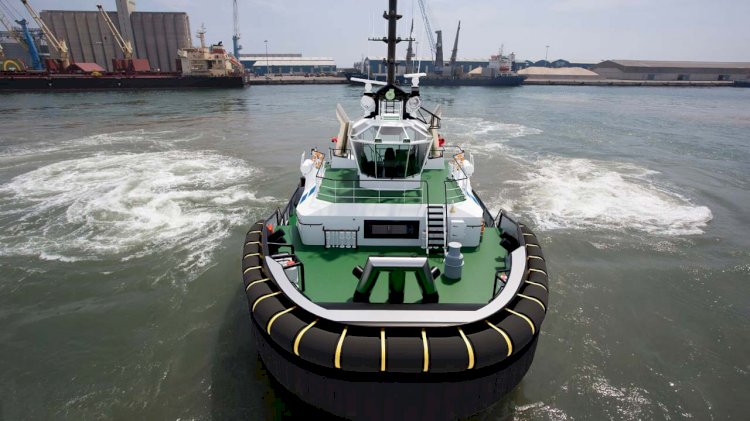
While a standard platform, like all vessels in Damen’s portfolio, the ASD Tug 2312 is customisable via modular options. Forth Ports has selected a number of options for its vessel, including remote monitoring. This, ultimately, can significantly lower the total cost of ownership of the vessel. Amongst other things it provides feedback on performance so that sailing can be optimally efficient. It also informs whenever a part or component needs replacing, so that preventative maintenance can be carried out in order to maximise vessel uptime.

Furthermore, Damen will outfit Forth Ports’ ASD Tug 2312 with CCTV, FiFi capabilities, additional fendering at the bow and a winterisation package, amongst other options.

Damen Sales Manager UK Mike Besijn said:

“We are delighted with this order from Forth Ports. The ASD Tug 2312 is a tug for the future that I am sure will serve them well in the years to come. Forth Ports has carefully evaluated their vessel requirements for both their current and future plans around fleet renewal and we are delighted that they have selected Damen for this replacement tug and we look forward to a long and growing relationship with Forth Ports.”

Alan McPherson, Chief Harbour Master at Forth Ports said:

“We are very pleased to be working with Damen on the delivery of the 2312 to Forth Estuary Towage as we replace older tonnage and significantly increase our towage fleet capability. The team at Damen have worked closely with us to deliver a very capable vessel for the operations we undertake and our staff are looking forward to this type of tug within our fleet. I look forward to building our relationship with Damen in the coming years.”

As Forth Ports required their new tug to be operational as soon as possible, Damen Marine Services (DMS) stepped into to assist. While the new ASD Tug 2312 is under construction, DMS is providing ASD Tug 2811 Pioneer to operate with Forth Ports.

Final voyage of icebreaker Aurora Australis departs

0

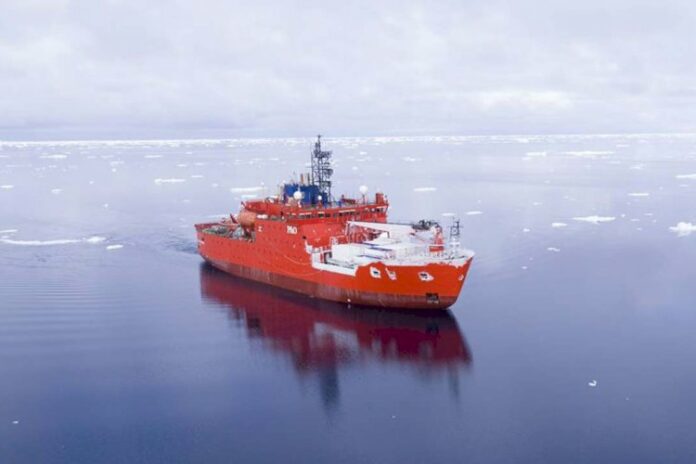
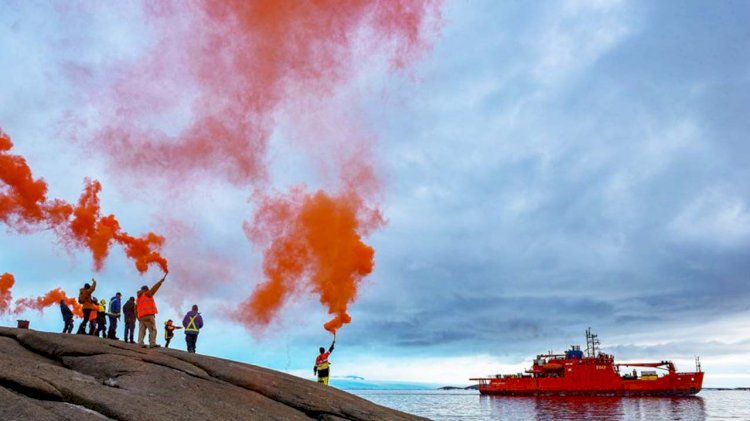
The final voyage of Australia’s Antarctic icebreaker RSV Aurora Australis has departed Hobart for sub-Antarctic Macquarie Island.

The ship’s last trip south, after 31 years of service to the Australian Antarctic Program, will be a two-week voyage to resupply Macquarie Island and transport expeditioners.

Australian Antarctic Division’s General Manager of Operations, Charlton Clark, said today marks the end of an era.

Mr Clark said:

“The Aurora Australis has been the backbone of the Australian Antarctic Program for more than three decades, so the vessel has a special place in our history. Over its lifetime the icebreaker has carried more than 14,000 expeditioners across the Southern Ocean on over 150 research and resupply voyages. Many who’ve sailed on the ship have a deep connection with the ‘Orange Roughy’ and fond memories of their Antarctic adventures.”

The delayed arrival of Australia’s new icebreaker RSV Nuyina means the Australian Antarctic Division has had to seek an alternative ship for next summer season.

The Division has entered into contract negotiations to use another vessel for a minimum of 90 days until the RSV Nuyina commences operations.

Australia’s new icebreaker is due to arrive in Hobart in November, with the first trip south scheduled for January 2021.

Mr Clark said:

“We’re really looking forward to the arrival of the Nuyina, it has unprecedented cargo carrying capacity and will be able to operate as a state-of-the-art science platform.”

VIDEO: Konecranes presents a digital solution for Daily Inspections

0

Konecranes CheckApp for Daily Inspections has been designed to help crane users quickly and easily record their findings when performing pre-shift and/or pre-lift inspections.

It gives a digitalized and cost-effective way for recording and retrieving daily inspection data that can be used for internal auditing and compliance. Daily inspections are statutory requirement in several countries.

The daily inspection is a user’s – or crane operator’s – own assessment of the condition of an asset and environment for safe use. It is not an expert’s examination of the condition of an asset or component. Konecranes CheckApp for Daily Inspections follows the guidance set in the ISO 9927 standard and in applicable statutory regulations.

MAQTA Gateway launches industrial zone services through single window platform

0

Maqta Gateway, developer and operator of the first Port Community System in the UAE and a wholly-owned subsidiary of Abu Dhabi Ports today announced the launch of Industrial Zone Services through its pioneering Single Window platform, in partnership with ZonesCorp, the UAE’s largest operator of purpose-built Economic zones.

A development that comes in continuation of Maqta Gateway’s achievements throughout the past five years, in providing services to leading companies including KIZAD, Abu Dhabi Terminals, CSP Abu Dhabi Port Container Terminal (COSCO), Autoterminal Khalifa Port and SAFEEN – Abu Dhabi Marine Services, in addition to partnering with The General Administration of Customs in Abu Dhabi to provide digital customs services across sea ports.

The new partnership aims to eliminate the need for customers to visit ZonesCorp Service Centers in Abu Dhabi and Al Ain to conduct processes and transactions, eliminating more than 150,000 physical trips annually.

Through the Single Window platform, customers will now be able to process multiple services and requests digitally, including: inquiries on contracts and investments, information on worker residential cities, work permits and residency services.

Commenting on this development, Dr. Noura Al Dhaheri, Head of Digitalization Cluster at Abu Dhabi Ports and CEO of Maqta Gateway said:

“We are pleased to collaborate with ZonesCorp to enhance customers experience by providing digital services that will play a major role in optimising processes and significantly reducing paperwork, administration and processing times. We are committed to providing innovative solutions to our customers and continue to explore ways to facilitate trade in Abu Dhabi and contribute towards its sustainable economic development plans.”

Launched in 2015, Maqta Gateway’s Single Window Platform offers complete digital solutions, simplifying shipping and freight forwarding procedures to digitally facilitate trade. The platform to date has facilitated 23 million transactions. Moreover, Maqta Gateway also ended 2019 by launching MARGO, enabling consumers importing personal goods from anywhere around the world through Khalifa Port or Abu Dhabi International Airport to have their goods cleared and delivered directly to their homes anywhere in the UAE, via online.

The new digital services support the Digital Month initiative, which was launched by Abu Dhabi Government, within the efforts exerted by the various government entities to enhance customer experience through innovative digital services and solutions.

Deepwater acreage will continue to attract company interest through 2020

0

A significant portion of the acreage available in Q1 2020 is located in either deep or ultra-deep water, up from the previous quarter, according to leading data and analytics company, GlobalData.

The company’s report: ‘Q1 2020 Global Bid Round Outlook – Increase in Deepwater Acreage Offered in Q1 2020’ reveals that in Q1 2020, approximately 60% of the acreage available in licensing rounds either open or scheduled to close in the quarter is located in deep or ultra-deep water.

Toya Latham, Upstream Oil & Gas Analyst at GlobalData, comments:

“With the increase in deepwater exploration drilling in 2019 and the largest discoveries of last year also mostly located in deepwater settings, it is likely that deepwater acreage offered by governments will continue to attract significant company interest through 2020.”

In Q1 2020, 16 licensing rounds are open with seven scheduled to close in the quarter. The US is offering the largest volume of acreage in Lease Sale 254, which will be held in March 2020. Senegal has also officially launched its 2020 licensing round offering 12 offshore blocks, which will close in July 2020.

Latham continues:

“Following the major exploration successes in the area over the past few years, Senegal’s 2020 licensing round could generate significant interest; the round will also be the first to test the country’s recently updated fiscal framework, which increases the fiscal burden for new investments.”

Looking ahead into 2020, Africa, Asia, and South America are expected to host a major portion of the potential upcoming licensing round activity including Angola, Nigeria, Thailand, and Brazil.

Ocean Installer awarded installation contract in China

0

Ocean Installer has been awarded a contract for Subsea Power Cable Installation for the CNOOC Liuhua 16-2 Oil Field Development in the South China Sea.

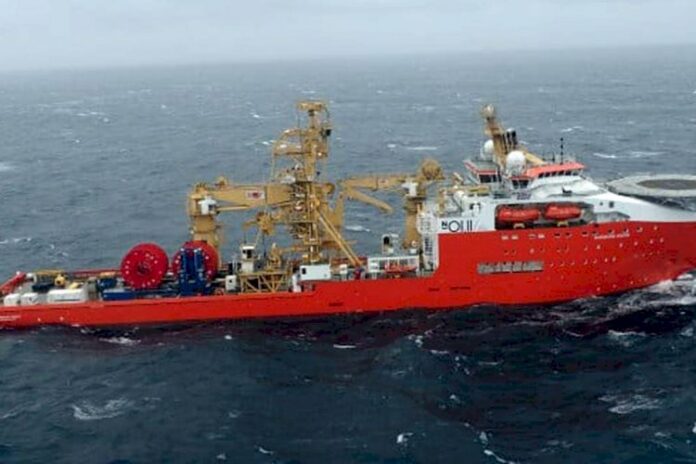
The work scope encompasses Project Management, Engineering, transportation and Installation as well as various other support functions to the client’s engineering team. This is the company’s second subsea job in China, and Ocean Installer will conduct the work as a subcontractor to COOEC Subsea Technology Co., Ltd., which is responsible for the deepwater SURF (Structures, Umbilicals, Risers, Flowlines) EPCI scope towards end-client CNOOC. Work has already begun, with installation season in the summer of 2020 utilising the “Connector”, a ultra deepwater multipurpose, flex-lay subsea construction vessel with DP3 which is owned by Ocean Yield AS.

Odd Strømsnes, CEO of Ocean Installer, says:

“This is Ocean Installer’s second job in China. Ocean Installer’s global subsea construction knowledge and expertise will be used to complement our client’s capability to ensure overall success for the project, and we believe this type of cooperation will be important going forward in what is a new geographic market adding to our strong backlog of projects to be executed over the next years.”

The project will be managed in close cooperation with COOEC Subsea Technology team in Shenzhen. Ocean Installer’s project management and engineering team will be based in Houston, and be supported by Ocean Installer’s main office in Stavanger, Norway.

The Liuhua 16-2 oil field, operated by CNOOC, is located approximately 240 km south of Hong Kong at water depth of approximately 400 meters.