1.1 C
New York
Home Blog Page 900

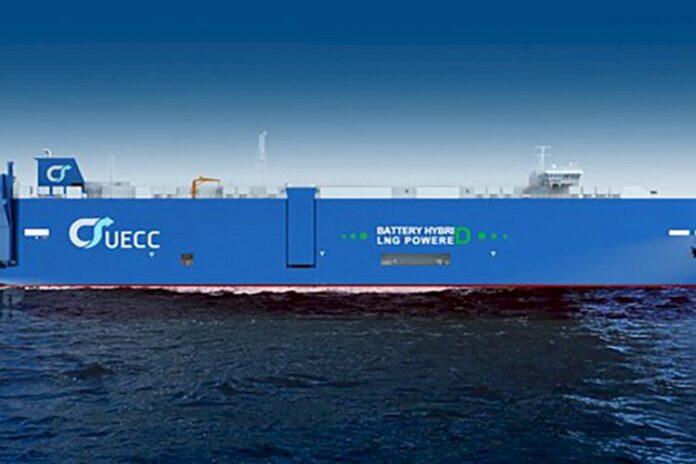
WE Tech to deliver its Solution Four for UECC’s LNG vessel

0

WE Tech Solutions, the leading energy efficiency solution provider, has received a repeat order from Jiangnan Shipyard Group Co. Ltd., China to deliver its Solution Four: Efficient Power Distribution for the third new generation PCTC vessel of United European Car Carriers (UECC).

In 2019, WE Tech has already contracted with Jiangnan Shipyard Group Co., Ltd, China for delivering the same solution to a series of two PCTC vessel of UECC.

The WE Tech Solution Four includes WE Drive, Direct Drive Permanent Magnet Shaft Generator, DC-link power distribution, Energy Storage System (ESS) and the Energy Management System (EMS). This tailored solution will place UECC’s new vessels beyond IMO’s target for a 40 percent reduction in carbon intensity by 2030. They will also meet the IMO Tier 3 NOx emissions limitations entering into force in the Baltic and North Sea from 2021 keel lays.

Mr Martin Andtfolk, Sales Manager of WE Tech Solutions, says:

“We take this repeat order as shipowner and shipyard’s acknowledgement of our reliable and highly environmental-sustainable solutions. the Efficient Power Distribution Solution together with ESS will make vessel electric power generation even more efficient and cost-effective.”

In PTO mode the vessel’s electrical power distribution will be supplied from a Permanent Magnet Shaft Generator. Together with the WE Drive the power from the Shaft Generator will keep stable frequency and voltage independent of Main Engine revolutions. Thus, allowing the Propulsion System to always operated in the most efficient way.

The ESS is a remarkable step forward to save even more fuel. It provides both Main Engine and Auxiliary Engines peak shaving, further increasing the energy efficiency of the vessel. The battery-based solution also improves flexibility and reliability via providing an energy reserve for blackout prevention so that the Auxiliary Gensets can be stopped without causing any blackout risk. As the operating hours of the Auxiliary Generators are reduced there will be significant savings in service and maintenance costs. During manoeuvring or while in port, the solution reduces emissions when the vessel can also utilise the power stored in the ESS.

Mr Martin Andtfolk says:

“WE Tech is proud to be a pioneer to supply the most energy efficient solutions. With our proven technology, we take our customers to success in terms of energy efficiency, fuel consumption and green values.”
New Van Oord’s dredger started its first project

0

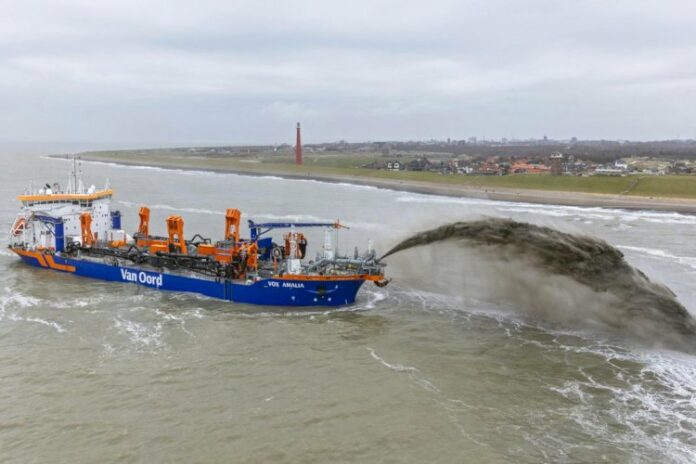
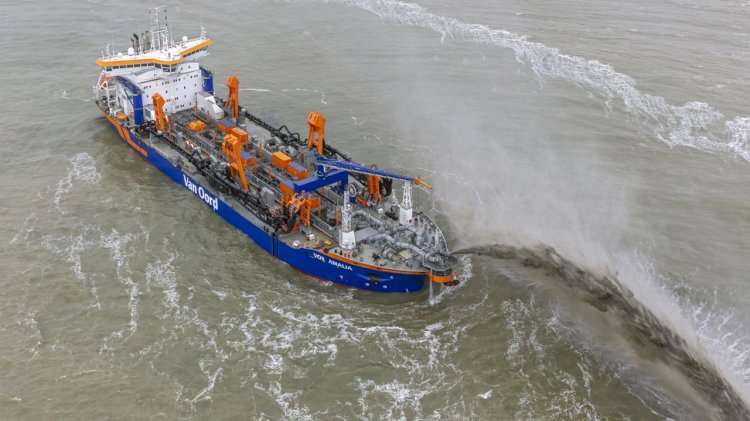
Van Oord’s trailing suction hopper dredger Vox Amalia successfully started its first project this week.

At Den Helder, the Netherlands, the brand-new vessel is reinforcing the coastline by placing more than 3.5 million cubic metres of sand in a deep trench just off the coast. The contract was awarded by Rijkswaterstaat, the operational arm of the Dutch Ministry of Infrastructure & Water Management.

The trailing suction hopper dredger has a length of 158 metres, a width of 36 metres and a load capacity of 18,000 cubic metres. The vessel was built in Spain on the instructions of Van Oord and is used for land reclamation, constructing or expanding port infrastructure and coastal reinforcement. In the next few weeks, the Vox Amalia can be admired from the North Holland beach and the dunes near Den Helder.

In December 2018, the vessel was christened by Her Majesty Queen Máxima in Rotterdam in the presence of 1,400 employees and guests during the celebration of Van Oord’s 150th anniversary. Between April and October 2019, all systems and installations were gradually placed in working order. Recently the final trial took place. The vessel is part of Van Oord’s new generation of trailing suction hopper dredgers with a focus on energy efficiency for the smallest possible carbon footprint.

OpenBridge releases a new set of open source design guidelines

0

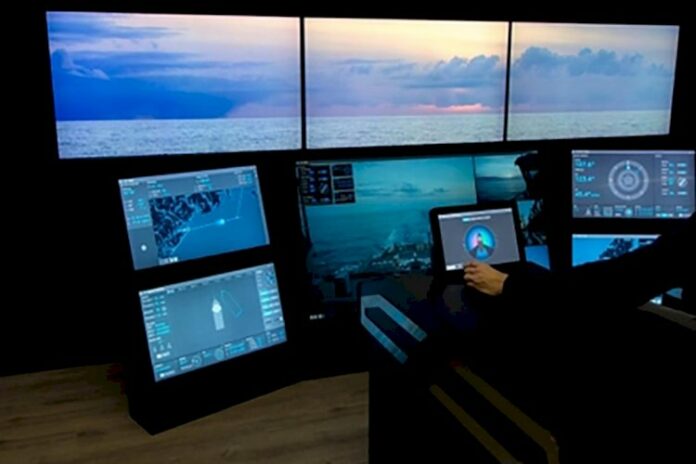
OpenBridge is a joint industry effort to solve some of the challenges in the maritime industry by developing OpenBridge Design System.

The parts of the design system that are currently released, is free for all to use. The companies that partner in the consortium are getting early access to resources and have direct influence on the development the design system.

The OpenBridge Consortium currently has 27 public and industrial partners (including Furuno, ProNav, BRUNVOLL, Kongsberg, SKIPPER, NAVTOR, Wilhelmsen, SINTEF, Lloyd’s Register and others) representing most stakeholders involved in design, development and use of maritime workplaces. 

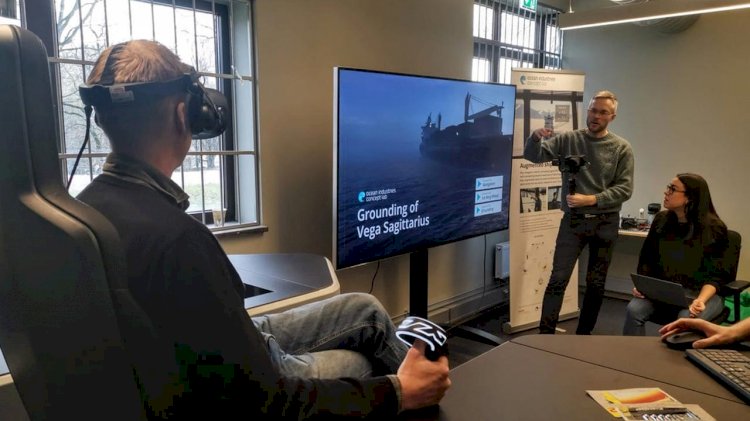
The OpenBridge consortium covers most aspects of maritime workplace design, including emerging technologies. The project welcomes research collaborations focusing on workplace design, guidelines or other work that can contribute to the OpenBridge Design System. The project is an excellent opportunity to engage with a broad consortium of industry actors focusing on improving maritime design.The project is already connected to the SEDNA EU project that develops design guidelines for Augmented reality user interfaces.

The OpenBridge consortium is currently developing a series of components that together will improve design, development and use of maritime workplaces.

The components of the OpenBridge Design System:

  • The OpenBridge Design Guideline is the first open source design guideline specifically developed for supporting the maritime community. It is currently in beta release. The guideline is free, but you need to register to use it.
  • The OpenBridge user- testing framework consists of tools, processes and methods for iterative quality assurance of the design guidelines, components and implementations. The framework establishes new standards for the quality of human interfaces in maritime workplaces on ships and on land.
  • An implementation platform, independent of integrator system and ­applications, simplifies system integration across stakeholders and approval of components and systems.

StormGeo and DNV GL sign MoU to accelerate maritime data sharing

0

StormGeo and DNV GL have announced that they have signed a Memorandum of Understanding (MoU) to drive digitalization and data standardization in the maritime industry.

In the MoU, both parties aim to strengthen the presence and integration of StormGeo’s fleet performance management and weather intelligence solutions on DNV GL’s independent data platform, Veracity. This will give StormGeo’s customers an enhanced service offering, helping them to further optimize the operations of their fleet. Veracity users will benefit from easy integration of StormGeo’s weather intelligence services that can be accessed on the Veracity Marketplace.

Thilo Dückert, StormGeo VP, Fleet Performance Management, says:

“We are very happy to deepen the partnership with DNV GL to make data sharing for our clients even easier. Today StormGeo offers an integrated solution to span navigation and voyage planning, weather routing and fleet performance management. We believe this partnership signals the industry that we intend to further enhance our service portfolio to help clients improve safety and fuel efficiency of their vessels.”

Mikkel Skou, Director of Veracity at DNV GL, says:

“With Veracity, we have built an independent network of industry relevant companies, where the members of the network can buy, combine, share and collaborate on data to optimize their operation – all while knowing their data is safe and secure throughout the process. StormGeo is an important supplier to many of Veracity’s customers and we have received interest from our clients for stronger integration with StormGeo in our platform products. We now look forward to closely examine how we can do this in a manner where both companies’ customers can gain from our united strengths.”

The MoU builds on an agreement from March 2019 when DNV GL and StormGeo announced that they would consolidate their fleet performance solutions under the StormGeo banner. The agreement combined DNV GL’s ECO Insight and Navigator Insight solutions with StormGeo’s FleetDSS and ship reporting solutions. StormGeo is now servicing a fleet of more than 12,000 vessels that receive route advisory, weather intelligence, navigation and planning, or fleet performance.

ABS launches eLearning training platform to foster safety leadership

0

ABS Group of Companies, Inc. (ABS Group) has launched an eLearning training platform to provide state-of-the-art educational tools and offer a robust catalog of professional training courses to technical personnel worldwide.

The new training solution will feature on-demand courses to augment classroom training in the practice areas of Cyber Security, Risk Management, Asset Reliability, Compliance Management and Process Safety, and to support excellence in organizational performance.

Michael Harrington, Director of ABS Group Training, says:

“For decades ABS Group has provided world-class training services, administering the highest standards of education and consulting to thousands of professionals in the U.S. and internationally. These same award-winning subject matter experts who have been recognized for their contributions to multidisciplinary engineering fields are now sharing technical and regulatory expertise for training at your pace, anytime, anywhere.”

Several eLearning courses are specialized to industry’s most pressing operational challenges. The first phase of e-courses focuses on Cyber Security as an operational imperative and include Business Cyber Security courses and a Maritime Cyber Security course. Additional e-courses will focus on Reliability Management and Reliability Centered Maintenance. The e-courses to follow will be tailored to safety, risk and compliance management topics ranging from Root Cause Analysis (RCA), ISO Concepts, Safety Management, Quality, Environment, Risk Management Standards, Process Hazard Analysis (PHA), Process Safety Management (PSM), Enterprise Risk Management (ERM), Management of Change (MOC) and International and Offshore Oil and Gas Regulations and Standards.

All e-course materials are introductory, with the option of customization for advanced or industry specific training. Accompanying training solutions are available such as public and private instructor led classroom training. The eLearning training platform will also host a range of learning products, including books, reference materials and Root Cause Maps™.

NIBULON builds its new transshipment terminal in Ukraine

0

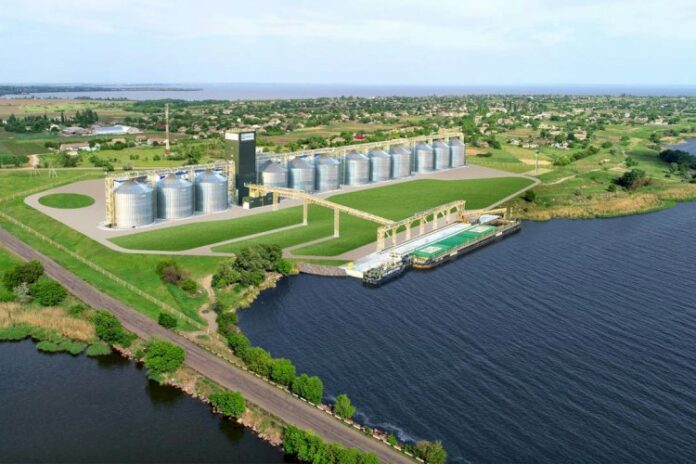
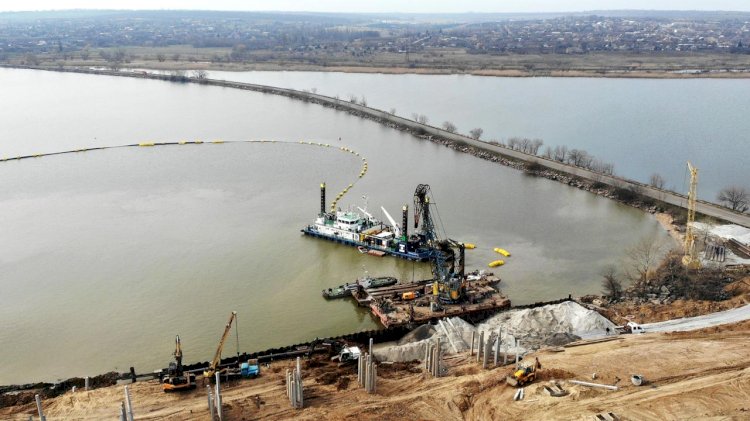
NIBULON is building the first transshipment terminal for grain, leguminous, and oilseeds shipments by water transport in Dnipropetrovsk region.

NIBULON’s General Director, Oleksiy Vadaturskyi, stated:

“We always hear that it is possible to revive Ukrainian rivers as shipping arteries only by adopting a certain law in this sector. In reality, the country has neither desire nor people to arrange it. NIBULON has been successfully doing it since 2009. As a result of NIBULON’s activities, the rivers are operating, and tens of thousands of trucks were removed from the Ukrainian highways. We made our effort so that trucks do not enter Cherkasy, Kremenchuk, Zaporizhzhia, and other cities. We did everything to prevent trucks entering Mykolaiv, having transported grain by the Southern Buh.”

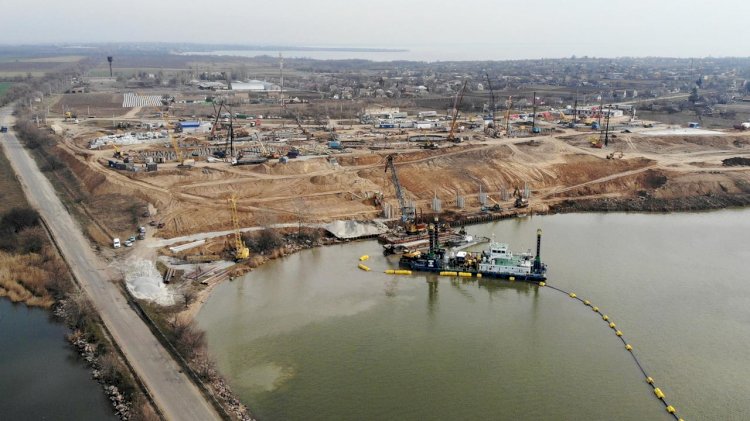
Now Dnipropetrovsk region has joined Ukrainian regions where NIBULON is implementing its patriotic investment project to revive Ukrainian rivers as transport arteries. Thus, the company is efficiently constructing its new high-capacity Zelenodolska branch river transshipment terminal (Marianka village, Apostolove district). 

Oleksiy Vadaturskyy told:

“12 challenging years have passed since we started constructing the facility. Although the local authorities were waiting for the investor, we managed to start constructing the terminal only this year because of certain circumstances. When the terminal commences its operation, the citizens from Kherson region and Zaporizhzhia district (Zaporizhzhia region) can breathe freely, as the agrarians will not need to transport their agricultural commodities over hundreds of kilometers by Kherson and Zaporizhzhia highways (to Kryvyi Rih).

The road industry workers can also repair highways which will be released from trucks. The trucks will move to Marianka village. This is our way to change logistics in Ukraine not due to the state’s support but due to the company’s own principal position and accurate strategy, implementing its large-scale investment project. We are constructing transshipment terminals and building fleet, redirecting more cargoes to water transport.”

Implementing its investment program, NIBULON has constructed 17 modern high-tech and automated facilities and has become a leader in creating its own network of transshipment terminals and complexes for receipt, storage and shipment of grain and oilseeds in Ukraine. A long-term experience enabled the company to unite Ukraine’s best contractors; thus, the construction of the 18th facility is carried out qualitatively and according to schedule. NIBULON regularly holds production meetings at the site with the participation of the company’s specialists and managers of contract organizations in order to solve all urgent issues.  

The specialists are currently conducting excavation and general works. In particular, the workers are driving piles and forming pile fields. The contractors have already driven 3,053 piles out of 3,311 provided by the project. 

NIBULON’s General Director states:

“This construction site means life, working places, and Ukraine’s development. These very things inspire me to invest in our country. Zelenodolska branch will be one of the best NIBULON’s facilities and a sightseeing of Marianka village, attracting villagers to take pictures. We are waiting for you on the opening of NIBULON’s new facility which will be held by June 15, 2020.”

NIBULON constructs the river transshipment terminal in Marianka village with the support of the first-class international financial institutions, such as the European Bank for Reconstruction and Development and the European Investment Bank. The total investment will comprise USD 22 million. The facility’s characteristics are as follows: grain storage capacity – 75.2 thousand tons, daily drying capacity – 3.6 thousand tons, daily capacity for shipment on water transport – 12 thousand tons. The total shipment capacity is 300 thousand tons per year. 

Zelenodolska branch transshipment terminal will become the most modern technological facility in the region and create about 120 working places. Due to the facility operation, the local agrarians can reduce costs for product transportation. The community will both receive stable financial receipts from taxes paid and will have the socially responsible investor who is always ready to support the community in different issues.

CIMC signs deal with Globe Tracker for reefer IoT technology solution

0

CIMC Intelligent Technology CO., LTD. (CIMC IT) has signed a multi-year agreement for a partnership with Globe Tracker ApS to offer state-of-the-art reefer tracking and monitoring IoT technology solution to global customers of CIMC.

Under the partnership, CIMC and Globe Tracker will provide comprehensive services for global CIMC customers, including:

  • Cutting edge IoT devices and sensors
  • Software-as-a-Service (SaaS) Platform management that hosts multiple asset types
  • Data docking (Real-time GPS, remote control and all necessary reefer data)
  • Customization, data analytics, API integrations and other IT services
  • Market leading knowledge and experience in executing large scale global IoT deployments
  • Local service and support to meet the demanding pace of the global logistics market

Hillman Duan, Vice President of International Marketing Department at CIMC IT, notes:

“As our industry undergoes the digital transformation from traditional reefer management to digital IoT management, our partnership with Globe Tracker will provide and promote the industry’s best reefer container tracking and monitoring solutions to global customers including ocean liners, 3PLs, beneficial cargo owners (BCOs), and rail operators.”

Don Miller, Vice President of Global Sales and Marketing at Globe Tracker, said:

“CIMC IT and Globe Tracker have a long and successful history of working together to develop innovative solutions. We see this partnership as the next logical step in our relationship to offer best-in-breed IoT products and services to the marketplace.”

Damen completes combat systems installation on Indonesian frigate

0

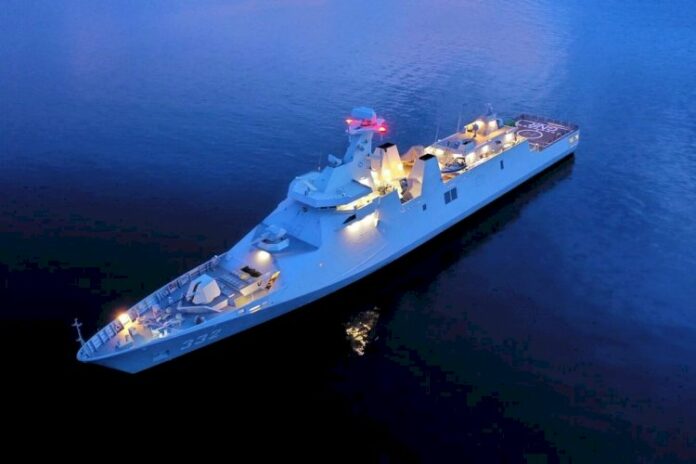
Damen Shipyards Group and its partner PT PAL recently completed installation and testing of combat systems to the second of the Indonesian Ministry of Defence’s SIGMA 10514 Perusak Kawal Rudal (PKR) guided missile frigates, the KRI Gusti Ngurah Rai (332).

The PKR frigates are constructed via a modular process operating simultaneously at Damen Schelde Naval Shipbuilding (DSNS) in the Netherlands and the PT PAL shipyard in Indonesia. In this manner, Damen is able to build high quality vessels anywhere in the world. This method also enables Damen to fulfil its commitment to the Indonesian Ministry of Defence to deliver an extensive knowledge and transfer of technology (ToT) programme.

A significant part of this transfer programme is the installation of combat systems along with provision of training to the crew in their usage and maintenance.

Hein van Ameijden, managing director of DSNS, said:

“From the outset of this project DSNS and our partner Thales Netherlands have been fully committed to the development of the Indonesian defence industry and its supporting sectors. This commitment is demonstrated with a series of ToT and local content programmes starting in 2013 when project execution commenced.

For example, DSNS has trained and educated more than 328 yard personnel, including welders, planners and engineers, during the project. Thales Netherlands has contributed by subcontracting local industry for software development, providing support, ultimately, for Indonesia to develop an indigenous combat management system.”

The combat systems installed and tested include the following:

  • VL MICA for defence from airborne threats
  • Exocet for defence from offensive targets at greater distance
  • Torpedo system for protection against submarine threat
  • 35mm rapid-fire cannon to respond to threats from both air and sea
  • Electronic detection system to divert enemy attacks with electromagnetic redirection
  • Modification of the computer operated operational system in order to operate the above
  • The final phase prior to handover was successfully completed on February 21st with sea-going trials – the sea acceptance test (SAT). The purpose of this was to demonstrate that installations throughout the entire chain of weapons systems meet desired efficiency and accuracy.

Mr Van Ameijden concluded:

“All our prior efforts paid off. Already at the start of the tests it was clear that installation had been carried out with great precision during construction and that preparatory alignment activities and agreements had been carefully followed. The second PKR vessel achieved similar results to the first one. This demonstrates that the complete concept implemented in the SIGMA PKR Class can be considered reliable and robust.”

Oil and gas discoveries at Evra and Iving exploration well

0

Lundin Petroleum AB (Lundin Petroleum) has announced that its wholly owned subsidiary Lundin Norway AS (Lundin Norway) as partner in PL820S, has made oil and gas discoveries at the Evra and Iving exploration well (25/8-19 S and two sidetracks), in the Norwegian North Sea, close to the Balder and Ringhorne field.  
 
At Iving, a gross gas column of 34 metres above an oil column of at least 45 metres was encountered in moderate quality Skagerrak reservoirs with no oil-water contact encountered in the well. The well included two sidetracks to allow for extensive data acquisition, including coring, logging and oil sampling. The well was production tested in the Skagerrak formation, and flowed at a maximum rate of around 3,000 bopd constrained by surface equipment.

Permanent pressure gauges have been installed in the well, and will assist in determining areal reservoir connectivity from further appraisal. Iving gross resources are estimated to be between 12 to 71 MMboe, (approximately 85 percent of which is light oil of 40 degrees API), part of which will be booked as contingent resources at end 2020.  
 
At Evra, the well encountered additional gas and oil in Eocene/Paleocene age injectite reservoir sands of up to 8 metres in thickness, with further appraisal required to determine the resource potential. Oil was also found in the Statfjord sandstone formation and in weathered and fractured basement, which will require further investigation. 
 
The discoveries will now be evaluated for further appraisal drilling with the aim to develop the discovery as a tieback to existing nearby infrastructure. Follow-up prospectivity exists in the license and will be evaluated in light of this discovery. 
 
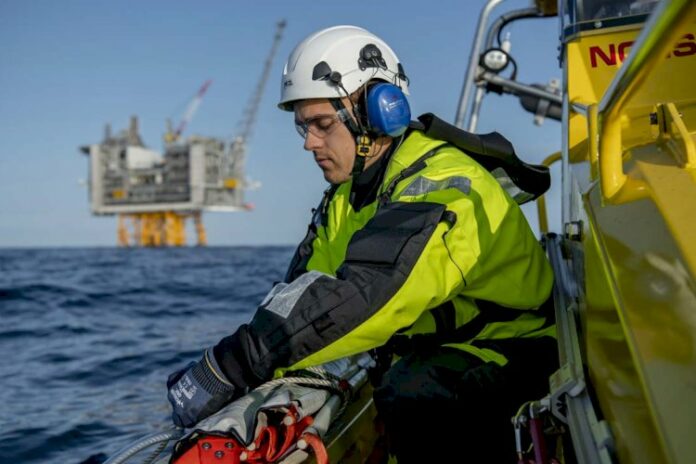
The Evra/Iving well was drilled 8 km northwest of the Balder and Ringhorne Fields by the Deepsea Bergen semisubmersible drilling rig. MOL Norway is the operator of PL820 S with a 40 percent working interest. The partners are Lundin Norway with 40 percent, Pandion Energy with 10 percent and Wintershall DEA with 10 percent. 

Wärtsilä’s VTS will be installed in the port of Callao in Peru

0

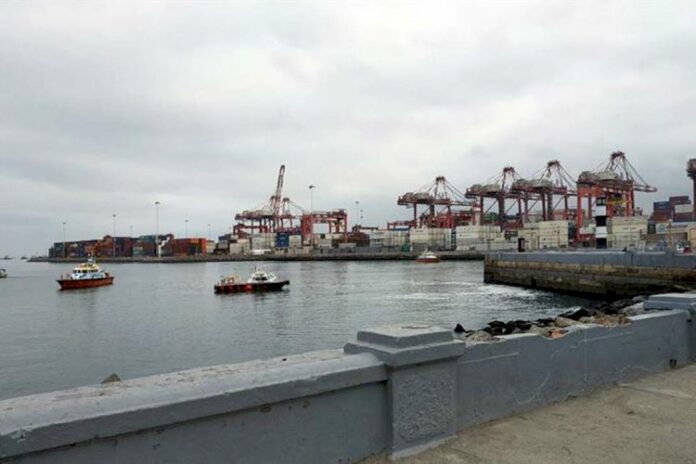
The technology group Wärtsilä’s Vessel Traffic Service (VTS) solution will be installed in the port of Callao in Peru, the country’s main harbour and one of Latin America’s most important ports.

Dense fog and haze are a consistent challenge for Callao’s port operations, often making shipping conditions dangerous. The Wärtsilä VTS solution will provide the technology needed to ensure uninterrupted port operations, while increasing safety levels and facilitating arrival, docking and departures for visiting ships. The order with Wärtsilä was placed by Dirección de Contrataciones del Material (DIRCOMAT) of the Peruvian Maritime Authority, in December 2019.

The spectrum of technologies deployed by Wärtsilä includes solid-state IALA Advanced radar, long-range thermal imaging, ultra-precise global positioning for pilotage operations, HF and VHF communication, data analysis, recording, and dispatching.

Eduardo Rosiello, Senior Sales manager of the Callao VTS project, Wärtsilä Marine, says:

“Our system will significantly improve the port’s efficiency by integrating high-end Wärtsilä products and technologies, and is a clear example of our ‘Smart Marine’ approach to raising efficiency and safety levels. The VTS will be fully integrated with a Wärtsilä-provided port management information system, and will have smart CCTV tracking.”

Calm. José Antonio San Martín, Dirección de Contrataciones del Material (DIRCOMAT), says:

“Fog and maritime awareness are something we have to deal with a lot and safety is a constant concern, which is why we turned to Wärtsilä. We have worked with them often in the past and their experience in traffic management systems is second-to-none. The Wärtsilä VTS will greatly improve operations in the port of Callao.”

In addition to the comprehensive range of elements making up the VTS solution, an oil spill detection system is also included in the overall scope. Delivery is planned for January 2021.

Wärtsilä’s VTS (Vessel Traffic Service) Solutions, with the support of automated self-learning decision support technologies, make it possible to operate a ship traffic control model similar to that available to the aviation industry. Ship movements can be advised and controlled, even beyond territorial waters, using radar, VHF, HF, weather, electro-optical equipment and sensors. Wärtsilä VTS extends the safety and efficiency of navigation far beyond the limits of traditional coastal systems. Technological elements are connected through a single central operating system, enabling the data to be available across the whole operational ecosystem.

The Wärtsilä VTS software has extensive functionalities, and the solution is modular, scalable, and accessible for future upgrade developments. Wärtsilä is a market leader in this field with more than 300 Vessel Traffic Management Systems installed in 70 countries around the world.