5.7 C
New York
Home Blog Page 9

ESVAGT purchases two SOVs on long-term windfarm contracts

0

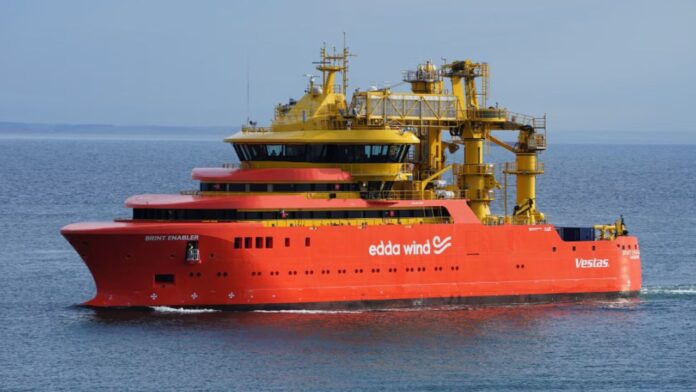
ESVAGT has completed the acquisition of the Service Operation Vessels (SOVs) ‘Breeze Enabler’ and ‘Brint Enabler’ from Edda Wind through a 100% share purchase agreement of the two Spanish vessel owning entities.

The SOVs are on long-term contracts with customers Ocean Breeze (Germany) and Vestas (UK). Following productive discussions with the customers, the contracts for both ‘Breeze Enabler’ and ‘Brint Enabler’ have been novated to ESVAGT for continued operations and the crew onboard has been offered employment with ESVAGT.

“We are delighted to have reached this agreement with Edda Wind for two high quality assets after a constructive acquisition process. We further appreciate the trust Ocean Breeze and Vestas have placed in ESVAGT, and are looking forward to continuing safe and efficient operations,” says ESVAGT CEO Søren Karas:

“This acquisition marks a major strategic step for ESVAGT, strengthening our leadership in long-term SOV operations and accelerating our growth ambitions.”

ESVAGT’s SOV fleet now consists of 12 vessels. In addition, three new SOVs are under construction for projects in the UK, the Netherlands, and the USA, with delivery planned for 2026.

“Combined with ESVAGT’s recent commissioning of the world’s first methanol-powered SOV for Ørsted, this development underscores ESVAGT’s commitment to driving a meaningful green transition in energy production,” CEO Kristian Ole Jakobsen says.
Russia deploys entire nuclear icebreaker fleet for first time—and it’s still not enough

0

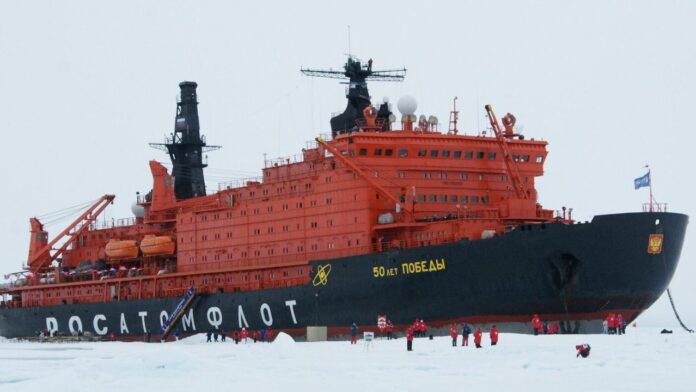
For the first time in history, Russia has deployed all eight of its nuclear-powered icebreakers simultaneously to keep Arctic shipping lanes open.

The Arctic has emerged as a vital economic lifeline for Russia amid Western sanctions that have narrowed access to traditional export routes, financing and shipping services. Keeping northern shipping lanes open through winter allows Moscow to move oil, liquefied natural gas (LNG) and metals to Asian markets, helping sustain hard-currency revenues critical to its war economy. The unprecedented deployment of Russia’s entire nuclear icebreaker fleet signals how essential these Arctic flows have become.

Russia operates the world’s only nuclear-powered icebreaker fleet, managed by the state nuclear corporation Rosatom. The fleet consists of four modern Project 22220 icebreakers—Arktika, Sibir, Ural and Yakutiya—alongside two older Arktika-class vessels, Yamal and 50 Let Pobedy, and two shallow-draught Taymyr-class ships, Taymyr and Vaygach, designed to operate in Arctic river estuaries.

According to gCaptain and Breakbulk News, six of the icebreakers are currently operating in the Gulf of Ob, while the remaining vessels are assigned to the Yenisei Gulf and Yenisei River. Their mission is to keep export routes open for traffic serving major Arctic energy and mining hubs, including Yamal LNG, the Arctic Gate oil terminal and Norilsk Nickel.

Nuclear propulsion allows these ships to sustain very high power output for extended periods, enabling them to break thick multi-year ice and operate continuously through the polar winter. This capability is essential for maintaining navigation along the Northern Sea Route during months when conventional icebreakers and ice-class merchant ships struggle.

Despite the scale of the deployment, Russia still faces bottlenecks. Breakbulk News reports that shortages of high ice-class tankers and LNG carriers have already disrupted shipments, highlighting that even the world’s most powerful icebreaker fleet cannot fully compensate for a lack of suitable commercial vessels.

Sanctions have also accelerated the use of a so-called “dark fleet” of ageing tankers operating outside standard insurance and regulatory systems. Analysts warn that attempts to push some of these vessels into Arctic waters raise the risk of accidents and environmental damage in one of the world’s most fragile ecosystems.

Western analysts note that while Russia’s nuclear icebreaker capability is unmatched, operating all eight vessels simultaneously is expensive and difficult to sustain over long periods. By comparison, the U.S. Coast Guard operates just two ageing heavy icebreakers and is only beginning construction of new Arctic Security Cutters, while countries such as Finland, Sweden and Canada rely on advanced but conventionally powered fleets.

Russia’s all-out icebreaker deployment underscores the growing strain on Arctic logistics—and how dependent Moscow has become on northern exports to sustain state revenues under sanctions. Analysts expect that maintaining such an intensive operational tempo will drive up costs, accelerate wear on ageing vessels and eventually force gaps in coverage.

Source: newsbreak

Fugro supports Mubadala Energy’s deepwater gas development offshore North Sumatra

0

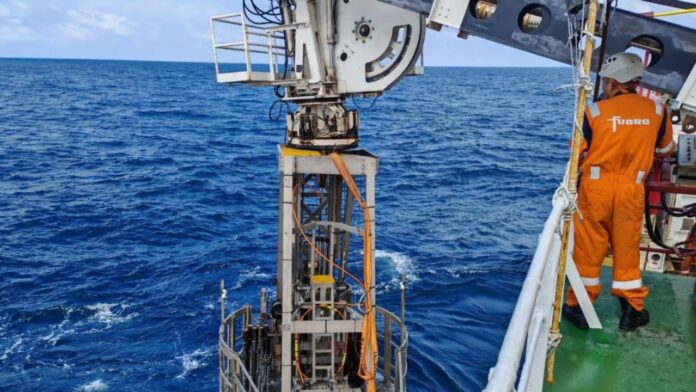
Fugro has been awarded a large contract with Mubadala Energy (South Andaman) RSC Limited to deliver advanced soil investigation services for the South Andaman Deepwater Development, located offshore Indonesia.

This strategic project will inform the Front-End Engineering Design Engineering Procurement and Construction (EPC) award, and guide the detailed design for the development of the Tangkulo Field.

The Tangkulo Field comprises offshore sub-sea wells connected via flowlines to a Floating Production Storage and Offloading (FPSO) vessel, enabling gas processing and export. The treated gas will be transported through a dedicated export pipeline to an Onshore Receiving Facility ) in Aceh, Indonesia. Geo-data will be acquired using Fugro’s deepwater autonomous underwater vehicle (AUV) and the robotic seafloor drill, Seafloor Drill 2, deployed from Indonesian support vessels.

“We are proud to support Mubadala Energy on this deepwater development,” said Shalu Shajahan Regional Business Line Director, MSC Asia Pacific. “This project showcases our global expertise in deepwater geology and geohazard assessments, critical for confident decision-making during development.It reflects our commitment to enabling complex offshore developments through high-quality Geo-data insightsand technical excellence.”

NYK welcomes first Japan-made CTV: Alfonsino Arrow

0

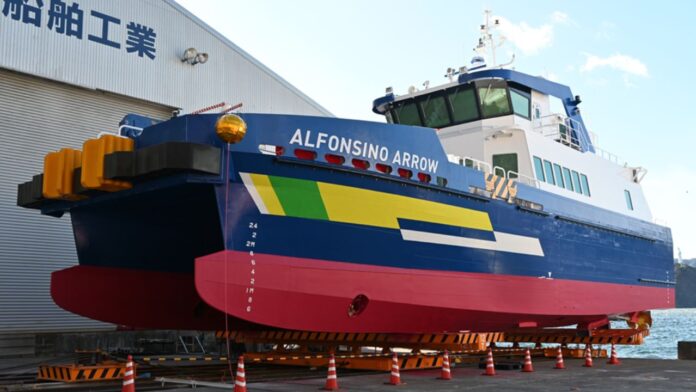
On December 12, a naming and launching ceremony for the crew transfer vessel (CTV) ordered by NYK was held at Kosaba Shipbuilding Co., Ltd. in Kamaishi City, Iwate Prefecture.

The ceremony was attended by many stakeholders, including Masato Yamada, CEO of JERA Nex bp Japan LLC; Takuya Tasso, governor of Iwate Prefecture; and Kyo Ono, mayor of Kamaishi City. NYK President Takaya Soga officially named the vessel “Alfonsino Arrow.”

This vessel is the first CTV ordered by NYK from a Japanese shipyard and is scheduled to transport personnel involved in the construction and maintenance of offshore wind power facilities within Japan.

NYK President Takuya Soga commented as follows:

“We modified drawings independently designed by Northern Offshore Services, an NYK Group company in Europe, to meet domestic specifications and sourced aluminum steel and key equipment from domestic manufacturers. This has allowed us to truly realize a “CTV made in Japan.” We extend our heartfelt gratitude to everyone who cooperated with us. We will continue striving alongside our stakeholders to solidify our role as a company essential to society. We are delighted to launch this vessel from Kamaishi City, Iwate Prefecture, marking a significant step forward.”

Vessel Overview

  • Length: Approx. 28 meters
  • Beam: Approx. 9 meters
  • Gross Tonnage: Approx. 145 tons
  • Shipyard: Kosaba Shipbuilding Co., Ltd. (Kamaishi City, Iwate Prefecture)

Wärtsilä’s fuel-flexible engines selected to reduce emissions on two new vessels

0

Technology group Wärtsilä will supply the main engines for two new pusher tugs being built for Brazilian operator AMAGGI. The ships are under construction at the Beconal shipyard, located in Manaus, Brazil, and are designed with a focus on decarbonised operations.

The engines will run on biodiesel, a capability that was a key factor in securing this contract. The order with Wärtsilä was booked in Q4 2025.

“The fuel flexibility of the Wärtsilä engines will enable these two new pusher vessels to operate using environmentally sustainable biofuels,” says Claudinei Zenatti, Logistics and Operations Director, AMAGGI. “By using biodiesel, these engines are expected to lower total greenhouse gas emissions, supporting both our company’s environmental commitments and the broader goal of delivering more sustainable river transport.”

The ships will each operate with two Wärtsilä 20 engines, equipped with a Wärtsilä Data Collection Unit (WDCU). The engines are able to run on either diesel or biodiesel fuel with a total power output of 2,100kW. This will allow each ship to push as many as 20 barges, carrying a total of 32,000 tons of grain on the Amazon inland waterway system. The Wärtsilä equipment is scheduled for delivery to the yard commencing in August 2026.

“AMAGGI is the first pusher tug operator to run entirely on biodiesel – a step aligned with our shared commitment to decarbonised shipping. The Wärtsilä Data Collection Unit (WDCU) will enable accurate monitoring of the engines, which promotes performance reliability and the benefit of extended overhaul intervals,” explains Genil Mazza, Newbuilding Sales Manager, LatAm – Wärtsilä Marine.

AMAGGI operates a river fleet comprising 212 barges and pusher vessels. Wärtsilä and AMAGGI share a longstanding partnership, having collaborated for more than 30 years to advance sustainable and efficient river transport solutions in Brazil.

Icebreaker Noosfera crossed the Arctic Circle for the first time

0

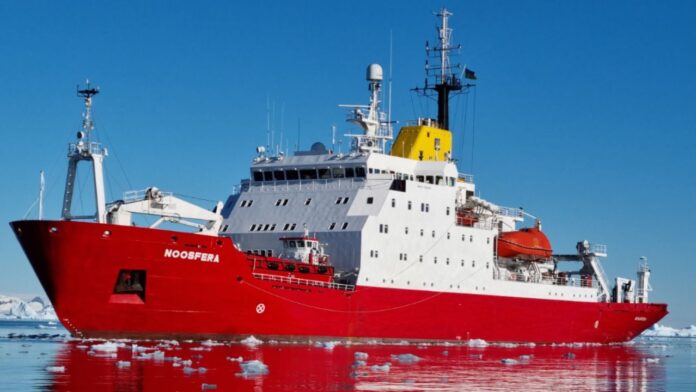
Since December 11, the Ukrainian icebreaker “Noosfera” has been operating for the first time beyond the Antarctic Circle.

There, the vessel provides international oceanographic and geological research, the National Antarctic Research Center reports.

Scientists said that the Ukrainian Antarctic Station “Akademik Vernadskyi” is located in front of the Arctic Circle.

It was from there that the route of the “Noosfera” to the South began – through the Arctic Circle, Margaret Bay on the western side of the Antarctic Peninsula to the British Antarctic Station “Rotera” on Adelaide Island.

The captain of the icebreaker Andriy Starish shared that on the way they had to maneuver between icebergs for more than two hours.

“This is an extremely “jewelry” job that requires considerable experience and a good understanding of the vessel’s navigation capabilities,” said Andriy Starish.

Along the way, oceanographers were looking for marine heat waves, which periodically arise as a result of global warming even in the cold waters of Antarctica. To more accurately locate climate anomalies, a seabed cartography was made using acoustic equipment.

Then, using a special CTD (conductivity, temperature, depth) probe, scientists measured temperature, salinity, oxygen, acidity levels at 12 points in the Southern Ocean, and also analyzed chemical and biological indicators.

In addition to working in the ocean, the scientists visited “Rotera” – the largest Antarctic station in Great Britain. The possibilities of joint research, which are planned to begin this season, were discussed.

Now the return journey of “Noosfera” to “Vernadskyi” begins, where research will also continue.

In early December, the icebreaker “Noosfera” arrived at the station “Akademik Vernadskyi”. The ship delivered the team of the Ukrainian seasonal expedition to the station, as well as participants in the first Mexican Antarctic expedition.

Reference

The Arctic Circle is an imaginary line at latitude 66°33′ (North in the north, South in the south) that marks the boundary of the zones where polar day (the Sun does not set) and polar night (the Sun does not rise) are observed for at least one day per year.

Anemoi Rotor Sails to help Union Maritime chemical tankers beat IMO 2030 targets

0

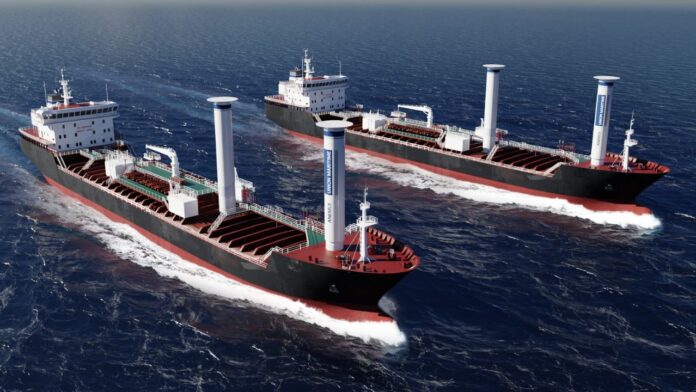
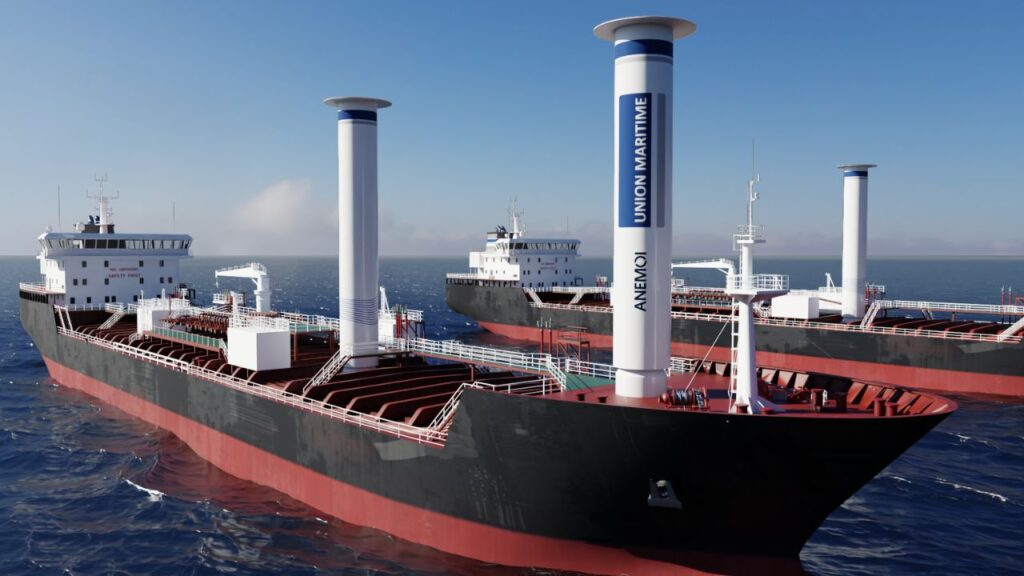
The 18,500 DWT vessels, to be built by Wuhu Shipyard Co in China, will feature a combination of technologies and retrofit readiness to safeguard cost-effective decarbonisation across their lifecycle. The Rotor Sails are set to be installed at Wuhu in early 2026 after construction at Anemoi’s state-of-the-art production facility in China.

The newbuilds will support Union Maritime’s strategy of surpassing the 20% reduction in greenhouse gas emissions (based on 2008 levels) required by the IMO’s 2030 indicative checkpoint. The use of wind-assisted propulsion will help to ensure that the owner fulfils the IMO requirement that at least 5% of the energy used by 2030 is from zero- or near-zero-emission sources.

The vessels will each be fitted with two 3.5m-diameter Rotor Sails, with heights of 20.5m and 24m, respectively. The Rotor Sails will be EX-rated, fulfilling the safety requirements for use on vessels carrying potentially explosive substances. Vessel and rotor sail integration design was conducted by China-based ship design and engineering consultancy Odely Marine.

Union Maritime is a long-standing advocate of wind-assisted propulsion and has explored multiple wind technologies across its fleet. Their decision to partner with Anemoi for this project reflects their continued commitment to innovation and their confidence in solutions that deliver strong operational performance and long-term value. Union Maritime selected Anemoi’s Rotor Sail technology for this project following a detailed review of available solutions. Anemoi adapted the previously prepared foundation arrangements to accommodate its system, ensuring optimal performance and seamless integration.

“Wind propulsion is central to Union Maritime’s sustainability roadmap and to our collaborative initiative, Project AeroPower, which demonstrates that commitment in action. Partnering with Anemoi reflects our ongoing drive for scalable, high-impact innovation. We believe Anemoi’s Rotor Sail technology will be a powerful enabler of our goal to build the most energy-efficient fleet on the water,” said Bhuvnesh Dogra, Chief Technical Officer of Union Maritime.

Clare Urmston, CEO of Anemoi, commented, “We’re proud to partner with Union Maritime on these forward-looking vessels. Integrating Anemoi Rotor Sails from the outset showcases what can be achieved when innovative owners commit to wind-assisted propulsion. This project highlights the strong operational benefits of our technology and sets a new benchmark for efficient, future-ready chemical tankers.”

CSA Ocean Sciences completes SPI/PV survey of the Columbia River in Oregon and Washington

0

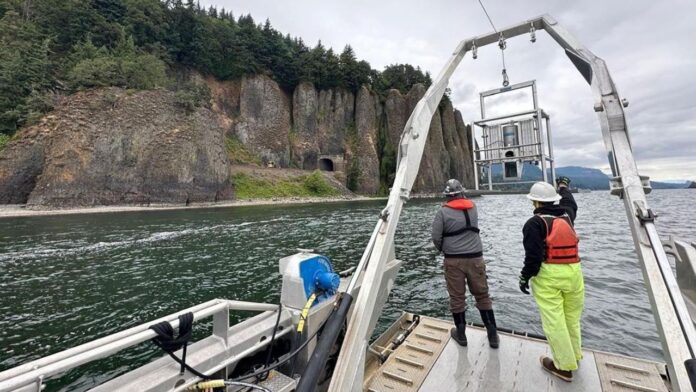
CSA Ocean Sciences Inc. has announced the completion of a Sediment Profile Imaging (SPI)/Plan View (PV) Survey of an 85-mile stretch of the Columbia River.

The survey, conducted between The Dalles, Oregon to Vancouver, Washington, supports planning for the Cascade Renewable Transmission (CRT) Project, a proposed underwater and underground transmission line capable of transferring approximately 1,100 MW of energy beneath the Columbia River to the Portland area.

This environmental baseline survey, awarded to CSA by HDR on behalf of the CRT Project, utilized CSA’s exclusive SPI/PV technology. This specialized capability is led by CSA Senior Scientist and Director of SPI Services, Ian Stupakoff, who brings more than a decade of experience using SPI equipment.

Led by Mr. Stupakoff, the field team deployed CSA’s SPI/PV camera system to acquire two types of images. The SPI camera captures vertical profiles of the sediment producing high‑resolution images that reveal a cross‑section of sediment layers, textures, redox boundaries, subsurface organisms, and estimates of bioturbation depth, without disturbing the sediment’s natural structure. In contrast, PV images provide plan-view perspectives that reveal grain types, shell deposits, surface morphology, and visible organisms.

“The SPI/PV system is incredibly versatile, and we have already successfully used it to study sediment conditions in a diverse range of marine environments, from shallow inland marshlands to deep oceans,” said Mr. Stupakoff.

The 400+ images captured from the Columbia River are now being examined by CSA Subject Matter Experts (SMEs) for sediment composition, fauna, and submerged aquatic vegetation to produce a precise map and environmental baseline of the riverbed to help inform planning and design of the CRT project.

The investment in SPI/PV technology services comes during a moment of significant expansion for CSA, as the company continues to diversify its service offering.

“While CSA is perhaps better known for planning and executing marine scientific survey projects in coastal and offshore waters, many of our SMEs and Senior Scientists have extensive experience in investigating freshwater ecosystems,” said Gordon Stevens, CSA President. “This is an exciting period of growth for CSA, and we continue to invest in tech-led survey specialisms across all types of marine environments. Establishing our SPI/PV services is just the latest example of CSA’s response to market demand for comprehensive multidisciplinary survey capabilities under one roof.”

SBM Offshore signs contract extension of FPSOs Mondo and Saxi Batuque

0

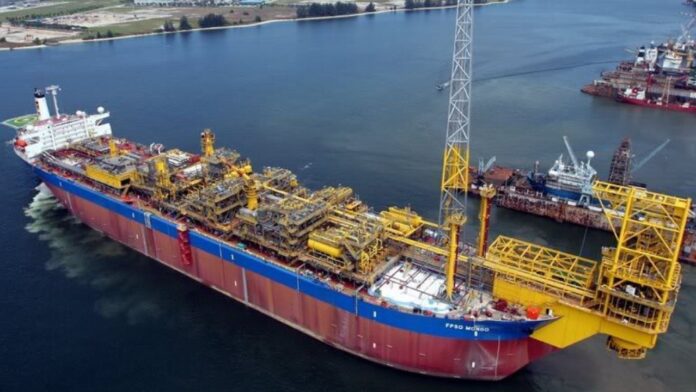
SBM Offshore announces it has signed a contract extension related to the lease and operation of FPSOs Mondo and Saxi Batuque with Esso Exploration Angola (Block 15) Limited, as the Operator of Block 15, an affiliate of ExxonMobil. The extension secures ownership and operations by SBM Offshore until 2032.

The agreement includes life-extension activities, for equipment replacement and refurbishment, to maintain high safety standards and ensure operational excellence throughout the contract term. The scope of work is expected to start in 2026.

Through these contracts, SBM Offshore supports Block 15 Contractor Group’s offshore energy objectives in Angola while contributing to the long-term growth in the region.

Esso Exploration Angola (Block 15) Limited is the operator of Block 15. Other Block 15 Co-Venturers are Azule Angola Limited, Azule Angola BV, Equinor Angola Block 15 A.S. and Sonangol E&P.

Øivind Tangen, CEO of SBM Offshore, commented:

“We are very pleased with the contract extension of FPSOs Mondo and Saxi Batuque. This allows us to maintain our structure and scale in Angola, and most importantly to provide job security to our teams. Through this extension, SBM Offshore will continue to generate value to the Angolan energy industry, as we have been for the last three decades. We remain committed to the continued safe and reliable operations through this extension period.”

OSINT by Paint: submarine struck by Ukrainian underwater drone identified as B-271 Kolpino

0

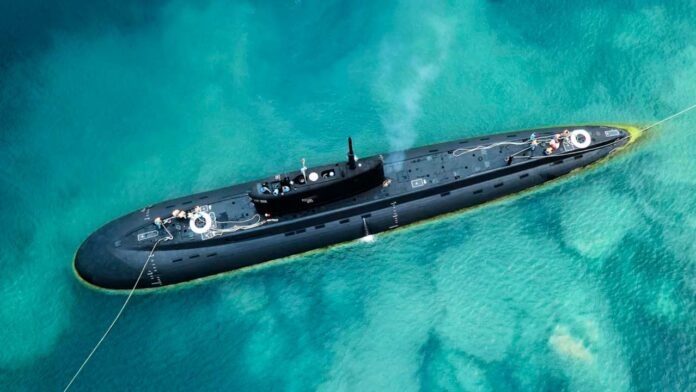
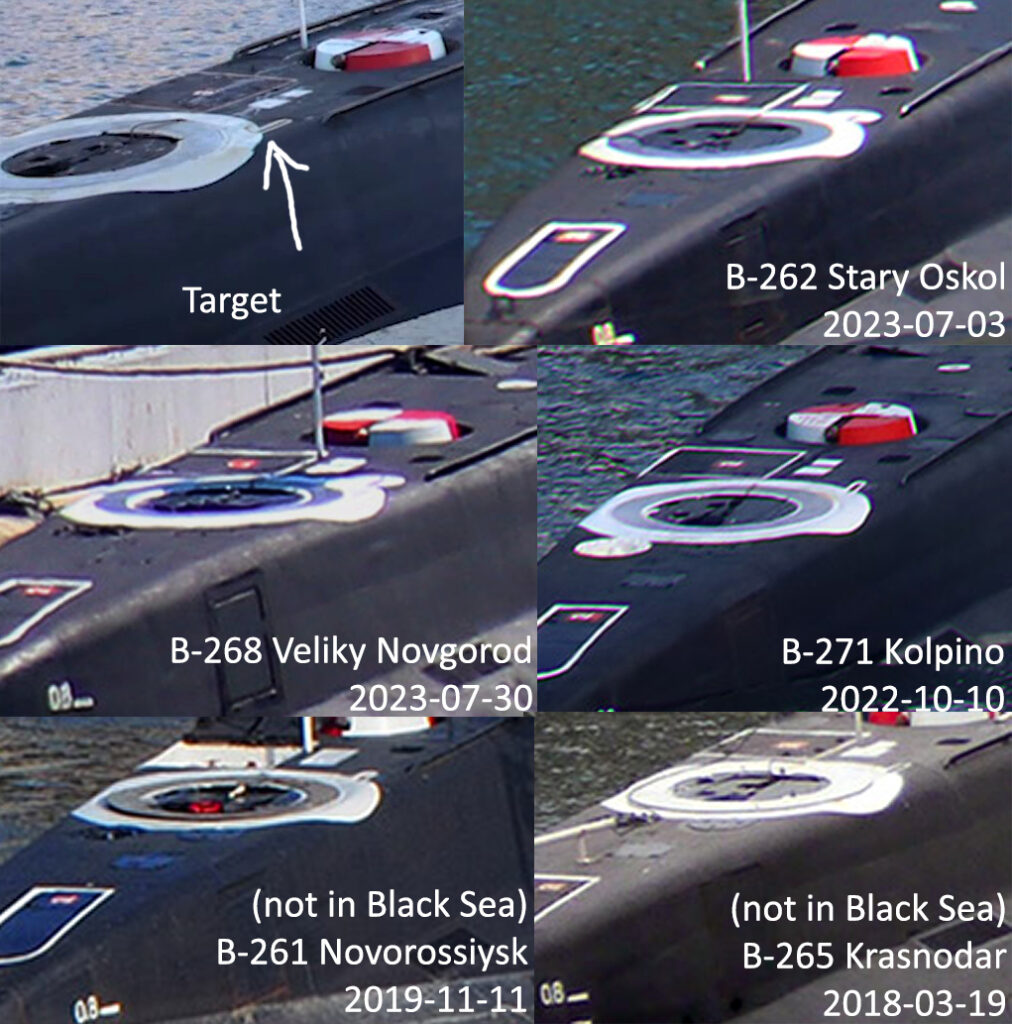
The Project 636.3 Varshavyanka (Kilo-class) submarine hit by a Ukrainian underwater drone has been identified as B-271 Kolpino. The assessment was published by Duke BG on X.

He compared the submarine shown in a video released by the Russian propaganda TV channel Zvezda on December 16 with other publicly available images of vessels of the same class, focusing on the paint scheme on the upper section of the outer hull.

The comparison shows that different submarines have distinct paint patterns, with the exception of the Kolpino and Krasnodar submarines.

However, the Krasnodar is outside the Black Sea and therefore could not have been hit.

B-271 Kolpino is a Russian diesel-electric submarine of Project 636.3 Varshavyanka, assigned to the Russian Navy’s 4th Independent Submarine Brigade, a unit of the Black Sea Fleet. It is the sixth vessel of the project and is named after the Russian city of Kolpino.

The submarine was laid down on October 30, 2014, at the Admiralty Shipyards in St. Petersburg.

It was launched on May 31, 2016; sea trials began on August 19, 2016, and on November 24 of the same year it was commissioned into the Russian Navy.

In 2017, the Kolpino submarine carried out combat missions in the Mediterranean Sea, launching Kalibr cruise missile strikes on targets in Syria. Since 2022, the submarine has been involved in combat operations against Ukraine, including missile launches.

At the start of Russia’s full-scale invasion of Ukraine, the Black Sea Fleet had six Project 636.3 Varshavyanka submarines. Not all were deployed in the Black Sea due to operations in the Mediterranean. In particular, the Krasnodar and Novorossiysk submarines are currently based in the Baltic Sea.

In September 2023, Ukraine’s armed forces struck a shipyard in Crimea with missiles, severely damaging the Rostov-on-Don submarine while it was undergoing repairs. The Kolpino, Veliky Novgorod and Stary Oskol submarines, along with the older Project 877B Halibut submarine Alrosa, are known to be based in Novorossiysk Bay.

Source: militarnyi